Trident Maple (Acer buergerianum): Identification, Leaves, Bark & Care
Trident Maple is one of Japan’s most widely planted street trees, valued for its tolerance of urban pollution, drought, and hard pruning, alongside attractive spring foliage and autumn color. Beyond street planting, it has earned a lasting place in Japanese gardens and bonsai, prized as much for its knobby, textured bark as for its foliage. This guide covers identification features, flowers, fruit, bark, cultivars, and care, based on observations of the tree as grown in Japan.
What Is Trident Maple?
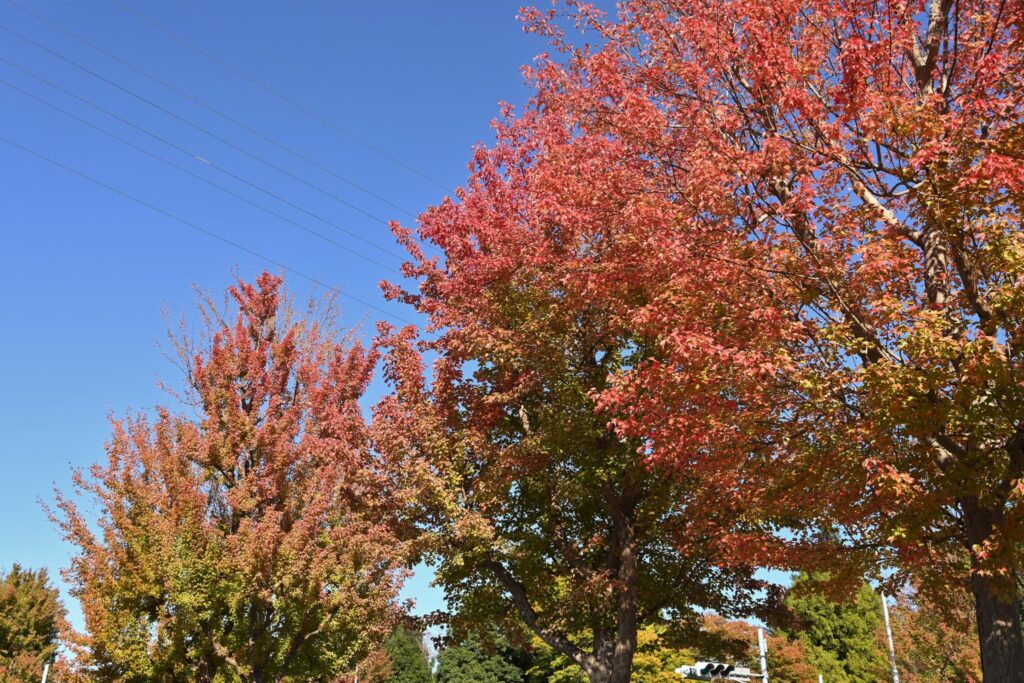
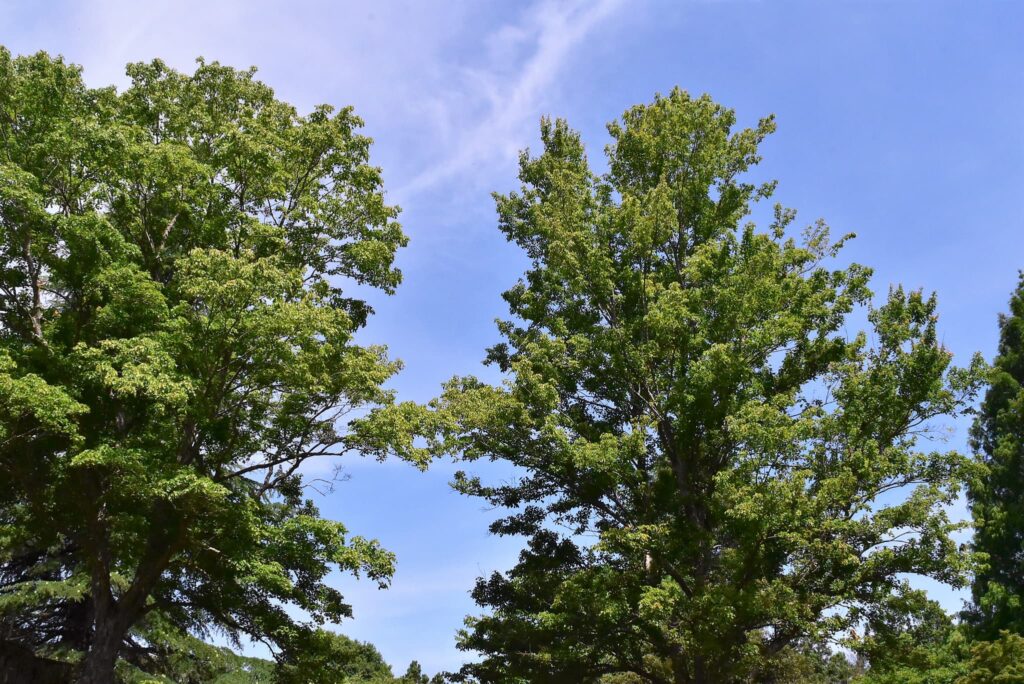
Trident Maple is a maple native to the Yangtze River basin of southeastern China and to Taiwan. Prized for its attractive spring growth and autumn color, and notably tolerant of drought, air pollution, and pests, it is widely planted as a street tree throughout Japan. Though not a particularly well-known name to the general public, it consistently ranks among the most commonly planted street trees in the country. Today it is regarded as one of Japan’s most important urban street trees and is also highly valued for bonsai and Japanese gardens.
Overview
| Item | Description |
|---|---|
| Family | Sapindaceae |
| Genus | Acer |
| Species | A. buergerianum |
| Scientific Name | Acer buergerianum |
| Common Name | Trident Maple |
| Japanese Name | Toukaede (トウカエデ), also Sankaku Kaede |
| Native Range | Southeastern China (Yangtze River basin), Taiwan |
| USDA Hardiness | 5–9 |
| Plant Type | Deciduous Tree |
| Flowering Season | April–May |
| Fruit Type | Samara (winged seed), 1.5–2 cm, ripening around October |
| Garden Use | Street tree, hedge, bonsai |
Characteristics
| Feature | Description |
|---|---|
| Leaves | Alternate, shallowly three-lobed to nearly oval, glossy above |
| Fruit | Winged samara, wings only slightly spread |
| Bark | Smooth gray when young, peeling vertically and knobby with age |
| Habit | Tough, densely branched, tolerant of pollution and hard pruning |
Trunk & Bark
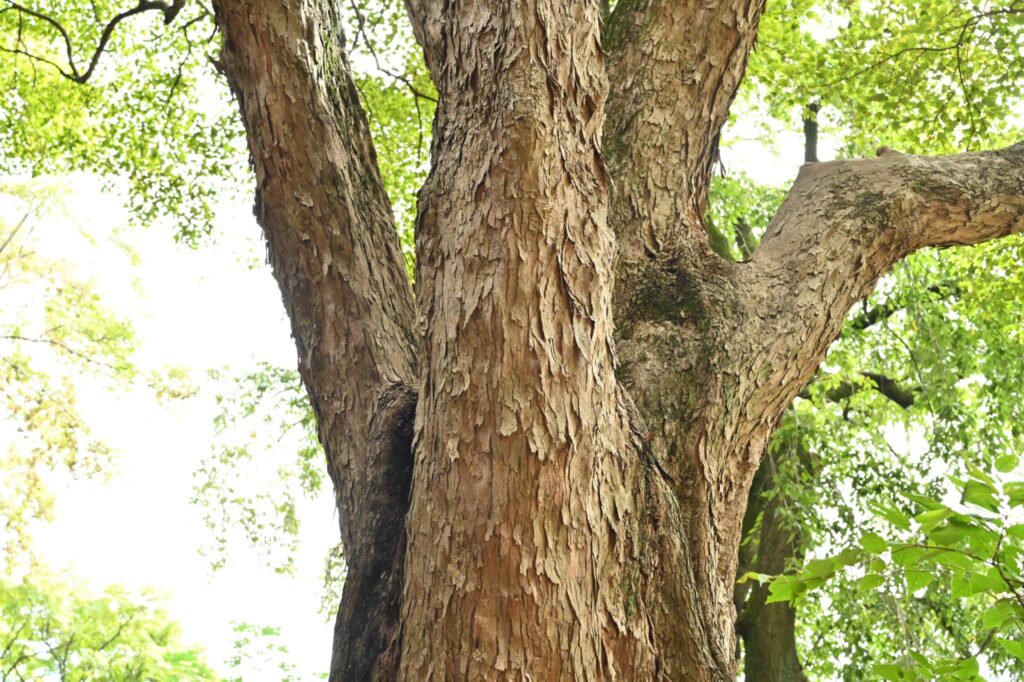
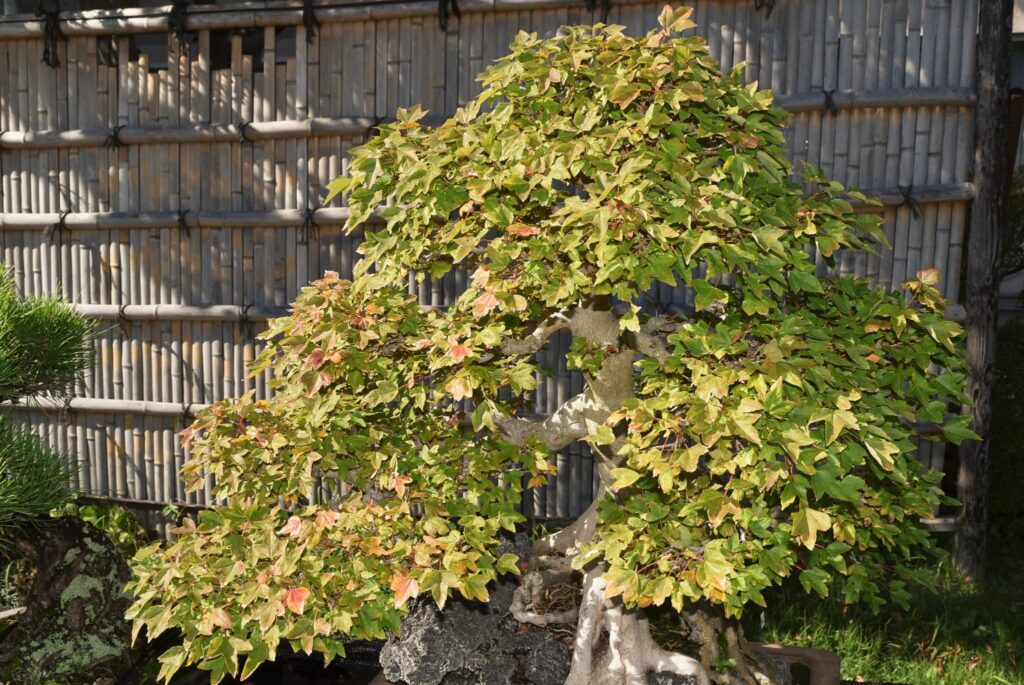
The bark is grayish brown, smooth on young trees, but as the tree matures it begins to peel away in vertical strips, and the trunk develops a knobby, textured character. This transformation from smooth young bark to a rugged, sculptural older trunk is one of the tree’s most distinctive ornamental traits, and it’s often the bark—rather than the leaves—that draws the most attention on a mature specimen. The branches are tough and tolerate pruning well, and the trunk’s distinctive character with age has also made Trident Maple a popular choice for bonsai, where growers deliberately cultivate that aged, textured look over many years.
Foliage
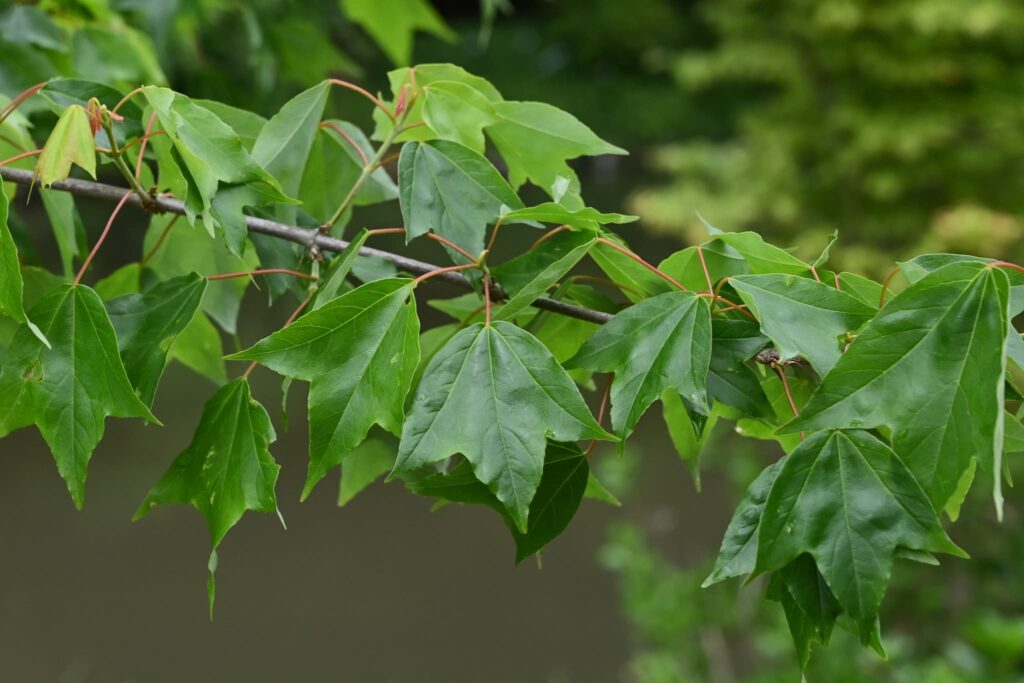
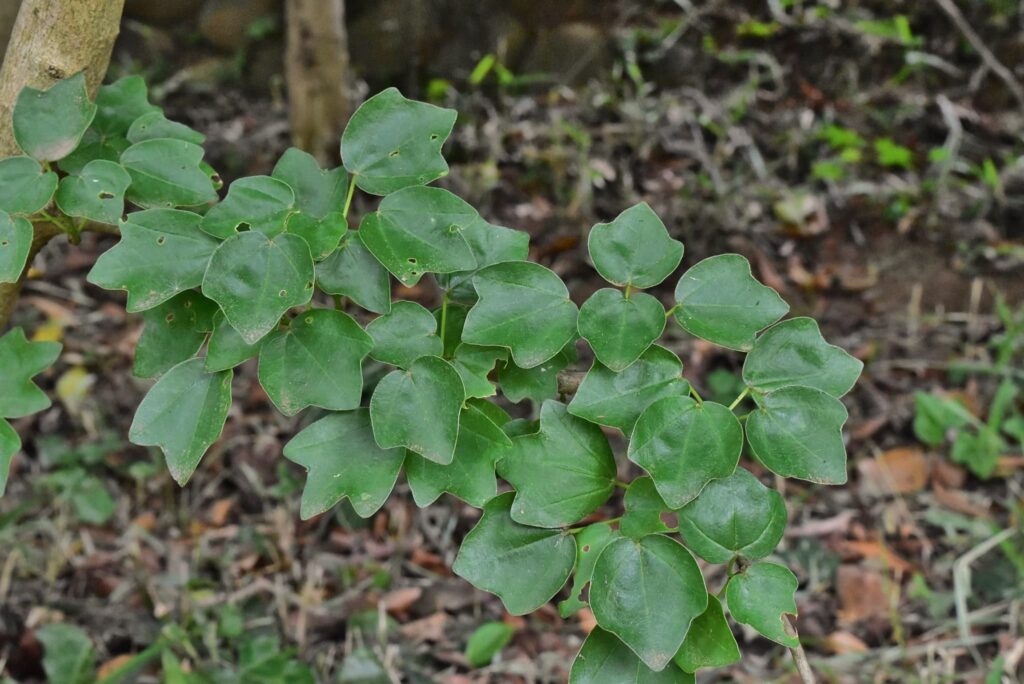
Leaves are 4–9 cm long and 2–5 cm wide, carried on long stalks. The tree’s Chinese name and Japanese alternate name, Sankaku Kaede (“triangular maple”), along with its English name “Trident,” all reference its characteristic three-pointed leaf shape—though in practice, leaves range from shallowly three-lobed to nearly oval, and shape varies considerably from tree to tree. Young saplings typically have toothed leaf margins, which smooth out as the tree matures, adding to the overall variability in leaf form.
The upper leaf surface is glossy, while the underside has a pale, bluish-green cast. New growth is covered in fine white down. In autumn, the foliage typically turns shades of yellow to orange-red, though as noted below, color intensity depends heavily on site conditions.
Flowers
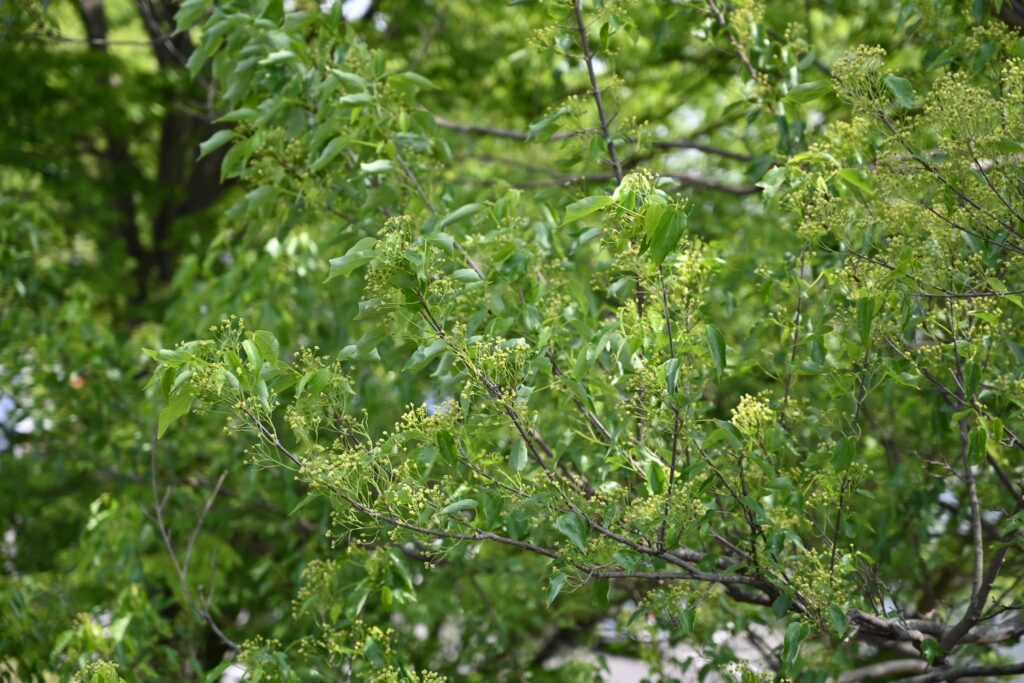
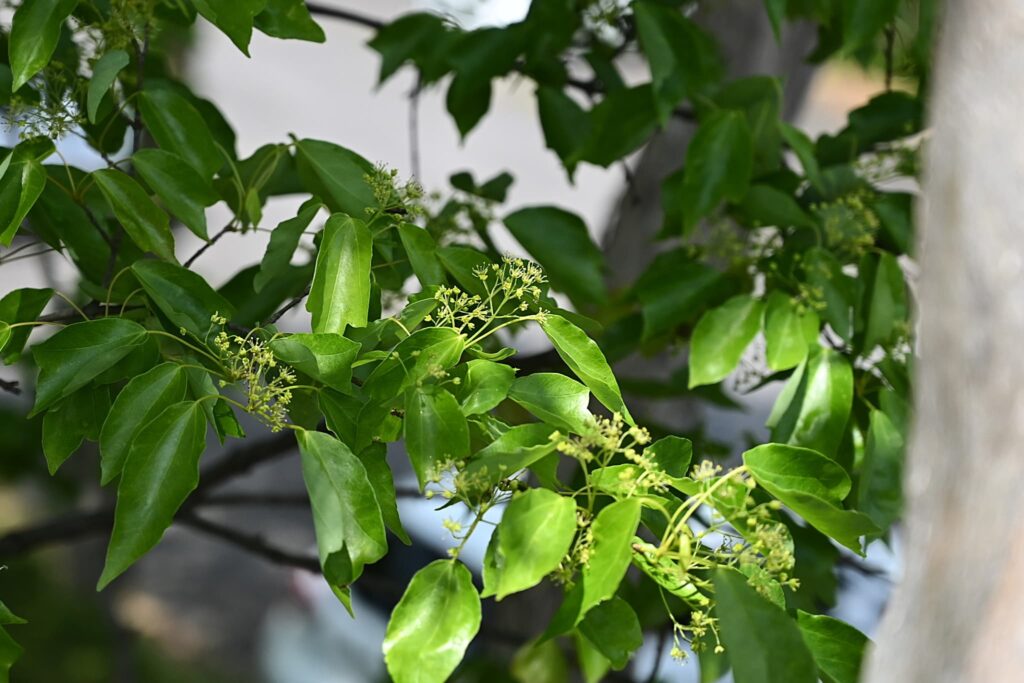
Trident Maple flowers in April and May, sending up flower clusters from the tips of that year’s new branches. Both male flowers and perfect (bisexual) flowers appear together in the same cluster, pale yellow in color. On close inspection, each flower has five petals and five sepals—technically flower-like enough, but the display is subtle and rarely draws much attention. The style and ovary are covered in fine white hairs.
Fruit
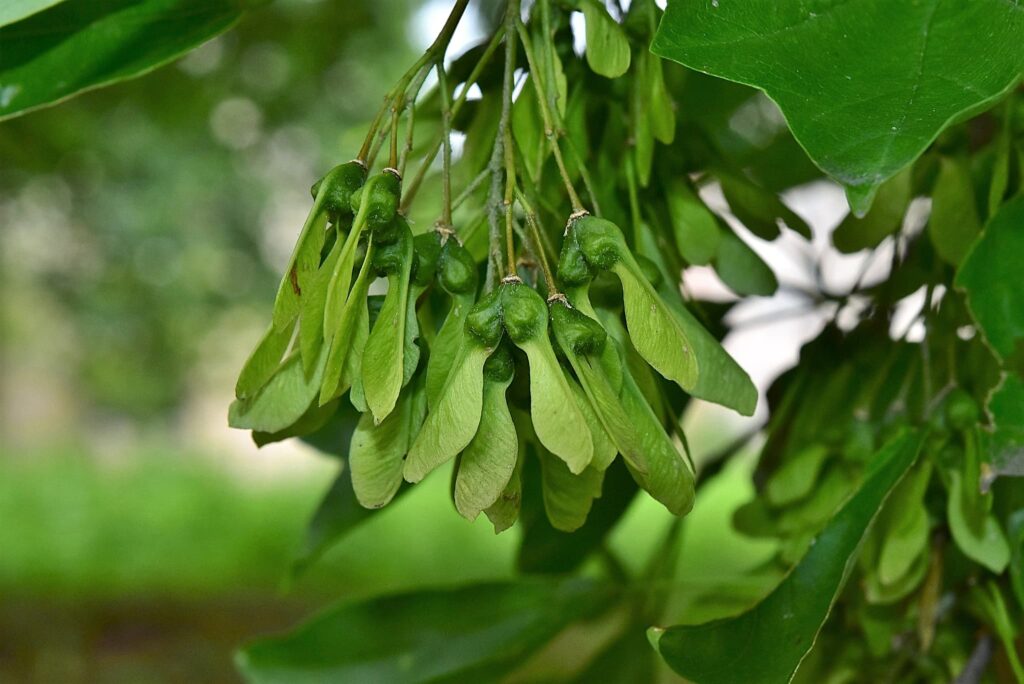
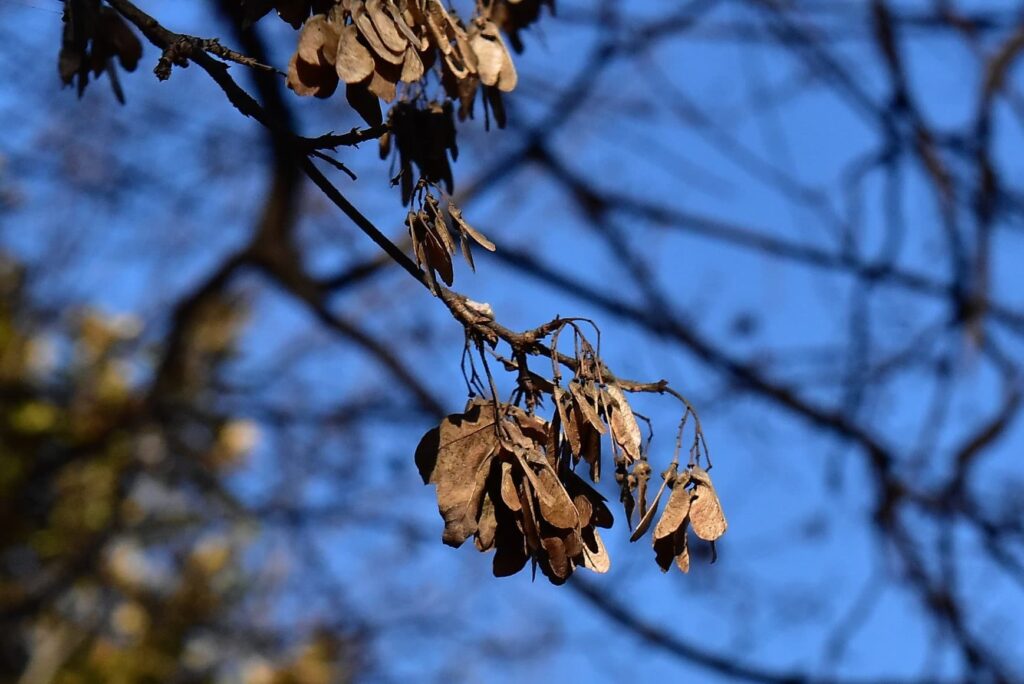
Flowers are followed by winged fruit (samaras) about 1.5–2 cm long. Their shape resembles that of Japanese Maple (Acer palmatum), though the “propeller” wings don’t spread as widely. The fruit ripens around October, and the tree can be propagated fairly easily by sowing its seed. A single tree produces an unusually large number of seeds, even by the standards of maples generally.
History in Japan
Its Japanese name, Toukaede, means “Tang (Chinese) maple.” The tree was first brought to Japan in 1724, during the Edo period, as a gift from China to the Tokugawa shogunate, and was initially planted only in Edo Castle and the gardens of feudal lords. It spread more widely among the general public beginning in the Meiji era, and today is planted throughout Japan, from Hokkaido to Kyushu.
Growing Guide
Soil & Site
Unlike typical maples such as Japanese Maple, which prefer moist, nutrient-rich soil, Trident Maple is tough and adaptable, growing well in full sun regardless of soil type, and tolerating harsh air pollution and poor, thin soil. That said, in hot urban environments it tends not to develop particularly vivid autumn color.
Hedging & Security
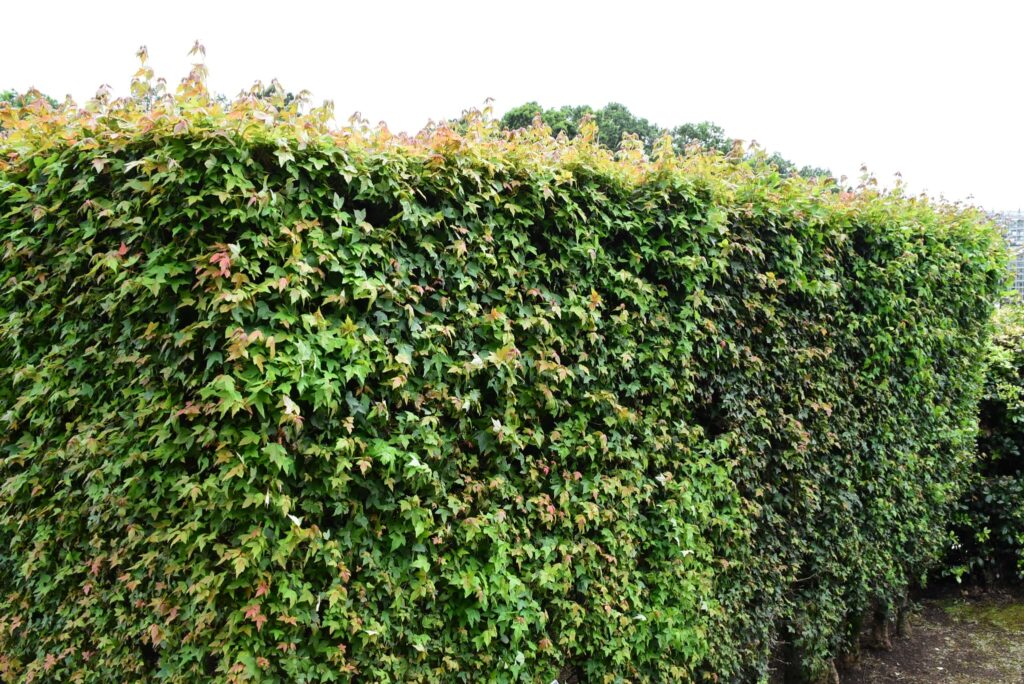
Because it produces dense, tough branching, a well-maintained Trident Maple hedge, over time, can become difficult for a person to push through. As a deciduous tree it doesn’t provide year-round screening, but it does offer a reasonable degree of deterrence against unwanted entry.
Pruning
The wood is extremely hard, making pruning more difficult than with many other trees, and heavy pruning can easily disrupt the tree’s overall shape. Trident Maple also grows substantially in height, so appreciating its branch structure properly requires a fair amount of space—making it a poor fit for planting alone in a small garden.
Cultivars
- ‘Hanachirusato’ — an improved cultivar widely used in ornamental gardening. New leaves emerge pale pink or cream, then shift through deep green, red, and purple as the seasons progress—a color range that has also earned it the alternate name “Maple Rainbow.” Grown to a larger size, it takes on an overall bright, luminous character, but it is less cold-hardy than the wild species.
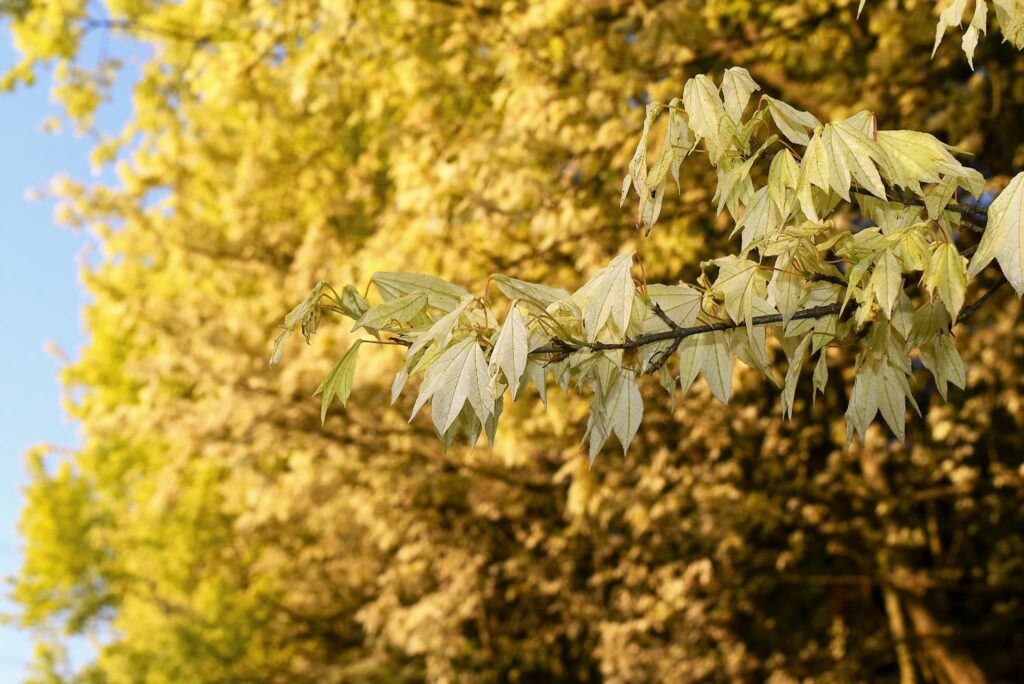
Variegated Trident Maple — a cultivar with white-patterned leaves. Less dramatic than ‘Hanachirusato’, but still bright enough in character to suit Western-style homes.
Taiwan Trident Maple — a form native to Taiwan, with more heavily branched twigs and more vivid autumn color. Japanese stock derives from a mother tree originally brought from Taiwan to the Fushimi-no-miya imperial family, giving it the alternate name “Miyasama Kaede” (“prince’s maple”).
Why Trident Maple Is So Widely Used
Bonsai
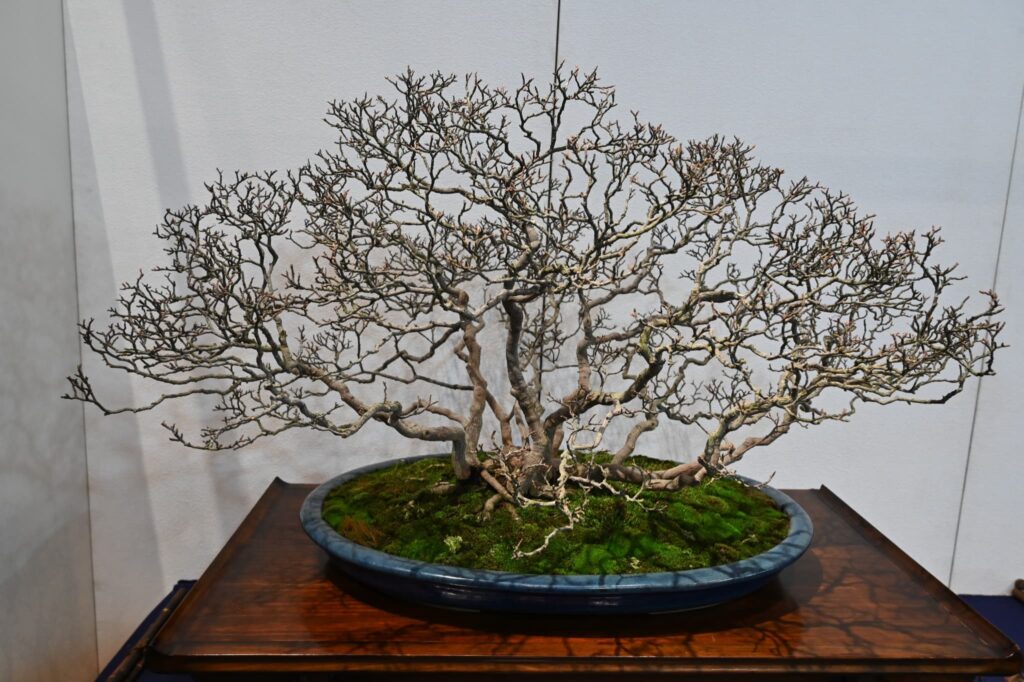
Trident Maple is one of the most popular deciduous species for bonsai in Japan, prized for a combination of traits that few other trees offer together: tough, flexible branches that tolerate wiring and hard pruning, a trunk that develops real character and texture with age, and a naturally compact leaf size that scales well to miniature form. Growers can shape and thicken the trunk over years of cultivation, deliberately encouraging the peeling, knobby bark that gives an aged specimen its sense of gravity. It’s often recommended as an entry point for beginning bonsai practitioners precisely because it’s so forgiving of pruning mistakes.
Autumn Foliage
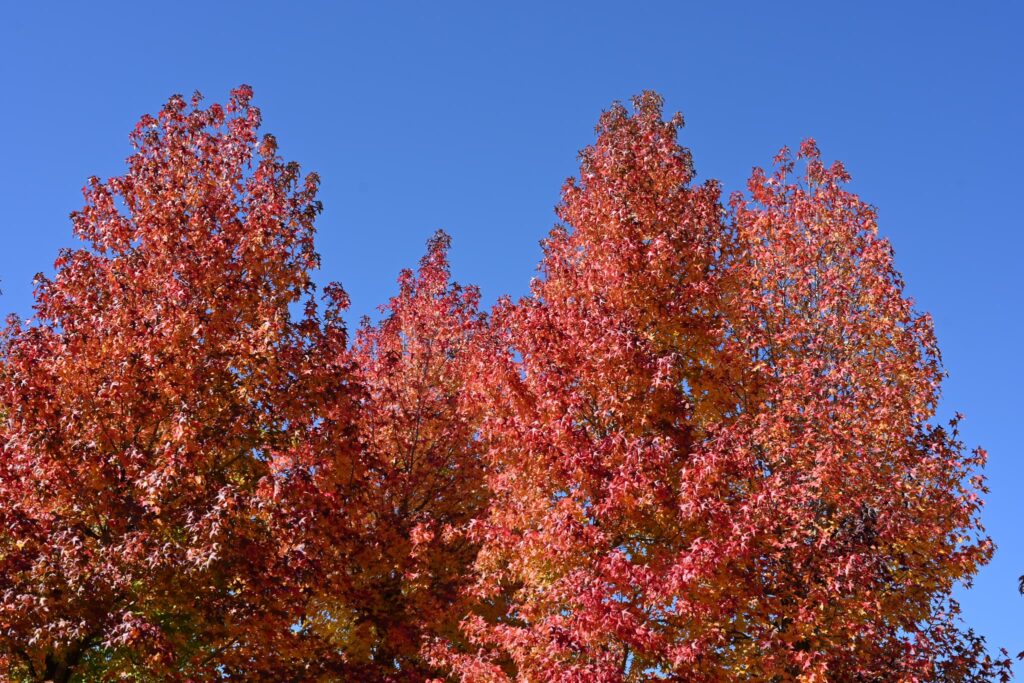
While not as famous for autumn color as Japanese Maple, Trident Maple still puts on a respectable seasonal display, its leaves shifting to yellow, orange, or red depending on the individual tree and growing conditions. Color tends to be most vivid in cooler, less polluted settings; in hot, built-up urban environments—exactly where the tree is often planted as a street tree—the display is typically more muted. This tradeoff between toughness and color intensity is part of what makes Trident Maple such a practical, if less flashy, alternative to more delicate ornamental maples.
Bark
As a tree matures, its bark transforms from smooth and gray to a deeply textured, vertically peeling surface with a distinctly knobby character—arguably the tree’s single most recognizable ornamental feature once it reaches a certain age. This bark texture is a major reason Trident Maple is valued in bonsai, where an aged, weathered trunk is often considered more desirable than the foliage itself, and it’s also part of what gives mature street and garden specimens a sense of real presence, even in winter when the tree is bare.
Street Tree
Trident Maple’s combination of toughness and ornamental value has made it one of the most commonly planted street trees in Japan, even though the tree’s name itself remains relatively unfamiliar to most people. It tolerates air pollution, poor or compacted soil, and drought far better than most ornamental maples, and its tough wood and dense branching structure hold up well to the repeated hard pruning that urban street trees typically require. It has held this practical, workhorse role since spreading beyond shogunal and daimyo gardens in the Meiji era, and today it lines streets from Hokkaido to Kyushu.
Japanese Gardens
Beyond its street-tree role, Trident Maple has a long history in more formal garden settings, dating back to its introduction as a diplomatic gift to the Tokugawa shogunate in the Edo period, when it was planted exclusively within Edo Castle and the gardens of feudal lords. Its tolerance for pruning makes it adaptable to a range of garden styles, from tightly clipped hedges dense enough to deter intruders, to specimen plantings where its branch structure and aging bark are given room to be appreciated on their own. That said, its substantial height at maturity means it needs real space to be shown off properly, making it a better fit for larger gardens than small residential plots.
Similar Plants
Japanese Maple (Acer palmatum) — Japan’s most iconic maple, with deeply lobed leaves and vivid, widely celebrated autumn color.
Field Maple (Acer campestre) — A European maple with small, rounded lobed leaves, valued for its tolerance of poor soil and hedging.
Amur Maple (Acer ginnala) — A cold-hardy East Asian maple with narrow, three-lobed leaves and fragrant flowers, prized for fiery red autumn color.
Paperbark Maple (Acer griseum) — A Chinese maple grown chiefly for its cinnamon-colored, papery, peeling bark rather than its foliage.
Frequently Asked Questions
Q: Why is Trident Maple used so often as a street tree?
It’s exceptionally tolerant of the conditions street trees typically face—air pollution, dry or poor soil, and pests—while still offering attractive spring growth and autumn color. This combination of toughness and ornamental value is why it consistently ranks among the most commonly planted street trees in Japan, even though the name itself isn’t widely known.
Q: Why do the leaves look so different from tree to tree?
Leaf shape is genuinely variable in this species, ranging from shallowly three-lobed (the classic “trident” shape referenced in its name) to nearly oval. Young trees also tend to have toothed leaf margins that smooth out with maturity, adding another layer of variation depending on the age of the tree.
Q: Is Trident Maple hard to prune?
Yes, more so than many trees—its wood is extremely hard, and heavy pruning can easily throw off its natural shape. It also grows quite tall over time, so appreciating its branch structure properly requires more space than a small garden can usually provide.
Q: Can Trident Maple be grown in poor soil or polluted areas?
Yes—unlike moisture-loving maples such as Japanese Maple, Trident Maple tolerates poor, thin soil and harsh air pollution reasonably well, provided it gets full sun. The tradeoff is that in hot, built-up urban environments, its autumn color tends to be less vivid than it would be in a cooler, less polluted setting.
Q: What’s the difference between ‘Hanachirusato’ and the standard species?
‘Hanachirusato’ is a cultivar bred for ornamental color, with new leaves that emerge pink or cream before shifting through green, red, and purple over the course of the season—hence its nickname, “Maple Rainbow.” It’s showier than the wild species but less cold-hardy, so it needs a somewhat more sheltered site.
Q: Is Trident Maple native to Japan?
No. It is native to China and Taiwan, but has been cultivated in Japan since the Edo period.
Conclusion
Trident Maple may not be a household name, but it is quietly one of the most successful street trees in Japan—tough enough to thrive in polluted, poorly maintained urban soil, yet still capable of the fresh spring growth and autumn color people associate with more delicate maples. From its origins as a shogunal gift in the Edo period to its present-day role lining streets across the country, and its more recent life as an ornamental cultivar like ‘Hanachirusato’, Trident Maple has proven remarkably adaptable in every sense of the word.