Japanese Raisin Tree (Hovenia dulcis): Identification, Care & Uses
Japanese Raisin Tree (Hovenia dulcis), known in Japan as Kenponashi (ケンポナシ), is a deciduous broadleaf tree in the buckthorn family (Rhamnaceae). It is best known for its unusual, sweet, fleshy flower stalks, which swell after flowering and have a flavor reminiscent of pear or raisins. The species also has a long history of use as a food, timber tree, and traditional folk remedy in East Asia. This guide covers its identification, flowers, fruit, bark, uses, cultivation, and similar species, based on observations of the plant as grown in Japan.
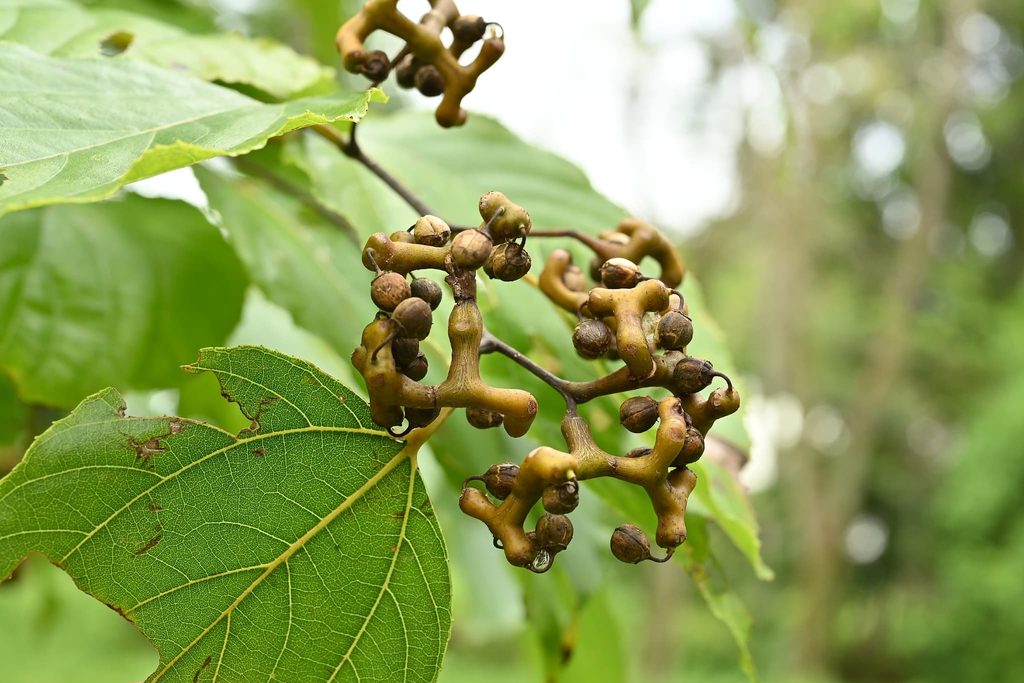
What Is the Japanese Raisin Tree?
Japanese Raisin Tree (Hovenia dulcis) is a deciduous tree in the buckthorn family (Rhamnaceae). Its native range extends from China and Korea to Japan. In Japan, it occurs naturally from southern Hokkaido, including Okushiri Island, through Honshu, Shikoku, and Kyushu. It is generally found in mountain forests, woodland margins, and other relatively moist habitats.
The species is particularly distinctive because its flower stalks become thick, fleshy, and sweet after flowering. Although the small fruits themselves are not especially conspicuous, the swollen stalks are edible and have long been valued as a natural source of sweetness.
The genus name Hovenia honors David ten Hoven, a patron associated with the botanist Carl Peter Thunberg, who established the genus.
Overview
| Scientific Name | Hovenia dulcis Thunb. |
| Common Names | Japanese Raisin Tree, Oriental Raisin Tree |
| Japanese Name | Kenponashi (ケンポナシ) |
| Family | Rhamnaceae (Buckthorn family) |
| Native Range | China, Korea, and Japan |
| Plant Type | Deciduous broadleaf tree |
| Height | Usually about 10–20 m in favorable conditions; can become a large tree |
| Flowering Season | May–July |
| Fruit Season | August–October |
| Fruit Type | Small, round nut-like fruit with a fleshy, swollen flower stalk |
| Sun Exposure | Full sun to part shade |
Characteristics
| Leaves | Ovate to broadly ovate, about 7–17 cm long, with irregularly serrated margins |
| Flowers | Small, yellowish-green to pale green, about 6–8 mm across |
| Fruit | Small, round, about 6.5–7.5 mm across, with a fleshy flower stalk |
| Bark | Gray to gray-brown, becoming fissured with age |
| Growth Habit | Large deciduous tree with a broad crown |
Foliage
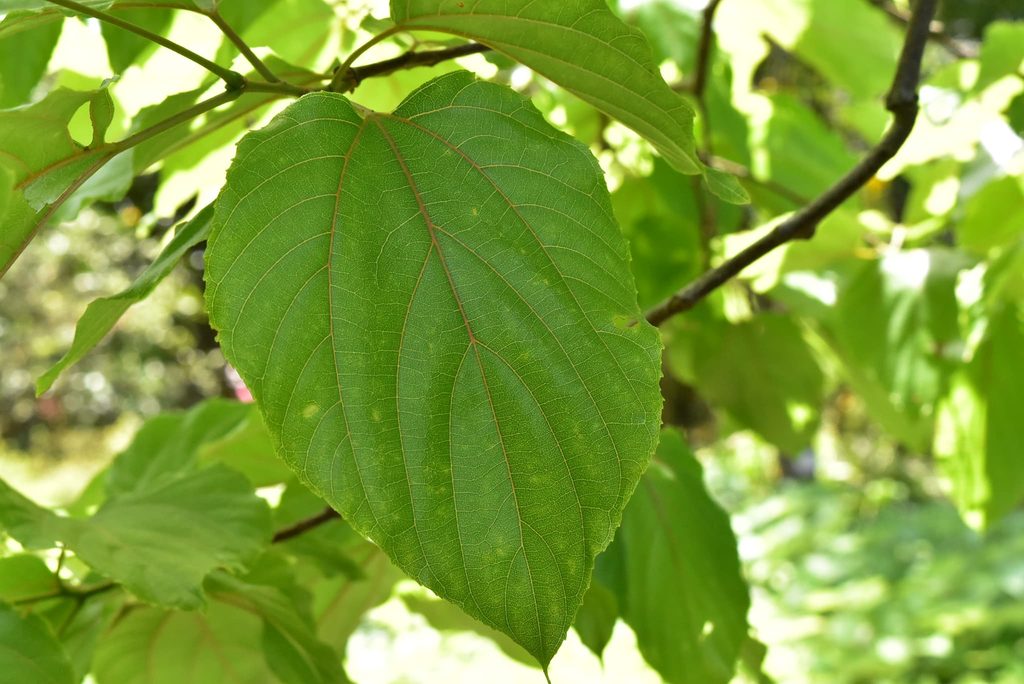
The leaves are broadly ovate to ovate, typically 7–17 cm long and 4–11 cm wide. They have serrated or irregularly toothed margins and a short, pointed to gradually tapering tip.
The leaves are alternate, although their arrangement along the branches can sometimes give the impression of a more regular, two-ranked pattern. This feature can be useful when identifying the tree, but it should not be relied upon by itself.
Some forms of Hovenia have hairs on the undersides of the leaves, particularly along the veins. This is one of the characteristics that can help distinguish Japanese Raisin Tree from the closely related Hovenia tomentella.
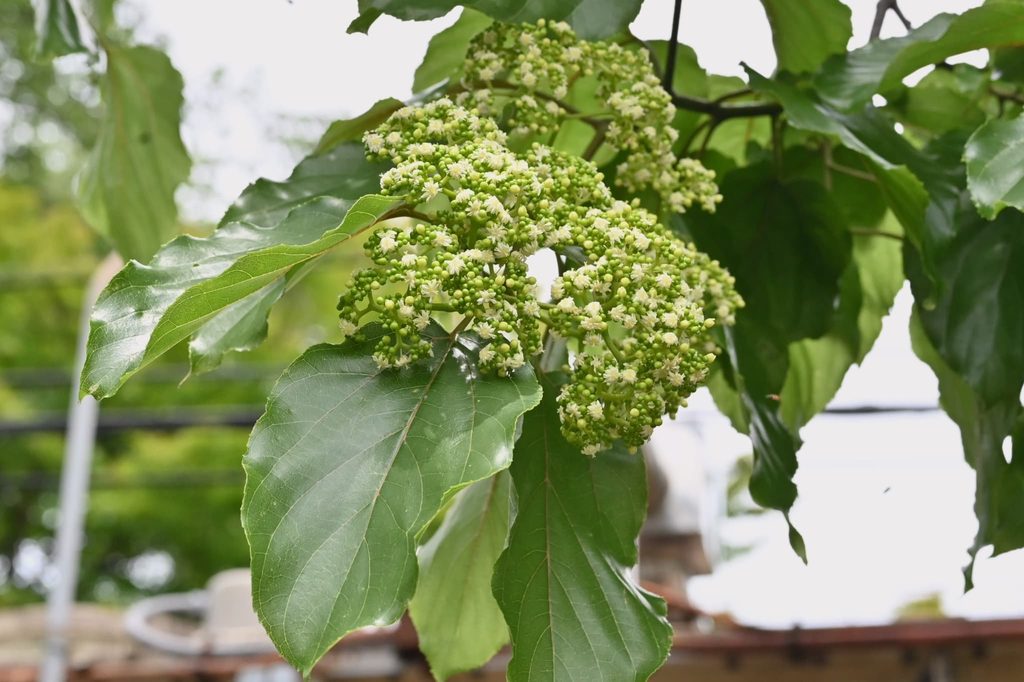
Flowers
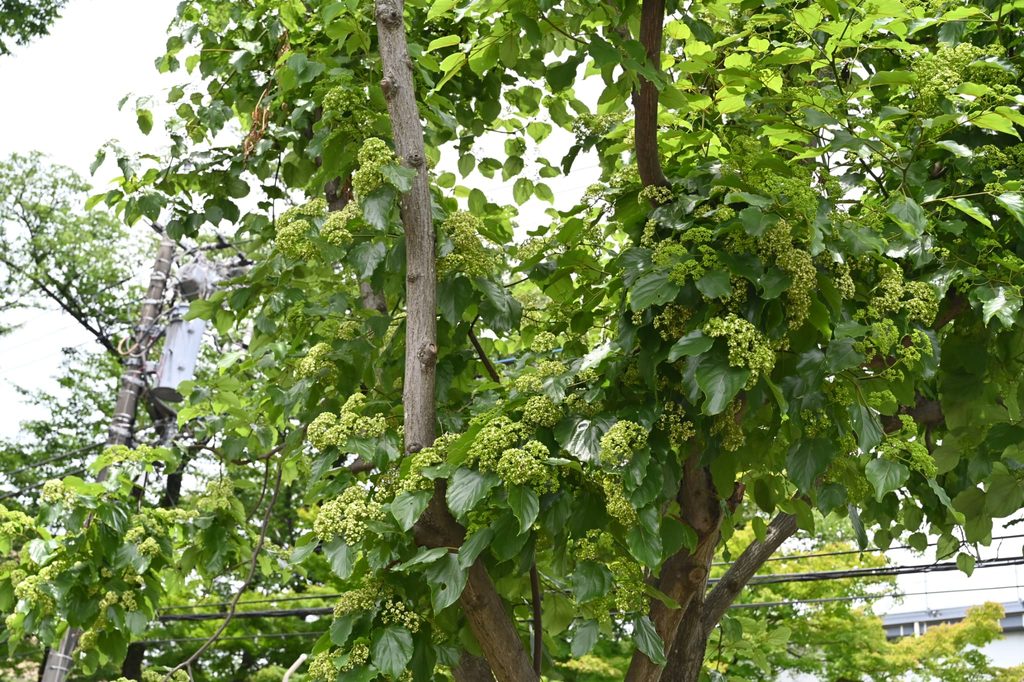
Japanese Raisin Tree flowers from late spring into summer, generally from May to July depending on location and climate.
The flowers are small, yellowish-green to pale green, and approximately 6–8 mm across. They are borne in clusters and are not especially showy, but they provide nectar for bees and other insects.
Because the flowers are relatively inconspicuous, the tree is much easier to recognize later in the season when its unusual fruit stalks begin to swell.
Fruits
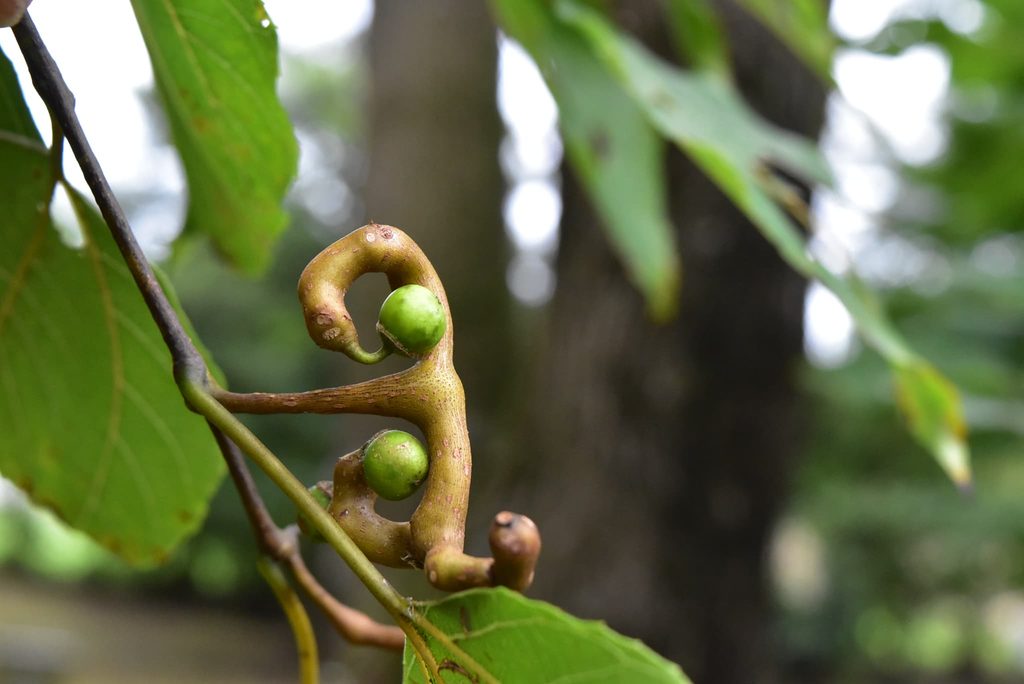
After flowering, the flower stalks and associated structures become swollen, fleshy, and juicy. A small, round fruit develops at the end of the swollen stalk.
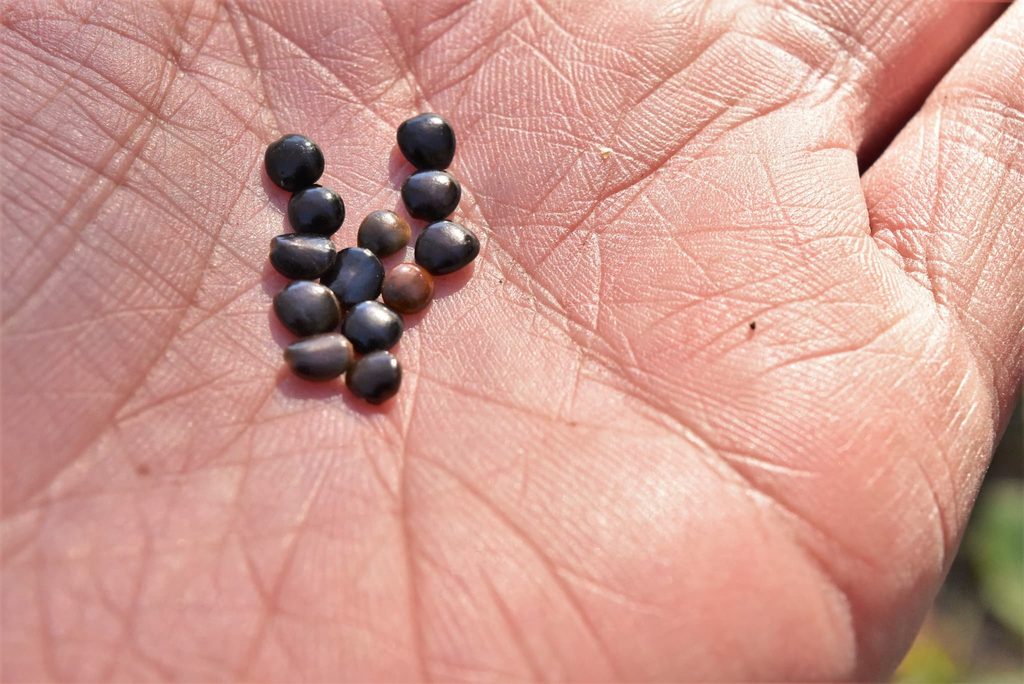
The true fruit is only about 6.5–7.5 mm across and becomes dark to blackish when mature. The fleshy stalk, rather than the small fruit itself, is the most notable edible part of the plant.
The swollen stalk has a sweet flavor often compared with pear, raisins, or other dried fruit. It can be eaten fresh when sufficiently mature and has traditionally been used as a source of sweetness in parts of East Asia.
The fruits generally mature from late summer into autumn. The exact timing varies with climate and year.
Bark & Timber
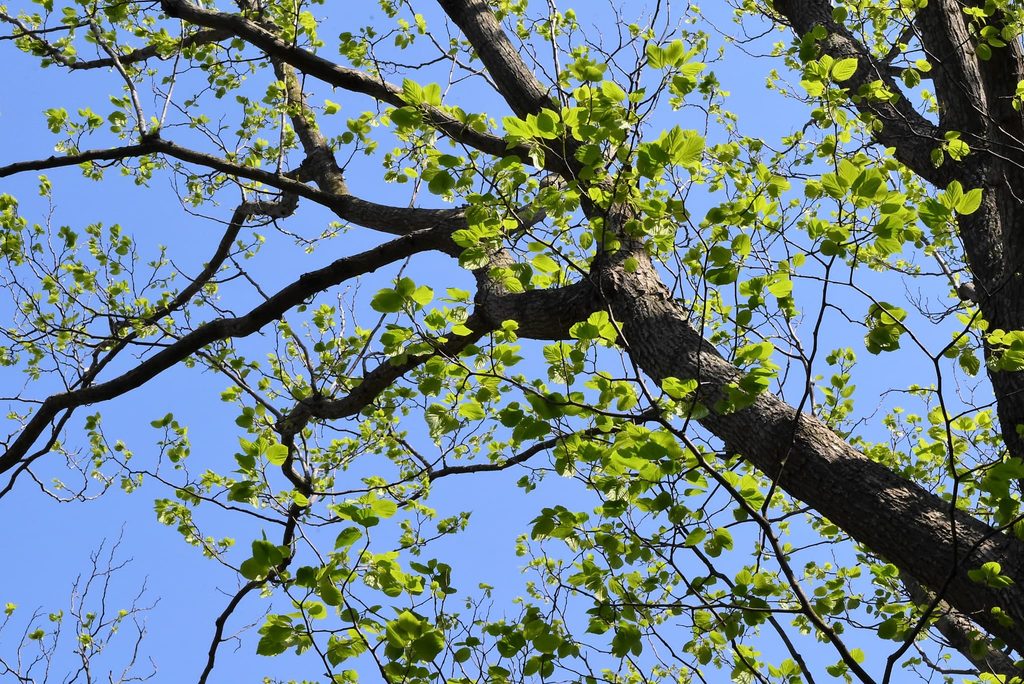
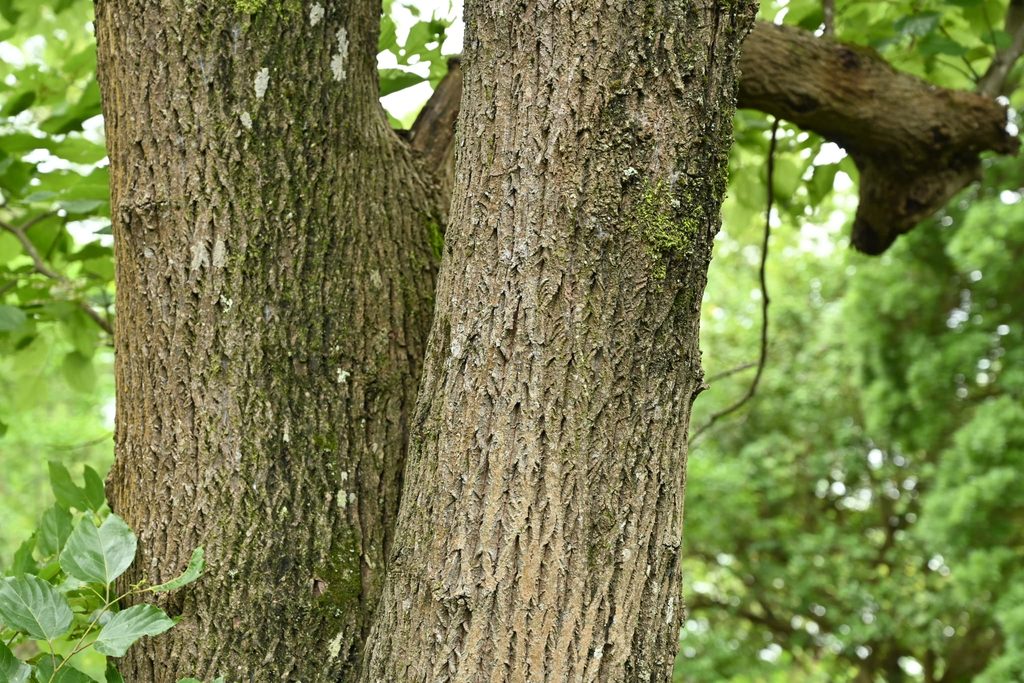
The bark is gray to gray-brown and becomes increasingly fissured as the tree ages. Older trunks develop a rougher texture and a more pronounced pattern of shallow cracks.
Japanese Raisin Tree produces fine-grained, relatively hard wood that has been used for timber, furniture, tools, musical instruments, carving, and other woodworking applications.
The wood has traditionally been valued in Japan and other parts of East Asia, although the species is much better known today for its unusual edible flower stalks and distinctive appearance than as a major commercial timber tree.
Size & Growth
Japanese Raisin Tree is a vigorous deciduous tree that can become large with age. Under favorable conditions, it may reach around 10–20 m in height and develop a broad crown.
It is generally easy to grow once established and does not require intensive maintenance. Its eventual size, however, should be taken into consideration before planting it near buildings, roads, or other structures.
Uses & Cultural Significance
Edible Flower Stalks
The most unusual feature of Japanese Raisin Tree is its edible flower stalk.
As the fruits develop, the stalks become thick, fleshy, and sweet. They have traditionally been eaten fresh or used as a natural source of sweetness. The dried or processed stalks can also be used in foods and beverages.
The common English name “Raisin Tree” refers to the raisin-like sweetness and appearance of the fleshy stalks rather than to a close relationship with the grapevine.
Traditional Uses
Japanese Raisin Tree has a long history of traditional use in East Asia. Various parts of the plant, particularly the fruits, seeds, and young branches, have been used in traditional medicine.
In Japan, extracts and preparations made from Kenponashi have traditionally been associated with relieving the effects of alcohol consumption. However, these are traditional uses rather than established medical treatments, and claims that Kenponashi can prevent or cure hangovers should not be presented as medically proven.
Growing Guide
| Soil | Adaptable; prefers fertile, well-drained soil |
| Site | Open, well-ventilated location with adequate moisture |
| Sun Exposure | Full sun to part shade |
| Water | Moderate; water during prolonged dry periods after planting |
| Maintenance | Low once established |
| Growth Rate | Moderate to vigorous under favorable conditions |
| Suitability for Home Gardens | Limited because of its eventual size |
Light & Soil
Japanese Raisin Tree grows well in full sun and can tolerate partial shade. A sunny position is preferable when the goal is vigorous growth and flowering.
It is adaptable to a range of soils but performs best in fertile, well-drained soil with adequate moisture. Newly planted trees should be watered regularly until their root systems become established.
Watering
Established trees are relatively adaptable, but young trees benefit from regular watering during dry periods.
Although the species can occur naturally in areas with abundant moisture, consistently waterlogged soil should be avoided. Good drainage is preferable to permanently saturated conditions.
Pruning
Japanese Raisin Tree generally requires little pruning once established. Pruning is mainly useful for removing dead, damaged, or crossing branches and for maintaining an appropriate structure.
Because the species can become a large tree, structural pruning while the tree is young can be more effective than attempting to control the size of a mature specimen through severe pruning.
Wind Tolerance
The tree itself is reasonably robust, but branches carrying heavy fruit clusters can be vulnerable to strong winds as the fleshy stalks develop.
Trees planted in exposed locations should therefore be given sufficient space and, where necessary, structural pruning to develop strong branch architecture.
Suitability for Home Gardens
Japanese Raisin Tree is generally not ideal for a small residential garden because it eventually becomes a large tree.
It can be an attractive choice for large properties, parks, temple grounds, botanical gardens, and other spacious locations where its mature size can be accommodated.
Similar Species
Hovenia tomentella
Hovenia tomentella is a closely related species that can be confused with Japanese Raisin Tree, particularly in Japan.
It was historically treated in some botanical literature as a variety of Hovenia dulcis, including names such as Hovenia dulcis var. tomentella. It is now treated as a separate species by major modern taxonomic databases.
One useful difference is the presence of denser hairs, particularly on the undersides of the leaves and along the veins, although identification can still be difficult from a living tree alone.
Hovenia tomentella is native to parts of southern China and Japan, including Honshu and Shikoku.
Orixa japonica
The leaves of Japanese Raisin Tree may also remind observers of Orixa (Orixa japonica), another deciduous tree native to Japan.
Both can show an unusual-looking arrangement of leaves along the branches, but they belong to different families and can be distinguished by their leaf shape, flowers, bark, and overall growth habit.
Frequently Asked Questions
What is a Japanese Raisin Tree?
Japanese Raisin Tree is the common English name for Hovenia dulcis, a deciduous tree in the buckthorn family (Rhamnaceae). It is native to China, Korea, and Japan and is particularly known for its sweet, fleshy flower stalks.
Is Japanese Raisin Tree edible?
Yes. The small fruits and, more importantly, the swollen flower stalks are edible. The fleshy stalk has a sweet flavor often compared with pear or raisins and has traditionally been eaten fresh or used as a source of sweetness.
Why is it called a Raisin Tree?
The name refers to the sweet, raisin-like flavor of the swollen flower stalks that develop around the fruit. The tree is not closely related to the grapevine or to true raisins.
What does Japanese Raisin Tree taste like?
The swollen flower stalk has a sweet flavor commonly described as similar to pear, raisins, or other dried fruit. The flavor becomes more noticeable as the stalk matures.
Can I grow Japanese Raisin Tree in my home garden?
It can be grown in cultivation, but it is not an ideal choice for a small garden because it eventually becomes a large tree. It is better suited to large gardens, parks, temple grounds, botanical gardens, and other spacious sites.
What is the difference between Hovenia dulcis and Hovenia tomentella?
Hovenia tomentella is a closely related species that was historically treated by some botanists as a variety of Hovenia dulcis. It generally has more conspicuous hairs on the underside of its leaves and other morphological differences, but the two can be difficult to distinguish in the field.
Does Japanese Raisin Tree cure hangovers?
Japanese Raisin Tree has a long history of traditional use in connection with alcohol consumption, but it should not be described as a proven treatment for hangovers. Traditional use and modern medical evidence are not the same thing.
Conclusion
Japanese Raisin Tree (Hovenia dulcis) is a distinctive deciduous tree best recognized for its broad leaves, small yellowish-green flowers, and unusual sweet, fleshy flower stalks that develop around its small fruits.
Native to China, Korea, and Japan, it has a long history of use as a food source, timber tree, and traditional medicinal plant. Its unusual fruit stalks are particularly valued for their natural sweetness and have given the species its English common name.
Although its eventual size makes it unsuitable for many small home gardens, Japanese Raisin Tree can be an excellent specimen for large gardens, parks, temple grounds, and other spacious landscapes. Its unusual fruiting habit and distinctive appearance also make it an interesting tree for anyone studying the native flora of East Asia.