Japanese Fir (Abies firma): Identification, Care & Uses
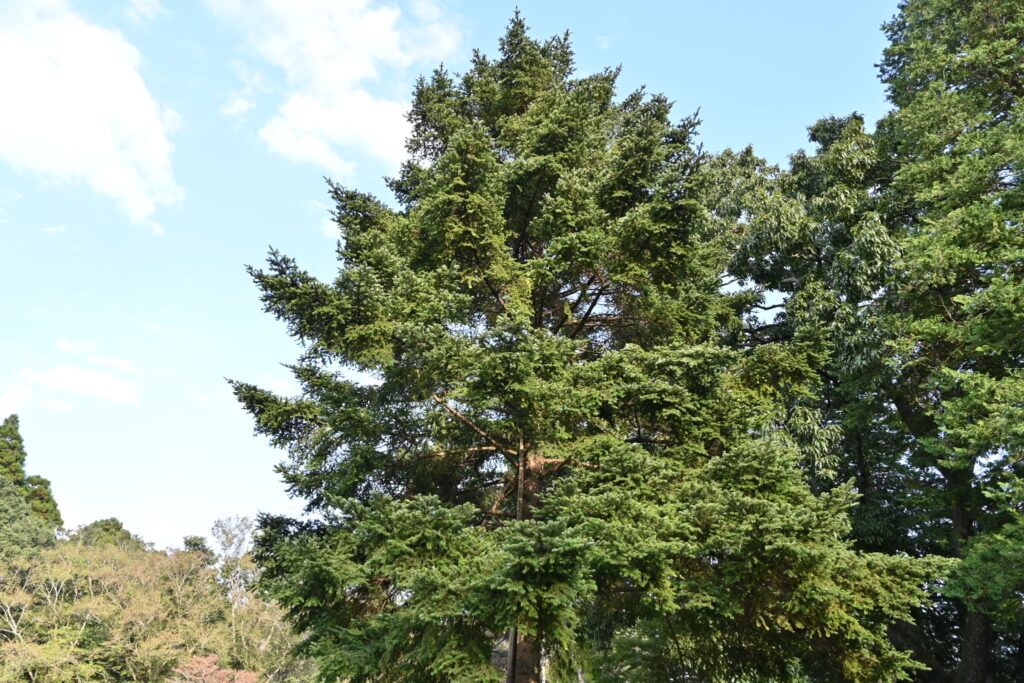
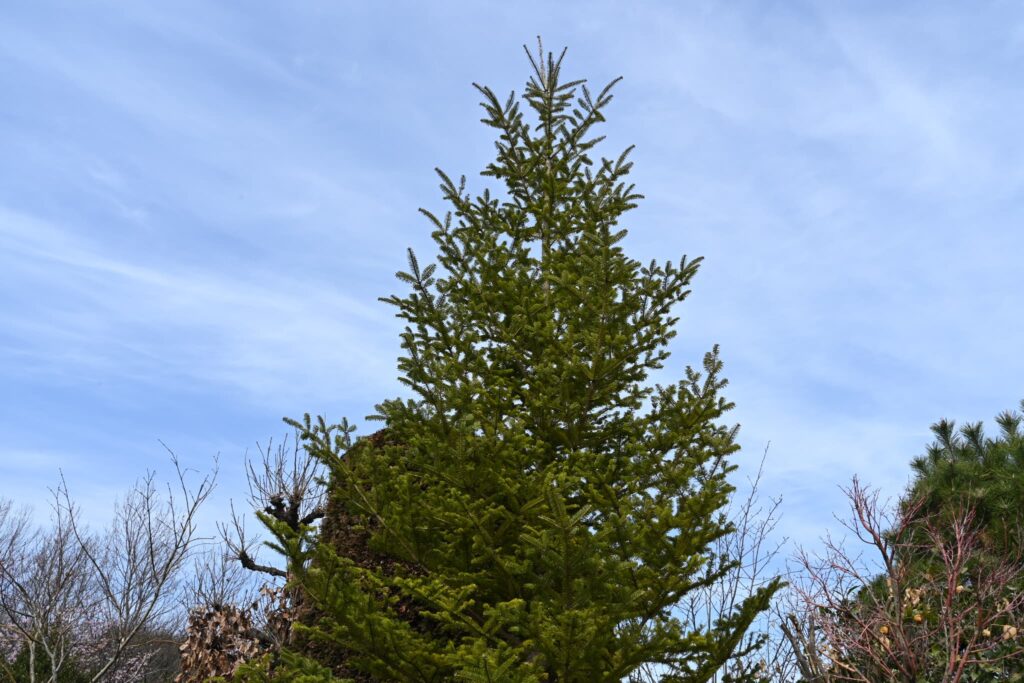
Japanese Fir is one of Japan’s most famous trees — a stately conifer whose silhouette inspired the shape of artificial Christmas trees across the country. This guide covers identification features, bark, flowers, cones, cultivation, and photographs, based on observations of the plant as grown in Japan.


What Is the Japanese Fir?
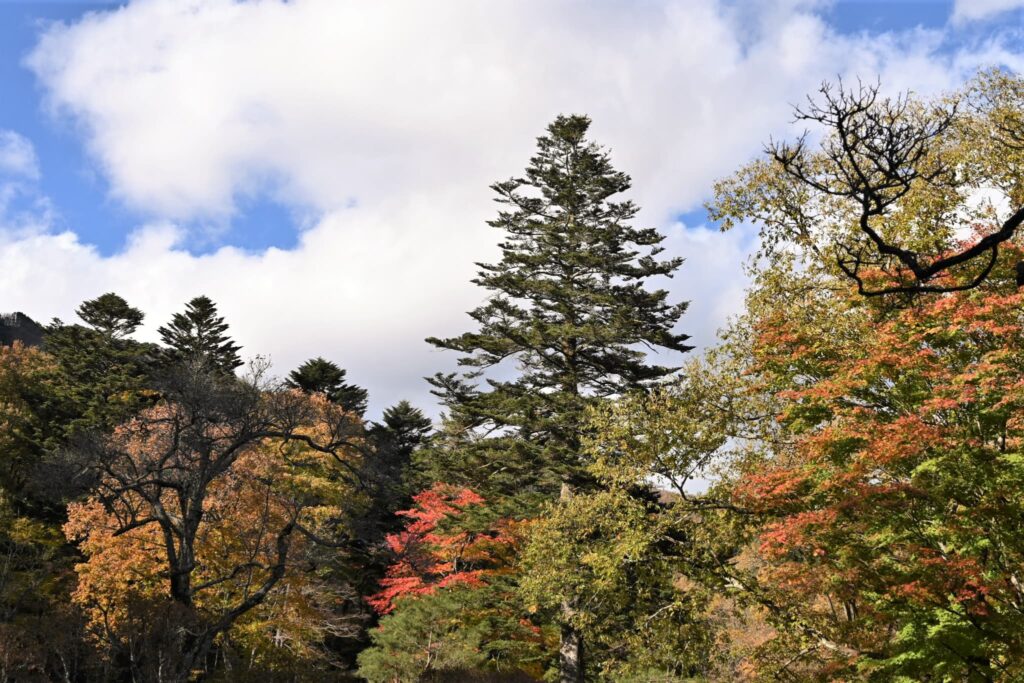
Japanese Fir is an evergreen coniferous tree in the family Pinaceae, distributed from northern Honshu south through Shikoku, Kyushu, and Yakushima. Although strongly associated with Western Christmas traditions today, it is actually a species endemic to Japan, typically found on hillsides alongside Tsuga and Japanese Red Pine.
Overview
| Item | Description |
|---|---|
| Scientific Name | Abies firma |
| Common Name | Japanese Fir / Momi Fir |
| Japanese Name | Momi-no-ki (モミノキ) |
| Family | Pinaceae |
| Native Range | Japan (endemic) |
| Plant Type | Evergreen Coniferous Tree |
| Height | Up to 40 m (130 ft) |
| Trunk | Up to 1.5 m in diameter at maturity |
| Flowering Season | May–June |
| Fruit Type (Cone) | Upright cone, 6–15 cm long |
| USDA Zones | 6–9 |
| Sun Exposure | Full Sun to Partial Shade |
Characteristics
| Item | Description |
|---|---|
| Leaf | Linear, 1–4 cm, glossy; forked tips when young, rounded when mature |
| Flower | Monoecious; pale yellow-green, blooming May–June |
| Fruit | Upright cylindrical cone, disintegrates on the tree at maturity |
| Bark | Pale whitish-gray when young, gray and scaly with age |
Foliage
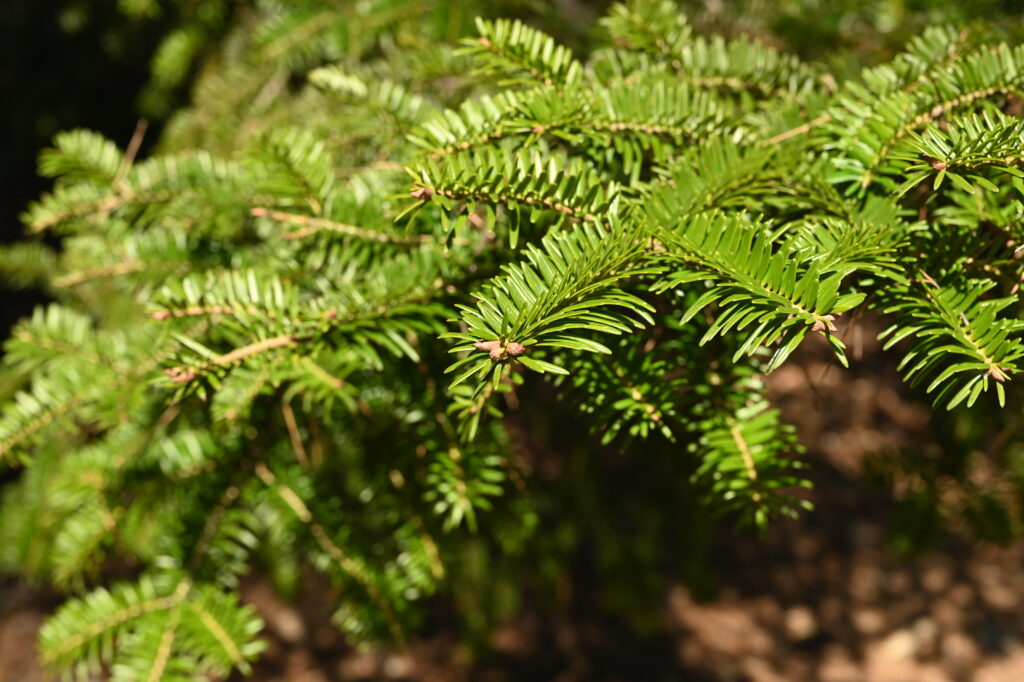
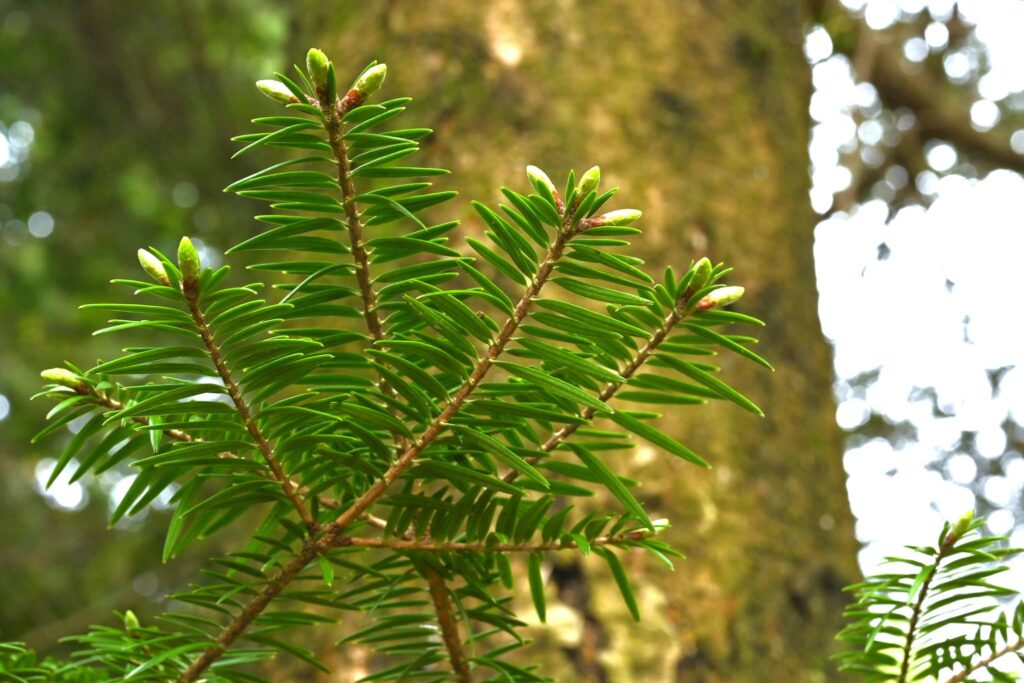
Japanese Fir leaves are linear, 1–4 cm long, glossy, and arranged spirally around the twigs, although they often appear comb-like on shaded branches. On young trees and in shaded locations, the leaf tips are forked into two sharp points — noticeably prickly to the touch. On mature trees growing in full light, the tips become notched and rounded.
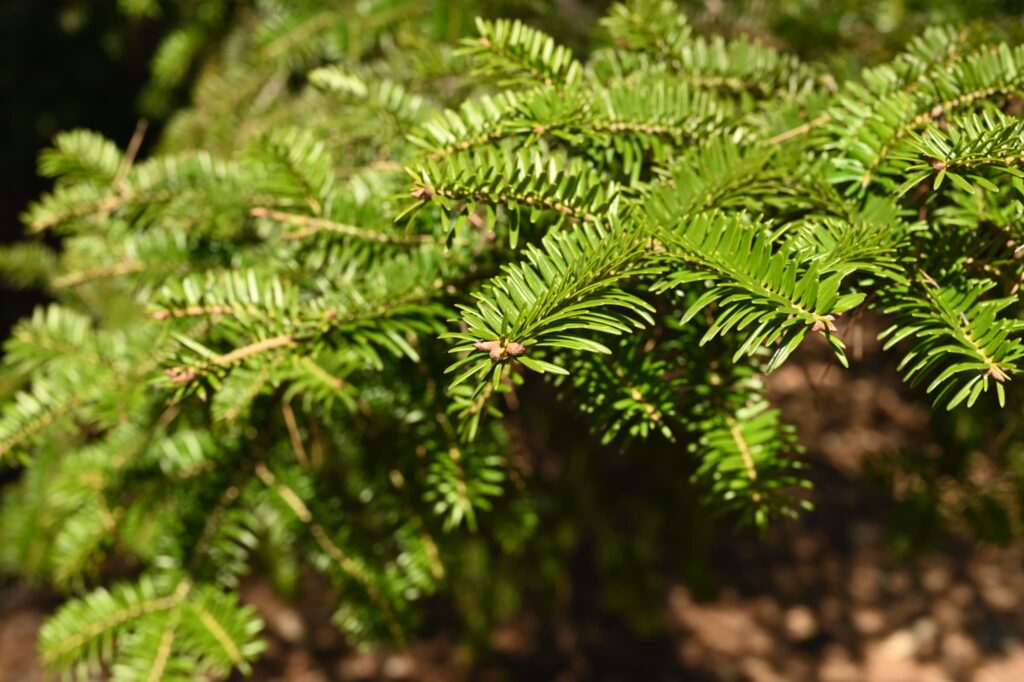
The white stomatal bands on the underside of the leaves are broad but pale — less conspicuous than those of the related Veitch’s Silver Fir (Abies veitchii). The leaf cross-section is flat, and a distinctive circular, suction-cup-like scar remains on the branch after a leaf falls — a useful identification feature. Individual leaves are thick and durable, with a lifespan of nearly 10 years.
Flowers
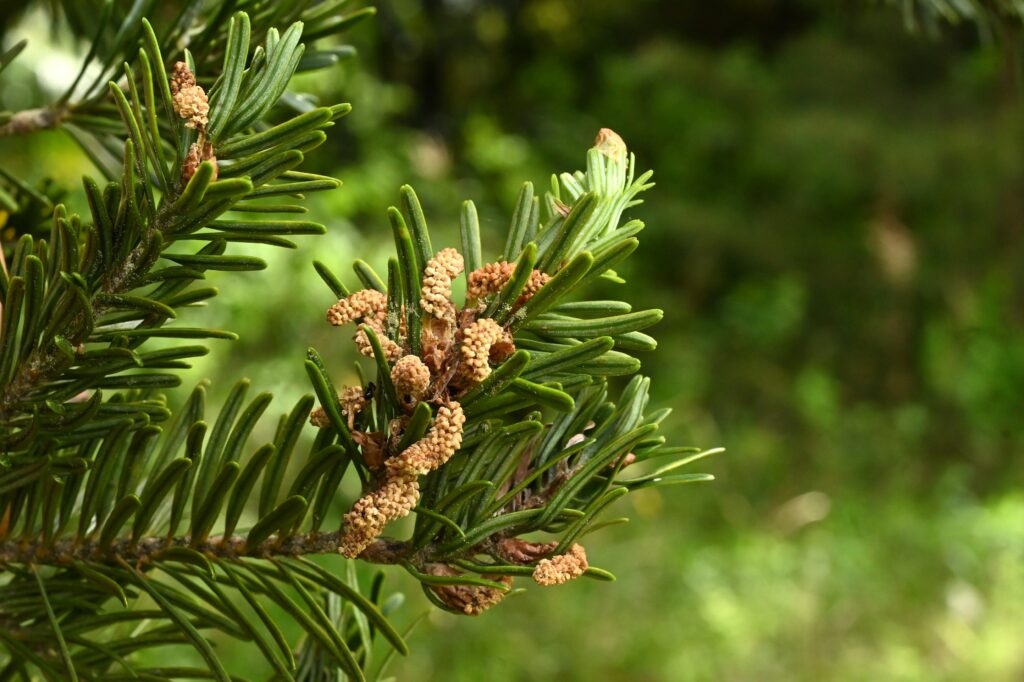
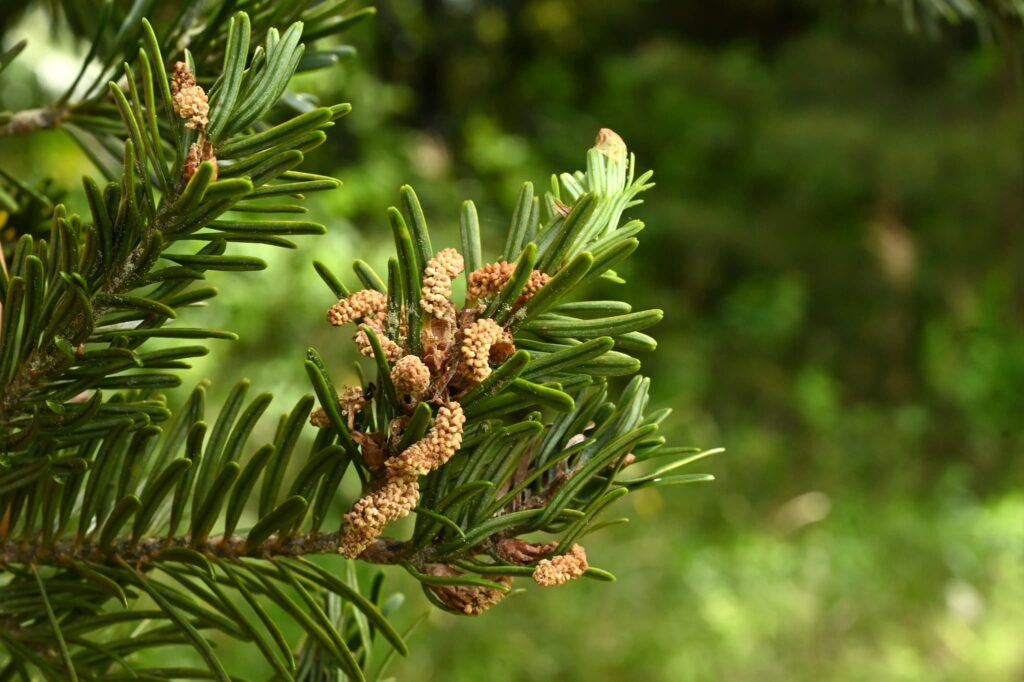
Japanese Fir is monoecious, flowering from May to June with both male and female flowers emerging from the axils of the previous year’s branches. Male flowers are small, cylindrical, and bear numerous stamens. Female flowers are upright, oval-shaped, and covered in numerous sharp scales. Both are pale yellow-green and easy to overlook — female flowers in particular, as they bloom high in the canopy.
Fruits (Cones)
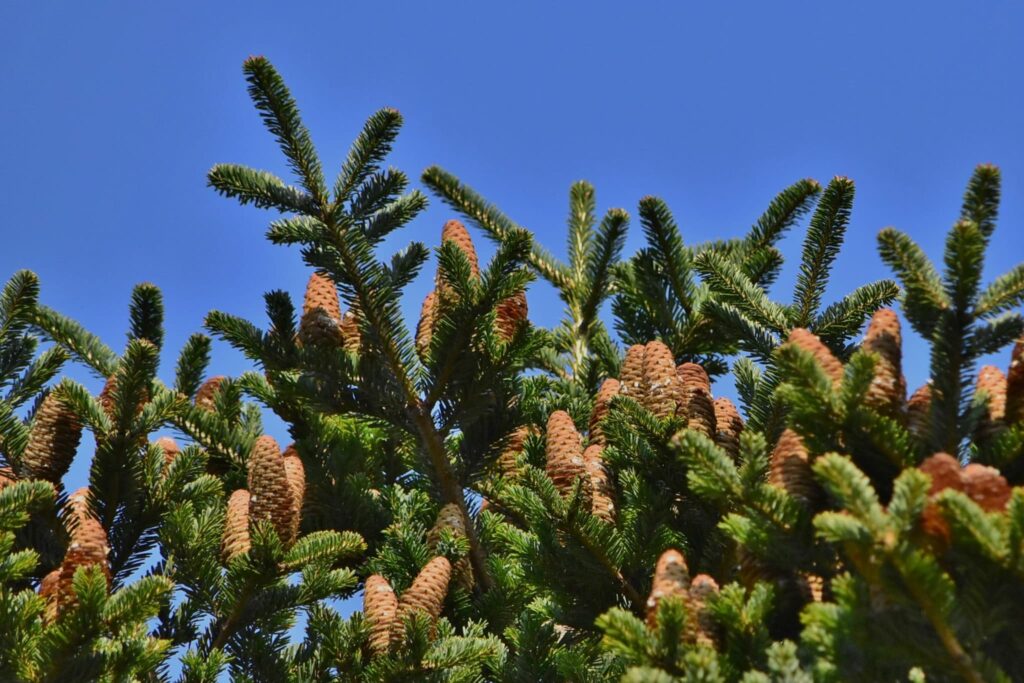
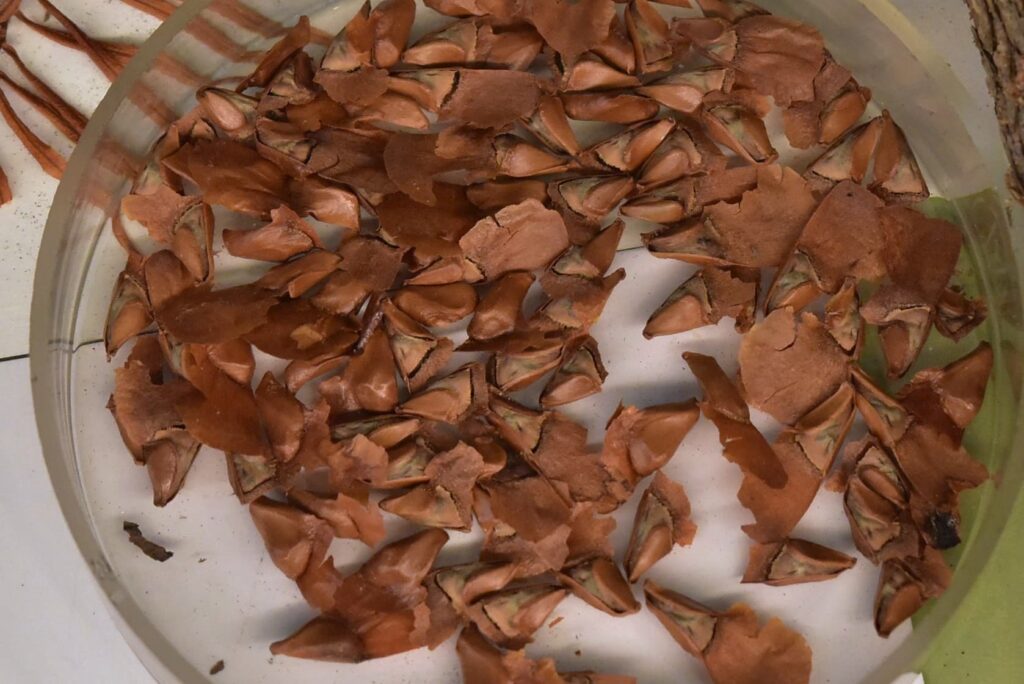
The cones that develop from fertilized female flowers are cylindrical, 6–15 cm long and 3–5 cm in diameter, and stand upright on the branch — a key identifying feature. They ripen in October to November, at which point they disintegrate on the tree, scattering their winged scales (rather than falling whole), leaving only the central axis attached to the branch. The winged seeds are about 6–10 mm long.
Bark & Timber
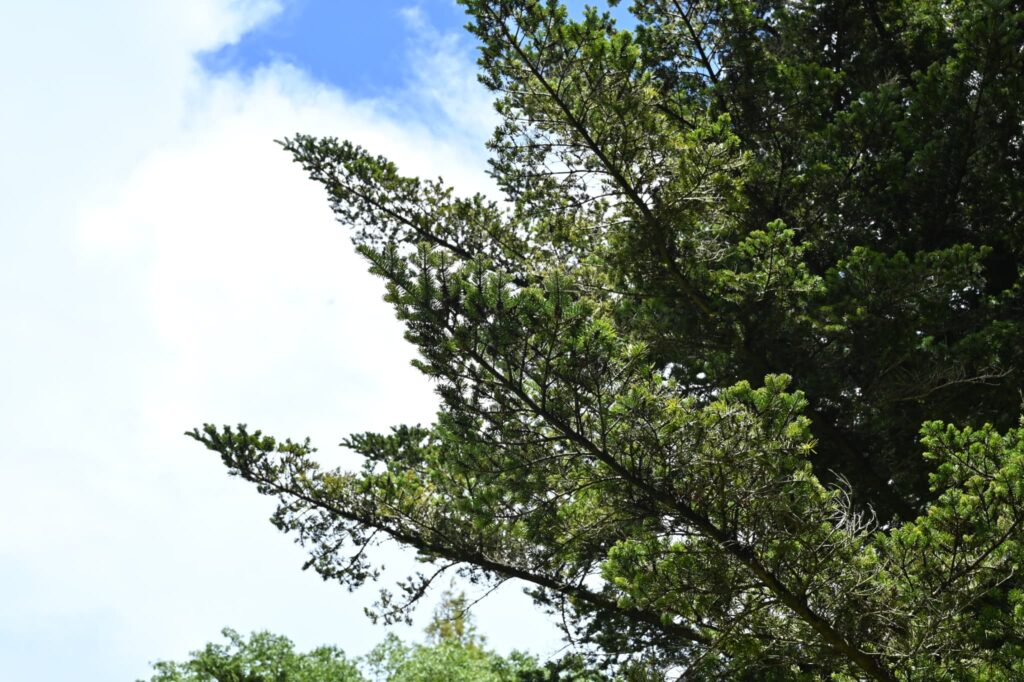
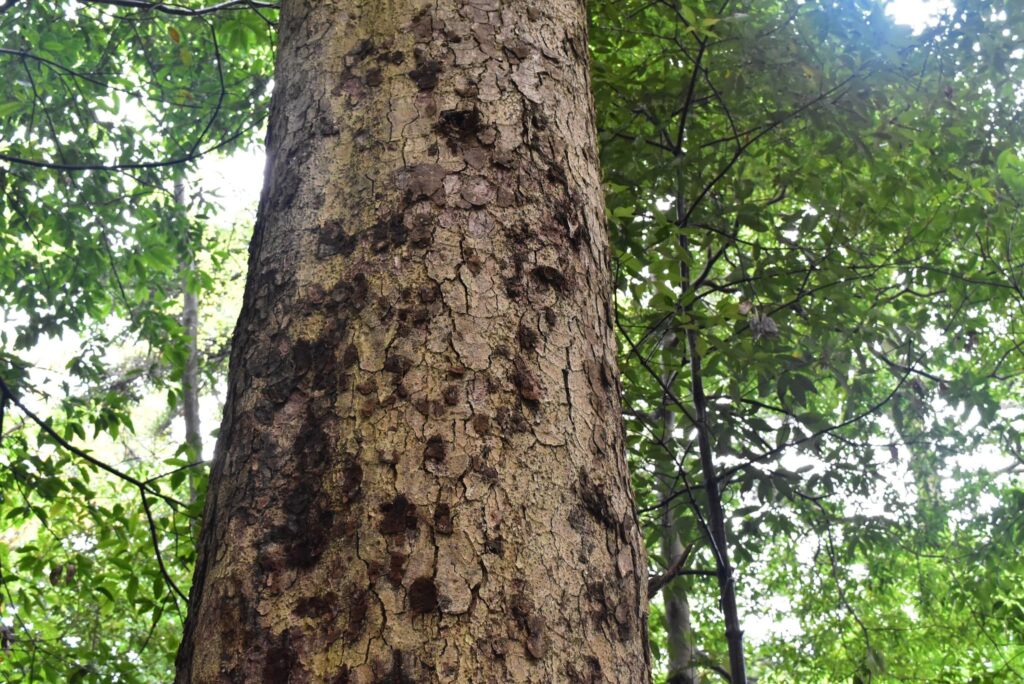
The trunk grows straight and the tree naturally develops a beautiful conical form — but because it grows into a very large tree, it is rarely planted as a garden ornamental. Young bark is pale whitish-gray, smoother and less textured than most other Pinaceae species. With age it darkens to gray and develops shallow fissures with scaly peeling — and can reportedly be rubbed off the trunk with relative ease, lending credence to one of the name-origin theories below.
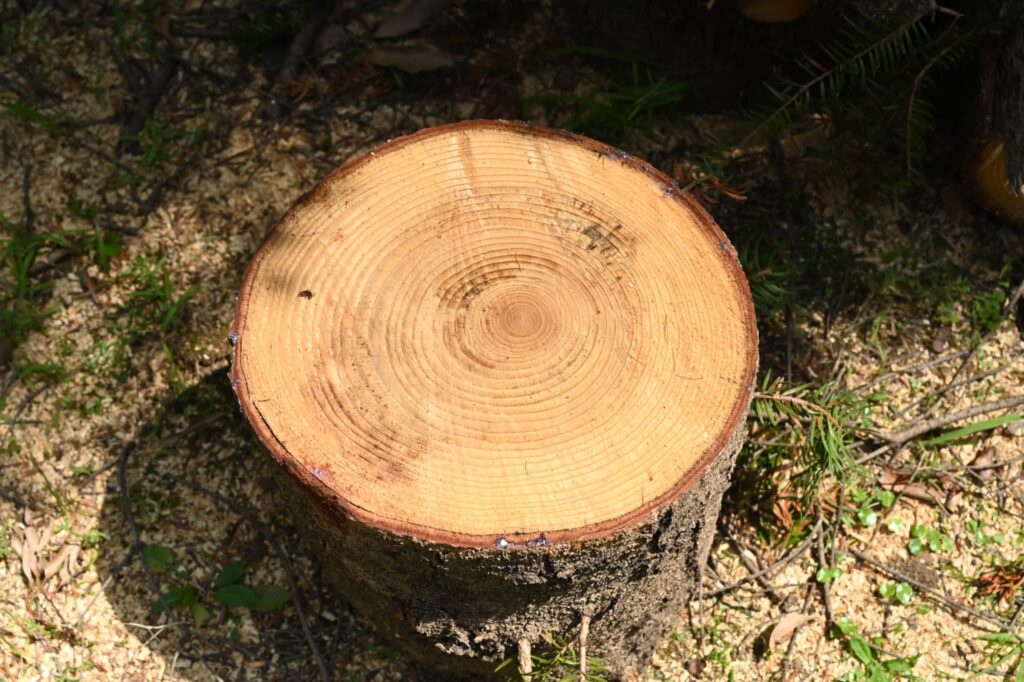
Despite its relatively low natural durability compared to other conifers, Japanese Fir was historically the most readily available timber in many parts of Japan. Its wood is white, soft, easy to work, and virtually odorless when dry.
Size & Growth
Japanese Fir can eventually become a very large tree, reaching over 40 m under favorable conditions. Its growth rate varies with site conditions, but it is capable of developing into a substantial tree relatively quickly compared with many other Japanese conifers. Its lifespan is generally shorter than that of some exceptionally long-lived Japanese trees, although individual longevity varies considerably with site conditions.
Uses & Cultural Significance
Its white, soft, easy-to-work, and virtually odorless wood has been used for coffins, grave tablets (sotoba), funeral accessories, rice containers (ohitsu), chopsticks, fish paste boards, tea canisters, and specialty packaging such as tea chests. It was used for structural pillars at ancient sites including the Toro ruins and Yoshinogari ruins, as well as for the pillars of Matsumoto Castle and other historic keep structures.
Name Origin
Several theories surround the etymology of Momi-no-ki. The leading explanations include: (1) the tree grows in localized clusters where its branches are tossed (momi-au, “to jostle”) by the wind; (2) the name derives from me-tomi (“bud-rich”), referencing its prolific new growth; (3) it references moegi (the yellow-green color of new spring buds); and (4) it was called omi-no-ki (“tree of the court attendants”) because it was frequently planted at imperial rest stops during royal processions. A further folk etymology links the name to the ease with which the bark can be momi (rubbed or kneaded) off the trunk by hand.
Historical & Urban Presence
Japanese Fir naturally inhabits lower mountain slopes and coastal hillsides primarily on the Pacific coast side of Japan. Historically, large specimens grew even in central Tokyo. The place name Yoyogi — where Meiji Jingu Shrine now stands — is said to derive from yo-yogi (“growing generation after generation”), referencing the Japanese Fir trees that grew there across multiple generations; the last large specimen in the area was felled during the Meiji era. The species is highly sensitive to air pollution, however, and can no longer be found in most low-elevation urban areas. A significant population of large specimens survives on Mount Takao in western Tokyo.
The related Silver Fir (Abies alba) — the European counterpart — is widely used as a garden ornamental in Western countries and is associated with sacred symbolism in Germany, where it is traditionally planted to ward off evil.
Growing Guide
| Item | Description |
|---|---|
| Light | Full Sun to Partial Shade |
| Soil / Moisture | Prefers consistently moist, well-drained soil |
| Cold Hardiness | USDA Zones 6–9 |
| Pruning | Minimal; light pruning only to maintain airflow to the lower canopy |
Light & Soil
While it prefers full sun, Japanese Fir has reasonable shade tolerance and can be grown in partial shade conditions. It has moderate heat tolerance but prefers consistently moist conditions, and is sensitive to drought caused by intense afternoon sun and hot, dry summer conditions — a common reason for summer decline in residential garden plantings.
Wind & Snow Tolerance
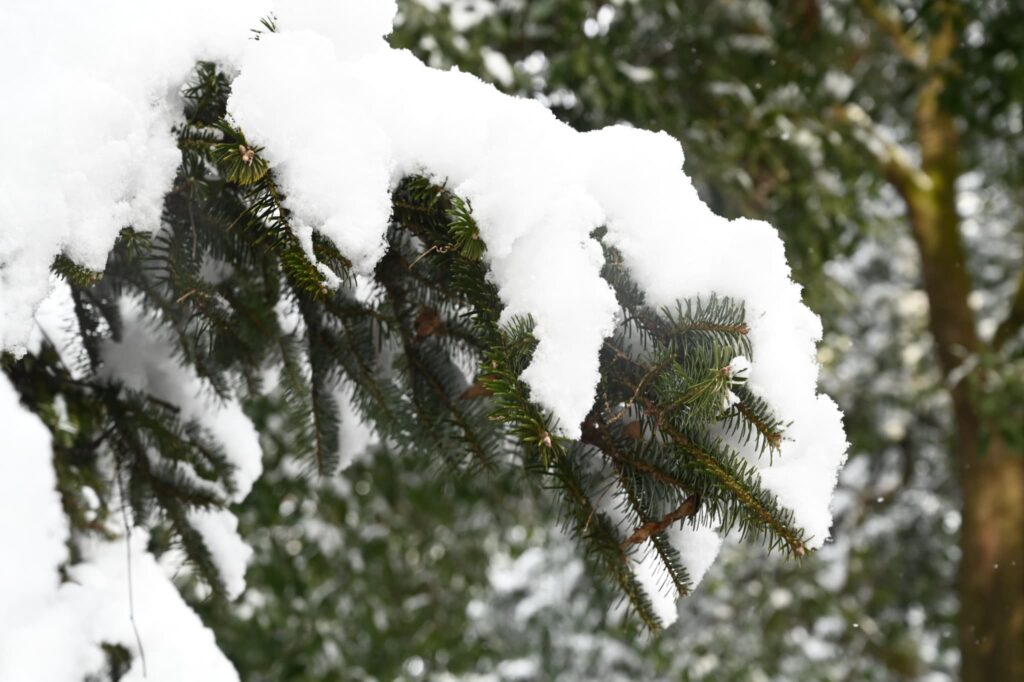
The tree’s upward-pointing branch structure allows it to shed and support snow loads without significant damage, making it well suited to the snowier parts of its natural range.
Cold Hardiness
Japanese Fir is cold-hardy and suitable for USDA Zones 6–9. It performs best in cool, clean-air environments and is most at home in cooler highland settings.
Pruning
Pruning can disrupt the tree’s natural form or cause dieback, so a minimal approach is recommended. However, without occasional intervention, lower branches tend to die back naturally due to shade — light pruning to maintain airflow to the lower canopy is advisable. Note that flowers and cones form on the previous year’s growth, so pruning in autumn or later will prevent the following season’s display.
Suitability for Home Gardens
Japanese Fir is only suitable for home gardens where ample long-term space is available. Although its growth rate varies with site conditions, it can eventually become a very large tree, and without sufficient space it will outgrow its surroundings. For this reason, it is rarely planted as a garden ornamental despite its attractive conical form.
Pests
Japanese Fir has no single pest or disease issue that dominates its cultivation profile. In practice, environmental stress — particularly air pollution, drought, and unfavorable urban conditions — is often a greater concern than insect pests.
Cultivars
No distinct ornamental cultivars of Japanese Fir are widely available or commonly grown; the species is planted almost exclusively in its wild form, and its large mature size has limited its development as a garden cultivar.
Similar Species
| Species | Key Difference |
|---|---|
| Veitch’s Silver Fir (Abies veitchii) | Usually found at higher elevations; the underside of the leaves has much more conspicuous silvery-white stomatal bands, giving the foliage a distinctly pale appearance. |
| Nikko Fir (Abies homolepis) | Typically found at higher elevations. Its leaves usually have blunt or shallowly notched tips and lack the distinctly forked, prickly tips often seen on young Japanese Fir. |
| Sakhalin Fir (Abies sachalinensis, Todomatsu) | Native mainly to Hokkaido; leaves are generally softer and less prickly, with shallowly notched tips. It is adapted to cooler northern climates. |
| Norway Spruce (Picea abies) | A spruce rather than a true fir; leaves are sharply pointed and attached to small woody pegs, giving the twigs a rough texture. Cones hang downward rather than standing upright. |
| Japanese Hemlock (Tsuga sieboldii) | Leaves are generally shorter and more varied in length, with a lighter green appearance. Its small cones hang downward, unlike the large upright cones of Japanese Fir. |
Japanese Fir vs. Norway Spruce: How to Tell Them Apart
Both are widely associated with Christmas trees, but Japanese Fir (Abies firma) belongs to the genus Abies (true firs), while Norway Spruce (Picea abies) belongs to Picea (spruces) — distinct genera within Pinaceae. The most reliable distinction is cone orientation: Japanese Fir cones stand upright on the branch, while Norway Spruce cones hang downward when mature — a characteristic shared across all Picea species. However, since Japanese Fir cones develop high in the canopy, they can be difficult to spot. Twig texture is another reliable indicator: Japanese Fir twigs are smooth, while Norway Spruce twigs feel distinctly ridged.
Frequently Asked Questions
Is Japanese Fir the same as the tree used for Christmas trees in Japan?
Not exactly. Japanese Fir is strongly associated with Christmas trees in Japan, but several fir species may be used commercially, including Veitch’s Silver Fir (Abies veitchii), which is also widely grown as an ornamental and Christmas tree species.
Why can’t Japanese Fir be found in most cities anymore?
Japanese Fir is highly sensitive to air pollution. As urban areas developed and air quality declined, low-elevation populations were gradually lost. Surviving populations are now primarily found in cleaner-air highland areas.
What does “Yoyogi” have to do with Japanese Fir?
The place name Yoyogi (代々木) — home to Meiji Jingu Shrine in Tokyo — is believed to derive from the Japanese Fir trees (momi) that grew there generation after generation (yo-yo, “age after age”). The last large specimen in the area was felled during the Meiji era.
Is Japanese Fir suitable for home gardens?
Generally no, unless the property has enough space for a mature tree. Japanese Fir can eventually become a very large conifer.
Why do Japanese Fir cones stand upright?
Unlike spruce trees, true firs (genus Abies) produce upright cones that disintegrate on the tree after the seeds mature. This is one of the easiest ways to distinguish firs from spruces.
Why are Japanese Fir leaves different on young and mature trees?
Young trees have sharply forked, prickly leaf tips, while mature trees often develop broader, more rounded tips. This change is one of the useful features for understanding the tree’s age-related variation.
Conclusion
Japanese Fir (Abies firma) is a distinctive native conifer with a long history in Japan’s forests, culture, and traditional use. Once found even on the hills surrounding central Tokyo, it is now more closely associated with cleaner mountain and highland environments. Its elegant conical form, characteristic prickly-to-rounded leaves, upright cones, and white, lightweight timber make it a tree of considerable botanical and cultural interest.
Although rarely suitable for ordinary home gardens because of its eventual size, Japanese Fir remains an important part of Japan’s native landscape. From historic timber and traditional household objects to the origins of place names such as Yoyogi, it is far more than a tree associated with Christmas. For gardeners, tree enthusiasts, and anyone interested in Japan’s native forests, Japanese Fir offers a distinctive example of the country’s remarkable conifer diversity.