Japanese Hornbeam (Carpinus japonica): Identification, Care & Uses
Japanese Hornbeam (Carpinus japonica), known in Japan as Kumashide (クマシデ), is a deciduous tree in the birch family (Betulaceae). It is characterized by its relatively large, coarse-textured leaves, distinctive hornbeam-like fruiting clusters, and hard, durable wood. Native to Japan, it is found mainly in mountainous forests and woodland habitats from Honshu to Kyushu. This guide covers its identification, foliage, flowers, fruit, bark, timber, cultivation, and similar species, based on observations of the plant as grown in Japan.
What Is Japanese Hornbeam?
Japanese Hornbeam (Carpinus japonica) is a deciduous broadleaf tree in the birch family (Betulaceae). It is native to Japan and occurs naturally mainly in Honshu, Shikoku, and Kyushu.
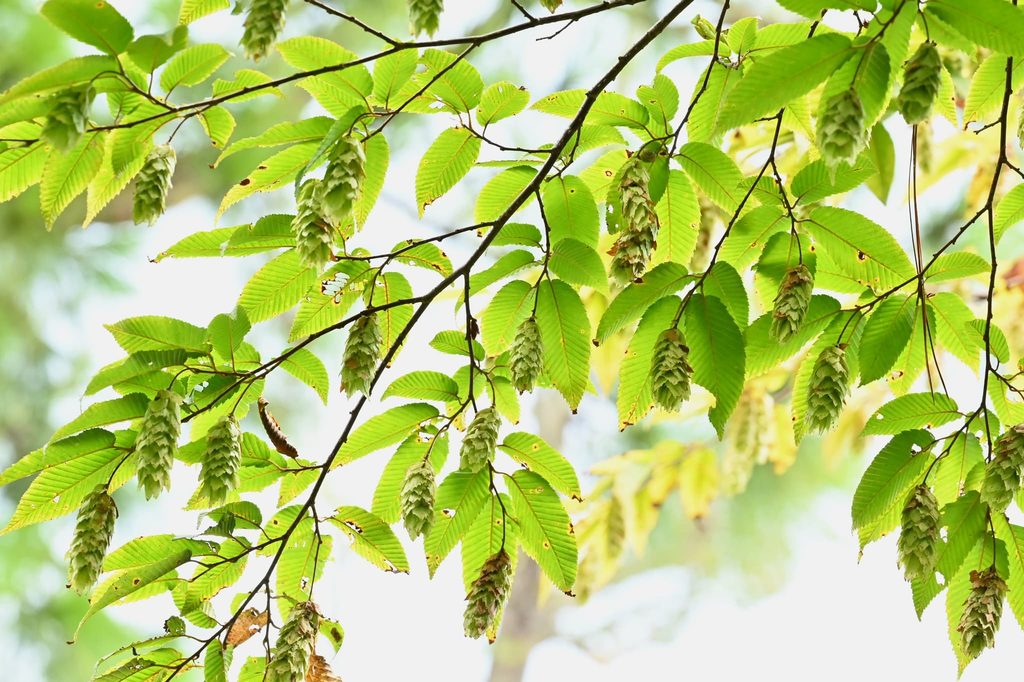
Like other members of the genus Carpinus, it produces separate male and female flowers on the same tree. The inconspicuous flowers appear in spring, followed by distinctive hanging fruiting clusters made up of numerous papery, leaf-like bracts surrounding the small fruits.
Japanese Hornbeam is closely related to several other Japanese hornbeams, including Chonoshide (Carpinus tschonoskii) and Akashide (Carpinus laxiflora). It can be distinguished from these species by a combination of leaf size and texture, fruiting-cluster characteristics, and other morphological features.
Overview
| Item | Description |
| Scientific Name | Carpinus japonica Blume |
| Common Name | Japanese Hornbeam |
| Japanese Name | Kumashide (クマシデ) |
| Family | Betulaceae (Birch family) |
| Native Range | Japan: Honshu, Shikoku, and Kyushu |
| Plant Type | Deciduous broadleaf tree |
| Height | Usually about 10–15 m, sometimes larger |
| Flowering Season | April–May |
| Fruit Season | Late summer to autumn |
| Sun Exposure | Full sun to part shade |
Characteristics
| Feature | Description |
| Leaves | Ovate to elliptic, relatively large, with prominent veins and serrated margins |
| Flowers | Small, inconspicuous, male and female flowers on the same tree |
| Fruit | Small nutlet enclosed among conspicuous, leaf-like bracts |
| Fruiting Clusters | Pendulous, typically about 5–9 cm long |
| Bark | Gray to gray-brown, becoming more fissured with age |
| Wood | Hard and dense, with traditional uses in woodworking |
Foliage
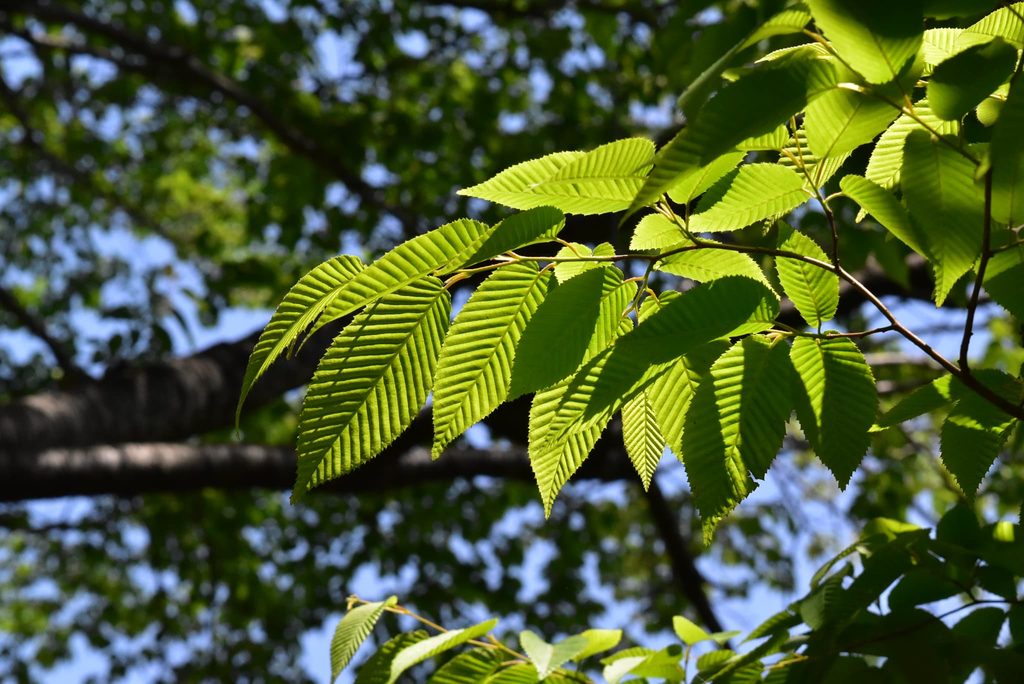
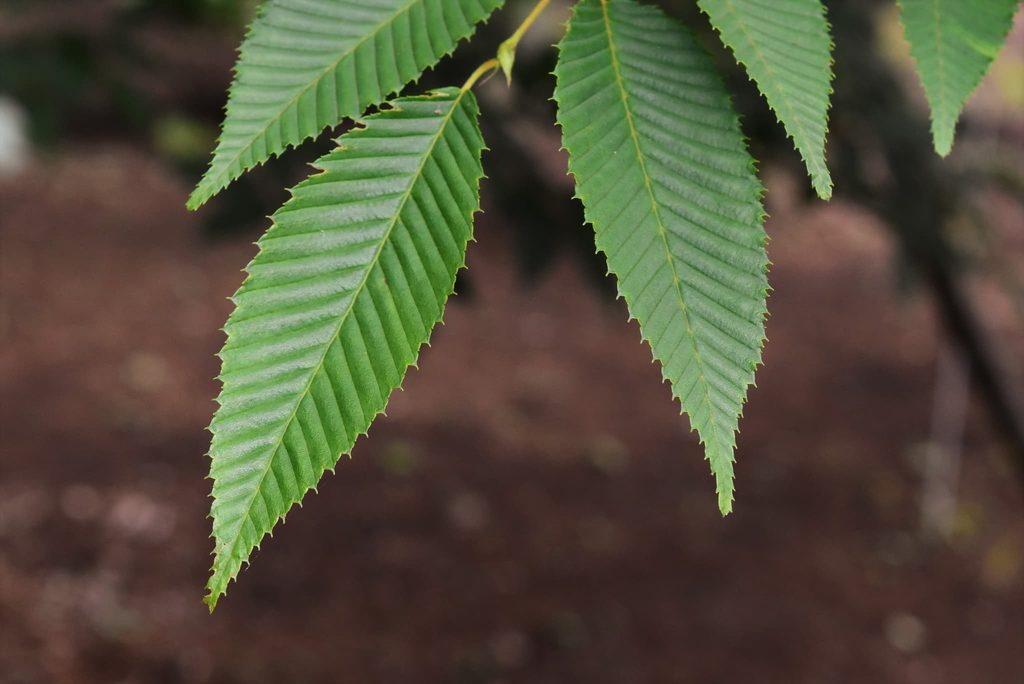
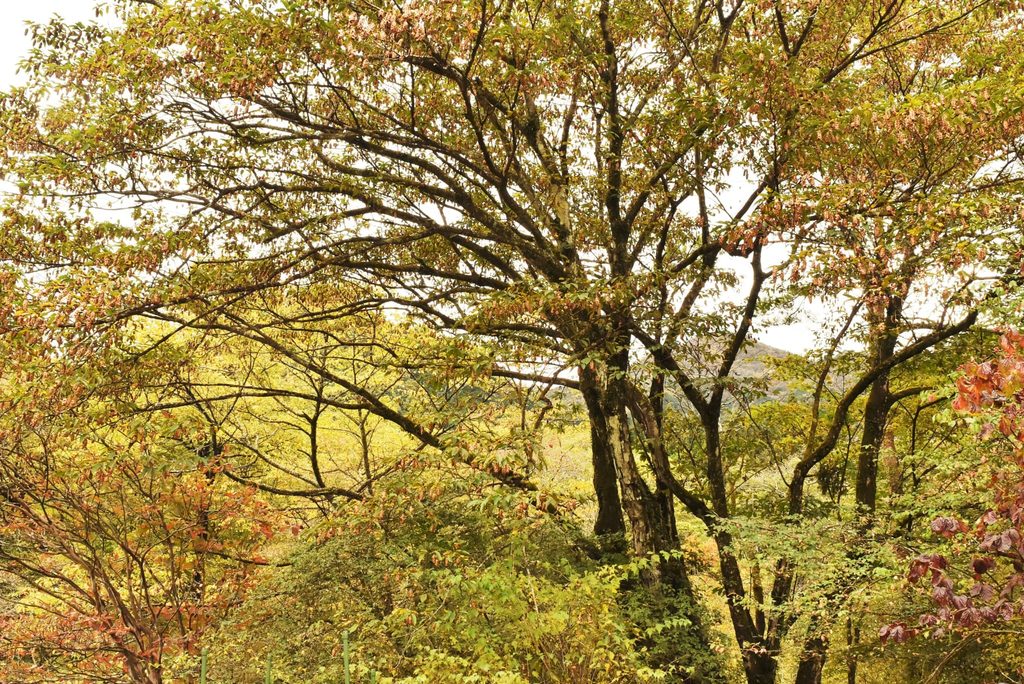
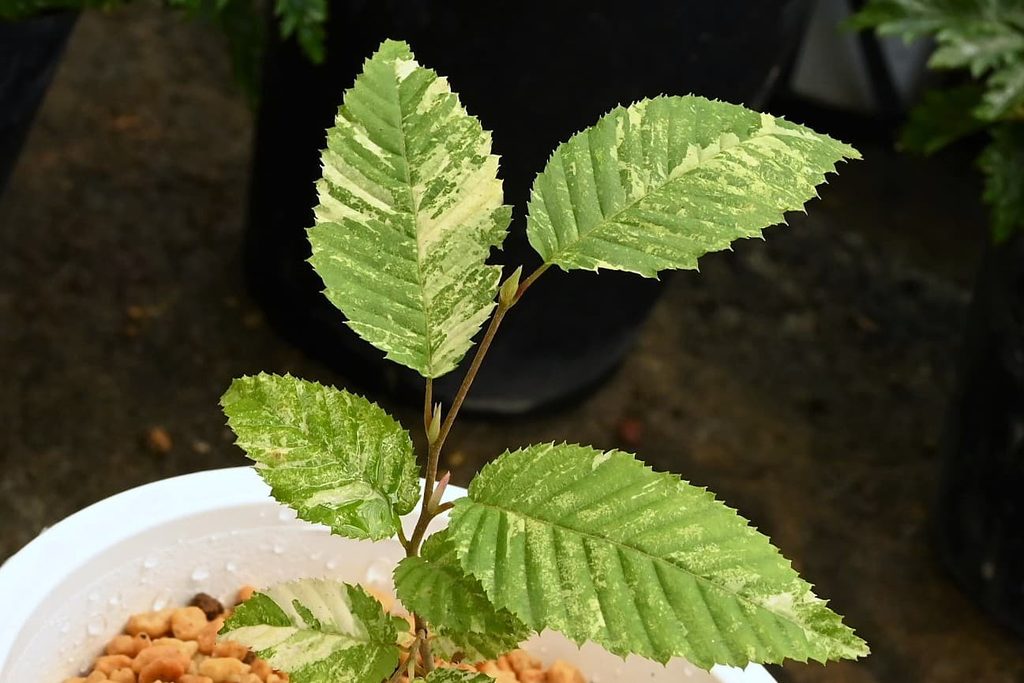
The leaves of Japanese Hornbeam are relatively large for a Japanese Carpinus, typically about 6–10 cm long. They are ovate to elliptic, with a pointed tip, serrated margins, and numerous prominent lateral veins.
The coarse texture of the foliage is one of the most useful features for distinguishing Japanese Hornbeam from some of its finer-leaved relatives.
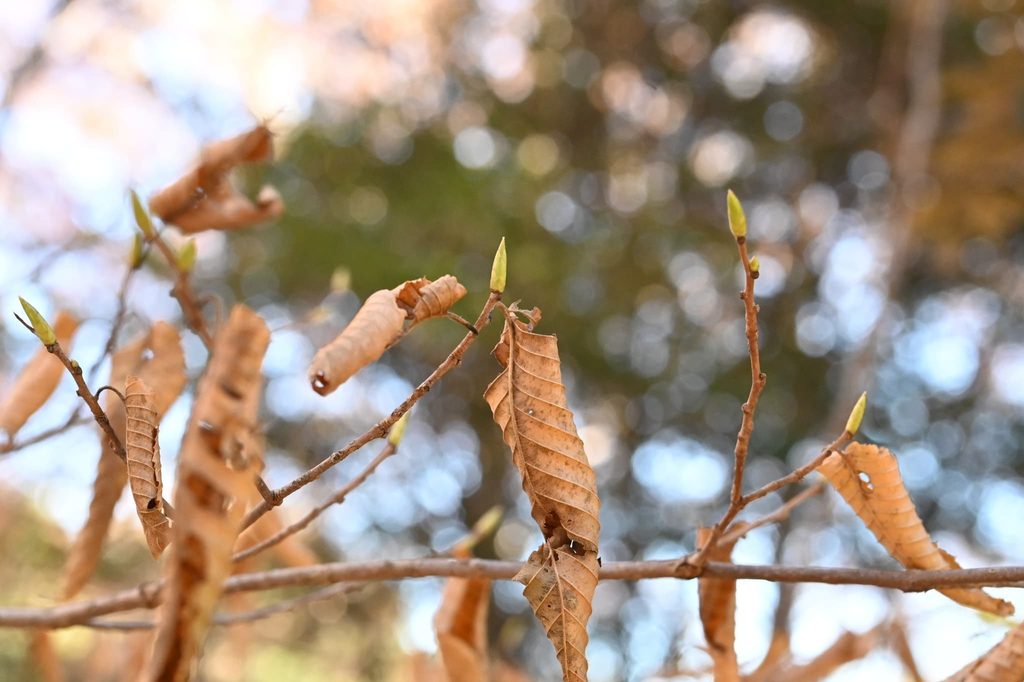
The leaves are arranged alternately along the twigs. In autumn, they may turn yellow before falling, although the intensity of the color varies with growing conditions and weather.
Flowers
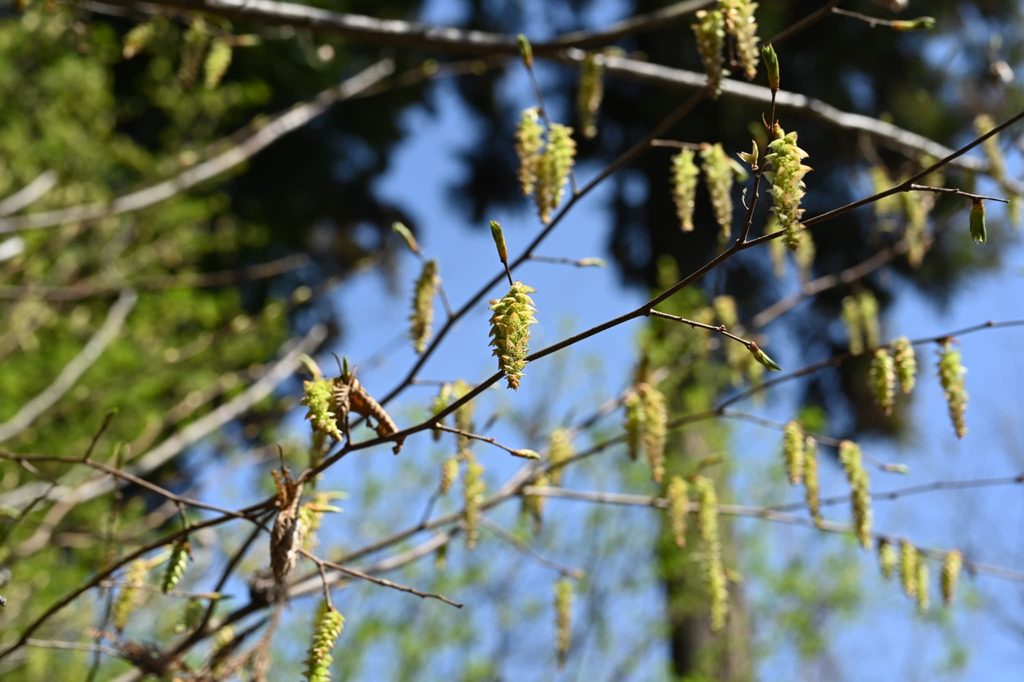
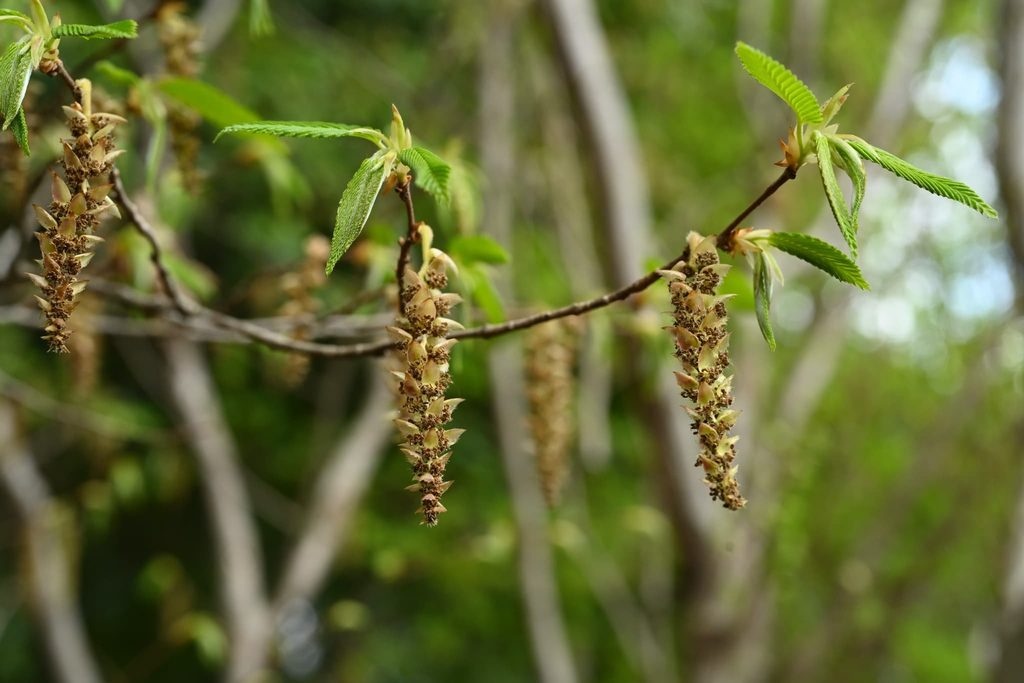
Japanese Hornbeam is monoecious, meaning that male and female flowers occur on the same tree.
The flowers appear in spring, generally from April to May, around the time the new leaves emerge. The male flowers are produced in hanging catkins, while the female flowers develop separately and later give rise to the characteristic fruiting clusters.
The flowers themselves are small and are not an important ornamental feature. The tree becomes much more conspicuous later in the season when the fruiting structures develop.
Fruits
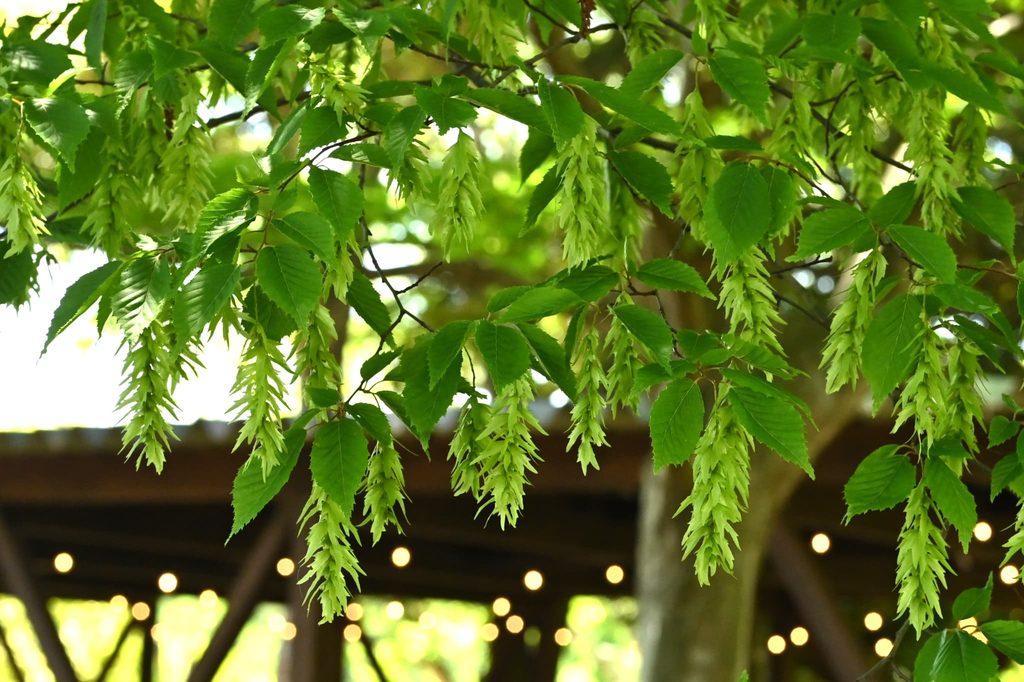
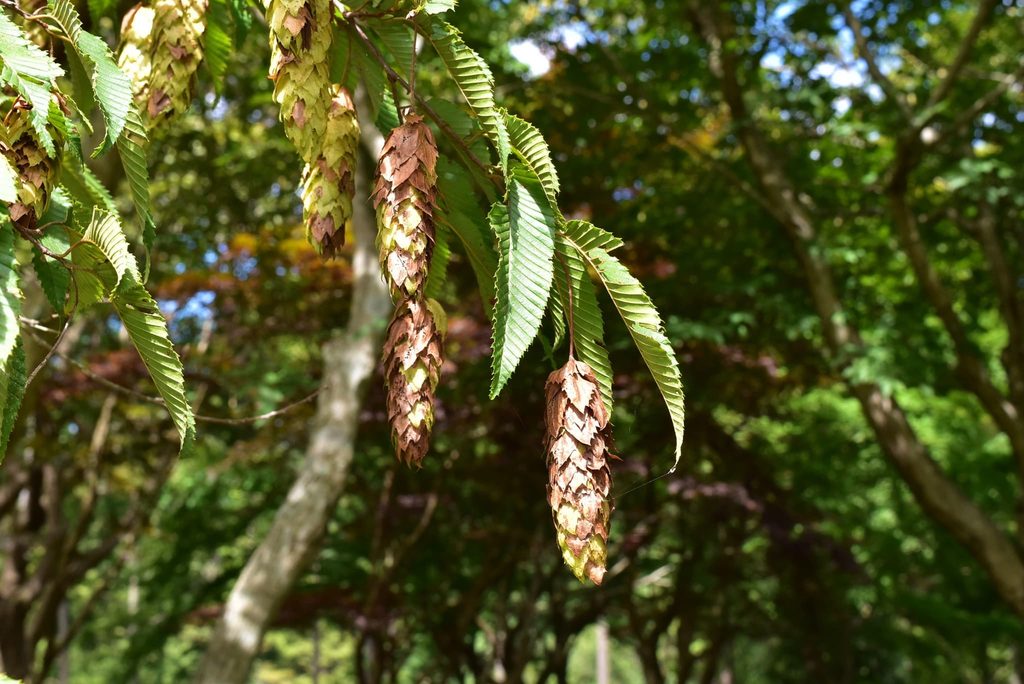
After pollination, the female inflorescences develop into distinctive hanging fruiting clusters.
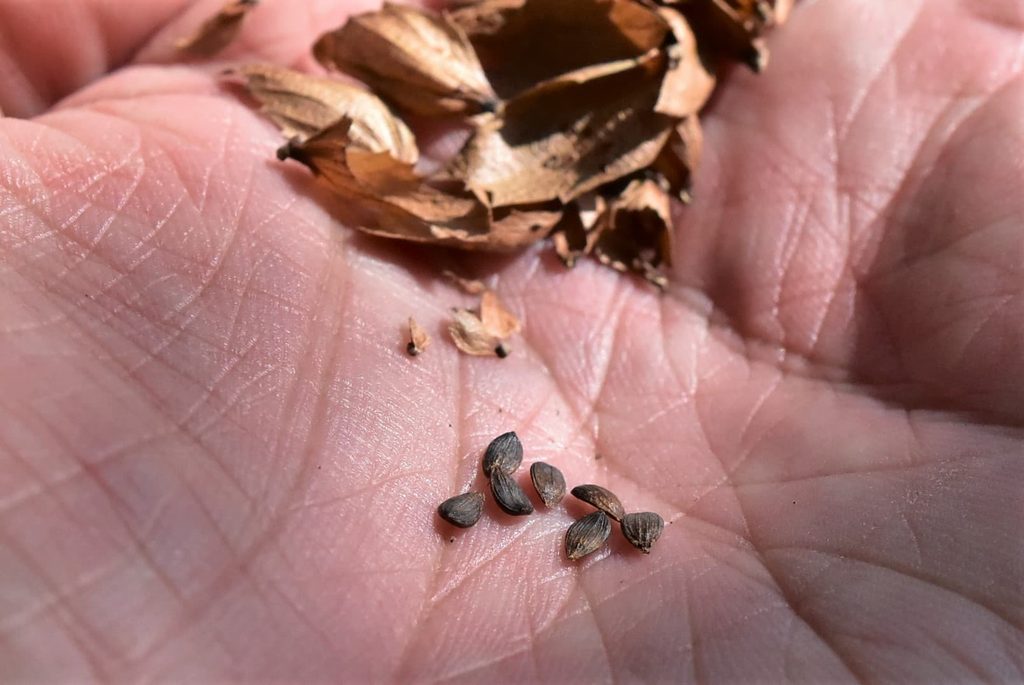
Each cluster consists of numerous small fruits surrounded by papery, leaf-like bracts. The clusters are generally about 5–9 cm long and become increasingly conspicuous as they mature.
The bracts are an important identification feature because the fruiting structures of Japanese Hornbeam differ in shape and size from those of other Japanese hornbeams.
Bark & Timber
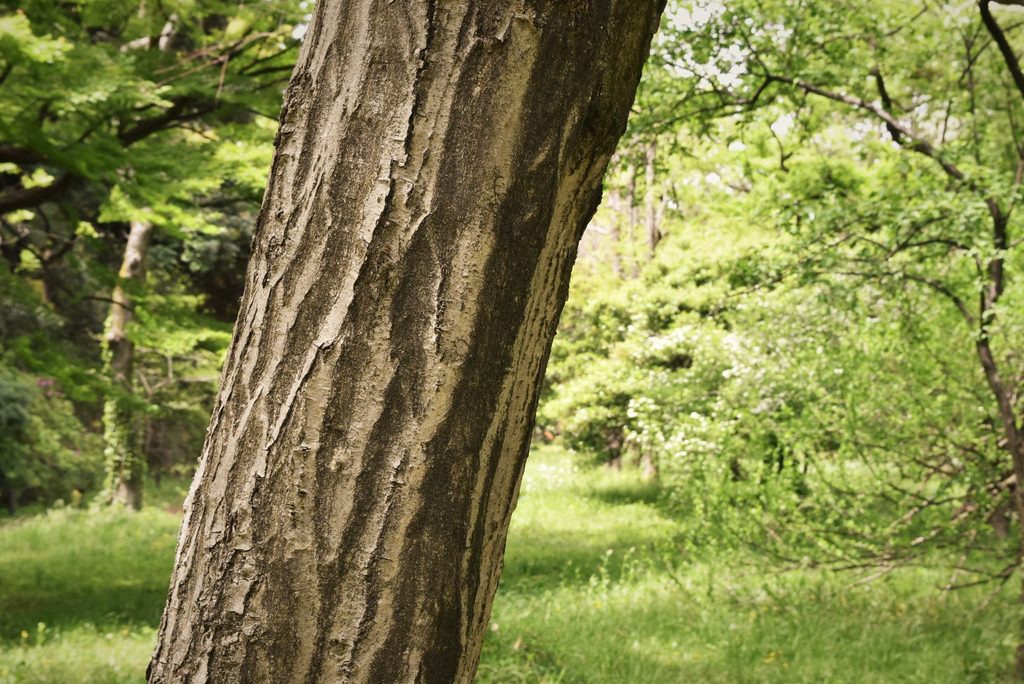
The bark of young Japanese Hornbeam trees is relatively smooth and grayish. As the trunk increases in diameter, the bark becomes rougher and develops shallow fissures.
The wood is hard and dense. Historically, it has been used for a variety of practical purposes, including woodworking, tools, furniture, and other applications where hard, durable timber is desirable.
The Japanese names Kata-shide and Ishi-shide are associated with the hardness of the wood, although local names and their meanings can vary by region.
Size & Growth
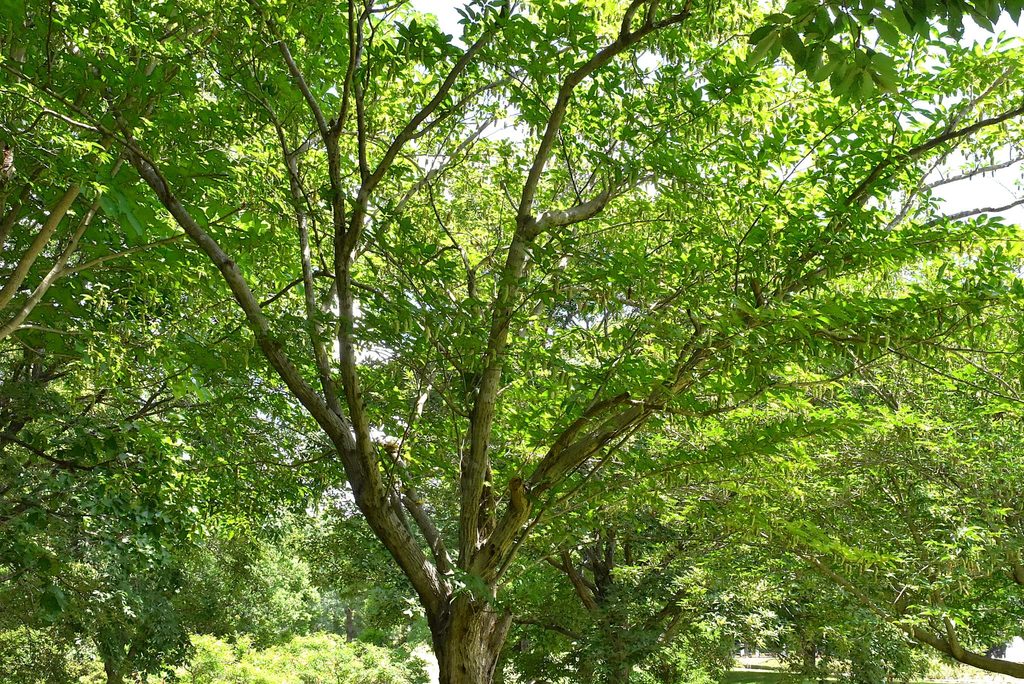
Japanese Hornbeam is a medium to large deciduous tree. It commonly reaches around 10–15 m in height, although larger specimens can occur under favorable conditions.
It develops a substantial trunk and broad crown with age. Because of its eventual size, it is better suited to spacious sites than to narrow residential gardens.
Uses & Cultural Significance
A Native Woodland Tree
Japanese Hornbeam is primarily a native woodland tree rather than a mass-planted ornamental species. Its natural form, textured foliage, and distinctive fruiting clusters can nevertheless make it attractive in naturalistic landscapes.
In Japan, increasing interest in gardens that emphasize native woodland vegetation has brought greater attention to trees such as Japanese Hornbeam that were once less commonly selected for conventional ornamental planting.
Timber Use
The hard, dense wood has traditionally been used for practical woodworking applications, including tools, furniture, and other products requiring strong timber.
Like other hornbeams, its wood can withstand considerable wear, making the species valuable where hardness and durability are important.
Garden Use
Japanese Hornbeam can be grown as a specimen tree where sufficient space is available. Its relatively coarse foliage gives it a different character from finer-textured Japanese deciduous trees.
It is particularly suitable for naturalistic gardens, woodland-style plantings, parks, and large properties rather than small formal gardens.
Growing Guide
| Item | Description |
| Light | Full sun to part shade |
| Soil | Moist, fertile, well-drained soil preferred |
| Water | Moderate; avoid prolonged drought while young |
| Space | Requires substantial room as it matures |
| Pruning | Light structural pruning is generally sufficient |
| Maintenance | Relatively low once established |
| Suitability for Home Gardens | Limited in small gardens because of its eventual size |
Light & Soil
Japanese Hornbeam grows well in full sun to partial shade. A position with adequate sunlight encourages healthy growth and can improve autumn coloration.
It prefers fertile, well-drained soil with adequate moisture. Newly planted trees should be watered during prolonged dry periods until their root systems become established.
Watering
Established trees are generally adaptable, but young specimens should not be allowed to dry out for extended periods during the growing season.
A consistently moist but well-drained soil is preferable to either severe drought or prolonged waterlogging.
Pruning
Japanese Hornbeam does not normally require intensive pruning. Remove dead, damaged, or crossing branches and use light structural pruning when necessary to develop a strong framework.
Because the species develops a naturally attractive form, severe shearing is generally unnecessary and can detract from its character.
Space Requirements
This is an important consideration when planting Japanese Hornbeam.
A tree that is small when purchased can eventually develop into a substantial specimen. It should therefore be planted where there is adequate room for the trunk, crown, and root system to develop without interfering with buildings, utility lines, or narrow paths.
Suitability for Home Gardens
Japanese Hornbeam can be grown in a garden, but it is not an ideal choice for a small residential plot.
It is better suited to large gardens, parks, woodland-style landscapes, temple and shrine grounds, and other sites where a medium-to-large deciduous tree can be accommodated.
Similar Species
Chonoshide (Carpinus tschonoskii)
Chonoshide is another native Japanese hornbeam and can resemble Japanese Hornbeam.
Japanese Hornbeam generally has larger and more coarsely textured leaves, but identification should be based on a combination of foliage and fruiting characteristics rather than leaf size alone.
Akashide (Carpinus laxiflora)
Akashide is also closely related to Japanese Hornbeam. Its foliage is generally finer in appearance, while the form of the fruiting clusters provides additional characters for distinguishing the two species.
Sawashiba (Carpinus cordata)
Sawashiba has broader leaves, often with a distinctly heart-shaped base. This feature can help distinguish it from Japanese Hornbeam.
Chidorinoki (Acer carpinifolium)
Chidorinoki has leaves that can superficially resemble those of a hornbeam because of their prominent veins and serrated margins. However, it belongs to the maple family and has a different overall structure and fruit.
Yashabushi (Alnus firma)
Yashabushi can also be confused with Japanese Hornbeam when viewed from a distance because of similarities in foliage. Careful examination of the leaves, twigs, flowers, and fruiting structures is necessary for reliable identification.
Frequently Asked Questions
What is Japanese Hornbeam?
Japanese Hornbeam is the common English name for Carpinus japonica, a deciduous tree in the birch family (Betulaceae) native to Japan. It is known for its relatively large, coarse-textured leaves and distinctive hanging fruiting clusters.
What does Kumashide mean?
Kumashide (クマシデ) is the Japanese common name for Carpinus japonica. The name is traditionally associated with the appearance of the tree and its resemblance to other Japanese species known as shide, but explanations of the precise origin of the name vary.
How large does Japanese Hornbeam grow?
Japanese Hornbeam commonly reaches about 10–15 m in height and can become a substantial tree with age. Large specimens require considerable planting space.
Is Japanese Hornbeam suitable for a home garden?
It can be grown in a garden if sufficient space is available, but it is not a good choice for a small residential plot. Its mature size makes it more appropriate for large gardens, parks, and naturalistic landscapes.
What is Japanese Hornbeam used for?
Its hard, dense wood has traditionally been used for furniture, tools, and other woodworking applications. As a living tree, it can also be used as a specimen tree in spacious naturalistic landscapes.
How is Japanese Hornbeam different from other Japanese hornbeams?
Japanese Hornbeam is generally recognized by its relatively large, coarse-textured leaves and distinctive fruiting clusters. However, several Japanese Carpinus species are similar, so reliable identification should consider multiple characteristics rather than a single feature.
Conclusion
Japanese Hornbeam (Carpinus japonica) is a distinctive native Japanese tree characterized by its relatively large, coarse-textured foliage and unusual hanging fruiting clusters. Its small spring flowers are inconspicuous, but the developing fruit clusters provide an attractive and useful identification feature later in the year.
Although it has historically received less attention as an ornamental tree than some finer-textured Japanese species, its natural form and bold foliage make it well suited to woodland-style and naturalistic landscapes. Its hard, dense wood has also given the species practical value.
Because Japanese Hornbeam eventually becomes a substantial tree, it is best planted where it has plenty of room to develop. For large gardens, parks, and other spacious landscapes, it can be an attractive native alternative to more commonly planted ornamental trees.