Japanese Cedar (Cryptomeria japonica): Identification, Care and Uses
Japanese Cedar is one of Japan’s most iconic and widely planted trees. This guide covers its identification, bark, foliage, flowers, cones, cultural significance, and growing habits, based on observations of the plant as grown in Japan.
What Is the Japanese Cedar?
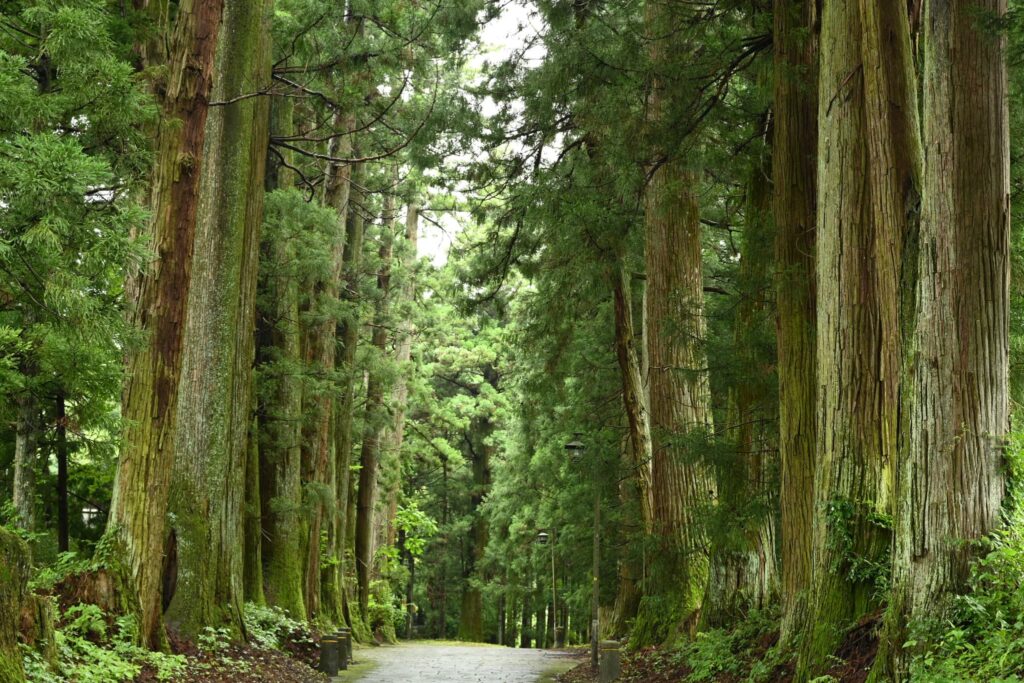
Japanese Cedar, known as Sugi in Japanese, is an evergreen tree in the genus Cryptomeria, family Cupressaceae (formerly classified under its own family, Taxodiaceae). It is widely distributed across Japan, from the border of Aomori and Akita Prefectures down to Yakushima Island, with the notable exception of Hokkaido. Alongside Hinoki Cypress, it is one of Japan’s two most important construction timber species and covers more planted forest area than any other tree in the country. Ornamental cultivars are also commonly grown as garden trees.
Overview
| Item | Description |
|---|---|
| Scientific Name | Cryptomeria japonica |
| Common Name | Japanese Cedar |
| Japanese Name | Sugi (スギ) |
| Family | Cupressaceae |
| Native Range | Japan (also naturalized/cultivated in China) |
| Plant Type | Evergreen Coniferous Tree |
| Height | Up to 60 m (195 ft) |
| Trunk | Up to 5 m in diameter |
| Flowering Season | January–April |
| Fruit Type | Woody Cone (2–3 cm, ripens Oct–Nov the following year) |
| USDA Zones | 6–9 |
| Sun Exposure | Full Sun |
Characteristics
| Feature | Description |
|---|---|
| Foliage | Small (1–2 cm), spirally arranged; straight or sickle-shaped; turns reddish-brown in winter |
| Flowers | Monoecious; cream male flowers in dense clusters, small green spherical female flowers |
| Cones | 2–3 cm, spiky bracts, 20–30 seeds each, ripens brown Oct–Nov |
| Bark | Reddish-brown to brown, peels in thin vertical strips |
| Size | Up to 60 m tall, trunk to 5 m diameter |
Foliage
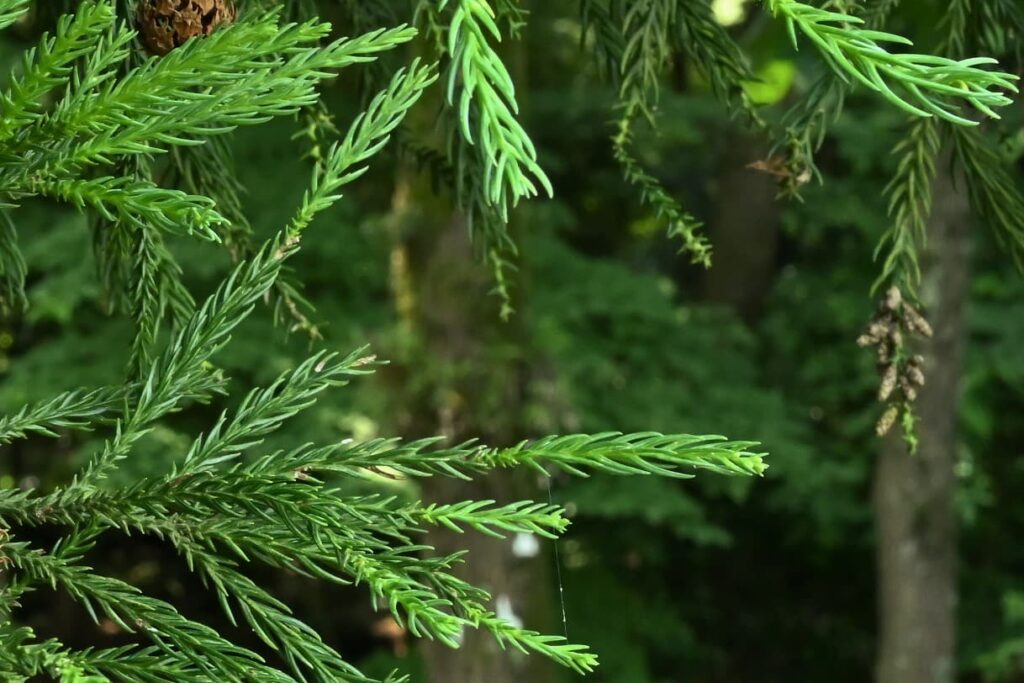
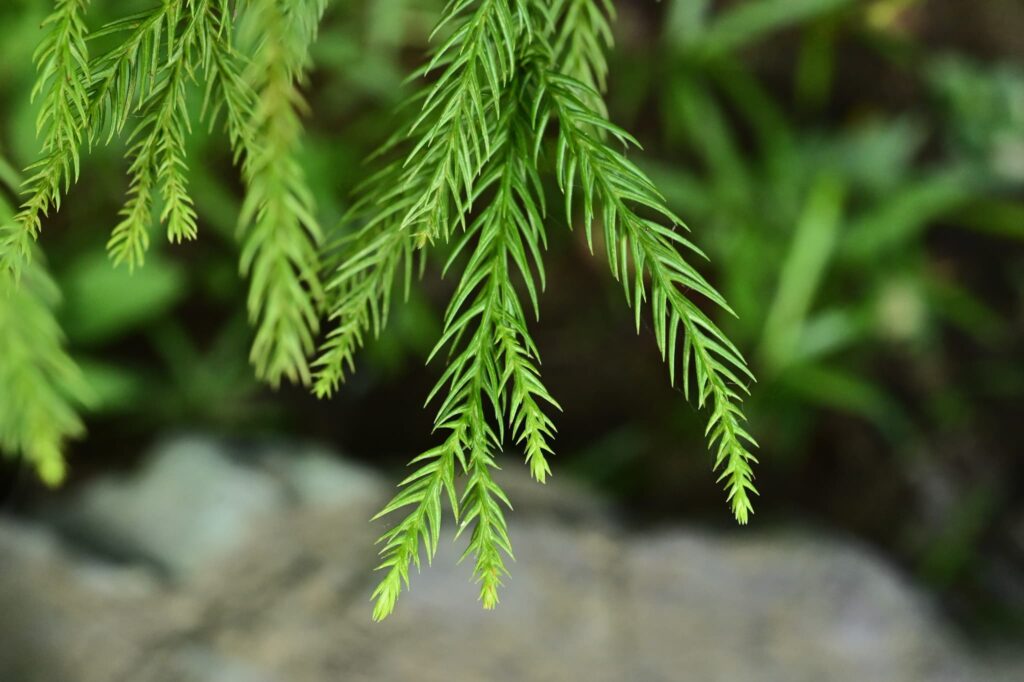
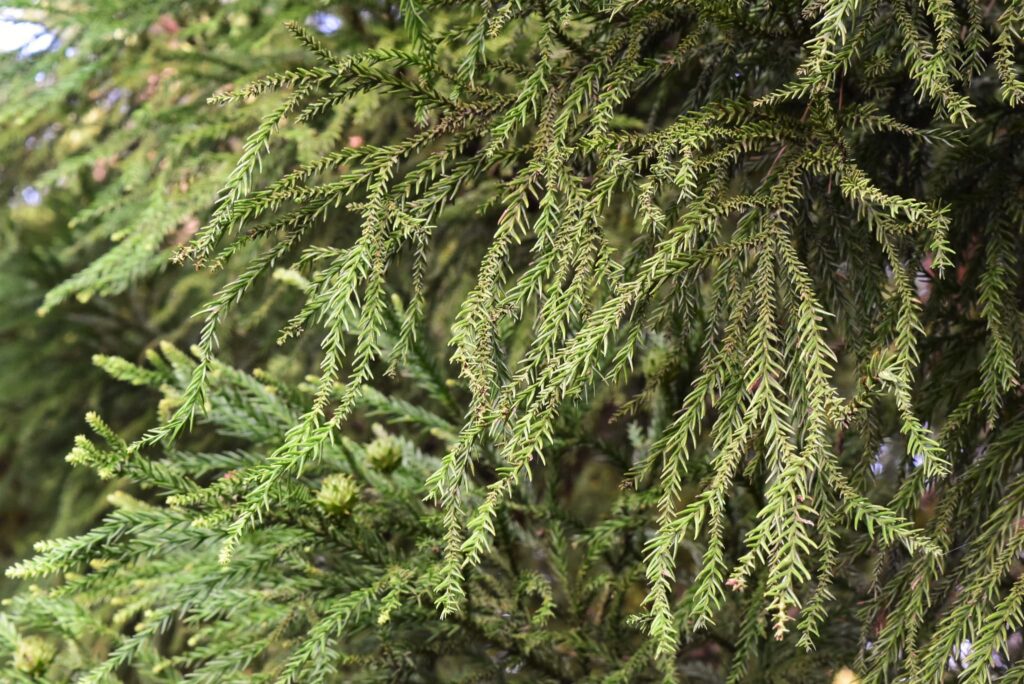
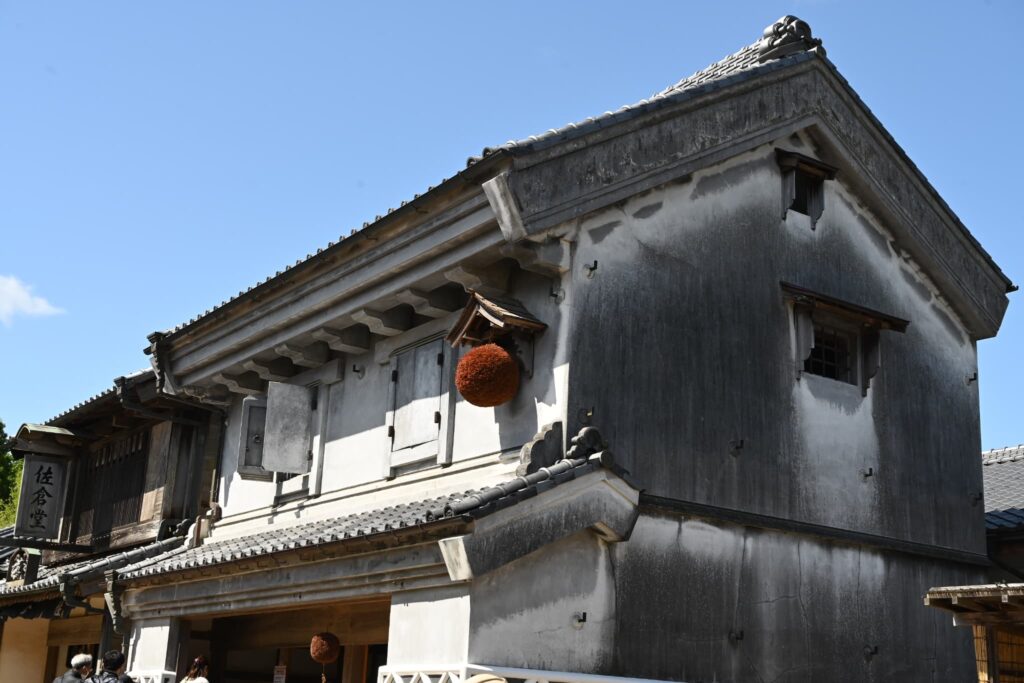
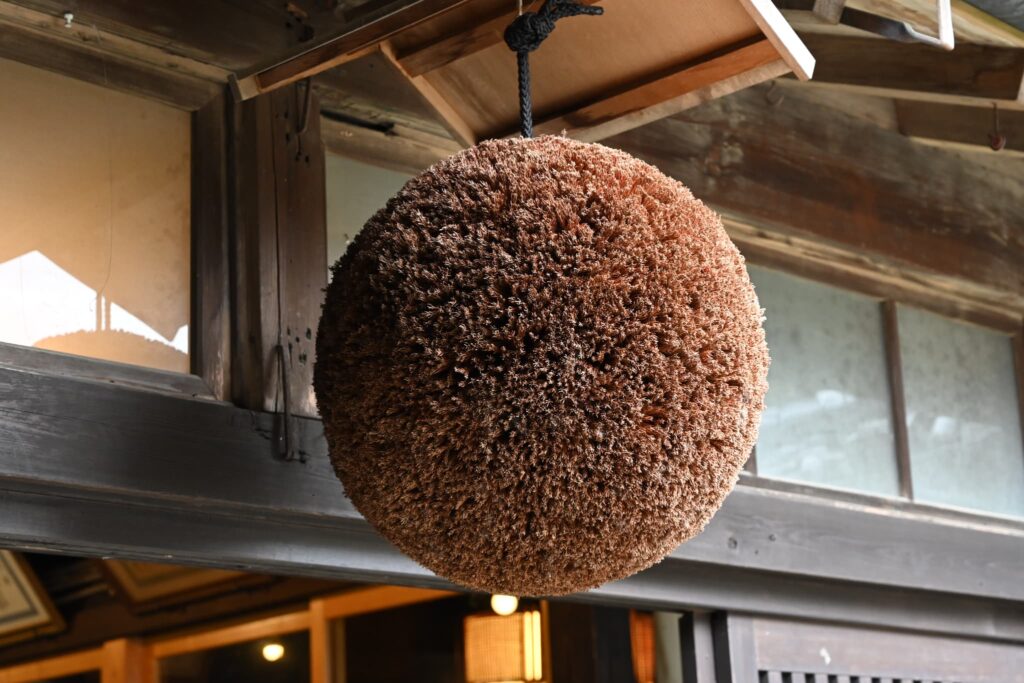
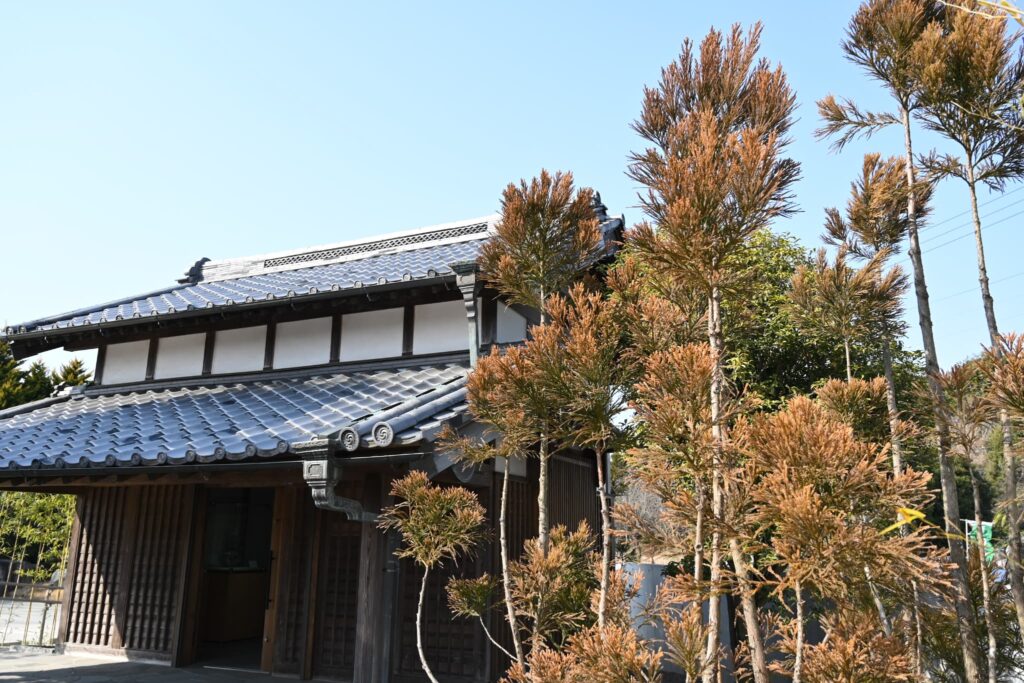
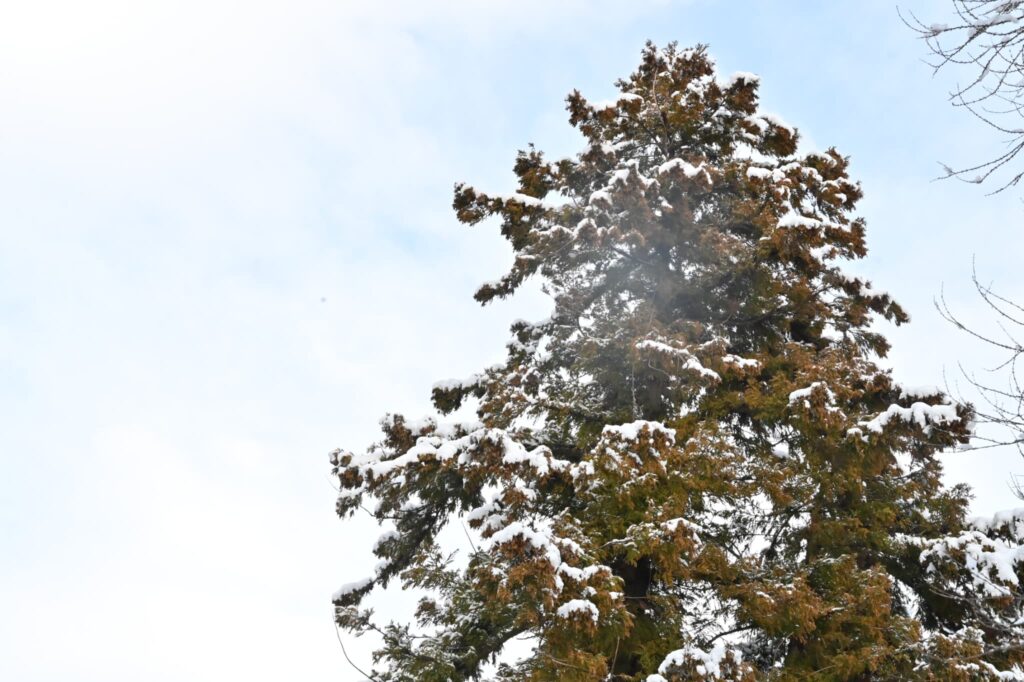
Japanese Cedar leaves are small, 1–2 cm long, and arranged in a spiral pattern along the branches. Some needles grow straight, while others curve into a sickle shape. In winter, the foliage turns a reddish-brown color, giving the tree the appearance of having died, but it returns to green by spring — old foliage is shed along with entire small branchlets rather than individual leaves. The branches and foliage are highly flammable, making them useful as fuel and in incense production. They are also famously used to make sugitama — decorative cedar-leaf balls hung outside sake breweries to signal the arrival of freshly brewed sake.
Flowers
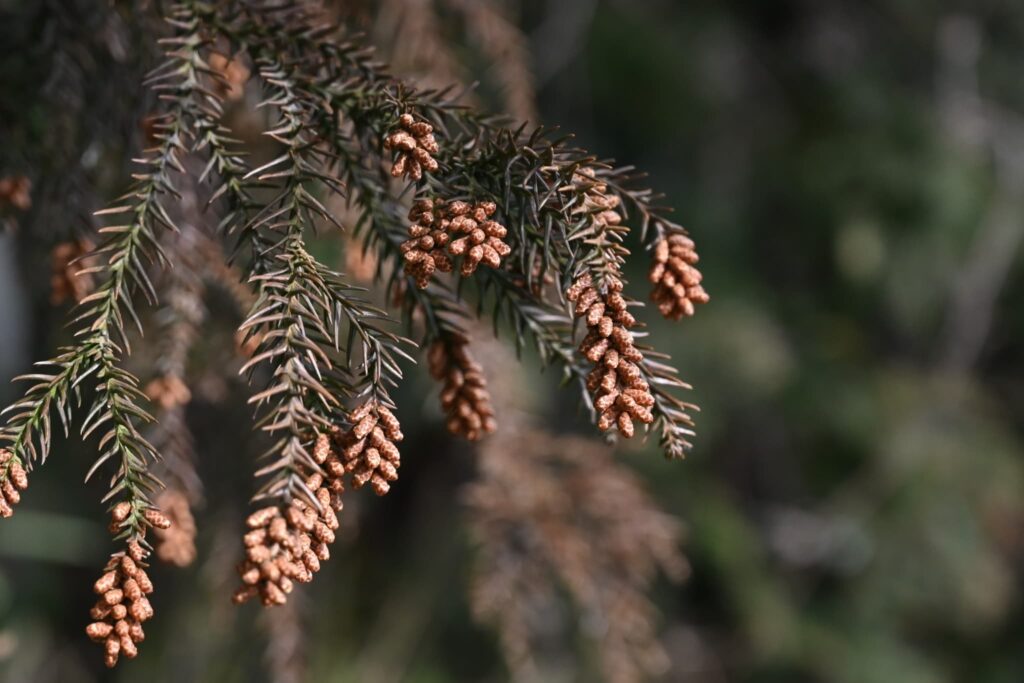
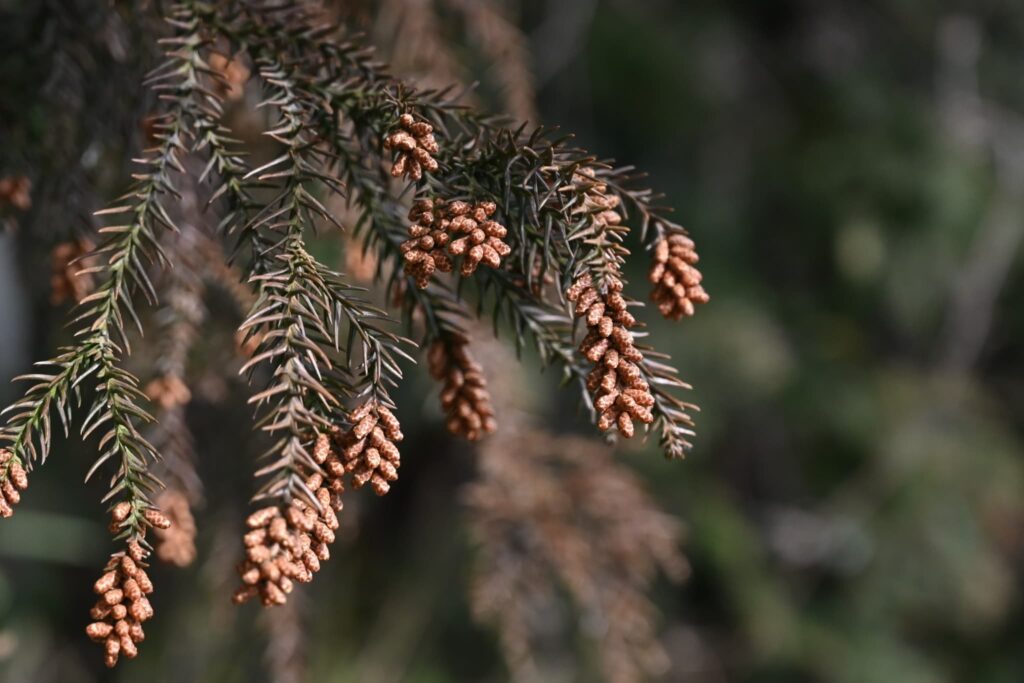
Japanese Cedar is monoecious, flowering in early spring (January to April). Male flowers are cream-colored, barrel-shaped, 5–8 mm in diameter, and bloom in dense clusters at the branch tips. Female flowers are small, green, and spherical, appearing singly at the tips of branchlets.
The understated appearance of Japanese Cedar flowers reflects the fact that, as a wind-pollinated species, it has no need to attract pollinating insects. This is precisely what makes it such a significant cause of seasonal allergies — on dry, windy days, male flowers release enormous quantities of yellow pollen into the air. In traditional Japanese poetry, “cedar flowers” (sugi no hana) is a recognized seasonal reference to spring.
Fruits (Cones)
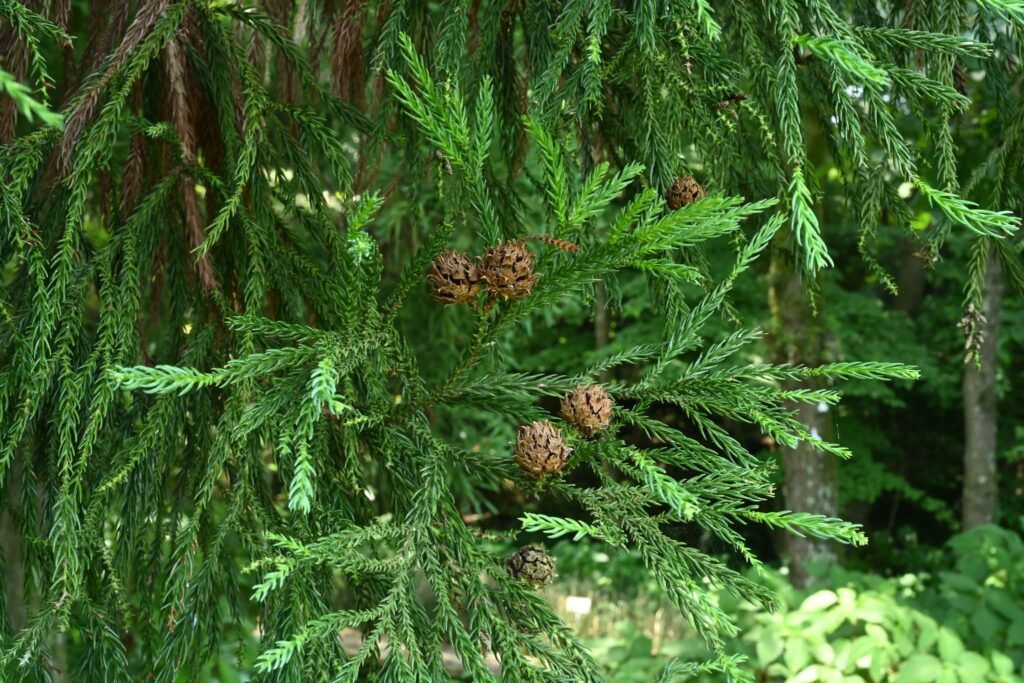
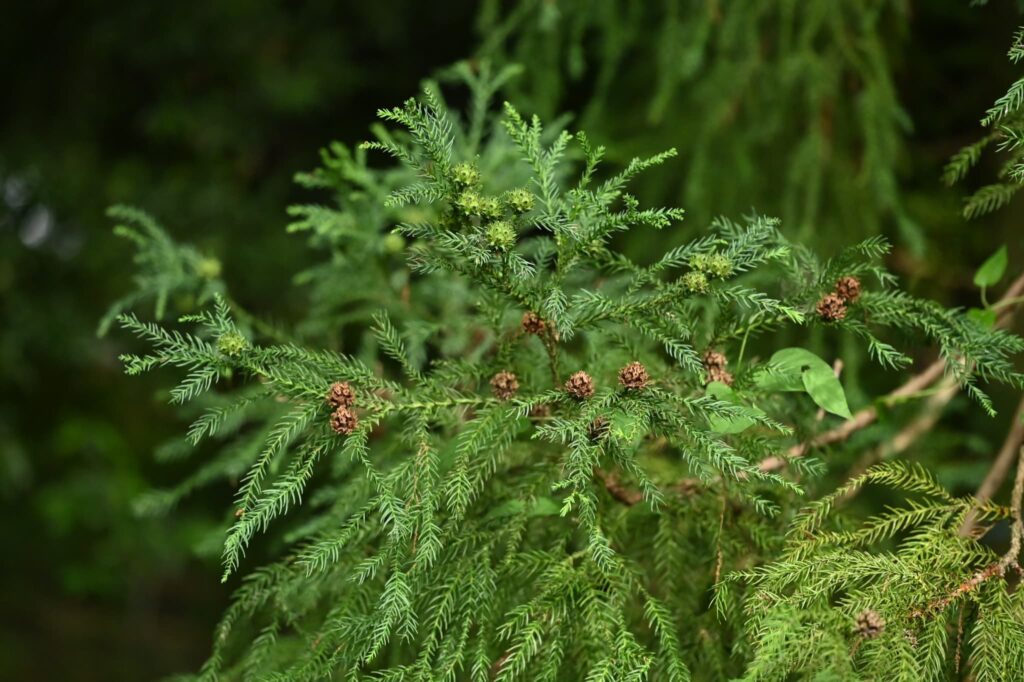
Pollinated female flowers develop into small, pinecone-like structures covered in spiky bracts, measuring 2–3 cm in diameter. They ripen to brown around October–November of the following year and split open naturally. Each cone contains 20–30 small, rice-grain-sized seeds, which are eaten by birds such as the Eurasian Siskin and Coal Tit. Empty cones often remain attached to the branch long after releasing their seeds.
Bark & Timber
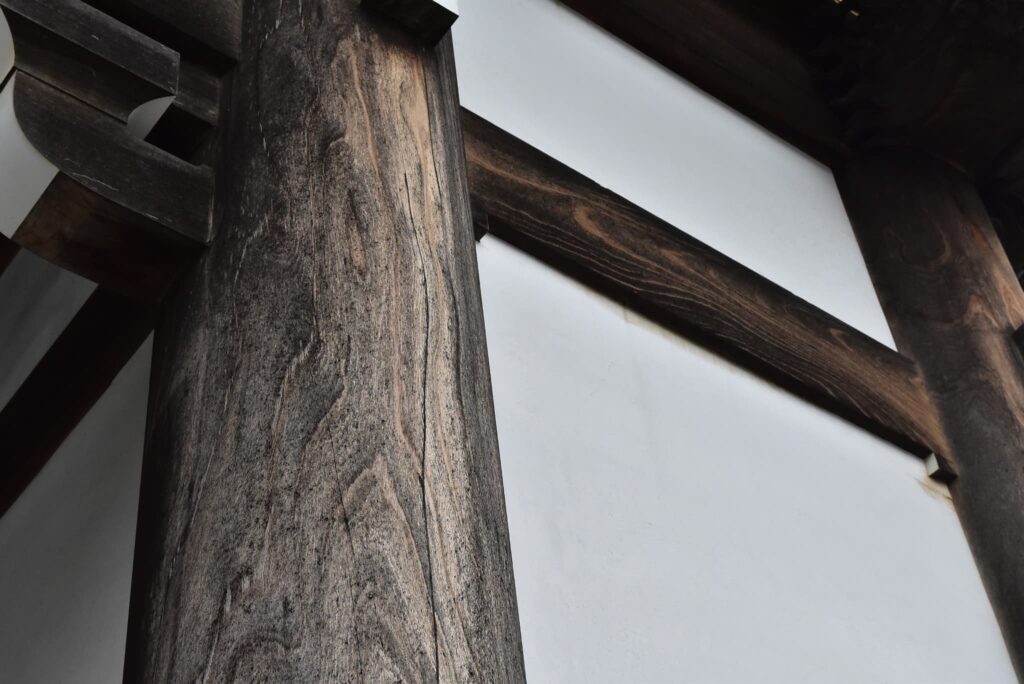
The trunk can reach up to 5 m in diameter. The bark is reddish-brown to brown and peels in thin vertical strips, traditionally used in landscaping and for roof thatching. Cedar wood has been used since the Jomon period to craft dugout canoes and tools, and remains widely used today in construction, civil engineering, furniture, household goods, shipbuilding, and even chopsticks. Cedar wood is also the traditional material for casks used to age sake, miso, and soy sauce — a natural alcohol compound in the wood is believed to enhance the flavor of the contents during aging.
Size & Growth
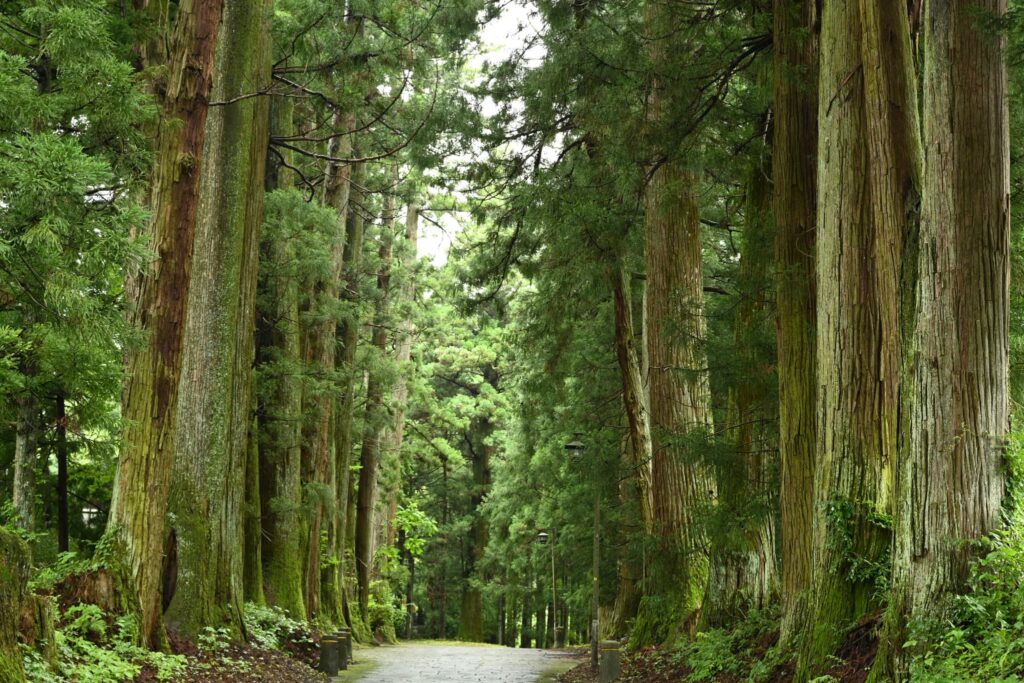
Japanese Cedar is among Japan’s longest-lived tree species. The Jomon Sugi on Yakushima Island is estimated to be several thousand years old. It is also Japan’s tallest tree species — as of 2017, the tallest tree in Japan was one of the “Three Cedars of Hanase” in Kyoto, two of which exceed 60 m in height. (For comparison, Japan’s largest-diameter tree is the camphor tree, Cinnamomum camphora.) Before World War II, Akita was home to cedar groves with trees exceeding 50 m, many of which were felled for postwar reconstruction timber.
Uses & Cultural Significance
A History of Cultivation
Japanese Cedar has been planted in Japan since before the era of the Manyoshu (Japan’s oldest poetry anthology, compiled in the 8th century) and continues to be cultivated today. Its value as construction timber comes from its fast growth, light weight, beautiful grain, and ease of working. However, the vast cedar plantations established after World War II were largely left unharvested due to shifting market demand and the rise of imported lumber. As these trees matured and began flowering en masse, Japanese Cedar became widely associated with seasonal allergies — a reputation that persists today.
Natural vs. Planted Forests
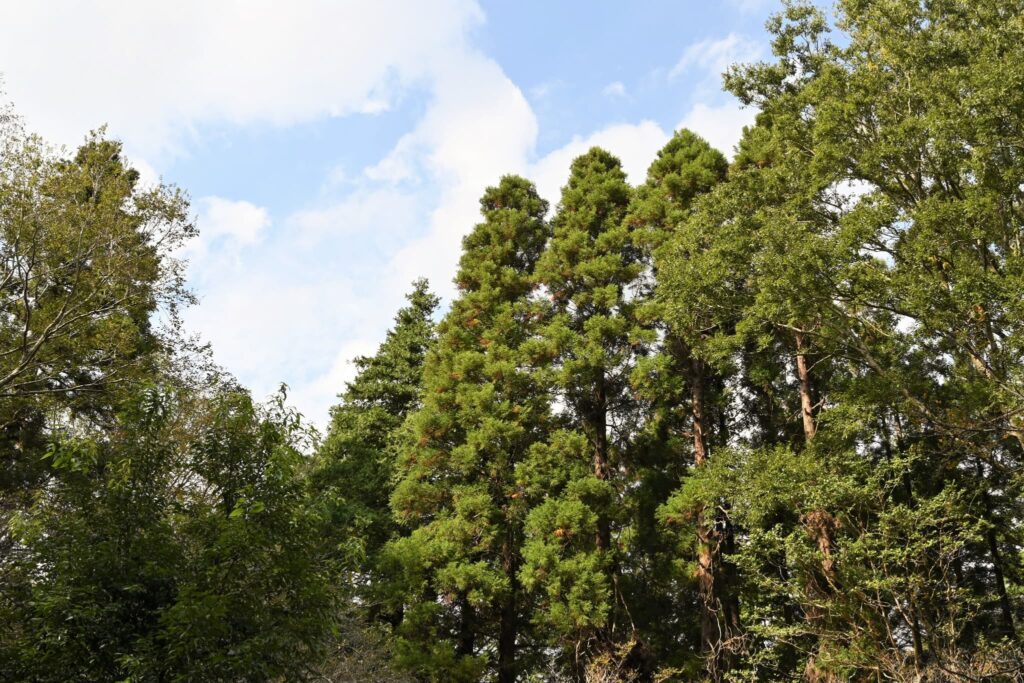
While cedar trees blanket many of Japan’s mountains, truly wild, naturally regenerated cedar is rare. Natural populations are generally found along mountain streams on the Pacific coast side of Japan — known as Omote-sugi (“front-side cedar”) — distinct from Ura-sugi (“back-side cedar”), found along the Sea of Japan coast. Ura-sugi has a distinctive growth habit: heavy snowfall causes its branches to bend down to the ground, where they can take root and form new stems.
Notable natural cedar forests are found along the Yoneshiro River basin in Akita Prefecture, Mount Tateyama in Toyama Prefecture, the Yanase River area in Kochi Prefecture, and Yakushima Island — all regions with particularly high precipitation and snowfall. The cedar forests of Akita are recognized, alongside the Hinoki forests of Kiso and the Hiba (Hinoki-Asunaro) forests of Aomori, as one of Japan’s Three Great Natural Forests.
Regional Varieties
Japanese Cedar is commonly divided in Japan into two broad regional types: Omote-sugi, associated mainly with the Pacific side, and Ura-sugi, associated with the Sea of Japan side, but environmental conditions produce considerable variation in wood quality and branch structure. As a result, the forestry industry recognizes numerous regional “varieties” named after their place of origin. Several have even been designated official prefectural trees, including:
- Akita Sugi (Akita Prefecture)
- Kitayama Sugi (Kyoto Prefecture)
- Tateyama Sugi (Toyama Prefecture)
- Jingu Sugi (Mie Prefecture)
- Yoshino Sugi (Nara Prefecture)
- Yanase Sugi (Kochi Prefecture)
Other well-known regional cedars include Tenryu Sugi (Shizuoka), Owase Sugi (Mie), Obi Sugi (Miyazaki), Yaku Sugi (Kagoshima), and Chizu Sugi (Tottori).
Garden Use
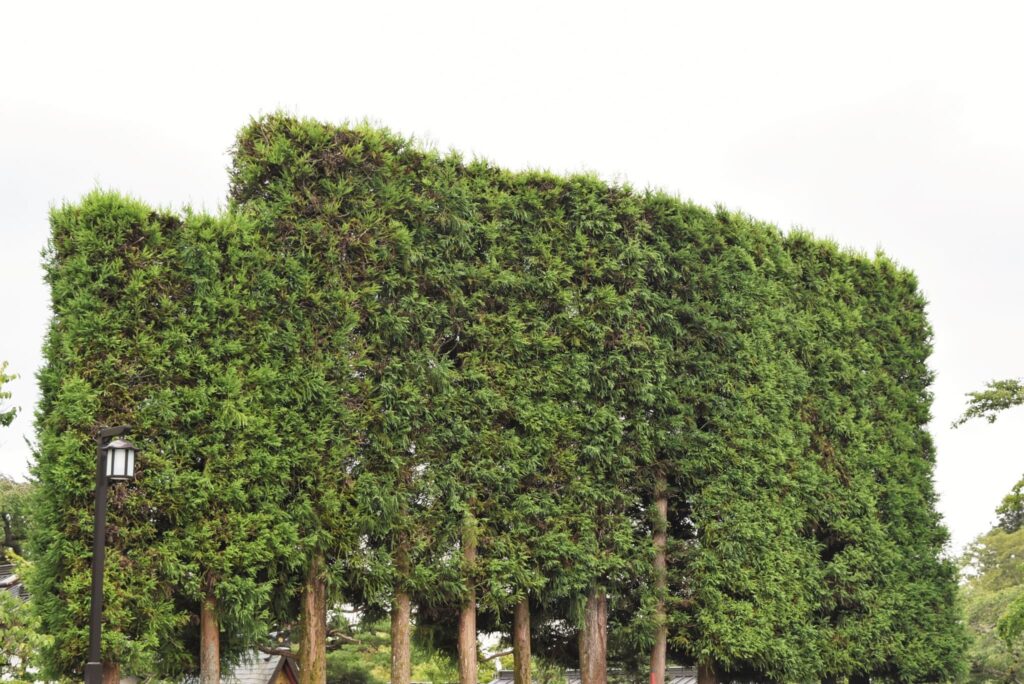
Despite its association with pollen allergies — which has dampened its popularity as an ornamental species — Japanese Cedar is still used in traditional Japanese gardens, particularly as hedging or accent plantings alongside rock arrangements. For garden use, Ura-sugi is generally preferred, since its dense foliage and resistance to lower-branch dieback make it more attractive as a landscape tree.
Ura-sugi is also known as Ashiu-sugi or Ashou-sugi, named after the Ashiu region of Kyoto. The famous Kitayama Daisugi — a traditional pruning technique from Kyoto’s Kitayama district that produces multiple straight trunks from a single base — is cultivated from this lineage. Among Kitayama cultivars, Shirasugi (“white cedar”) is especially prized for its strong shade tolerance.
Name Origin
Several theories exist regarding the origin of the name Sugi. The most widely accepted explanation traces it to suku-ki (“straight tree”), referring to its famously straight trunk. A related theory suggests it comes from susumu-ki (“advancing tree”), describing its continuous upward growth. In Japanese, it is written as 杉, 須疑, or 須岐之木 — though the character 杉 means something different in Chinese, where it refers to Cunninghamia (Chinese fir).
Cultural & Spiritual Significance
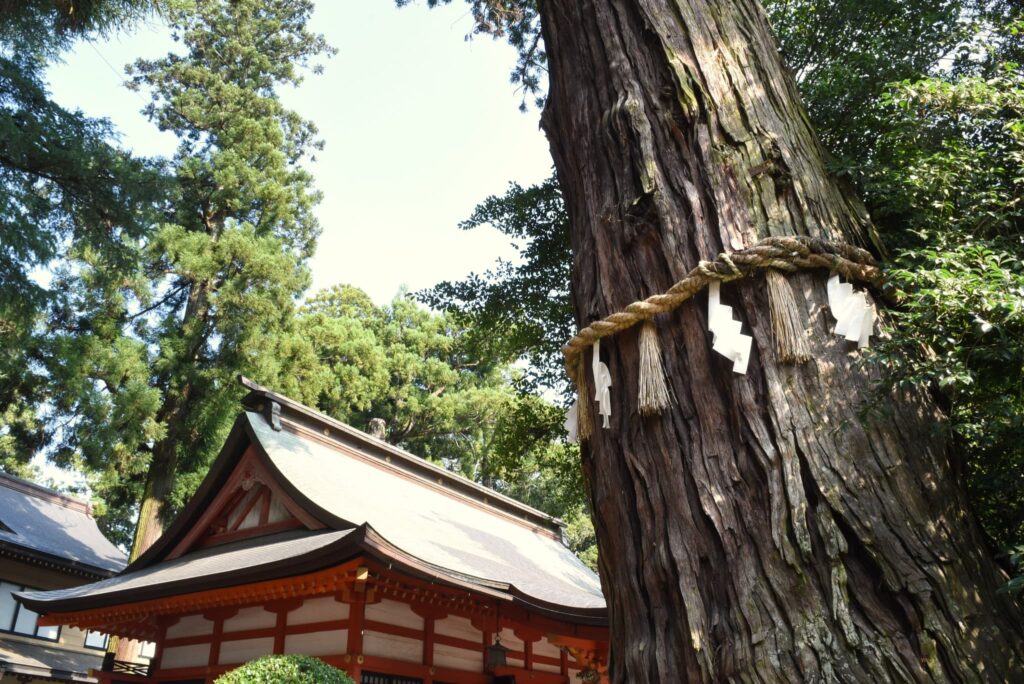
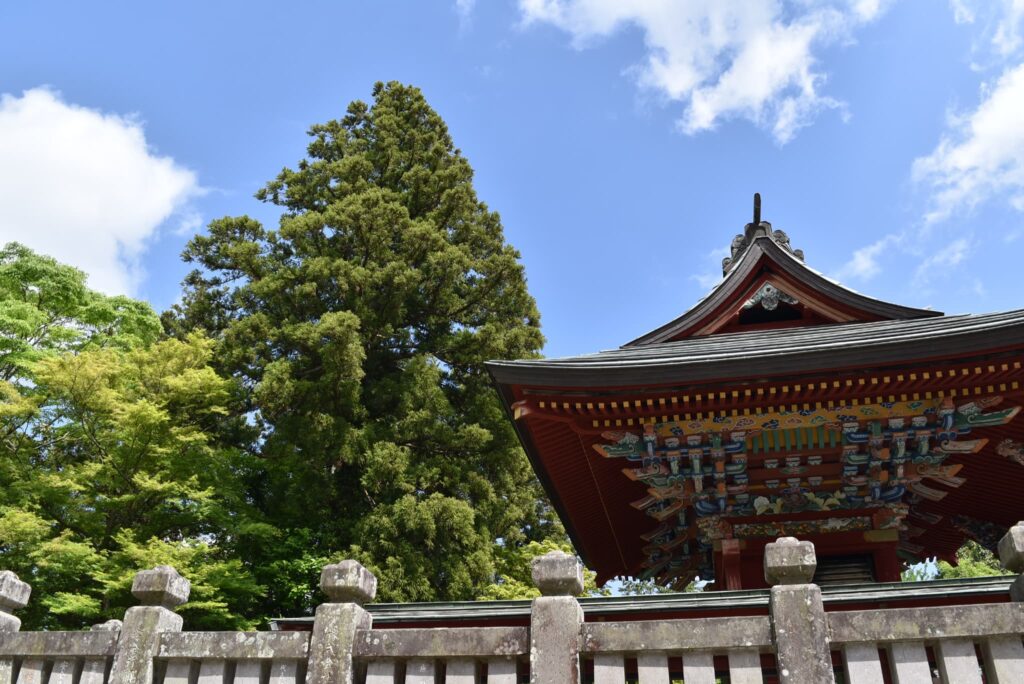
Japanese Cedar is commonly planted at Shinto shrines and Buddhist temples, where its tall, straight form reaching toward the sky has long been regarded as a vessel for divine spirits (yorishiro). According to the Nihon Shoki, the deity Susanoo-no-Mikoto created Japanese Cedar from his beard, Hinoki Cypress from his chest hair, Maki (Podocarpus) from his buttock hair, and camphor trees from his eyebrows.
Though now endemic to Japan, Cryptomeria was once far more widespread — fossil evidence shows it ranged as far as the Arctic Circle between 65 million and 1.8 million years ago. A related variety, the Kawai cedar, still grows wild in central China today.
Growing Guide
| Item | Description |
|---|---|
| Light | Full sun; young seedlings tolerate partial shade |
| Soil | Consistently moist, well-draining; adapts to ordinary garden soil |
| Wind & Snow Tolerance | Withstands snowfall well; Ura-sugi form roots from bent, snow-pressed branches |
| Cold Hardiness | USDA Zones 6–9 |
| Pruning | Regular pruning/topping needed in gardens; autumn pruning reduces spring pollen |
| Suitability for Home Gardens | Best kept as hedging/accent planting |
| Pests | Notably resistant to pests and disease |
Light & Soil
Japanese Cedar is a sun-loving species, though young seedlings can tolerate partial shade. It prefers consistently moist, well-draining soil. Wild trees typically grow in fertile soil, but cultivated specimens adapt well to ordinary garden soil.
Wind & Snow Tolerance
The tree withstands snowfall and continues to thrive. In snowy regions, the Ura-sugi form has adapted so that heavy snow bends its branches to the ground, where they can take root and form new stems.
Cold Hardiness
Japanese Cedar is hardy in USDA Zones 6–9.
Pruning
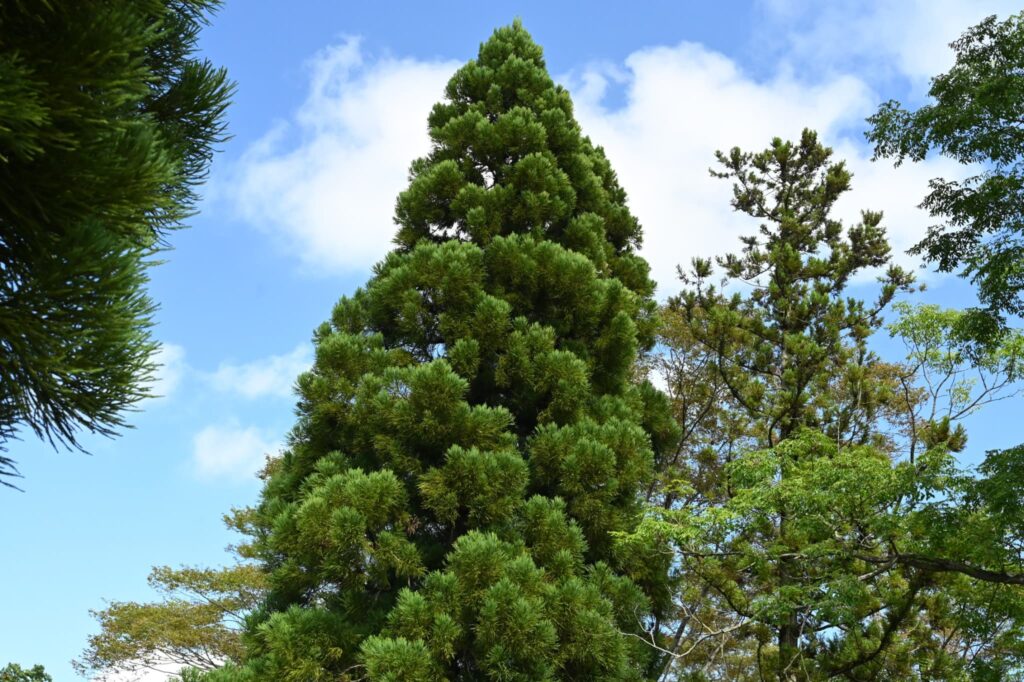
Young trees grow in a neat conical form, but as they mature, the upper crown tends to round out. Branches grow densely and the tree can become quite large, so residential gardens typically require regular pruning and trunk topping to keep it manageable. Because flower buds develop on the previous year’s shoots, pruning can reduce the number of flowers — and therefore pollen production — the following spring.
Suitability for Home Gardens
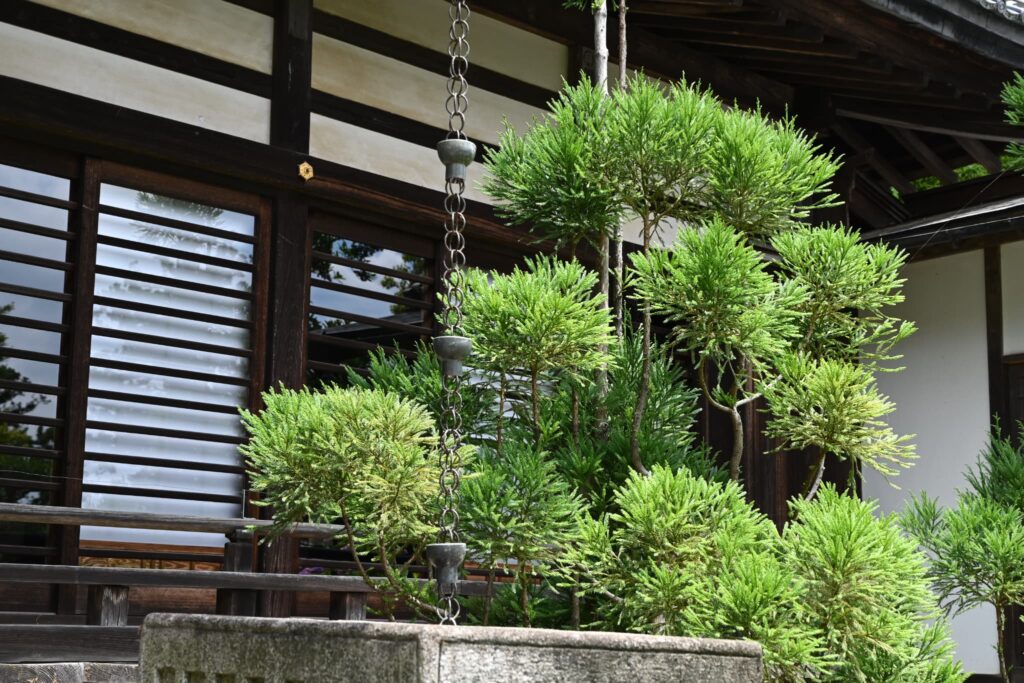
While tolerant of regular pruning, Japanese Cedar performs best in clean air and sufficiently moist soil. It is best suited to spacious gardens or traditional landscape settings, where it can be used as a hedge or accent tree.
Pests
Japanese Cedar is notably resistant to pests and disease, making it a low-maintenance species once established.
Regional Types and Cultivated Forms
Japanese Cedar shows considerable regional and cultivated variation. The names below include regional forestry types, selected forms, and ornamental cultivars rather than a single uniform category of formally registered cultivars.
| Cultivar | Feature |
|---|---|
| Ashio-sugi | More vigorous regrowth than standard Sugi; easy to shape |
| Mankichi-sugi | Bred by Kurume gardener Mankichi Harada; each branch resembles a miniature mature cedar tree, prized in ikebana. Also known as Mure-sugi or Shishi-sugi |
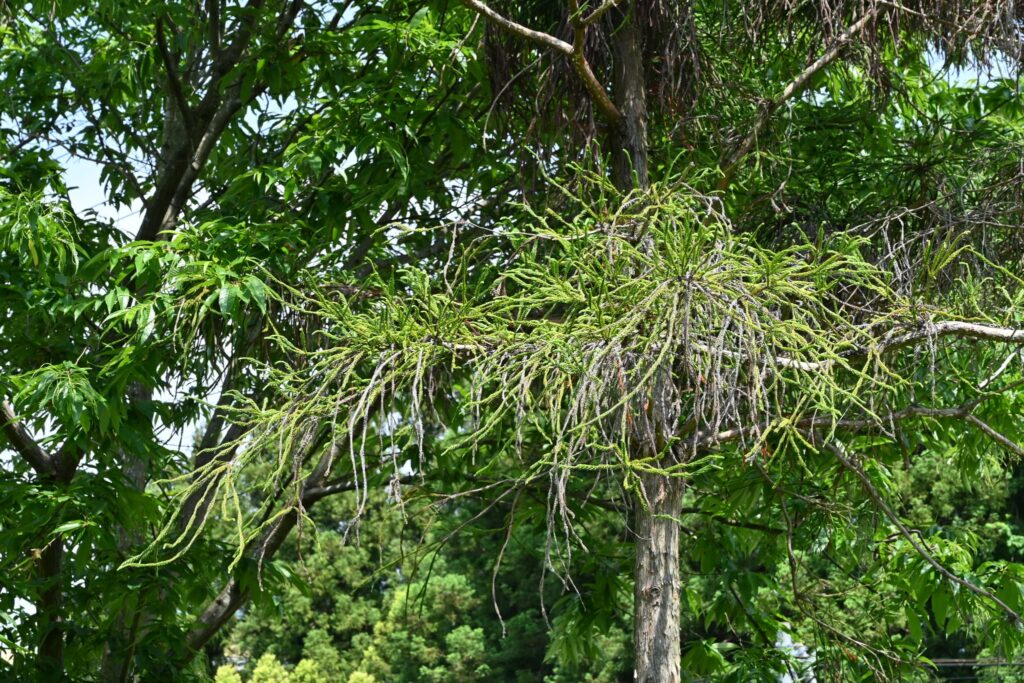
| Ikari-sugi (“Anchor Cedar”) | Irregular, drooping branches creating an unusual silhouette |
| Mejirodai-sugi | Distinct regional cultivar |
| Enko-sugi (“Monkey Cedar”) | Foliage likened to the long arms of a gibbon |
| Mejiro-sugi | White-patterned foliage near the branch tips |
| Shibahara-sugi | Distinct regional cultivar |
| Jindai-sugi | Short, densely packed foliage |
| Obi-sugi | Regional cultivar from Miyazaki Prefecture |
| Yore-sugi | Twisted, curling foliage |
| Taisho-sugi | Cultivar dating to the Taisho era |
| Yanase-sugi | Official prefectural tree of Kochi Prefecture |
| Sekka-sugi (“Crested Cedar”) | Fasciated branch tips resembling cockscomb (celosia) flowers |
| Kijin-sugi | Yellow-cored foliage |
| Midori-sugi (Ao-sugi) | Retains green foliage year-round, without winter bronzing |
| Yoshino-sugi | From the Yoshino River basin in Nara Prefecture; well-suited for hedging |
| Senbon-sugi (“Thousand Cedar”) | Multi-stemmed, clustering growth habit |
| Ougondai-sugi | Rare naturally occurring form with golden new growth |
| Yatsubusa-sugi | Compact, densely branched dwarf form |
| Tama-sugi (“Ball Cedar”) | Naturally rounded growth habit |
| Sekkan-sugi (“Snow Crown Cedar”) | Distinct regional cultivar |
Similar Species
| Tree | Why It Is Similar |
|---|---|
| Hinoki Cypress | Commonly confused with Japanese Cedar in Japan |
| Western Red Cedar | Shares the common name “cedar” but belongs to a different genus |
| Deodar Cedar | A true cedar, visually very different but often confused because of the name |
| Chinese Juniper | Similar evergreen conifer sometimes used in ornamental landscapes |
Frequently Asked Questions
Why is Japanese Cedar associated with allergies?
As large areas of postwar plantations matured, many trees began producing substantial quantities of pollen, making Japanese Cedar one of the leading causes of seasonal allergies in Japan.
How can I avoid pollen if I want to keep Japanese Cedar in my garden?
Pruning in autumn can remove some of the branch tips where the following spring’s flowers would form, helping to reduce flowering and pollen production.
What is the oldest Japanese Cedar tree?
The Jomon Sugi on Yakushima Island is believed to be several thousand years old, making it both one of the oldest and most famous individual trees in Japan.
Is Japanese Cedar the same as Western Red Cedar?
No. Despite the shared common name “cedar,” Japanese Cedar (Cryptomeria japonica) is a distinct genus from Western Red Cedar (Thuja plicata) and other trees commonly called cedars, including true cedars of the genus Cedrus.
What is Kitayama Daisugi?
A traditional Japanese forestry technique from Kyoto in which a single Japanese Cedar trunk is pruned to produce multiple straight, branch-free trunks — used historically to efficiently produce high-quality timber for tea-ceremony architecture.
Is Japanese Cedar fast growing?
Yes. Japanese Cedar grows faster than many other Japanese conifers, which is one reason it became Japan’s most widely planted timber tree.
Is Japanese Cedar wood rot-resistant?
Yes. Cedar wood is naturally durable and moisture-resistant, making it suitable for construction, barrels, furniture, and outdoor applications.
Can Japanese Cedar be used for bonsai?
Yes. Several dwarf cultivars are popular in bonsai because of their compact growth and attractive foliage.
Conclusion
Few trees have shaped Japan’s landscape, architecture, and cultural identity as profoundly as Japanese Cedar. From the ancient, towering Jomon Sugi to the carefully cultivated Kitayama Daisugi, and from sake casks to shrine groves, Cryptomeria japonica embodies both the practical and the spiritual dimensions of Japan’s relationship with its forests. While its modern reputation is often colored by springtime allergies, this remarkable tree remains a defining symbol of the Japanese landscape.