Japanese Red Pine (Pinus densiflora): Identification, Care & Uses
Japanese Red Pine (Pinus densiflora), known in Japanese as Akamatsu, is one of Japan’s most familiar native pine trees, recognized for its reddish-brown bark, slender form, and soft needles. This guide covers its identification, growth habits, cultural significance, and care requirements, based on observations of the plant as grown in Japan.
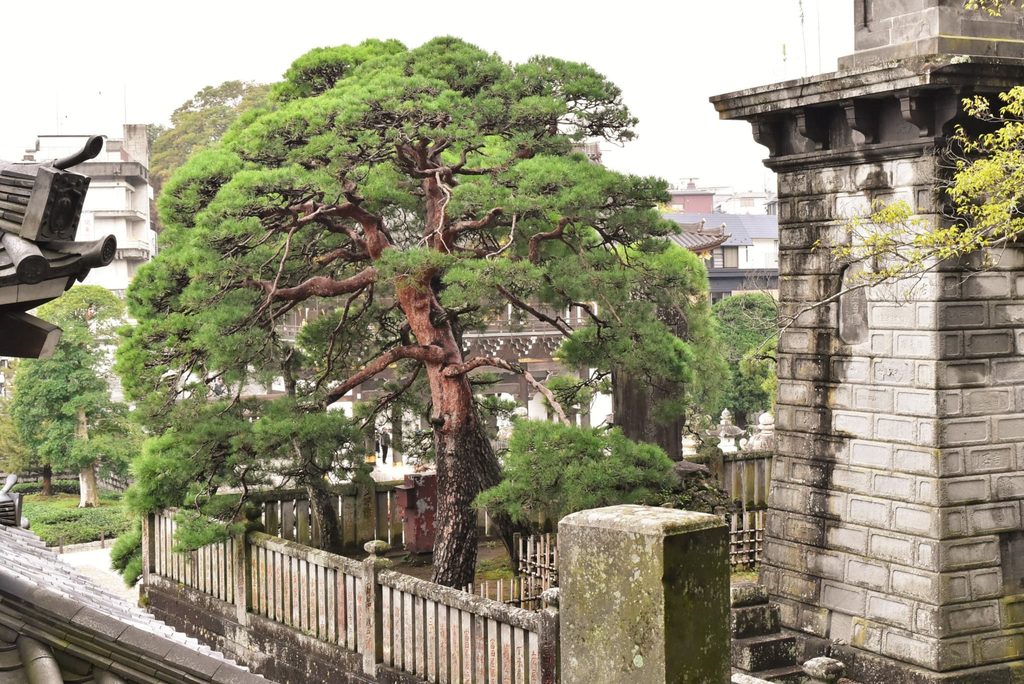
What Is the Japanese Red Pine?
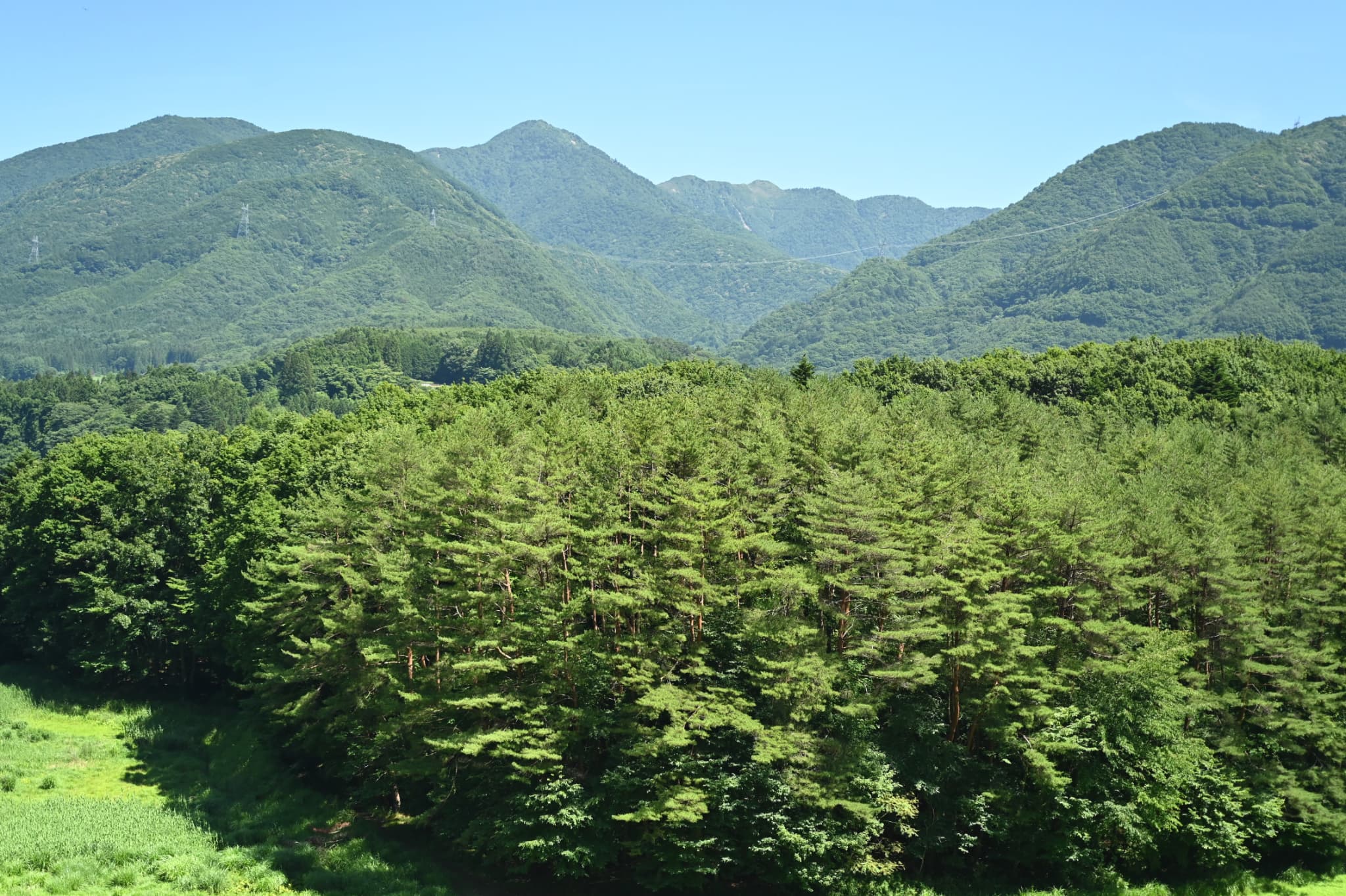
Japanese Red Pine (Pinus densiflora) is an evergreen conifer in the pine family (Pinaceae). Its native range extends from central and southern Japan through Korea and northeastern China to the Russian Far East. In Japan, it occurs naturally from southern Hokkaido through Honshu, Shikoku, and Kyushu.
It is especially characteristic of sunny, relatively dry sites and can grow on poor, well-drained soils where many broad-leaved trees perform less well.
Japanese Red Pine is closely related in appearance to Japanese Black Pine (Pinus thunbergii). The two species can be distinguished by several features, including bark, needle texture, new shoots, and habitat. Japanese Red Pine generally has softer needles and more reddish bark, while Japanese Black Pine typically has stiffer, darker needles and is particularly well adapted to coastal conditions.
In traditional Japanese terminology, Japanese Red Pine is also called Onna-matsu or Me-matsu (“female pine”), reflecting its softer and more graceful appearance. Japanese Black Pine is correspondingly known as Otoko-matsu (“male pine”).
Overview
| Item | Description |
|---|---|
| Scientific Name | Pinus densiflora Siebold & Zucc. |
| Common Name | Japanese Red Pine |
| Japanese Name | Akamatsu (アカマツ) |
| Family | Pinaceae |
| Native Range | Japan, Korea, northeastern China, and the Russian Far East |
| Plant Type | Evergreen coniferous tree |
| Height | Typically 20–35 m (65–115 ft) |
| Trunk Diameter | Can exceed 1 m in mature trees |
| Reproductive Season | April–May |
| Cone Maturity | Autumn of the following year |
| Cone Type | Woody seed cone |
| USDA Hardiness Zones | 3–7 |
| Sun Exposure | Full sun |
Characteristics
| Feature | Description |
| Needles | 7–12 cm long, in pairs, soft and slender |
| Bark | Reddish-brown on younger and upper portions; darker and more deeply fissured near the base with age |
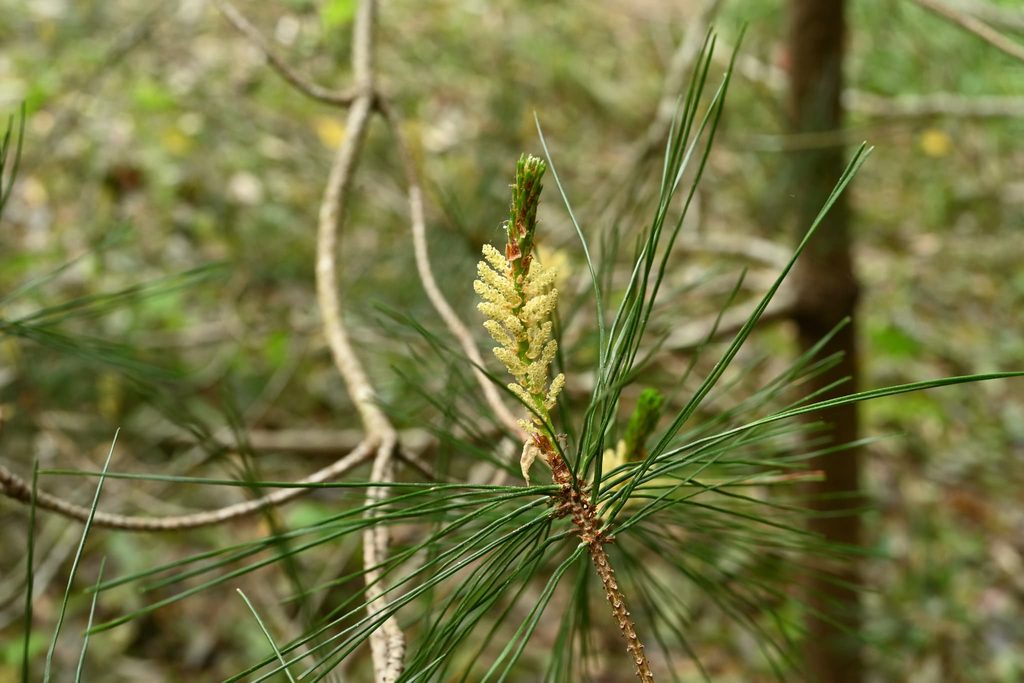
| Male Cones | Small, yellowish clusters near the base of new shoots |
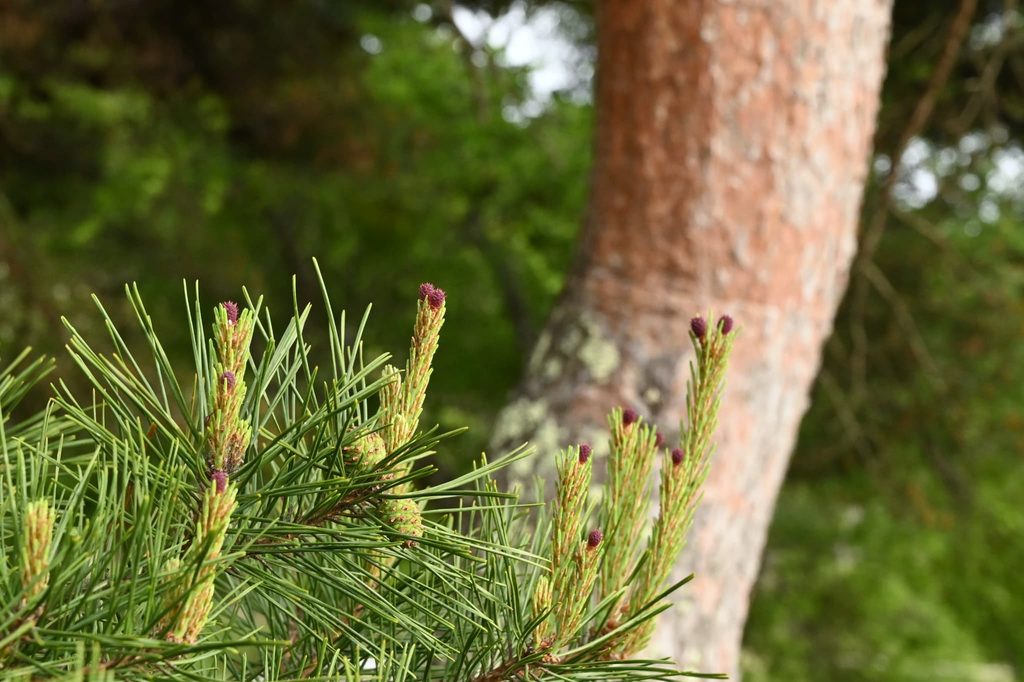
| Female Cones | Small, reddish to purplish structures near the tips of new shoots |
| Seed Cones | Oval to ovoid, approximately 3–6 cm long |
| Growth Rate | Moderate under favorable conditions |
Foliage
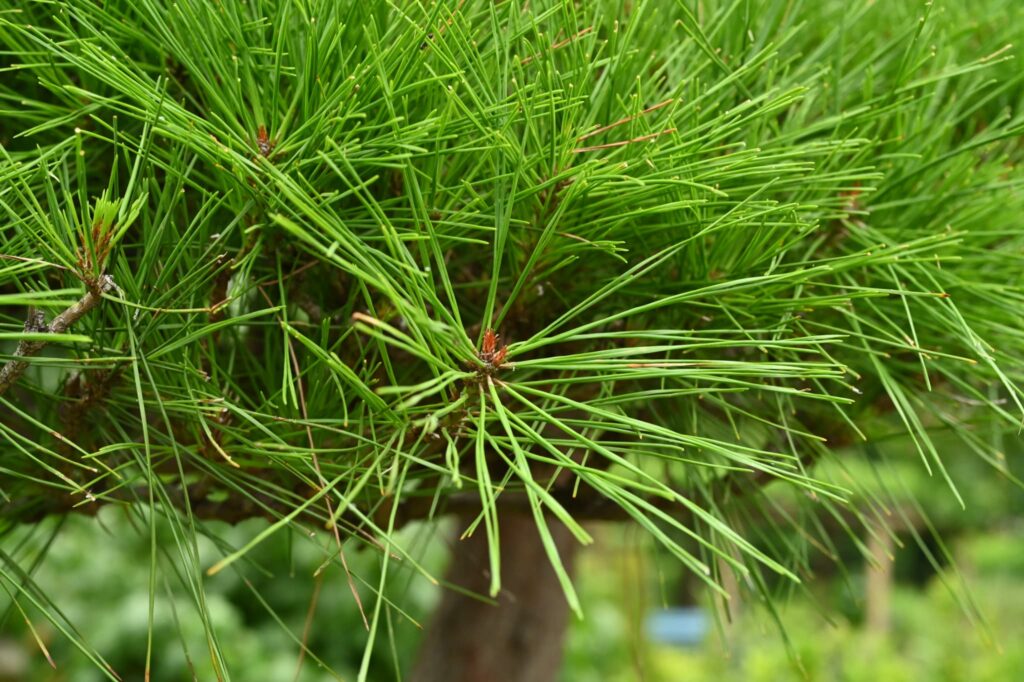
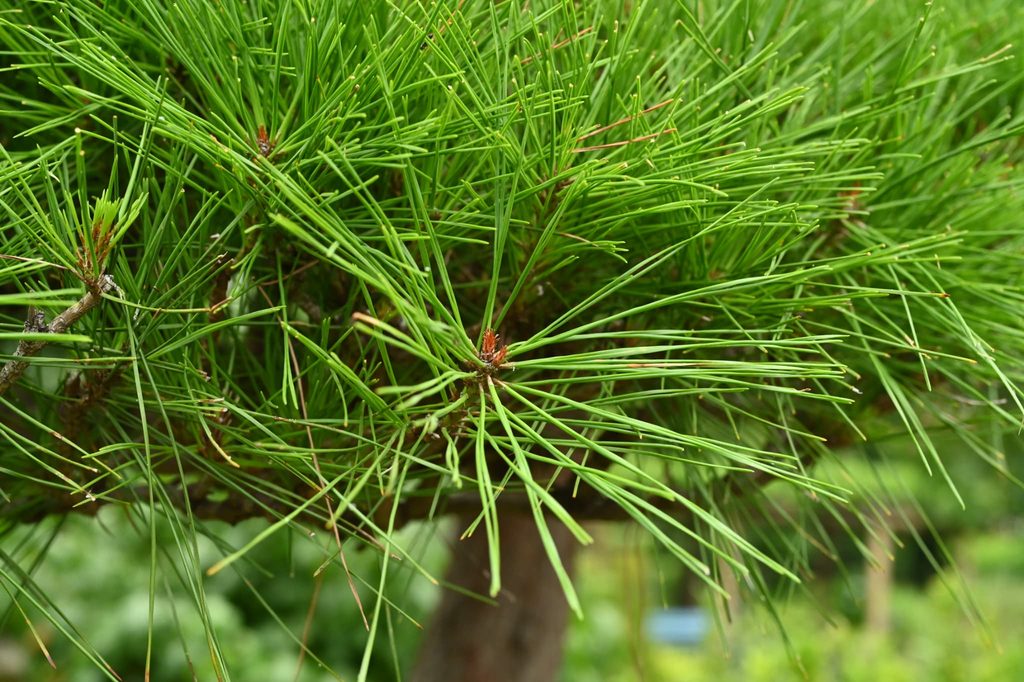
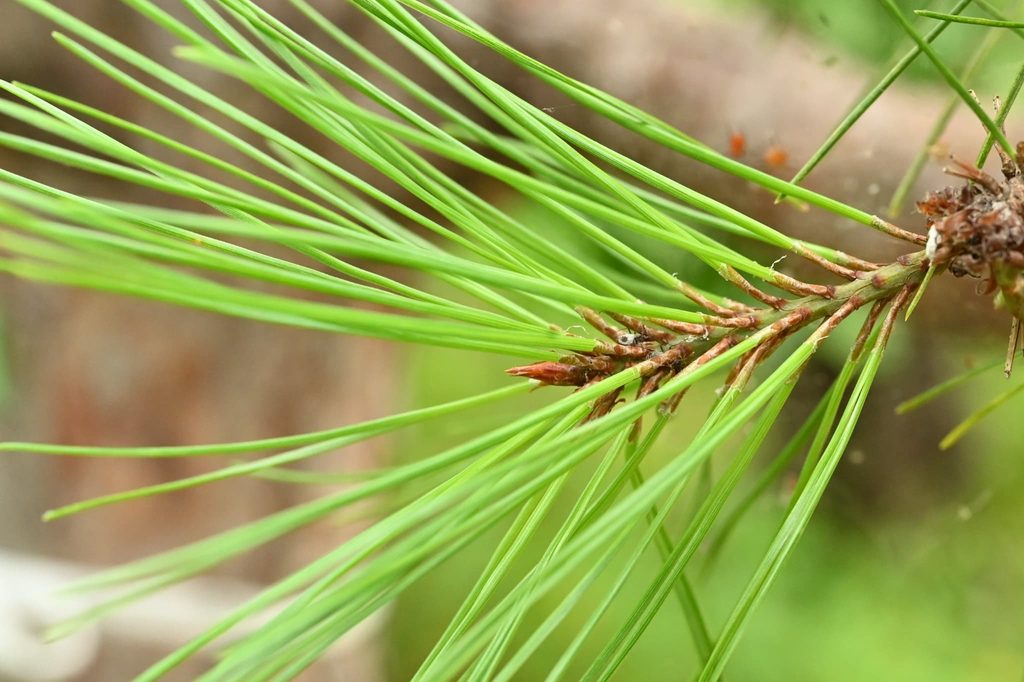
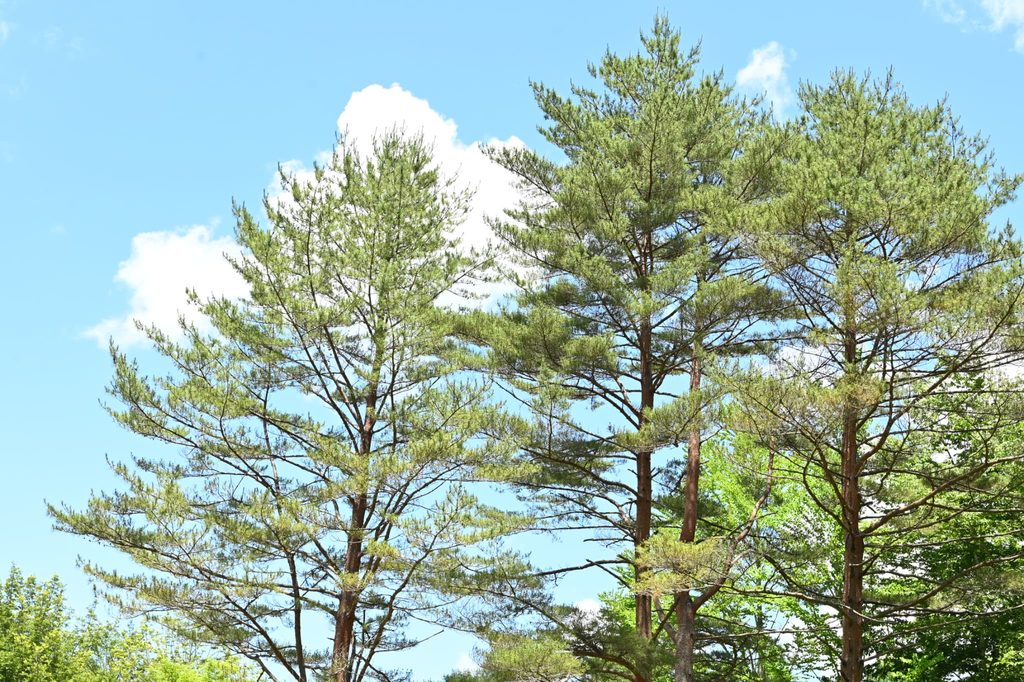
Japanese Red Pine has slender needles arranged in pairs, with two needles arising from each fascicle. The needles are generally about 7–12 cm long and are relatively soft and flexible compared with those of Japanese Black Pine.
The foliage is usually a fresh or light green, giving the tree a softer appearance than Japanese Black Pine. The relatively soft needles are also one of the easiest practical features to notice when comparing the two species.
Flowers
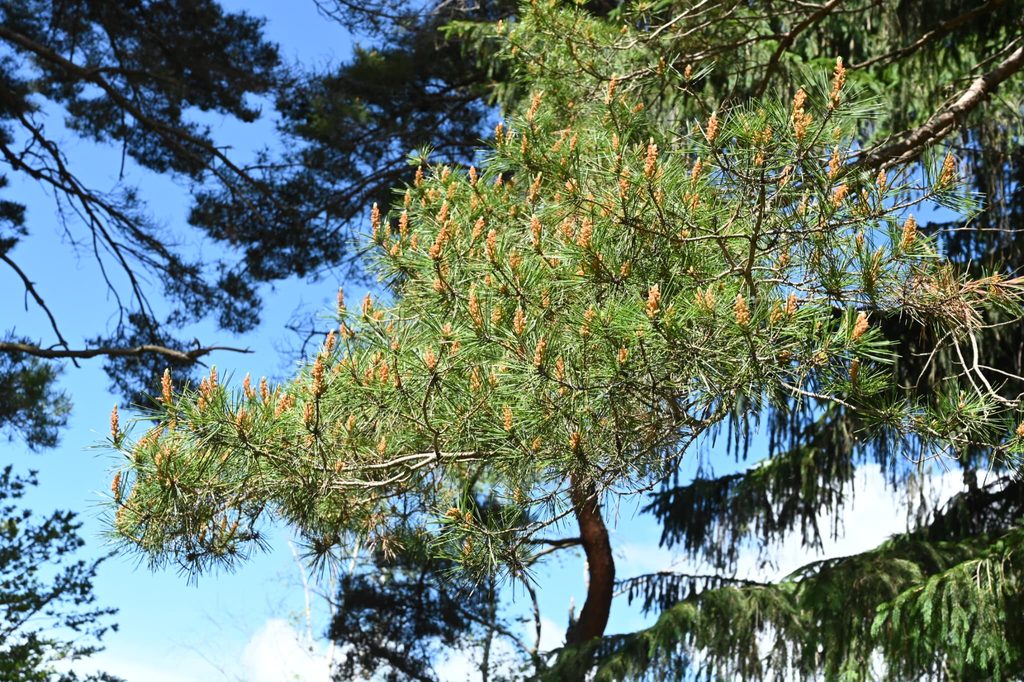
Like other pines, Japanese Red Pine does not produce conventional flowers. Instead, it produces male and female reproductive structures called cones.
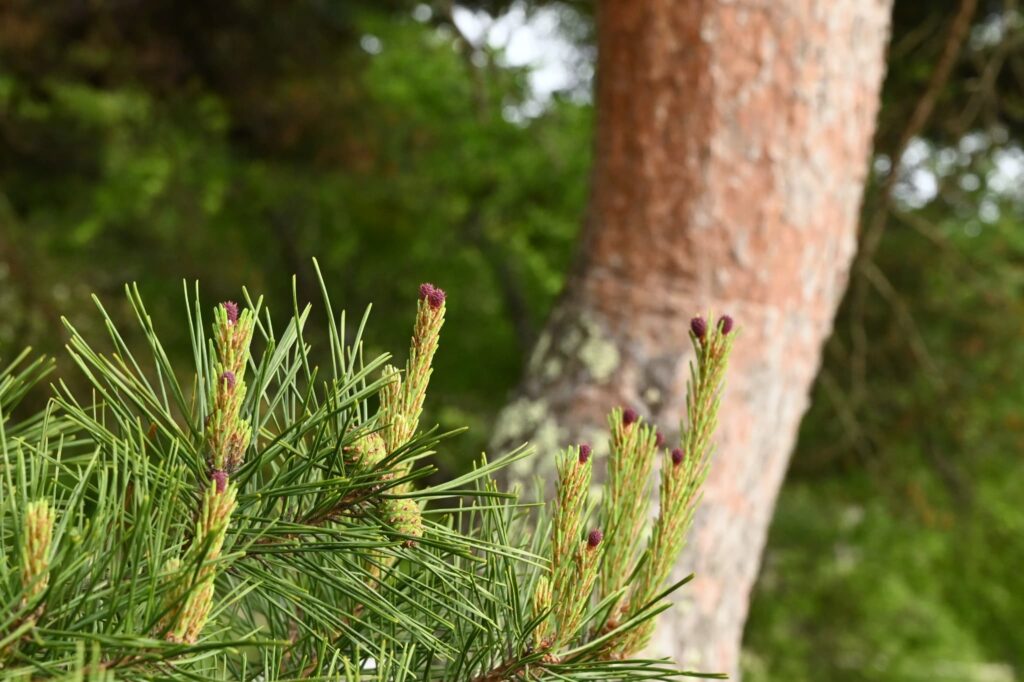
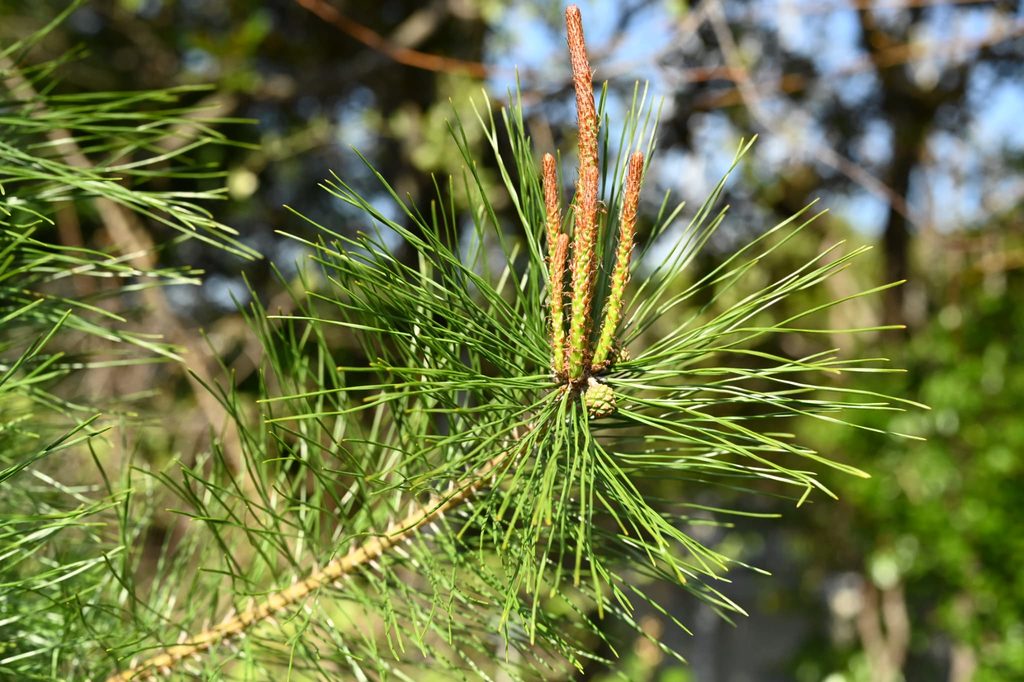
Male cones are small and yellowish and occur in clusters near the bases of new shoots. Female cones are much less conspicuous and develop near the tips of young shoots, initially appearing reddish or purplish.
Pollination takes place in spring, generally around April and May in Japan.
Cones & Seeds
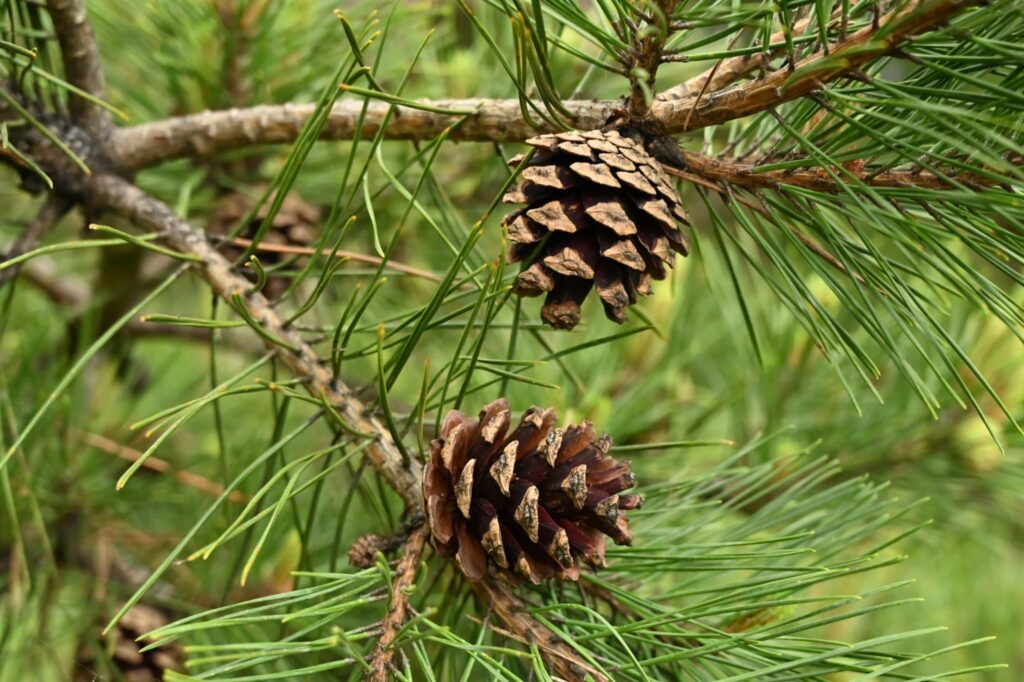
The seed cones of Japanese Red Pine are generally oval to ovoid and about 3–6 cm long. They develop from the female reproductive structures and mature during the autumn of the following year.
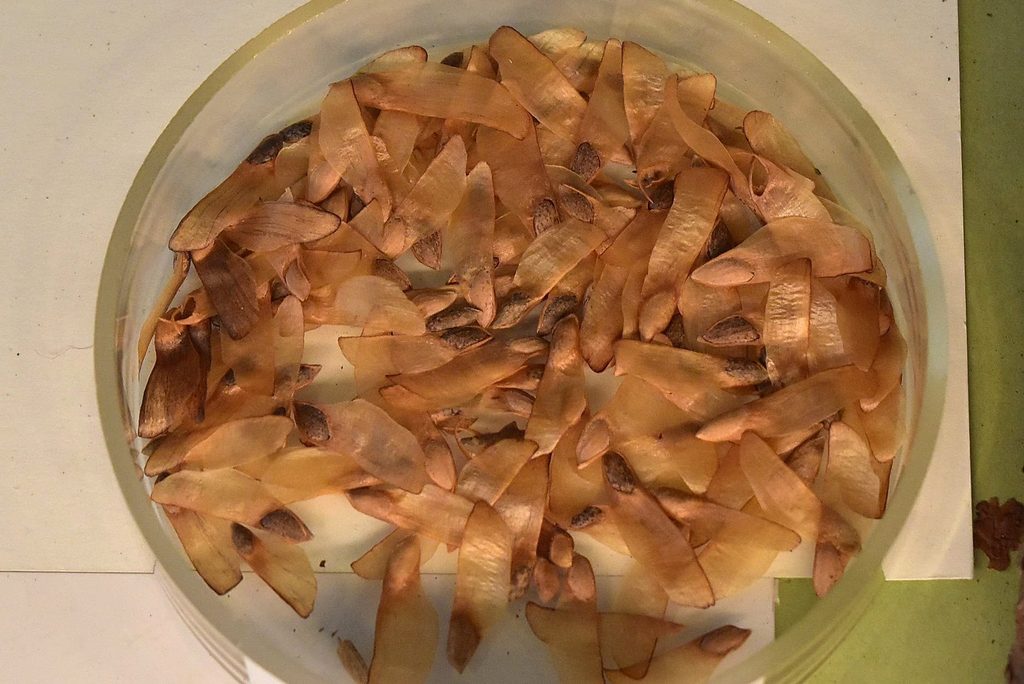
Each cone contains winged seeds adapted for dispersal by wind. When the cone scales dry, they open and release the seeds. Under humid conditions, the scales can close again.
Bark & Timber
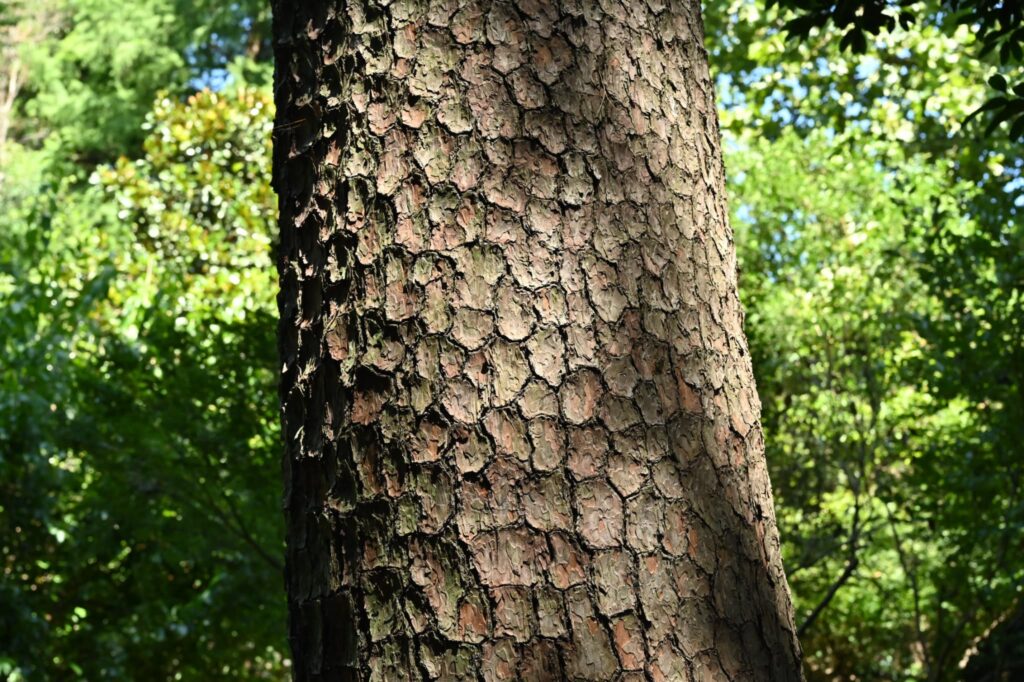
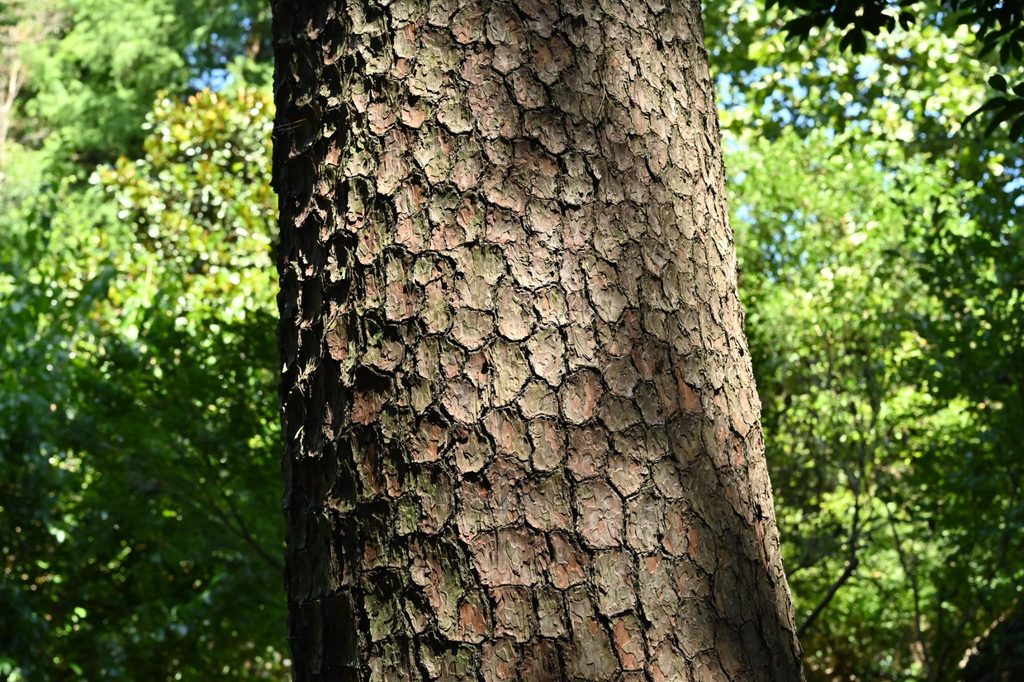
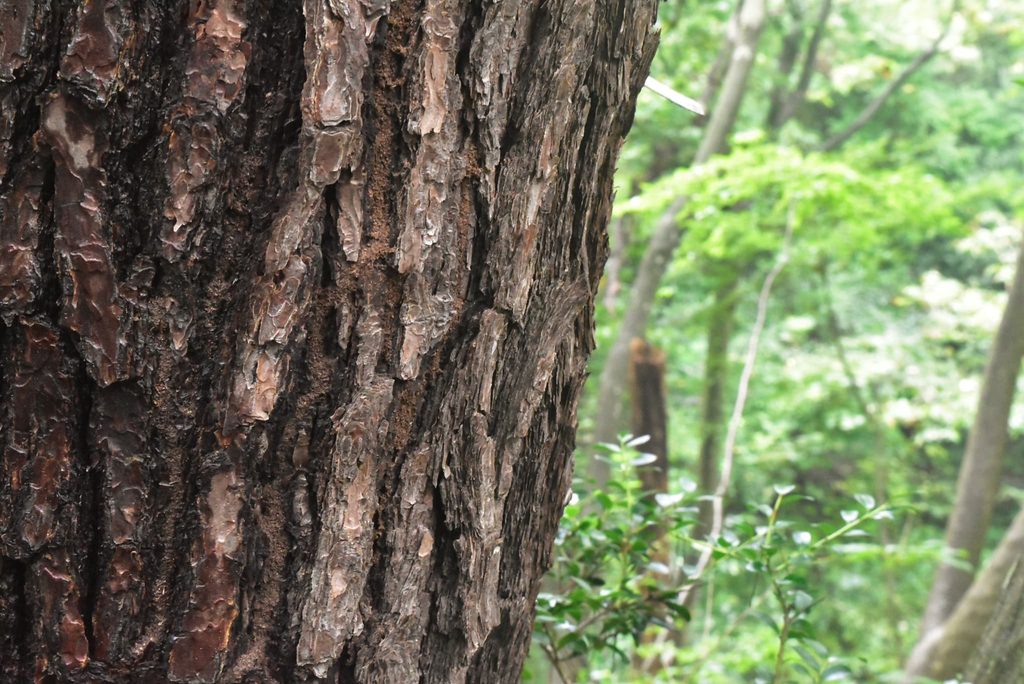
The reddish-brown bark is one of the characteristic features of Japanese Red Pine and is the reason for the Japanese name Akamatsu (“red pine”).
Young trunks and the upper portions of mature trees often show attractive reddish-orange to reddish-brown tones. With age, the lower trunk becomes darker and more deeply fissured, sometimes developing a rough, irregular pattern. Because old trees can develop dark basal bark, bark color alone should not be used to identify a mature tree; needles, shoots, cones, and overall habit should also be considered.
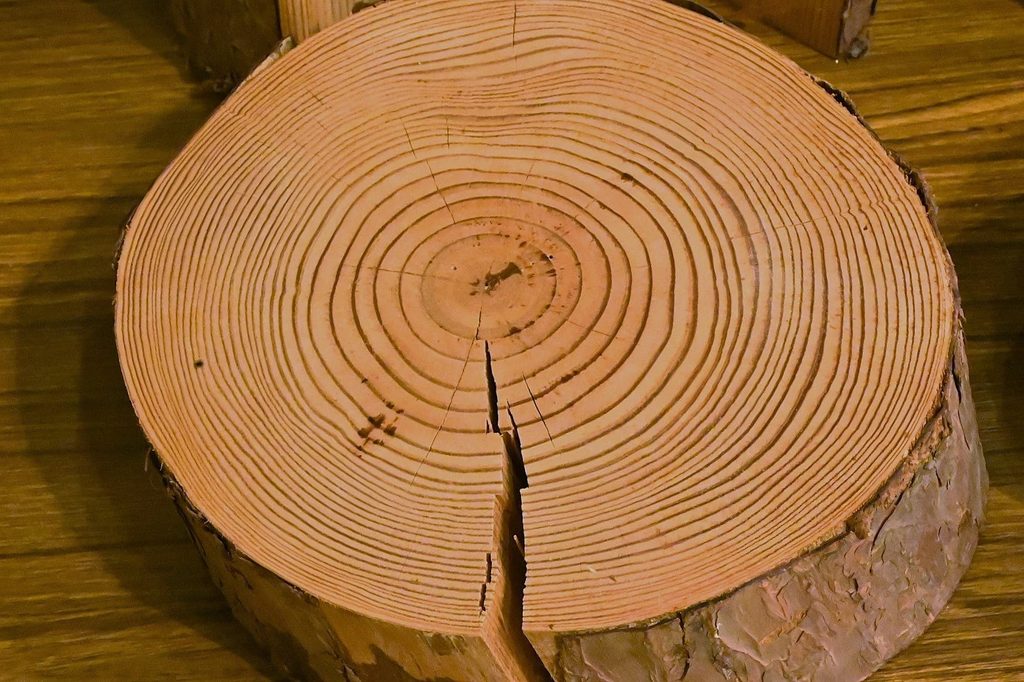
Japanese Red Pine has been an important timber tree in Japan. Its wood has been used for construction, beams, posts, fuel, pulp, and other purposes. It has also been used historically for wood products and packaging materials.
Size & Growth
Japanese Red Pine can reach approximately 20–35 m (65–115 ft) in height, although trees in gardens and managed landscapes are often considerably smaller.
Growth is generally moderate when the tree receives abundant sunlight and has adequate drainage. It can grow on relatively dry and nutrient-poor soils, but growth becomes weaker in heavily shaded or poorly drained locations.
The species can be long-lived, and old specimens are found in historic gardens, temple grounds, shrine precincts, and other traditional landscapes in Japan.
Uses & Cultural Significance
Japanese Red Pine has a long history in Japanese culture and is frequently depicted in paintings, prints, poetry, and traditional gardens. Its reddish bark and graceful form make it particularly attractive as a garden tree.
The contrasting forms of Akamatsu and Kuromatsu (Japanese Black Pine) also became part of traditional Japanese aesthetics. Akamatsu was associated with the softer, more delicate “female pine” form, while Japanese Black Pine was regarded as the more robust “male pine.”
Japanese Red Pine has also been an important forestry tree. Its wood was traditionally used for construction, fuel, charcoal, poles, and other products. Thin sheets of shaved wood and wood shavings were historically used for packaging and other practical purposes.
During the Second World War, pine roots were processed to produce pine-root oil (shōkon-yu), which was used as an emergency source of fuel. The historical use of pine-derived materials reflects the high resin content characteristic of many pines.
Japanese Red Pine also has important ecological relationships. Matsutake (Tricholoma matsutake) forms ectomycorrhizal associations with the roots of Japanese Red Pine and other pine species. Japanese Red Pine forests have therefore been closely associated with traditional matsutake-producing landscapes in Japan.
Despite serious local impacts from pine wilt disease, Japanese Red Pine as a species is currently classified as Least Concern (LC) by the IUCN rather than Near Threatened.
Growing Guide
| Item | Description |
| Light | Full sun; performs poorly in prolonged shade |
| Soil | Well-drained and well-aerated; tolerates relatively poor soils |
| Watering | Low to moderate after establishment |
| Salt Tolerance | Relatively low; less suitable for exposed coastal sites |
| Cold Hardiness | USDA Zones 3–7 |
| Maintenance | Moderate; mature specimens may require professional pruning |
Light & Soil
Japanese Red Pine is a sun-loving species and grows best in full sun. Prolonged shade can reduce growth, weaken the crown, and result in sparse foliage.
It prefers well-drained, well-aerated soil and is relatively tolerant of dry and nutrient-poor conditions. Poor drainage is more problematic than low soil fertility.
Watering
Established Japanese Red Pines have moderate drought tolerance, particularly when growing in well-drained soil. Newly planted trees require regular watering until their root systems become established.
During prolonged periods of drought, even mature trees can suffer from reduced vigor and needle browning. Avoid keeping the soil continuously wet.
Wind & Snow Tolerance
Japanese Red Pine is generally well adapted to exposed, sunny sites, but individual trees vary in their resistance to wind and snow.
Young trees and heavily trained garden specimens can suffer branch breakage under heavy wet snow. Maintaining a balanced crown and removing weak or poorly positioned branches can reduce structural problems.
Cold Hardiness
Japanese Red Pine is generally listed as hardy in USDA Zones 3–7. It tolerates cold winters across much of its native range, although local climate, exposure, soil moisture, and the condition of individual trees can affect winter performance.
Pruning
Japanese Red Pine is commonly trained in Japanese gardens and bonsai, but mature specimens require skilled pruning to maintain their natural character.
The relatively soft needles make hands-on work more comfortable than pruning Japanese Black Pine, whose needles are considerably stiffer and sharper. However, the softness of the needles does not mean that the tree can be pruned without botanical knowledge.
Avoid removing large amounts of foliage or major branches unnecessarily. Heavy pruning can weaken mature pines, and structural pruning is best carried out by someone experienced with pine management.
Suitability for Home Gardens
Japanese Red Pine can make an excellent specimen tree for a large garden where there is sufficient sunlight and room for the crown to develop.
It is particularly suitable for:
- Japanese-style gardens
- Large traditional gardens
- Parks and open landscapes
- Bonsai
- Sunny, well-drained sites
It is less suitable for small gardens, heavily shaded locations, or exposed coastal sites where salt spray is frequent.
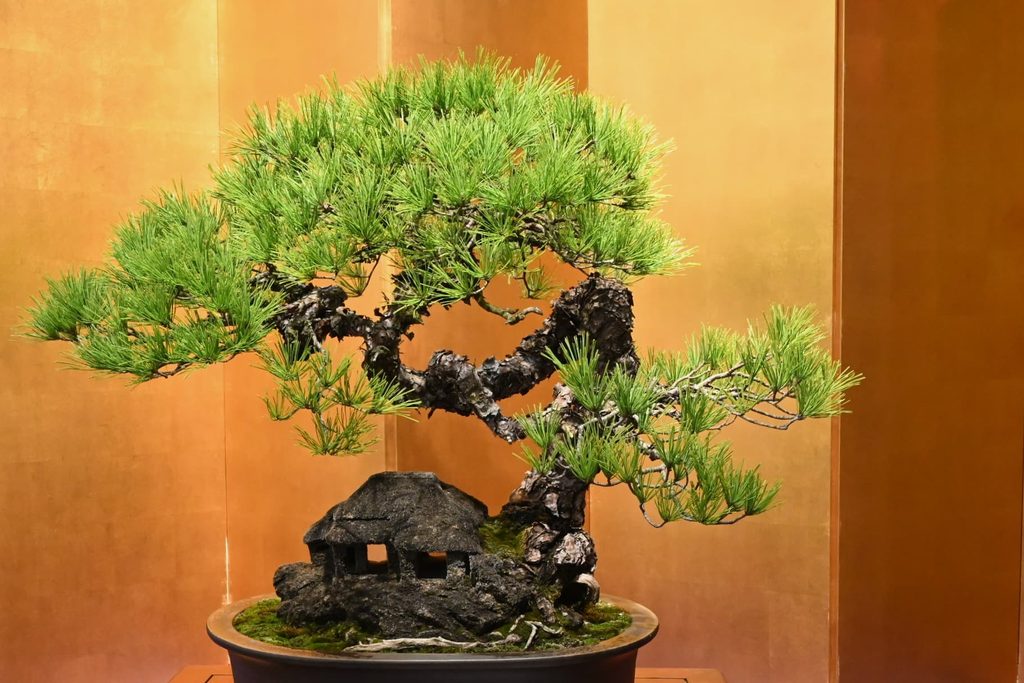
Young plants can also be grown in containers, especially when trained as bonsai.
Pests & Diseases
One of the most serious diseases affecting Japanese Red Pine in Japan is pine wilt disease. The disease is caused by the pine wood nematode (Bursaphelenchus xylophilus) and is transmitted primarily by the Japanese pine sawyer (Monochamus alternatus).
Affected trees can wilt rapidly and may die within a relatively short period. Japanese Red Pine and Japanese Black Pine are both important hosts of the disease.
Other insects and mites may occasionally affect Japanese Red Pine, but their importance varies by region and growing conditions.
Because pine wilt disease can be difficult to control once a tree becomes infected, prevention and early detection are more important than routine pesticide treatment. Management practices should follow local forestry and plant-health recommendations.
Cultivars
Japanese Red Pine has several cultivated forms selected for unusual growth habits, foliage, or ornamental characteristics.
| Cultivar / Form | Feature |
| Pinus densiflora ‘Umbraculifera’ (Tagyosho) | Low, many-stemmed form with an umbrella-like crown |
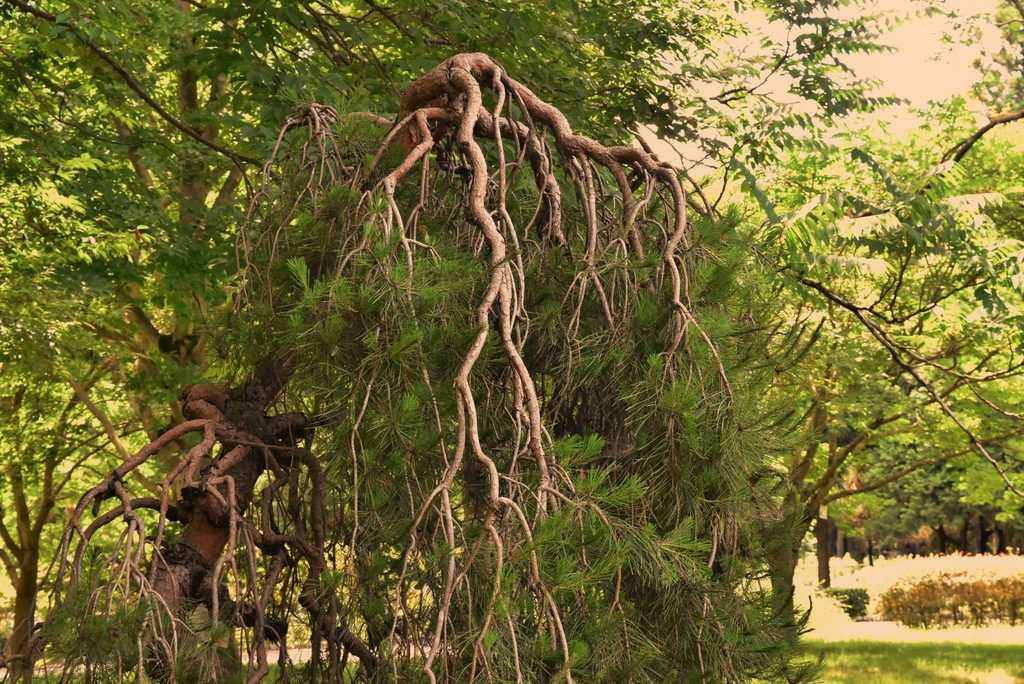
| ‘Pendula’ | Weeping form with pendulous branches |
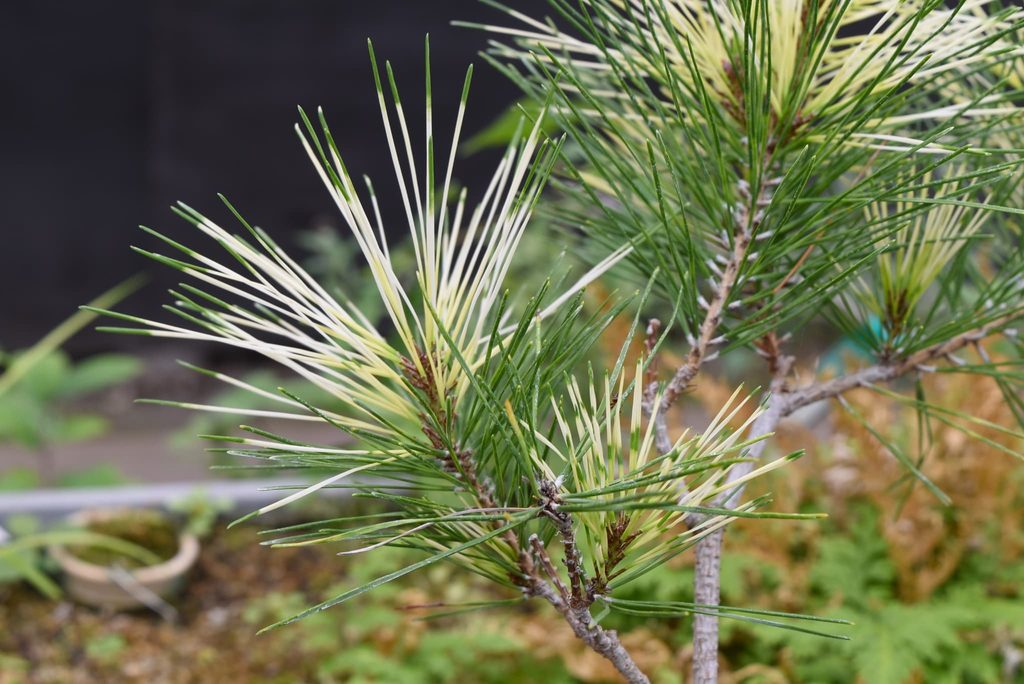
| ‘Oculus-draconis’ (Janome Akamatsu) | Needles with distinctive cream-colored bands |
| Utsukushimatsu | Naturally occurring, sculptural form with a distinctive multi-stemmed habit |
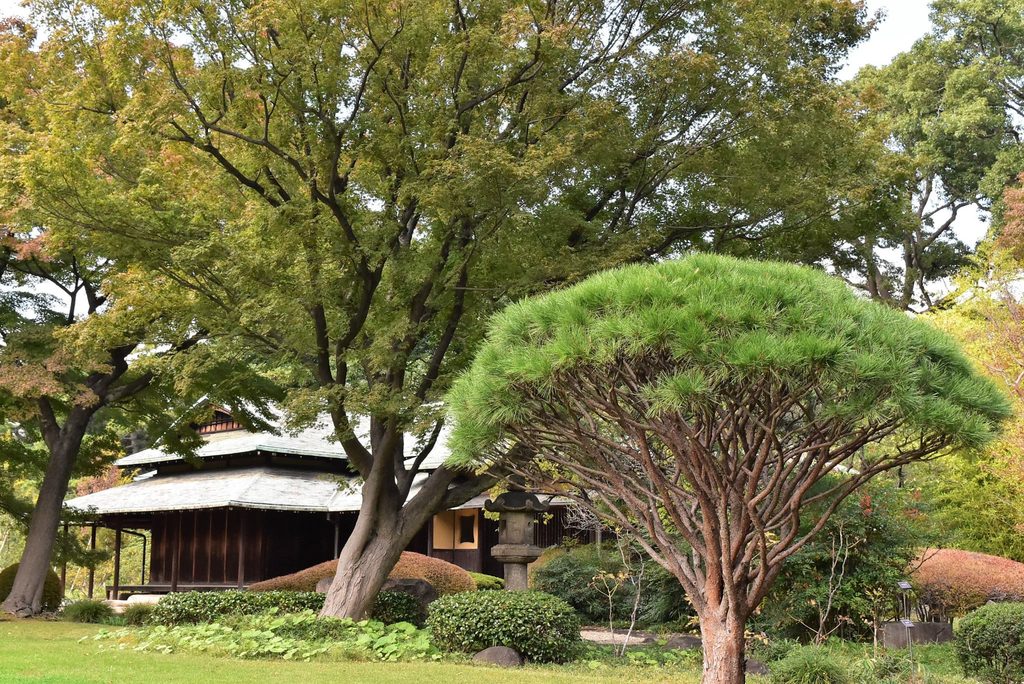
Utsukushimatsu is a naturally occurring form of Japanese Red Pine known for its distinctive, irregularly spreading crown. It closely resembles the cultivated form ‘Umbraculifera’ (Tagyosho), and the two have sometimes been treated under the same botanical name.
Similar Species
Scots Pine (Pinus sylvestris)
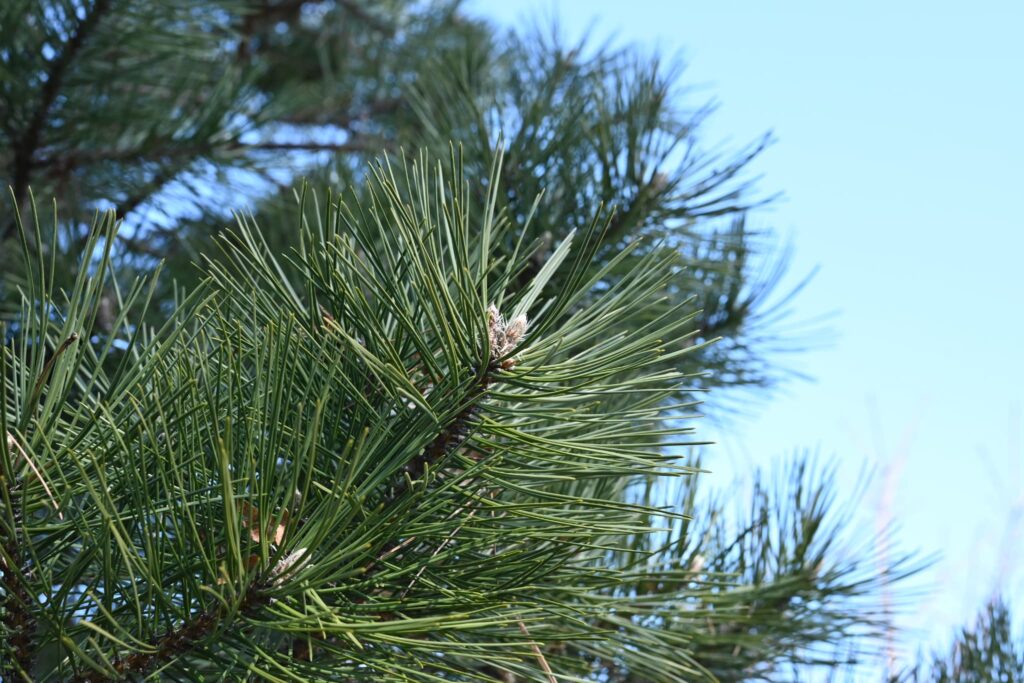
Scots Pine is native to Europe and northern Asia and is sometimes planted in Japan, particularly in colder regions.
It can resemble Japanese Red Pine because both species have reddish bark and paired needles. However, Scots Pine generally develops shorter, often bluish or grayish-green needles, and its mature upper trunk commonly shows distinctive orange-red bark.
Because both species are variable, identification should be based on several characteristics rather than bark color alone.
Masson’s Pine (Pinus massoniana)
Masson’s Pine is native mainly to southern and southeastern China and Taiwan. Its needles usually occur in pairs and are substantially longer than those of Japanese Red Pine, often approaching 20 cm.
The longer needles and differences in cone and bark characteristics can help distinguish it from Japanese Red Pine.
Japanese Black Pine (Pinus thunbergii)
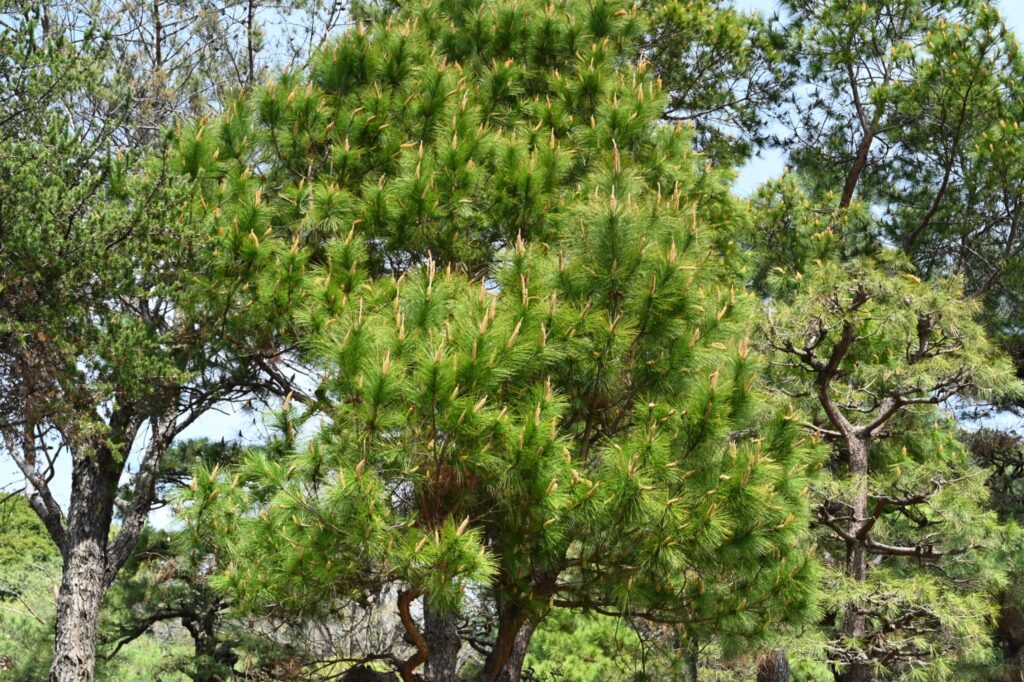
Japanese Red Pine and Japanese Black Pine are among the most commonly encountered native pines in Japan and can sometimes be difficult to distinguish, particularly in old trees.
| Feature | Japanese Red Pine | Japanese Black Pine |
| Bark | Reddish-brown, especially on upper trunk | Dark gray-brown to blackish |
| New shoots | Usually reddish-brown | Typically whitish due to resinous scales |
| Needles | Softer and more slender | Stiffer and sharper |
| Typical Habitat | Inland hills, mountains, and dry sites | Coastal areas and exposed sites |
| Salt Tolerance | Relatively low | Relatively high |
Natural hybrids between Japanese Red Pine and Japanese Black Pine, known as Aiguro-matsu, can occur. Such trees may show intermediate characteristics, making identification difficult.
Frequently Asked Questions
Is Japanese Red Pine native to Japan?
Yes. Japanese Red Pine (Pinus densiflora) is native to Japan, Korea, northeastern China, and the Russian Far East. In Japan, it occurs naturally from southern Hokkaido through Honshu, Shikoku, and Kyushu.
How fast does Japanese Red Pine grow?
Japanese Red Pine has a moderate growth rate when grown in full sun and suitable soil. Young trees can make substantial annual growth under favorable conditions, while growth is slower in poor, shaded, or otherwise stressful sites.
What is the difference between Japanese Red Pine and Japanese Black Pine?
Japanese Red Pine generally has reddish-brown bark, softer needles, and a lighter, more graceful appearance. Japanese Black Pine has darker bark, stiffer needles, and greater tolerance of salty coastal conditions.
New shoots are also useful for identification: Japanese Red Pine tends to have reddish-brown new shoots, while Japanese Black Pine typically has conspicuously whitish buds.
Why are the needles on my Japanese Red Pine turning brown?
Needle browning can result from natural aging, drought stress, root damage, poor drainage, disease, or insect damage.
If only older inner needles turn brown and fall during their normal seasonal cycle, the change may be natural. Widespread browning of current-year needles, sudden wilting, or rapid decline should be investigated because it may indicate a serious problem such as pine wilt disease.
Can Japanese Red Pine be used for bonsai?
Yes. Japanese Red Pine is a highly valued bonsai species. Its relatively small needles, attractive bark, flexible branches, and ability to develop an aged appearance make it particularly suitable for traditional pine bonsai.
Does Japanese Red Pine grow in shade?
Japanese Red Pine grows best in full sun. Young trees may tolerate some light shade, but prolonged shade can result in weak growth, sparse foliage, and poor crown development.
How long does Japanese Red Pine live?
Japanese Red Pine is a long-lived tree and can survive for several hundred years under suitable conditions. Old specimens are found in historic gardens, temples, shrines, and other traditional landscapes in Japan.
Is Japanese Red Pine drought tolerant?
Once established, Japanese Red Pine has moderate drought tolerance and can grow on relatively dry soils. However, prolonged severe drought can cause stress, needle browning, and reduced growth, particularly in young trees.
Is Japanese Red Pine salt tolerant?
No. Japanese Red Pine is less tolerant of salt spray than Japanese Black Pine and is generally better suited to inland locations than exposed coastal sites.
Can Japanese Red Pine grow in a container?
Yes. Young Japanese Red Pines can be grown in containers, and the species is widely used for bonsai. Containers must have good drainage, and the tree should receive plenty of sunlight.
How long do Japanese Red Pine cones take to mature?
Japanese Red Pine cones generally mature in the autumn of the year following pollination. From spring pollination to mature cones, the process therefore takes roughly 18 months.
Conclusion
Japanese Red Pine (Pinus densiflora) is one of Japan’s most recognizable native conifers, valued for its reddish bark, soft needles, graceful form, and long association with Japanese gardens, forestry, art, and literature.
It grows naturally in sunny, relatively dry habitats and is well adapted to poor, well-drained soils. Its differences from Japanese Black Pine—particularly its softer needles, reddish-brown bark, reddish new shoots, and preference for inland habitats—make it one of the most distinctive pines of the Japanese landscape.
Japanese Red Pine is also important ecologically and culturally, from its association with matsutake mushrooms to its traditional use as a timber tree and ornamental subject. Although pine wilt disease causes serious local losses in Japan, the species as a whole is currently classified as Least Concern rather than a threatened category by the IUCN.
For gardeners with sufficient space and sunlight, Japanese Red Pine remains an excellent specimen tree and one of the classic choices for Japanese-style landscapes and bonsai.