Hinoki Cypress vs. Sawara Cypress: How to Tell Them Apart
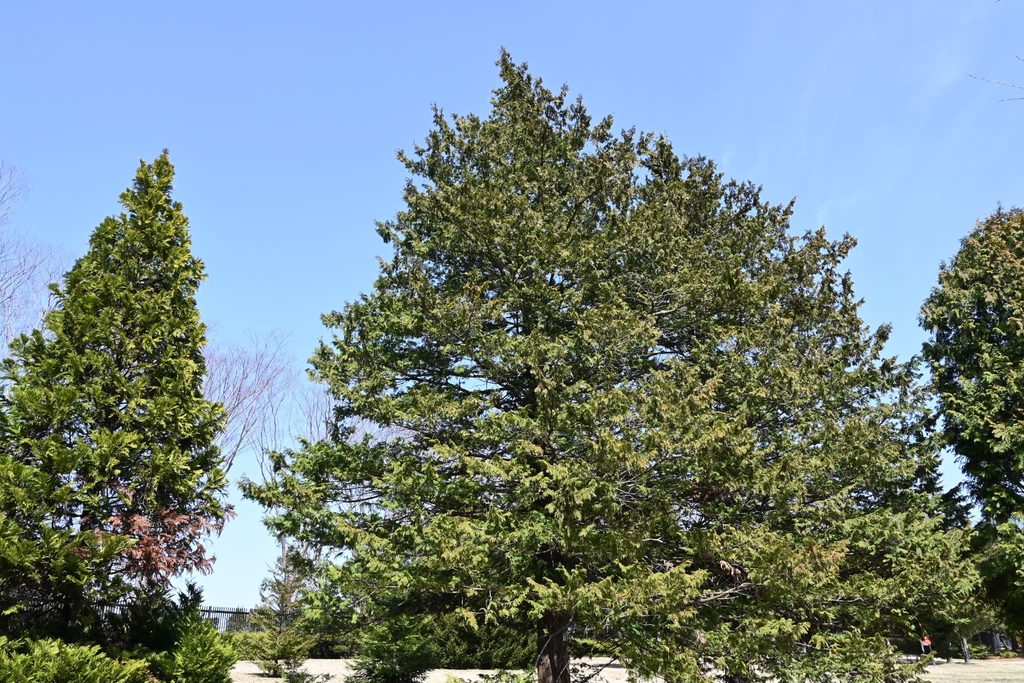
Hinoki Cypress (Chamaecyparis obtusa) and Sawara Cypress (Chamaecyparis pisifera) are closely related evergreen conifers native to Japan. They have similar scale-like foliage, reddish-brown bark, and upright forms, so they can be difficult to distinguish from a distance.
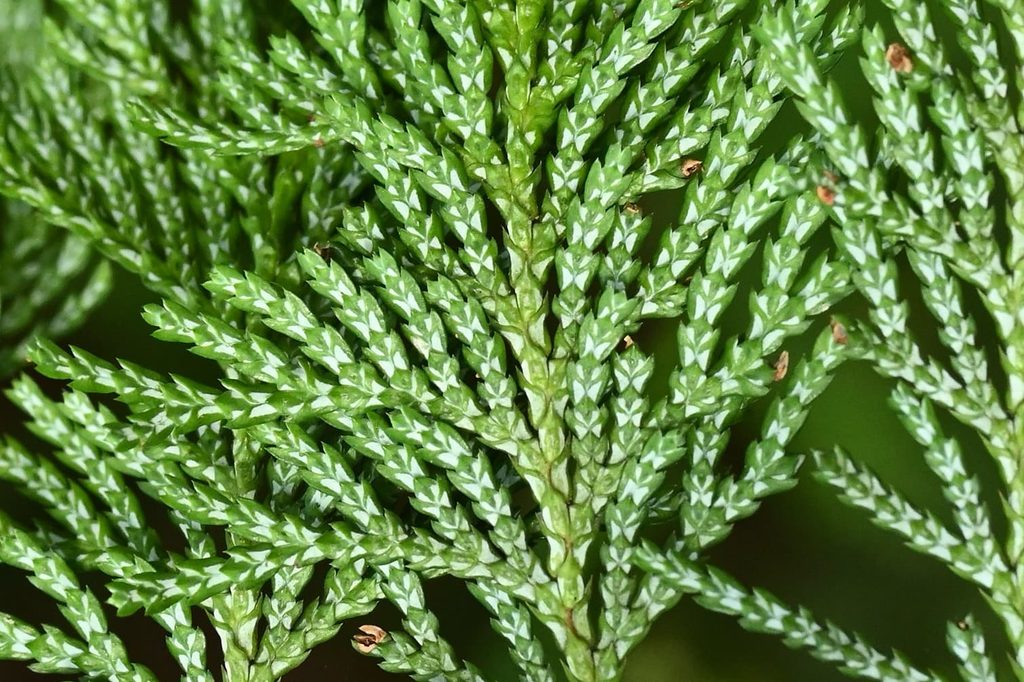
The most reliable way to tell them apart is to examine the underside of the foliage. Hinoki has white stomatal bands that typically form a Y-shaped pattern, while Sawara has bands that appear X-shaped or ribbon-like. Leaf tips provide another useful clue: Hinoki leaves have blunt, rounded tips, whereas Sawara leaves are pointed.
Both species were included among the Kiso Goboku, the five tree species whose harvesting was strictly restricted under the forest-protection policies of the Owari Domain during the Edo period.
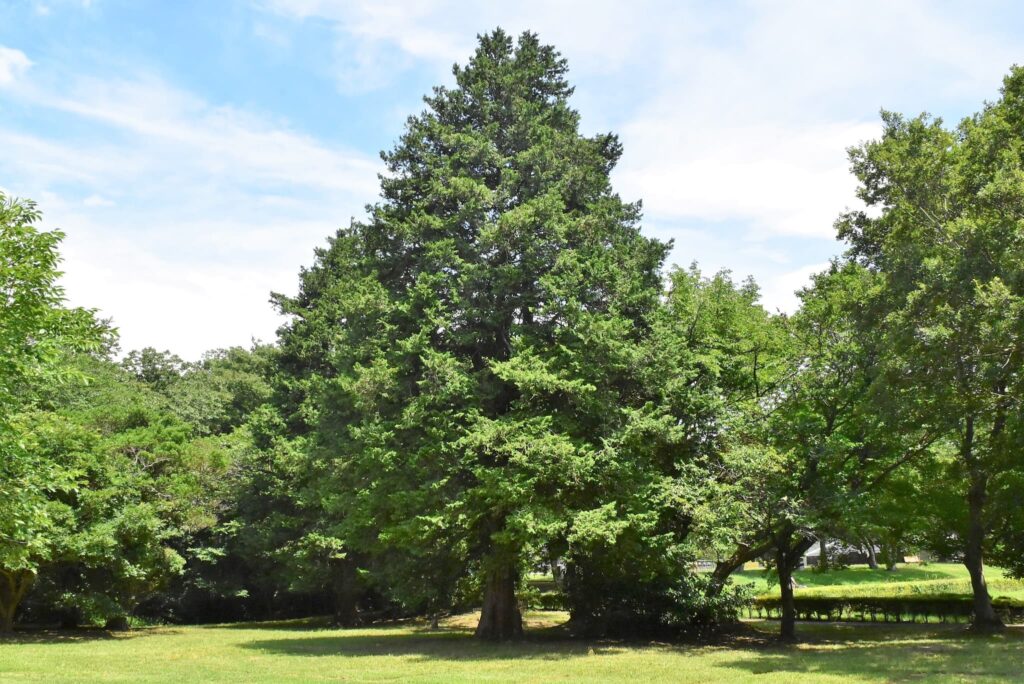 HInoki cypress
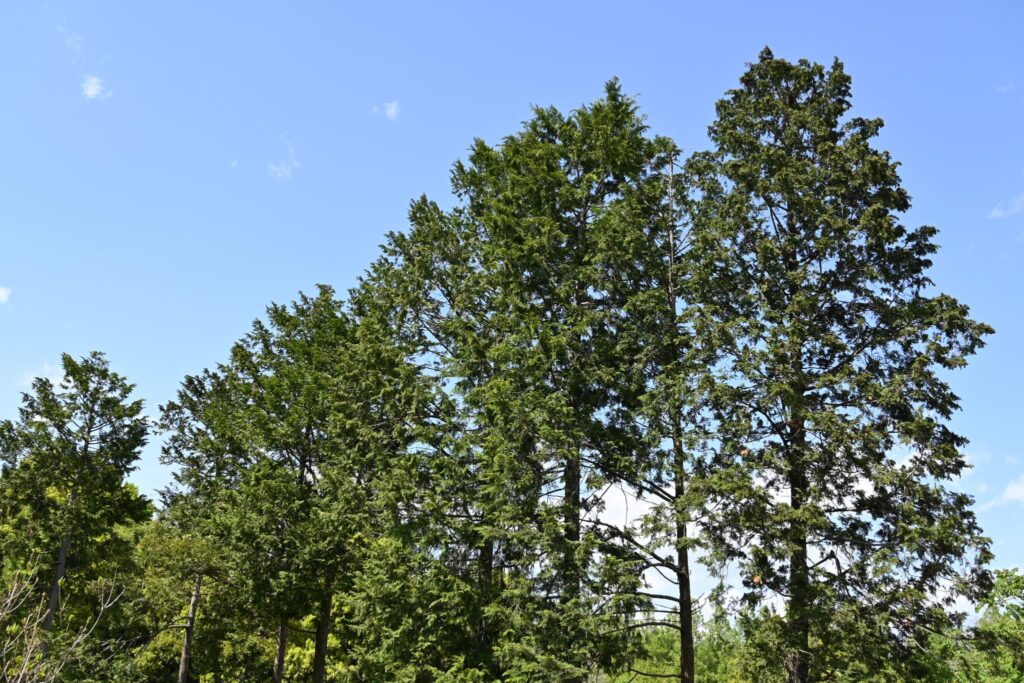 Sawara cypress
Table of Contents
- At a Glance
- Comparison Table
- Difference in Bark
- Difference in Foliage
- Difference in Cones
- Difference in Habitat
- Difference in Wood and Uses
- Quick Identification Summary
- Frequently Asked Questions
- Conclusion
At a Glance
The easiest way to distinguish Hinoki and Sawara Cypress is to turn a foliage spray over and look at the white stomatal bands.
- Leaf tips are blunt and rounded.
- White stomatal bands on the underside usually form a Y-shaped pattern.
- Foliage is generally dense and tightly overlapping.
- Cones are relatively large, usually around 1 cm across.
- The wood has a distinctive, strong fragrance.
- Leaf tips are pointed.
- White stomatal bands usually form an X-shaped or ribbon-like pattern.
- Foliage often appears somewhat more open.
- Cones are much smaller, usually only a few millimeters across.
- The wood is lighter and has a much milder scent.
Habitat can also provide a clue: Sawara naturally occurs especially often in moist valleys, depressions, and other damp sites, while Hinoki occupies a broader range of mountain habitats.
Comparison Table
| Feature | Hinoki Cypress | Sawara Cypress |
|---|---|---|
| Scientific name | Chamaecyparis obtusa | Chamaecyparis pisifera |
| Japanese name | Hinoki (ヒノキ) | Sawara (サワラ) |
| Family | Cupressaceae | Cupressaceae |
| Leaf tips | Blunt and rounded | Pointed |
| Underside of foliage | White stomatal bands form a Y-shaped pattern | White stomatal bands form an X-shaped or ribbon-like pattern |
| Foliage | Dense, closely overlapping | Often somewhat more open |
| Cones | Relatively large, about 1 cm across | Small, only a few millimeters across |
| Bark | Reddish-brown, peeling in broad strips | Reddish-brown to grayish-brown, peeling in finer strips |
| Habitat | Mountain forests, including relatively dry or exposed sites | Moist valleys, depressions, and other damp sites |
| Growth | Generally slower-growing | Generally more vigorous |
| Wood | Dense, durable, strongly fragrant | Light, workable, and less strongly scented |
| Traditional uses | Buildings, temples, shrines, baths, furniture | Buckets, tubs, barrels, furniture, and other water-related uses |
Difference in Bark
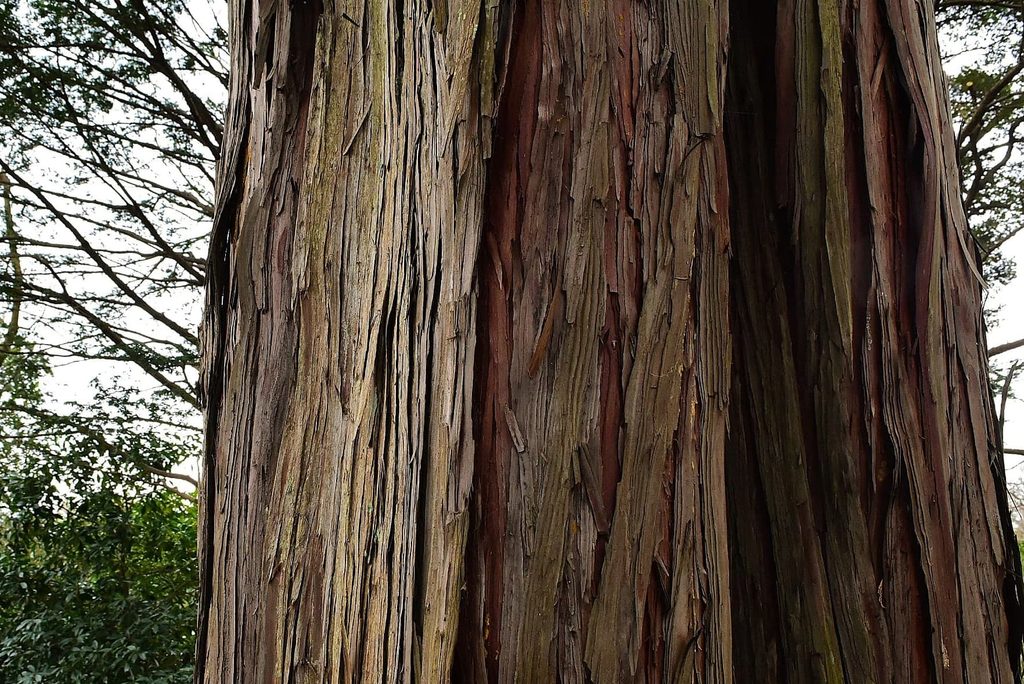
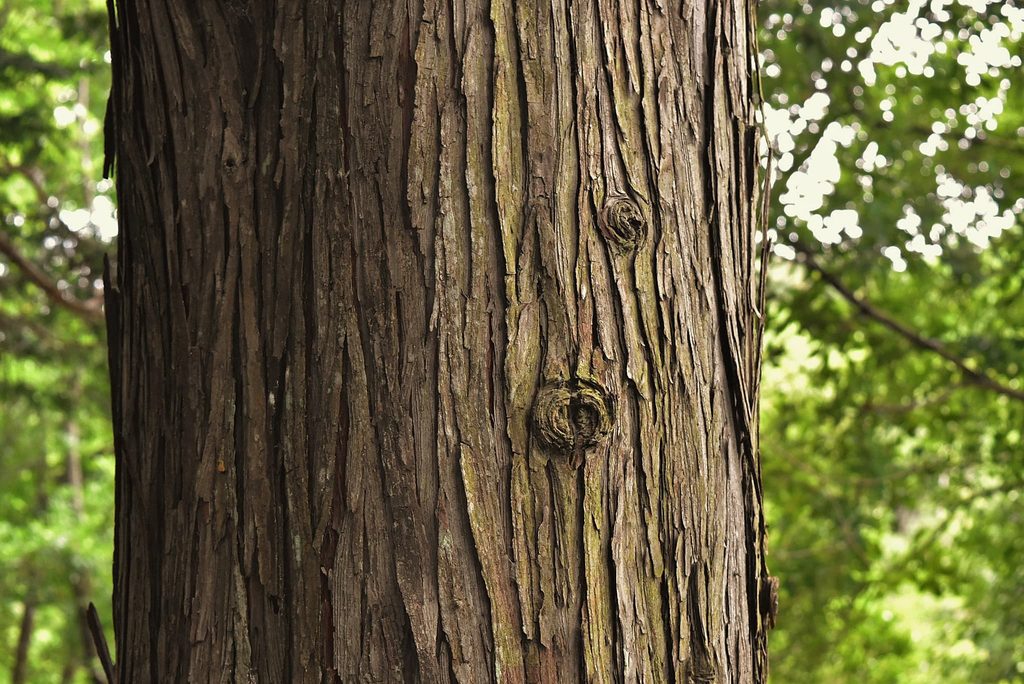
The bark of both species becomes reddish-brown and peels vertically as the trees mature, so bark alone is not the best way to identify them.
Hinoki typically develops relatively broad, long strips of peeling bark. Its durable bark has traditionally been used for hiwada, the thin bark used for traditional roofing.
Sawara generally develops finer, more string-like strips of peeling bark. Its bark can become grayish-brown with age.
Because bark characteristics vary with tree age and growing conditions, the foliage is a more reliable identification feature.
Difference in Foliage
The foliage provides the most reliable field mark.
Hinoki Cypress
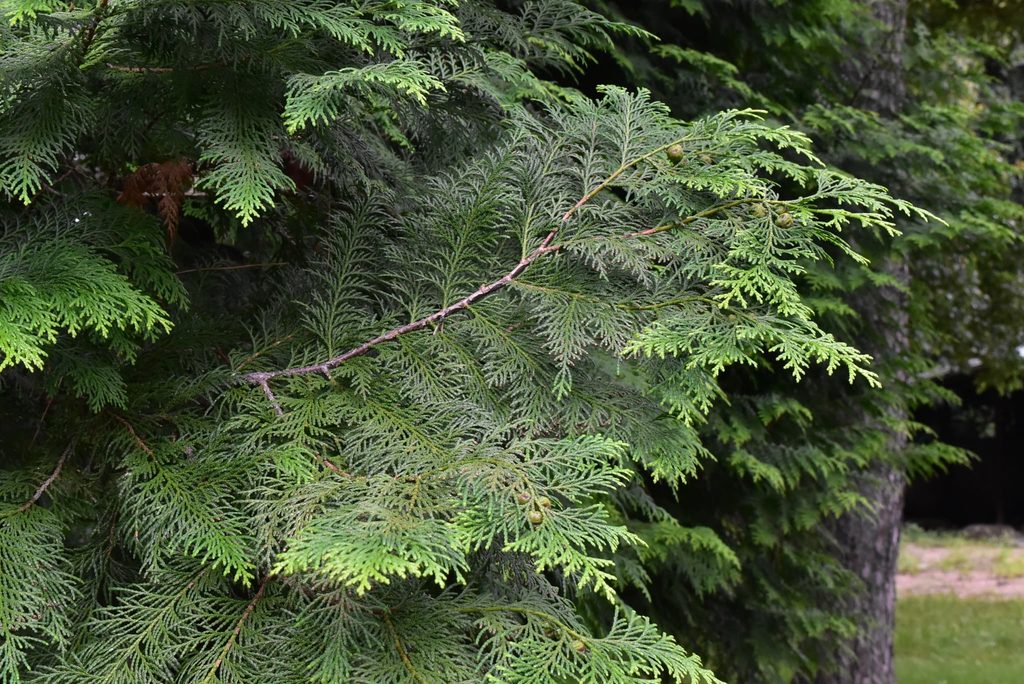
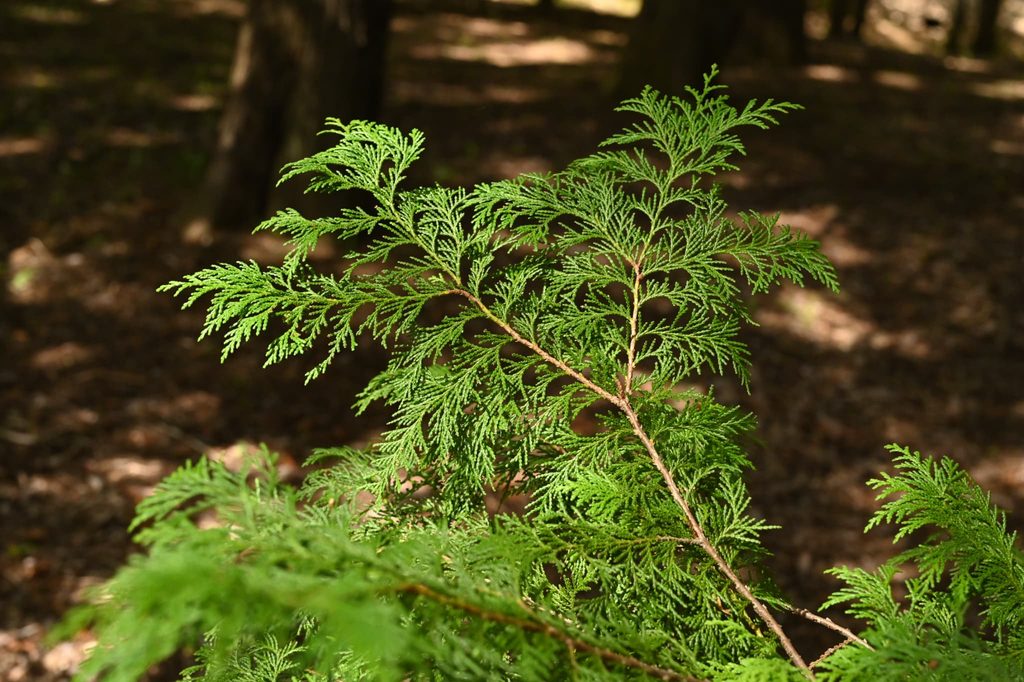
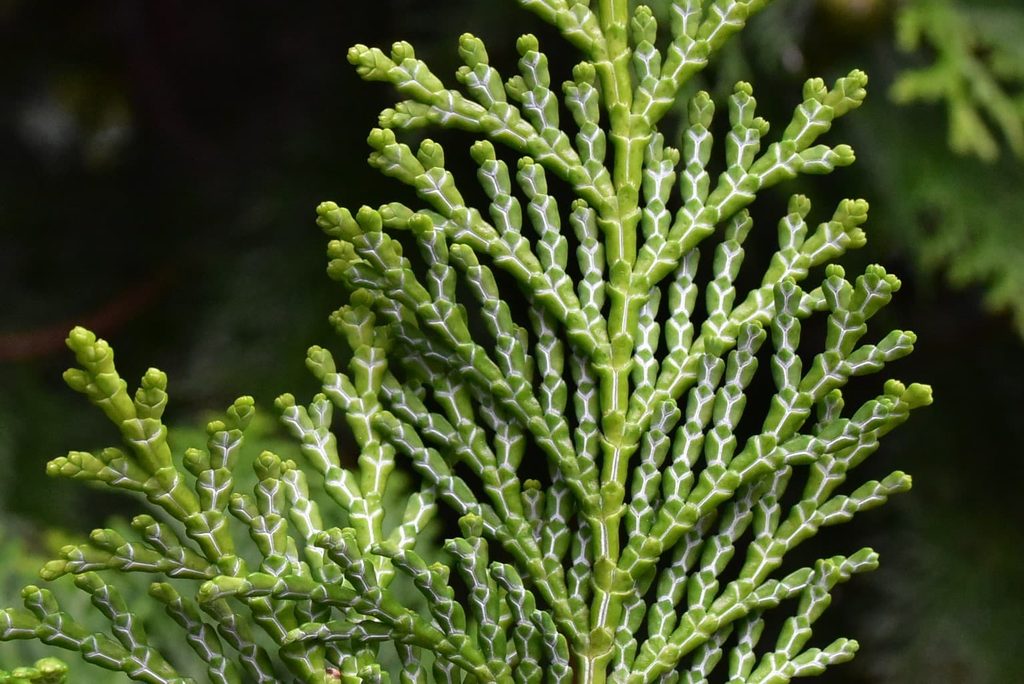
Hinoki has small, scale-like leaves with blunt, rounded tips. The foliage is usually dense, with the overlapping scales giving the sprays a relatively smooth appearance.
Turn a foliage spray over and look for the white stomatal bands. They typically form a distinctive Y-shaped pattern.
Sawara Cypress
Sawara also has small, scale-like leaves, but the tips are sharply pointed. The foliage can therefore feel slightly prickly when touched.
The underside has white stomatal bands that typically appear X-shaped or ribbon-like.
The difference is especially useful when the two species are growing near each other, although individual foliage sprays can vary. The underside markings are generally more dependable than overall foliage density.
What About Japanese Cedar?
Japanese Cedar (Cryptomeria japonica) is another common Japanese conifer that can be confused with Hinoki and Sawara, especially when viewed from a distance. Its foliage, however, is quite different: instead of flat, scale-like sprays, Japanese Cedar has short, sharply pointed leaves arranged spirally around the branchlets.
This makes the distinction relatively straightforward when the foliage is examined closely:
Hinoki: flat, scale-like leaves with blunt tips; white Y-shaped stomatal bands underneath.
Sawara: flat, scale-like leaves with pointed tips; white X-shaped or ribbon-like stomatal bands underneath.
Japanese Cedar: short, pointed, needle-like leaves arranged spirally around the branchlets.
For a closer look at Japanese Cedar, see [Japanese Cedar].
Difference in Cones
The cones provide another useful clue.
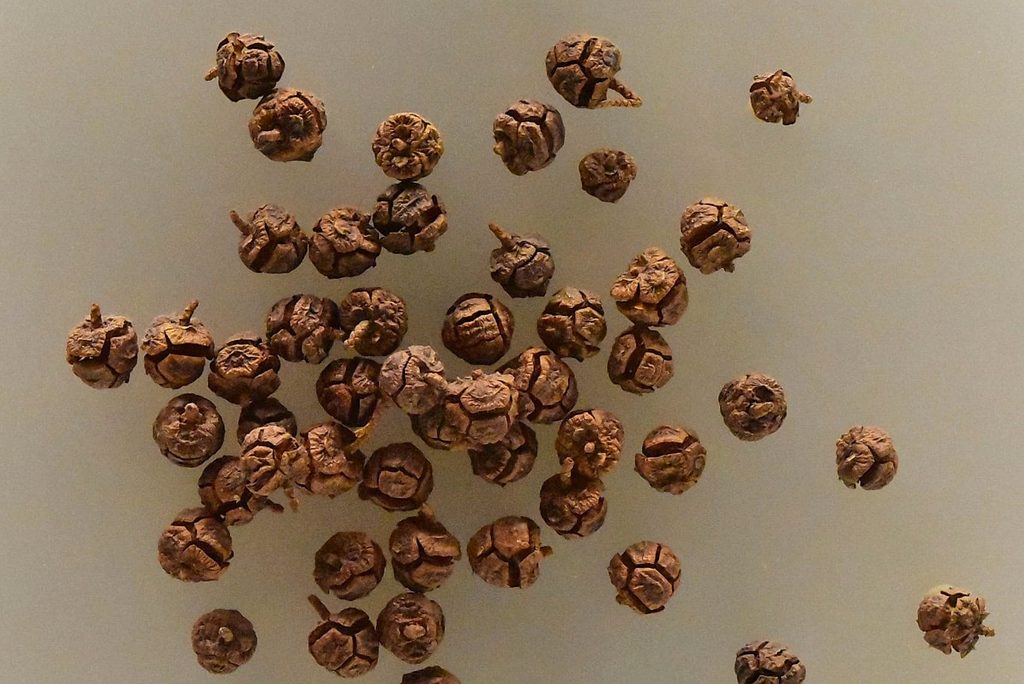
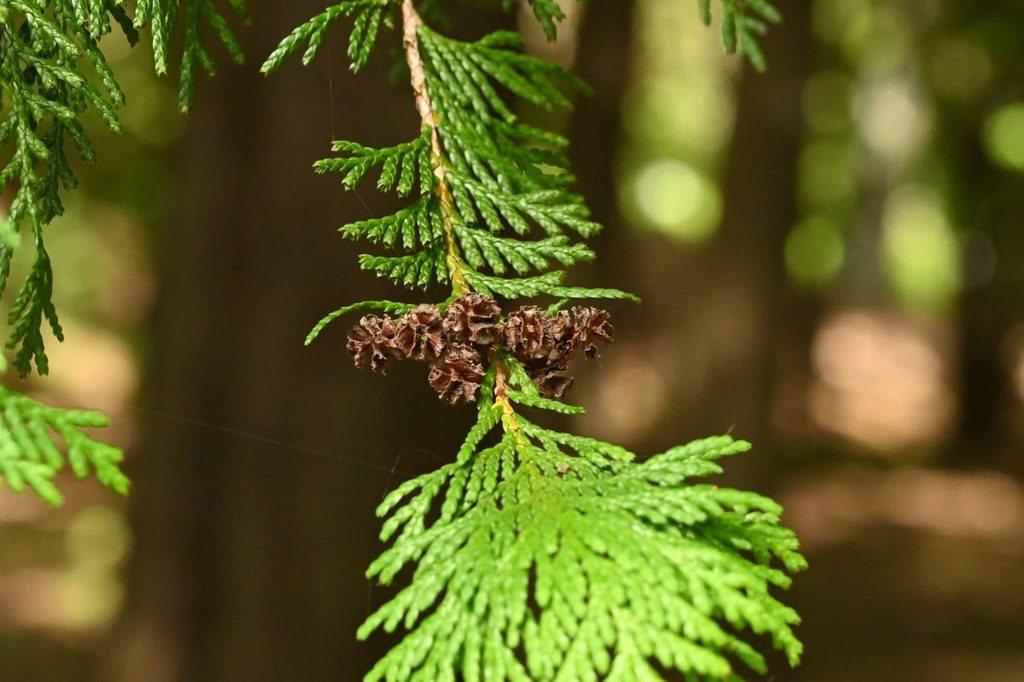
Hinoki produces relatively large, rounded cones, generally around 1 cm in diameter, although size varies.
Sawara produces much smaller cones, usually only a few millimeters across. They can appear noticeably smaller than those of Hinoki even when the trees themselves are similar in size.
Cone size is therefore useful when cones are present, but the foliage underside is a better primary identification feature.
Difference in Habitat
The two species overlap in range, but their preferred growing conditions differ.
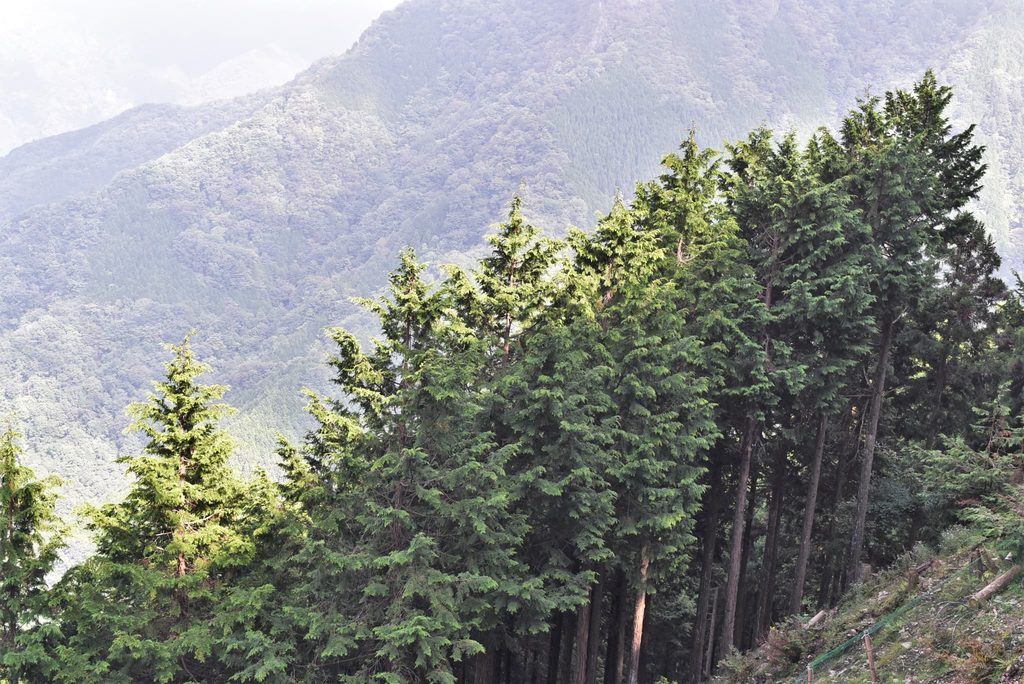
Hinoki occurs in a broad range of mountain environments and can grow on relatively dry, rocky, or exposed sites as well as in more favorable forest conditions.
Sawara has a stronger association with moist valleys, depressions, streamside areas, and other sites where soil moisture remains relatively high. It is generally more vigorous than Hinoki under favorable moist conditions.
Habitat should be treated as supporting evidence rather than a definitive identification feature. Both species are widely planted, and cultivated trees can occur far outside their natural habitats.
Difference in Wood and Uses
Hinoki is prized for its fine grain, durability, and distinctive fragrance. Its wood has been widely used for high-quality buildings, temples, shrines, furniture, baths, and other products where durability and appearance are important.
The wood of Sawara is lighter and less strongly scented than Hinoki. It has traditionally been used for buckets, tubs, barrels, furniture, and other products, particularly where resistance to moisture is useful.
The two species therefore have different traditional reputations in Japanese woodworking, but wood use alone is not a reliable way to identify a living tree.
Quick Identification Summary
When trying to distinguish the two trees in the field, check these features in this order:
- Look at the underside of the foliage.
- Hinoki: white Y-shaped stomatal bands.
- Sawara: white X-shaped or ribbon-like bands.
- Check the leaf tips.
- Hinoki: blunt and rounded.
- Sawara: pointed.
- Look at the cones if present.
- Hinoki: relatively large, around 1 cm.
- Sawara: much smaller, only a few millimeters.
- Consider the habitat.
- Hinoki: broader range of mountain habitats.
- Sawara: particularly common in moist valleys and depressions.
- Use bark and fragrance as supporting clues, rather than relying on them alone.
If the foliage is accessible, the underside of the leaves is usually enough to make the identification.
Frequently Asked Questions
What is the easiest way to tell Hinoki and Sawara Cypress apart?
Turn over a spray of foliage and look at the white stomatal bands.
Hinoki usually shows a Y-shaped pattern, while Sawara shows an X-shaped or ribbon-like pattern. The leaf tips provide a second clue: Hinoki is blunt-tipped, while Sawara is pointed.
Which has pointed leaves, Hinoki or Sawara?
Sawara Cypress has pointed leaf tips. Hinoki has blunt, rounded leaf tips.
This is one of the easiest differences to see when the foliage is examined closely.
Which tree grows faster, Hinoki or Sawara?
Sawara generally grows more vigorously than Hinoki, particularly under moist conditions. Growth rate nevertheless varies considerably with soil, light, climate, and cultivation conditions.
Which has the stronger fragrance?
Hinoki has the stronger and more distinctive fragrance. Sawara wood has a much milder scent.
This difference is particularly noticeable when comparing freshly cut wood, but fragrance should not be used as the primary method of identifying a living tree.
Are Hinoki and Sawara both Kiso Goboku?
Yes. Both are included among the Kiso Goboku, the five tree species historically subject to strict harvesting restrictions in the Kiso forests under the Owari Domain.
The other three are Asunaro (Thujopsis dolabrata), Nezuko or Kurobe (Thuja standishii), and Koyamaki (Sciadopitys verticillata).
Which tree prefers wetter conditions?
Sawara generally has a stronger preference for moist sites. It is commonly associated with valleys, depressions, and other moist locations.
Hinoki is more tolerant of a wider range of mountain conditions and can occur on relatively dry or exposed sites.
Can Hinoki and Sawara be grown in a home garden?
Both species can become large trees in cultivation, although many plants sold for gardens are compact cultivars rather than the wild-type species.
Sawara has produced numerous ornamental cultivars, including forms with distinctive foliage colors and growth habits. Hinoki also has many widely grown dwarf and compact cultivars.
When choosing a plant for a small garden, the mature size and growth habit of the particular cultivar are more important than the species name alone.
Conclusion
Hinoki and Sawara Cypress are closely related Japanese conifers that can look remarkably similar at first glance. Their bark, overall form, and scale-like foliage overlap enough that identification from a distance can be difficult.
Up close, however, the difference is straightforward. Hinoki has blunt leaf tips and Y-shaped white stomatal bands on the underside, while Sawara has pointed leaf tips and X-shaped or ribbon-like markings. Cone size, habitat, bark, and fragrance can provide additional supporting clues.
For field identification, start with the underside of the foliage. It is the most useful feature for separating these two otherwise very similar cypresses.