Northern Japanese Hemlock (Tsuga diversifolia): Identification, Care & Uses
Introduction
Northern Japanese hemlock (Tsuga diversifolia), known in Japan as kometsuga (コメツガ), is an evergreen conifer native to the cool mountain forests of Japan. It is closely related to the southern Japanese hemlock (Tsuga sieboldii), but generally has shorter needles, smaller cones, and hairy young shoots.
It is particularly characteristic of cool, snowy mountain forests and can become a substantial tree in favorable conditions. However, its preference for cool climates makes it less suitable for warm lowland gardens.
What Is the Northern Japanese Hemlock?
Northern Japanese hemlock is an evergreen conifer in the pine family (Pinaceae). In Japan, it occurs mainly in the mountains of Honshu and Kyushu, with populations also recorded in Shikoku. It is especially associated with cool mountain forests at roughly 700–2,000 m above sea level.
It is highly shade-tolerant and may occur as a dominant tree in cool coniferous forests. In exposed or high-elevation locations, it may remain relatively small.
Overview
| Item | Description |
|---|---|
| Scientific Name | Tsuga diversifolia |
| Common Name | Northern Japanese hemlock |
| Japanese Name | コメツガ (Kometsuga; 米栂) |
| Family | Pinaceae |
| Native Range | Mountainous regions of Japan |
| Plant Type | Evergreen coniferous tree |
| Typical Habitat | Cool mountain and subalpine forests |
| Elevation | About 700–2,000 m |
| Height | Up to about 25 m (82 ft) |
| Flowering | Spring; male and female cones |
| Seed Cone | About 1.5–2.5 cm long |
| USDA Hardiness | About Zone 5 |
| Growth Rate | Slow |
| Light | Shade to sun in cool climates |
Characteristics
| Item | Description |
|---|---|
| Leaf Type | Evergreen needles |
| Needle Length | About 5–15 mm, sometimes to 18 mm |
| Needle Color | Glossy dark green above, white beneath |
| Young Shoots | Initially orange-brown and finely hairy |
| Seed Cones | Ovoid, about 1.5–2.5 cm long |
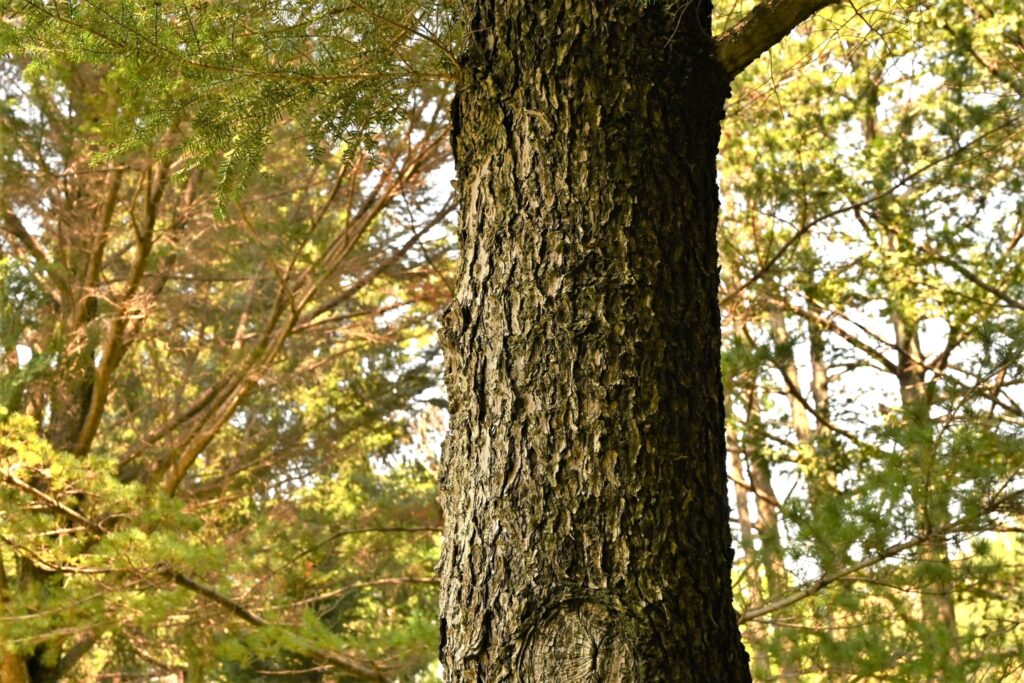
| Bark | Dark gray-brown, furrowed with age |
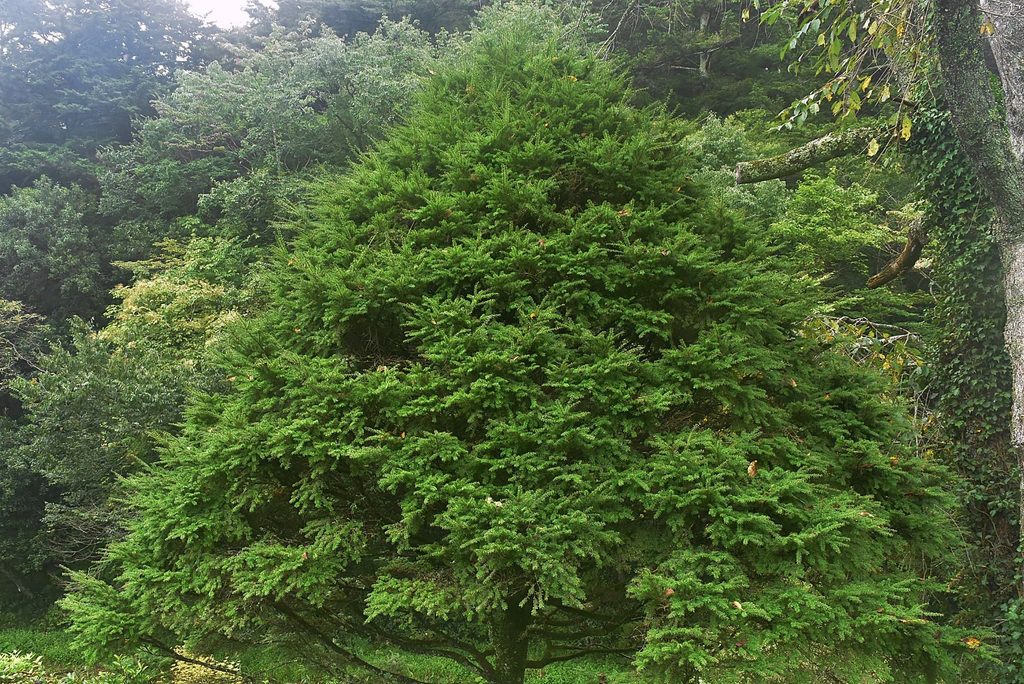
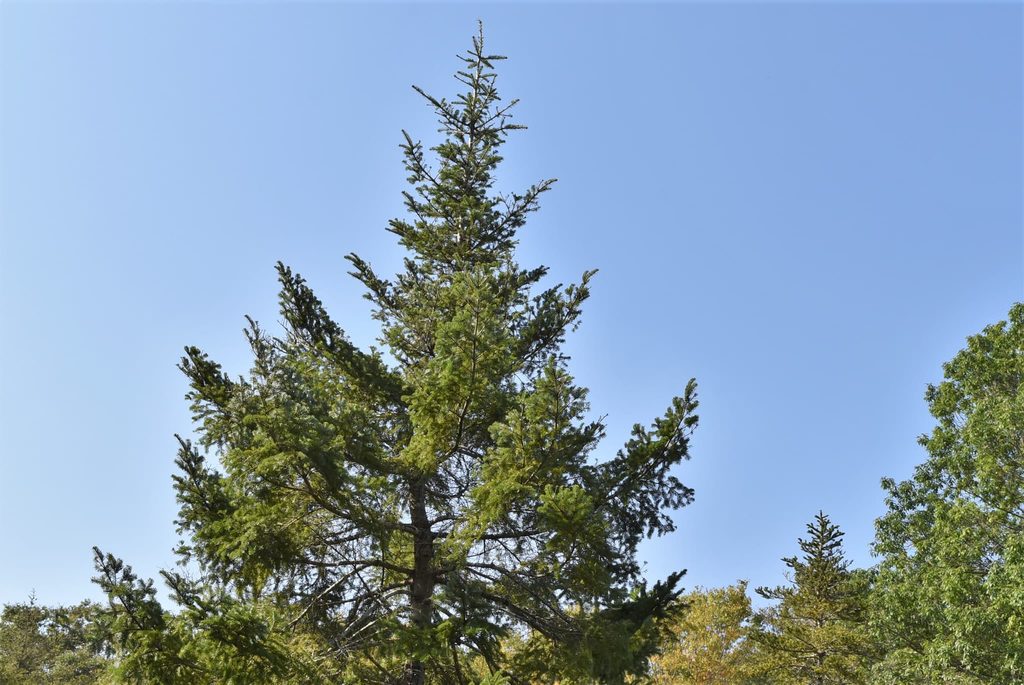
| Crown | Dense and broadly domed when mature |
Foliage
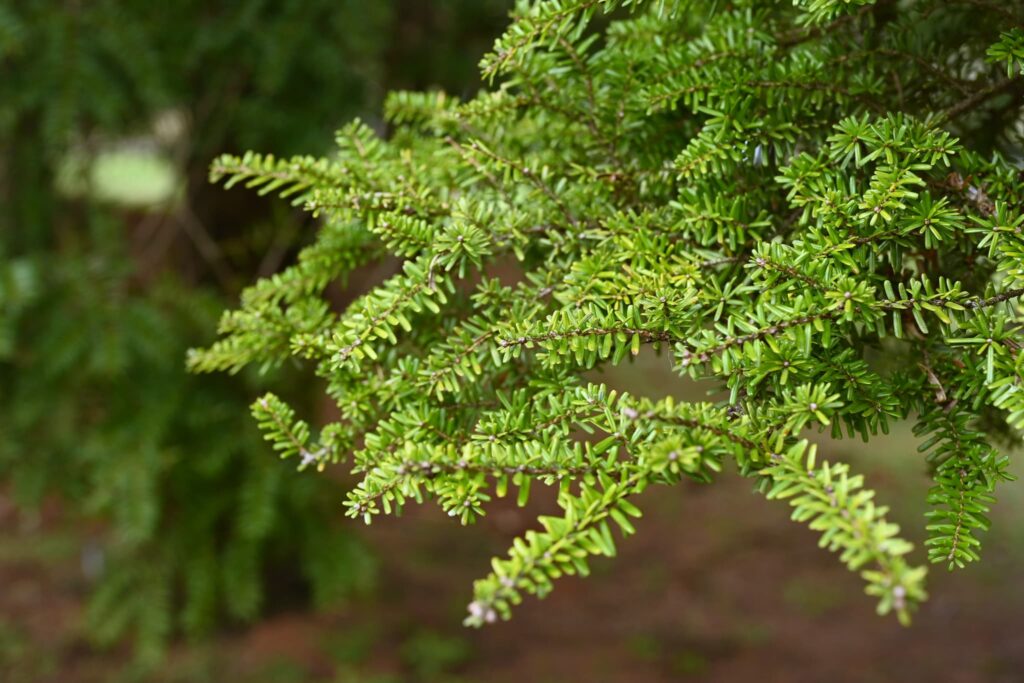
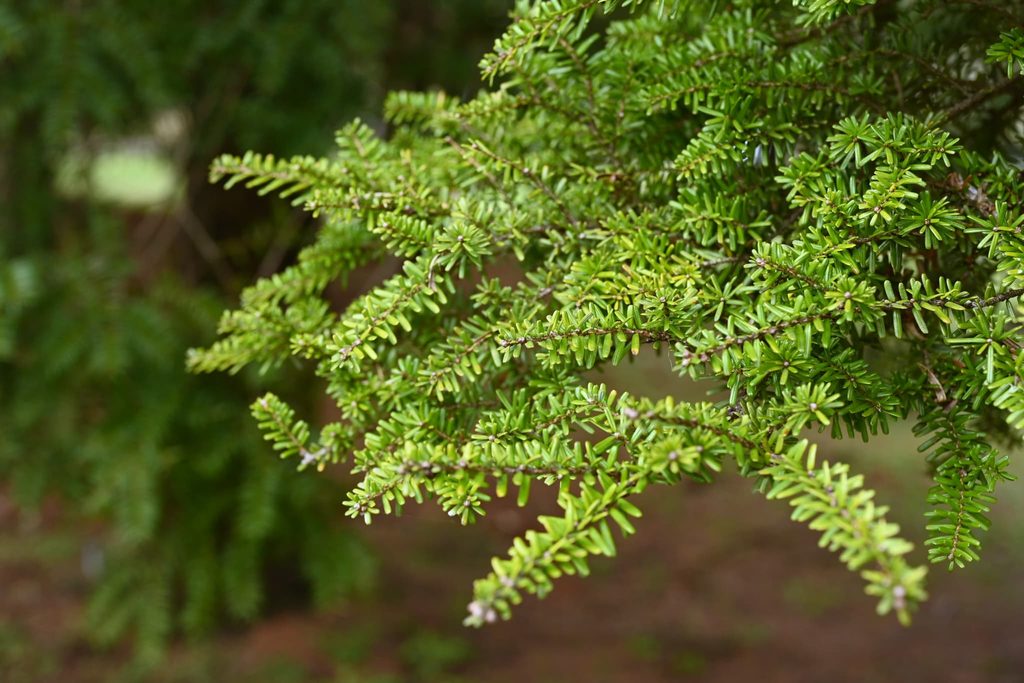
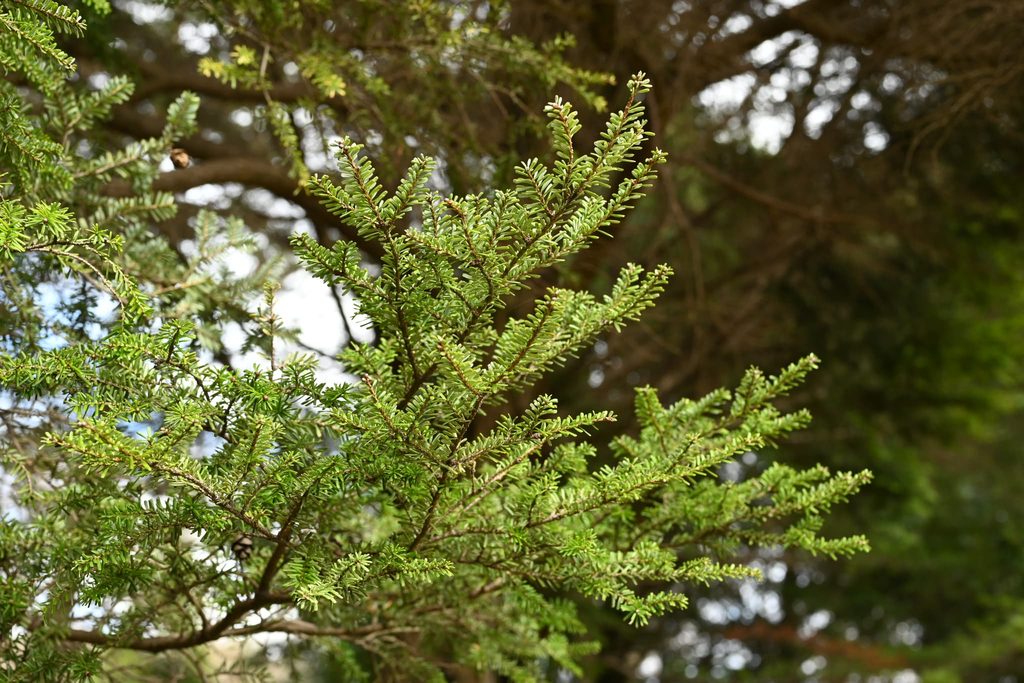
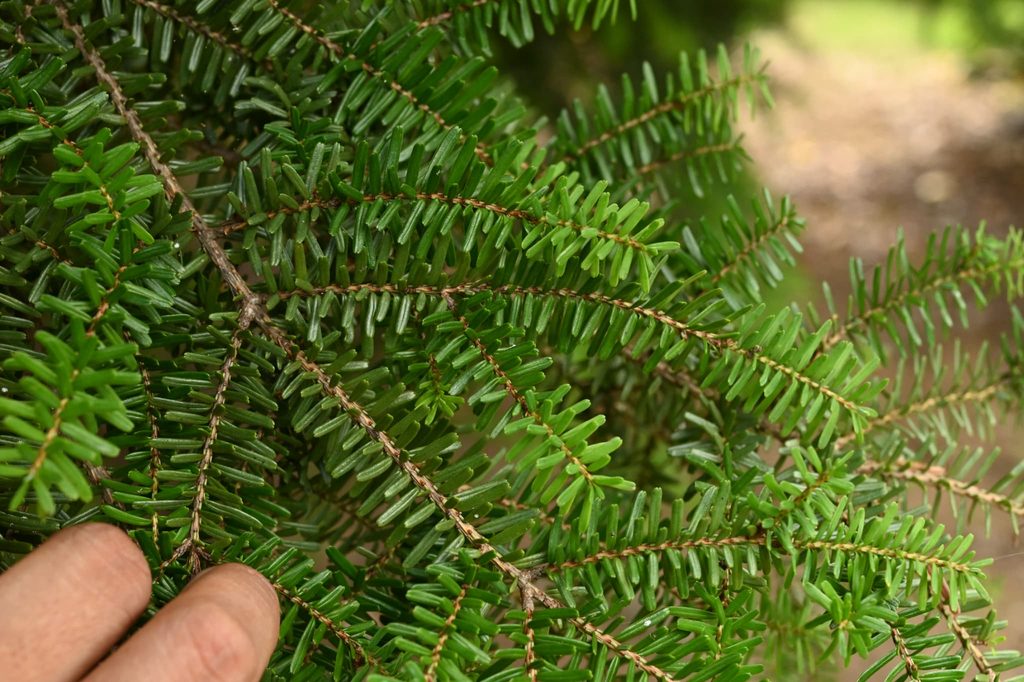
The needles are short, flattened, and dark glossy green above. They are generally about 5–15 mm long and have a distinctly notched or indented tip. The underside has two conspicuous white stomatal bands separated by the midrib.
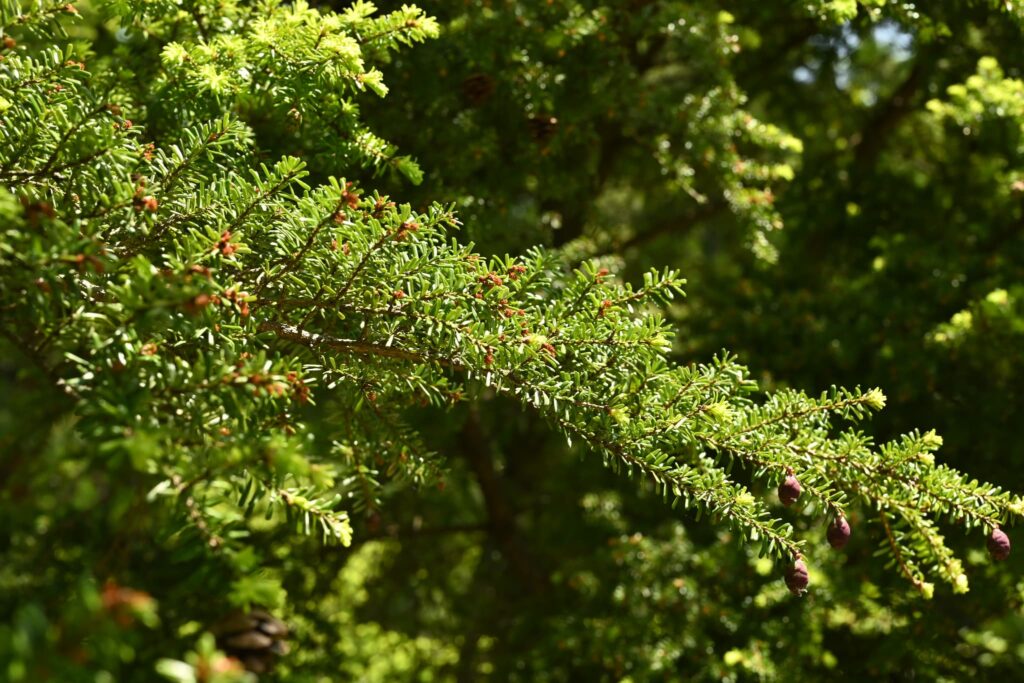
Young shoots are an especially useful feature when identifying the species: they are finely hairy when young, becoming smoother and brown with age.
Flowers
Like other hemlocks, northern Japanese hemlock is monoecious, producing male and female reproductive structures on the same tree.
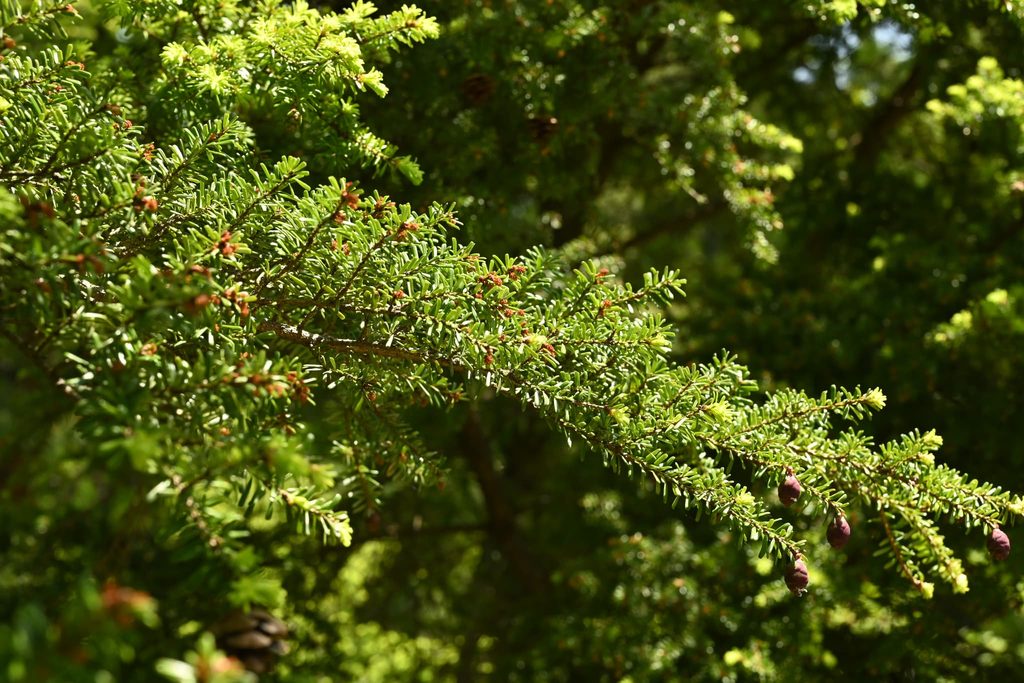
The small male pollen cones appear in spring and release yellow pollen. Female seed cones develop on the outer branches. These structures are inconspicuous compared with the flowers of flowering trees.
Cones
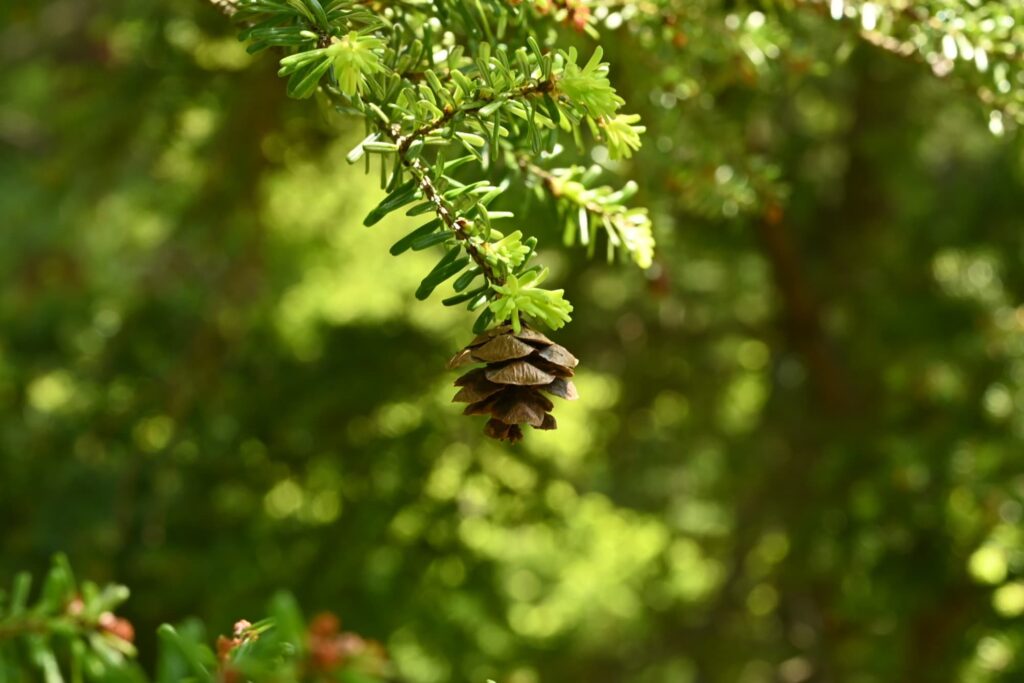
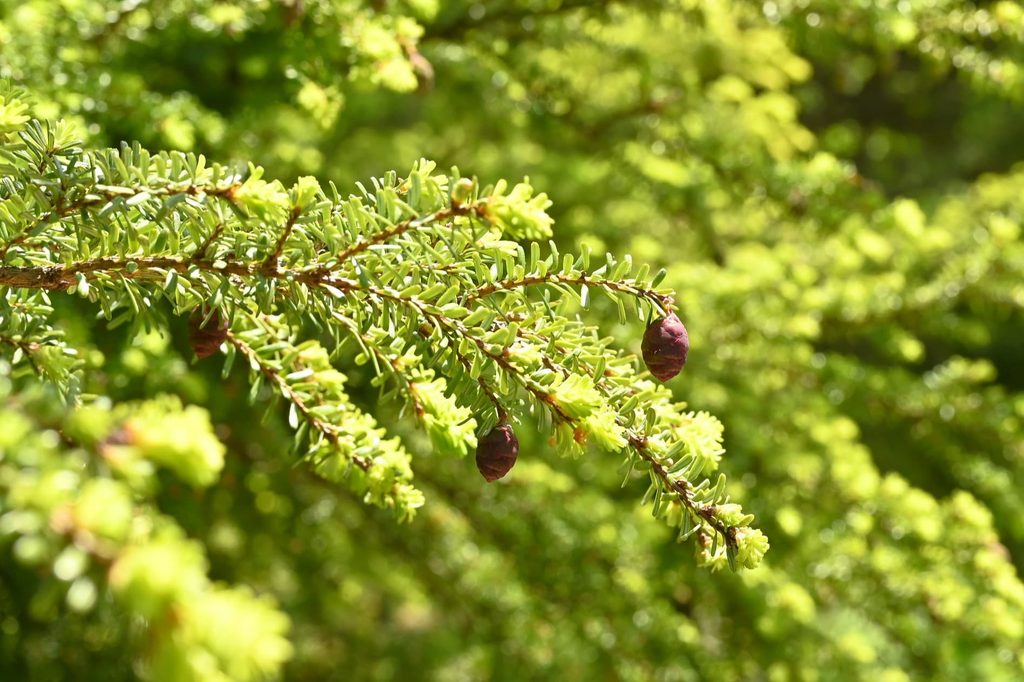
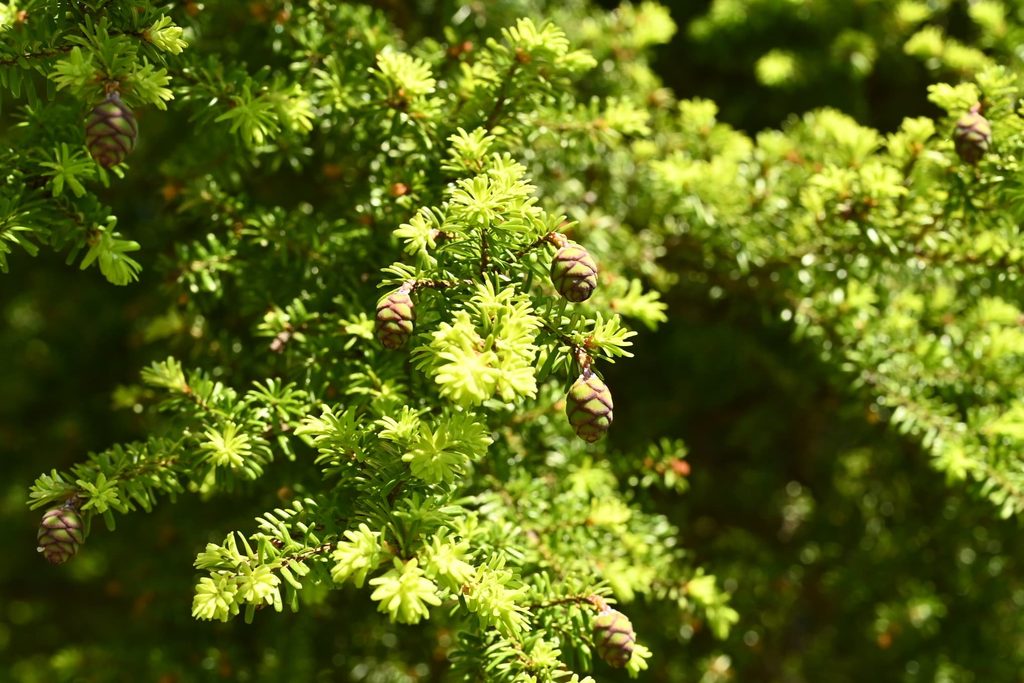
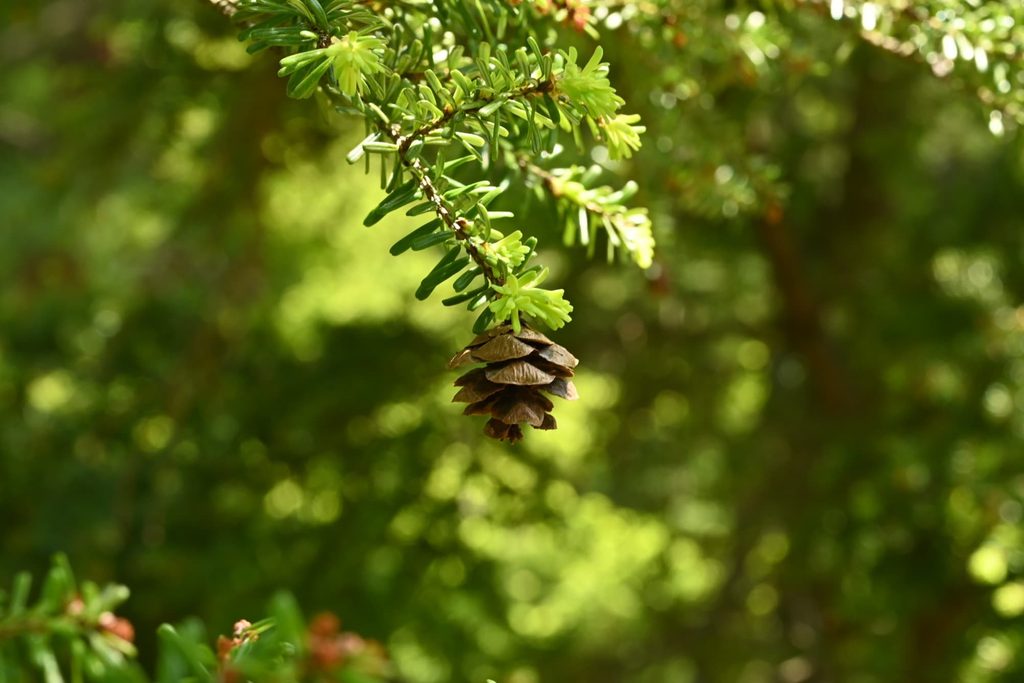
The seed cones are ovoid and usually about 1.5–2.5 cm long. They may be green or purplish green when developing and turn reddish brown to dark brown as they mature.
The cones are generally smaller and more rounded than those of southern Japanese hemlock (Tsuga sieboldii).
Bark & Timber
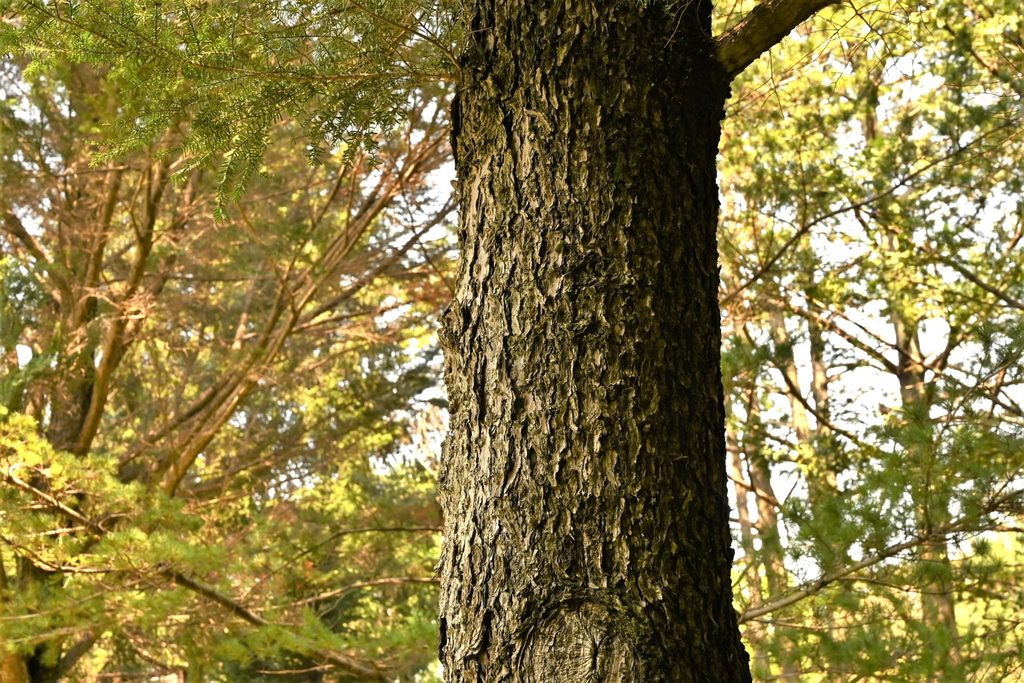
The bark is dark gray-brown and becomes increasingly furrowed and scaly with age. Mature trees develop a dense, broad crown.
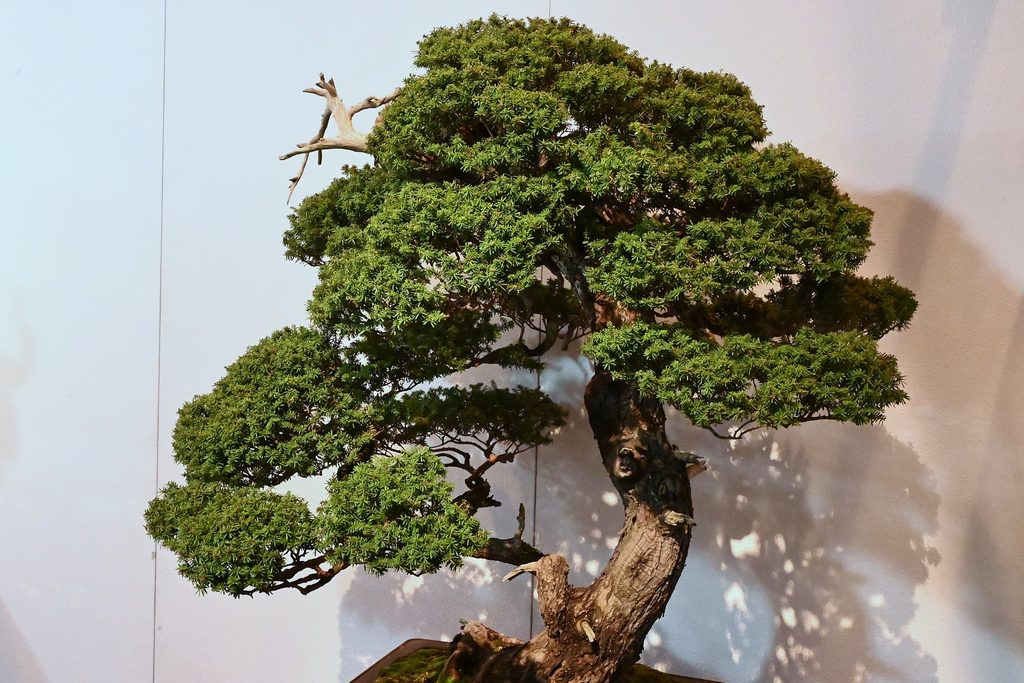
The wood is relatively dense and hard and has been used in Japan for furniture, finish carpentry, utensils, and other wood products. The species also has a long history of use as a timber tree and is valued in bonsai culture.
The Japanese name 米栂 is easily confused with 米栂 (beitsuga), the Japanese trade name for western hemlock (Tsuga heterophylla). They are completely different species: kometsuga is native to Japan, whereas western hemlock is native to western North America.
Size & Growth
Northern Japanese hemlock can reach about 25 m (82 ft) in favorable mountain habitats, although trees are often much smaller in exposed or high-elevation sites.
It is a slow-growing species. In cultivation it may remain shrub-like for many years, particularly in cooler climates.
Uses & Cultural Significance
Habitat and Forests
Northern Japanese hemlock is characteristic of cool mountain forests in Japan. It is highly shade-tolerant and can be an important or dominant tree in mixed coniferous forests.
Its associates may include firs, spruces, larches, five-needle pines, arborvitae, and other cool-climate conifers.
Timber
The wood is relatively dense and hard and has been used for furniture, finish carpentry, utensils, and other products. It has also been used for pulp and other timber applications.
The species is also valued as a bonsai subject because of its small needles, dense branching, and slow growth.
Growing Guide
| Item | Description |
|---|---|
| Light | Shade to part shade; full sun is possible in cool climates |
| Soil | Moist, well-drained, preferably acidic |
| Moisture | Evenly moist but not waterlogged |
| Cold Hardiness | About USDA Zone 5 |
| Heat Tolerance | Limited in hot lowland climates |
| Pruning | Usually little pruning is required |
| Home Garden | Best suited to cool climates and specialist collections |
Light & Soil
Northern Japanese hemlock is highly shade-tolerant and naturally grows beneath or among taller trees. In cultivation, it is best protected from intense heat and drying conditions.
A moist, well-drained soil is preferable. Soil that remains excessively wet should be avoided, despite the species’ preference for consistently moist conditions.
Heat & Moisture
Cold is generally less of a problem than heat. The species is adapted to cool mountain climates with snowy winters and relatively wet summers.
In warm lowland areas, prolonged summer heat can make cultivation difficult. A cool, sheltered site with adequate soil moisture is therefore preferable.
Wind & Snow
The species naturally occurs in snowy mountain regions, but cultivated trees are best protected from strong drying winds. Maintaining adequate soil moisture is particularly important during hot, dry weather.
Cold Hardiness
Northern Japanese hemlock is considerably adapted to cold conditions and is generally considered hardy to about USDA Zone 5. Its natural distribution at high elevations should not, however, be interpreted as meaning that it requires extreme cold; moisture and summer temperatures are also important.
Pruning
The species generally develops an attractive form without heavy pruning. Remove dead, damaged, or poorly positioned branches as necessary, and avoid severe cutting into old wood.
Its slow growth means that major structural mistakes can take many years to correct.
Suitability for Home Gardens
The species can be grown successfully in suitable climates, but it is not an easy choice for hot lowland or urban gardens.
It is most appropriate where summers are relatively cool and the soil can be kept evenly moist. In warmer regions, dwarf cultivars may be more practical than the full-sized species.
Pests and Diseases
Northern Japanese hemlock can be affected by some of the pests and diseases that occur on other hemlocks, including mites, defoliating insects, cankers, needle diseases, and root problems.
Good air circulation, appropriate watering, and avoidance of severe heat stress are important for maintaining healthy plants.
Cultivars
Tsuga diversifolia ‘Loowit’
‘Loowit’ is a dwarf, compact selection of northern Japanese hemlock. It forms a low, rounded mound and is suitable for rock gardens, conifer collections, and other small-scale plantings.
The cultivar was selected from seed collected in the high-elevation region of Fukushima Prefecture, Japan. It typically reaches only about 2 ft (60 cm) in height and width in garden cultivation.
Similar Species
Southern Japanese Hemlock (Tsuga sieboldii)
Northern and southern Japanese hemlock are closely related and can be difficult to distinguish, particularly when only a single characteristic is considered. A combination of young shoots, needles, cones, and habitat is more reliable.
| Feature | Northern Japanese Hemlock (T. diversifolia) | Southern Japanese Hemlock (T. sieboldii) |
|---|---|---|
| Distribution | More northern and higher elevations | Mainly central and southern Japan |
| Young shoots | Finely hairy | Generally hairless |
| Needles | Usually shorter, about 5–15 mm | Usually longer, about 7–25 mm |
| Needle arrangement | Dense, more closely spaced | More openly arranged |
| Cones | Smaller, ovoid | Larger and generally more elongated |
| Habitat | Cool mountain and subalpine forests | Temperate forests at generally lower elevations |
The two species are morphologically very similar, and reliable identification may require examining several features rather than relying on needle length alone.
Western Hemlock (Tsuga heterophylla)
Western hemlock is a North American species and is not the same tree as Japanese kometsuga.
In Japan, the name beitsuga (米栂) is widely used for western hemlock timber. The identical Japanese characters can therefore cause confusion between the two species.
Canada Hemlock (Tsuga canadensis)
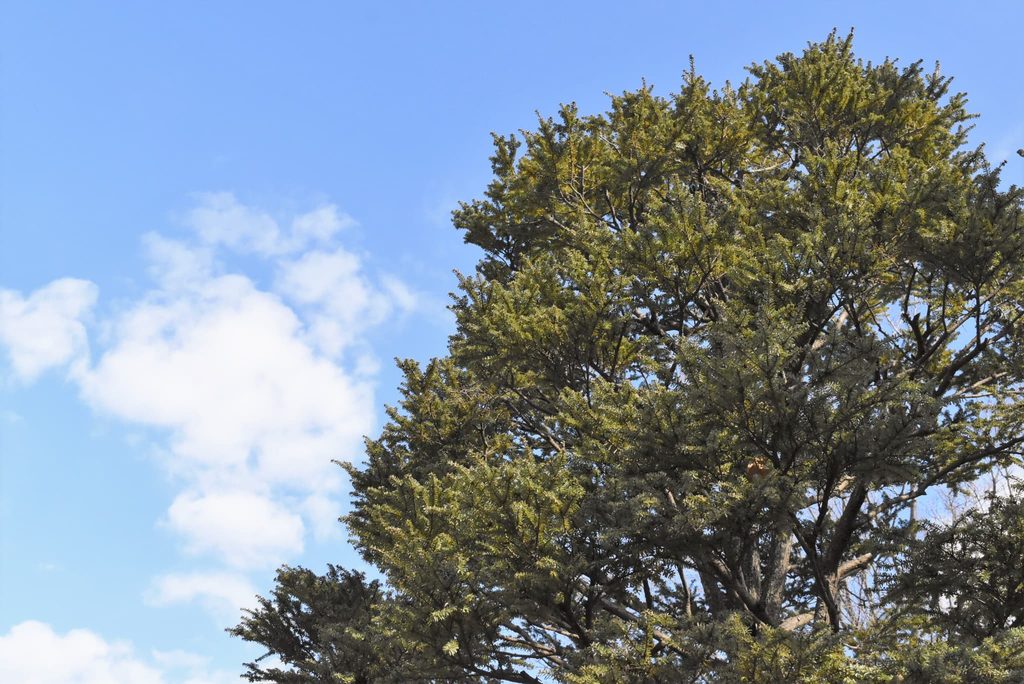
Canada hemlock is another member of the genus Tsuga, native to eastern North America. It is widely cultivated as an ornamental tree and has numerous garden cultivars.
It should not be confused with either of Japan’s native hemlocks.
Frequently Asked Questions
Is kometsuga the same as western hemlock?
No. Kometsuga is Tsuga diversifolia, a Japanese species. Western hemlock is Tsuga heterophylla, native to western North America. The Japanese timber name 米栂 (beitsuga) is responsible for much of the confusion.
How can I tell northern Japanese hemlock from southern Japanese hemlock?
Look at several characteristics together. Northern Japanese hemlock generally has shorter needles, hairy young shoots, and smaller, more rounded cones. It also tends to occur at higher elevations and farther north.
Is northern Japanese hemlock evergreen?
Yes. It is an evergreen conifer and retains its needles throughout the year.
How tall does northern Japanese hemlock become?
It can reach about 25 m (82 ft) in favorable natural conditions, although it is often considerably smaller in exposed mountain habitats or in cultivation.
Can I grow northern Japanese hemlock in a lowland garden?
It can be grown in suitable cool climates, but hot summers are a significant limitation. A cool, partly shaded site with consistently moist, well-drained soil is preferable.
What is northern Japanese hemlock used for?
Its wood has been used for furniture, finish carpentry, utensils, and other timber products. The species is also cultivated as bonsai.
Is there a dwarf cultivar?
Yes. Tsuga diversifolia ‘Loowit’ is a compact dwarf form used in rock gardens and conifer collections.
Conclusion
Northern Japanese hemlock (Tsuga diversifolia) is a distinctive evergreen of Japan’s cool mountain forests. Its short, notched needles, white stomatal bands, hairy young shoots, and relatively small ovoid cones help distinguish it from southern Japanese hemlock.
It can become a large tree in favorable conditions, but its preference for cool climates makes it better suited to mountain regions, cool gardens, and specialist collections than to hot lowland landscapes. Its timber, bonsai value, and dwarf cultivar ‘Loowit’ also give it horticultural and practical interest.