Katsura Tree (Cercidiphyllum japonicum): Identification, Care & Uses
Katsura is a large deciduous tree native to Japan and China, known for its graceful form, heart-shaped leaves, colorful autumn foliage, and the sweet caramel-like fragrance released by its falling leaves. The species is especially characteristic of moist mountain valleys and streamside forests in Japan. All photos and observations in this guide are based on trees grown in Japan.
What Is the Katsura?
Katsura (Cercidiphyllum japonicum) is a deciduous tree in the family Cercidiphyllaceae. It is native to Japan and China and grows naturally in mountain forests, forest margins, and along streams.
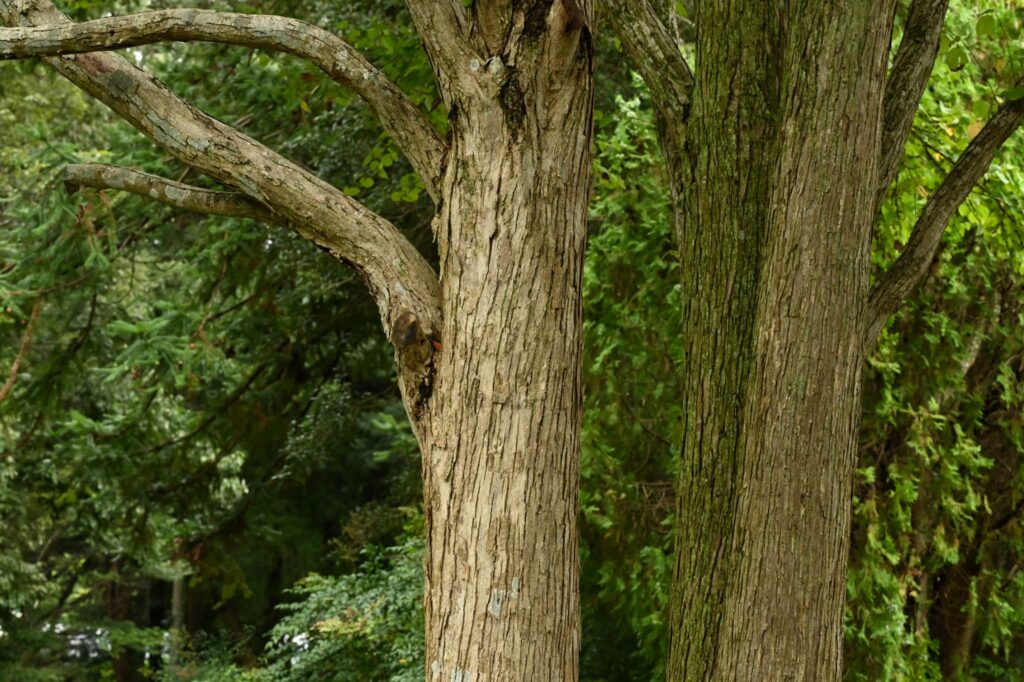
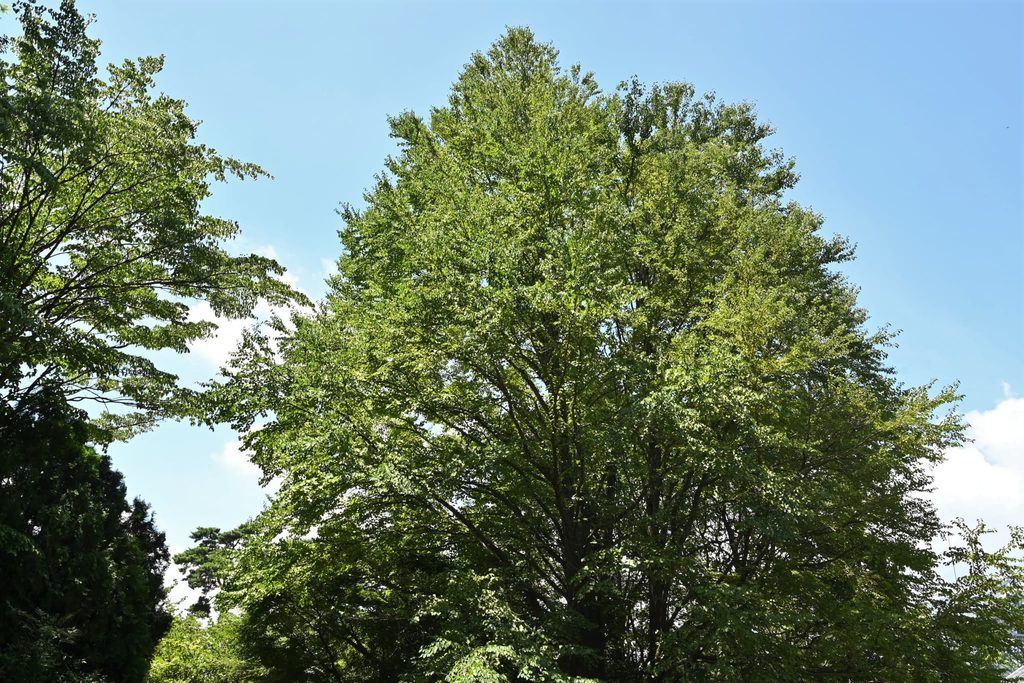
In Japan, it occurs from Hokkaido to Kyushu and can become a very large tree, especially in moist, fertile sites. Young trees often have a pyramidal crown, while mature trees may develop a broad, rounded crown and several trunks.
Katsura is particularly valued for its heart-shaped foliage and its autumn fragrance. The genus Cercidiphyllum is an ancient East Asian lineage with a much wider fossil distribution in the Northern Hemisphere.
Overview
| Item | Description |
|---|---|
| Scientific Name | Cercidiphyllum japonicum |
| Common Name | Katsura Tree, Japanese Judas Tree |
| Japanese Name | カツラ (Katsura) |
| Family | Cercidiphyllaceae |
| Native Range | Japan and China |
| Plant Type | Deciduous broadleaf tree |
| Height | 10–30 m (33–100 ft) in the wild; commonly 12–18 m (40–60 ft) in cultivation |
| Trunk | Straight, sometimes exceeding 1 m in diameter; exceptionally large trees can be much wider |
| Flowering Season | Early spring, generally before or around leaf emergence |
| Fruit Type | Clusters of small follicles containing winged seeds |
| USDA Zones | 4–8 |
| Sun Exposure | Full sun to partial shade |
Characteristics
| Item | Description |
|---|---|
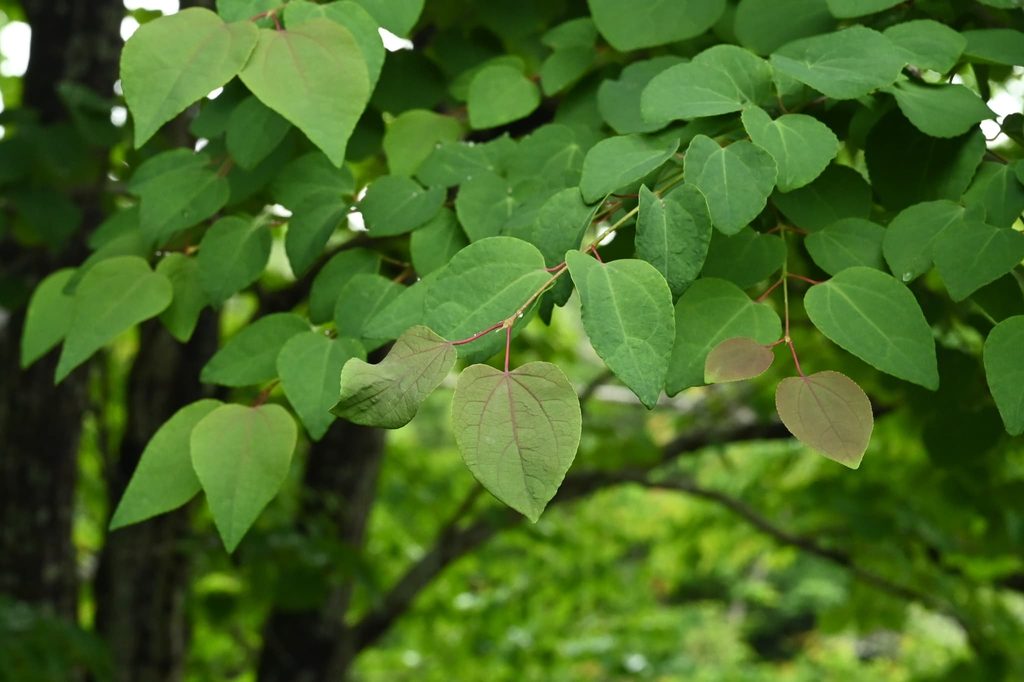
| Leaf Shape | Heart-shaped to kidney-shaped, especially on short shoots |
| Leaf Arrangement | Opposite on long shoots; often single on short shoots |
| Flower Color | Male: reddish-purple; Female: green to reddish |
| Fruit | Small clusters of brown to black follicles |
| Bark | Gray to brown, becoming shallowly fissured and sometimes peeling with age |
| Growth Rate | Moderately fast to fast under favorable conditions |
| Habit | Single- or multi-trunked |
Foliage
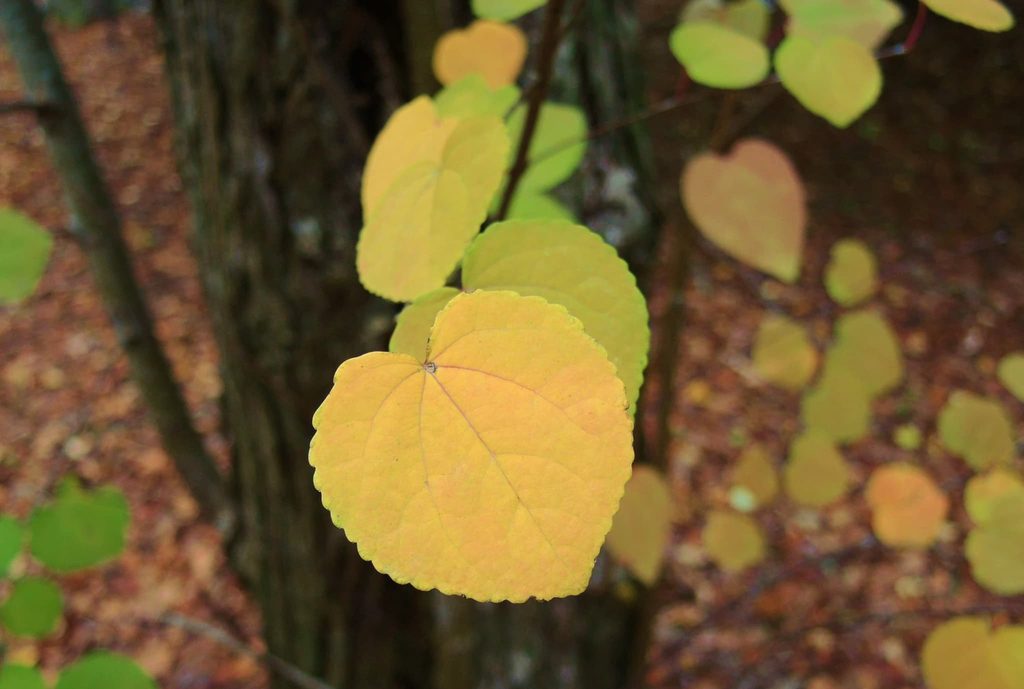
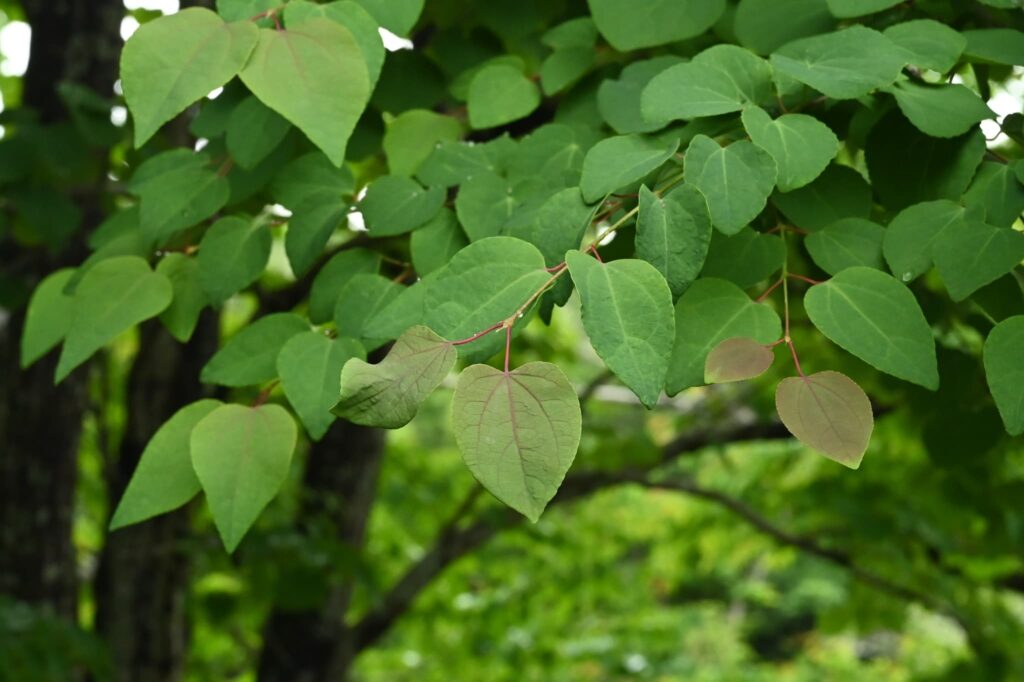
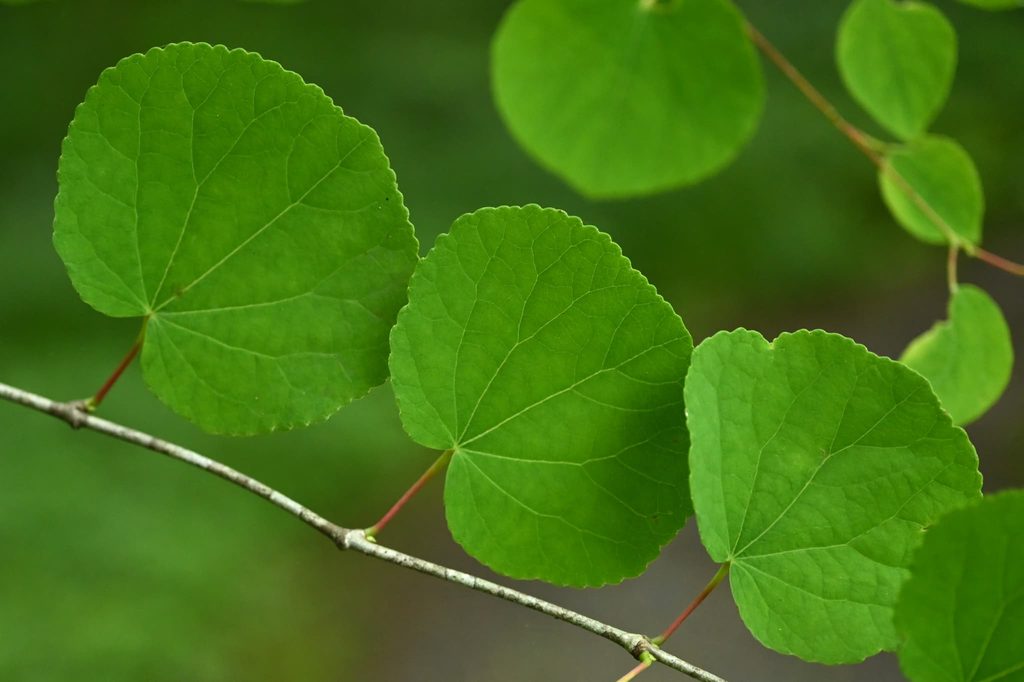
The leaves are one of the easiest ways to recognize katsura. Those on short shoots are relatively large, broadly heart-shaped to kidney-shaped, and usually have rounded teeth. Leaves on long shoots are smaller and more elongated.
The leaves are arranged oppositely on long shoots, while short shoots may bear a single leaf. The upper surface is green to blue-green, sometimes with a slightly glaucous appearance.
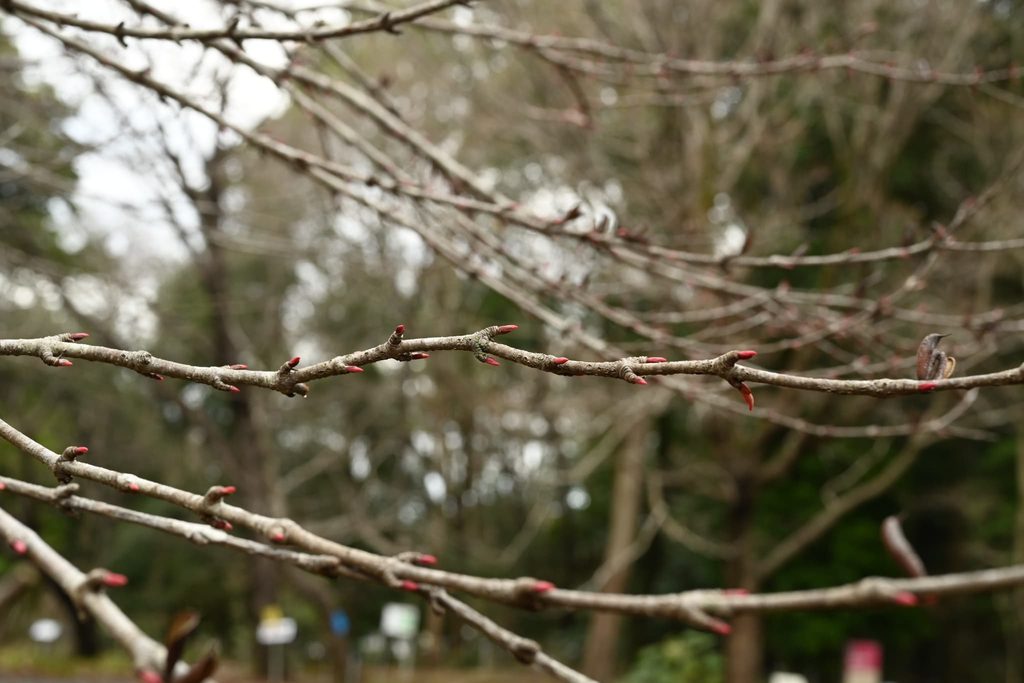
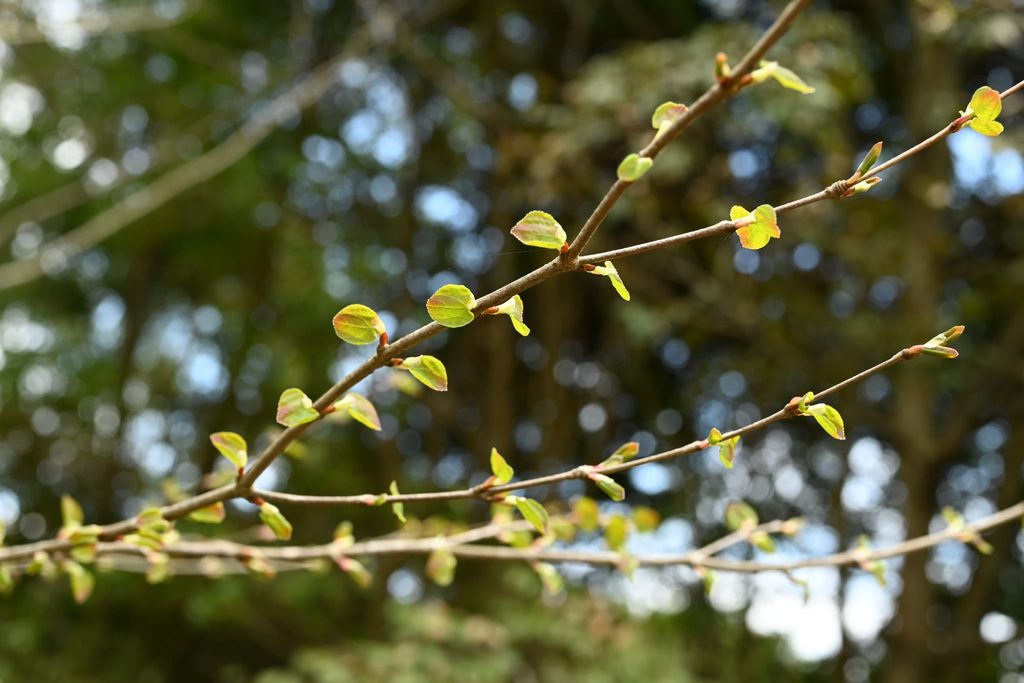
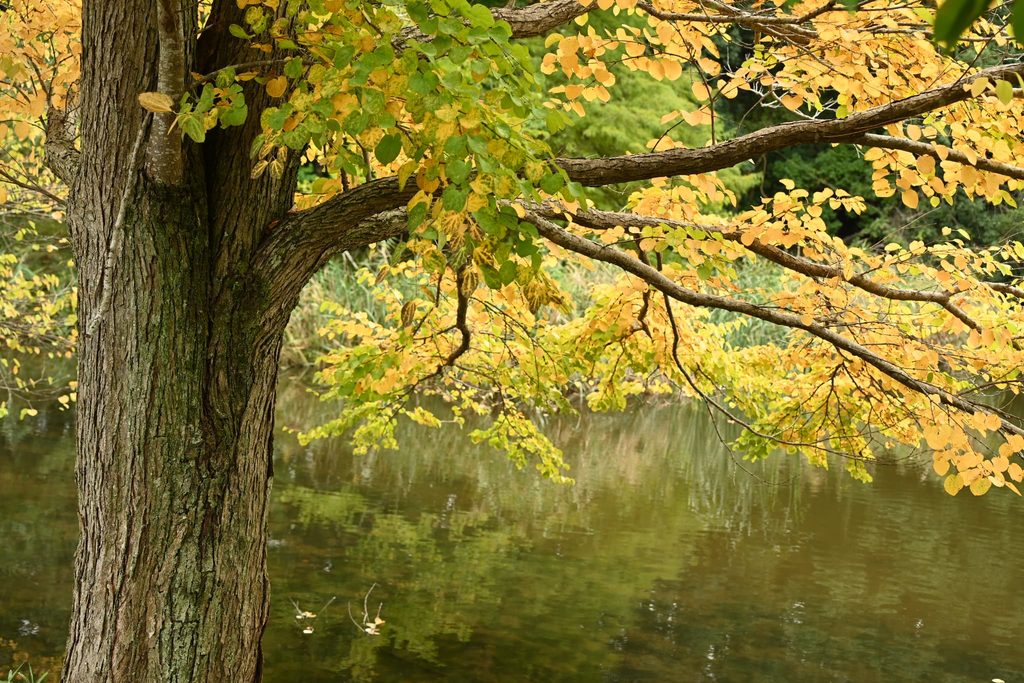
Young leaves often emerge reddish or bronze-purple in spring. In autumn they turn yellow, orange, apricot, or reddish shades.
As the leaves begin to wither and fall, they can produce a distinctive sweet fragrance often compared with caramel, cotton candy, or burnt sugar. Maltol is one of the compounds associated with this characteristic scent.
Flowers
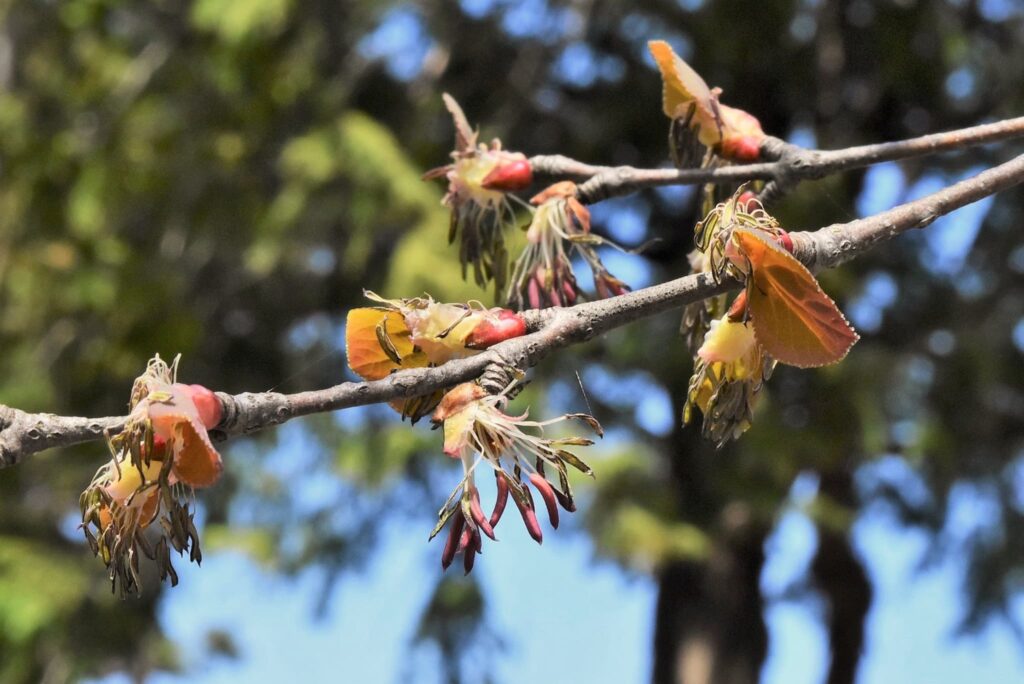
Katsura is dioecious, meaning that male and female flowers occur on separate trees. The flowers are small and lack showy petals.
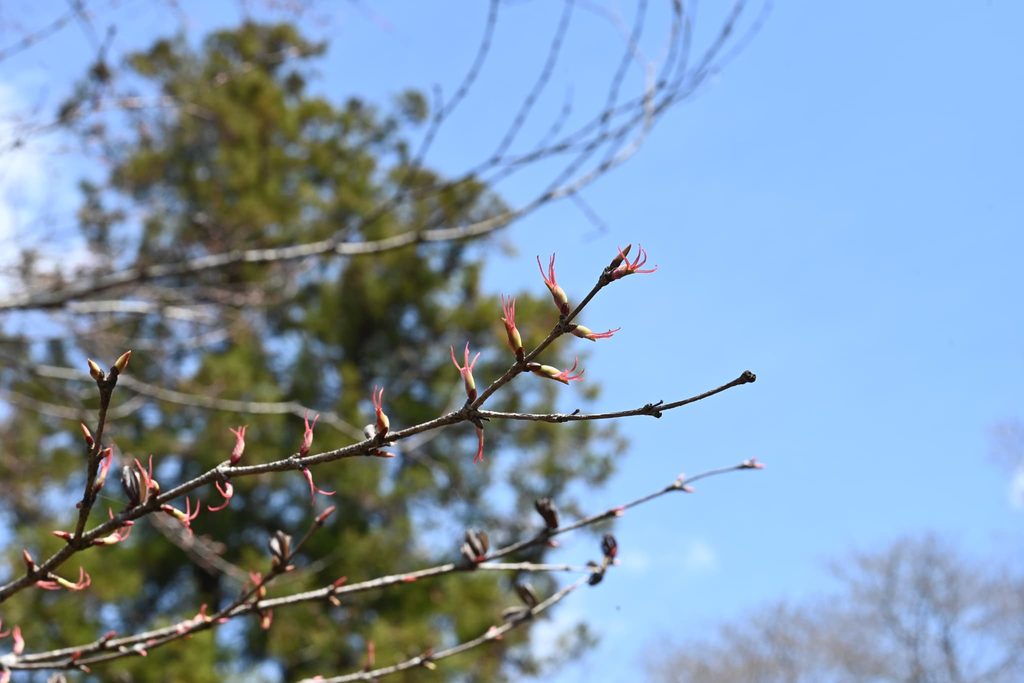
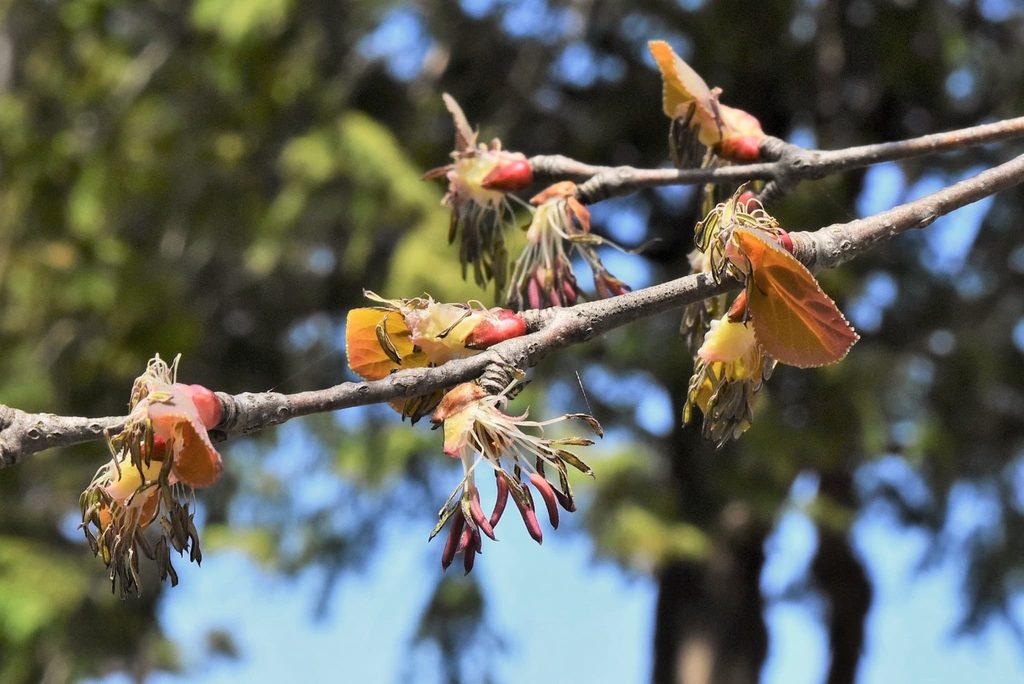
Male flowers have numerous stamens with reddish-purple anthers. Female flowers have several slender carpels and reddish stigmas.
Flowering occurs in early spring. Male flowers generally appear before the leaves, while female flowers may develop as the foliage begins to emerge.
Fruits
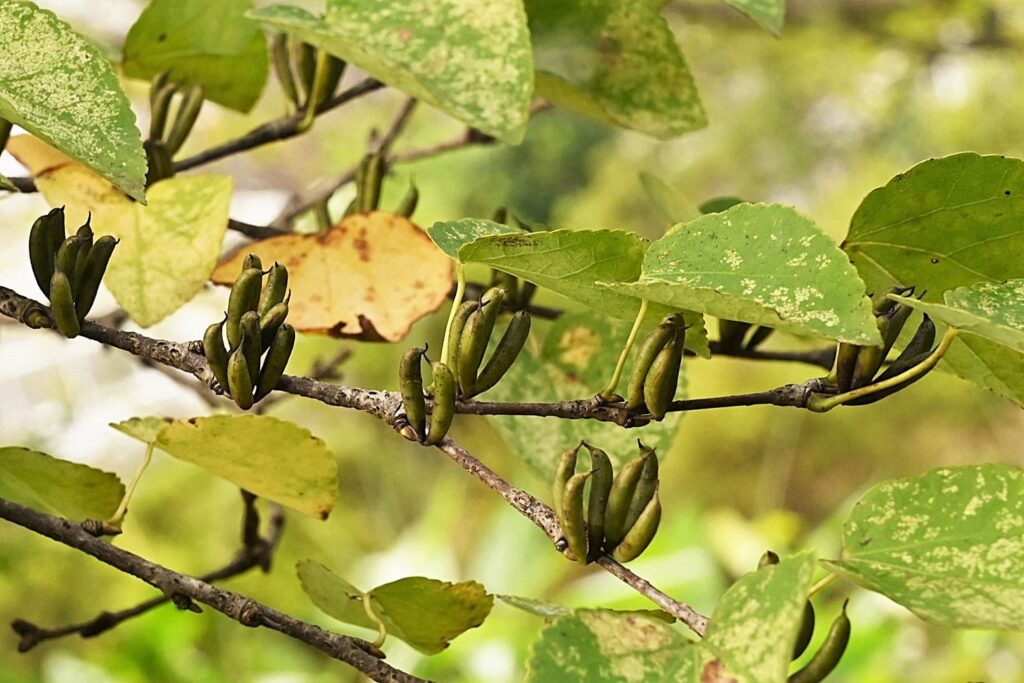
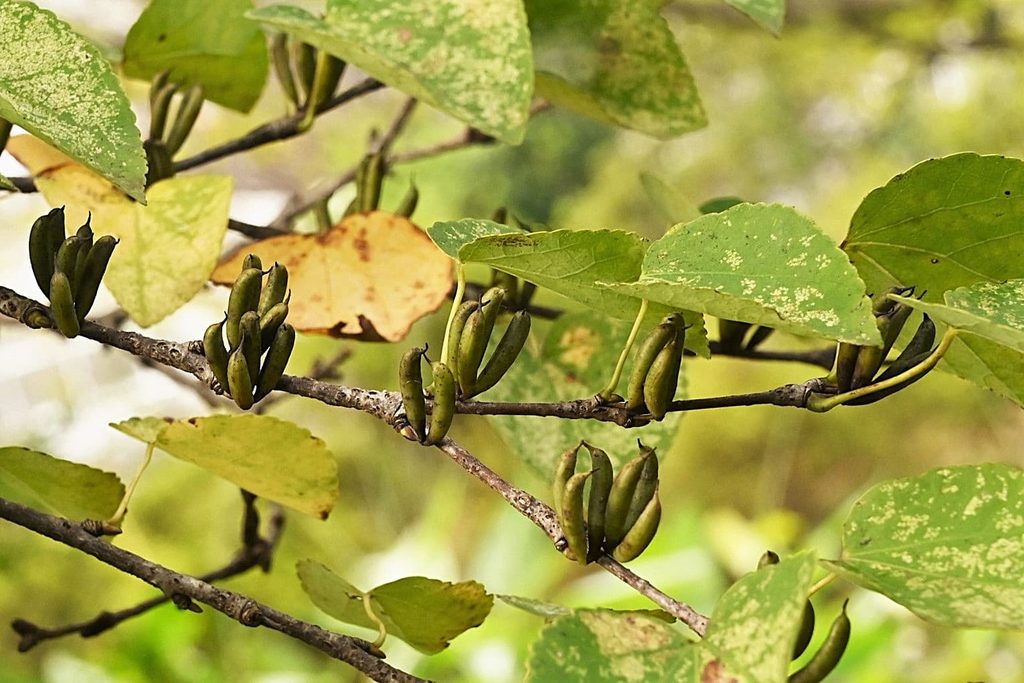
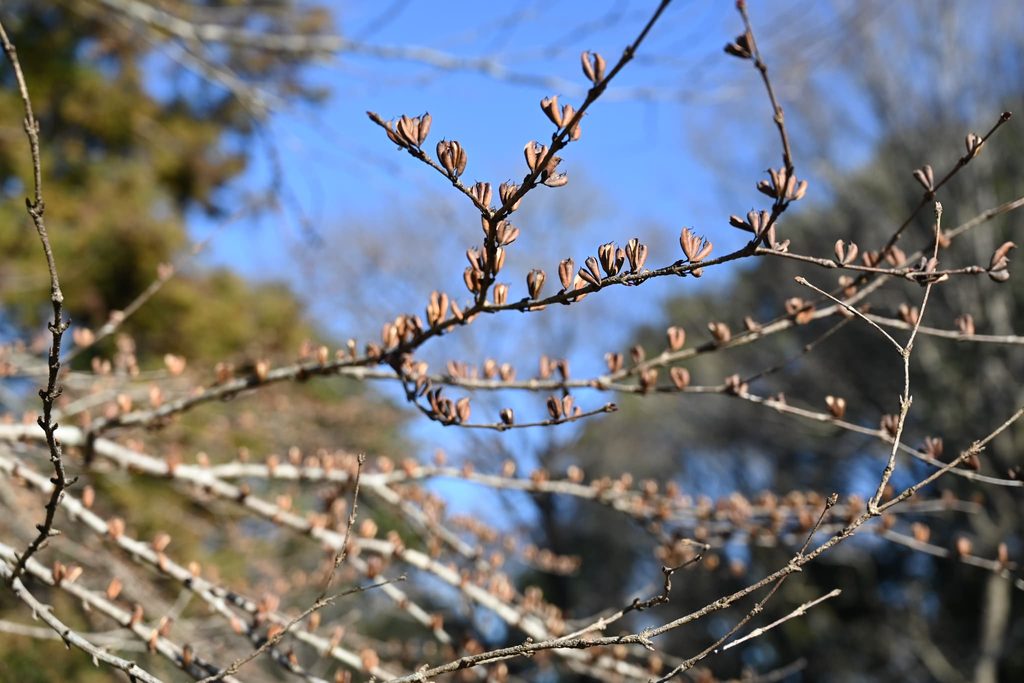
Only female trees produce fruit. The fruits occur in small clusters of two to four follicles. Each follicle is narrow and curved, becoming brown to black as it matures and splitting open to release small, winged seeds.
The clusters can remain on the branches after the leaves have fallen.
Bark & Timber
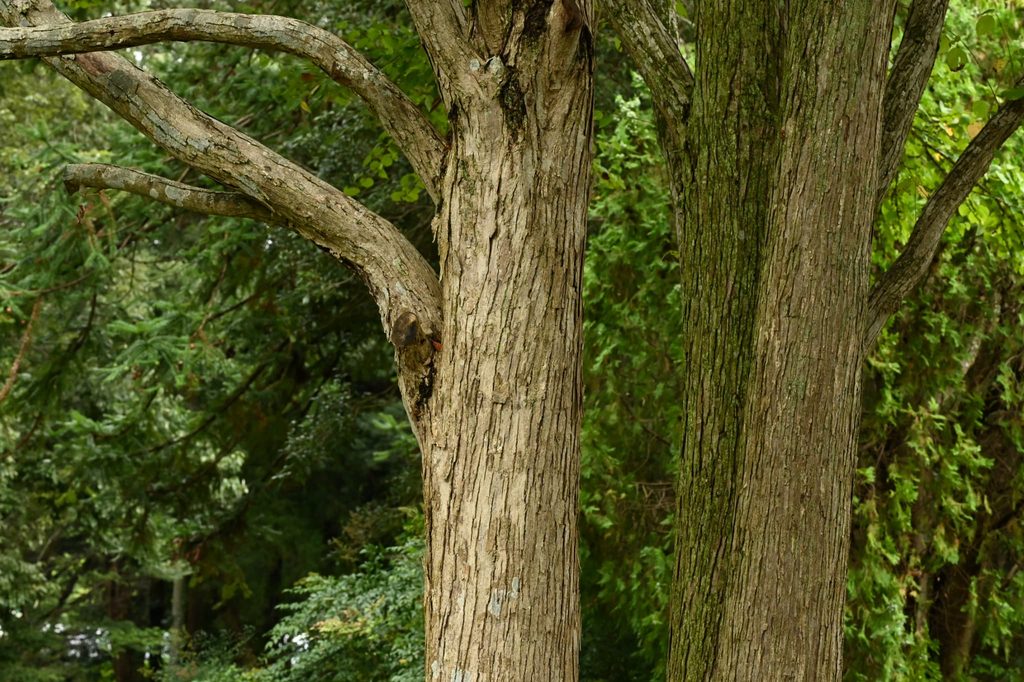
Katsura usually develops a straight trunk and can become a very large tree. Older bark is gray to brown and develops shallow fissures or may peel in thin strips.
The wood is light-colored, soft, fine-grained, and relatively easy to work. In Japan it has traditionally been used for furniture, carving, Buddhist statues, game boards, lacquerware bases, musical instruments, and other fine woodwork.
Size & Growth
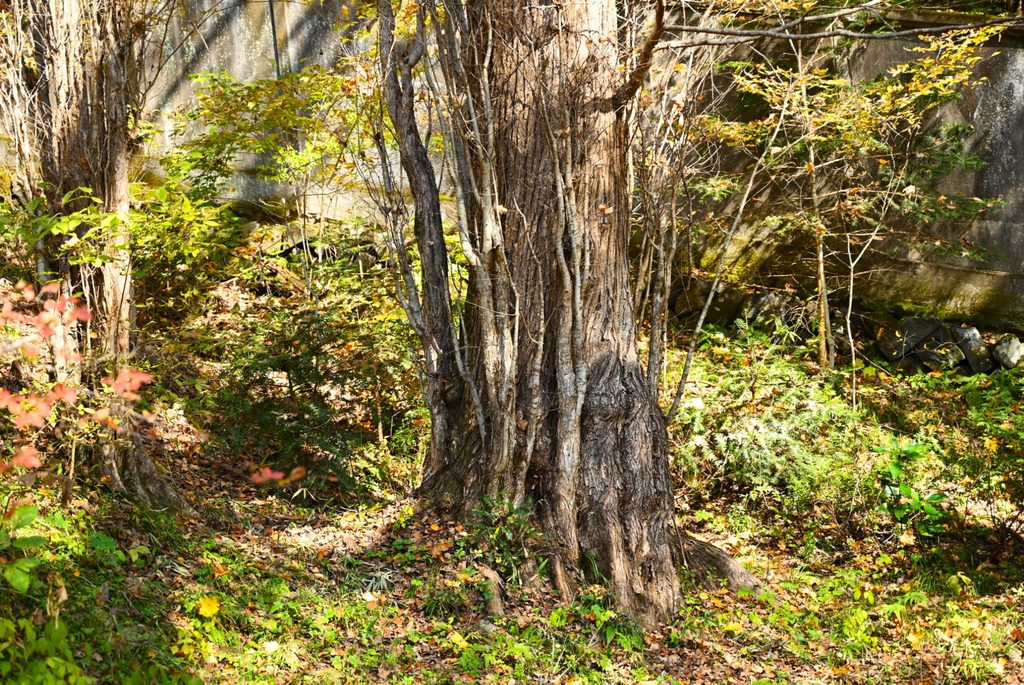
Katsura can reach 30 m (100 ft) or more under favorable conditions, although trees in cultivation are commonly around 12–18 m (40–60 ft). It can develop a broad crown and multiple trunks, so its eventual size should be considered carefully when choosing a planting site.
Uses & Cultural Significance
Katsura has a long history in Japanese culture and appears in early Japanese literature. Its distinctive fragrance and attractive seasonal foliage have also made it an important ornamental and landscape tree.
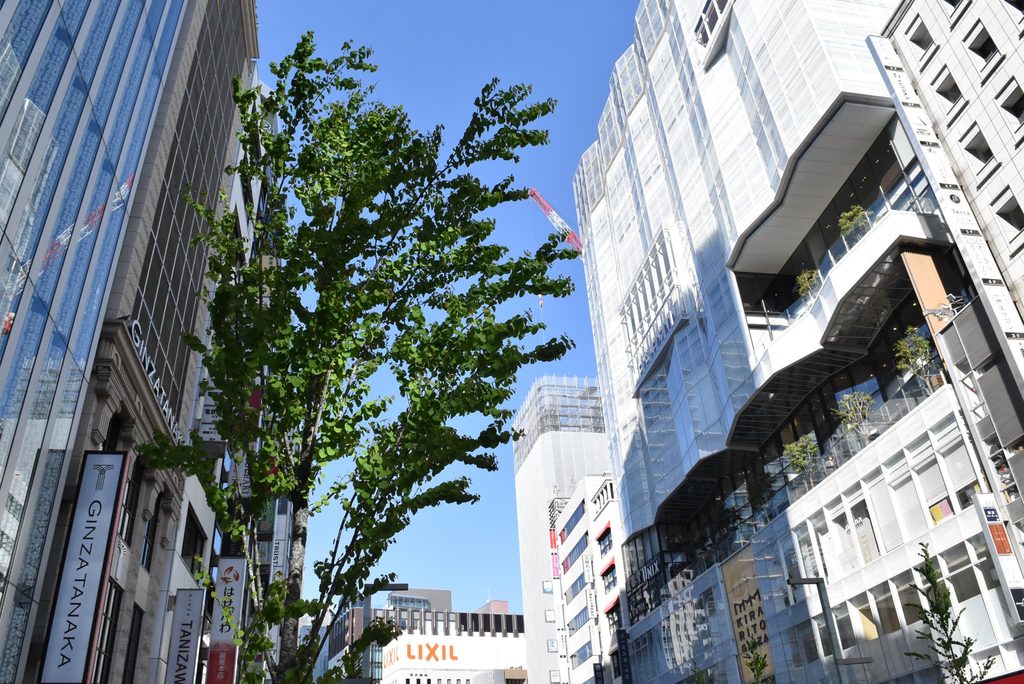
The tree is widely planted in parks, gardens, streets, and other public landscapes. Its autumn fragrance is one of its most distinctive ornamental features.
Traditional and Modern Uses
Katsura wood is soft, fine-grained, and easy to work. It has been used for furniture, carved lacquerware, go and shogi boards, carving, musical instruments, woodblock printing blocks, and other traditional crafts.
Growing Guide
| Light & Soil | Full sun to partial shade; prefers moist, fertile, well-drained soil |
| Water | Regular moisture is important, especially while young |
| Wind & Snow Tolerance | Branches can be damaged by strong wind or heavy snow |
| Cold Hardiness | USDA Zones 4–8 |
| Pruning | Best managed with selective, restrained pruning |
| Transplanting | Can be difficult to transplant once established |
| Suitability for Home Gardens | Suitable for large gardens; too large for many small sites |
| Pests & Diseases | Generally few serious pest or disease problems |
Light & Soil
Katsura grows best in full sun to partial shade and prefers moist, fertile, well-drained soil. It naturally occurs along streams and in other moist mountain habitats.
It can tolerate some shade, but dry conditions can cause leaf scorch and premature leaf drop. Regular watering is particularly important during establishment and during prolonged summer drought.
Wind & Snow Tolerance
The branches can be vulnerable to strong winds and heavy snow, particularly in trees with weak branch unions or multiple trunks. A sheltered planting site is preferable where severe weather is common.
Cold Hardiness
Katsura is generally hardy in USDA Zones 4–8. Established trees tolerate severe winter cold, but young or recently transplanted trees may be more vulnerable to frost and winter injury.
Pruning
Katsura naturally develops an attractive branching structure and generally does not require heavy pruning.
When pruning is necessary, remove poorly positioned, damaged, or crossing branches selectively. Avoid repeated shearing, which can produce vigorous shoots and spoil the tree’s natural form.
Katsura can also produce vigorous basal shoots, particularly after severe damage or heavy cutting.
Suitability for Home Gardens
Katsura can make an excellent specimen or shade tree where sufficient space is available. Its mature size and potentially broad, multi-trunked form make it unsuitable for many small gardens.
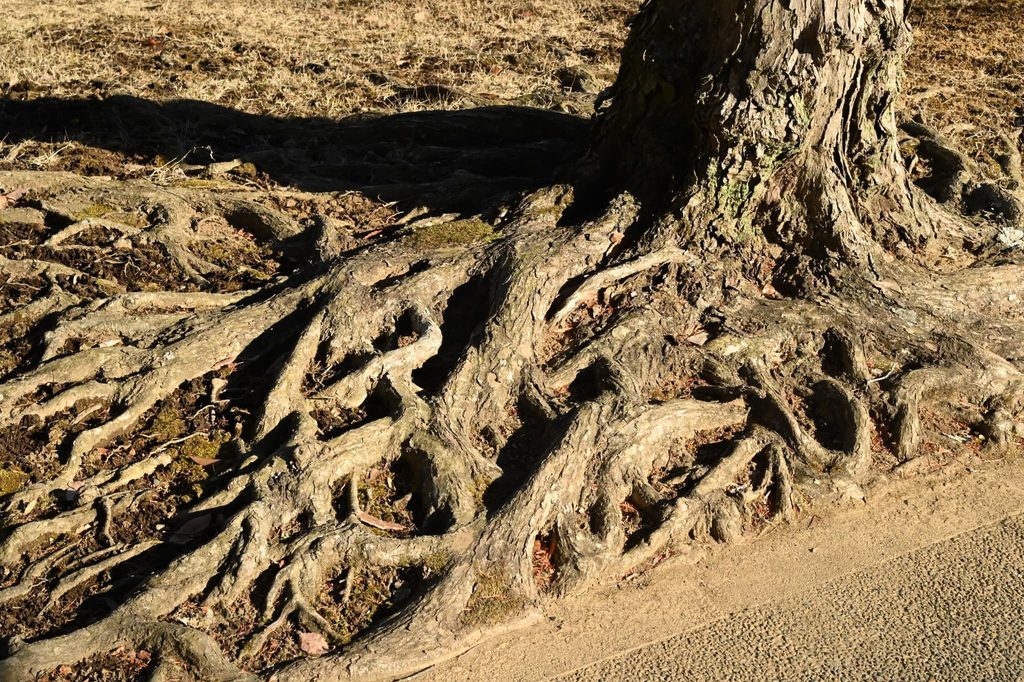
Surface roots may also become prominent around large trees, so the planting site should be planned with adequate room from paths and structures.
Pests
Katsura generally has few serious pest or disease problems. However, drought, heat, and transplant stress can cause leaf scorch, premature leaf drop, or reduced vigor.
Related Species and Forms
Hiroha-katsura (Cercidiphyllum magnificum) — A closely related species native to mountainous areas of central and northern Honshu. It generally has larger, more rounded leaves and occurs at higher elevations than typical katsura. It was formerly treated as a variety of C. japonicum but is now widely recognized as a separate species.
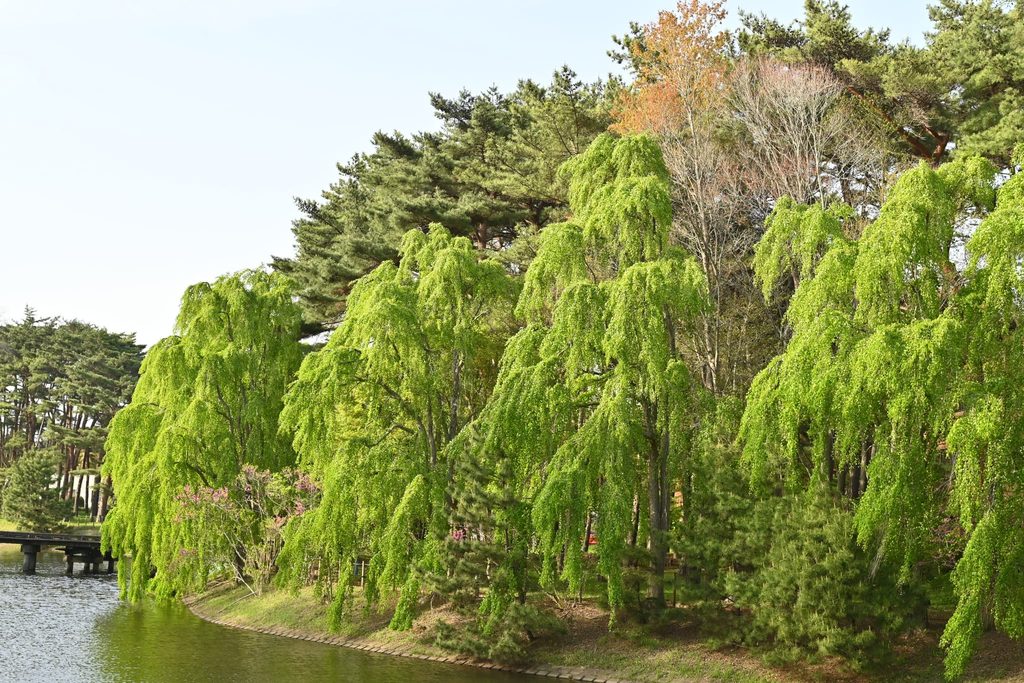
Shidare-katsura (Weeping Katsura) — A weeping form of katsura with pendulous branches. It is occasionally planted as an ornamental tree in parks and gardens.
Similar Species
Fusazakura (Euptelea polyandra) — A deciduous tree of the family Eupteleaceae. Its flowers and fruits can superficially resemble those of katsura, but its leaves and overall branching structure are different.
Frequently Asked Questions
What does katsura smell like?
The withering leaves have a sweet fragrance often compared with caramel, cotton candy, or burnt sugar. Maltol is one of the compounds associated with this characteristic autumn scent.
Is katsura suitable for a small home garden?
Usually not. Katsura is naturally a large tree and can develop a broad, multi-trunked form. A large planting site is preferable if the tree is to be allowed to develop naturally.
How can I tell a male tree from a female tree?
The most reliable feature is the fruit. Female trees produce clusters of small follicles, while male trees do not. During flowering, male flowers have reddish-purple anthers, whereas female flowers have slender carpels and stigmas.
Does katsura lose its leaves in winter?
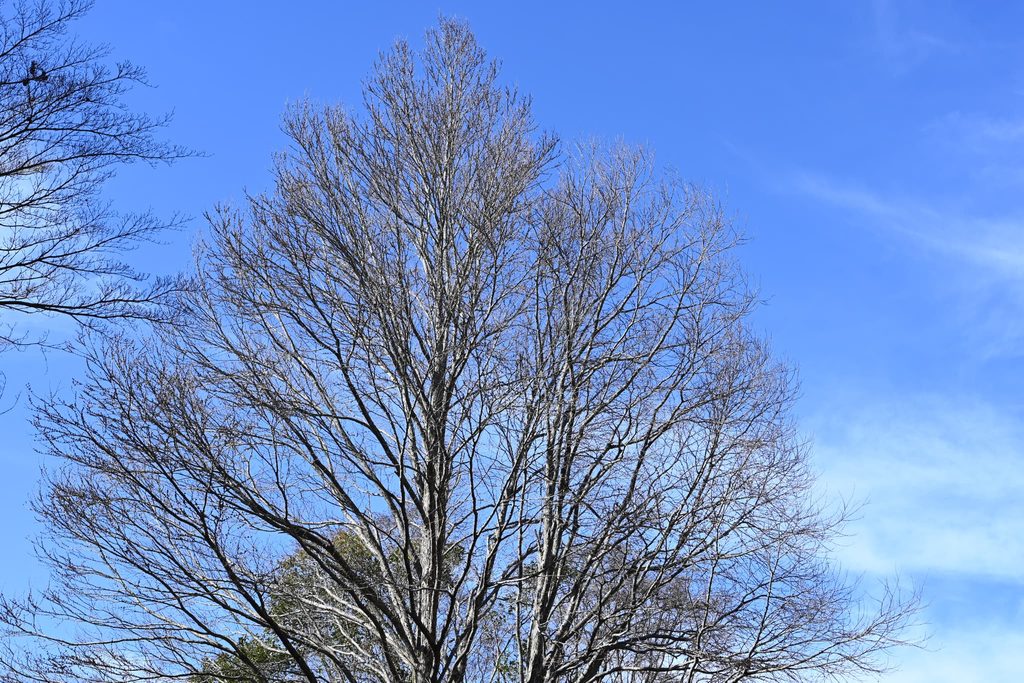
Yes. Katsura is deciduous and becomes bare in winter. The leaves usually turn yellow, orange, apricot, or reddish shades before falling.
Conclusion
Katsura is one of Japan’s most distinctive deciduous trees, combining an elegant form with attractive heart-shaped foliage and a remarkable autumn fragrance. Its large size and preference for moist soil mean that it is best suited to spacious sites, but where there is room, it can be an outstanding specimen tree.
Its spring foliage, autumn color, and characteristic caramel-like scent give katsura an ornamental character that is difficult to confuse with most other Japanese trees.