Japanese White Birch (Betula platyphylla var. japonica): Identification, Care & Uses
Introduction
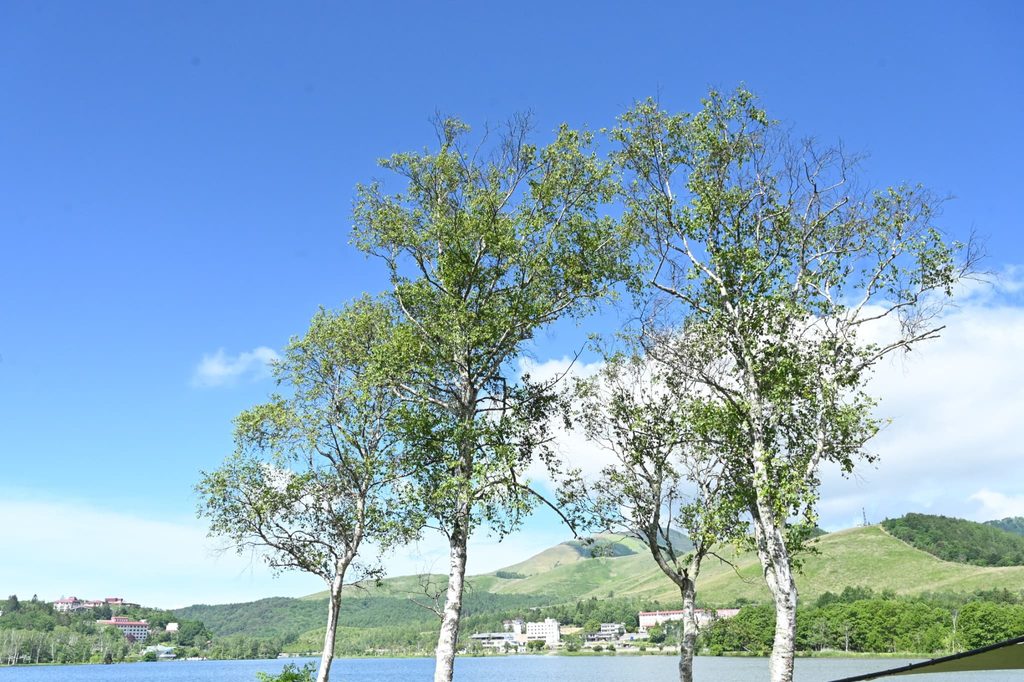
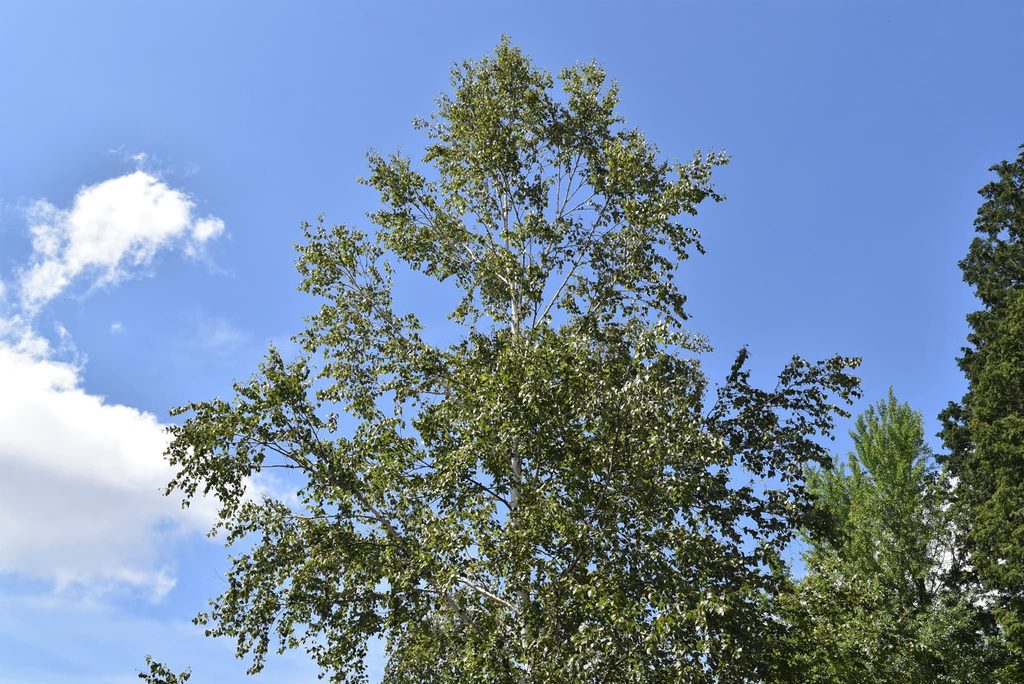
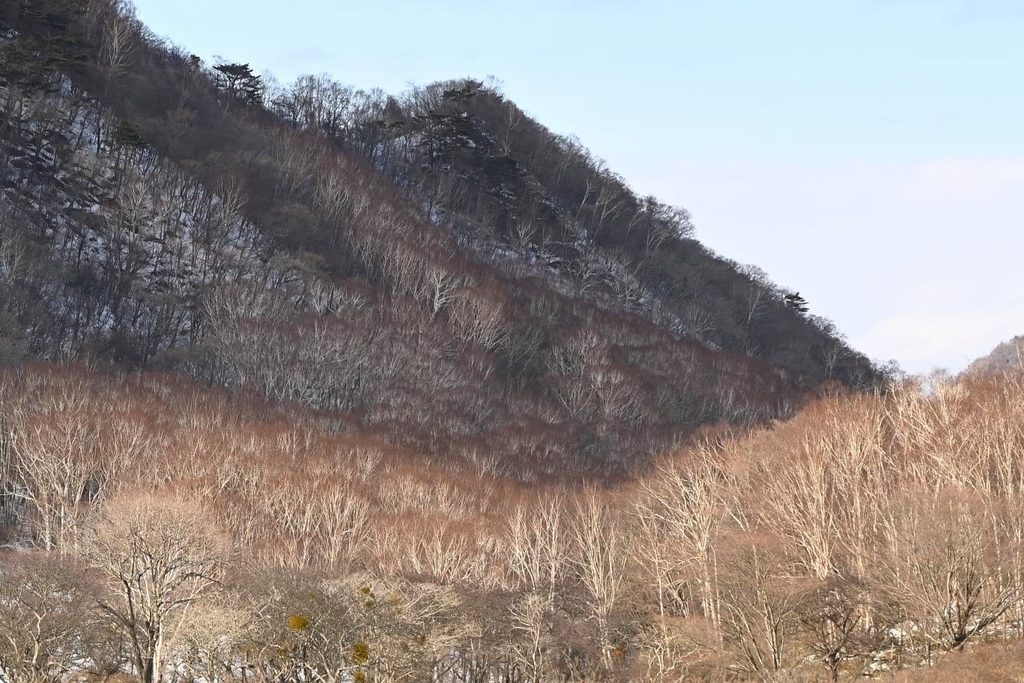
Japanese white birch is one of the characteristic trees of Japan’s cool mountain and highland regions. Its white bark, fresh green foliage, and golden-yellow autumn color make it especially conspicuous in landscapes such as those of Hokkaido and the Shinshu highlands. Along with other characteristic trees of cool mountain forests, such as Japanese beech, it is closely associated with the landscapes of Japan’s northern and upland regions.
This guide explains how to identify Japanese white birch, where it grows, how it differs from related birches, and what to consider when growing it in a garden.
What Is the Japanese White Birch?
Japanese white birch is a deciduous broadleaf tree in the birch family (Betulaceae). In Japan, it occurs mainly in Hokkaido and northern and central Honshu, particularly in cool mountain regions and highlands.
It is a sun-loving pioneer species that can establish rapidly on open ground after major disturbances such as wildfire, volcanic activity, or landslides. Its seeds are small and readily dispersed by wind, allowing it to colonize exposed sites quickly.
The species grows rapidly when young but is relatively short-lived compared with many other Japanese forest trees.
Overview
| Item | Description |
|---|---|
| Scientific Name | Betula platyphylla var. japonica |
| Common Name | Japanese white birch, Asian white birch |
| Japanese Name | シラカンバ (shirakanba); also commonly シラカバ (shirakaba) |
| Family | Betulaceae (birch family) |
| Native Range | Hokkaido and northern and central Honshu, Japan; also parts of northeastern Asia |
| Plant Type | Deciduous broadleaf tree |
| Height | About 20–25 m (65–82 ft) |
| Trunk | Slender to moderately thick, with white bark developing with age |
| Flowering Season | April–May |
| Fruit | Pendulous cone-like fruiting catkins containing numerous small winged seeds |
| Sun Exposure | Full sun |
Characteristics
| Item | Description |
|---|---|
| Scientific Name | Betula platyphylla var. japonica |
| Height | About 20–25 m (65–82 ft) |
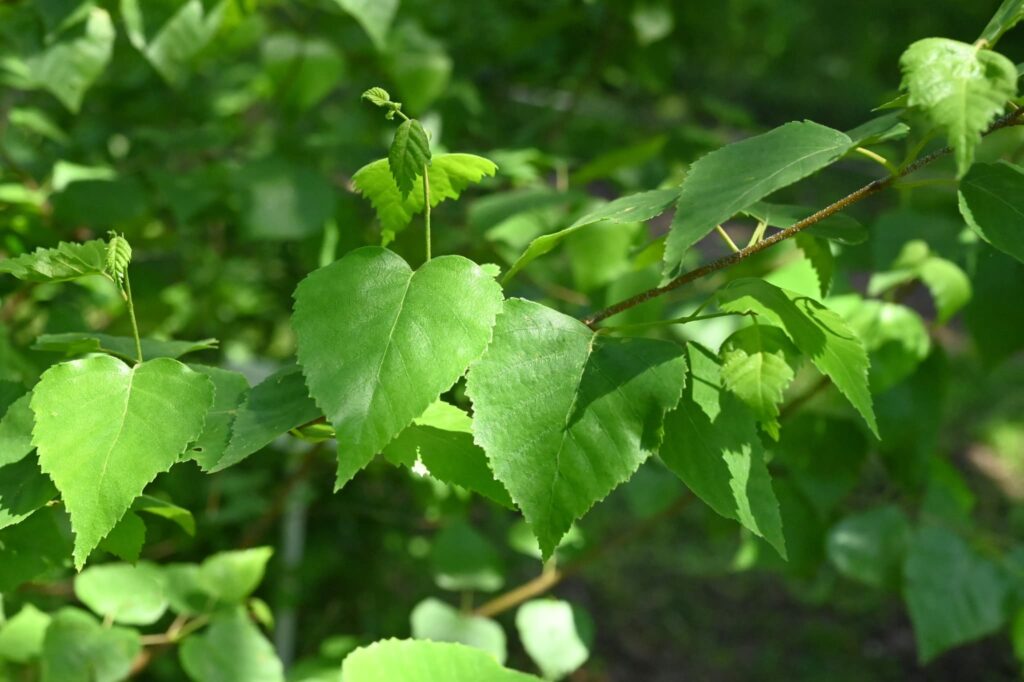
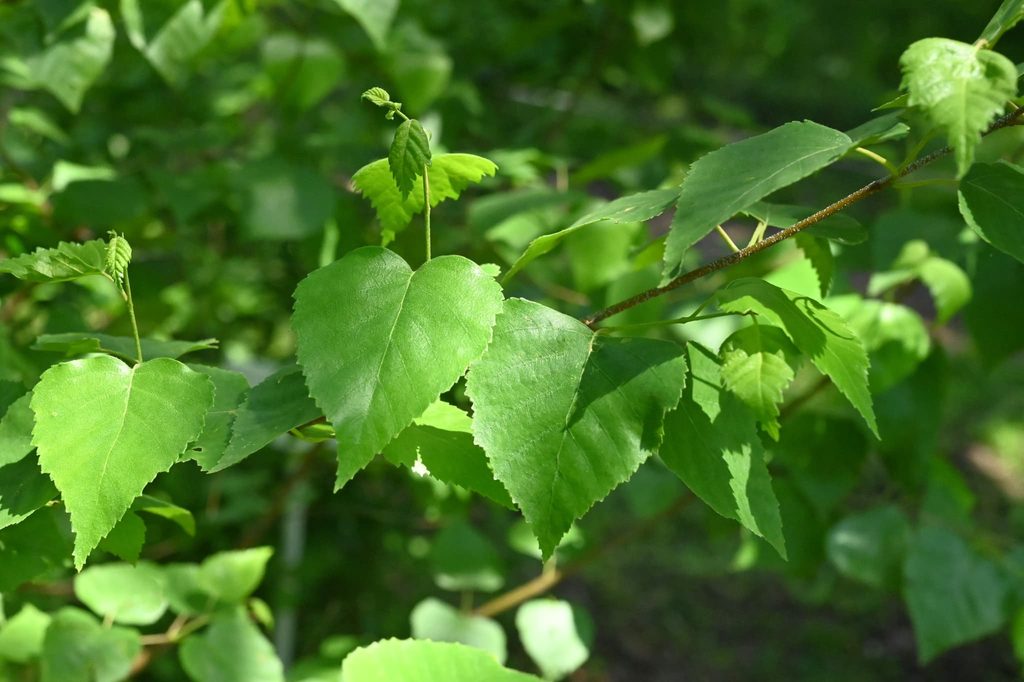
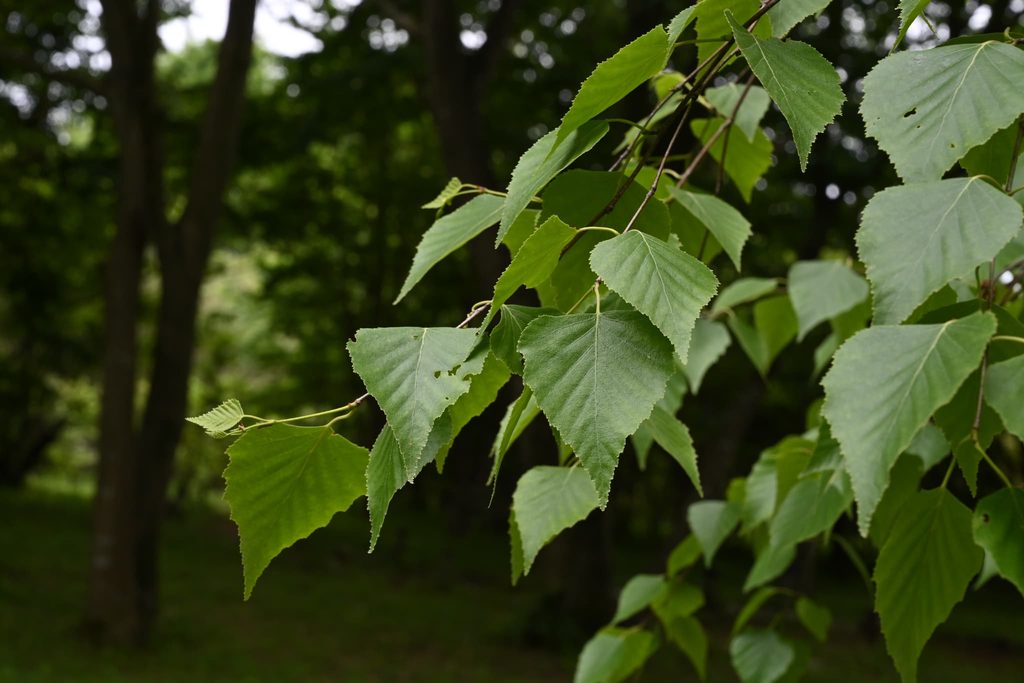
| Leaves | Triangular to broadly ovate, about 5–8 cm long, with double-serrated margins |
| Flowers | Male and female catkins on the same tree |
| Fruit | Pendulous fruiting catkins, ripening in summer |
| Bark | White, becoming papery and peeling with age |
| Lifespan | Relatively short-lived; around 100 years is a useful general estimate |
Foliage
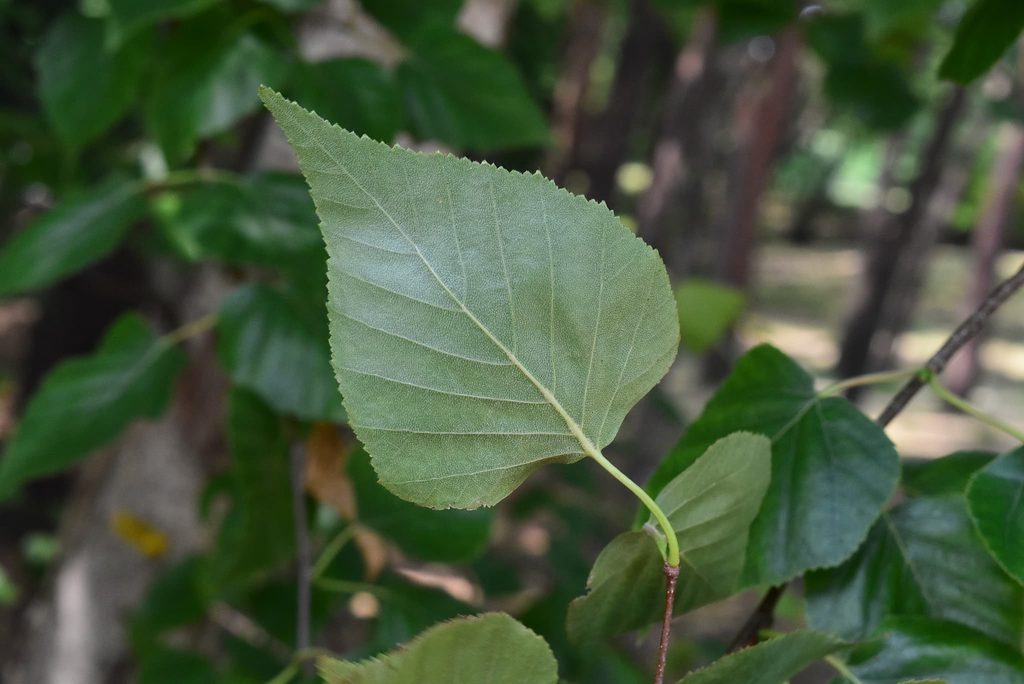
The leaves are triangular to broadly ovate, about 5–8 cm long and 4–6 cm wide. They have pointed tips, toothed margins, and distinct petioles. The upper surface is dark green, while the underside is paler.
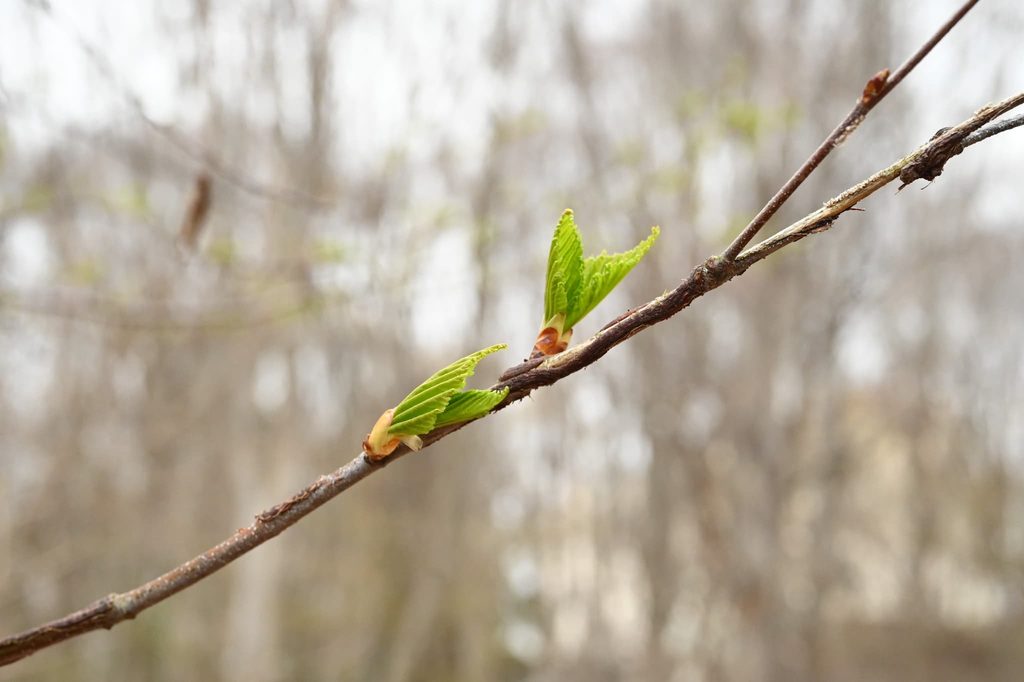
Young shoots and twigs are often darker than the mature white trunk. The branches and twigs can also show small resinous glands.
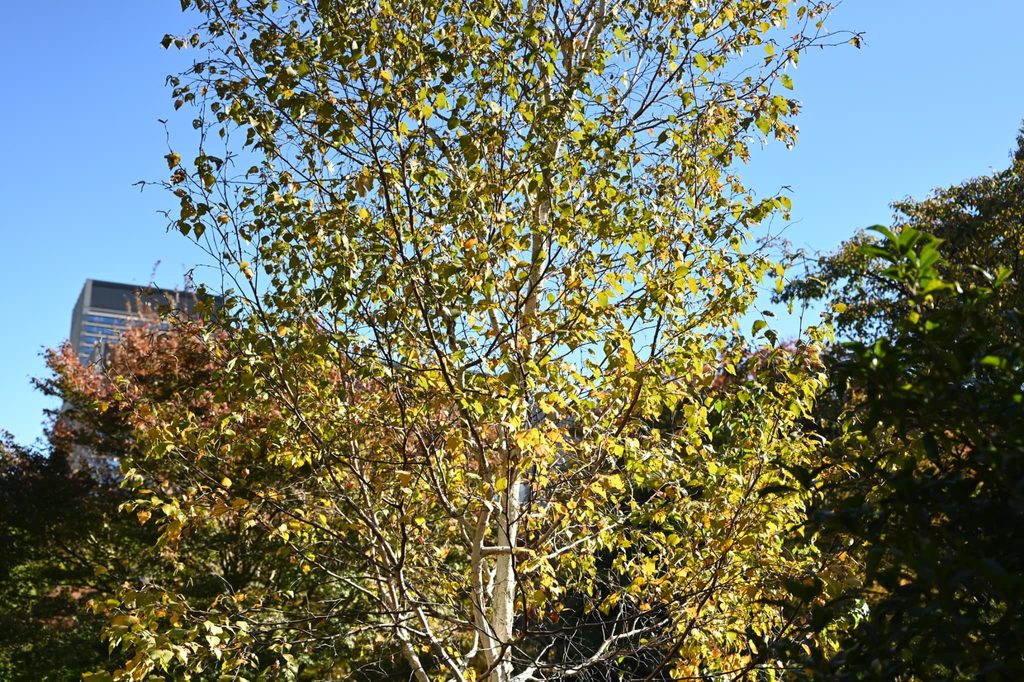
The leaves turn yellow in autumn before falling.
Flowers
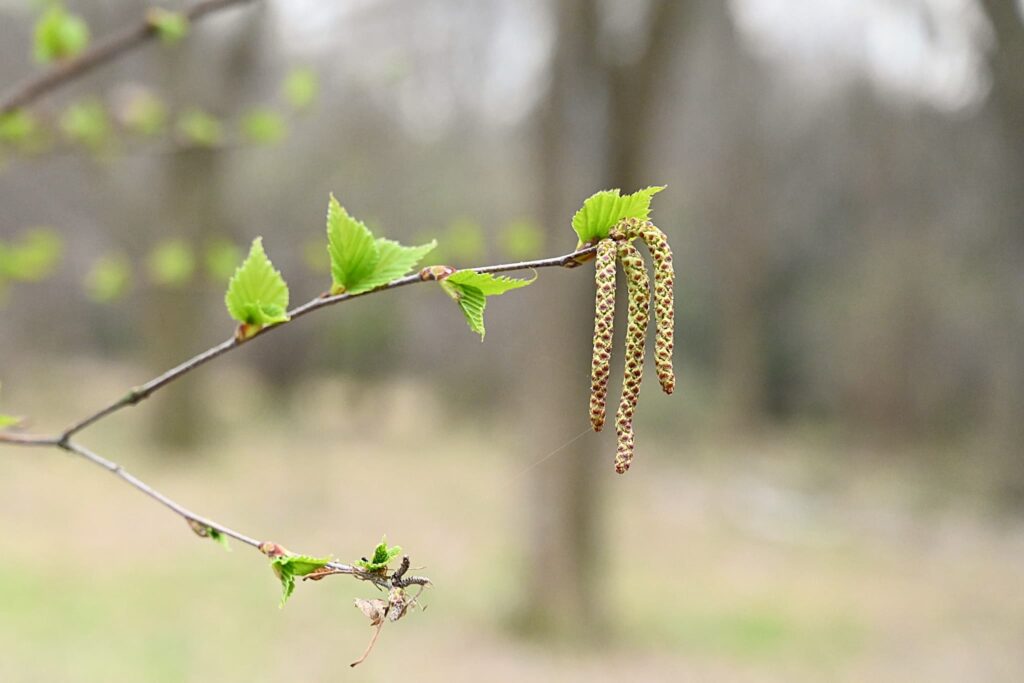
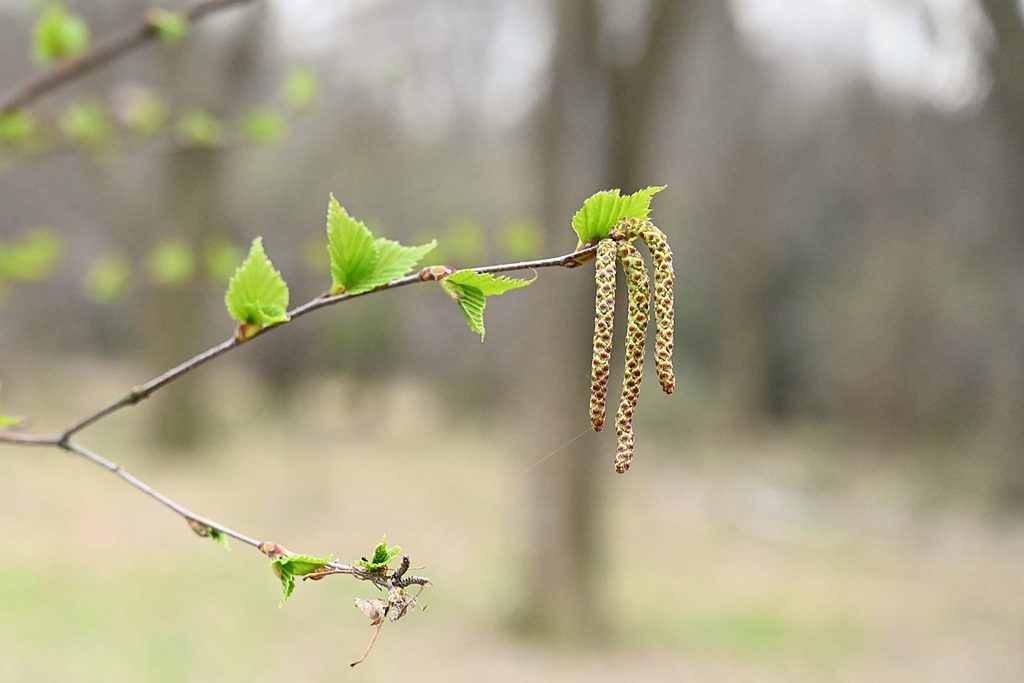
Japanese white birch is monoecious, with male and female flowers occurring separately on the same tree.
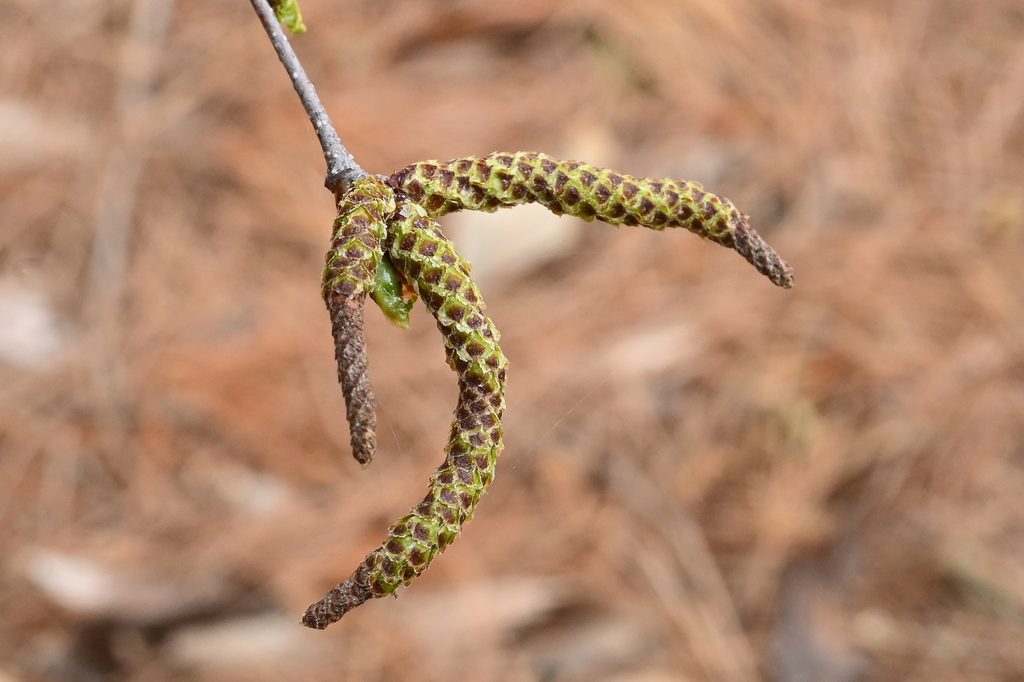
The yellowish-brown male catkins are long and pendulous, while the smaller female catkins are initially upright. Flowering takes place in early spring, around April to May, as the new leaves emerge.
Fruits
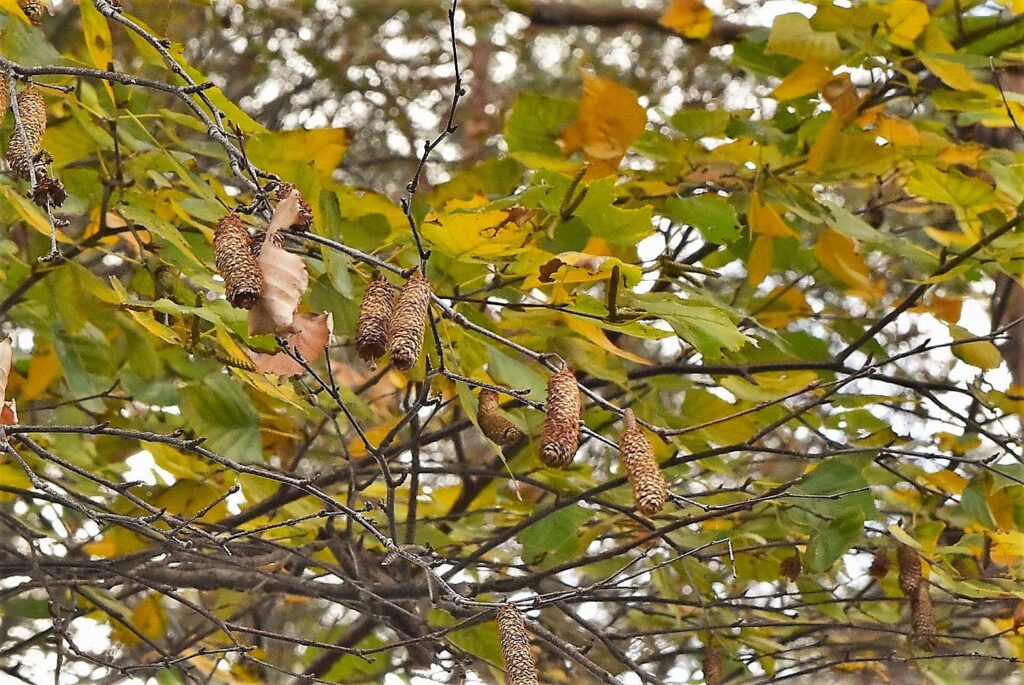
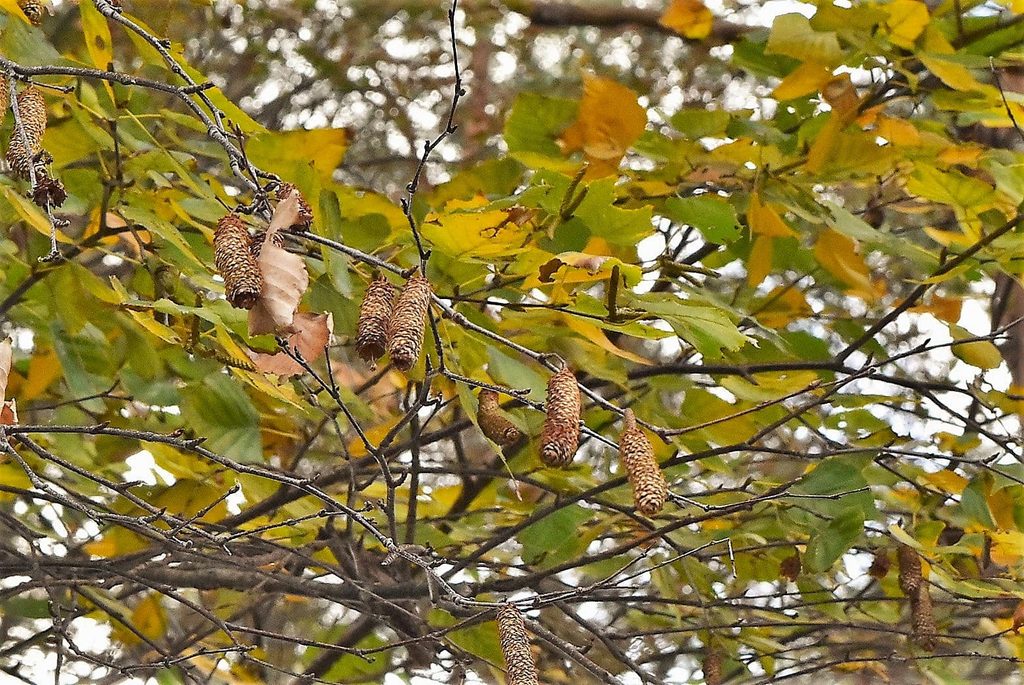
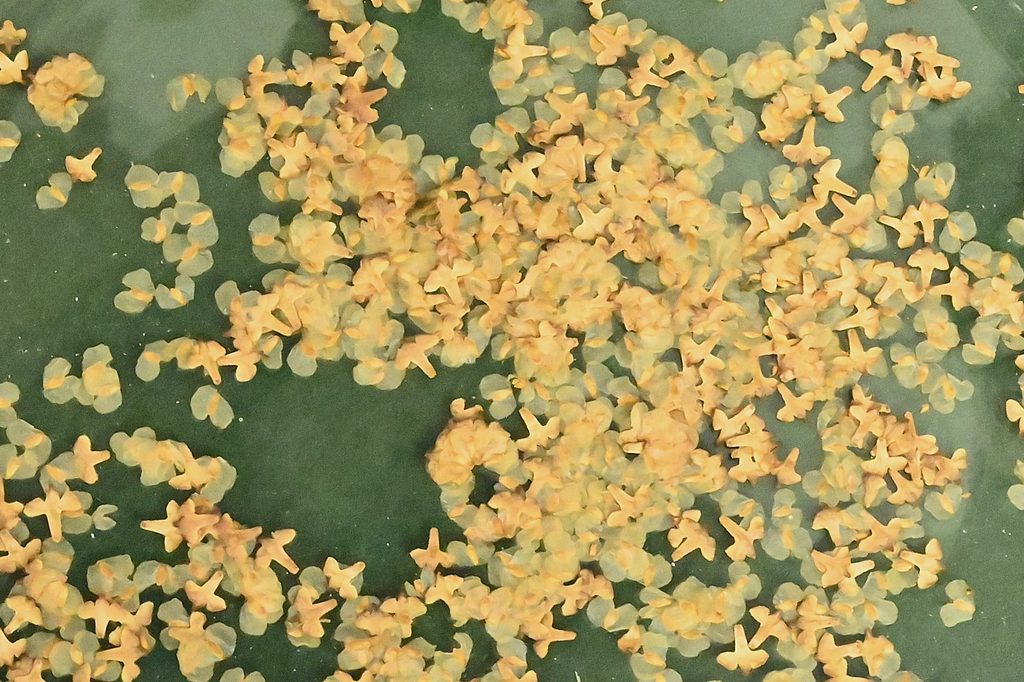
The female flowers develop into pendulous, cone-like fruiting catkins. These contain numerous small, winged seeds that mature during summer.
The mature fruiting catkins become brown and eventually release their seeds, which are dispersed mainly by wind.
Bark & Timber
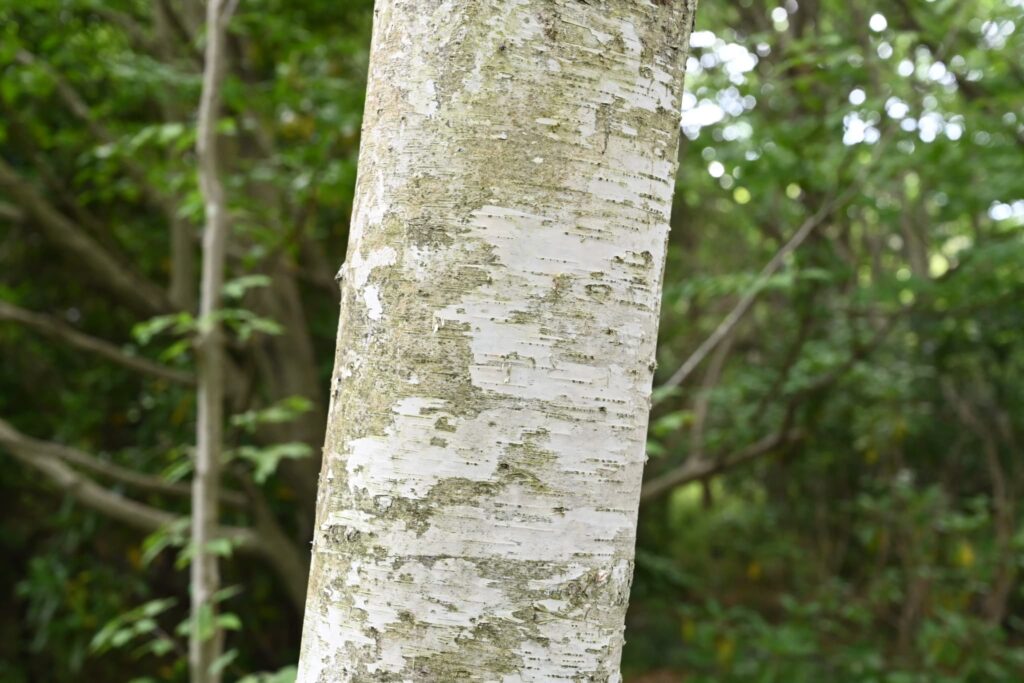
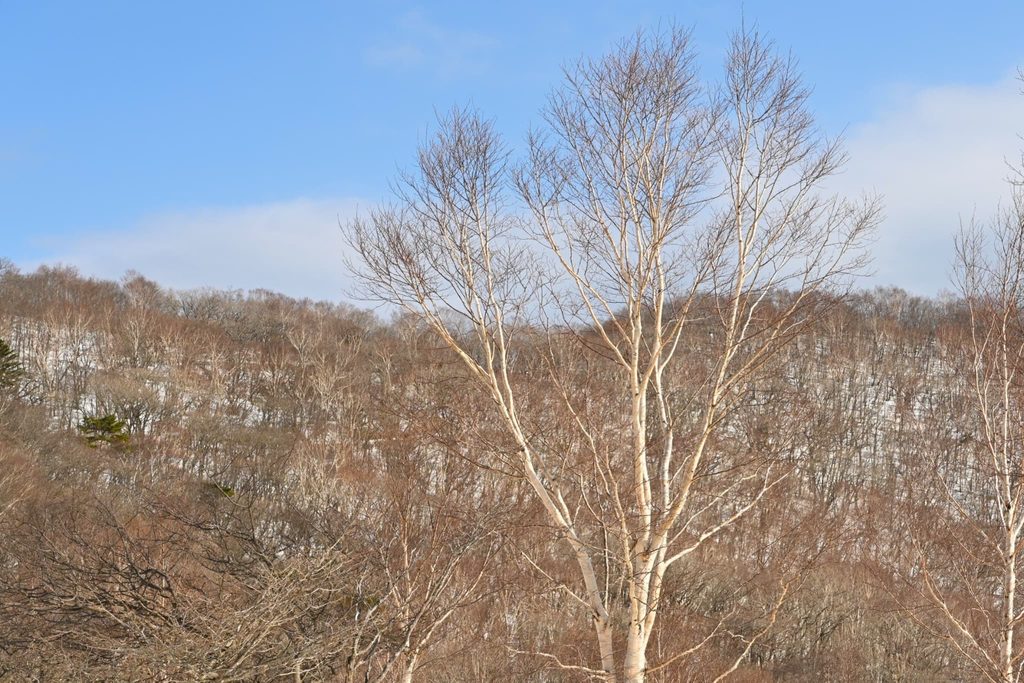
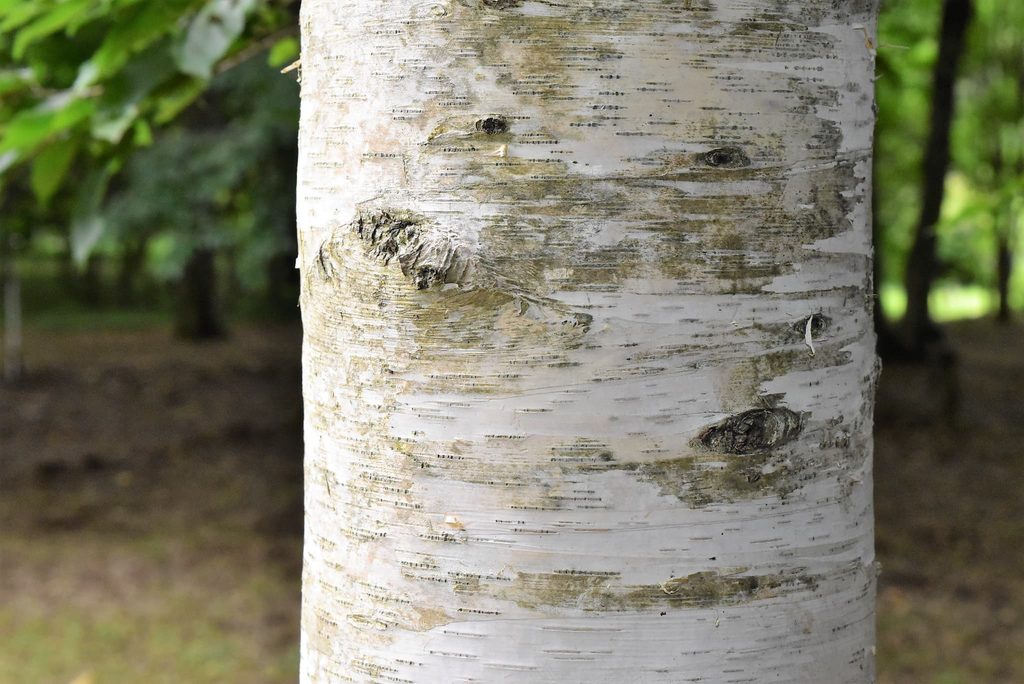
The most distinctive feature of Japanese white birch is its white bark. Young trees have darker bark, but the trunk becomes increasingly white as the tree matures. The bark may develop dark, horizontal markings and characteristic dark branch scars.
The bark is thin and papery and can peel in layers.
The wood is pale and relatively soft. It has been used for furniture, utensils, craft products, pulp, disposable chopsticks, and other small wooden items.
Size & Growth
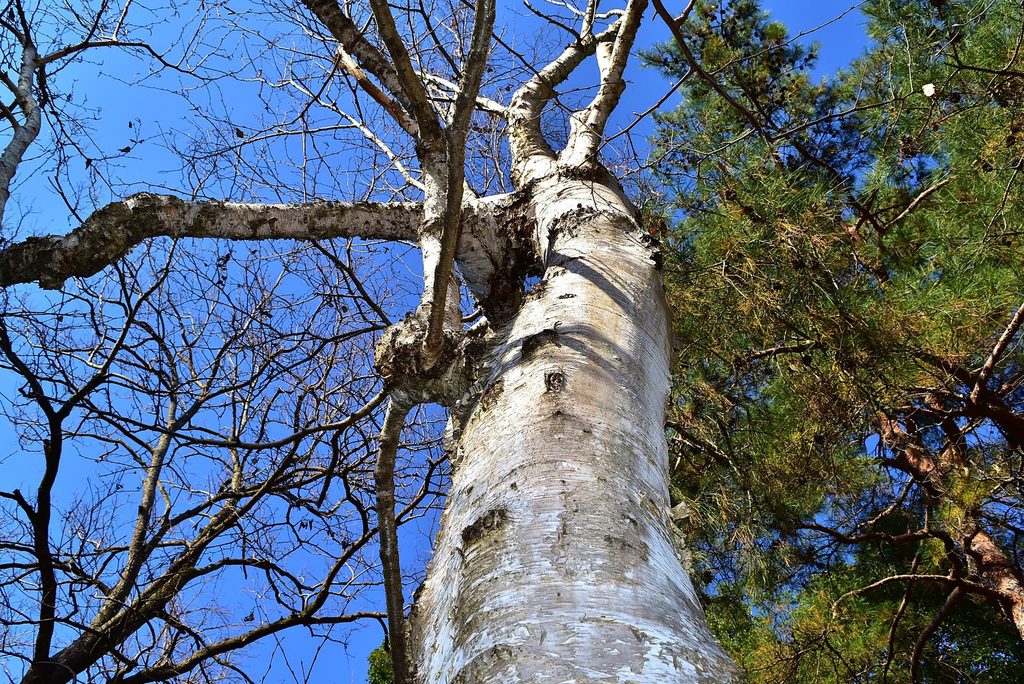
Japanese white birch grows rapidly in open, sunny conditions, particularly when young. It is a typical pioneer tree and is well adapted to disturbed ground.
Its relatively short lifespan is one reason it is often succeeded by longer-lived forest trees as vegetation develops. Research on northern Japanese forests estimates its lifespan at roughly 100 years, placing it among the shorter-lived major tree species of the region.
Uses & Cultural Significance
“Shirakanba” and “Shirakaba”
The standard Japanese name is shirakanba (シラカンバ), while shirakaba (シラカバ) is also very widely used. Both names are encountered in Japan, including in official and public forestry information.
The name refers to the tree’s white bark. The word kanba is used in Japanese names for several birches, such as dake-kanba (Erman’s birch).
Japanese white birch and Erman’s birch can occur in the same broad regions, but their typical habitats differ. Japanese white birch is strongly associated with sunny low- to mid-elevation mountain and highland environments, whereas Erman’s birch is more characteristic of subalpine and higher-elevation sites.
Birch Sap
Birch sap is collected in early spring when the tree begins its seasonal growth. In Hokkaido and other northern regions, Japanese white birch sap has traditionally been consumed as a drink.
The Ainu have long used birch and birch sap, and Ainu names for the tree and its bark are recorded in ethnobotanical sources. Birch sap is still commercially collected in Japan and sold as a beverage.
Claims that birch sap has specific medicinal or cosmetic effects should be treated cautiously; its established use as a traditional and contemporary beverage is better documented.
Emblem of Empress Emerita Michiko
Japanese white birch has a distinctive place in modern Japanese culture because white birch (白樺) is the personal emblem (o-shirushi) of Empress Emerita Michiko.
The Imperial Household Agency lists “white birch” as Empress Emerita Michiko’s personal emblem.
Growing Guide
| Item | Description |
|---|---|
| Light | Full sun |
| Soil | Moist but well-drained soil; tolerates a range of soil types |
| Climate | Cool climates and highlands |
| Water | Keep the root zone from becoming excessively dry |
| Pruning | Keep pruning light and avoid unnecessary large cuts |
| Main Problems | Heat stress and insect damage, especially in unsuitable warm sites |
Light & Soil
Japanese white birch is strongly associated with open, sunny habitats and performs best in full sun.
It tolerates a range of soils but grows best where the soil is adequately moist and well drained. In hot or dry locations, maintaining cool, evenly moist soil around the roots is particularly important.
Climate & Heat
The main difficulty in growing Japanese white birch outside its natural range is summer heat.
Although the species is cold-hardy, it is not equally tolerant of hot urban environments. Japanese forestry sources specifically note that planting it in lowland urban areas can result in serious pest and disease problems.
For gardens in warm regions, a naturally cool site with good air circulation and adequate soil moisture is preferable. Mulching the root zone can also help moderate soil temperature and moisture loss.
Pruning
Japanese white birch generally requires little pruning. Its natural form is more attractive than a heavily pruned crown, and large cuts should be avoided whenever possible.
Birches can produce abundant sap flow when pruned in late winter or early spring. If pruning is necessary, make small cuts and avoid the period of strongest spring sap flow.
Suitability for Home Gardens
Japanese white birch is an excellent specimen tree where the climate is cool enough, but it is not an ideal choice for every garden.
Its white trunk is particularly attractive in sunny landscapes, but heat, drought, and insect problems can shorten its useful life in warm urban environments. It is therefore better suited to cool upland gardens, parks, and other sites that resemble its natural habitat.
Pests and Problems
Japanese white birch can suffer from insect damage and other stress-related problems, particularly when planted in hot, unsuitable locations.
Birch trees are generally vulnerable to wood-boring insects when stressed. Maintaining adequate soil moisture and avoiding severe pruning can help reduce stress.
Similar Species
Japanese white birch can be confused with several other birches found in Japan:
- Erman’s birch (Betula ermanii) — common at higher elevations and often more difficult to distinguish from Japanese white birch.
- Mizume / Azusa (Betula grossa) — has darker bark and differs in leaf and bark characteristics.
- Udai-kanba (Betula maximowicziana) — a large birch with darker bark when young and different leaf characteristics.
- Onoore-kanba (Betula schmidtii) — notable for its dark, rough bark.
- Yaegawa-kanba (Betula davurica) — has darker, more deeply fissured bark.
- Neko-shide (Betula corylifolia) — a smaller Japanese birch with different leaf and bark characteristics.
- Yachi-kanba (Betula ovalifolia) — a northern birch associated with wet habitats.
Frequently Asked Questions
Is it “shirakaba” or “shirakanba”?
Both names are used in Japan. Shirakanba (シラカンバ) is the standard Japanese name, while shirakaba (シラカバ) is a very common alternative.
Why is the bark white?
The mature bark contains white pigments and becomes highly reflective, producing the characteristic white appearance of the trunk. The bark also develops dark horizontal markings and branch scars.
Can I grow Japanese white birch in a warm region or city?
It can be difficult. The species is naturally adapted to cool climates, and trees planted in hot, lowland urban environments are more susceptible to stress and insect problems.
How can I tell it from Erman’s birch?
Habitat is one of the most useful clues. Japanese white birch is strongly associated with sunny highlands and open disturbed sites, while Erman’s birch is more typical of subalpine and higher-elevation environments. The two can overlap, however, so identification should also consider bark, leaves, twigs, and fruiting catkins.
How long does a Japanese white birch live?
It is relatively short-lived compared with many Japanese forest trees. Research on northern Japanese forests gives a lifespan estimate of around 100 years.
Can I prune a Japanese white birch?
Yes, but pruning should be kept light. Avoid large cuts and avoid pruning during the period of strong spring sap flow.
Conclusion
Japanese white birch is one of the most distinctive trees of Japan’s cool highlands. Its white, papery bark, bright spring foliage, and golden autumn color make it an attractive landscape tree, while its rapid growth and pioneer habit allow it to colonize open ground after major disturbances.
It is best suited to sunny, cool sites with adequate soil moisture. In warm urban environments, heat and pest problems can make long-term cultivation difficult. Its traditional use of birch sap and bark, together with its association with northern Japanese landscapes, also gives the species a notable cultural significance.