Satsuki Azalea (Rhododendron indicum): Identification, Care & Uses
Satsuki Azalea (Rhododendron indicum) is one of Japan’s most important ornamental shrubs, known for its late-spring flowers, small leaves, dense branching, and extraordinary diversity of cultivated forms. It is also one of the classic plants used for Japanese bonsai. This guide covers identification, flowers, fruit, bark, cultivation, and horticultural uses, based on the species and its cultivation in Japan.
What Is the Satsuki Azalea?
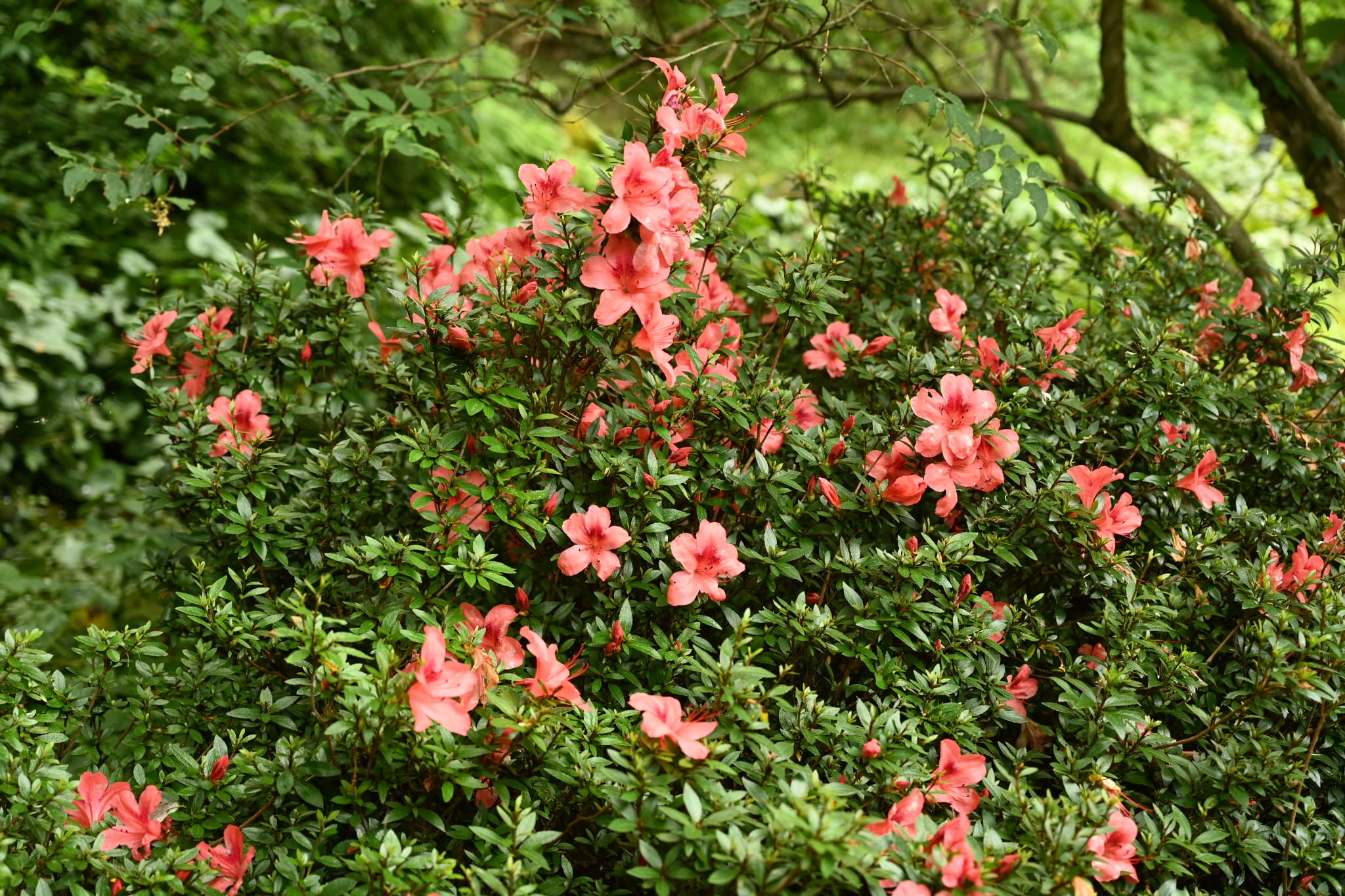
Satsuki Azalea is a Japanese native evergreen to semi-evergreen shrub that grows naturally along rocky riverbanks and in valleys. It is widely planted in gardens, parks, streetscapes, and bonsai collections.
The name “Satsuki” refers to the fifth month of the traditional Japanese calendar, roughly corresponding to May, when the plant flowers later than many other Japanese azaleas. Numerous horticultural varieties have been developed, differing greatly in flower color, pattern, size, and form.
Overview
| Item | Description |
|---|---|
| Scientific Name | Rhododendron indicum (L.) Sweet |
| Common Name | Satsuki Azalea |
| Japanese Name | Satsuki (サツキ, 皐月) |
| Family | Ericaceae |
| Native Range | Japan: western and central Honshu, and Kyushu |
| Plant Type | Evergreen to semi-evergreen shrub |
| Height | Usually 0.5–1.5 m; occasionally larger |
| Habit | Dense, much-branched, often low and spreading |
| Flowering Season | Late spring to early summer, usually May–June |
| Fruit Type | Dehiscent capsule |
| Sun Exposure | Full sun to partial shade |
Characteristics
| Feature | Description |
|---|---|
| Leaves | Small, lanceolate to oblanceolate, often 1–3 cm long, hairy |
| Flowers | Broadly funnel-shaped, usually 3–5 cm across |
| Flower Color | Wild plants usually reddish to scarlet |
| Fruits | Oblong-ovoid, hairy capsules, about 1 cm long |
| Bark | Brown to reddish-brown on young branches |
| Growth Habit | Dense branching from the base |
Foliage
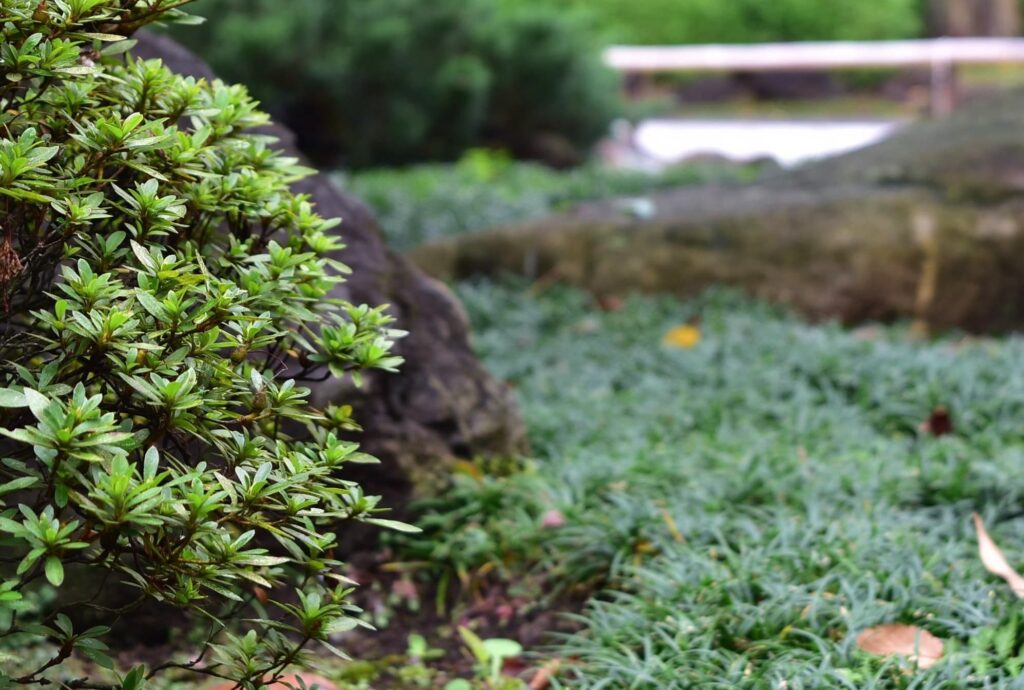
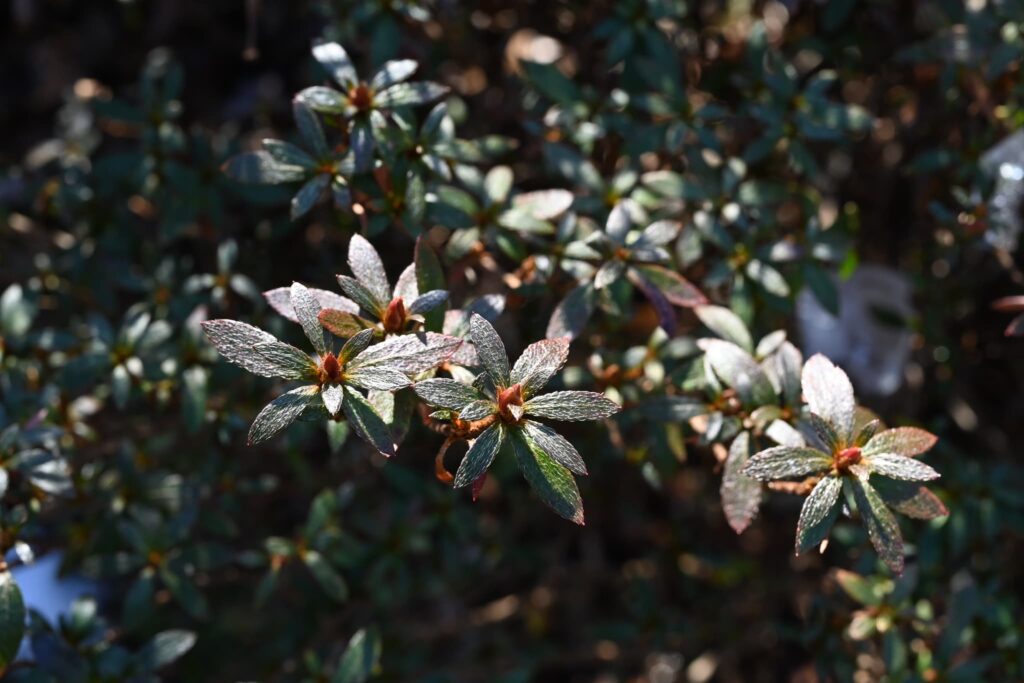
Satsuki Azalea has small, relatively thick leaves that are an important feature for identification. The leaves are generally lanceolate to oblanceolate, with pointed tips and scattered brown hairs on both surfaces.
The species produces two types of leaves during the growing season: relatively larger spring leaves and smaller summer leaves that remain through winter. In cold climates, some foliage may be lost, so the species is better described as evergreen to semi-evergreen rather than strictly evergreen.
Flowers
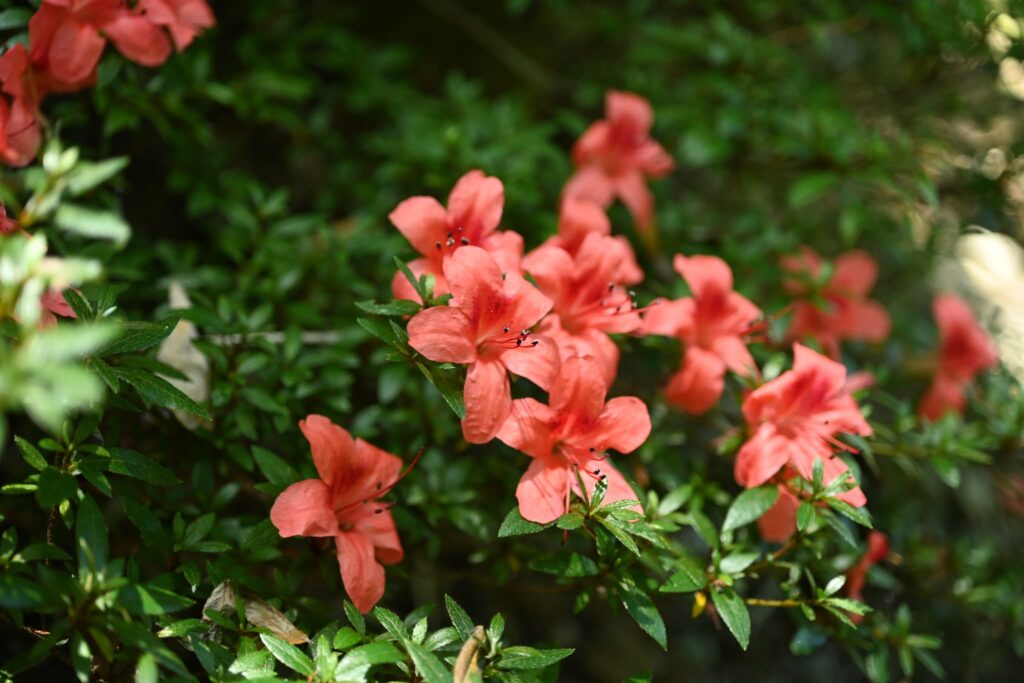
The flowers are broadly funnel-shaped and usually appear singly or in pairs near the tips of the branches. Wild plants typically have bright reddish to scarlet flowers, often with darker markings on the upper petal lobe.
The corolla is usually about 3–5 cm across and divided into five lobes. The wild species has five stamens. Cultivated varieties show enormous variation in flower color, size, pattern, and form.
Fruits
After flowering, Satsuki Azalea produces oblong-ovoid seed capsules covered with stiff brown hairs. The capsules are about 1 cm long and split open when mature, releasing numerous small seeds.
Seed propagation is possible, but cuttings are much more commonly used to reproduce selected horticultural varieties.
Bark & Timber
Satsuki Azalea is a small shrub rather than a timber tree. Its young branches are brown to reddish-brown and densely branched, often dividing repeatedly from near the base.
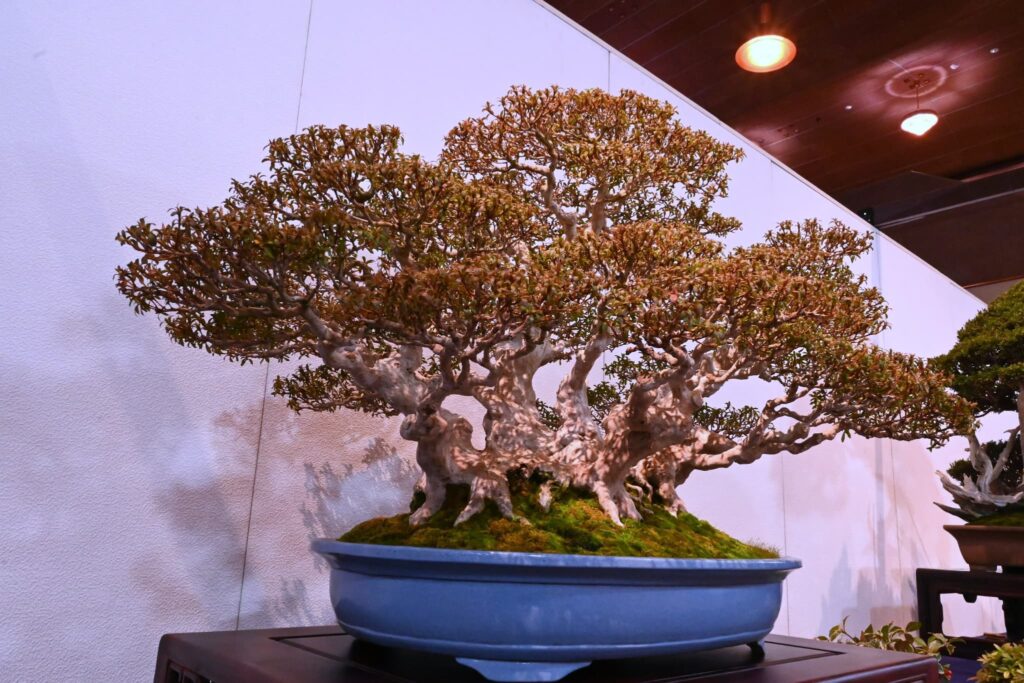
The dense branching and naturally compact habit are particularly valuable in bonsai, where old specimens can develop impressive trunks and fine ramification.
Size & Growth
Satsuki Azalea is usually a low, densely branched shrub about 0.5–1.5 m tall in cultivation, although larger plants can occur under favorable conditions. Wild plants often grow close to the ground and spread across rocks along streams.
Its relatively slow growth and strong response to pruning make it well suited to hedges, shaped shrubs, containers, and bonsai.
Uses & Cultural Significance
Satsuki has been cultivated in Japan for centuries and is widely planted in gardens, parks, temple and shrine grounds, streetscapes, and public landscapes. It is also one of the most important flowering subjects in Japanese bonsai.
The wild species is adapted to rocky riverbanks and stream valleys, where plants may be exposed to periodic flooding. This distinctive habitat helps explain its ability to grow in relatively harsh, exposed sites while maintaining a compact form.
More than 2,000 horticultural varieties are associated with Satsuki cultivation. These varieties display remarkable differences in flower color, patterns, petal form, leaf size, and growth habit.
Growing Guide
| Item | Description |
|---|---|
| Light | Full sun to partial shade |
| Soil | Acidic, well-drained, humus-rich soil |
| Soil pH | Approximately 4.5–6.0 |
| Watering | Keep evenly moist; avoid prolonged waterlogging |
| Cold Hardiness | Cultivar-dependent; protect plants in severe cold |
| Wind | Moderate tolerance; protection from drying winds is beneficial |
| Pruning | Immediately after flowering |
| Propagation | Mainly cuttings for selected cultivars |
| Common Pests | Aphids, spider mites, lace bugs, scale insects |
Light & Soil
Satsuki Azalea grows best in acidic, well-drained soil that remains consistently moist. Full sun produces good flowering, while light afternoon shade can be beneficial in hot climates.
It does not perform well in alkaline or lime-rich soils. In cultivation, an acidic soil mix containing organic matter and good drainage is preferable.
In nature, Satsuki often grows on rocks and along streams, where water is plentiful but drainage is rapid. Reproducing both conditions—adequate moisture and good drainage—is important.
Wind & Snow Tolerance
Satsuki tolerates moderate exposure but benefits from protection from strong, drying winds, particularly during winter when frozen soil can prevent the roots from replacing water lost through the foliage.
Its low, flexible habit gives it reasonable resistance to ordinary snow, although heavy wet snow can bend or break branches.
Cold Hardiness
Cold tolerance varies considerably among Satsuki cultivars. Rather than applying a single hardiness rating to the entire group, gardeners should select cultivars suited to their local climate.
Flower buds and newly opened flowers are more vulnerable to late spring frost than established wood. Container-grown plants are also more susceptible to winter damage because their roots are exposed to lower temperatures than plants growing in the ground.
Pruning
The best time to prune Satsuki Azalea is immediately after flowering. Flower buds for the following year develop on new growth during the growing season, so heavy pruning later in summer can reduce the following year’s bloom.
Regular pruning encourages the dense branching and compact form for which Satsuki is famous.
Suitability for Home Gardens
Satsuki Azalea is well suited to acidic garden soils and can be used as a specimen shrub, low hedge, foundation planting, or container plant. Its compact growth and tolerance of pruning also make it particularly suitable for bonsai.
In areas with alkaline soil, growing the plant in an acidic planting bed or container is often easier than attempting to modify the surrounding soil.
Pests
Common pests include aphids, spider mites, lace bugs, and scale insects. Problems are more likely when plants are stressed by drought, poor drainage, or unsuitable soil conditions.
Good air circulation, appropriate watering, and maintaining healthy growing conditions help reduce many pest and disease problems.
Cultivars
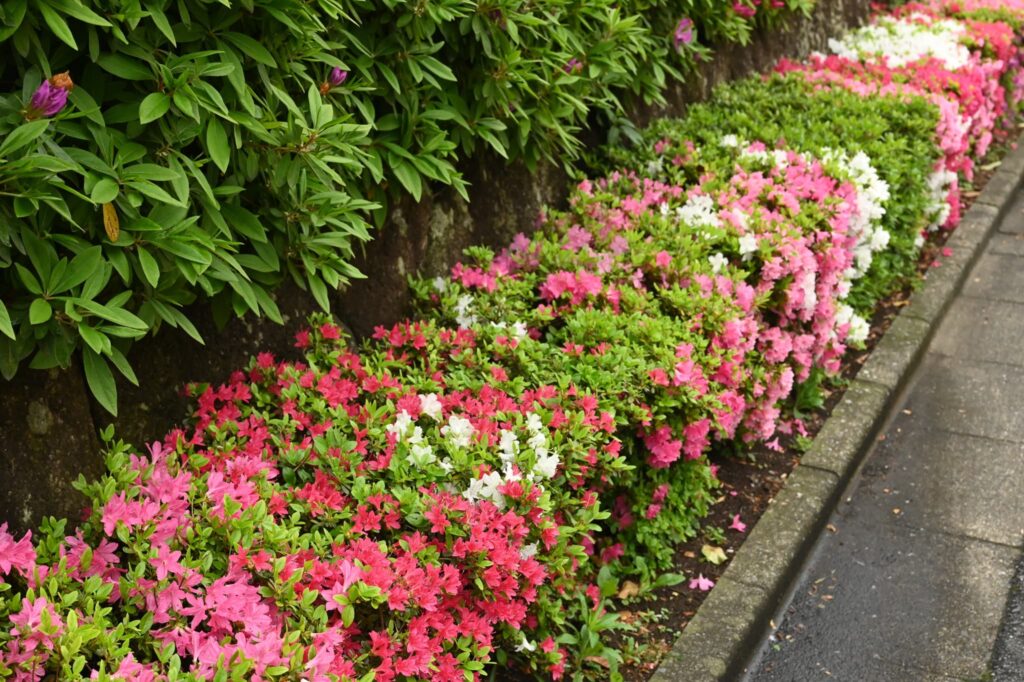
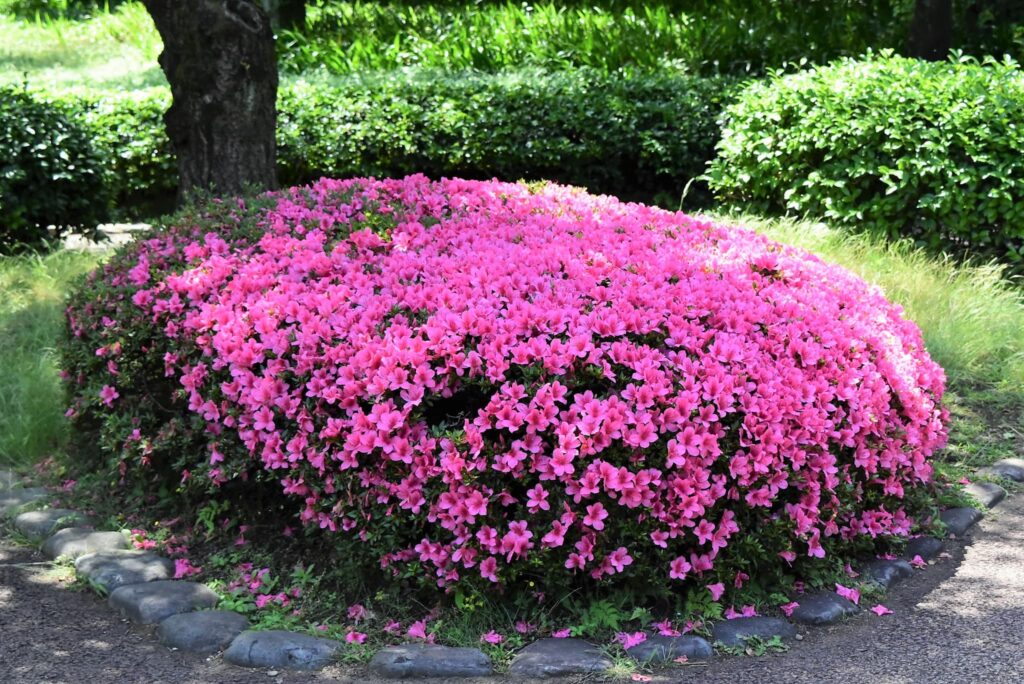
Satsuki cultivation has produced more than 2,000 named horticultural varieties. Flowers may be red, pink, white, purple, bicolored, striped, or variegated, and single, semi-double, and double forms occur.
Some cultivars have particularly small leaves and flowers and are highly valued for bonsai, while others are selected primarily for large or unusually patterned flowers.
Similar Species
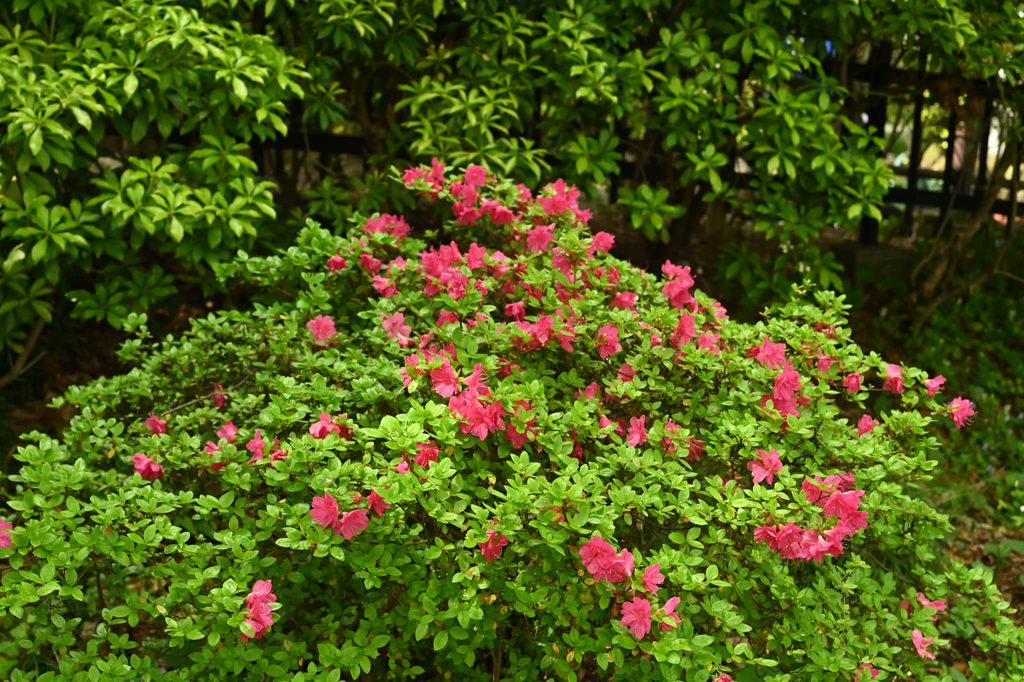
Kurume Azalea (Rhododendron × obtusum)
Kurume Azaleas generally flower earlier than Satsuki and usually have smaller flowers. They are widely used for mass planting, hedges, and garden displays.
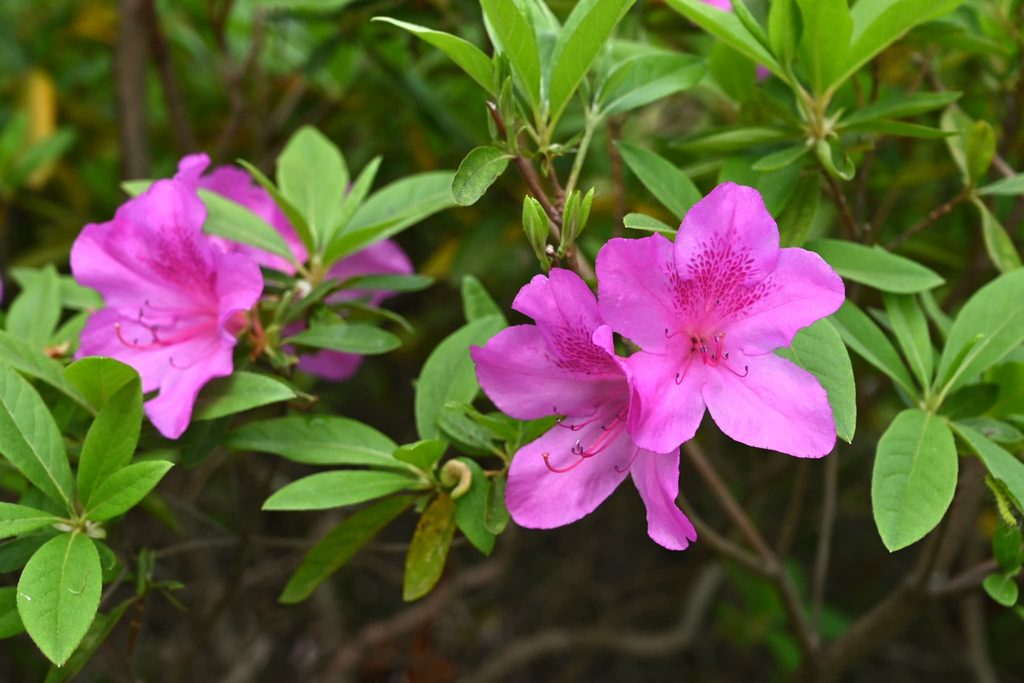
Hirado Azalea (Rhododendron × pulchrum)
Hirado Azaleas generally have larger flowers and a more vigorous, larger-growing habit than Satsuki. They are primarily valued as ornamental shrubs rather than for traditional Satsuki-style bonsai.
| Feature | Satsuki | Kurume | Hirado |
|---|---|---|---|
| Bloom Time | Late spring | Earlier spring | Late spring |
| Flower Size | Medium | Small | Large |
| Growth Habit | Compact, dense | Compact to spreading | More vigorous |
| Bonsai Use | Excellent | Good | Less typical |
Sasanqua Camellia (Camellia sasanqua)
Sasanqua Camellia can be confused with Satsuki when neither is in flower, but it has larger, glossier leaves and blooms mainly from autumn into winter. Its flowers also have a completely different structure.
Frequently Asked Questions
What is the difference between Satsuki Azalea and Kurume Azalea?
Satsuki generally flowers later, has somewhat larger flowers, and is especially important in Japanese bonsai. Kurume Azaleas usually flower earlier and are widely used for mass planting and hedges.
Can Satsuki Azalea grow in full sun?
Yes. Full sun encourages flowering, provided the soil does not dry out. In hot climates, some afternoon shade can reduce heat and moisture stress.
How fast does Satsuki Azalea grow?
Growth is generally slow to moderate, but the rate varies considerably with cultivar, climate, soil, and pruning.
Is Satsuki Azalea evergreen?
It is evergreen to semi-evergreen. In mild climates it can retain most of its foliage, while colder conditions may cause partial or substantial leaf loss.
Why are my azalea leaves turning yellow?
Common causes include alkaline soil, poor drainage, root stress, and nutrient deficiencies. Satsuki requires acidic soil, so high soil pH is a particularly common problem.
When should Satsuki Azalea be pruned?
Prune immediately after flowering. Later pruning can remove developing flower buds for the following year.
How cold-hardy is Satsuki Azalea?
Cold tolerance varies among cultivars. Hardiness should therefore be judged by the particular cultivar and local growing conditions rather than by a single temperature limit for the entire group.
Conclusion
Satsuki Azalea (Rhododendron indicum) is one of Japan’s most distinctive ornamental shrubs. Its small hairy leaves, late-spring flowers, dense branching, and remarkable diversity of cultivated forms make it valuable in gardens and especially in bonsai.
Although commonly associated with formal gardens and horticulture, the wild species has a distinctive ecology, growing mainly on rocky riverbanks and in stream valleys. Understanding this natural habitat helps explain both its appearance and its cultivation requirements.