Japanese Persimmon (Diospyros kaki): Identification, Care & Uses
Introduction
The Japanese persimmon, or kaki, is one of the most familiar fruit trees in Japan. Its bright orange fruit and vivid autumn foliage make it a characteristic feature of the Japanese autumn landscape. This guide covers its identification, growing requirements, cultivars, uses, and cultural significance, based on observations of the tree as grown in Japan.
What Is the Japanese Persimmon?
The Japanese persimmon (Diospyros kaki) is a deciduous fruit tree in the ebony family (Ebenaceae). It is native to China and has been cultivated in Japan for centuries. Today, it is widely grown in Japan for its fruit and is also familiar as a garden and rural landscape tree. The species is now cultivated in many temperate and subtropical regions around the world.
Overview
| Item | Description |
|---|---|
| Scientific Name | Diospyros kaki |
| Common Name | Japanese Persimmon, Oriental Persimmon, Kaki |
| Japanese Name | カキ (Kaki) |
| Family | Ebenaceae |
| Native Range | China and neighboring parts of East and Southeast Asia |
| Plant Type | Deciduous fruit tree |
| Height | Varies by cultivar; commonly about 4–10 m |
| Trunk | Usually single-trunked, sometimes multi-trunked |
| Flowering Season | May–June |
| Fruit Type | Berry |
| USDA Zones | 7–10 |
| Sun Exposure | Full sun |
Characteristics
Foliage
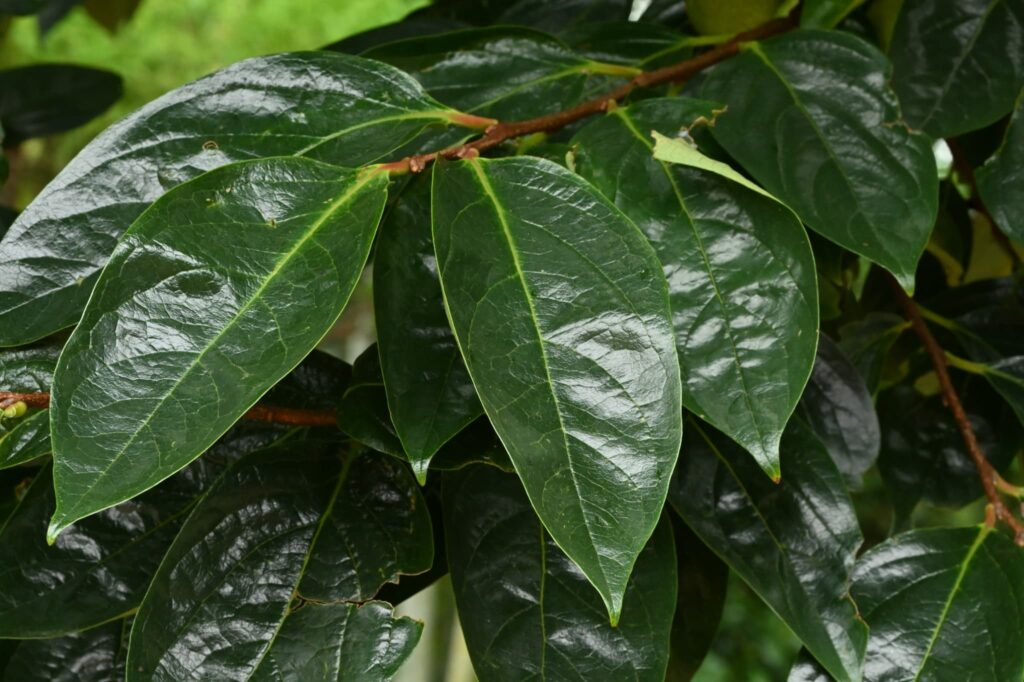
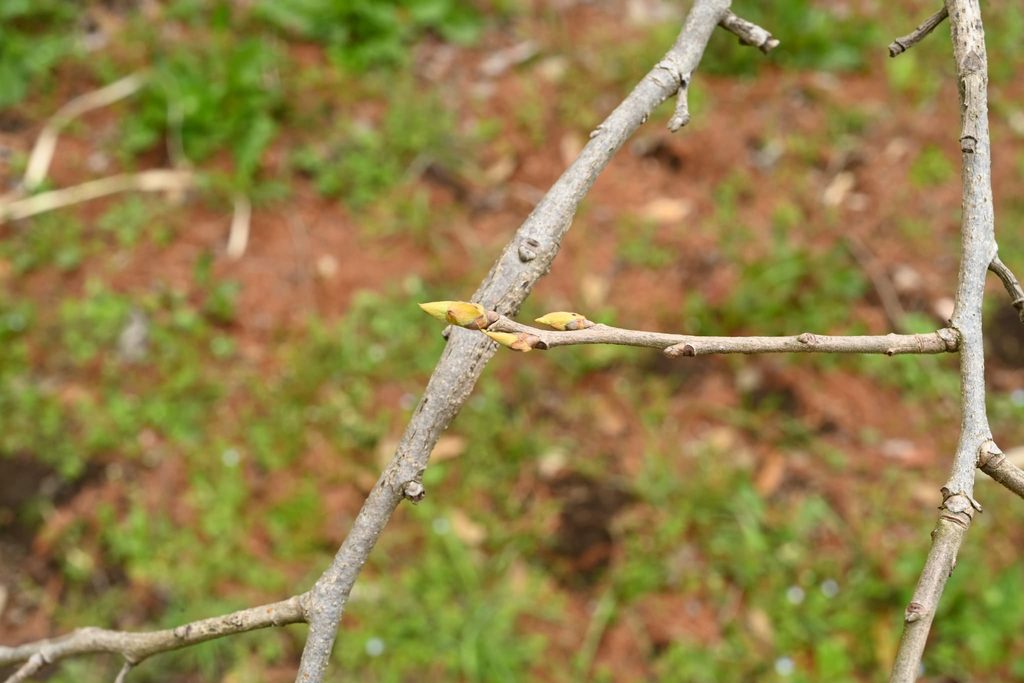
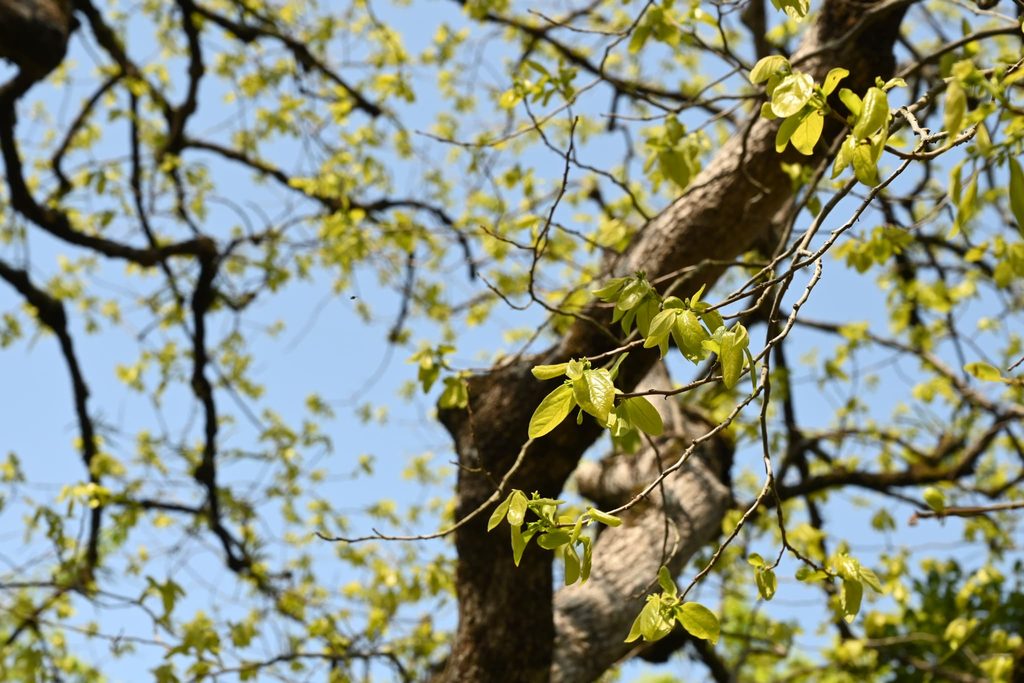
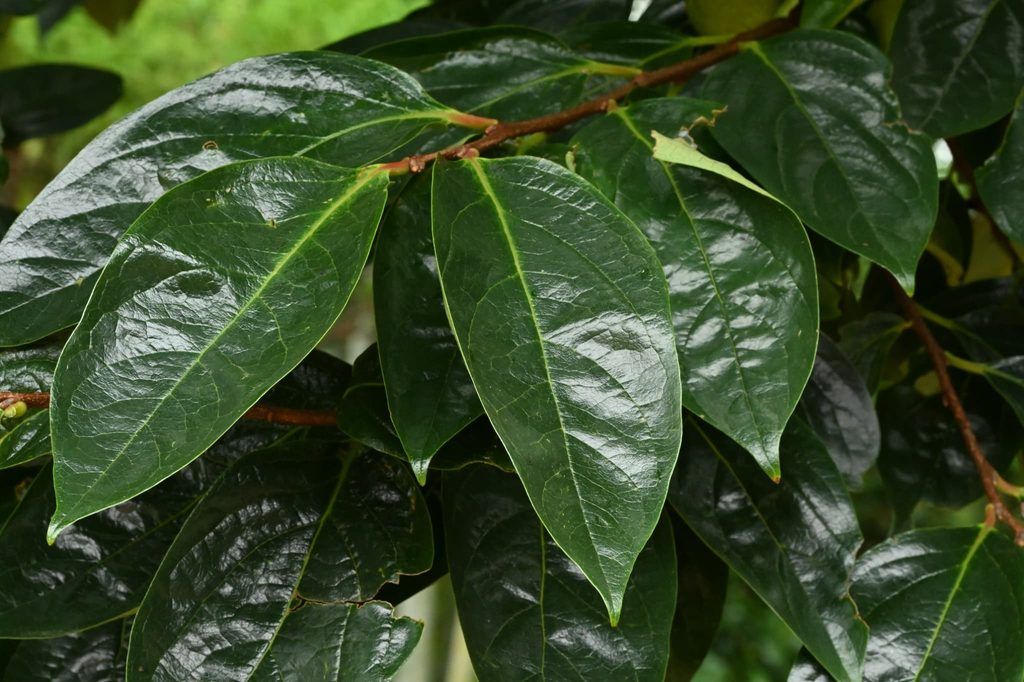
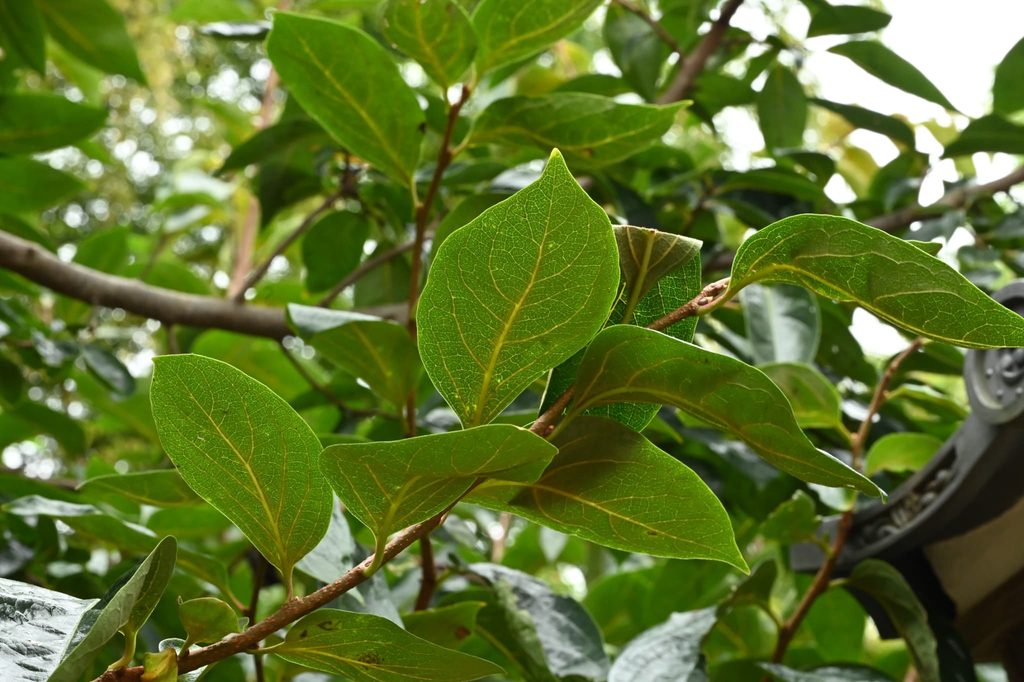
The leaves are large, oval to elliptic, leathery, and glossy. They are arranged alternately along the branches and typically measure about 7–15 cm long and 5–10 cm wide. The underside is often paler and may be slightly hairy.
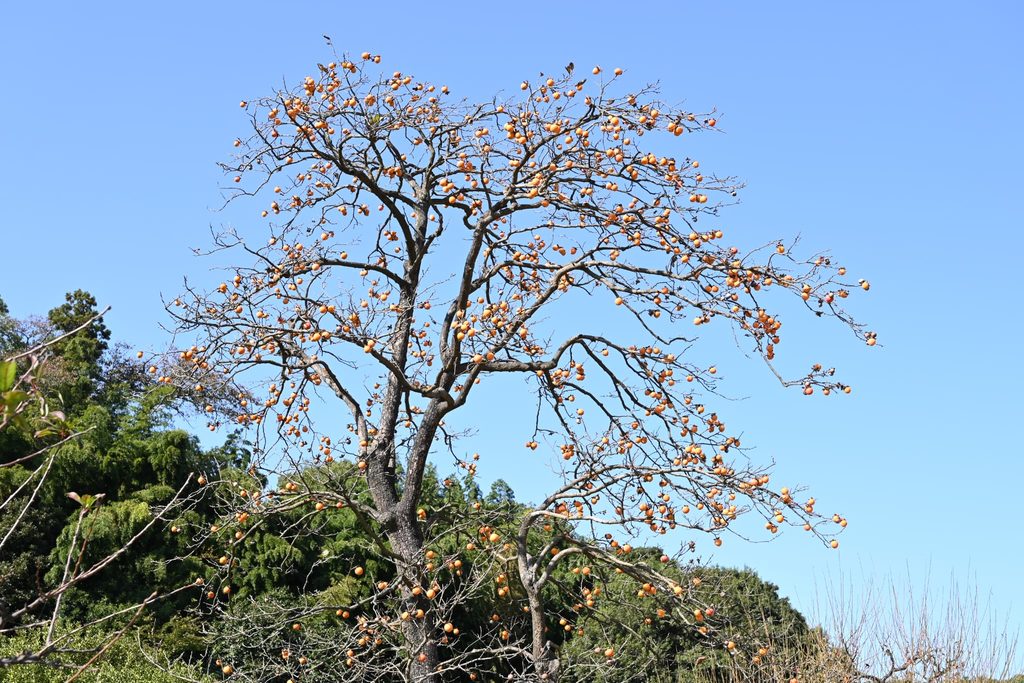
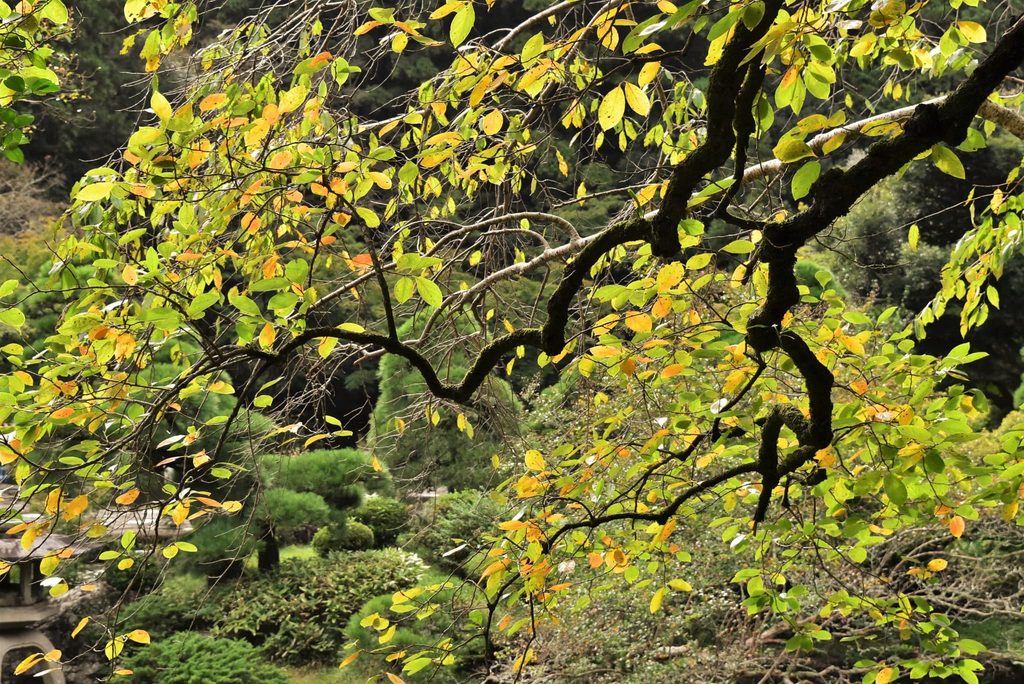
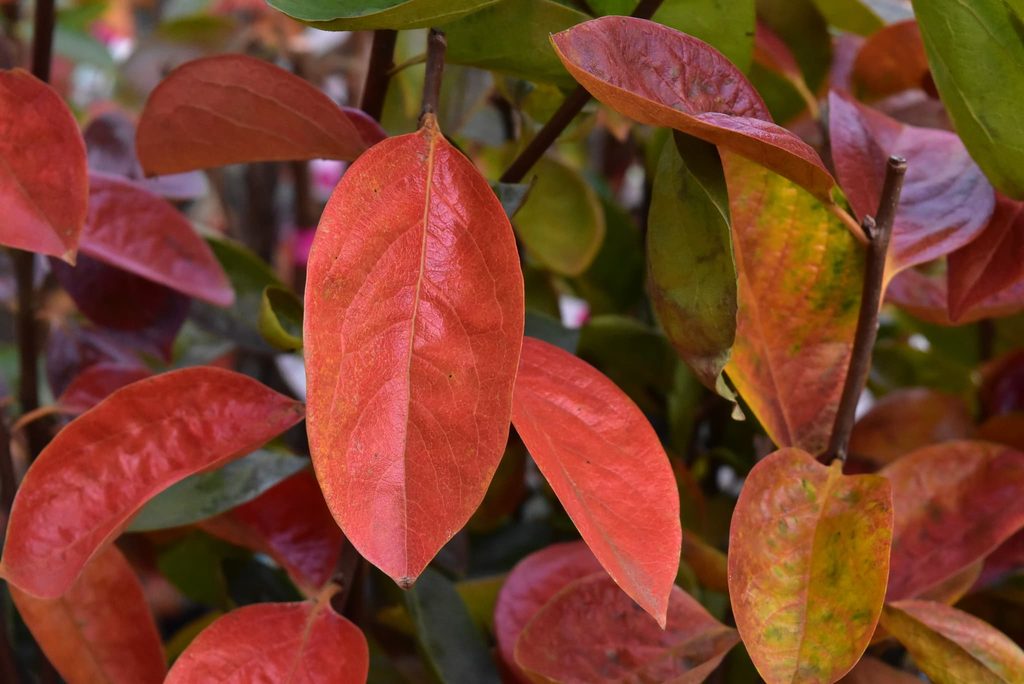
In autumn, the foliage can turn yellow, orange, or reddish before falling, adding to the tree’s ornamental value.
Flowers
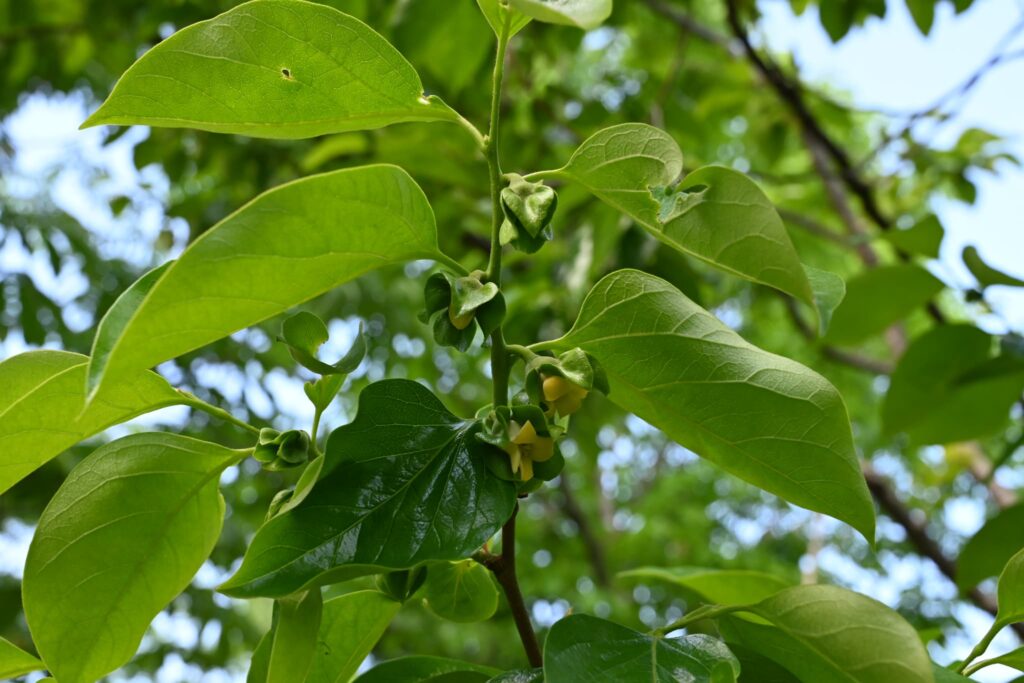
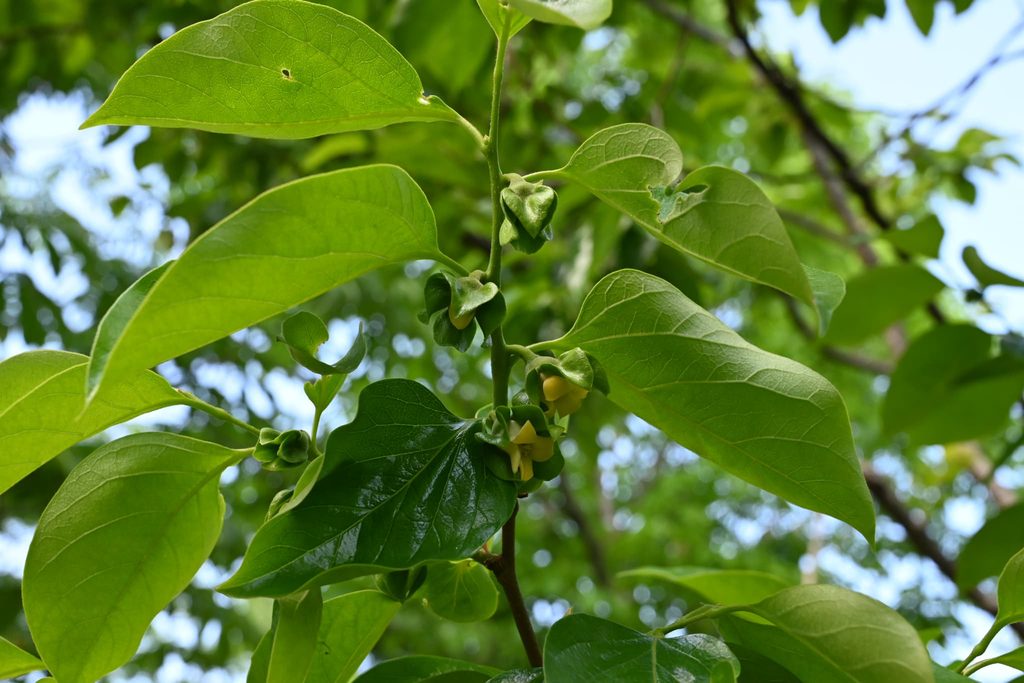
Persimmon flowers appear in May and June on the current season’s shoots. They are small, cream-colored, and bell-shaped, so they are less conspicuous than the fruit.
The sexual expression of Diospyros kaki is more complicated than that of a typical monoecious tree. Most cultivars produce female flowers only, while some cultivars produce both male and female flowers on the same tree. Hermaphrodite flowers can also occur in some cultivars. Female flowers are generally solitary, whereas male flowers are usually produced in small clusters.
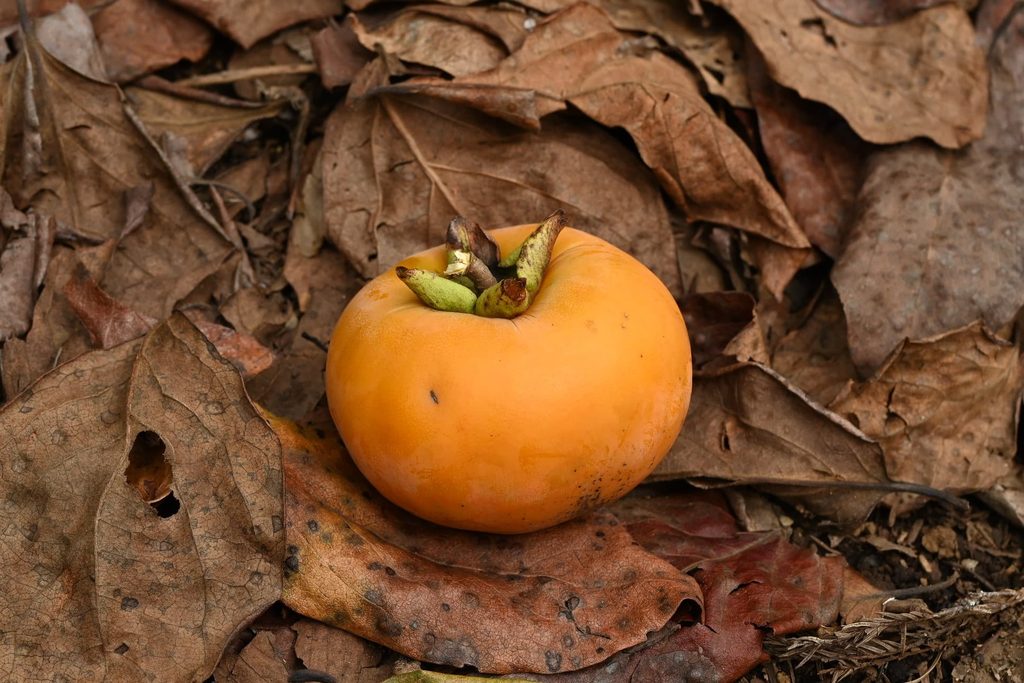
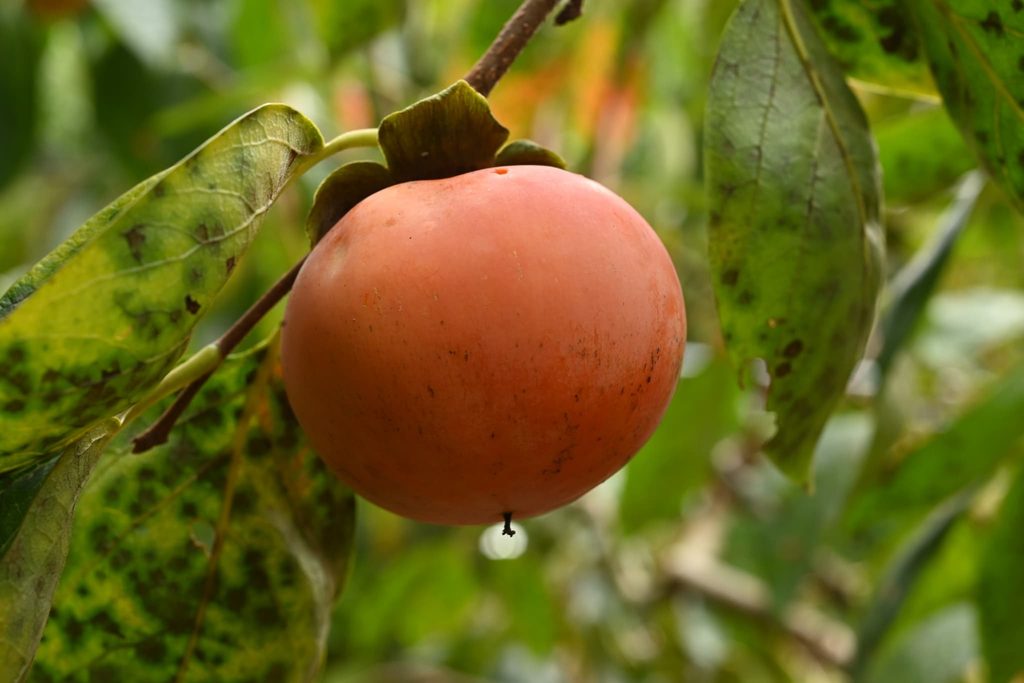
The large green calyx remains attached to the fruit and is particularly conspicuous on female flowers.
Fruits
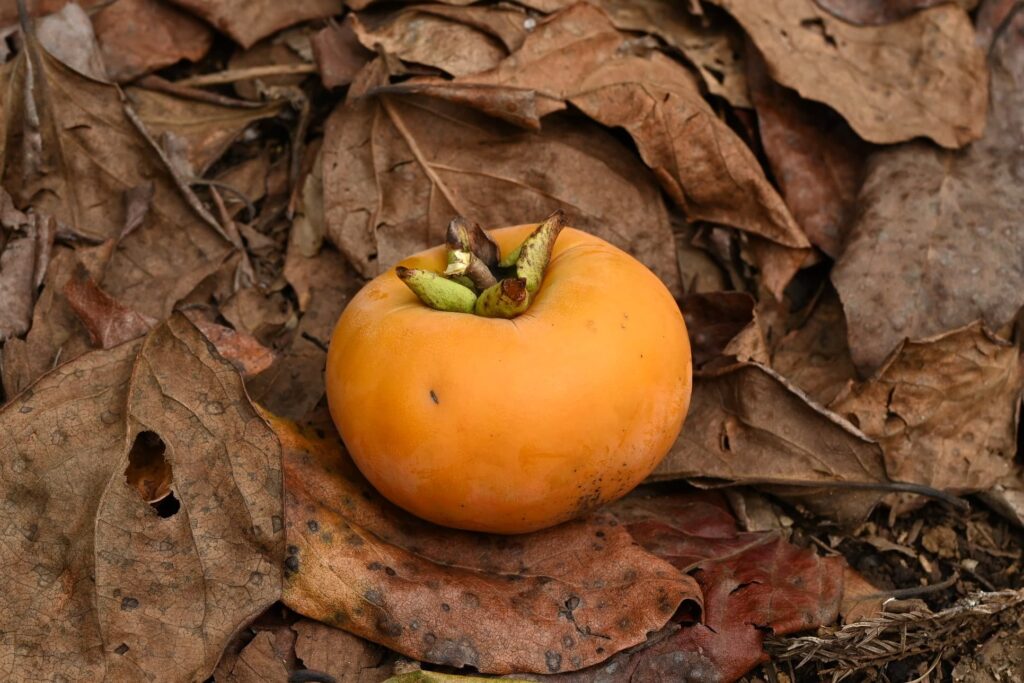
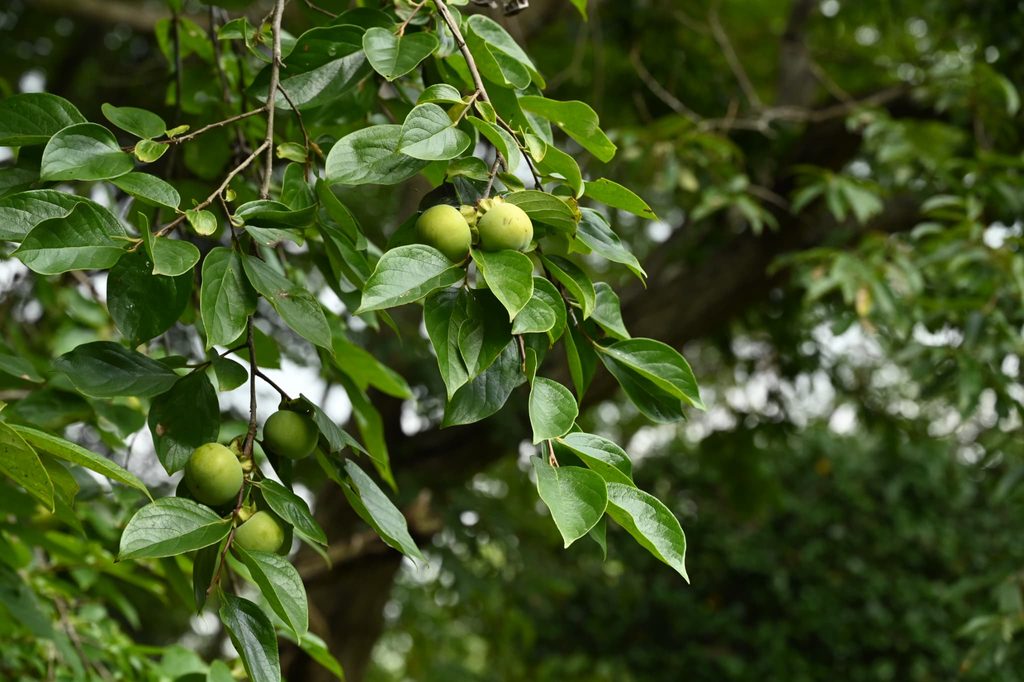
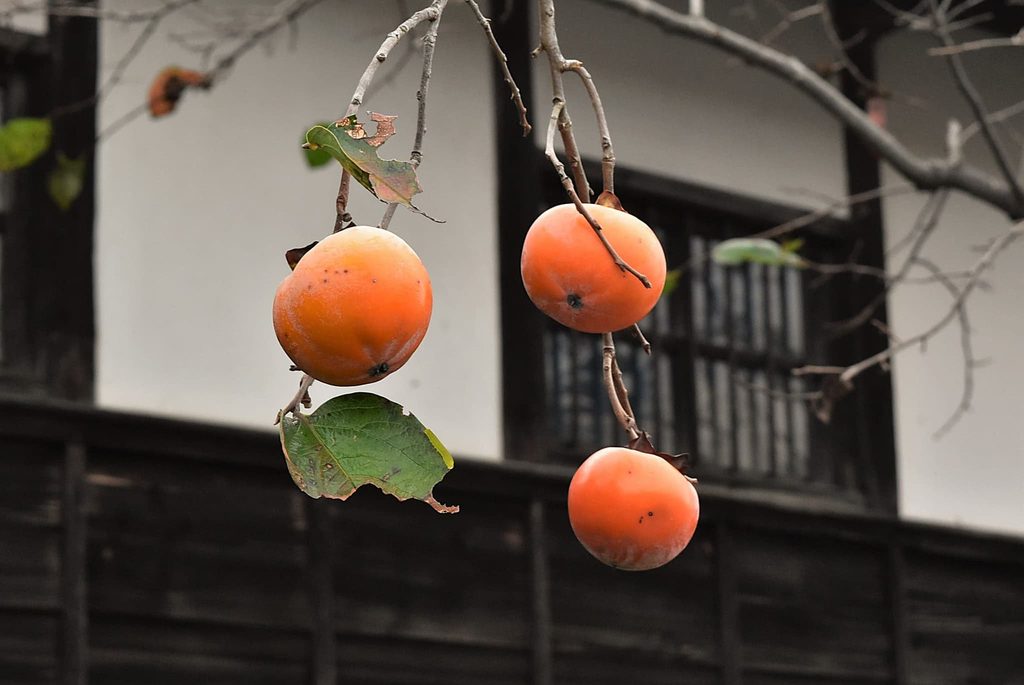
Persimmons generally ripen from October to November in Japan. The fruit is botanically a berry and varies greatly in shape and size among cultivars. Japanese Chestnut is another familiar Japanese tree whose edible fruits mature in autumn.
Persimmon cultivars are broadly classified according to their astringency. Non-astringent cultivars lose their astringency naturally as they ripen, whereas astringent cultivars retain soluble tannins and require treatment or further ripening before they become palatable.
Astringent fruit is traditionally processed into hoshigaki (dried persimmons), while alcohol treatment and other methods are also used to remove astringency. The juice of astringent persimmons, known as kakishibu, has traditionally been used as a coating and preservative material.
Persimmon fruit is also an important food source for birds in autumn and winter.
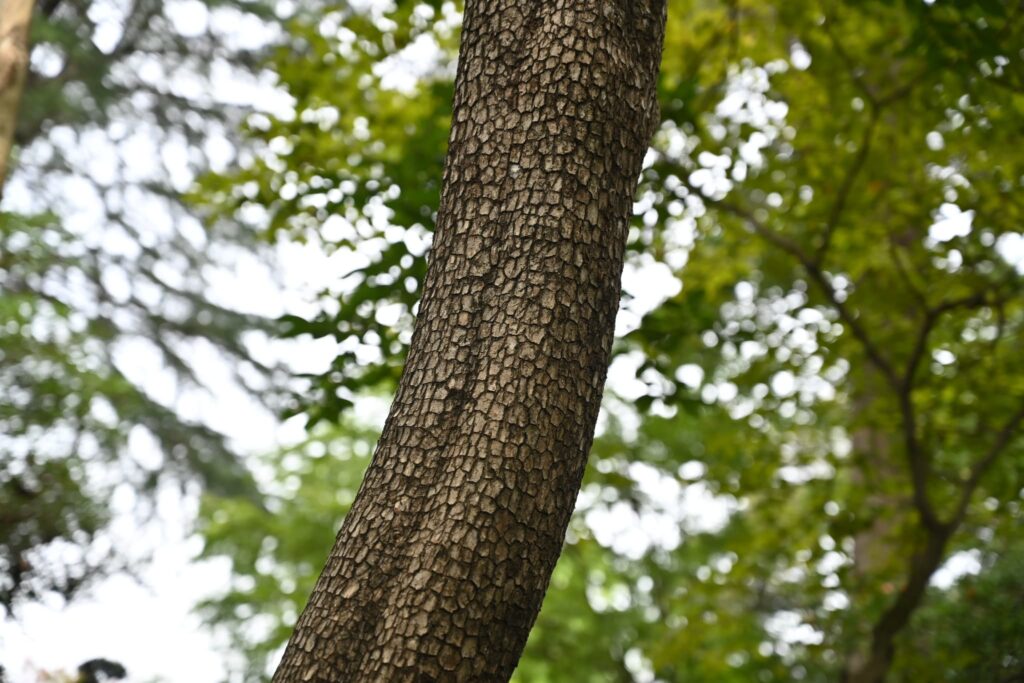
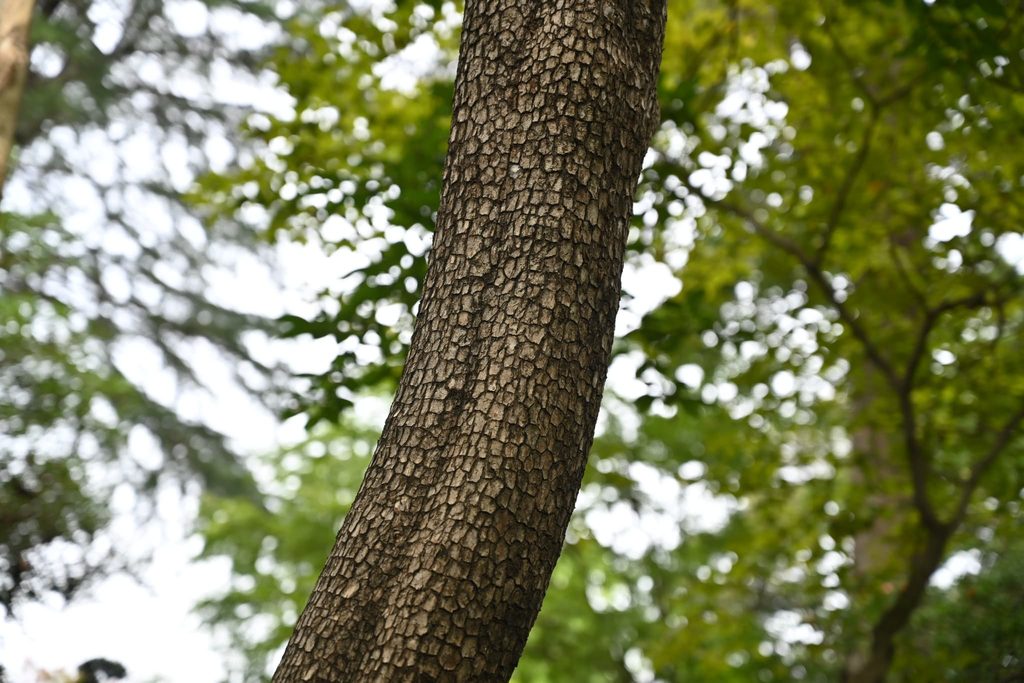
Bark & Timber
Persimmon wood is hard and dense but can be brittle, and branches may break under heavy fruit loads, snow, or strong winds.
A particularly prized form of persimmon wood is known as kurogaki. It is not a separate species or cultivar but wood with distinctive dark or black streaking. The occurrence of this dark grain cannot reliably be determined while the tree is standing.
Kurogaki is valued for its unusual appearance and hardness and has traditionally been used for furniture, decorative woodwork, tea utensils, and architectural details.
The ebony commonly known in the timber trade also belongs to the genus Diospyros, although it comes from different species.
Size & Growth
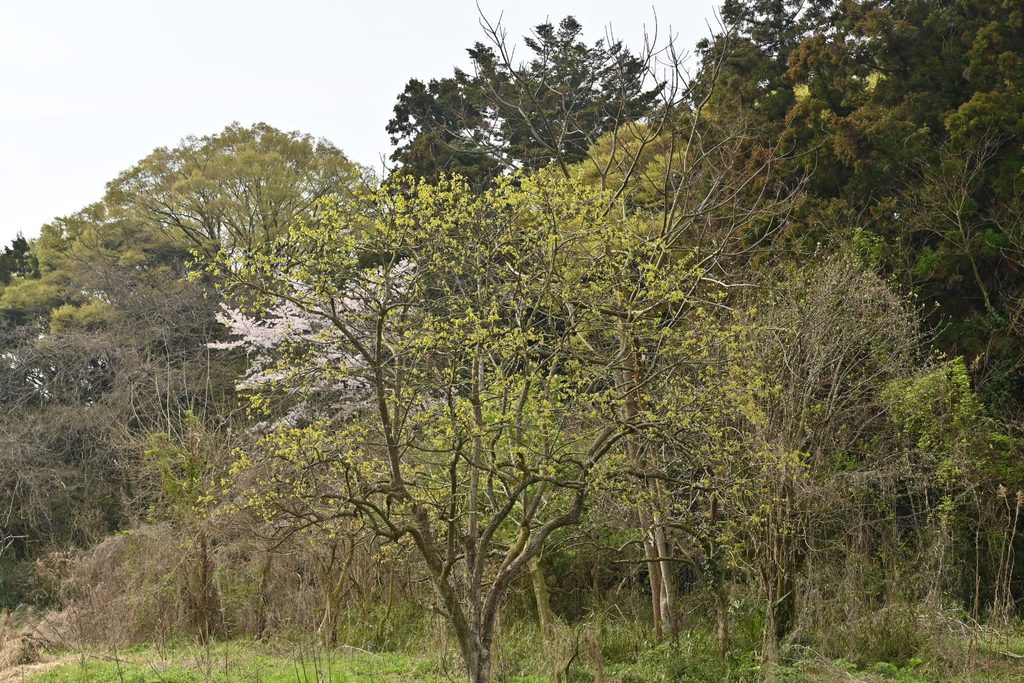
Mature size varies considerably among cultivars and growing conditions. The tree can produce heavy crops, but excessive fruiting may contribute to alternate bearing in subsequent years. Its relatively brittle branches also make structural pruning important.
Uses & Cultural Significance
Culinary and Traditional Uses
Persimmons are eaten fresh, dried, or processed in various ways. Persimmon leaves are also used to make kaki-no-ha-cha (persimmon leaf tea) and to wrap kakinoha-zushi, a traditional Japanese sushi associated particularly with the Nara region.
Astringent persimmons are commonly processed into hoshigaki, while kakishibu has traditionally been used as a coating and preservative because of its tannin content.
Name Origin
The origin of the Japanese name kaki is uncertain. Several traditional explanations have been proposed, including derivations associated with the fruit’s red-orange color or the hardness of the wood. None can be regarded as definitively established.
Growing Guide
| Item | Description |
|---|---|
| Light & Soil | Full sun; adaptable to a range of well-drained soils |
| Wind & Snow Tolerance | Moderate to low; brittle branches can break under heavy loads |
| Cold Hardiness | Generally suited to USDA Zones 7–10, although hardiness varies with cultivar and local conditions |
| Pruning | Remove poorly placed, crowded, weak, or excessively vigorous branches; avoid removing too much fruiting wood |
| Suitability for Home Gardens | Good where summers are warm and the site receives ample sunlight |
| Pollination | Many cultivars can set fruit without cross-pollination; requirements vary among cultivars |
| Pests | Various caterpillars, including slug-moth larvae, as well as bagworms and other common fruit-tree pests |
Light & Soil
Persimmons grow best in full sun. They tolerate a range of soil types but perform best in fertile, well-drained soil that does not remain waterlogged.
Wind & Snow Tolerance
The wood and branches can be brittle, so trees in exposed sites may suffer branch breakage during strong winds. Heavy snow can also place considerable weight on the branches.
Cold Hardiness
Japanese persimmons are generally grown in USDA Hardiness Zones 7–10. They prefer mild to moderately cold winters and warm growing seasons. Hardiness varies among cultivars, and late spring frosts can damage newly emerging growth.
Pruning
Persimmon fruit is produced on new shoots arising from older branches, so pruning should preserve a good framework of fruiting wood.
Remove dead, damaged, crossing, or excessively crowded branches, together with some overly vigorous shoots when necessary. Heavy pruning can stimulate vigorous vegetative growth and reduce the balance between vegetative growth and fruit production.
Because persimmons can bear heavy crops, maintaining an open, well-balanced crown is more useful than simply shortening vigorous shoots.
Suitability for Home Gardens
Persimmons can make excellent garden fruit trees where there is enough sunlight and space for the mature canopy.
A second cultivar is not always necessary for fruit production. Many cultivars can produce fruit parthenocarpically without cross-pollination, although pollination and seed formation vary considerably among cultivars.
Pests
Persimmon trees may be attacked by several kinds of caterpillars, including slug-moth larvae, as well as bagworms and other insects.
Slug-moth caterpillars should be handled with particular care because some species have irritating or venomous hairs and can cause painful stings.
Cultivars
Japanese persimmon has a very large number of cultivars, traditionally divided into non-astringent and astringent types.
Well-known non-astringent cultivars include Fuyū, Jirō, Gosho, Suruga, and Zenjimaru. Astringent cultivars include Hiratanenashi, Saijō, Dōjō-hachiya, and Yotsumizo.
Some small-fruited forms, such as Yamagaki and Mamegaki, are also valued for ornamental purposes, bonsai, or traditional uses.
The characteristics of individual cultivars—including fruit shape, ripening time, astringency, pollination requirements, and cold tolerance—can differ considerably.
Similar Species
The Japanese persimmon can be confused with other members of the genus Diospyros, particularly when the tree is seen without fruit.
In Japan, wild persimmon populations are also represented by forms commonly called Yamagaki. These are generally treated within Diospyros kaki rather than as a separate species. Other Diospyros species occur in southern Japan and the Ryukyu Islands, but they differ in fruit size, leaf characteristics, and distribution.
Frequently Asked Questions
Why do some persimmons taste astringent while others are sweet?
All persimmon fruit contains tannins when unripe. In non-astringent cultivars, these tannins become insoluble as the fruit develops, so the fruit can become sweet and non-astringent while still firm. Astringent cultivars retain soluble tannins and therefore require further ripening or treatment such as drying or alcohol deastringency.
Can persimmons be grown in cold climates?
Japanese persimmons are generally suited to USDA Zones 7–10, although cultivar and site make a difference. Winter cold is not the only concern: early spring growth can be damaged by late frosts.
Do I need two persimmon trees to get fruit?
Not necessarily. Many cultivated Japanese persimmons can produce fruit without cross-pollination, although pollination behavior varies among cultivars. Some cultivars produce seedless fruit parthenocarpically, while pollination can influence seed formation and fruit characteristics.
Why do persimmon trees break so easily?
Persimmon wood is hard but can be brittle. Long or poorly positioned branches may break under strong winds, heavy fruit crops, or snow, making a well-balanced branch structure important.
Conclusion
The Japanese persimmon is both a productive fruit tree and a distinctive component of the Japanese landscape. Its glossy foliage, inconspicuous early-summer flowers, brilliant autumn fruit, and valuable timber give it an unusual combination of culinary, ornamental, and cultural importance.