Konara Oak (Quercus serrata): Identification, Care & Uses
Konara Oak is one of the defining trees of Japan’s traditional coppice woodlands (satoyama), long valued for firewood, charcoal, and shiitake cultivation, and increasingly appreciated today as an ornamental garden tree. This guide covers identification features, flowers, acorns, bark, cultivars, and care, based on observations of the tree as grown in Japan.
What Is Konara Oak?
Konara Oak is a deciduous broadleaf tree in the family Fagaceae, native to Honshu, Shikoku, Kyushu and southern Hokkaido. It grows wild in relatively dry mountain sites, but because its wood has long been used for firewood and charcoal, it was also planted in large numbers near villages—traces of this practice remain common in satoyama landscapes across the country today. Outside Japan, it is also found on the Korean Peninsula.
Overview
| Item | Description |
|---|---|
| Family | Fagaceae |
| Genus | Quercus |
| Species | Q. serrata |
| Scientific Name | Quercus serrata |
| Common Name | Konara Oak / Japanese Deciduous Oak |
| Japanese Name | Konara (コナラ) |
| Native Range | Native to Honshu, Shikoku, Kyushu and southern Hokkaido.; also the Korean Peninsula |
| USDA Hardiness | 5–8 |
| Plant Type | Deciduous Tree |
| Height | 15–25 m |
| Trunk Diameter | 50–60 cm |
| Flowering Season | April–May |
| Fruit Type | Acorn, about 2 cm, ripening in October |
| Garden Use | Ornamental shade tree, naturalistic/satoyama-style planting |
Characteristics
| Feature | Description |
|---|---|
| Leaves | Alternate, oval, pointed tip, silvery when young |
| Fruit | Slender acorn with a scaly, bowl-shaped cap |
| Bark | Grayish brown, developing black-and-white streaked fissures with age |
| Habit | Single upright trunk in the wild; multi-stemmed when repeatedly coppiced |
Foliage
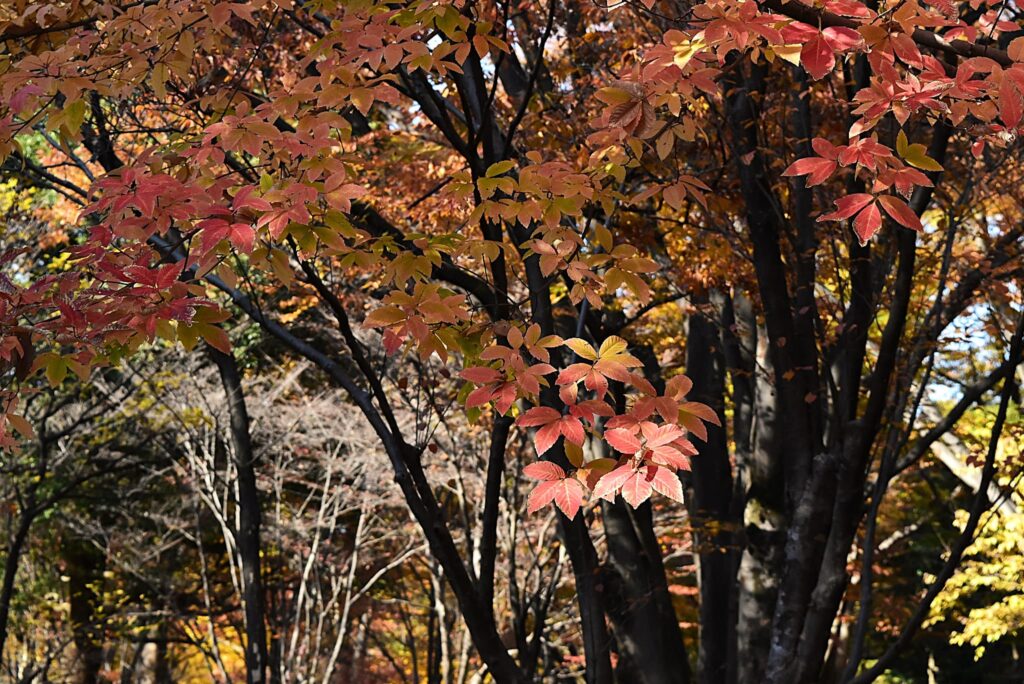
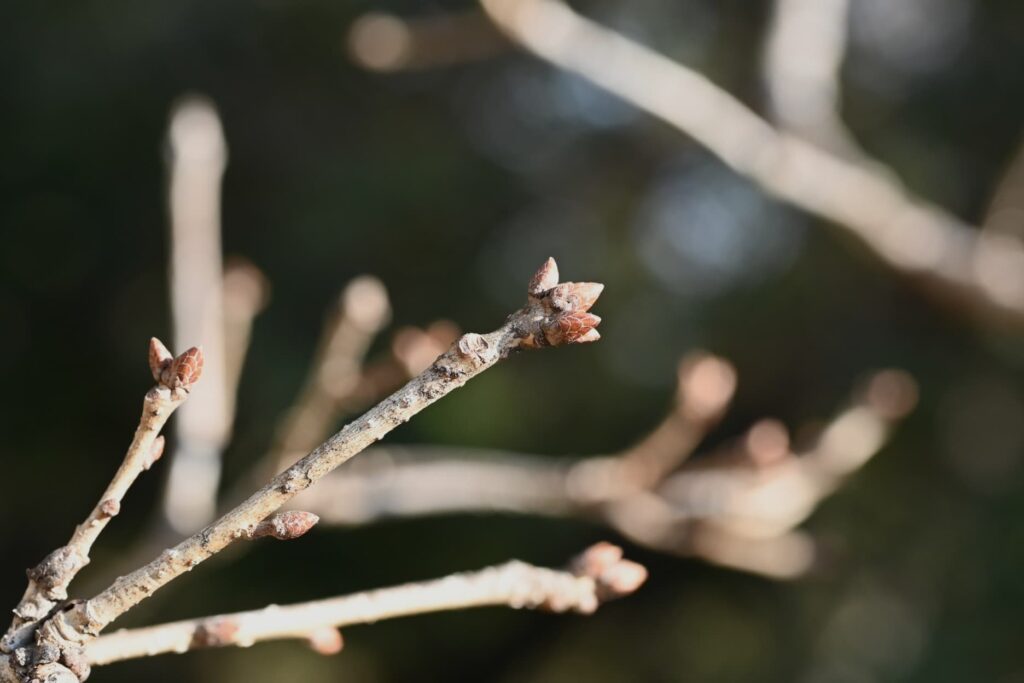
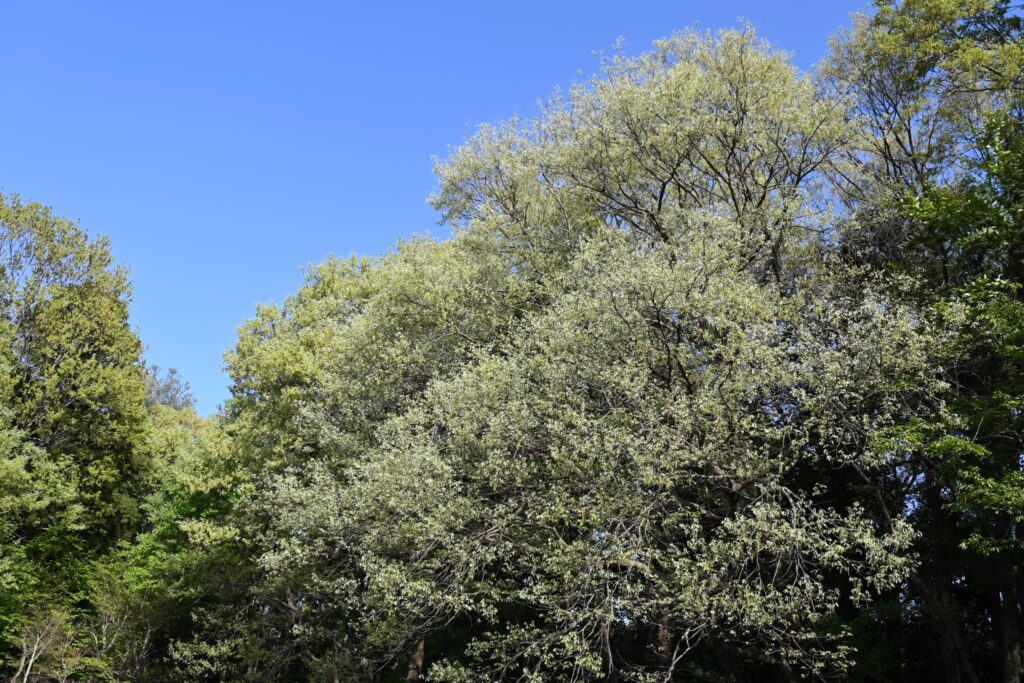
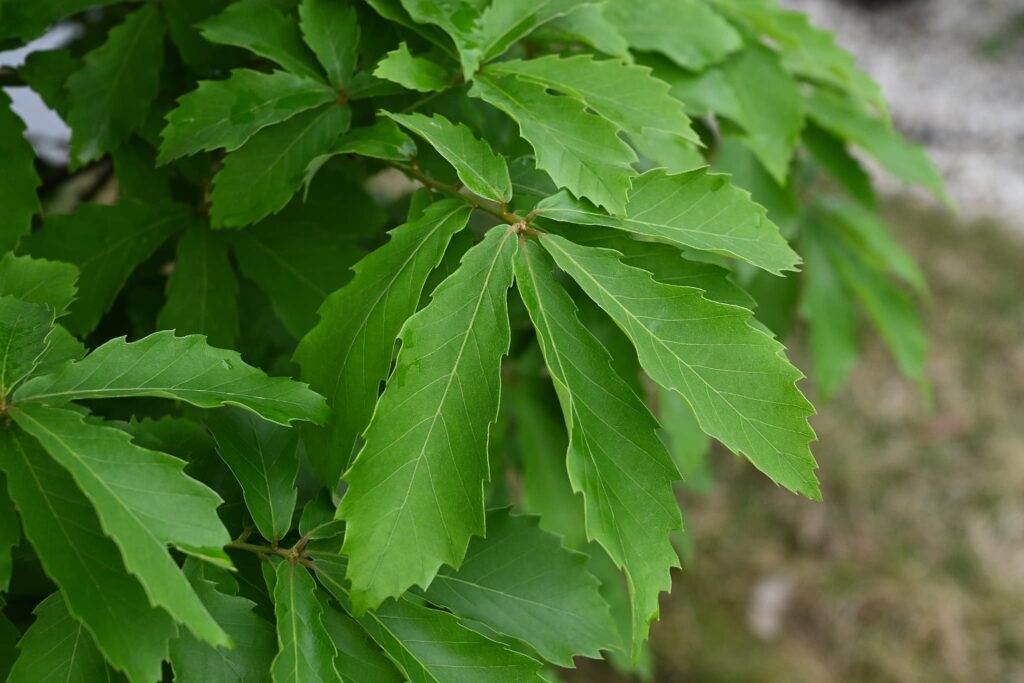
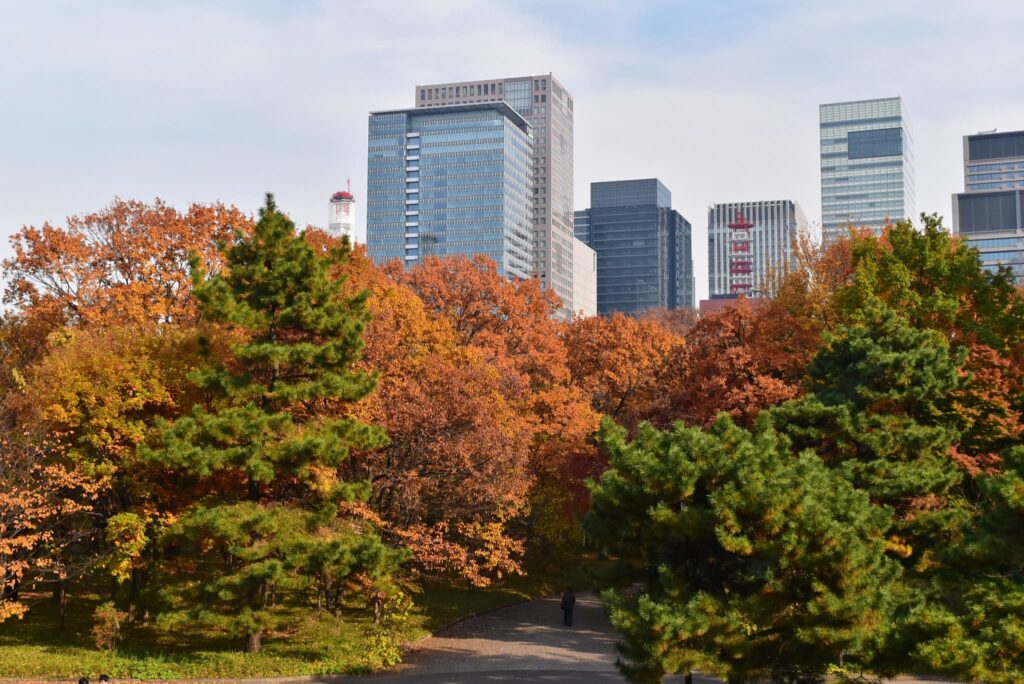
Konara Oak leaves are 5–15 cm long and about 5 cm wide, oval in shape with a pointed tip, wider toward the leaf’s outer end than at its base. New leaves are densely covered in silky hairs, giving the tree a silvery shimmer visible from a distance. The tree’s autumn color develops later than many other species and tends toward a muted, understated palette, with younger trees generally producing the most attractive color. Along with the bark and acorns, the leaves have been used since ancient times as a source of brown and black dye.
Flowers
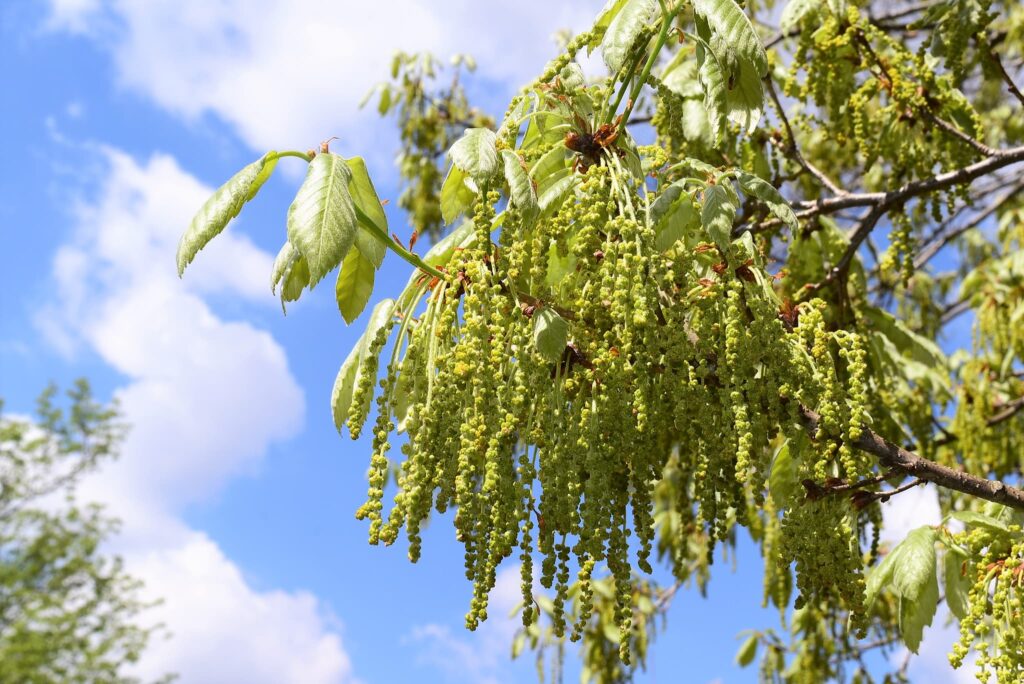
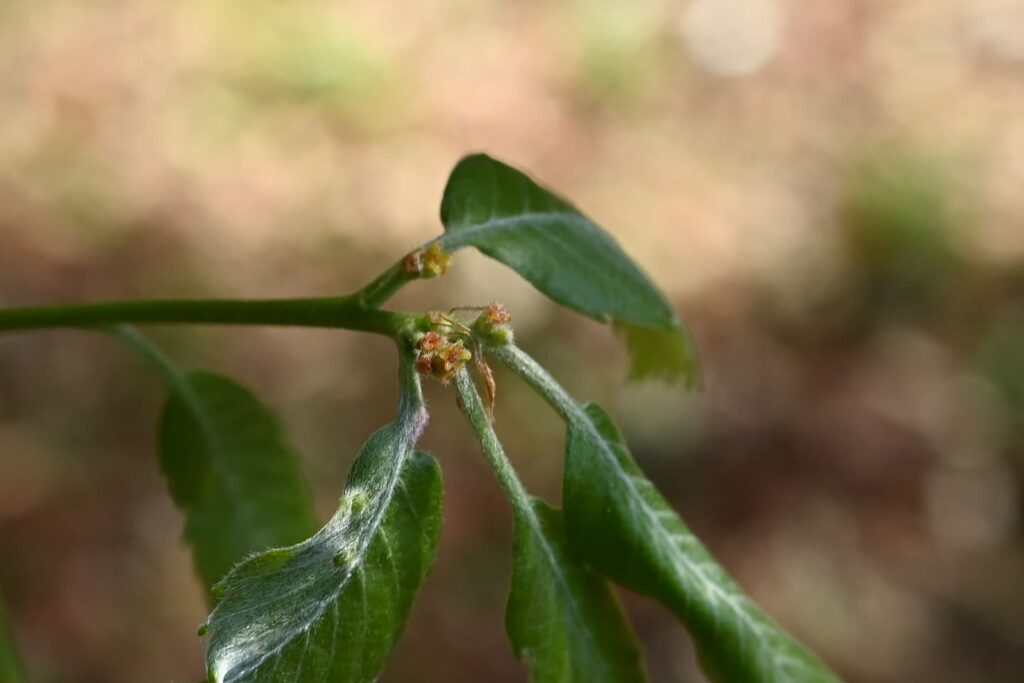
Konara Oak flowers in April and May, around the same time its leaves emerge. The tree is monoecious, with both male and female flowers appearing on the same branch. Female flowers bloom quietly and inconspicuously, a few at a time, at the leaf axils near the tips of new shoots. Male flowers, by contrast, are far more conspicuous, gathering in large numbers into drooping, yellow, cord-like clusters roughly 3–6 cm long that hang from the base of new shoots.
Acorns
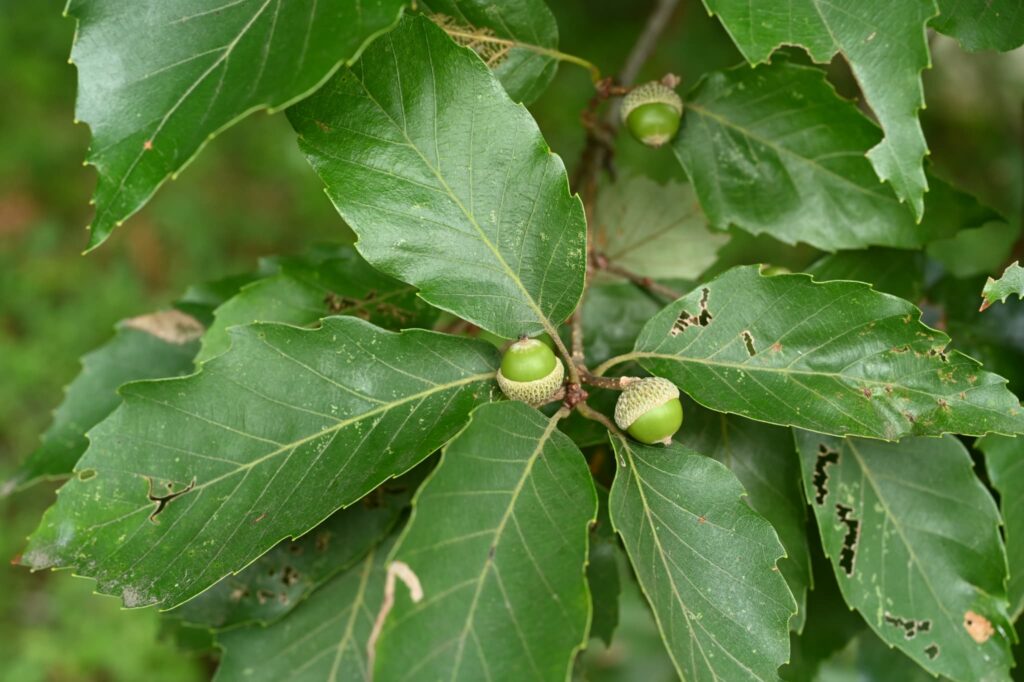
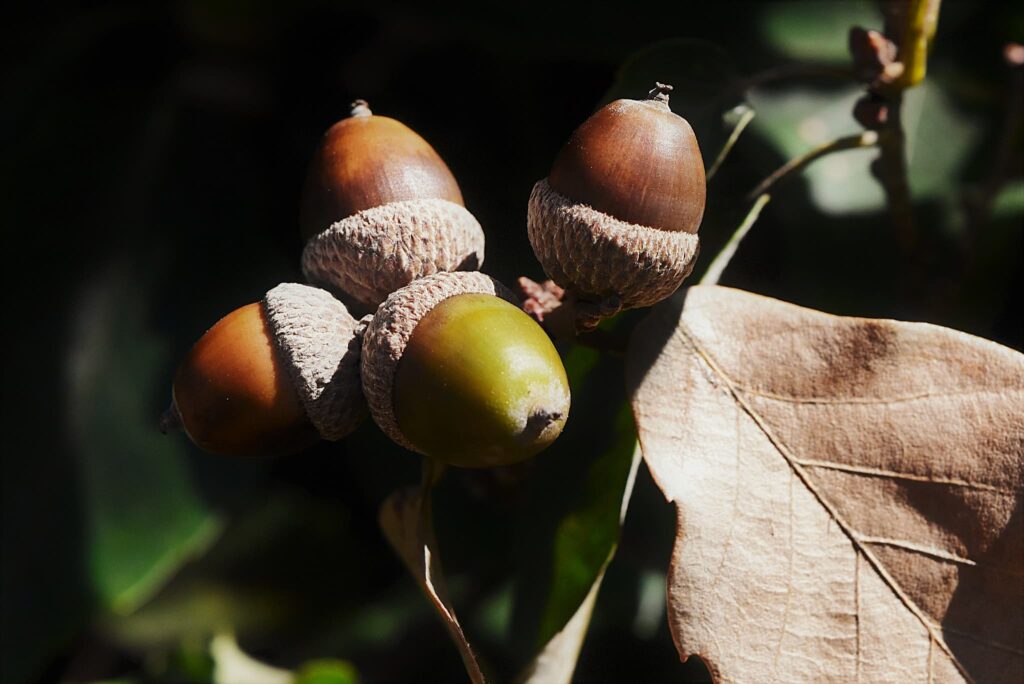
Female flowers develop into acorns about 2 cm long—smaller and more slender than those of Mizunara. The bowl-shaped cap (cupule) covering the base has a scaly surface. Acorns ripen in autumn (around October) of the flowering year, and upon falling to the ground, quickly begin sending out a root in preparation for germination.
Acorns contain strong tannins and are difficult to eat raw, but become edible once the bitterness has been leached out through soaking or processing. In Noda Village, Iwate Prefecture, and elsewhere, acorns from Konara and Mizunara oaks are ground into flour to make a traditional dish known as shidami dango. Wild animals such as the Asiatic black bear, along with birds like jays, mandarin ducks, and Japanese green pigeons, also feed readily on the acorns.
Trunk & Bark
Konara Oak has long been prized as firewood and charcoal both because the tree readily resprouts from a cut stump—allowing repeated harvest from the same root system—and because its wood burns hot and holds a fire well. Demand declined as petroleum fuels became dominant, but as Japanese gardening tastes have shifted in recent years, the tree has found new popularity as an ornamental shade tree in home gardens.
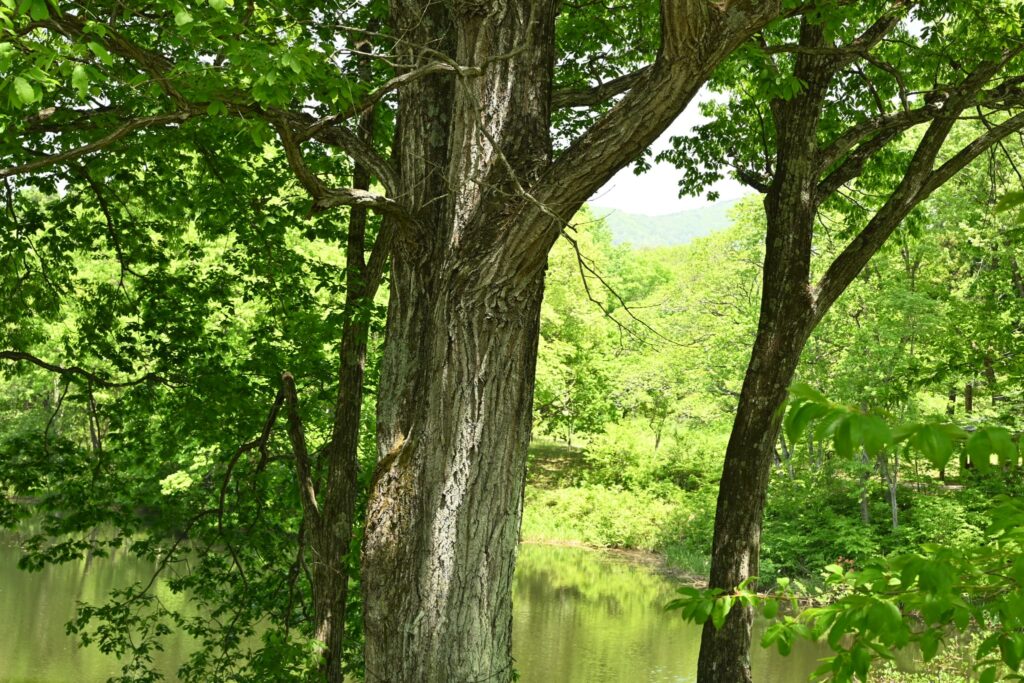
Left to grow naturally, the trunk rises as a single, straight stem, but trees that have been repeatedly cut and managed by hand often develop multiple trunks in a clumped, coppiced form. The bark is grayish brown, and with age it typically develops vertical fissures that create a black-and-white streaked appearance.
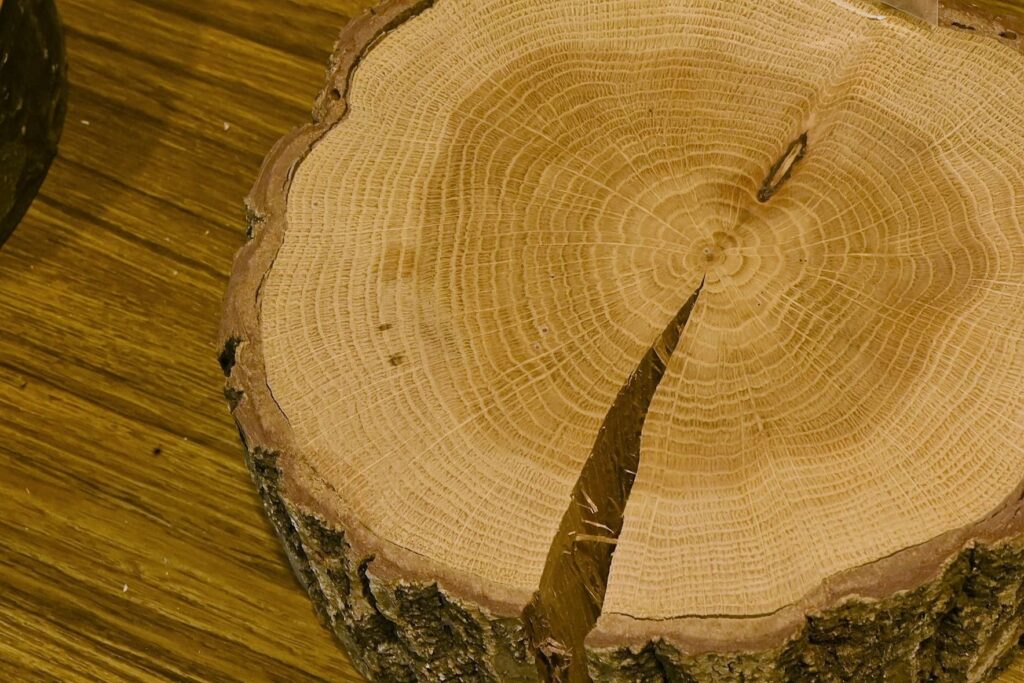
The trunk can reach up to about 50–60 cm in diameter. The wood is harder and heavier than Mizunara’s, earning it the alternate name Ishinara (“stone Nara”). Because it tends to warp or crack if not carefully dried, it sees somewhat less use as construction lumber than Mizunara.
Role in Satoyama Woodlands
Along with Kunugi (Sawtooth Oak), Konara Oak is one of the two defining trees of Japan’s traditional coppice woodlands, producing the classic, picture-perfect acorn familiar to most people. Its acorns are an important food source for satoyama wildlife. Its wood has been used for shiitake cultivation logs, firewood, charcoal, furniture, flooring, and traditional crafts. Today, it is also widely planted as an ornamental landscape tree and is occasionally used for bonsai and wildlife-friendly gardens.
Naming: Konara, Mizunara, and the Word “Nara”
There is no single tree simply called “Nara”—the term, when used on its own, most often refers to either this species or Mizunara (Japanese Oak, Quercus crispula). Because Konara Oak has smaller leaves and a lower stature than Mizunara, it is called Konara (“small Nara”), while Mizunara is sometimes referred to, by contrast, as Oonara (“large Nara”). Konara Oak is typically found on hills and lowland areas, while Mizunara occupies higher-elevation mountain sites.
The origin of the word “Nara” itself is debated: one theory traces it to a corruption of the Korean word kalak-nam, while another holds that it comes from nagara-ha, meaning “long leaf.”
Growing Guide
| Item | Description |
|---|---|
| Growth Rate | Fast |
| Longevity | 100–300 years |
| Salt tolerance | Poor |
| Drought tolerance | Moderate |
| Urban tolerance | Good |
Sun & Site
Konara Oak prefers full sun but will tolerate partial shade.
Soil & Water
The tree tolerates dry conditions well.
Growth & Vigor
Because it grows vigorously and quickly, Konara Oak is sometimes deliberately planted in nutrient-poor soil to help keep its growth in check.
Pruning
The tree tolerates pruning well, but it isn’t really suited to being clipped and formally managed—it’s best appreciated in its natural form. Being monoecious, a mature tree will typically produce a heavy crop of acorns every few years.
Pests & Diseases
Konara Oak can be affected by oak wilt disease, spread by ambrosia beetles, as well as by wood-boring longhorn beetle larvae (the white-striped longhorn beetle in particular). Moth caterpillars, including those of the Japanese giant silk moth and related species, can also defoliate the tree, occasionally stripping it bare, and the tree can develop galls caused by the gall wasp Andricus mukaigawae (Narame-ringo-fushi).
The leaf-rolling weevil is another notable visitor, building chimaki-like nests (called yuran) from the young leaves of Konara Oak and chestnut trees, then cutting the rolled leaf free so it drops to the ground—a behavior that gives the insect its Japanese name, Otoshibumi (“dropped letter”). This weevil is best observed from late May through early June.
Ecological Value
Konara Oak supports a wide variety of insects. Its acorns feed bears, deer, wild boar, jays, woodpeckers, rodents and squirrels. Old trees provide nesting cavities for birds.
Cultivars
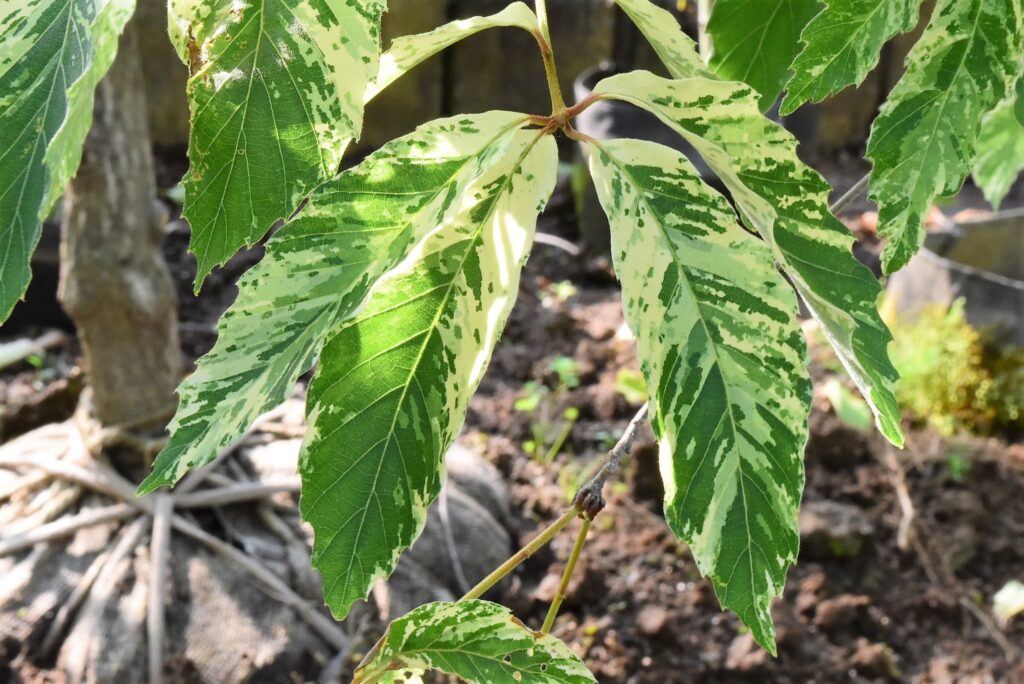
Notable forms include a variegated cultivar with patterned leaves, and ‘Issai Konara’, a form selected for producing acorns readily and at a young age.
Similar Plants
- Mizunara / Japanese Oak (Quercus crispula)
- Kunugi / Sawtooth Oak (Quercus acutissima)
- Kashiwa / Daimyo Oak (Quercus dentata)
- Abemaki / Chinese Cork Oak (Quercus variabilis)
- Naragashiwa (Quercus aliena)
- Miyama-hahaso (Meliosma tenuis) — a deciduous shrub in the family Sabiaceae, unrelated to true oaks but native to the mountains of Honshu, Shikoku, and Kyushu. Its leaves resemble Konara Oak’s closely enough that it was named after Hahaso, an old alternate name for Konara Oak; its flowers and fruit closely resemble those of the related Sabia japonica.
Konara Oak vs. Kunugi (Sawtooth Oak)
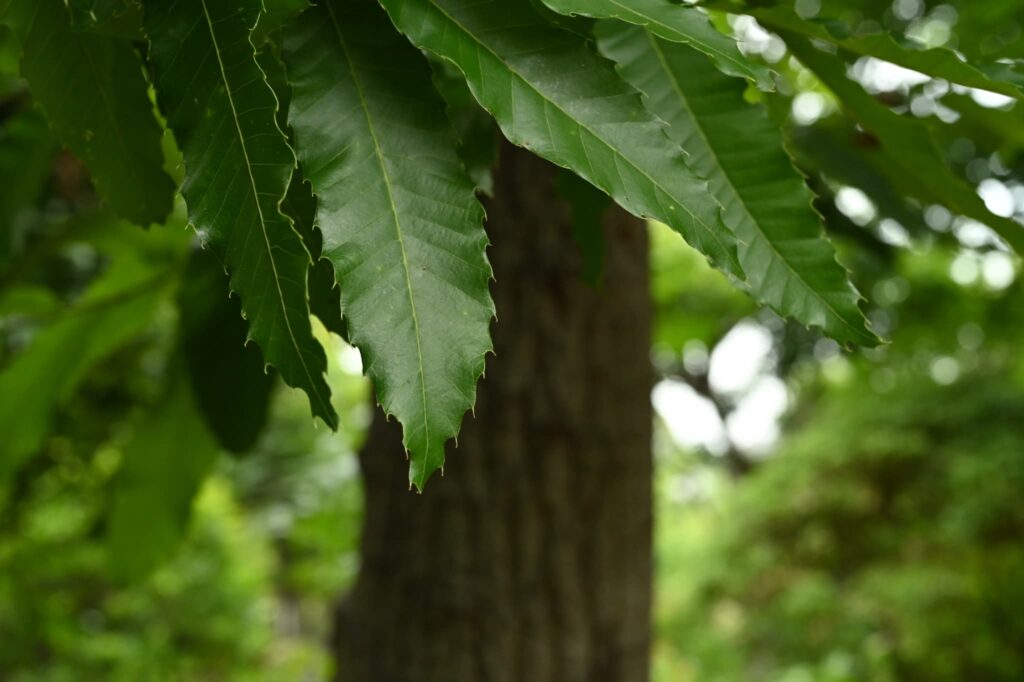
Konara Oak and Kunugi are both defining trees of Japan’s traditional coppice woodlands and are frequently confused with one another, but their leaves differ clearly in both shape and size.
Konara Oak vs. Mizunara (Japanese Oak)
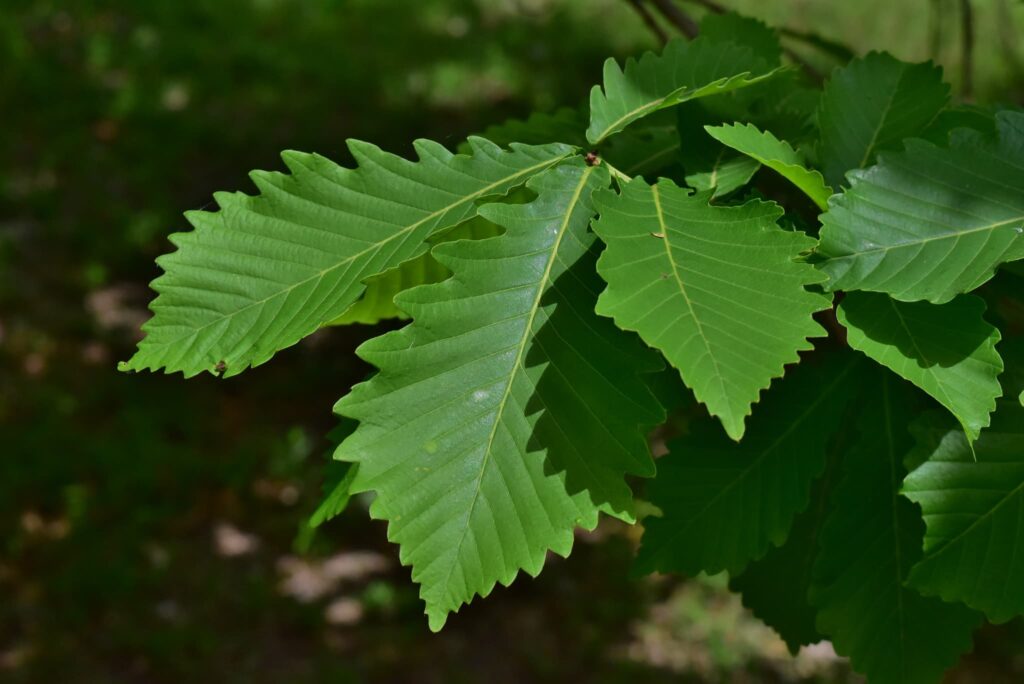
Mizunara’s leaves are larger, with more clearly visible serrations along the margin. Viewed from above, Konara Oak shows a visible leaf stalk (petiole) about 1–2 cm long connecting leaf to branch, while Mizunara’s petiole is so short it’s largely hidden, making the leaf appear to emerge directly from the branch.
Frequently Asked Questions
Q: What’s the easiest way to tell Konara Oak apart from Mizunara?
Look at the leaf stalk connecting the leaf to the branch. Konara Oak has a clearly visible stalk about 1–2 cm long, while Mizunara’s stalk is so short it’s mostly hidden, making the leaf look like it grows directly out of the branch. Mizunara’s leaves are also larger overall, with more obviously toothed edges.
Q: Why was Konara Oak planted so widely near Japanese villages?
Its wood was historically valued as firewood and charcoal, thanks to both its hot, long-lasting burn and its ability to resprout readily from a cut stump—meaning the same tree could be harvested repeatedly over many years rather than needing to be replanted. This practical value led to extensive planting near settlements, much of which is still visible in Japan’s satoyama landscapes today.
Q: Are Konara Oak acorns edible?
They contain strong tannins and can’t be eaten raw, but become edible once the bitterness has been leached out through soaking or similar processing. In some regions of Japan, they’ve traditionally been ground into flour for dishes like shidami dango. They’re also an important food source for wild animals, including Asiatic black bears and several bird species.
Q: Does Konara Oak need regular pruning?
Not really—it tolerates pruning well if needed, but it isn’t a tree meant to be sheared into a formal shape. It’s generally best left to develop its natural form, which also happens to require less ongoing maintenance than a tightly clipped hedge or specimen tree.
Q: What pests should I watch for on Konara Oak?
Oak wilt disease (spread by ambrosia beetles) and wood-boring longhorn beetle larvae are among the more serious concerns, while moth caterpillars can occasionally defoliate the tree and gall wasps can cause noticeable galls on the leaves. None of these are usually fatal on their own, but they’re worth monitoring, especially oak wilt in regions where it’s active.
Q: How fast does Konara Oak grow?
Konara Oak has a moderate to fast growth rate when young, especially in full sun and well-drained soil. Under favorable conditions, young trees may grow 30–60 cm (1–2 ft) per year. Because it resprouts vigorously after being cut, it has long been managed as a coppice tree in Japan’s satoyama woodlands.
Q: How long does Konara Oak live?
Konara Oak is a long-lived tree that can survive for well over 100 years, with some specimens living for several centuries under favorable conditions. Trees that have been traditionally coppiced may persist even longer because new trunks repeatedly regenerate from the same root system.
Q: Can Konara Oak grow in the US?
Yes. Konara Oak is generally suitable for USDA Hardiness Zones 5–8, making it adaptable to many parts of the United States with temperate climates. It prefers full sun, well-drained soil, and moderate moisture, and is especially well suited to naturalistic landscapes and woodland gardens.
Q: Can you grow Konara Oak from acorns?
Yes. Fresh acorns collected in autumn germinate readily if planted soon after they ripen. Because acorns lose viability if allowed to dry out, they should be sown immediately or kept moist until planting. Seed-grown trees are the most common way to propagate Konara Oak.
Q: Is Konara Oak good for wildlife?
Yes. Konara Oak is one of the most important wildlife trees in Japan’s satoyama landscapes. Its acorns provide food for Asiatic black bears, wild boars, deer, jays, Japanese green pigeons, and many small mammals, while its foliage supports numerous insects. Mature trees also provide shelter and nesting sites for birds, making Konara Oak an excellent choice for wildlife-friendly landscapes.
Conclusion
Few trees are as thoroughly woven into the practical history of Japanese village life as Konara Oak—burned for fuel, grown as substrate for shiitake mushrooms, and left standing as a source of acorns for both people and wildlife across generations of coppice management. As that traditional role has faded with the shift away from wood fuel, Konara Oak has found a second life as an increasingly popular ornamental shade tree, carrying the character of Japan’s satoyama landscapes into modern home gardens.