Japanese White Pine (Pinus parviflora): Identification, Care & Uses
Japanese White Pine (Pinus parviflora) is one of Japan’s most prized ornamental conifers, valued for its soft, blue-green needles, slow growth, elegant branching, and long history in Japanese gardens and bonsai. Known in Japanese as Goyomatsu (五葉松), it has been appreciated as an ornamental pine for centuries and remains one of the most important species in Japanese bonsai.
This guide covers identification, foliage, flowers, cones, bark, timber, traditional names, varieties and cultivars, cultural history, similar species, and cultivation.
What Is the Japanese White Pine?
Japanese White Pine (Pinus parviflora) is an evergreen conifer in the family Pinaceae. It is native primarily to Japan, with populations also occurring on Ulleungdo in southern Korea and in the southern Kuril Islands.
In Japan, it grows mainly in mountainous regions, often on well-drained slopes, rocky sites, and exposed ridges. It is a relatively slow-growing pine and can eventually become a substantial tree, although cultivated specimens are often kept much smaller through pruning and training.
The Japanese name Goyomatsu means “five-needle pine” and refers to the species’ most distinctive feature: its needles are borne in bundles of five. This immediately distinguishes it from Japanese Black Pine (Pinus thunbergii) and Japanese Red Pine (Pinus densiflora), whose needles normally occur in bundles of two.
Japanese White Pine has been valued for centuries as an ornamental tree. Its relatively short, soft needles, fine branching, slow growth, and ability to develop an aged appearance have made it especially important in Japanese gardens and bonsai.
Overview
| Item | Description |
|---|---|
| Scientific Name | Pinus parviflora Siebold & Zucc. |
| Common Name | Japanese White Pine / Five-Needle Pine |
| Japanese Name | Goyomatsu (ゴヨウマツ/五葉松); Himekomatsu (ヒメコマツ/姫小松) |
| Family | Pinaceae |
| Native Range | Japan, Ulleungdo in southern Korea, and the southern Kuril Islands |
| Plant Type | Evergreen conifer |
| Mature Height | Commonly about 15–25 m; exceptionally larger |
| Trunk | Gray to dark gray, becoming scaly with age |
| Flowering Season | Spring, generally April–May in Japan |
| Cone | Usually about 5–8 cm long, maturing in the second year |
| USDA Zones | Generally 5–7, depending on provenance and cultivar |
| Sun Exposure | Full sun |
| Soil | Well-drained soil; dislikes prolonged waterlogging |
| Main Uses | Specimen tree, Japanese garden, bonsai, traditional landscaping |
Characteristics
| Feature | Description |
|---|---|
| Needles | Usually five per bundle, soft, blue-green to silvery-green, about 3–9 cm long |
| Cones | Ovoid to elongated, about 5–8 cm long, maturing brown in the second year |
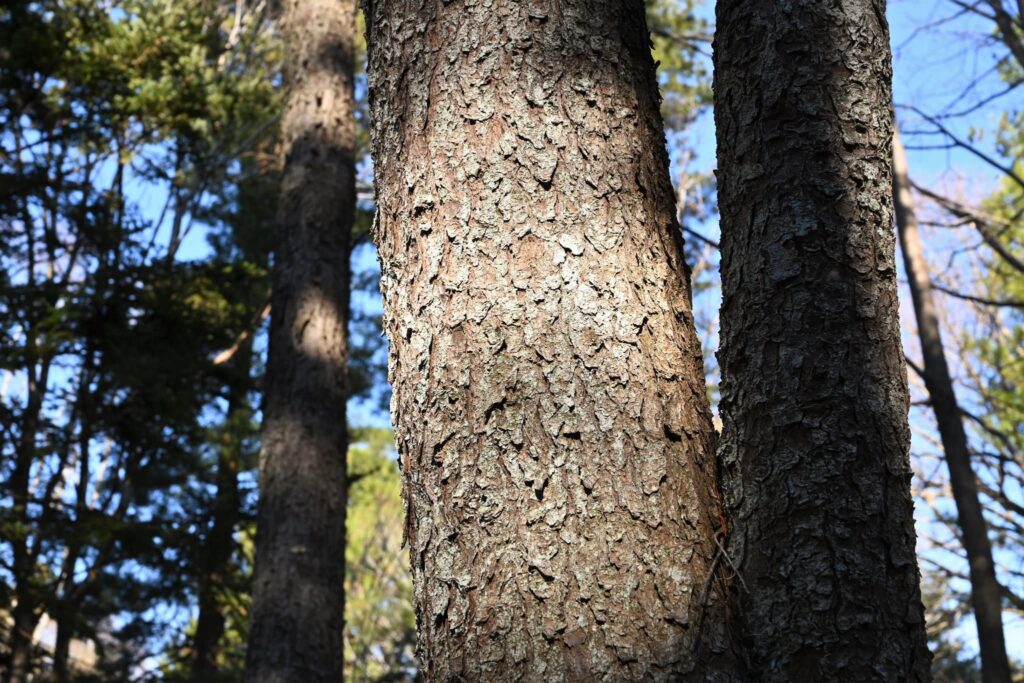
| Bark | Gray to dark gray, becoming scaly and irregular with age |
| Habit | Slow-growing evergreen tree with fine branching |
| Reproduction | Monoecious; male and female reproductive structures occur on the same tree |
Foliage
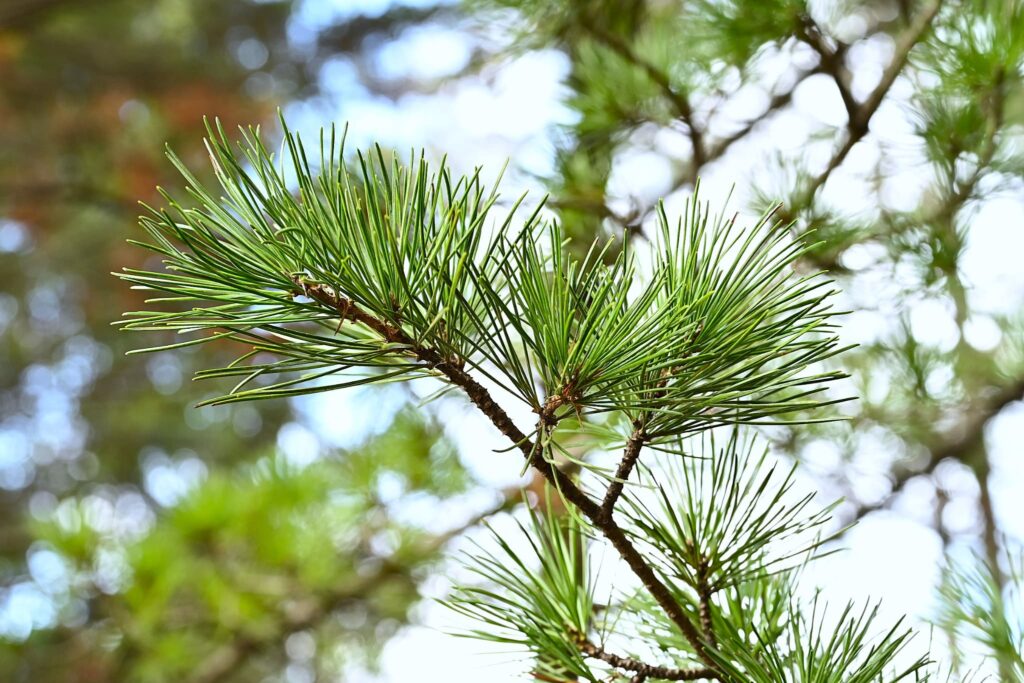
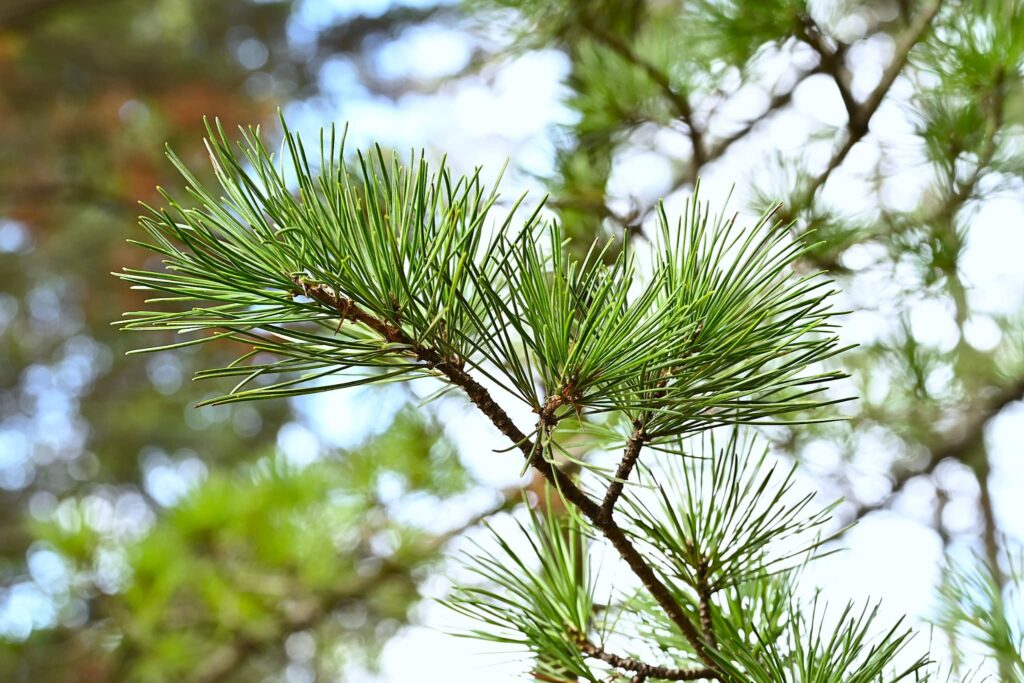
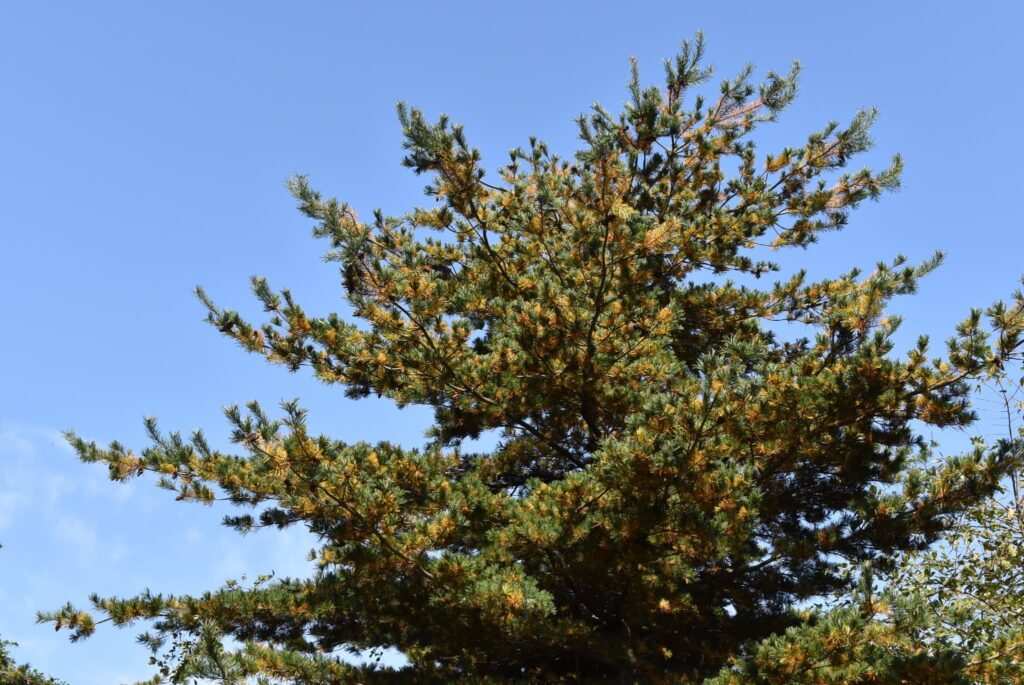
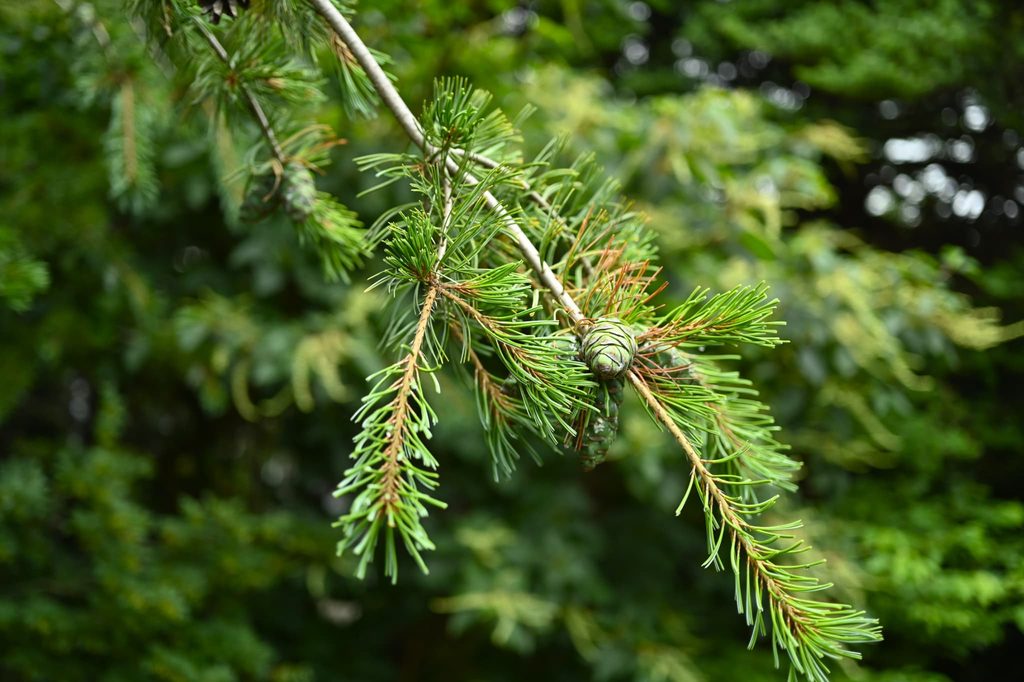
The easiest way to identify Japanese White Pine is by its needles, which occur in bundles of five.
The needles are relatively short and soft, usually blue-green to silvery-green. Compared with Japanese Black Pine, the foliage feels noticeably less stiff and prickly.
Each needle is triangular in cross-section and bears conspicuous white stomatal bands. Young branchlets may be covered with fine hairs.
Needle length varies among populations and cultivated forms. Short needles are particularly prized in bonsai because they maintain good visual proportions with the tree’s branches and trunk.
The combination of five-needle foliage, relatively short needles, fine branching, and slow growth is responsible for much of the species’ horticultural appeal.
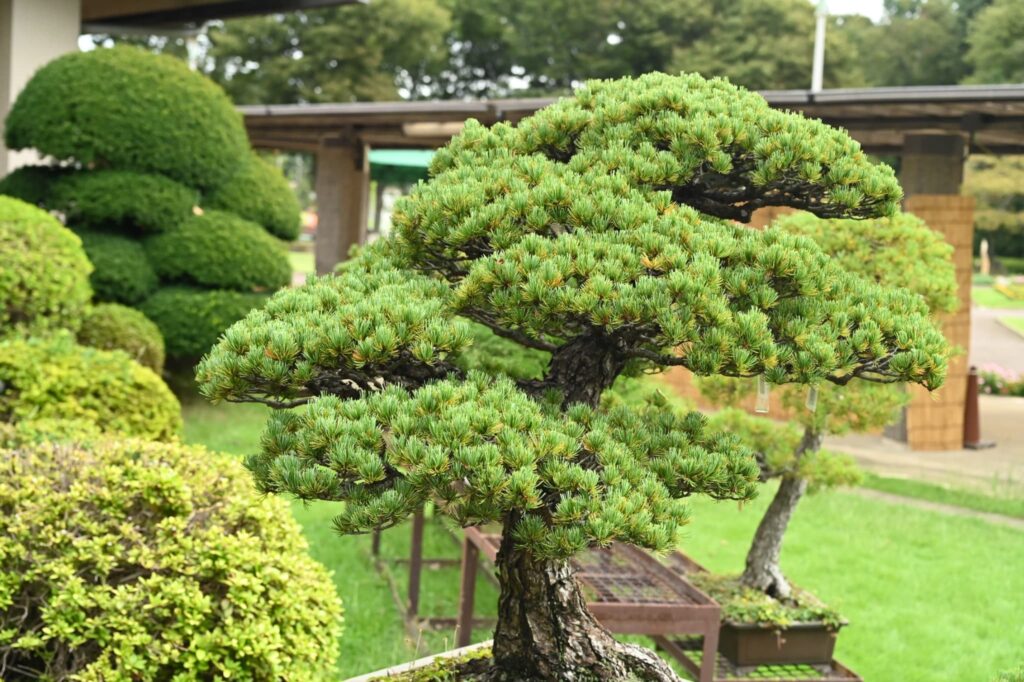
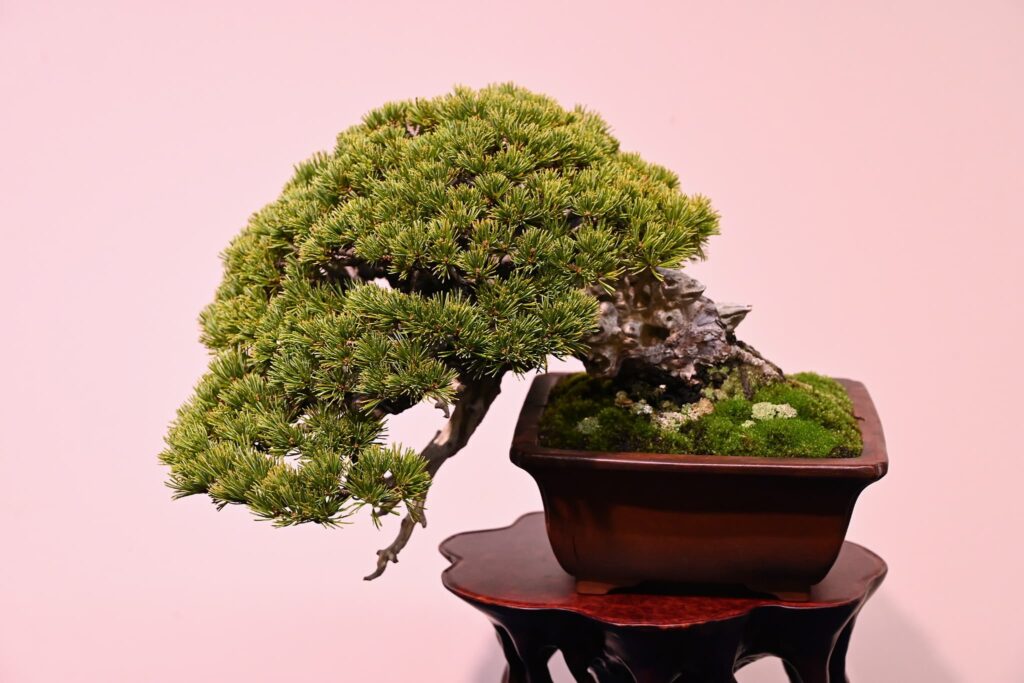 An example of a Japanese White Pine bonsai
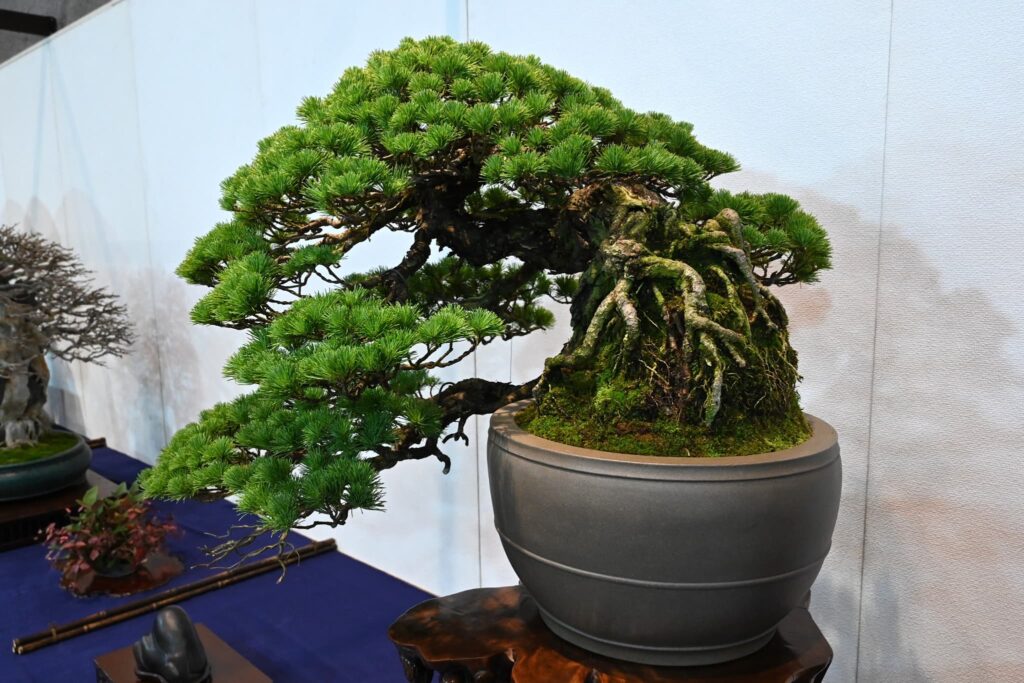 An example of a Japanese White Pine bonsai
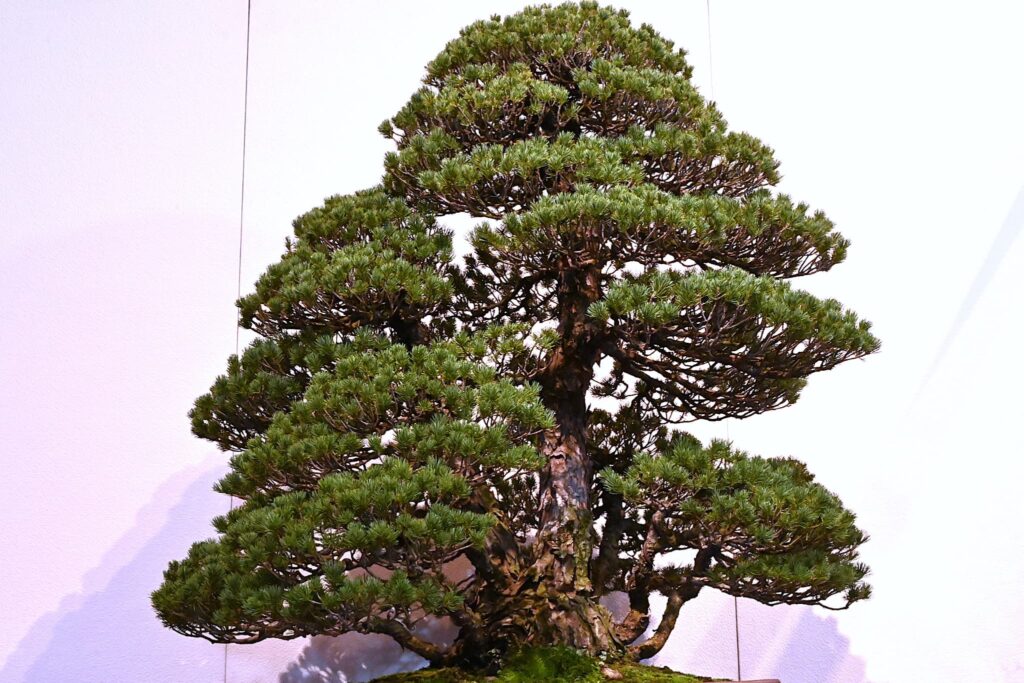 An example of a Japanese White Pine bonsai
Flowers
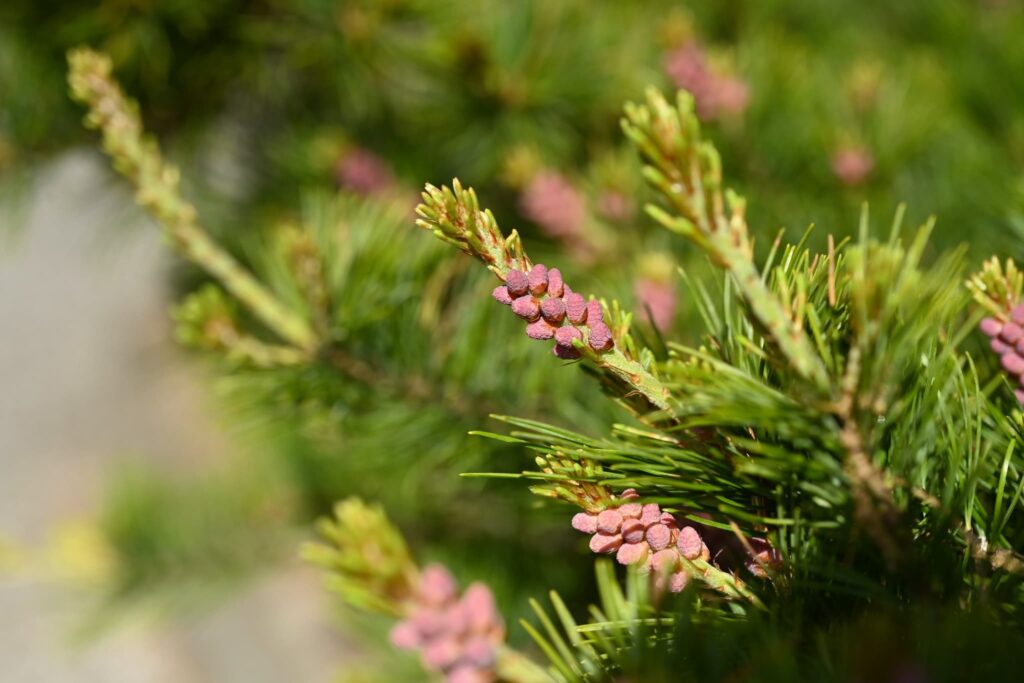
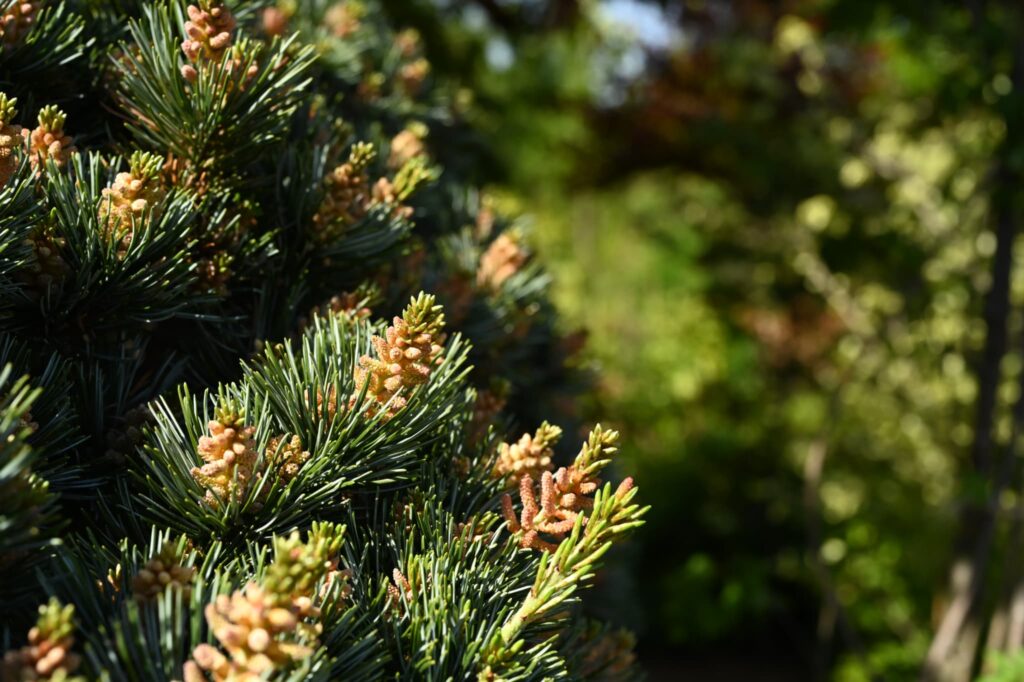
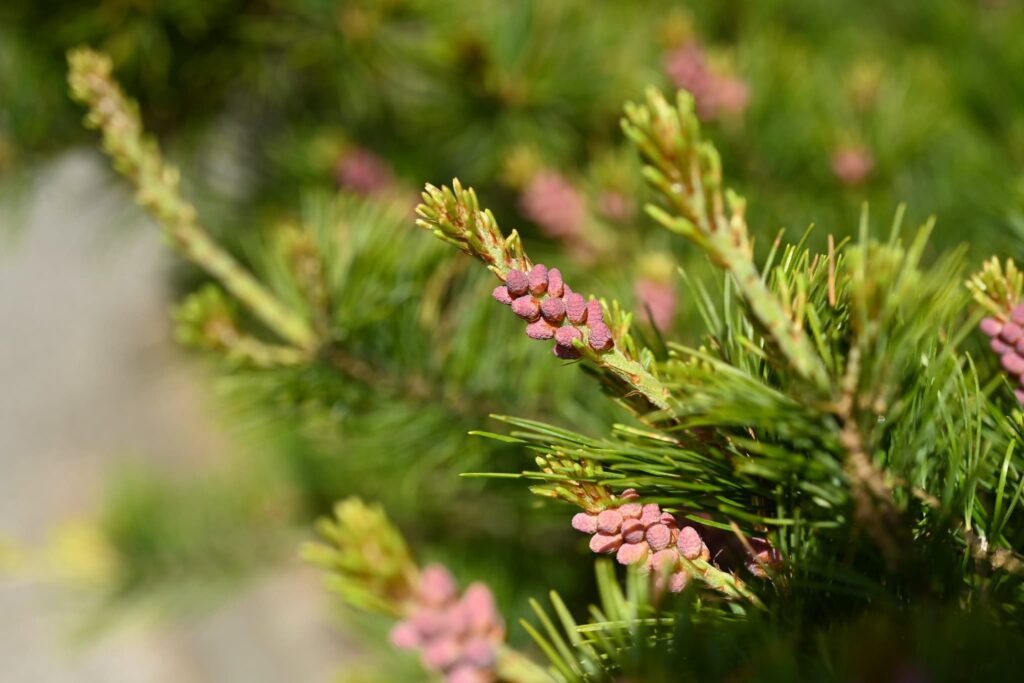
Japanese White Pine is monoecious, meaning that male and female reproductive structures occur on the same tree.
Male cones occur in clusters around the bases of young shoots, while female cones develop near the ends of shoots. Pollination takes place in spring.
The reproductive structures are not particularly showy, but they are useful for understanding the tree’s life cycle and for identifying the species.
Fruits
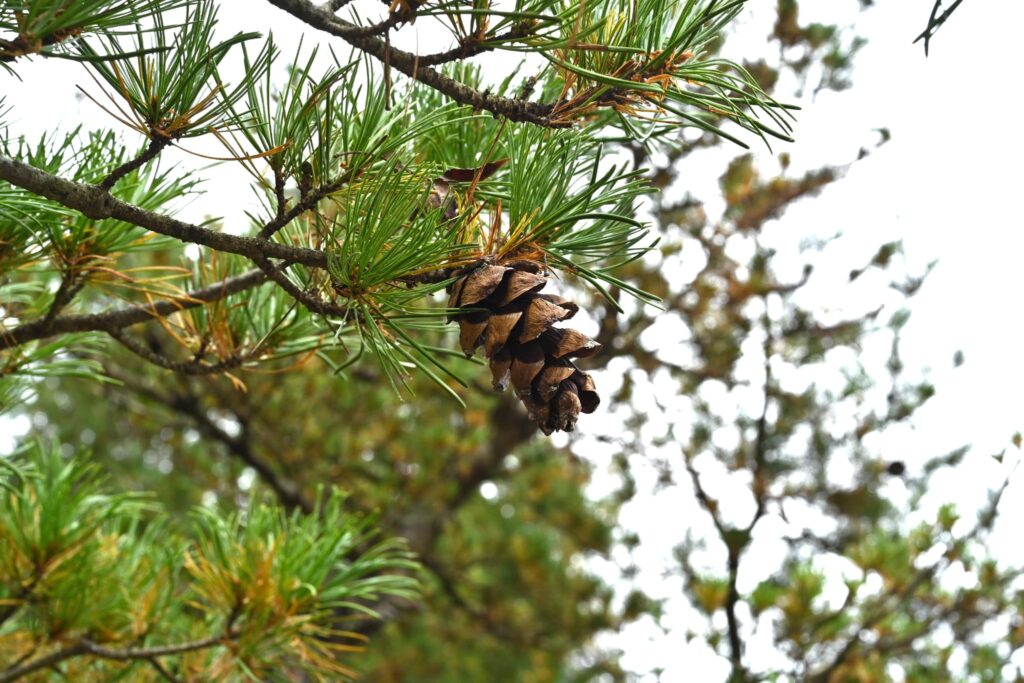
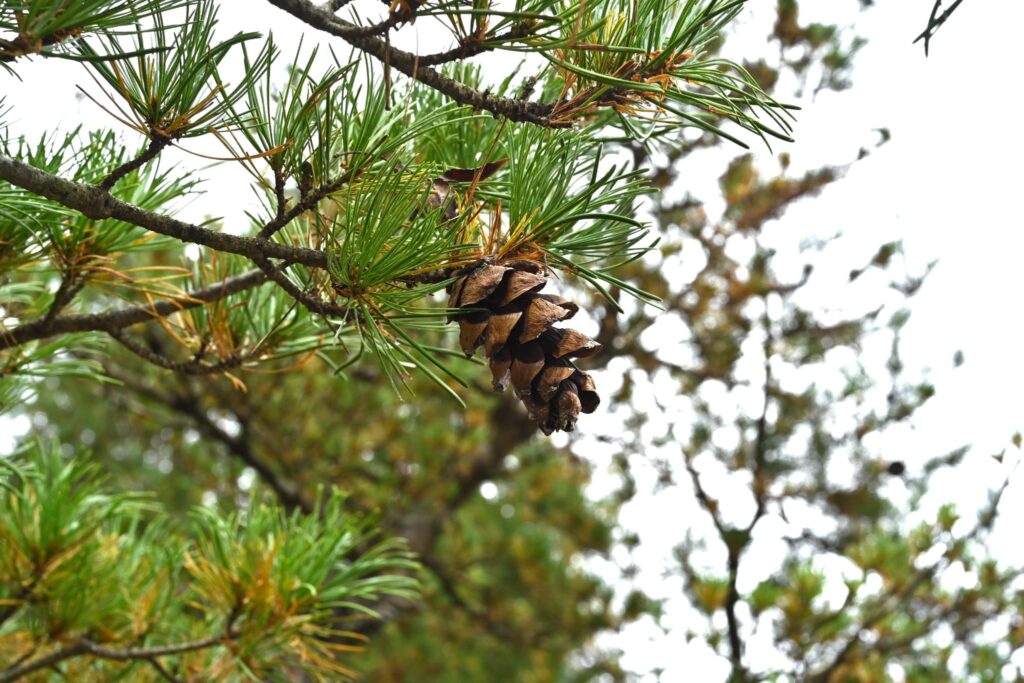
The female reproductive structures develop into woody seed cones that mature during the following year.
The cones are generally about 5–8 cm long and become brown as they mature. They open to release their seeds, although old cones may remain attached to the branches for some time afterward.
The seeds are relatively small compared with those of some other five-needle pines. Seed-wing characteristics can be useful when distinguishing Japanese White Pine from related taxa.
Bark & Timber
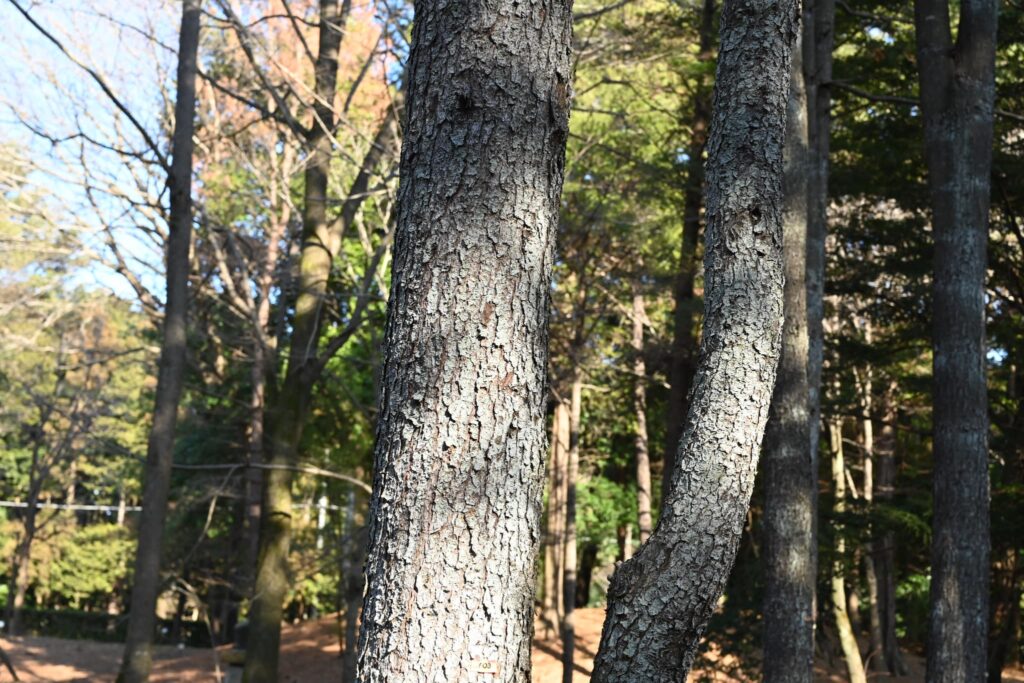
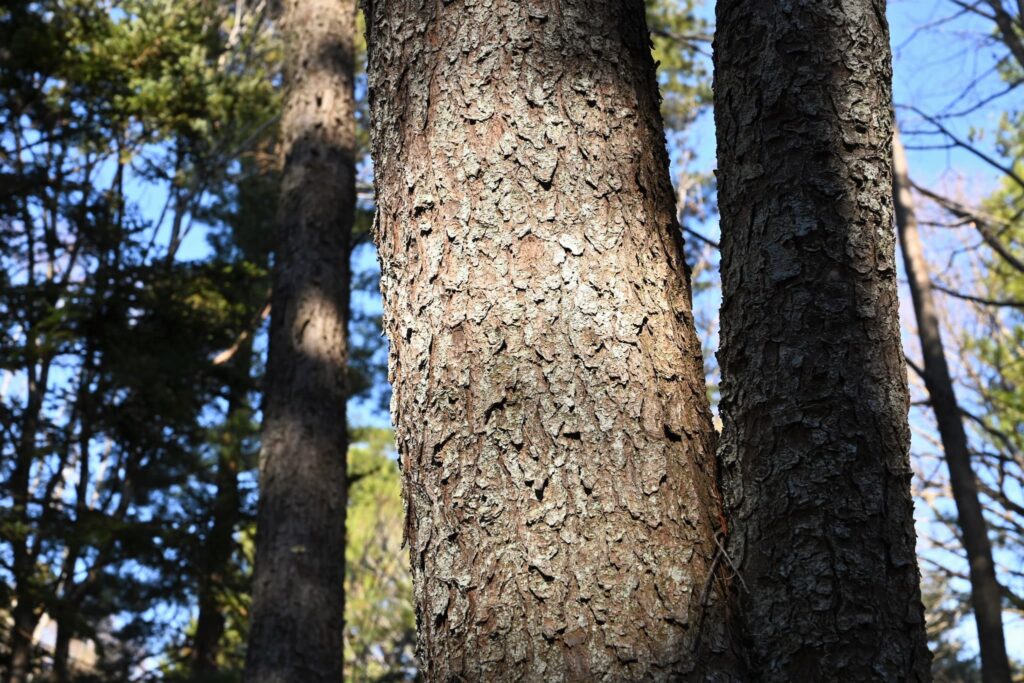
Young Japanese White Pine has relatively smooth gray bark. As the tree matures, the bark becomes darker and develops an irregular, scaly texture.
Old garden trees can develop particularly attractive trunks, with rough bark and irregular surface texture contributing greatly to their ornamental character.
The wood is relatively light and fine-textured. Although Japanese White Pine has never been one of Japan’s principal structural timber species, its wood has been used for furniture, interior fittings, carving, musical instruments, wood patterns and molds, and other specialized purposes.
Size & Growth
Japanese White Pine is a relatively slow-growing tree, although mature specimens can eventually become large.
Its slow growth is particularly valuable in ornamental horticulture. A garden specimen does not rapidly outgrow its space, while a bonsai can retain a carefully developed structure for many years.
The species develops relatively fine branches and short needles, allowing a trained tree to suggest the appearance of a much older full-sized pine even when the actual specimen is relatively small.
This characteristic is one of the principal reasons Japanese White Pine became so important in bonsai.
Uses & Cultural Significance
Japanese White Pine has an unusually long history in Japanese garden culture.
The Meaning of Goyomatsu
The Japanese name Goyomatsu (五葉松) literally means “five-leaf” or “five-needle pine.” It describes the arrangement of the needles, which occur in fascicles of five.
Himekomatsu (姫小松) is another traditional Japanese name for the species. Historical botanical literature has sometimes treated the names and regional forms differently, but modern taxonomic usage generally places Himekomatsu within Pinus parviflora rather than recognizing it as a separate species.
Cultural Significance
Japanese White Pine has a long history in Japanese literature and garden culture. The five-needle pine (goyō) appears in The Pillow Book (Makura no Sōshi, around the early 11th century), where it is listed among desirable trees.
Later, the poet Saigyō referred to goyō pine in his poetry, and Essays in Idleness (Tsurezuregusa, early 14th century) states that a desirable tree for a home is pine, with five-needle pine being especially suitable.
These references show that five-needle pines were recognized as distinctive and desirable ornamental trees in Japan long before their modern use in bonsai. Today, Japanese White Pine remains one of the most important species for traditional Japanese gardens and bonsai.
“The trees one would like to have around the house are pine and cherry. As for pine, the five-needle kind is also good.”
— Tsurezuregusa, Section 139
From Classical Gardens to Bonsai
The appreciation of Japanese White Pine continued through the medieval and early modern periods. As Japanese horticulture became increasingly sophisticated, regional forms were selected and propagated for distinctive needles, branching, growth habit, and trunk character.
During the Edo period, numerous named forms and regional horticultural traditions became established. The species subsequently became one of the defining trees of Japanese bonsai.
Its slow growth, relatively short needles, fine branching, and ability to develop aged-looking bark and trunks make it particularly suitable for the bonsai aesthetic of suggesting an old tree in a small space.
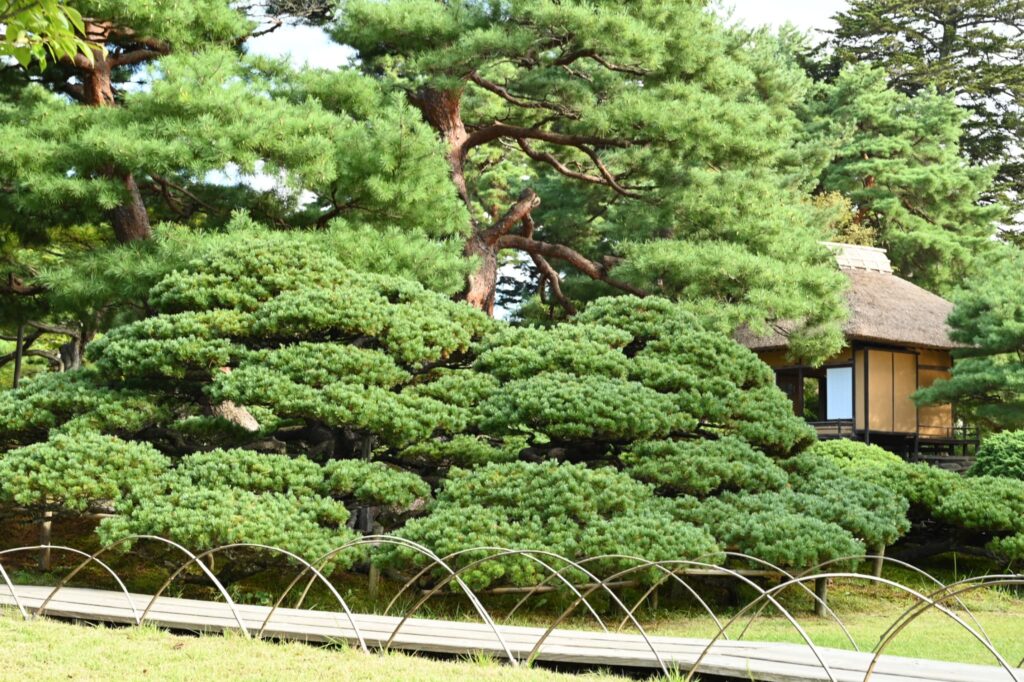
Today, Japanese White Pine is cultivated as a specimen tree in gardens, temple grounds, shrines, and private landscapes, as well as being one of the most important species in Japanese bonsai.
Growing Guide
| Condition | Guidance |
|---|---|
| Light | Full sun |
| Soil | Well-drained soil |
| Water | Regular watering while establishing; moderate drought tolerance once established |
| Drainage | Excellent drainage is important |
| Wind | Tolerates exposed conditions reasonably well |
| Salt | Some tolerance of coastal conditions |
| Cold Hardiness | Generally USDA zones 5–7 |
| Pruning | Moderate; detailed training is required for refined specimens |
| Bonsai | Excellent species for long-term training |
Light & Soil
Japanese White Pine grows best in full sun and well-drained soil.
It can tolerate relatively lean soils, particularly once established, but poor soil tolerance should not be confused with a preference for severely infertile conditions. Good drainage and adequate root aeration are more important.
Avoid sites where water remains around the roots after rainfall.
Watering
Newly planted trees should be watered regularly until they establish a strong root system.
Established trees tolerate periods of dry weather reasonably well, but prolonged drought can weaken the tree, particularly during hot weather.
Bonsai and container-grown trees require much more frequent monitoring because their restricted root systems and shallow growing media can dry rapidly.
Wind & Snow Tolerance
Japanese White Pine occurs naturally in exposed mountain environments and can tolerate considerable wind.
Northern populations traditionally known as Kitagoyou are associated with colder and snowier regions.
Nevertheless, newly planted specimens should be protected from severe drying winds until their root systems are established.
Heavy snow can also damage carefully trained garden specimens and bonsai branches, so structural support or snow removal may be necessary in areas with heavy snowfall.
Cold Hardiness
Japanese White Pine is generally regarded as suitable for USDA zones 5–7, although actual performance depends on provenance, cultivar, soil drainage, winter wind, and local climate.
Cold hardiness should not be reduced to a single minimum temperature. Winter damage can result from a combination of low temperature, desiccating wind, excessive soil moisture, or abrupt temperature fluctuations.
Gardeners in colder areas should choose planting material with a proven record in their local climate.
Pruning
Japanese White Pine responds well to careful structural pruning and training.
For garden specimens, remove dead, damaged, crossing, or poorly positioned branches. Avoid removing large amounts of healthy foliage at once.
Bonsai training is considerably more specialized. Candle reduction, shoot selection, wiring, and removal of older needles are performed according to the strength of individual branches and the desired structure.
Strong shoots can tolerate more intervention than weak interior branches. Excessive removal of needles or shoots can reduce the tree’s ability to produce new buds and should therefore be avoided.
Suitability for Home Gardens
Japanese White Pine is an excellent specimen tree for gardeners who value long-term structure and evergreen character.
Its slow growth means that it does not rapidly outgrow its allotted space, but it should not be considered maintenance-free. Mature specimens benefit from periodic attention to branch structure and foliage density.
It is particularly suitable for Japanese-style gardens, specimen planting, courtyards, rock gardens, temple-inspired landscapes, and bonsai.
In hot and humid climates, good air circulation and drainage are particularly important.
Pests & Diseases
Japanese White Pine can be affected by several pests and diseases that also affect other pine species.
Pine wilt disease is caused by the pinewood nematode (Bursaphelenchus xylophilus) and transmitted by pine sawyer beetles, particularly the Japanese pine sawyer (Monochamus alternatus) in Japan.
Japanese White Pine is a host of the pinewood nematode, but its susceptibility should not be equated with that of every other Japanese pine. Research has shown considerable differences in resistance among pine species.
Other potential problems include scale insects, aphids, shoot-feeding insects, and fungal diseases. Poor drainage, excessive humidity, drought stress, and inappropriate pruning can increase the risk of secondary problems.
Cultivars & Varieties
Japanese White Pine has a rich horticultural history, with numerous regional forms and named selections.
Some traditional Japanese names refer to geographic populations or horticultural strains rather than formally registered modern cultivars. This distinction is important because Japanese bonsai and nursery traditions often preserve names that do not correspond neatly to the modern international rules of cultivar nomenclature.
Kitagoyou
Kitagoyou (Pinus parviflora var. pentaphylla)
Kitagoyou, or Northern Japanese White Pine, is the traditional name for northern populations of Japanese White Pine.
It is associated particularly with Hokkaido and northern Honshu and occurs naturally in colder regions, including areas with substantial winter snowfall.
Kitagoyou has traditionally been distinguished from southern forms by characters including cone shape and seed-wing characteristics. Modern classifications vary in the rank given to these populations, so it is best presented as a northern variety or form rather than as a completely separate species.
Himekomatsu
Himekomatsu (Pinus parviflora)
Himekomatsu is a traditional Japanese name for Japanese White Pine.
The name has a long history in Japanese horticultural and botanical literature. It should not normally be presented as a separate species from Pinus parviflora.
‘Glauca Nana’
‘Glauca Nana’
‘Glauca Nana’ is a dwarf ornamental selection valued for its compact habit and blue-green to gray-green foliage.
It is suitable for gardens, containers, and bonsai, although the ultimate size and hardiness of individual plants can vary with growing conditions and nursery provenance.
Other Named Forms
Japanese horticultural traditions include numerous named forms such as Azuma Goyo, Nasu Goyo, Negishi, Miyajima Goyo, Janome Goyo, and Fuiri Goyo.
Some names refer to regional horticultural strains, while others refer to particular foliage or growth characteristics.
Variegated forms are especially valued for their distinctive foliage, while regional bonsai forms may be selected primarily for short needles, dense branching, bark character, or a particular trunk structure.
Related Species Often Confused with Japanese White Pine
Several five-needle pines are sometimes discussed together with Japanese White Pine but are not cultivars of it.
Japanese Stone Pine (Pinus pumila), known in Japanese as Haimatsu, is a separate species. It is a naturally low-growing or prostrate pine of high mountains and cold regions.
Yakutane Goyo (Pinus amamiana) is also a separate species rather than a cultivar or variety of Pinus parviflora. It is native to Yakushima and Tanegashima and is a rare and threatened Japanese conifer.
A naturally occurring hybrid involving Japanese White Pine and Japanese Stone Pine is known in Japanese horticultural literature as Hakkouda Goyo.
Similar Species
- Japanese Stone Pine (Pinus pumila) — a naturally dwarf, often prostrate five-needle pine of high mountains. It has a much lower growth habit than Japanese White Pine.
- Korean Pine (Pinus koraiensis) — a five-needle pine native mainly to northeastern Asia, with much larger cones and edible pine seeds.
- Japanese Black Pine (Pinus thunbergii) — a coastal Japanese pine with stiff needles in bundles of two.
- Japanese Red Pine (Pinus densiflora) — a Japanese pine with two needles per bundle and generally softer foliage than Japanese Black Pine.
- Eastern White Pine (Pinus strobus) — a North American five-needle pine with considerably longer needles and generally faster growth.
Frequently Asked Questions
How can I tell Japanese White Pine apart from Japanese Black Pine or Japanese Red Pine?
Count the needles in a bundle.
Japanese White Pine normally has five needles per bundle, while Japanese Black Pine and Japanese Red Pine have two.
Japanese White Pine also tends to have shorter, softer, blue-green to silvery-green needles.
Why is Japanese White Pine so popular for bonsai?
Its slow growth, relatively short needles, fine branching, and ability to develop an aged trunk and bark make it particularly suitable for bonsai.
The foliage remains visually proportional to relatively small branches and trunks, allowing a carefully trained tree to suggest the character of a much older full-sized pine.
Does Japanese White Pine need a lot of pruning?
It does not normally require frequent heavy corrective pruning, but refined specimens require regular maintenance.
Bonsai specimens require considerably more detailed work, including shoot selection, candle management, wiring, and selective removal of older needles.
What kind of site does Japanese White Pine need?
Choose a sunny location with excellent drainage.
It tolerates relatively lean soil and some dry conditions once established but does poorly in persistently waterlogged soil.
How cold-hardy is Japanese White Pine?
It is generally considered suitable for USDA zones 5–7, although hardiness varies according to provenance, cultivar, winter exposure, and local climate.
What’s the difference between Goyomatsu and Himekomatsu?
Both names are traditionally associated with Pinus parviflora.
Goyomatsu literally refers to the five-needle arrangement, while Himekomatsu is another traditional Japanese name for the species.
Historical botanical literature sometimes treated these names in different ways, but they are not generally regarded as separate species today.
Is Japanese White Pine native only to Japan?
No.
Although it is strongly associated with Japanese horticulture, Pinus parviflora is not strictly endemic to Japan. Its natural distribution also includes Ulleungdo in southern Korea and the southern Kuril Islands.
Was Japanese White Pine mentioned in the Man’yōshū?
The Man’yōshū contains many poems about pine trees, but there is no secure occurrence of the specific name Goyomatsu (五葉松) referring to Pinus parviflora.
It is therefore better not to claim that the Man’yōshū specifically records Japanese White Pine.
The more secure literary history begins with the use of “Goyō” in The Pillow Book, followed by the explicit poetic use of Goyō by Saigyō and the garden reference in Tsurezuregusa.
What is the earliest Japanese literary reference to Japanese White Pine?
The earliest secure literary reference traditionally associated with the Japanese tree is in The Pillow Book (Makura no Sōshi), where “Goyō” is listed among valued non-flowering trees.
However, the text does not provide a botanical identification in modern terms. It is therefore more accurate to describe it as an early Japanese literary reference to the five-needle pine tradition rather than as an unequivocal taxonomic record of Pinus parviflora.
What does Goyomatsu mean?
Goyomatsu (五葉松) literally means “five-leaf pine” or “five-needle pine.”
The name refers to the five needles grouped together in each fascicle.
Conclusion
Japanese White Pine (Pinus parviflora) is much more than an attractive ornamental conifer. Its five-needle foliage, slow growth, fine branching, and ability to develop an aged appearance have made it one of the defining trees of Japanese garden culture and bonsai.
Its history in Japan reaches back at least to the classical literary tradition of the Heian period. The Pillow Book lists Goyō among valued trees, while Saigyō’s Sanka-shū provides a later poetic reference to a five-needle pine in the context of the New Year pine-pulling tradition. By the early fourteenth century, Tsurezuregusa explicitly praises Goyō as a desirable tree to have around the home.
The history should nevertheless be described carefully. The earlier Wamyō Ruijushō contains the term five-needle pine, but its entry derives from continental Chinese sources and does not establish the presence of Pinus parviflora in Japan. Likewise, the Man’yōshū contains numerous references to pine but does not securely name Goyomatsu.
This distinction between the history of the word and the history of the species is important. What can be said with confidence is that by the Heian period, five-needle pine had entered Japanese literary and garden culture, and over the following centuries it became increasingly important as an ornamental tree.
Today, Japanese White Pine remains one of Japan’s finest specimen conifers. Whether grown in a traditional garden, trained as a bonsai, or allowed to develop into a mature landscape tree, it combines exceptional longevity with a refined structure that reflects centuries of Japanese horticultural appreciation.