Mizunara Oak vs. Konara Oak: How to Tell Them Apart
Mizunara Oak (Quercus crispula) and Konara Oak (Quercus serrata) are two of Japan’s most familiar deciduous oaks. Their Japanese names — Mizunara and Konara — reflect their close relationship and similar appearance. Both produce acorns and are important trees in Japan’s temperate forests, but they differ in leaf stalks, leaves, bark, habitat, and traditional uses.
The easiest field mark is the leaf stalk (petiole): Mizunara has an extremely short petiole, usually only a few millimeters long, while Konara has a clearly visible petiole. Other features can then be used to confirm the identification.
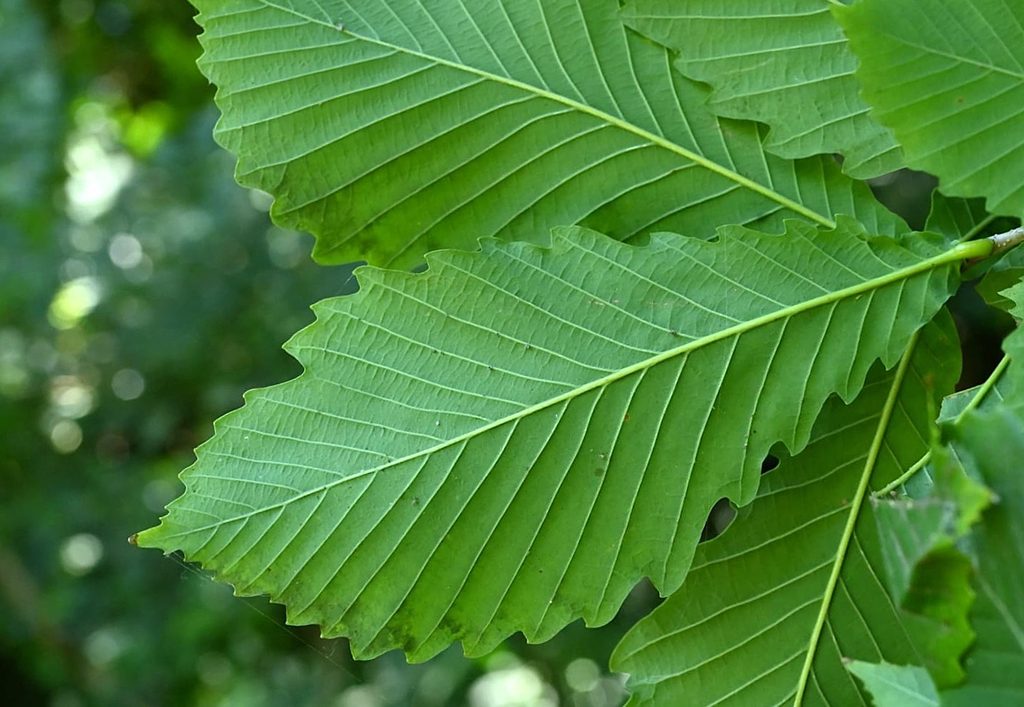
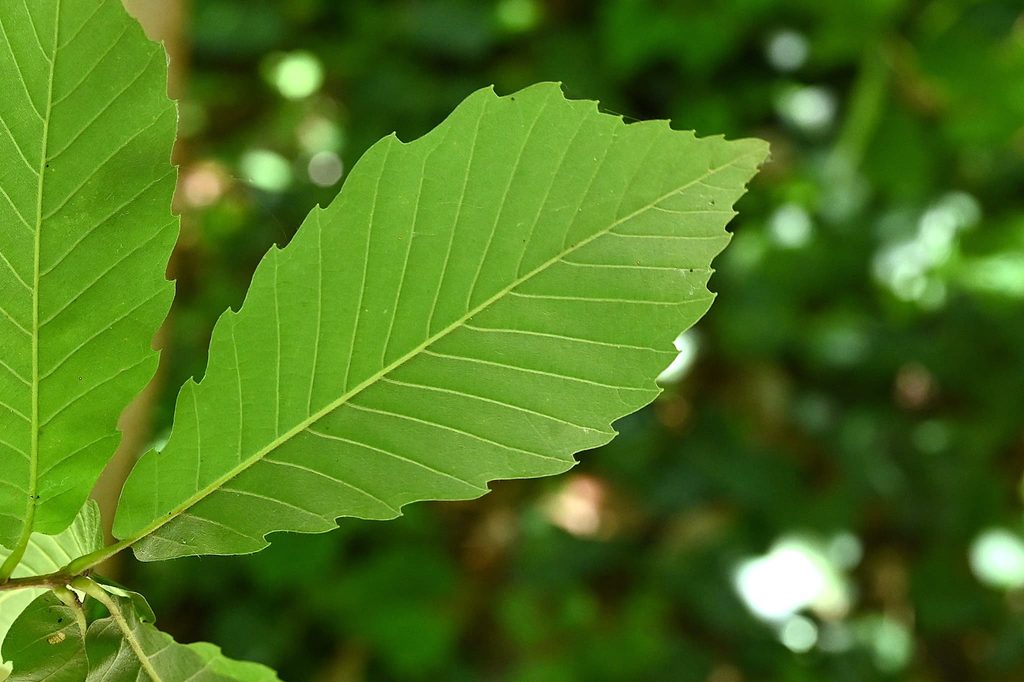
Table of Contents
- Mizunara Oak vs. Konara Oak at a Glance
- Differences in Bark
- Differences in Leaves
- Differences in Winter Buds
- Differences in Acorns
- Differences in Habitat
- Differences in Uses
- How to Tell Them Apart: Summary
- Frequently Asked Questions
What Are Mizunara Oak and Konara Oak?
Mizunara Oak and Konara Oak are deciduous trees in the beech family (Fagaceae) and genus Quercus. Both are native to Japan and commonly occur in temperate deciduous forests, although their preferred habitats differ.
Mizunara is strongly associated with cooler mountain forests and is an important component of beech forests. Konara is more widespread in low hills and satoyama landscapes and has a long history of use for firewood and charcoal.
Mizunara is also famous as the source of Japanese oak used for premium whisky casks.
Taxonomy note: Mizunara is widely treated in Japanese botanical literature as Quercus crispula Blume. Kew’s Plants of the World Online currently treats this name as a synonym of Quercus mongolica var. crispula. This page follows the widely used Japanese name Quercus crispula for clarity.
Comparison at a Glance
| Feature | Mizunara Oak (Q. crispula) | Konara Oak (Q. serrata) |
|---|---|---|
| Japanese name | Mizunara (ミズナラ), also Oonara (オオナラ) | Konara (コナラ) |
| Typical height | Up to about 30 m | Up to about 25 m |
| Leaf stalk | Extremely short, usually only a few mm | Clearly visible, commonly around 1–3 cm |
| Leaf size | Generally larger | Generally smaller |
| Leaf margin | Coarse, sharp teeth | Finer, more numerous teeth |
| Bark | Gray-brown, becoming deeply fissured with age | Gray to dark gray-brown, with longitudinal fissures |
| Acorns | About 2–3 cm long | Usually about 1.5–2 cm long |
| Habitat | Cooler mountain forests | Low hills, secondary forests, and satoyama |
| Traditional uses | Timber, furniture, flooring, whisky casks | Firewood, charcoal, shiitake logs, timber |
| Best field mark | Very short petiole | Distinctly longer petiole |
Differences in Bark
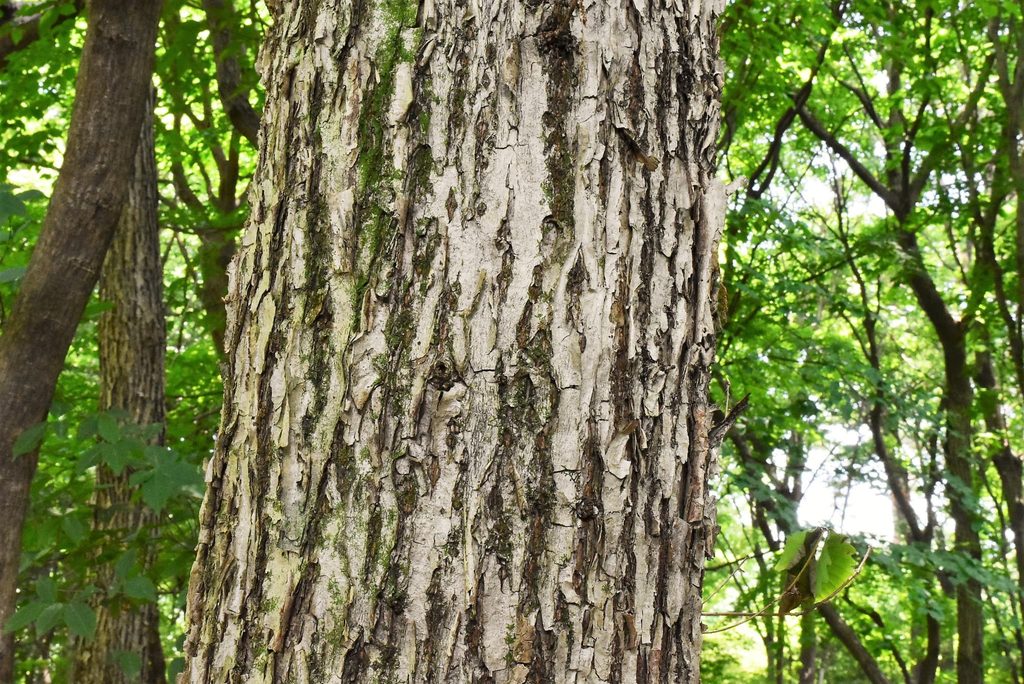
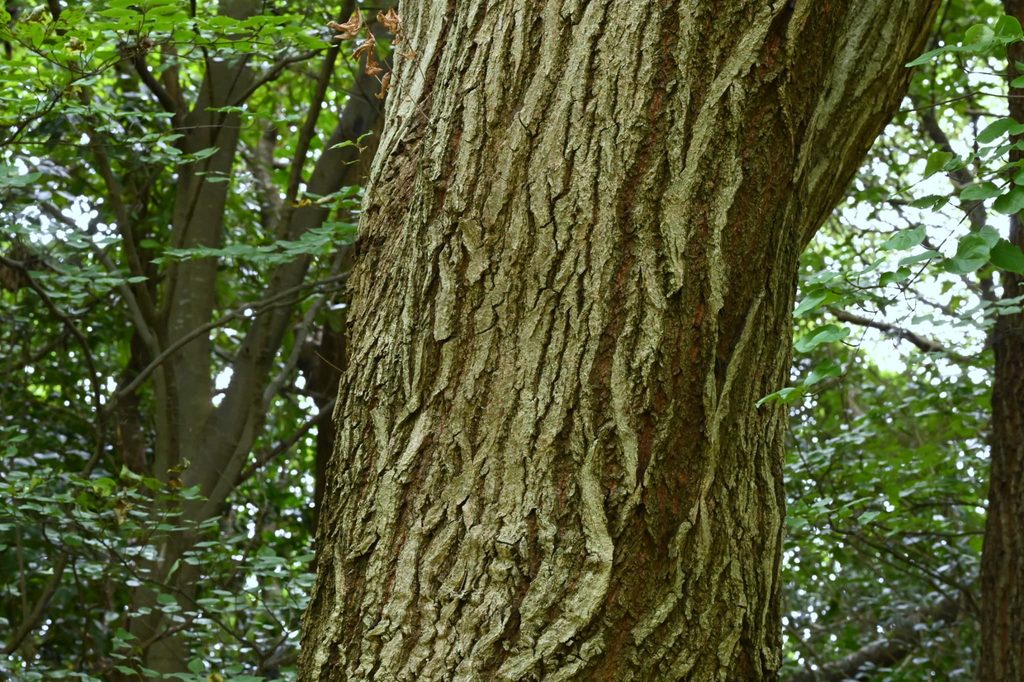
Both trees develop longitudinal fissures as they mature, so bark alone is not the most reliable way to distinguish them.
Mizunara typically develops thick, gray-brown bark with deep, irregular vertical fissures. Konara also develops longitudinal fissures, and older trunks can become dark and rugged.
The original distinction that Mizunara “peels in thin vertical strips” while Konara develops “black-and-white streaked fissures” is too categorical. Bark varies considerably with age and growing conditions, so it is better used together with leaf characteristics rather than as a primary identification feature.
Differences in Leaves
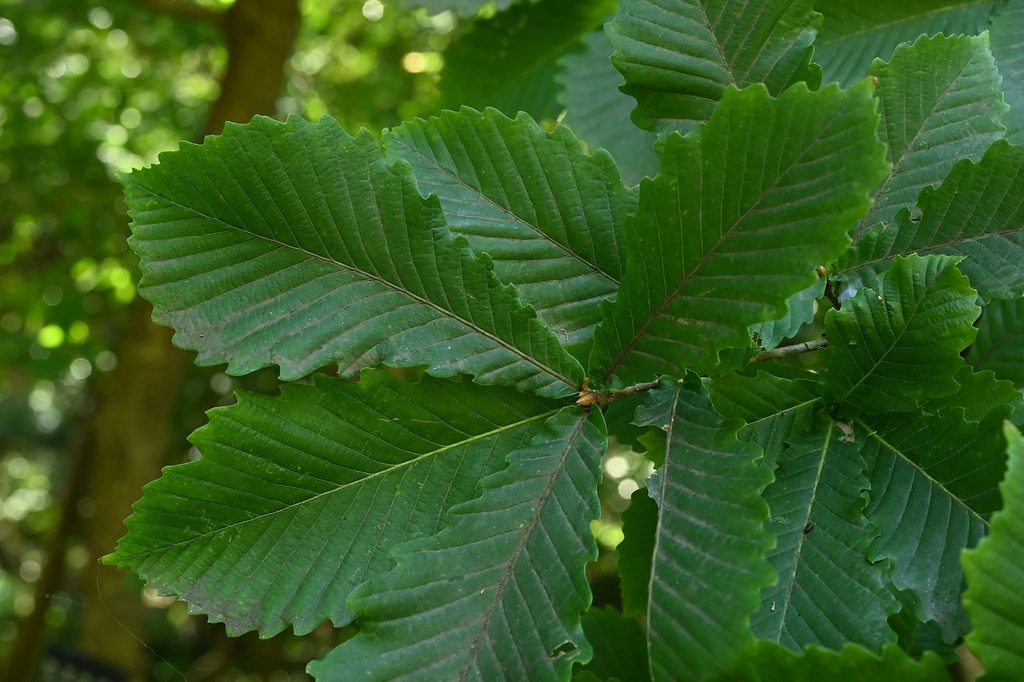
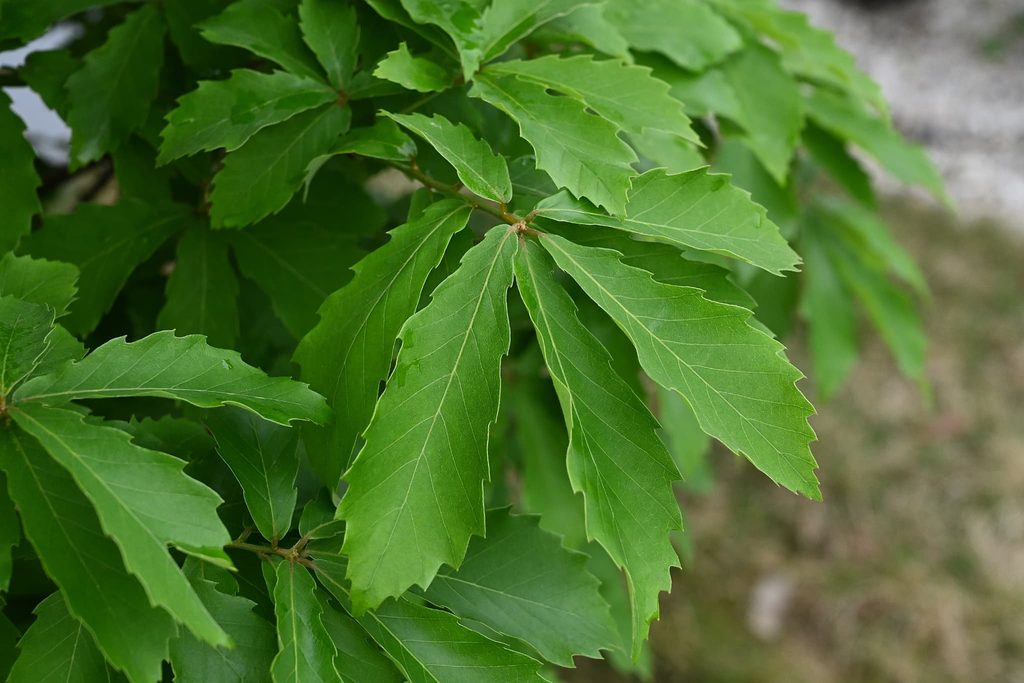
The leaf stalk (petiole) is the quickest and most useful feature for distinguishing these two oaks.
Mizunara has an extremely short petiole, usually only a few millimeters long. As a result, the leaf blade appears almost directly attached to the twig.
Konara has a clearly visible petiole, commonly around 1–3 cm long. This difference is particularly useful when the two species are growing in the same area.
Mizunara also generally has larger leaves with coarse, sharply pointed teeth. Konara leaves are usually smaller, with more numerous and somewhat finer teeth.
Young Konara leaves are often densely covered with hairs, especially on the lower surface, although hairiness changes as the leaves mature.
Because leaf size and tooth shape can overlap between individual trees, petiole length should be given greater weight than leaf size alone.
Differences in Winter Buds
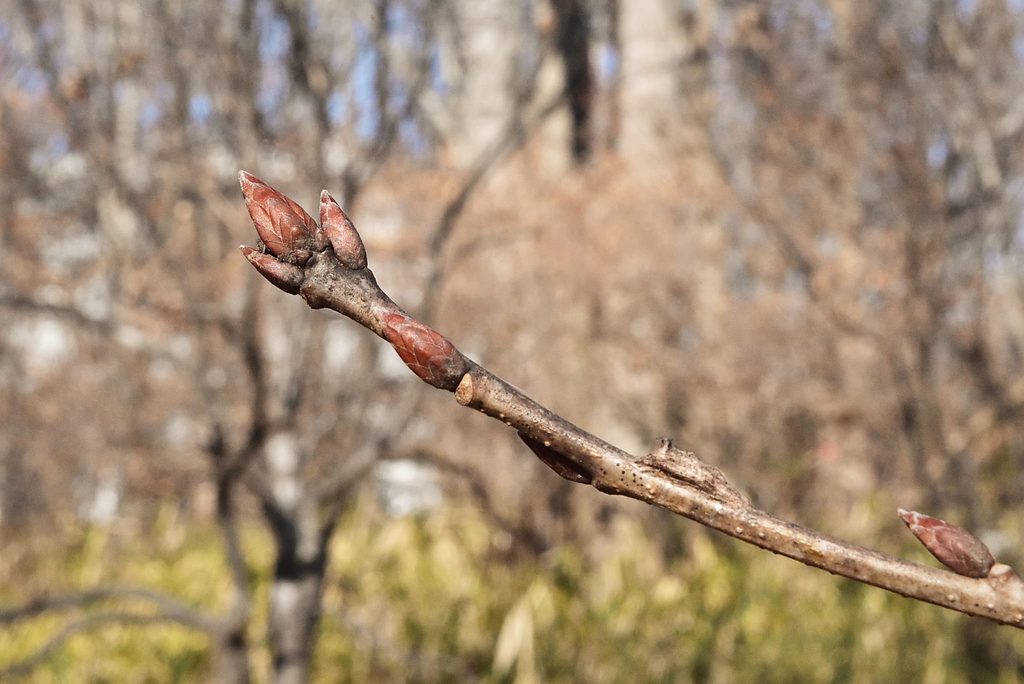
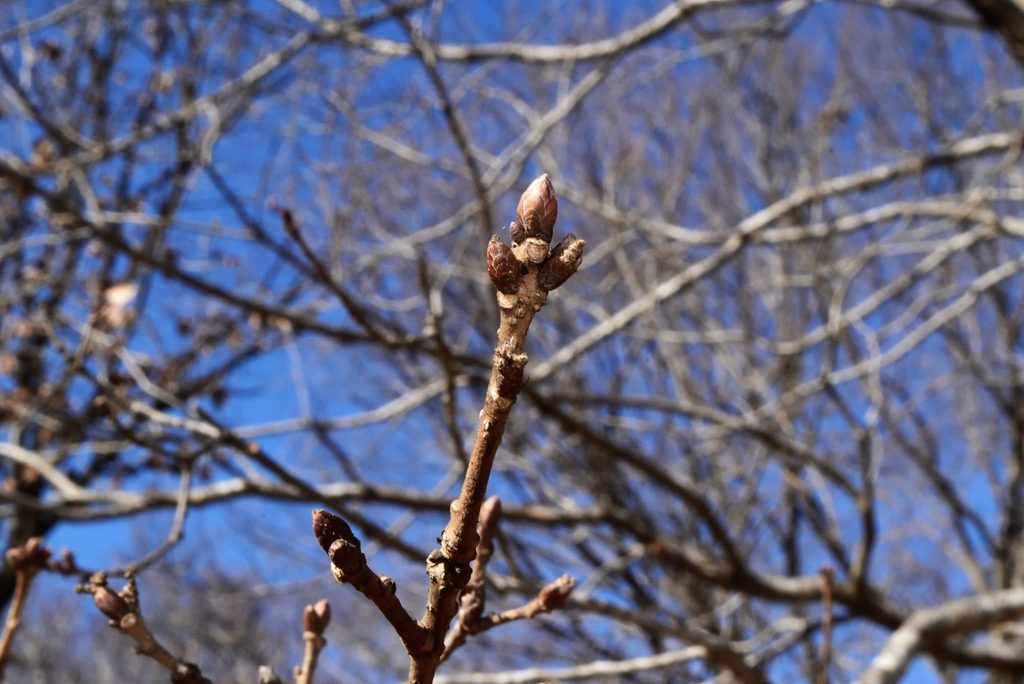
The winter buds of Mizunara and Konara are similar and are not as useful for identification as the leaves.
Both have relatively large, clustered terminal buds characteristic of many oaks. Kunugi (Sawtooth Oak) can also look similar at this stage, so winter buds alone should not normally be used to make a confident identification.
When leaves are present, the petiole provides a much more reliable clue.
Differences in Acorns
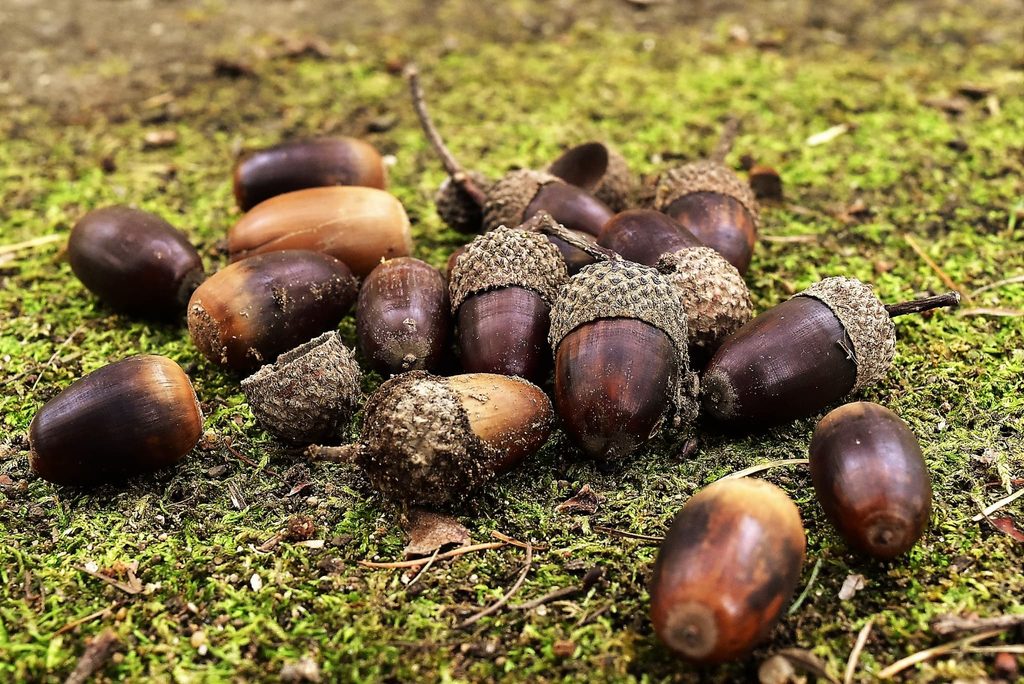
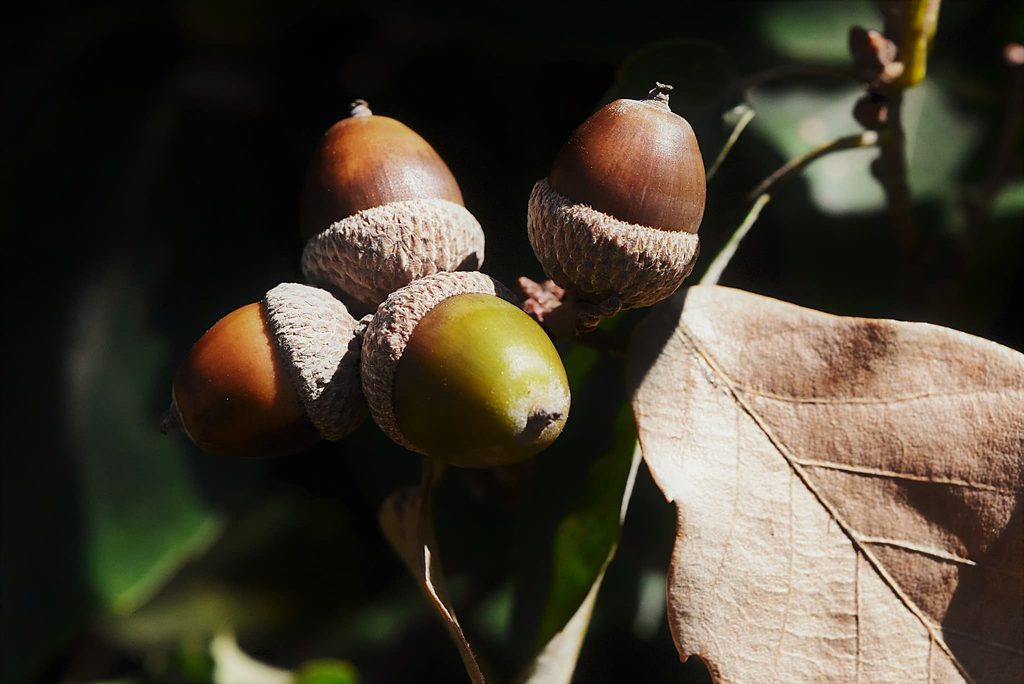
Mizunara generally produces larger acorns than Konara.
Mizunara acorns are typically about 2–3 cm long, with a cup-shaped cupule covered in small scales. Konara acorns are usually smaller, often around 1.5–2 cm long, and are also enclosed at the base by a scaly cupule.
Acorn size can vary, however, so it should not be used as the sole identification feature.
Both species produce acorns that are eaten by wildlife and contain substantial amounts of tannins. Acorns can be made edible after appropriate processing to remove the tannins, and acorn foods have a long history in Japan.
Differences in Habitat
Mizunara is strongly associated with cooler mountain regions and is an important component of temperate deciduous forests, often growing with Japanese Beech (Fagus crenata). In Japan it occurs from Hokkaido southward through much of the country.
Konara is more characteristic of lower hills and secondary forests, including traditional satoyama landscapes. Its ability to resprout after cutting made it particularly valuable in coppice woodlands managed for firewood and charcoal.
The two species can overlap, so elevation and habitat are useful supporting clues rather than absolute identification criteria.
Differences in Uses
Mizunara has long been valued as a hardwood for furniture, flooring, tools, and other products. Its attractive grain also makes it a prized timber.
Its best-known modern use is in Mizunara oak whisky casks. Japanese distillers use the wood for long maturation because it can contribute distinctive aromatic qualities often described in terms of fragrant woods such as sandalwood and agarwood. Mizunara casks are relatively difficult to make and are highly valued.
Konara was historically one of Japan’s important sources of firewood and charcoal. Its ability to resprout vigorously after cutting made it well suited to repeated coppice management. The wood has also traditionally been used for shiitake mushroom cultivation.
Today, both species can also be planted as ornamental trees, although their large mature size makes them better suited to spacious landscapes than small gardens.
How to Tell Mizunara Oak and Konara Oak Apart: Summary
- Petiole: Mizunara has an extremely short petiole, usually only a few millimeters long; Konara has a clearly visible petiole, commonly around 1–3 cm.
- Leaves: Mizunara generally has larger leaves with coarser teeth; Konara usually has smaller leaves with finer teeth.
- Acorns: Mizunara generally has larger acorns, about 2–3 cm long; Konara’s are usually around 1.5–2 cm.
- Bark: Both develop longitudinal fissures, so bark is useful as a supporting feature rather than a decisive one.
- Habitat: Mizunara favors cooler mountain forests; Konara is particularly common in lower hills, secondary forests, and satoyama.
- Uses: Mizunara is especially valued as timber and for whisky casks; Konara has a strong history as firewood, charcoal, and shiitake logs.
The easiest rule to remember
Look at the petiole first.
Very short or almost absent petiole → Mizunara
Clearly visible petiole → Konara
This is usually more reliable than trying to identify the species from bark, acorn size, or overall tree shape alone.
Frequently Asked Questions
What’s the fastest way to tell Mizunara and Konara apart?
Check the leaf stalk. Mizunara has an extremely short petiole, usually only a few millimeters long, while Konara has a clearly visible petiole, commonly around 1–3 cm long.
Which tree has the larger acorns?
Mizunara generally has the larger acorns. They are typically about 2–3 cm long, while Konara acorns are usually around 1.5–2 cm long. There is some natural variation, so acorn size alone is not conclusive.
Which tree grows taller?
Mizunara generally becomes the larger tree, reaching around 30 m in favorable conditions. Konara can reach about 25 m.
Are Mizunara and Konara found in the same places?
Yes. Their ranges overlap, but Mizunara is more strongly associated with cool mountain forests, while Konara is particularly common in lower hills and secondary forests. The two should therefore be distinguished by morphology rather than habitat alone.
Which tree is used for Japanese whisky casks?
Mizunara. Japanese distillers use Mizunara oak for specialized whisky casks, where long maturation can produce distinctive fragrant-wood notes.
Which tree was traditionally used for firewood and charcoal?
Konara was one of the most important traditional firewood and charcoal oaks in Japan. Its vigorous resprouting after cutting made it well suited to coppice management.
Conclusion
Mizunara and Konara are closely related Japanese oaks with similar overall appearances, but they can usually be distinguished by one particularly useful feature: the leaf petiole. Mizunara has an extremely short petiole, while Konara has a conspicuous one.
Leaf size, tooth shape, acorn size, bark, and habitat provide useful supporting clues, but none is as dependable on its own. Mizunara is especially famous for its high-quality timber and use in Japanese whisky casks, while Konara is closely associated with the traditional satoyama landscape and the production of firewood, charcoal, and shiitake logs.