Sweet Osmanthus (Osmanthus fragrans): Identification, Care & Uses
Sweet Osmanthus (Osmanthus fragrans var. aurantiacus) is an evergreen shrub or small tree prized for its intensely fragrant orange flowers that appear in autumn. Native to East Asia and long cultivated in Japan, it is one of the country’s most familiar ornamental trees. This guide covers identification, flowers, fruit, bark, cultural significance, cultivars, and care, based on observations of the plant as grown in Japan.
What Is Sweet Osmanthus?
Sweet Osmanthus is an evergreen broadleaf shrub or small tree in the olive family (Oleaceae). It is an orange-flowered form of Osmanthus fragrans, a species native from the Himalayas through China and Indochina to southern Japan. The orange-flowered variety is commonly treated botanically as Osmanthus fragrans var. aurantiacus.
In Japan, this plant is known as Kinmokusei (キンモクセイ) and is widely grown as a garden and park tree. Most plants encountered in Japan are male because male plants were favored for their abundant flowers and fragrance and were repeatedly propagated by cuttings. As a result, fruiting is extremely uncommon in Japan.
Overview
| Item | Description |
|---|---|
| Scientific Name | Osmanthus fragrans var. aurantiacus |
| Common Name | Sweet Osmanthus / Fragrant Olive |
| Japanese Name | Kinmokusei (キンモクセイ) |
| Family | Oleaceae |
| Native Range | East Asia; the species ranges from the Himalayas through China and Indochina to southern Japan |
| Plant Type | Evergreen shrub or small tree |
| Height | Commonly around 3–6 m in cultivation |
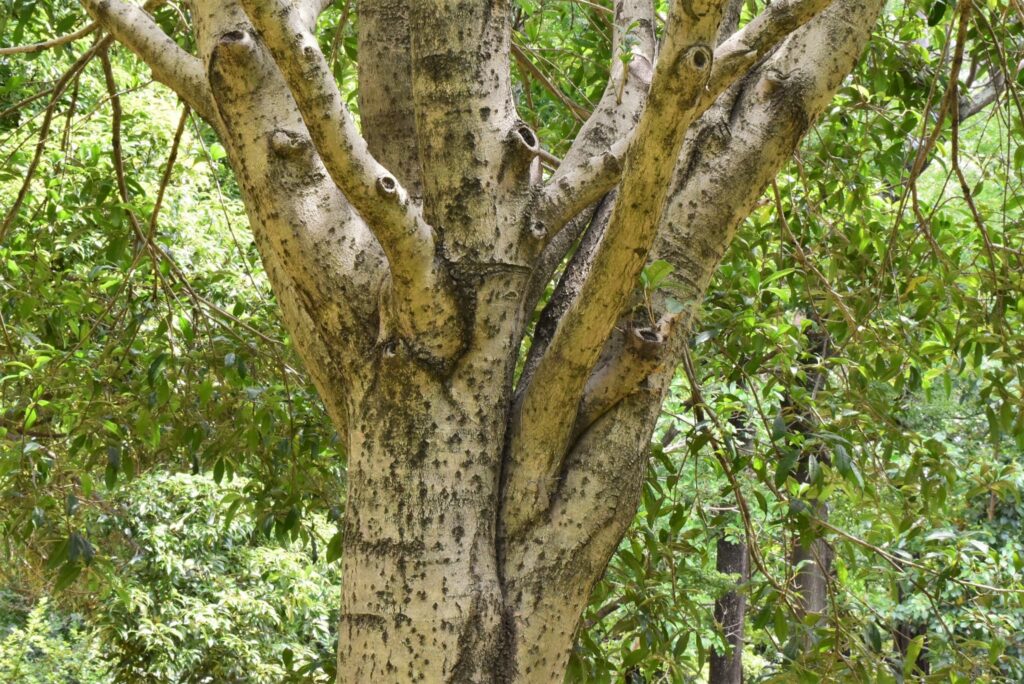
| Trunk | Usually multi-stemmed or heavily branched; gray-brown bark |
| Flowering Season | September–October in Japan |
| Fruit Type | Bluish to dark blue drupe; rarely produced by plants in Japan |
| USDA Zones | Approximately 8–11 |
| Sun Exposure | Full sun to partial shade; good light favors flowering |
Characteristics
| Feature | Description |
|---|---|
| Leaves | Opposite, evergreen, leathery, dark green, usually narrowly elliptic with fine serrations |
| Flowers | Small, orange to deep orange, strongly fragrant, borne in clusters in the leaf axils |
| Fruit | Bluish to dark blue drupe, rarely seen in Japan |
| Bark | Gray to gray-brown, becoming rougher with age |
| Habit | Dense and heavily branched; suitable for hedges and specimen planting |
Foliage
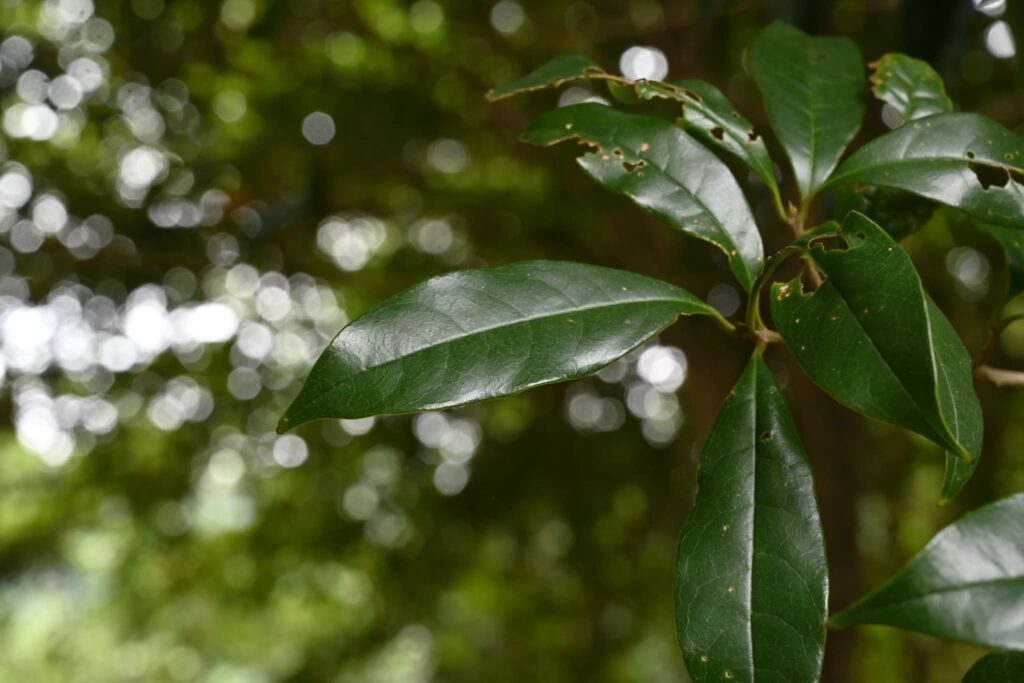
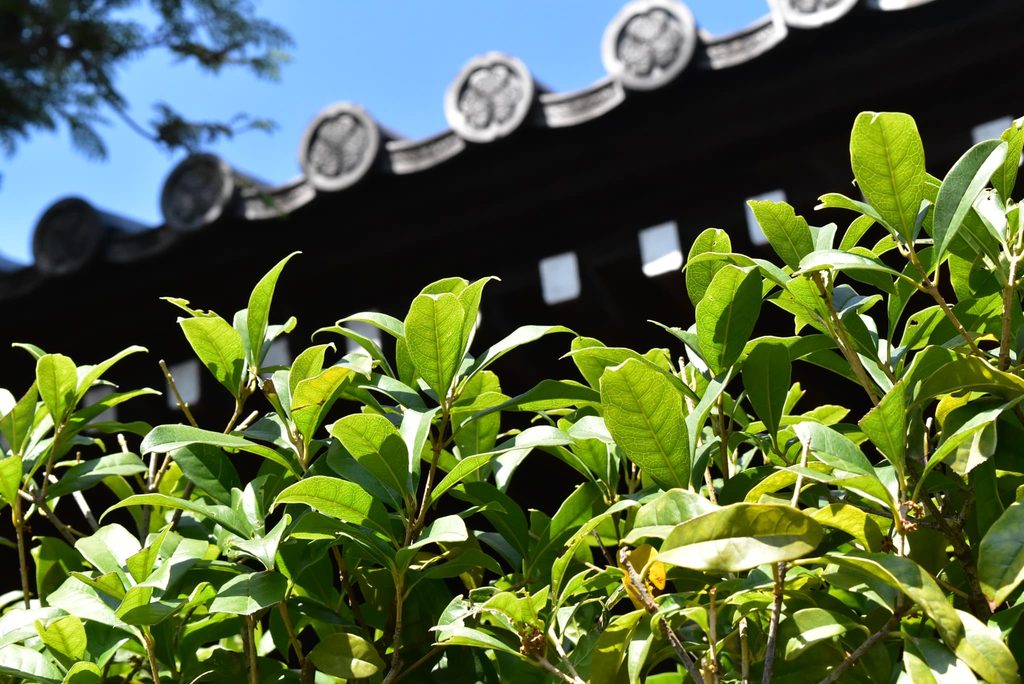
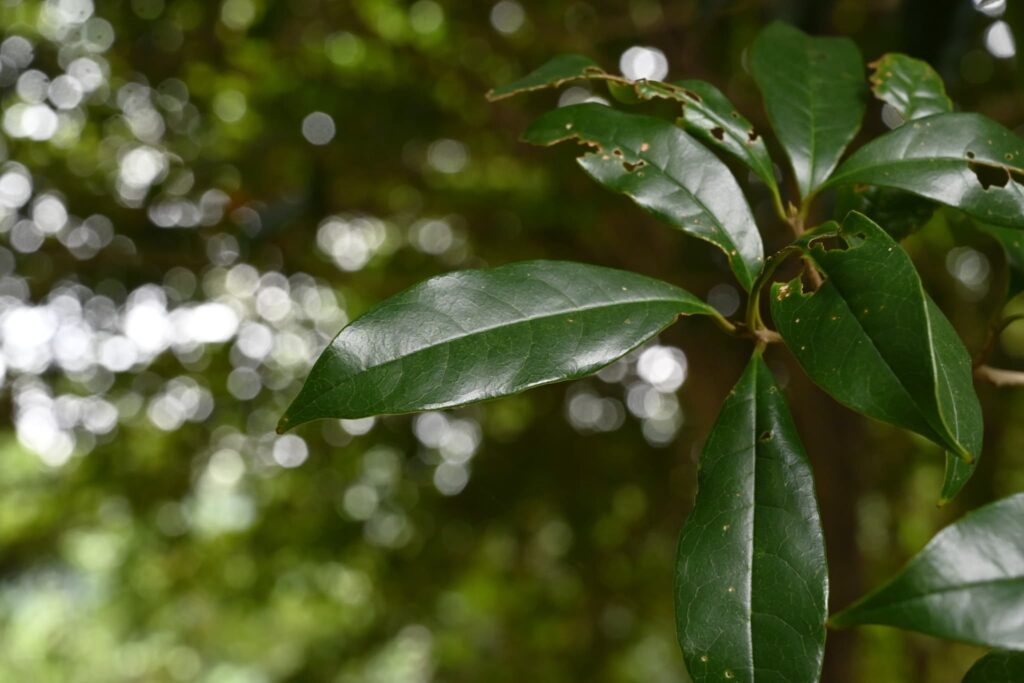
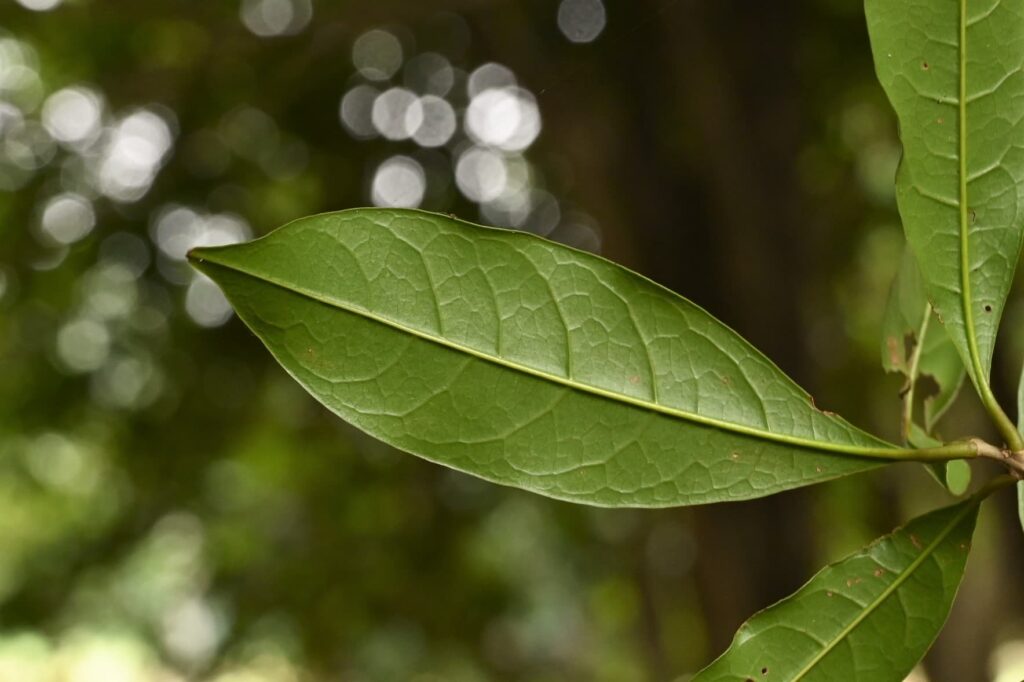
Sweet Osmanthus has opposite, leathery, dark-green leaves that remain on the plant throughout the year. They are generally narrow to elliptic and have fine serrations, although the margins can appear nearly entire on some leaves.
The leaves are usually around 7–15 cm long, although their size varies with the individual plant and growing conditions. The upper surface is glossy or semi-glossy, while the underside is paler.
Sweet Osmanthus can be difficult to distinguish from other forms of Osmanthus fragrans outside the flowering season. Flower color and fragrance are usually more reliable identification features than leaf shape alone.
Flowers
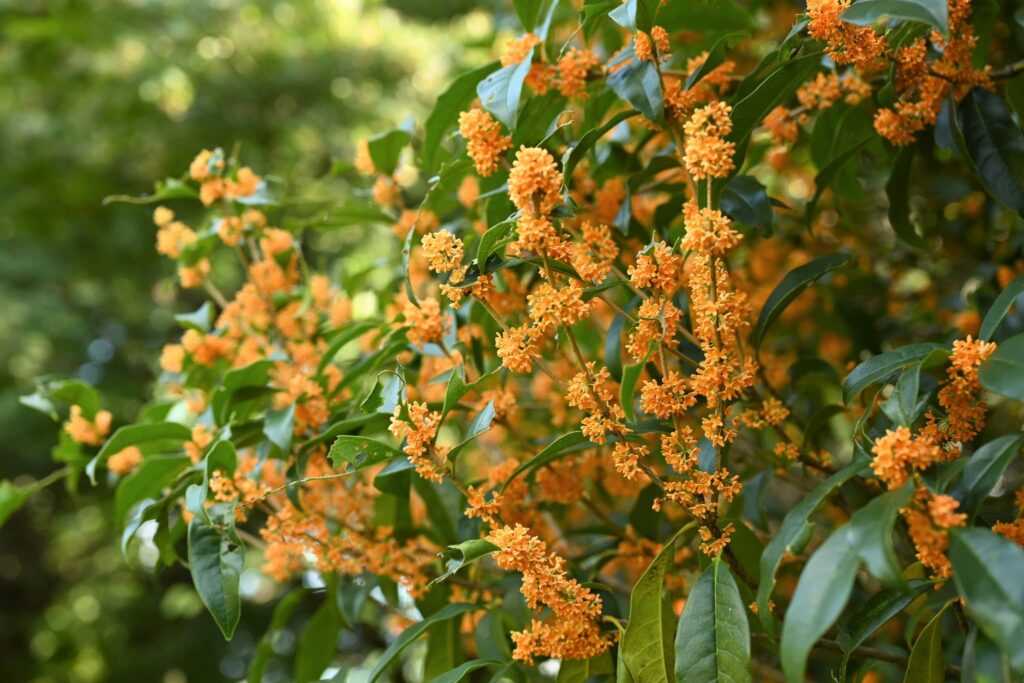
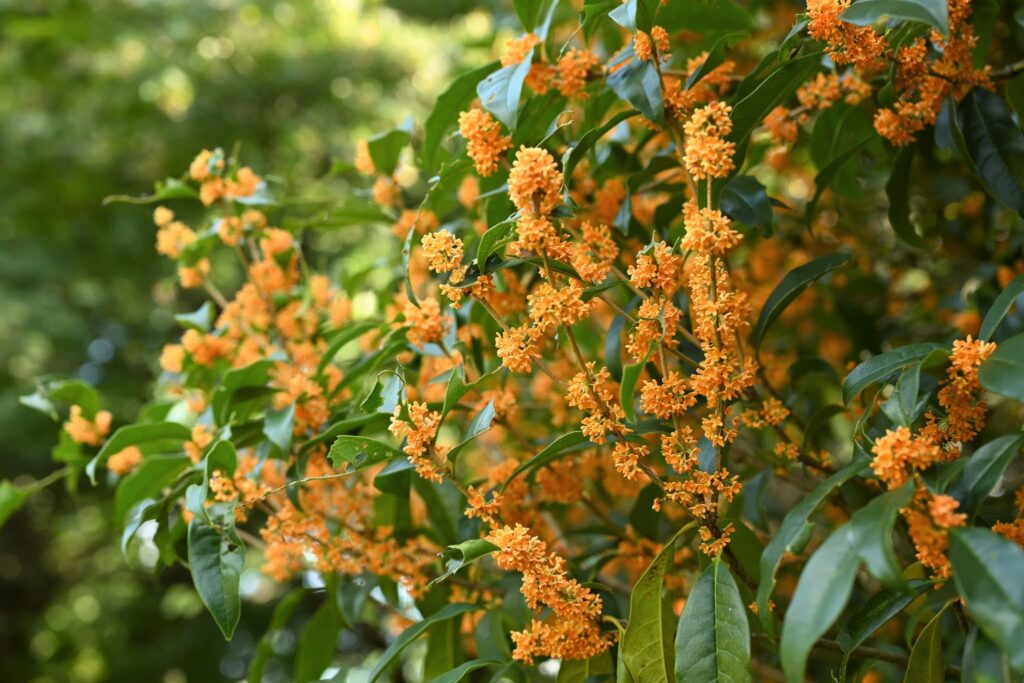
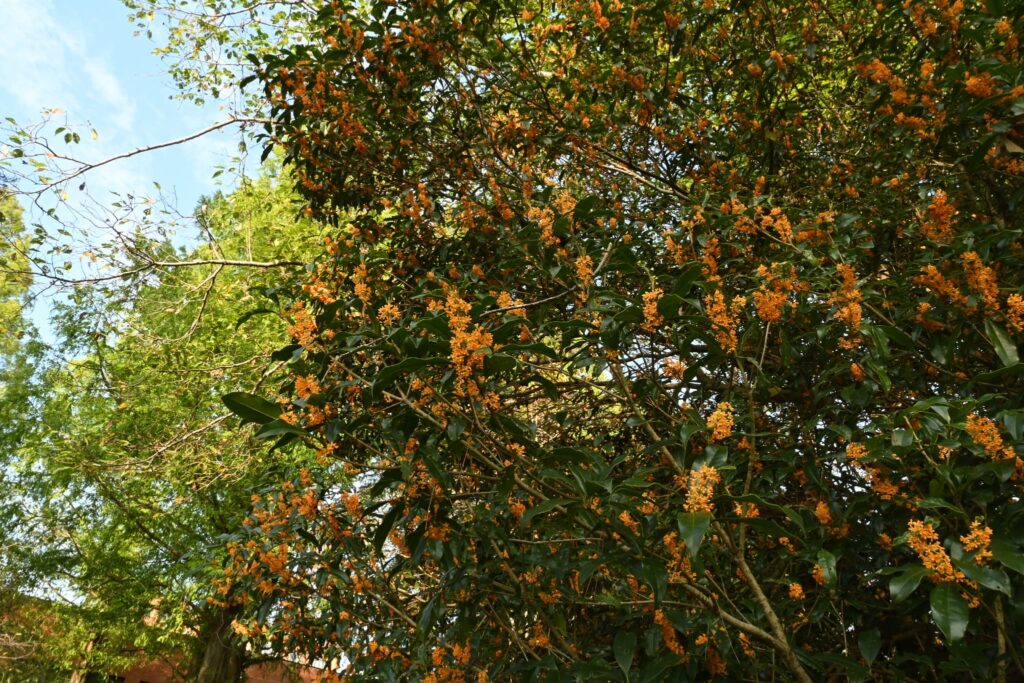
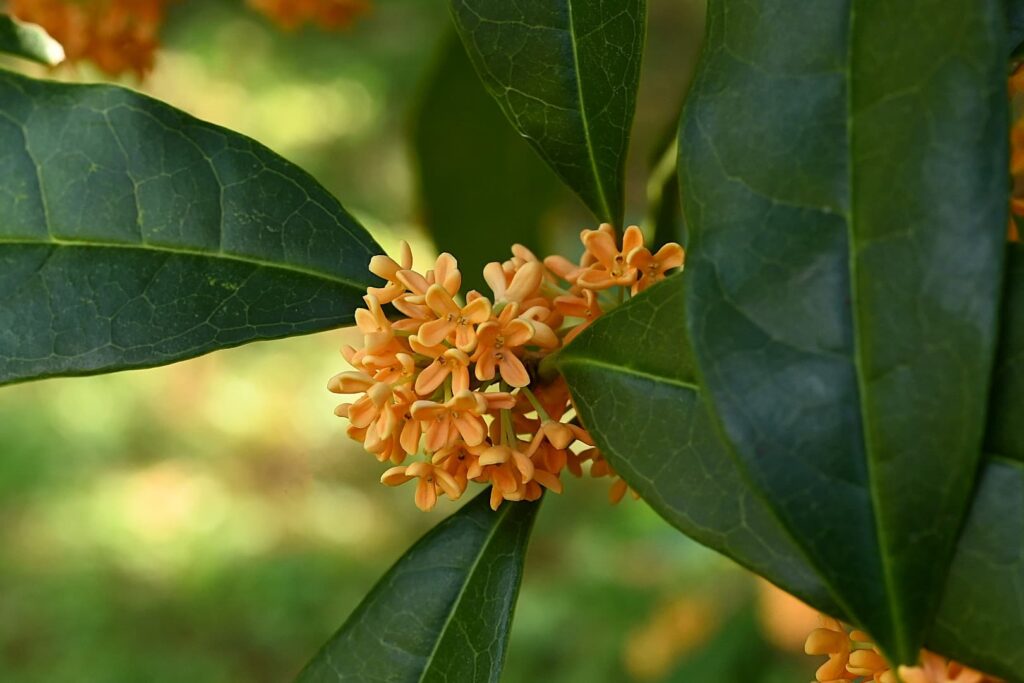
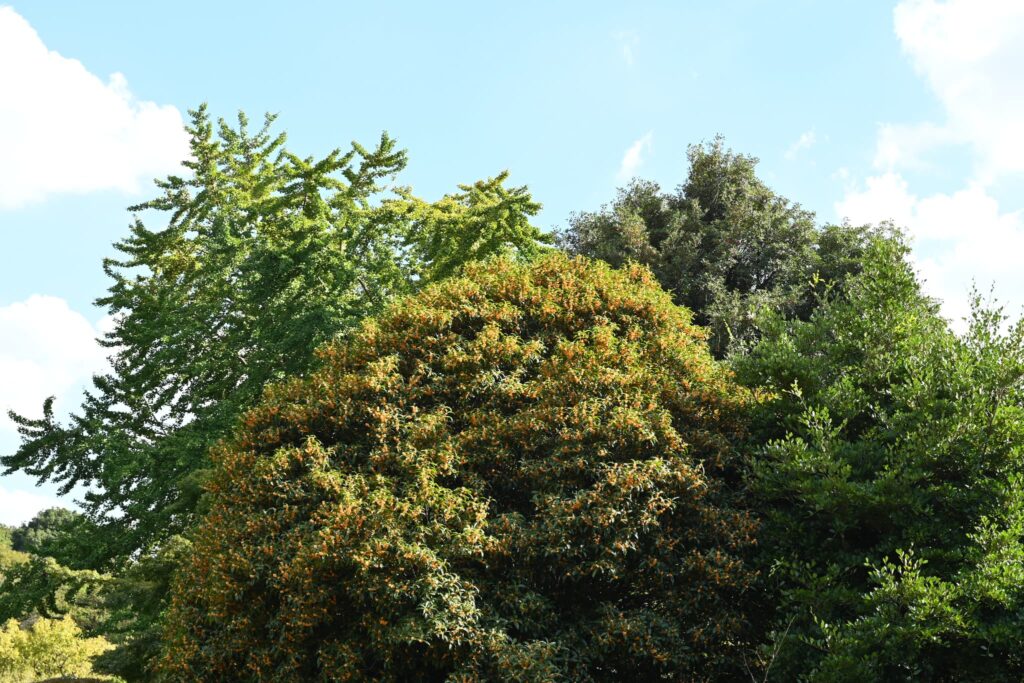
Sweet Osmanthus flowers mainly from September to October in Japan. The flowers are very small, but they occur in dense clusters in the leaf axils and produce an exceptionally strong fragrance.
Individual flowers are only a few millimeters across and have a short tubular structure with four lobes. The flowers are orange to deep orange, which distinguishes Sweet Osmanthus from the white-flowered Silver Osmanthus.
The flowering period is relatively short, often lasting around a week under favorable conditions. Warm autumn weather can intensify the fragrance, while cool or rainy conditions may shorten the display.
In Japan, Sweet Osmanthus is particularly associated with the arrival of autumn because its fragrance can be detected well before the flowers are noticed visually.
Fruits
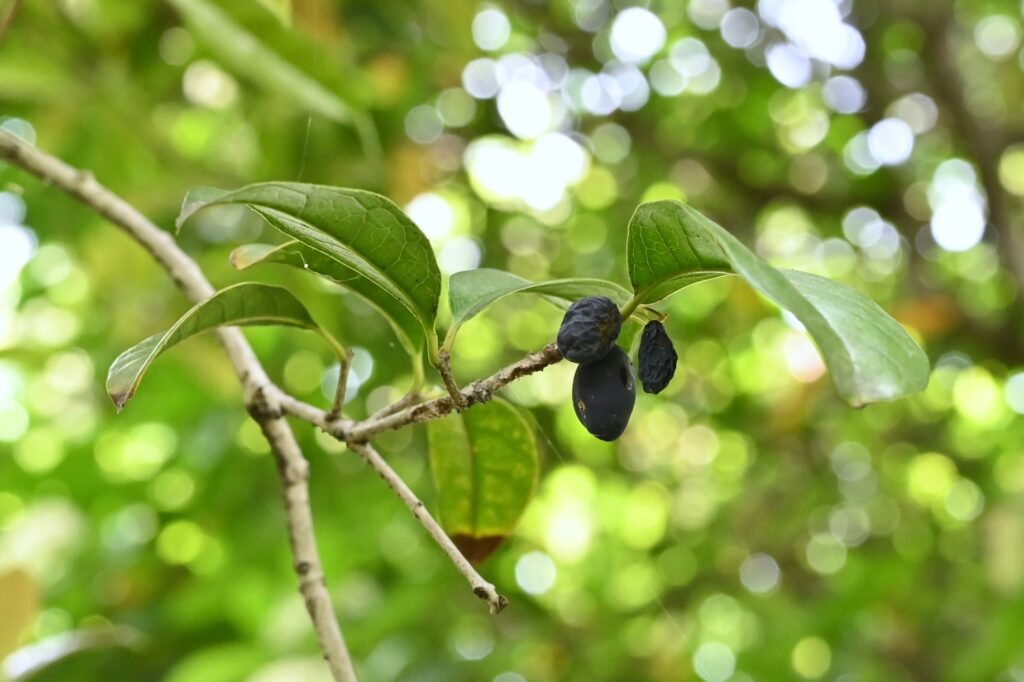
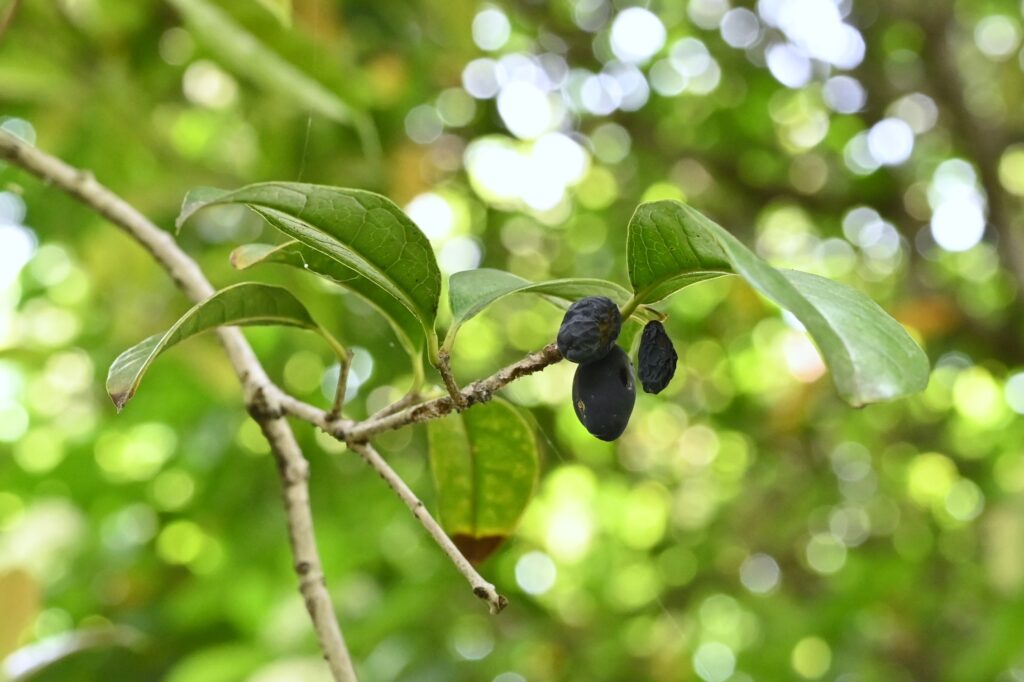
Sweet Osmanthus is dioecious, meaning that male and female flowers occur on separate plants. Although female plants can produce fruit, the overwhelming majority of Sweet Osmanthus planted in Japan are male. Consequently, fruit is rarely seen on Japanese garden specimens.
When fruit is produced, it is a small, oval drupe that becomes bluish to dark blue as it matures. Other forms of Osmanthus fragrans, including Usugi Mokusei, are more commonly encountered with fruit in Japan.
Bark & Timber
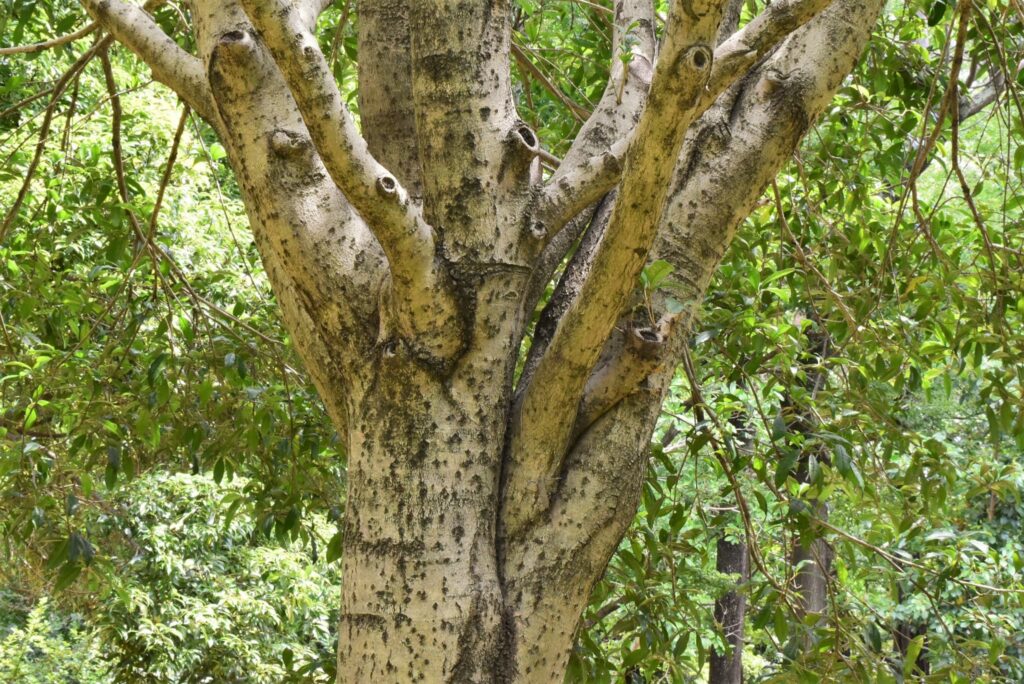
The bark of Sweet Osmanthus is gray to gray-brown and becomes increasingly rough and textured as the plant ages.
The Japanese name Kinmokusei (金木犀) is traditionally explained as referring to the golden-orange flowers and bark resembling the rough hide of a rhinoceros. Mokusei (木犀) literally refers to the rhinoceros-hide-like appearance of the bark.
Sweet Osmanthus is primarily valued as an ornamental plant rather than as a timber tree.
Size & Growth
Sweet Osmanthus commonly grows to around 3–6 m in cultivation, although old specimens in favorable climates can become considerably larger.
It grows slowly to moderately and develops dense branching. With sufficient space, it can eventually become a substantial evergreen small tree rather than remaining a compact shrub.
Uses & Cultural Significance
Sweet Osmanthus is one of Japan’s most recognizable autumn-flowering garden trees. It is widely planted around homes, parks, schools, temples, and along roadsides, particularly in relatively mild regions.
Its principal ornamental value is its combination of evergreen foliage and exceptionally fragrant autumn flowers. The flowers are also used traditionally in China to flavor tea, wine, sweets, and other foods. The species has a long history of cultivation in China.
Kinmokusei in Japan
The Japanese name Kinmokusei (金木犀) refers to the orange-golden flowers and the characteristic bark. The tree was introduced to Japan from China and subsequently became widespread as a garden and park plant.
Because male plants produce abundant flowers and can be propagated vegetatively, they were strongly favored in Japan. This explains why almost all commonly encountered Japanese specimens are male and rarely produce fruit.
Fragrance
The fragrance of Sweet Osmanthus is one of its most distinctive characteristics. Although the individual flowers are tiny, large numbers open simultaneously, producing a scent that can spread well beyond the tree itself.
The genus name Osmanthus is derived from Greek words meaning “fragrant flower.” Sweet Osmanthus is cultivated commercially and traditionally in China for its aromatic flowers, including use in tea, wine, and confectionery.
Growing Guide
| Item | Description |
|---|---|
| Light | Full sun to partial shade; good light is important for abundant flowering |
| Soil | Fertile, well-drained soil; avoid prolonged waterlogging |
| Wind | Protection from strong, drying winds is beneficial |
| Cold Hardiness | Best suited to warm-temperate climates; approximately USDA Zones 8–11 |
| Pruning | Usually best carried out after flowering |
| Growth | Slow to moderate |
| Pests | Generally robust, but scale insects and aphids may occasionally occur |
Light & Soil
Sweet Osmanthus grows best in a sunny position with good drainage. It tolerates partial shade, but insufficient light can reduce flowering.
A fertile, moderately moist soil is suitable, while prolonged waterlogging should be avoided. Established plants can tolerate short periods of dry weather, but prolonged drought can reduce vigor and flowering.
Wind & Urban Conditions
Shelter from strong, drying winds is beneficial, particularly in colder areas. Coastal sites exposed to salt-laden winds can also cause leaf damage.
Sweet Osmanthus has traditionally been widely planted in urban environments, but severe air pollution or other environmental stresses can reduce flowering.
Cold Hardiness
Sweet Osmanthus is a warm-temperate plant. It generally performs best in USDA Zones 8–11, although actual hardiness varies with the plant, exposure, and duration of cold.
In colder areas, young plants and new growth may suffer winter damage. A sheltered position near a building or wall can improve survival.
Pruning
Sweet Osmanthus tolerates pruning well and is commonly maintained as a hedge or compact garden tree.
For established plants, pruning immediately after flowering is a useful general approach because it allows the plant time to produce new growth before the following flowering season.
Avoid unnecessarily heavy pruning when the plant is about to flower, particularly if the objective is to maximize the autumn display. Excessive shearing can also produce dense outer growth while leaving the interior of an old hedge increasingly bare.
For older specimens, selective thinning and removal of poorly positioned branches is generally preferable to repeatedly shearing the entire plant.
Suitability for Home Gardens
Sweet Osmanthus is well suited to home gardens where its fragrance can be enjoyed at close range. It works particularly well beside entrances, paths, patios, and boundaries.
It is also an effective evergreen hedge plant, provided sufficient space is allowed for its eventual size.

Pests
Sweet Osmanthus is generally a robust ornamental plant. Scale insects and aphids may occasionally occur, particularly on stressed plants.
Regular inspection of young shoots and the undersides of leaves is usually sufficient for early detection.
Cultivars
Four-Season Sweet Osmanthus is a cultivated form sold under names such as “Four-Season Sweet Olive.” It is valued for producing flowers outside the main autumn flowering period, although flowering frequency and intensity vary with age and growing conditions.
Similar Species
- Silver Osmanthus (Osmanthus fragrans var. fragrans) — The flowers are white rather than orange, and the fragrance is generally less intense. The two can be difficult to distinguish from foliage alone.
- Usugi Mokusei (Osmanthus fragrans var. thunbergii) — A pale-yellow-flowered form with a milder fragrance. Female plants occur in Japan, so fruit is more commonly seen than on Sweet Osmanthus.
- Hiiragimokusei (Osmanthus × fortunei) — A hybrid involving False Holly, usually recognized by its more strongly serrated leaves.
- False Holly (Osmanthus heterophyllus) — A related Japanese ornamental shrub whose leaves may have prominent spines or teeth, especially on young plants. Its flowers are white and much less conspicuous.
- Delavay Osmanthus (Osmanthus delavayi) — A smaller-leaved Chinese species with abundant white, fragrant flowers that bloom mainly in spring.
Frequently Asked Questions
Why doesn’t my Sweet Osmanthus produce fruit?
Most Sweet Osmanthus plants sold and planted in Japan are male. Because the species is dioecious, a male plant cannot produce fruit by itself. The historical preference for highly flowering male plants and their vegetative propagation explains why female plants are now extremely uncommon in Japan.
Why isn’t my Sweet Osmanthus flowering well?
Insufficient sunlight is one possible cause. Sweet Osmanthus generally flowers more heavily in good light.
Other factors include excessive pruning before flowering, drought stress, poor drainage, and unfavorable exposure. Severe urban pollution or coastal exposure may also reduce flowering.
When is the best time to prune Sweet Osmanthus?
Pruning immediately after flowering is generally a good time for routine shaping. This allows new shoots to develop well before the following flowering season.
What’s the difference between Sweet Osmanthus and Silver Osmanthus?
The easiest difference is the flower color. Sweet Osmanthus has orange to deep-orange flowers, while Silver Osmanthus has white flowers. Sweet Osmanthus is also generally regarded as having the stronger fragrance.
Outside the flowering season, the two can be difficult to distinguish reliably from leaves alone.
Can Sweet Osmanthus be grown from seed?
Yes, in principle, if a female plant has been pollinated and produces viable fruit. However, this is rarely practical in Japan because most cultivated Sweet Osmanthus plants are male.
Commercial and garden propagation is therefore normally carried out vegetatively, especially by cuttings.
How long do Sweet Osmanthus flowers last?
The main flowering display is relatively short, often around a week, although the exact duration varies with weather and the individual plant. Because thousands of tiny flowers open together, the fragrance can be particularly intense during the peak bloom.
Conclusion
Few evergreen garden plants announce autumn as unmistakably as Sweet Osmanthus. Its dense foliage is attractive throughout the year, but its greatest appeal comes in September and October, when small orange flowers release an exceptionally strong fragrance.
Known in Japan as Kinmokusei, the plant has become deeply established in Japanese gardens and streetscapes despite its East Asian origin. The predominance of male plants in Japan also gives the species an unusual horticultural history: the trees most people encounter are valued almost entirely for their flowers and fragrance rather than their fruit.
For a home garden, Sweet Osmanthus is particularly valuable when planted where its autumn fragrance can be experienced at close range—beside an entrance, path, or seating area—while its evergreen foliage provides structure throughout the rest of the year.