Japanese Stewartia (Stewartia pseudocamellia): Identification, Bark, Care & Uses
Japanese Stewartia (Stewartia pseudocamellia) is a deciduous tree prized for its four-season ornamental interest. It is best known for its white, camellia-like flowers in early summer, attractive autumn foliage, and beautifully mottled, exfoliating bark that remains striking after the leaves have fallen. Native to Japan and South Korea, it is widely valued as a specimen tree in Japanese gardens and in temperate landscapes.
What Is Japanese Stewartia?
Japanese Stewartia is a deciduous tree in the family Theaceae, the tea family, which also includes Camellia. Its accepted scientific name is Stewartia pseudocamellia Maxim. The species is native to Japan and South Korea and grows naturally in temperate mountain forests. In Japan, it occurs across Honshu, Shikoku, and Kyushu, with its northern range extending into the Tohoku region.
The Japanese name Natsu-tsubaki (ナツツバキ) means “summer camellia,” referring to its white flowers, which resemble those of Camellia but appear in early summer rather than winter or spring. It is also widely known as Shara-no-ki (シャラノキ, 沙羅の木).
Japanese Stewartia is particularly valued as a specimen tree because its ornamental features change throughout the year: fresh green foliage in spring, white flowers in June and July, colorful autumn leaves, and distinctive exfoliating bark in winter.
The species has sometimes been treated under names such as Stewartia koreana and Stewartia japonica, but these are now generally regarded as synonyms of Stewartia pseudocamellia.
Overview
| Item | Description |
|---|---|
| Scientific Name | Stewartia pseudocamellia |
| Common Name | Japanese Stewartia |
| Other English Names | Korean Stewartia, Natsu-tsubaki |
| Japanese Name | Natsu-tsubaki (ナツツバキ), Shara-no-ki (シャラノキ) |
| Family | Theaceae |
| Native Range | Japan and South Korea |
| Plant Type | Deciduous Tree |
| Height | Usually a small to medium-sized tree in cultivation; up to around 15–20 m in favorable conditions |
| Leaves | Alternate, simple, elliptic to obovate, finely serrated |
| Flowers | White, camellia-like, about 5–6 cm across |
| Flowering Season | June–July in Japan |
| Fruit Type | Dry, hard capsule that splits into five sections |
| Fruit Ripening | September–October |
| Bark | Smooth and exfoliating, developing gray, orange, reddish-brown, and cream-colored patches |
| USDA Zones | Approximately 5–8 |
| Sun Exposure | Full sun to partial shade; protection from intense afternoon heat is beneficial in hot climates |
| Soil | Moist, well-drained, humus-rich soil; slightly acidic conditions are preferred |
Characteristics
| Feature | Description |
|---|---|
| Leaves | Alternate, dark green, elliptic to obovate, with fine serrations; undersides may bear sparse hairs |
| Flowers | White, solitary, cup-shaped to somewhat flat, about 5–6 cm across, with five petals and yellow-orange stamens |
| Fruit | Hard, ovoid capsule that splits into five sections when mature |
| Bark | Thin, exfoliating bark with attractive gray, orange, reddish-brown, and cream-colored patches |
| Habit | Deciduous tree with a pyramidal to oval crown, often branching low or forming multiple trunks |
| Autumn Color | Yellow, orange, red, and reddish-purple, depending on conditions |
Foliage
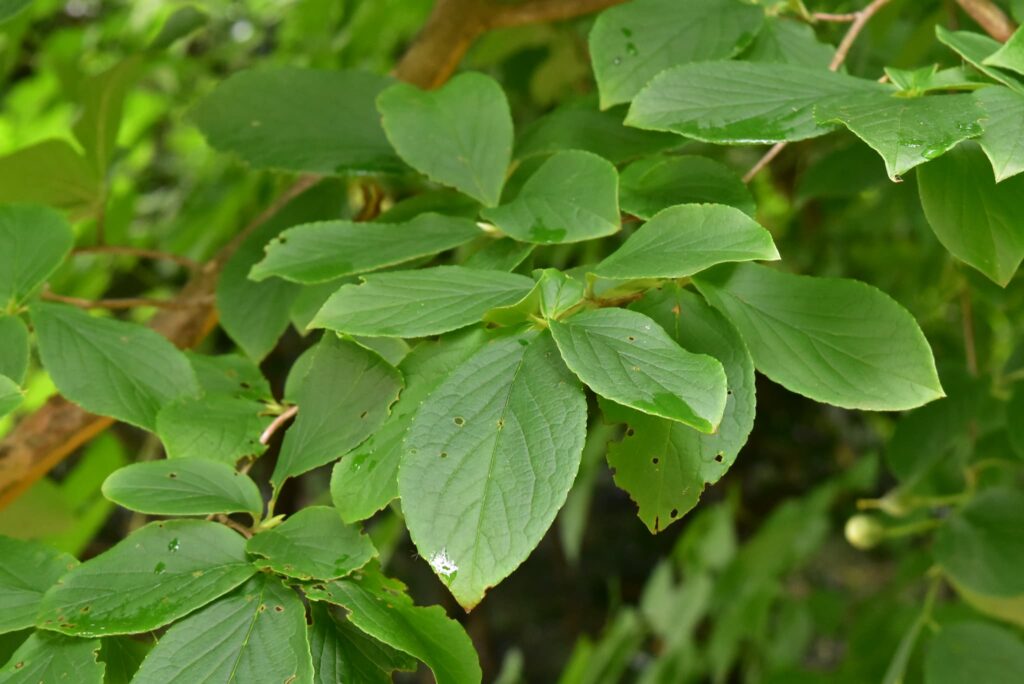
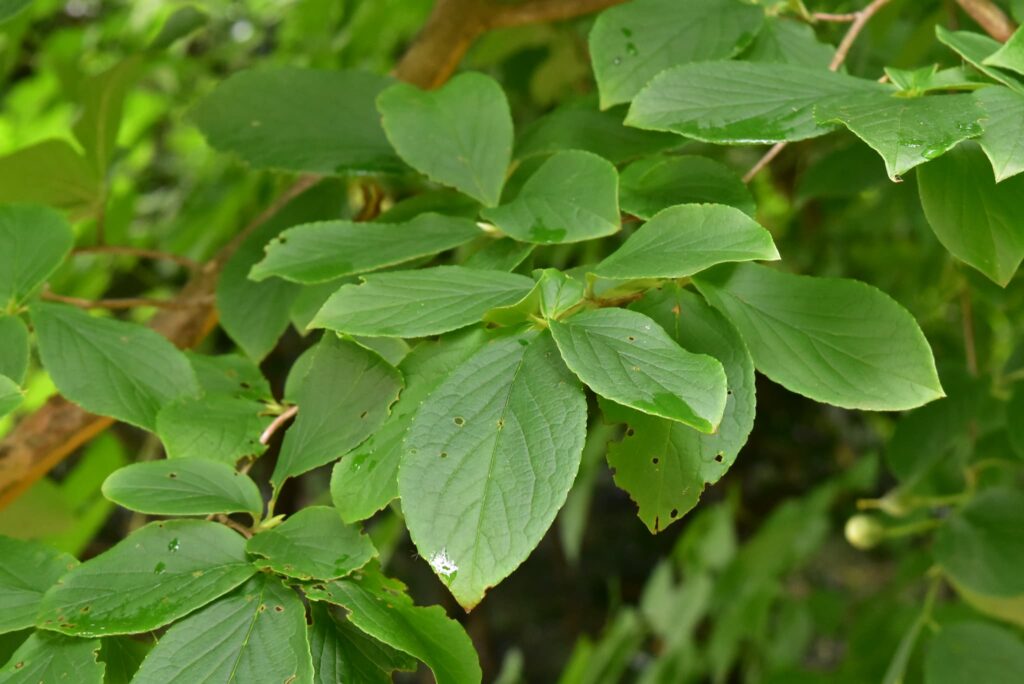
Leaves emerge alternately along the branches and are generally elliptic to obovate, with finely serrated margins. They are typically about 5–10 cm long, although larger leaves can occur.
The upper surface is dark green and relatively smooth, while the underside may have sparse hairs. Young shoots can have a slightly zigzagging appearance.
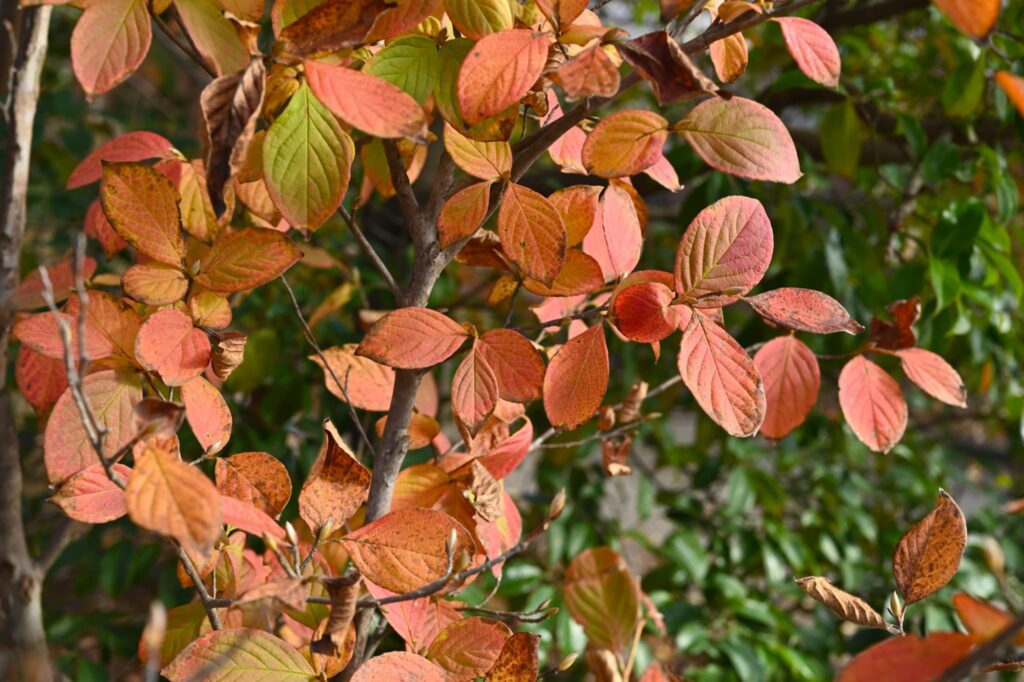
In autumn, the foliage can turn yellow, orange, red, or reddish-purple. The exact color varies with climate, weather, and growing conditions, making autumn foliage another important ornamental feature.
Flowers
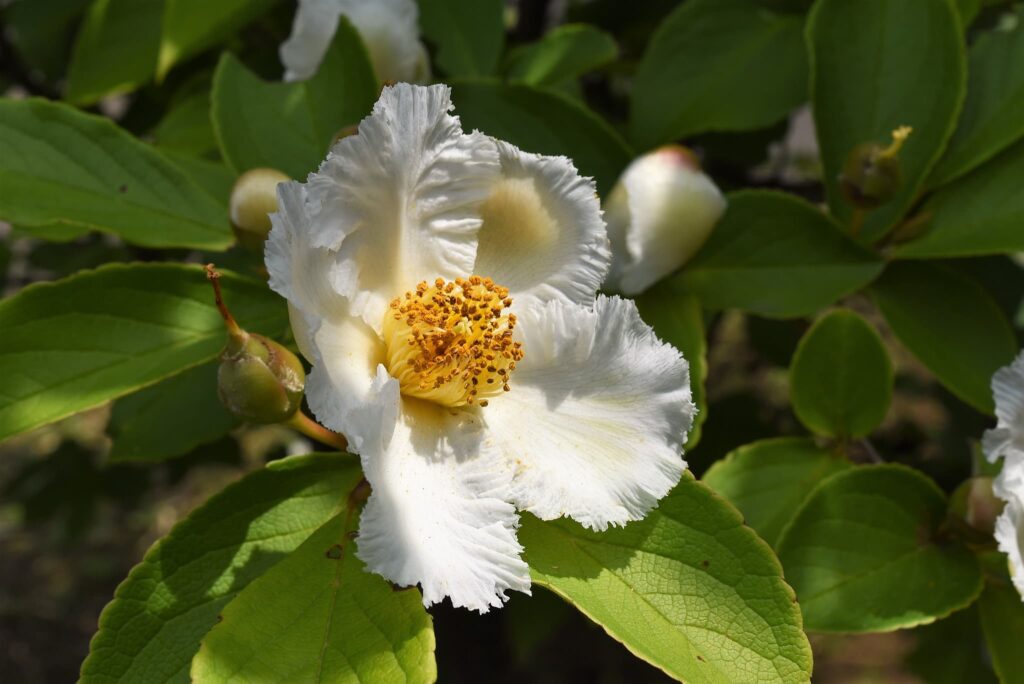
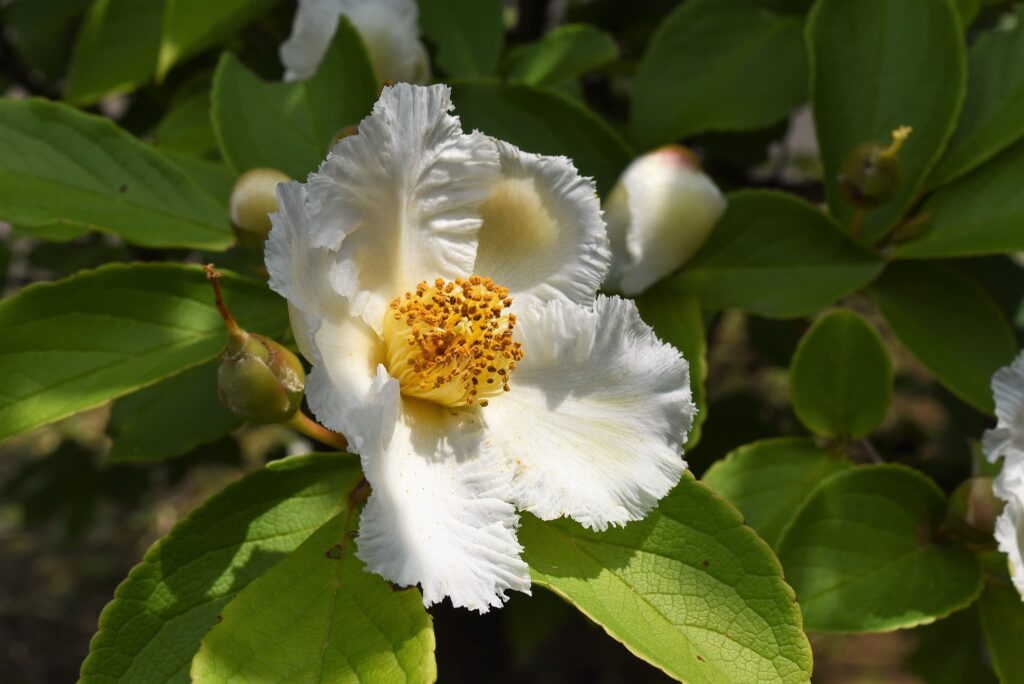
Japanese Stewartia produces solitary white flowers in the leaf axils of the current season’s growth. In Japan, flowering generally occurs in June and July.
The flowers are about 5–6 cm across and resemble those of Camellia. Each flower has five broad white petals with irregularly wavy or finely toothed margins. Numerous yellow to orange stamens form a conspicuous center.
Individual flowers are short-lived, but the tree produces many flowers over a period of weeks, so the overall flowering display lasts considerably longer than the life of any single bloom.
The flowers are one of the main reasons Japanese Stewartia is called Natsu-tsubaki, or “summer camellia.”
Fruits
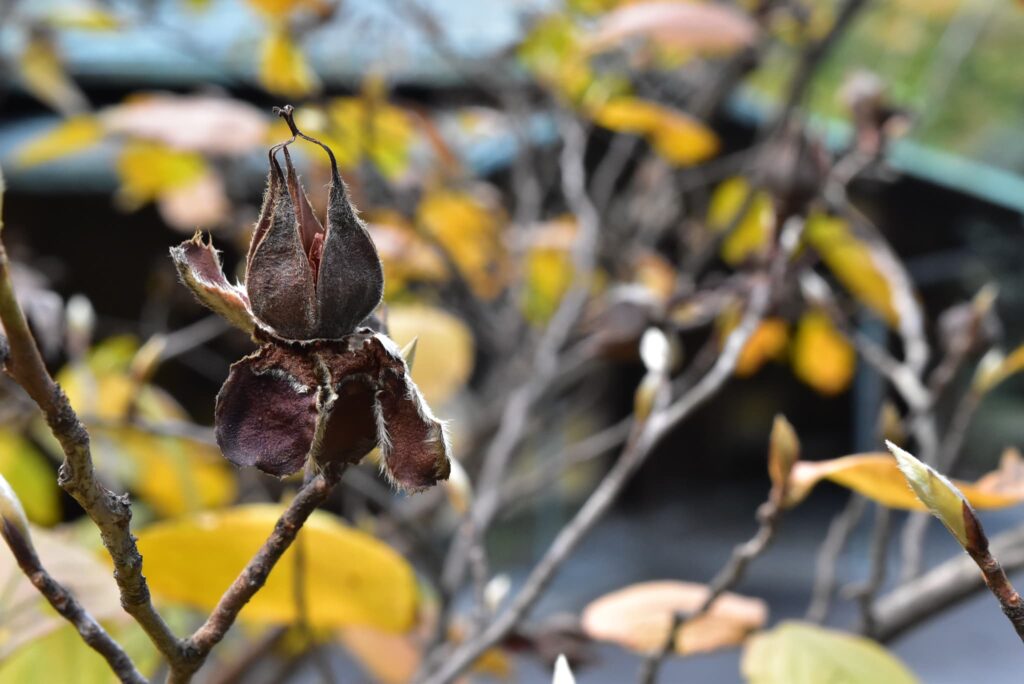
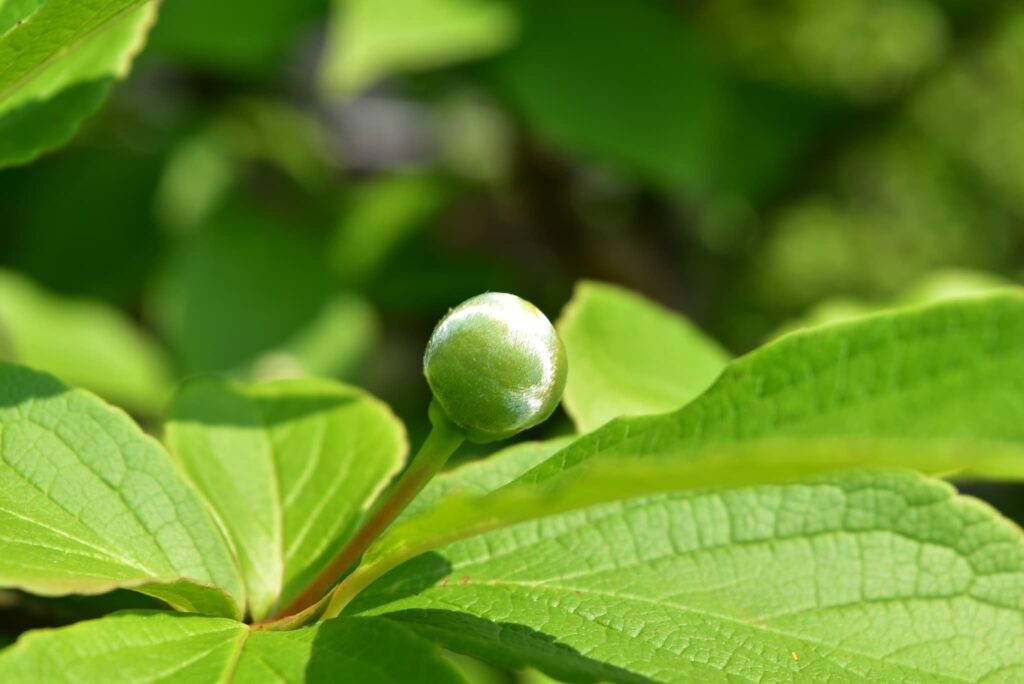
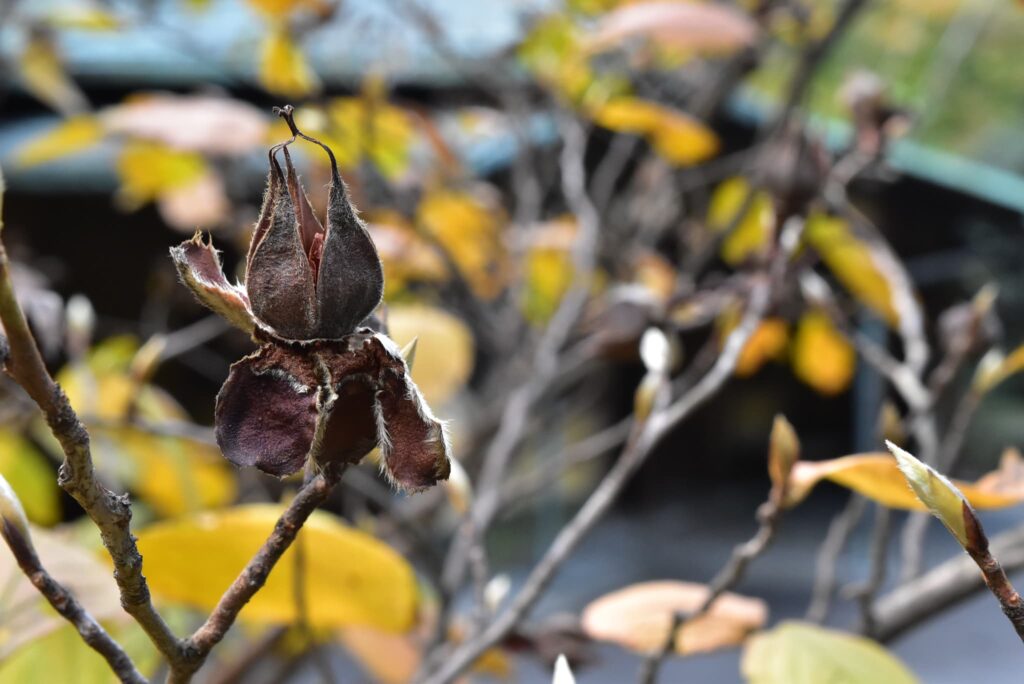
After flowering, Japanese Stewartia develops hard, ovoid capsules. They mature in early autumn, generally around September or October in Japan.
When mature, the capsule splits into five sections and releases flattened seeds. The dry capsules may remain attached to the branches after opening, providing additional winter interest.
Bark & Timber
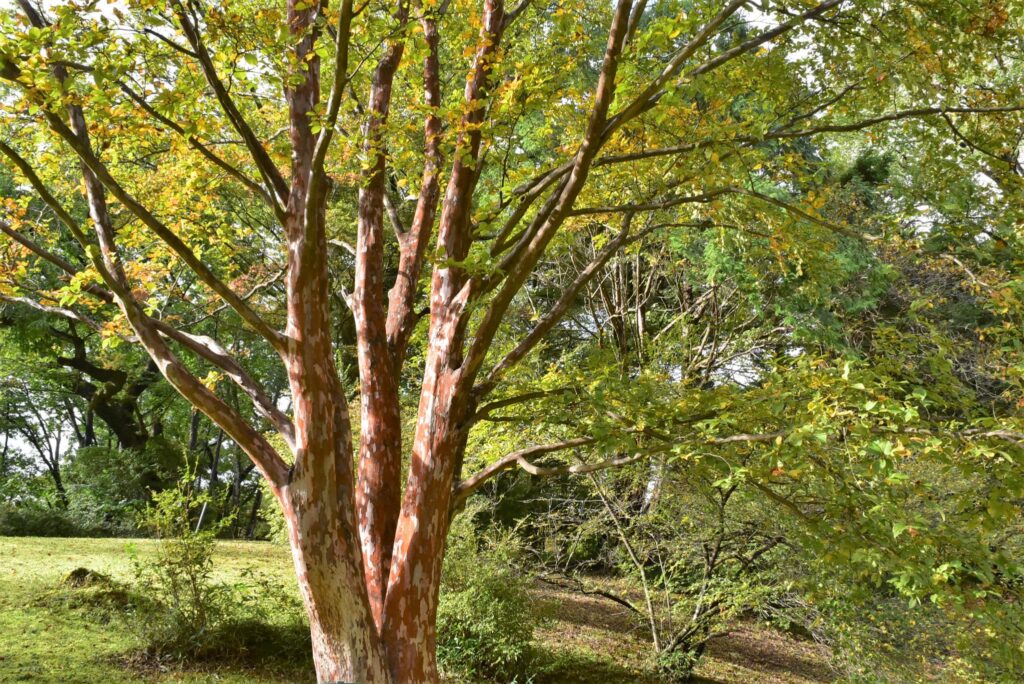
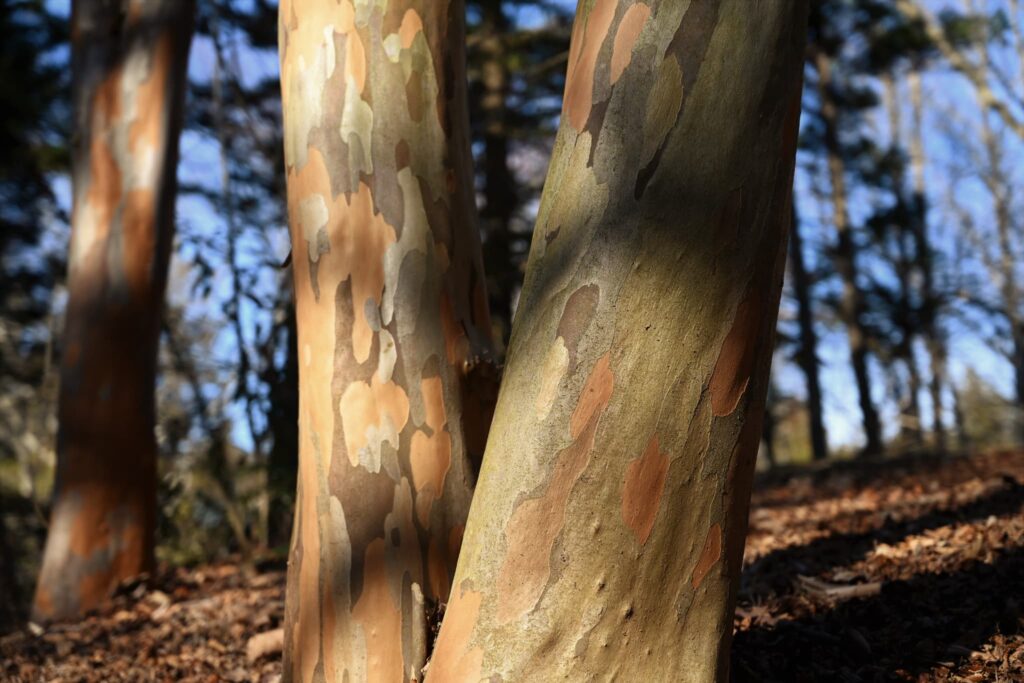
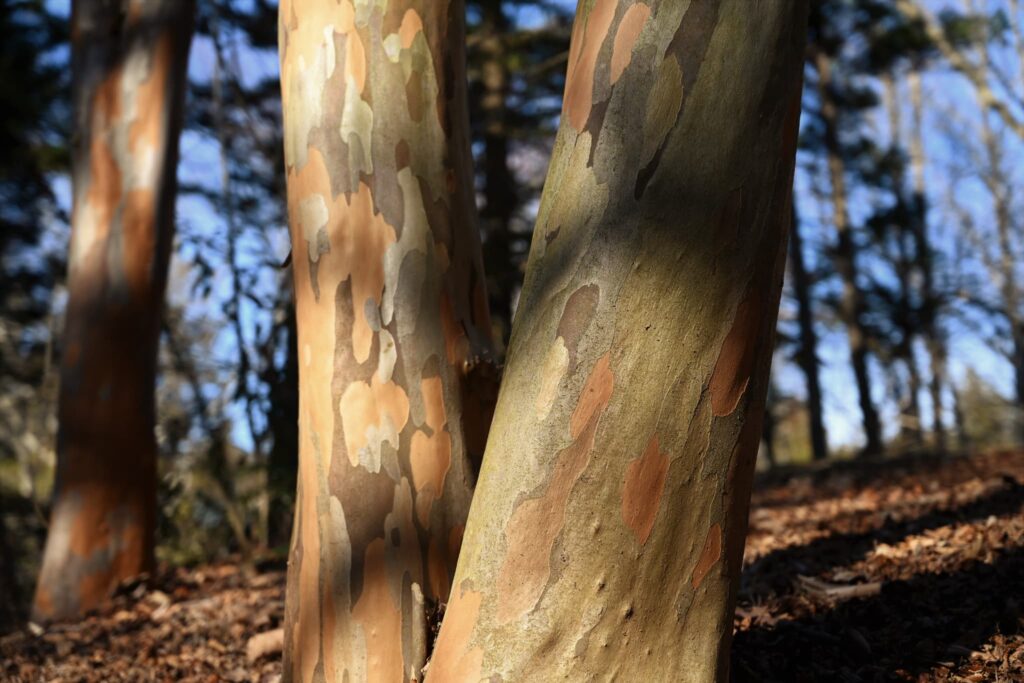
The bark is one of the most distinctive features of Japanese Stewartia.
Young trunks are relatively smooth, but as the tree matures, the outer bark begins to exfoliate in thin flakes and strips. The exposed layers create an irregular patchwork of gray, cream, orange, reddish-brown, and sometimes cinnamon-colored tones.
Unlike trees whose ornamental value is concentrated in the growing season, Japanese Stewartia remains attractive after leaf fall because its trunk and branches continue to provide visual interest throughout winter.
The wood has traditionally been used for purposes including building material, household implements, tool handles, and carving. It is not, however, a major commercial timber species today; its principal value in modern horticulture is as an ornamental tree.
Size & Growth
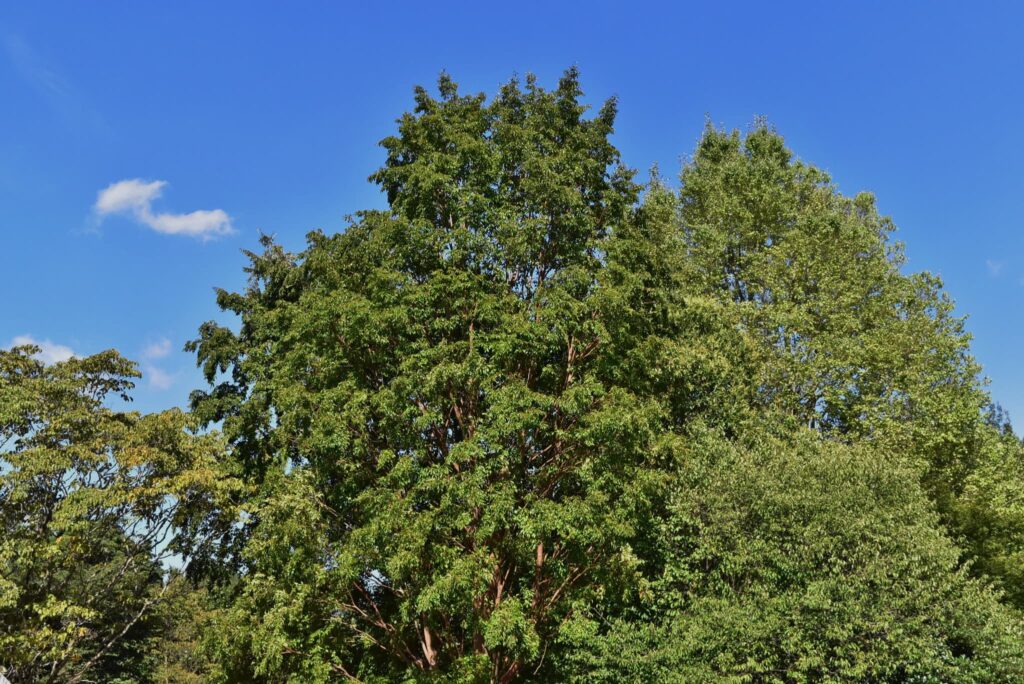
Japanese Stewartia is a slow-growing tree, especially when young. In cultivation it commonly develops into a small to medium-sized specimen tree, often around 6–12 m tall, although larger trees can occur under favorable conditions.
The crown is typically pyramidal to oval, and the tree may branch low or develop multiple trunks. Its attractive form is best appreciated when it is allowed to develop naturally rather than being repeatedly reduced by heavy pruning.
Because growth is relatively slow, Japanese Stewartia is best considered a long-term landscape tree rather than a species chosen for rapid screening or immediate shade.
Uses & Cultural Significance
Japanese Stewartia is one of the most valued specimen trees for Japanese-style and woodland gardens. Its appeal comes from the succession of seasonal features it provides:
- Fresh green foliage in spring
- White, Camellia-like flowers in early summer
- Colorful autumn foliage
- Distinctive exfoliating bark in winter
The tree is also closely associated with the Japanese name Shara-no-ki.
This name refers to the sal tree (Shorea robusta), an important tree in Buddhist tradition associated with the Buddha’s death and with the famous opening passage of The Tale of the Heike. The true sal tree is a tropical species and cannot grow outdoors in most of Japan. Japanese Stewartia, with its white flowers, came to be associated with the sacred sal tree and was planted as a substitute, leading to the widespread Japanese name Shara-no-ki.
The two trees are not botanically related: sal belongs to the family Dipterocarpaceae, whereas Japanese Stewartia belongs to the Theaceae.
Cultivars
Several cultivated selections of Japanese Stewartia have been introduced, particularly in Europe and North America. Availability varies by country.
- ‘Ballet’ — A selection known for its spreading habit and relatively large flowers.
- ‘Cascade’ — A slow-growing, semi-weeping form with gently drooping branches.
- ‘Milk and Honey’ — Selected for abundant, relatively large flowers and strongly colored bark.
- ‘Pink Form’ — A rare selection with flowers that may open from pinkish buds and have a subtle pinkish cast.
Named cultivars are much less commonly encountered in Japan than the species itself, where the natural form is generally preferred as a garden tree.
Growing Guide
| Item | Description |
|---|---|
| Soil & Site | Moist, well-drained, humus-rich soil; slightly acidic conditions are ideal |
| Sun Exposure | Full sun to partial shade; some protection from intense afternoon heat is useful in hot climates |
| Water | Keep soil evenly moist, particularly while establishing |
| Cold Hardiness | Approximately USDA Zones 5–8 |
| Wind | Shelter from strong, drying winter winds |
| Pruning | Minimal pruning is preferred; preserve the natural crown |
| Transplanting | Establishment can be slow, so careful siting is important |
| Pests | Generally few serious pest problems; Tea Tussock Moth (Chadokuga) may occur in Japan |
Light & Soil
Japanese Stewartia grows naturally in temperate mountain forests, often in moist, humus-rich soils. In cultivation, it performs best in fertile soil with good drainage and consistent moisture.
Slightly acidic soil is generally preferred, although the species can tolerate a wider range of soils than is sometimes suggested. The more important consideration is avoiding prolonged drought and providing adequate organic matter and moisture.
Wind & Heat Tolerance
Japanese Stewartia is generally hardy, but it performs best when protected from harsh, drying conditions.
In hot climates, afternoon shade or filtered shade can help reduce heat stress and leaf scorch. A position sheltered from strong winter winds is also preferable, particularly for newly planted trees.
Cold Hardiness
Japanese Stewartia is generally considered hardy in approximately USDA Zones 5–8, although exact performance depends on the provenance of the plant and local conditions.
The species is native to temperate regions of Japan and South Korea and is successfully cultivated in parts of North America with cold winters. Therefore, it should not be described as inherently poorly cold-hardy simply because its natural range is concentrated in central and southern Japan.
Young trees benefit from protection from drying winter winds and from a layer of organic mulch around the root zone.
Watering & Sun
Consistent moisture is particularly important while the tree is becoming established. Japanese Stewartia does not perform well under prolonged drought, and leaf scorch can occur during hot, dry summers, especially when the tree is exposed to intense afternoon sun.
In warm climates, morning sun combined with afternoon shade or filtered light can provide favorable conditions. In cooler climates, the tree can grow successfully in full sun if adequate moisture is available.
Pruning
Japanese Stewartia is best grown in its natural form and generally requires little pruning.
Pruning should focus on removing dead, damaged, crossing, or poorly positioned branches and on establishing a strong structure when the tree is young. Heavy reduction pruning should be avoided because it can destroy the tree’s natural form and diminish the character of the trunk and crown.
For this reason, the final planting position should be selected with the tree’s mature size and natural shape in mind.
Transplanting
Japanese Stewartia can be slow to establish after transplanting, so planting a healthy young tree in a carefully selected permanent position is preferable to moving a mature specimen.
Prepare the soil well, maintain adequate moisture during establishment, and avoid unnecessary root disturbance.
Suitability for Home Gardens
Japanese Stewartia is particularly well suited to gardens where a specimen tree can be appreciated from several viewpoints throughout the year.
It works well as:
- A focal point in a Japanese-style garden
- A specimen tree near a lawn or patio
- A woodland-garden tree
- A small group planting
- A tree valued for winter bark as well as summer flowers
Its slow growth and dislike of prolonged drought make site selection more important than with many fast-growing landscape trees.
Pests
Japanese Stewartia generally has few serious pest or disease problems in cultivation.
In Japan, however, the Tea Tussock Moth (Chadokuga, Euproctis pseudoconspersa) is an important pest of several Theaceae plants. Because the caterpillars possess irritating hairs, care should be taken when inspecting or pruning an infested tree.
The presence of Chadokuga should therefore be regarded as a potential problem rather than as an inevitable or characteristic pest of Japanese Stewartia.
Similar Species
- Stewartia monadelpha (Hime-shara) — A closely related Japanese species with substantially smaller flowers and different bark characteristics.
- Camellia japonica (Yabu-tsubaki) — An evergreen tree with similar white or colored flowers but fleshy fruits and non-exfoliating bark.
- Camellia japonica var. decumbens (Yuki-tsubaki) — A cold-adapted form of Camellia japonica associated with snowy areas of Japan.
- Schima species — Related members of the Theaceae with Camellia-like flowers but different leaves, fruits, and growth habits.
Distinguishing Japanese Stewartia from Hime-shara
Japanese Stewartia and Hime-shara (Stewartia monadelpha) are easily confused because both are deciduous members of the same genus and both have white Camellia-like flowers.
Flowers: Japanese Stewartia has much larger flowers, usually about 5–6 cm across. Hime-shara has much smaller flowers, generally around 1.5–2 cm across.
Bark: Japanese Stewartia develops conspicuous exfoliating bark with large, irregular patches of contrasting colors. Hime-shara also develops attractive smooth, reddish-brown bark that may exfoliate with age, but its bark pattern is generally finer and less dramatically mottled.
Leaves: Japanese Stewartia generally has larger leaves than Hime-shara. The underside of Japanese Stewartia leaves may have sparse hairs, while Hime-shara has hairs concentrated particularly along the veins.
Autumn color: Japanese Stewartia can develop yellow, orange, red, or reddish-purple foliage. Hime-shara is also capable of strong autumn color, often including red tones.
Distribution: Hime-shara is mainly distributed from the Kanto region westward through Shikoku and Kyushu, whereas Japanese Stewartia has a broader distribution extending much farther north in Honshu.
Frequently Asked Questions
Why is Japanese Stewartia often called “Shara-no-ki” (sal tree)?
The Japanese name Shara-no-ki is associated with the Buddhist sal tree (Shorea robusta), which is traditionally linked with the Buddha’s death and appears in the opening of The Tale of the Heike.
The true sal tree is tropical and cannot normally survive outdoors in most of Japan. Japanese Stewartia therefore became associated with the sacred sal tree and was planted as a substitute in Japan. Although the two species are unrelated, the name Shara-no-ki became established.
What’s the easiest way to tell Japanese Stewartia apart from Hime-shara?
Flower size is one of the easiest clues. Japanese Stewartia has flowers about 5–6 cm across, while Hime-shara’s flowers are only about 1.5–2 cm across.
The bark is another useful feature. Japanese Stewartia develops a strongly mottled, exfoliating trunk with relatively large patches of contrasting colors, whereas Hime-shara has a smoother, more uniformly reddish-brown trunk.
Are Japanese Stewartia flowers short-lived?
Yes. Individual flowers are short-lived, but the tree produces many flowers over a succession of weeks. This means that although a particular flower may disappear quickly, the overall flowering display can continue for a considerable period.
Can Japanese Stewartia be pruned to control its size?
It can be pruned, but heavy pruning is not recommended. Japanese Stewartia develops an attractive natural crown and generally needs only corrective and structural pruning.
If a tree must be repeatedly cut back to fit its location, it is better to choose a smaller species or select a more suitable planting site.
Why do the leaves sometimes scorch in summer?
Leaf scorch can occur when the tree experiences intense heat, dry soil, or strong afternoon sun. This is particularly likely in hot climates or during prolonged summer drought.
Maintaining even soil moisture and providing some afternoon protection can reduce the problem.
Is Japanese Stewartia cold-hardy?
Yes. It is generally considered hardy to approximately USDA Zone 5 and can tolerate considerably colder winters than its reputation in Japan might suggest.
However, young trees and trees exposed to strong drying winds can still suffer winter damage. Local climate and plant provenance also influence performance.
Is Japanese Stewartia prone to serious pests?
Generally, no. Japanese Stewartia is regarded as having relatively few serious pest and disease problems in cultivation.
In Japan, however, Tea Tussock Moth (Chadokuga) can occasionally attack members of the tea family, including Japanese Stewartia. Its caterpillars have irritating hairs, so they should not be handled directly.
How fast does Japanese Stewartia grow?
Japanese Stewartia is generally slow-growing. It takes time to develop into a mature specimen, but its long-term ornamental value comes from the combination of flowers, autumn foliage, attractive form, and exfoliating bark.
Is Japanese Stewartia related to Camellias?
Yes. Both Japanese Stewartia and Camellia belong to the tea family, Theaceae.
Their flowers are similar in appearance, but they belong to different genera. Japanese Stewartia is deciduous and has dry capsule fruits, whereas Camellia species are generally evergreen and produce different types of fruit.
Why is Japanese Stewartia popular as a specimen tree?
Few deciduous trees combine so many seasonal features in one plant. It offers fresh spring foliage, large white flowers in early summer, colorful autumn leaves, and distinctive exfoliating bark in winter.
This succession of features makes it especially valuable where a single tree is intended to provide year-round visual interest.
Conclusion
Japanese Stewartia (Stewartia pseudocamellia) is one of the most distinctive ornamental trees native to Japan. Its white, Camellia-like flowers appear in early summer, while its foliage provides a fresh spring display and often develops attractive yellow, orange, red, or reddish-purple colors in autumn.
Its greatest distinguishing feature, however, is its exfoliating bark. As the tree matures, the trunk develops an irregular patchwork of gray, orange, reddish-brown, and cream-colored tones that remains visible throughout winter.
The tree also has an important cultural connection through the Japanese name Shara-no-ki and its association with the Buddhist sal tree. Although that association is based on cultural tradition rather than botanical relationship, it has helped make Natsu-tsubaki one of the best-known trees of Japanese temple and garden landscapes.
For gardeners, the main considerations are its slow growth, need for adequate moisture, preference for fertile well-drained soil, and dislike of severe heat and drought. Given a suitable site and allowed to develop naturally, Japanese Stewartia can become an exceptionally beautiful specimen tree whose ornamental value continues through all four seasons.