Japanese Plum (Prunus mume): Identification, Care & Uses
Japanese Plum (Prunus mume) is one of Japan’s most beloved ornamental and fruit trees, famous for filling the cold air of late winter with fragrance long before cherry blossoms appear. This guide is based on observations of the plant as grown in Japan.
What Is the Japanese Plum?
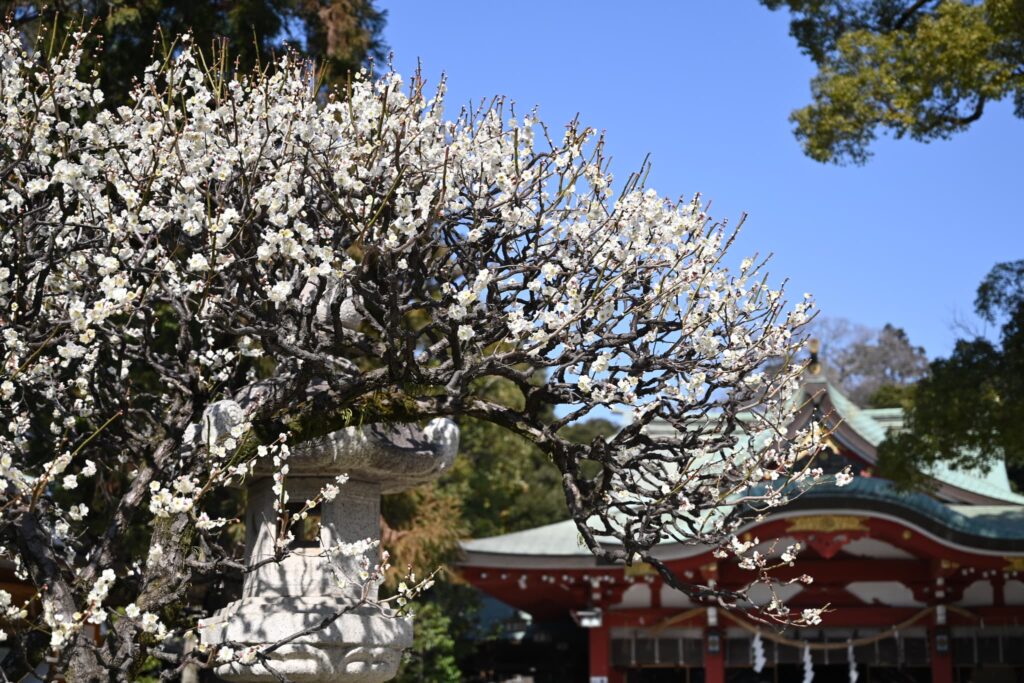
Japanese Plum (Prunus mume), known as ume in Japanese, is a deciduous small tree in the family Rosaceae, native to southern and south-central China and extending into northern Indochina. While some scholars argue for a natural population in Kyushu, it is generally considered to have been introduced from China to Japan before the Nara period, probably as a medicinal plant, and has since become widely cultivated and naturalized in parts of Japan. Today it is cultivated throughout Japan in gardens, parks, temple grounds, and orchards, valued both for its fragrant late-winter blossoms and for its fruit, used to make umeboshi, umeshu, and plum syrup.
Its early spring flowers have a longer history as a subject of flower-viewing than cherry blossoms. Plum was one of the most important flowering trees in early Japanese court culture and literature. Before the Nara period, the word hana (“flower”) in Japanese referred specifically to plum blossoms, not cherry blossoms — and the Man’yoshu (Japan’s oldest poetry anthology) contains more than twice as many poems about plum as about cherry.
Overview
| Item | Description |
|---|---|
| Scientific Name | Prunus mume |
| Common Name | Japanese Plum / Japanese Apricot / Ume |
| Japanese Name | Ume (ウメ) |
| Family | Rosaceae |
| Native Range | South-Central China to North Indo-China |
| Plant Type | Deciduous Small Tree |
| Height | 5–10 m (16–33 ft) |
| Trunk | Up to 60 cm (24 in) diameter |
| Flowering Season | Late January–March |
| Fruit Type | Drupe |
| USDA Zones | 6–9 |
| Sun Exposure | Full Sun |
Characteristics
| Item | Description |
|---|---|
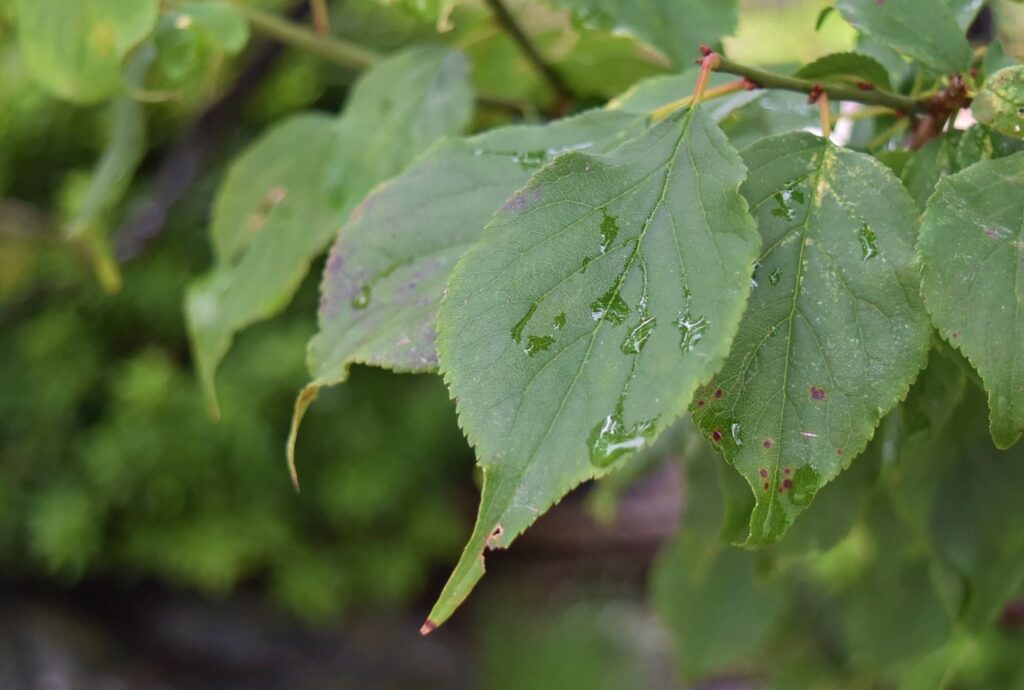
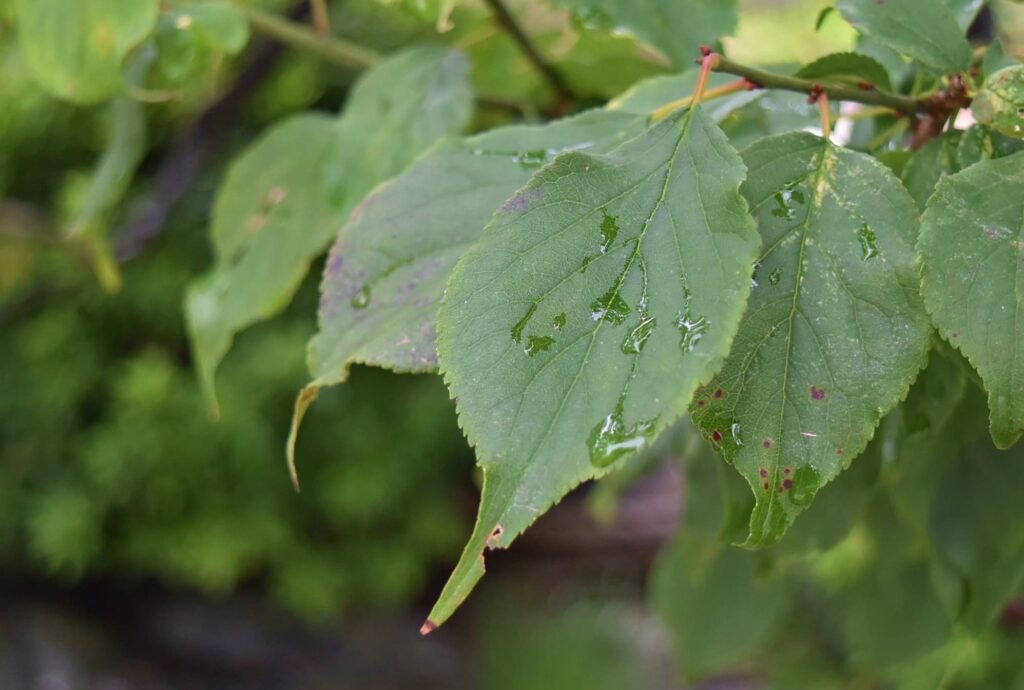
| Leaf | 4–8 cm long, 3–6 cm wide, alternate, oval with a finely pointed tip, finely serrated margins |
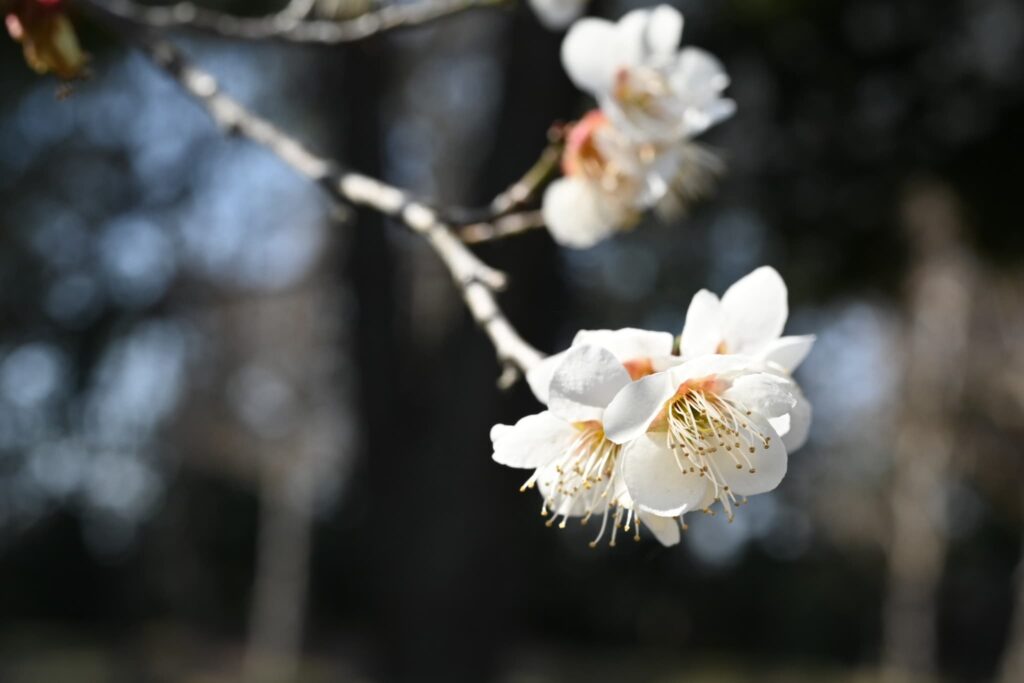
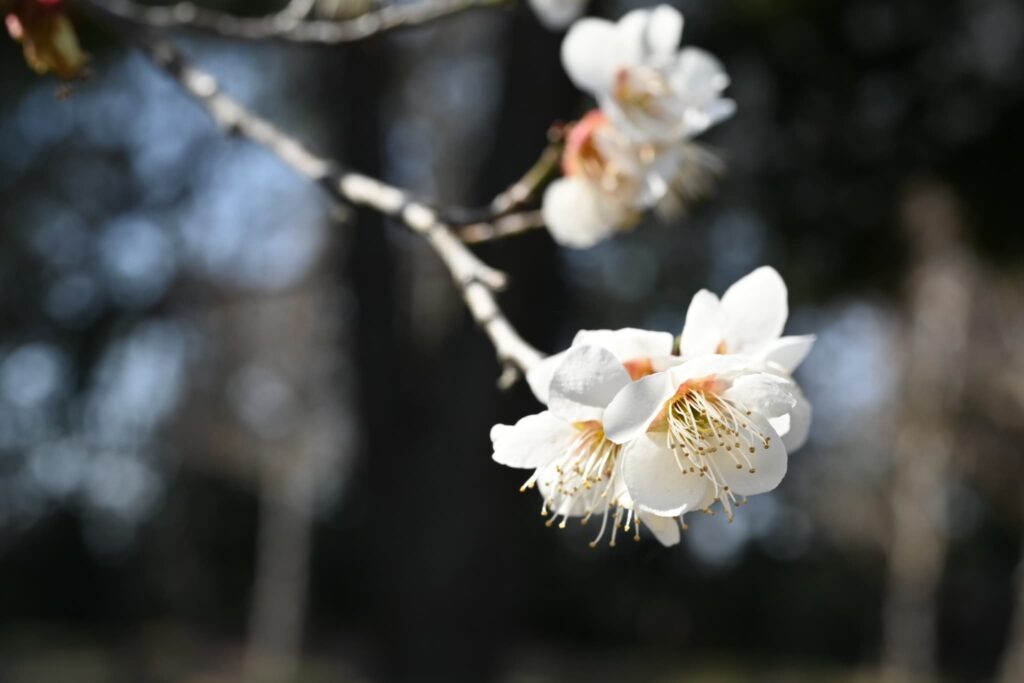
| Flower | 5 petals, 5 sepals, single pistil, numerous stamens; white (hakubai) or red (kobai) |
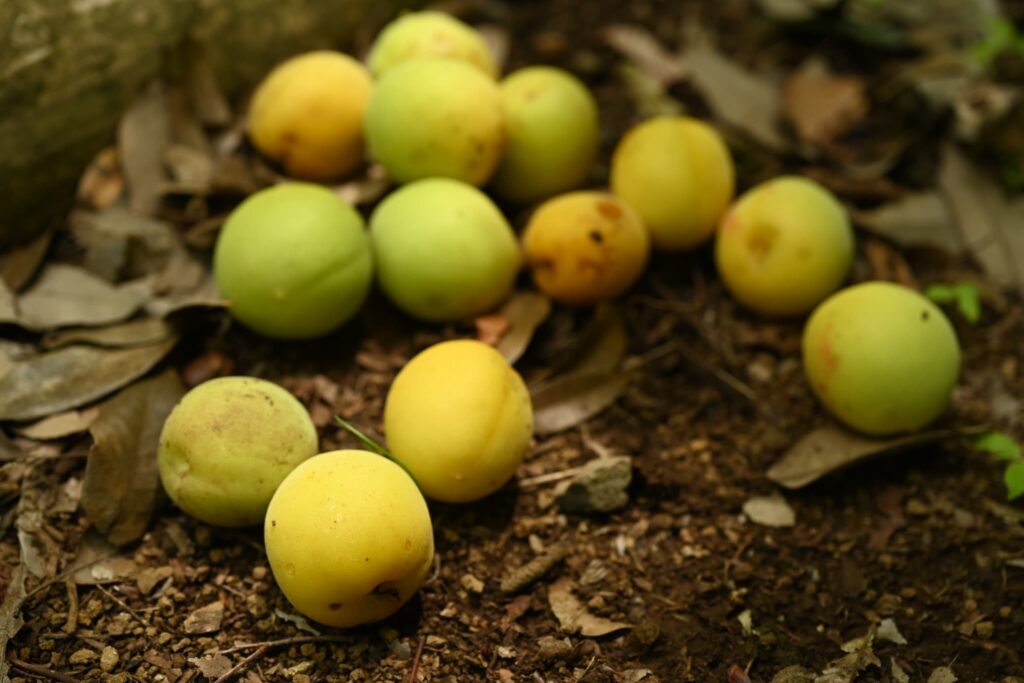
| Fruit | Spherical drupe with a shallow longitudinal groove, ripens yellow in June |
| Bark | Dark gray, deeply and roughly furrowed with age |
| Autumn Color | Yellow, not particularly ornamental |
Foliage
Leaves are 4–8 cm long and 3–6 cm wide, alternately arranged, oval-shaped with a finely pointed tip and finely serrated margins. Autumn color is yellow but not particularly ornamental.
Flowers
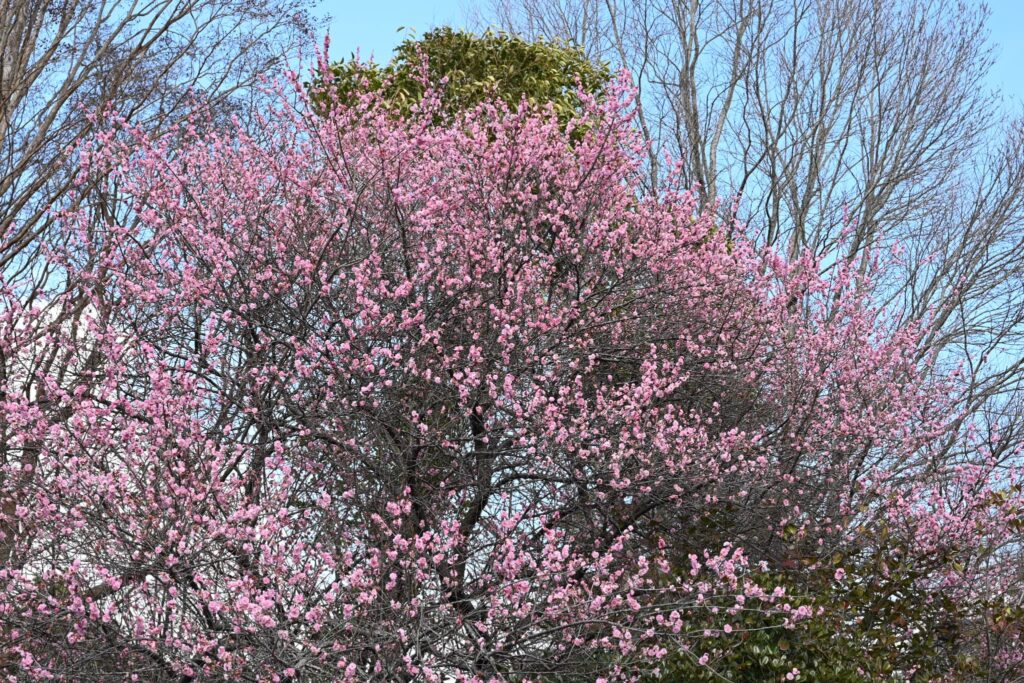
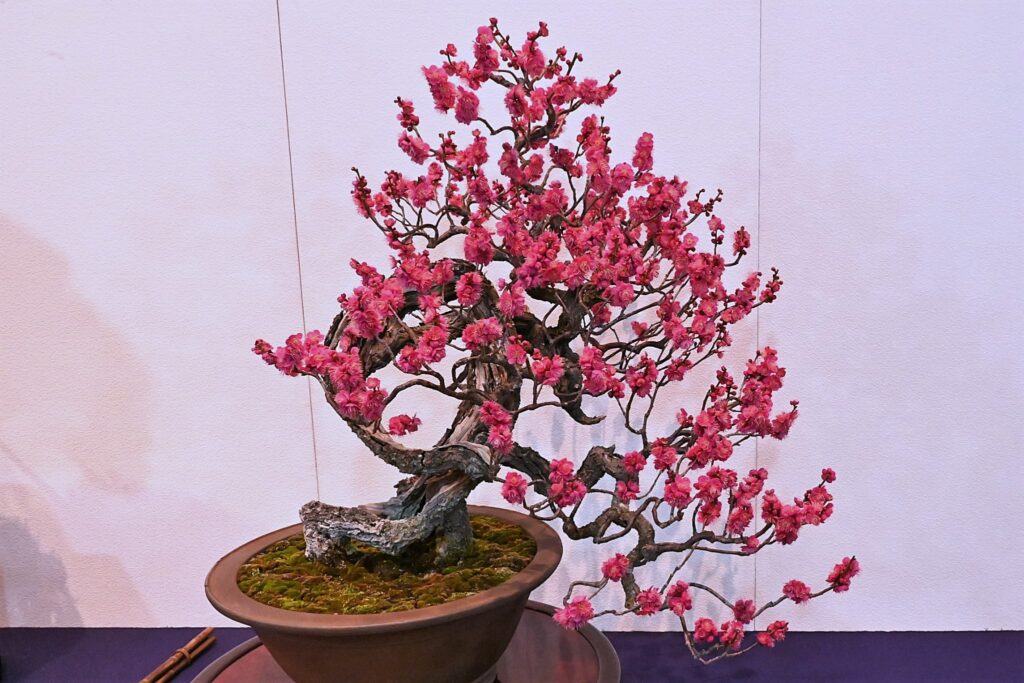
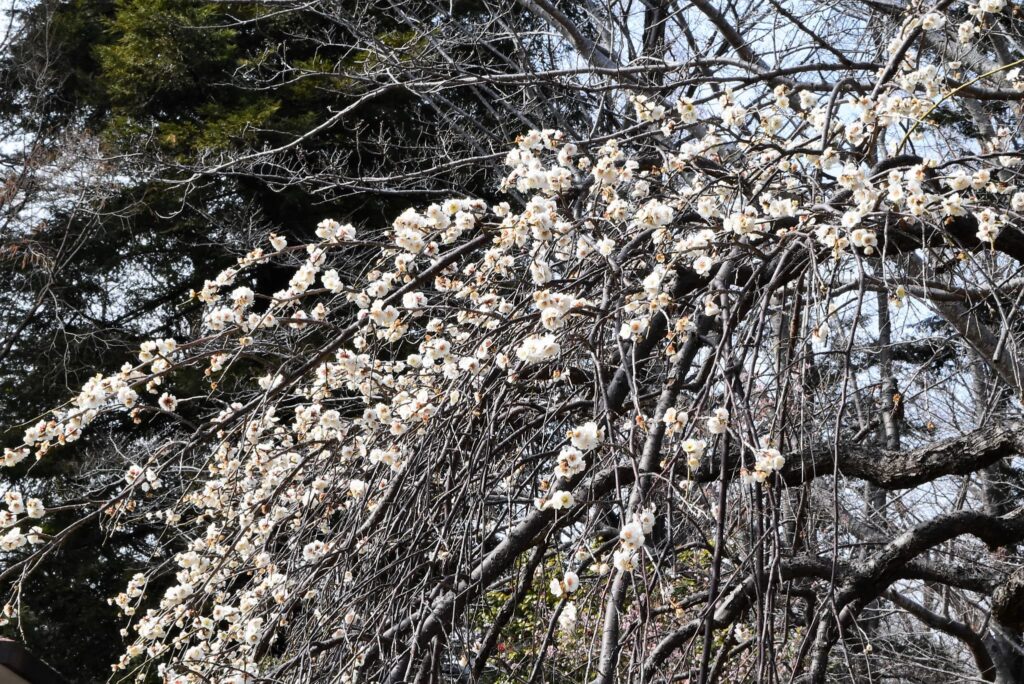
Japanese Plum blooms from late January through March, before the leaves emerge. The two broad categories are white plum (hakubai) and red plum (kobai). White-flowered forms have traditionally been especially prized for their delicate fragrance, while red-flowered forms became increasingly prominent in Japanese literature and horticulture. Red-flowered forms became more prominent in literature during the Heian period, appearing in works such as The Pillow Book and The Tale of Genji. By the Edo period, extensive cultivation had produced a vast range of cultivars with varied petal colors and forms.
Traditionally, white-flowered cultivars have been regarded as more elegant because of their delicate fragrance; red plum, which tends to bloom around the traditional lunar New Year, is associated with New Year’s celebrations. In recent years, cultivars bearing both red and white flowers simultaneously have become increasingly popular.
The basic species has single flowers with five petals and five sepals, surrounding a single pistil enclosed by numerous stamens. It is said that cherry blossoms are best appreciated one flower at a time, while plum is best admired as a whole tree.
Fruits
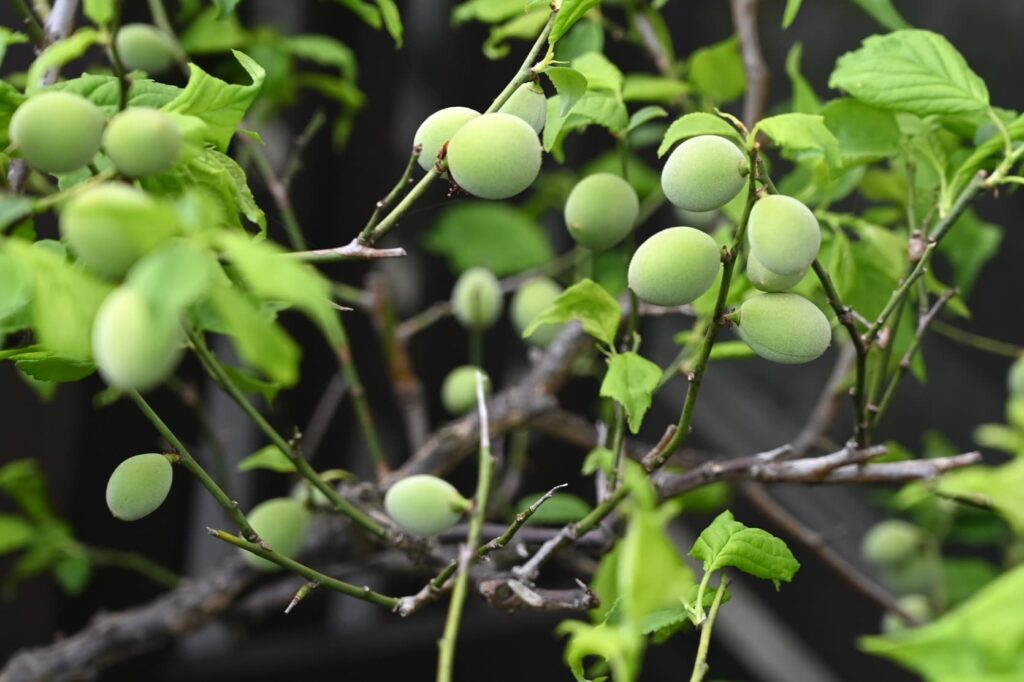
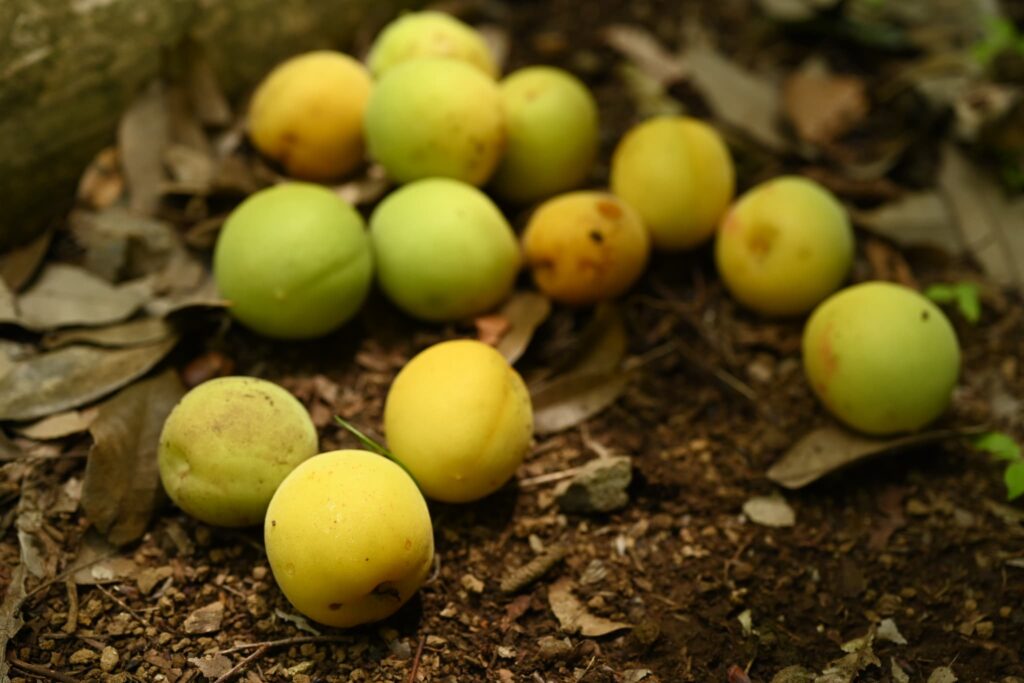
The fruit ripens to yellow in June — the season of Japan’s rainy season, named tsuyu (梅雨, “plum rain”) after the timing of plum ripening. The fruit is spherical with a shallow longitudinal groove and a surface covered in fine hairs. While the fruit is now valued primarily as food, it has a long history of medicinal use. Unripe plum contains citric acid and oleanolic acid, and Ubai, made by smoking and drying unripe fruit, was traditionally used in East Asian medicine for various ailments.
Wakayama, Gunma, and Tokushima Prefectures are the leading production areas for fruit plum varieties used in umeboshi, umeshu, and plum juice. Leading fruit cultivars include ‘Shiraka’ and ‘Koume’. Green unripe plums (aoume), harvested before fully ripening, are also well known. During the Edo period, plum cultivation expanded throughout Japan because of the fruit’s medicinal and culinary value.
Bark & Timber
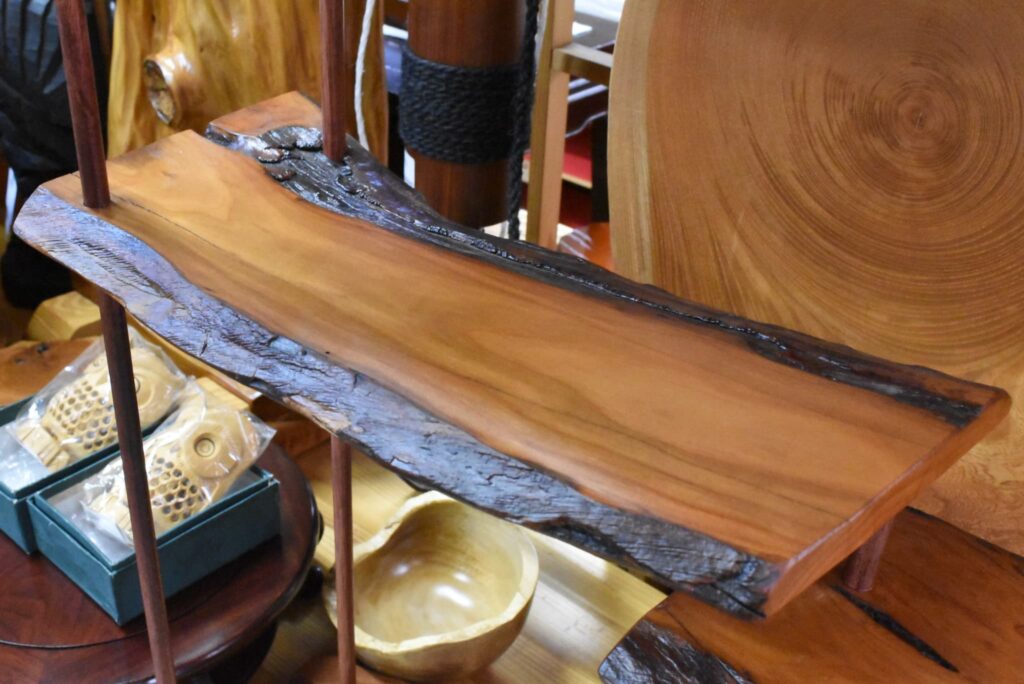
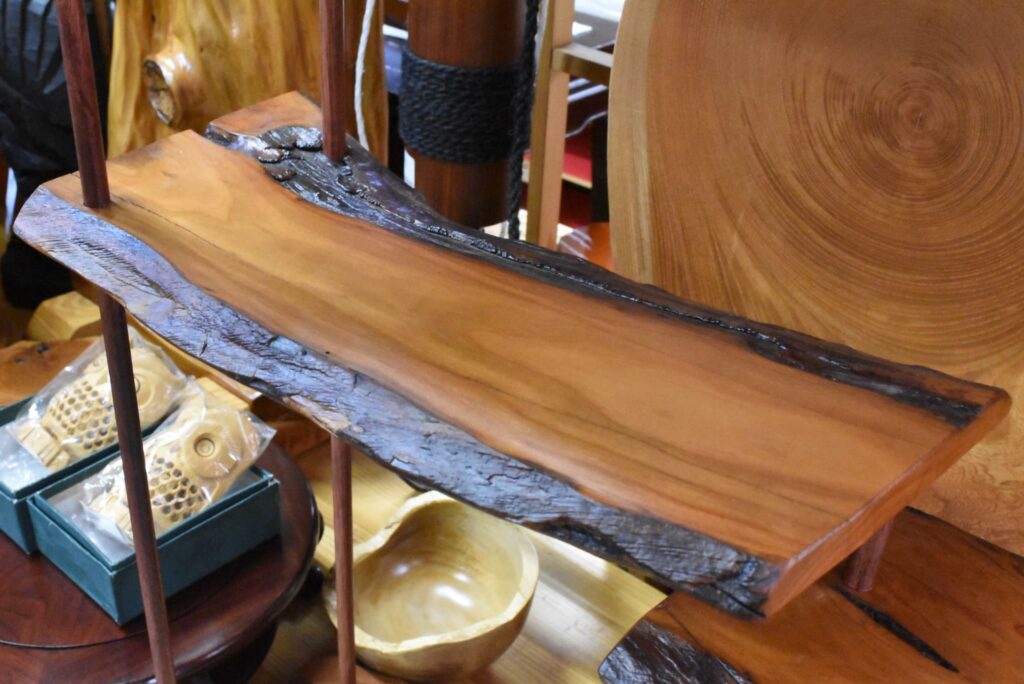
The trunk may reach 60 cm (24 in) in diameter. With age, the bark becomes deeply and roughly furrowed in a vertical pattern. The bark color is dark gray, but the timber is warm-toned. The wood is hard, fine-grained, and valued for small craft objects and traditional decorative work.
Size & Growth
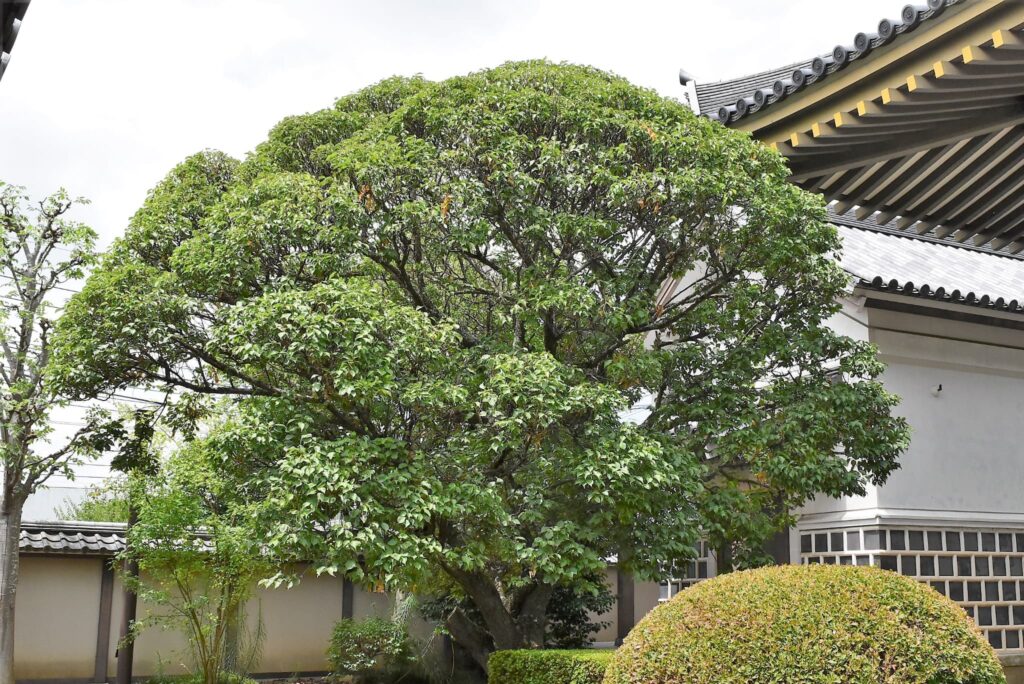
Japanese Plum grows into a small tree reaching 5–10 m (16–33 ft) in height, with a trunk that can reach 60 cm (24 in) in diameter over time. Japanese Plum can live for many decades and can retain considerable vigor as an old tree. Its rugged, characterful form also makes it a popular choice for bonsai.
Uses & Cultural Significance
Japanese Plum is exceptionally long-lived and retains vigorous growth even as an ancient tree. Its ability to flower in the chill of early spring has made it a powerful symbol of auspiciousness and resilience. Alongside bamboo and pine (Black & Red), it forms the “Three Friends of Winter” (Saikansanyu) — a classical East Asian symbol of perseverance through adversity. Together with chrysanthemum, orchid, and bamboo, it is also counted among the “Four Gentlemen” (Shikkunshi) of Chinese and East Asian art.
The tree’s strong association with scholarship derives from a Chinese legend about Emperor Wu of Jin, whose plum trees were said to bloom when he applied himself to his studies and wither when he neglected them — giving rise to the poetic alternative name Kobunboku (“tree that loves learning”).
Name Origin
The Japanese name ume (ウメ) is generally considered to be related to the Middle Chinese pronunciation of the character 梅, which was introduced to Japan along with the tree and its cultural associations. An older Japanese form, mume, is preserved in historical texts and is reflected in the scientific name Prunus mume.
The character 梅 means “plum” in Chinese and Japanese and has long been associated with the plant’s fragrant flowers and fruit. In Japan, ume became firmly established as the common name for Prunus mume, while the tree also acquired numerous poetic and cultural names reflecting its early flowering, fragrance, and association with scholarship and perseverance.
The English names “Japanese Plum” and “Japanese Apricot” reflect the tree’s similarity to both plums and apricots. Botanically, Prunus mume is more closely related to apricots than to the European plum (Prunus domestica), and “Japanese Apricot” is therefore also widely used as an English common name.
Growing Guide
| Item | Description |
|---|---|
| Light & Soil | Full sun; drought-tolerant and adaptable to a range of soil types |
| Cold Hardiness | Hardy to USDA zones 6–9 |
| Pruning | Requires regular pruning to encourage short flowering spurs |
| Pests & Diseases | Aphids, scale insects, caterpillars, and fungal diseases such as black spot may occur, particularly under poor growing conditions. |
Light & Soil
Japanese Plum is drought-tolerant and adaptable to a range of soil types, performing best in full sun.
Wind & Snow Tolerance
As a small, sturdy deciduous tree, Japanese Plum generally tolerates wind well once established; heavy wet snow on flowering branches in late winter can occasionally cause breakage.
Cold Hardiness
Japanese Plum flowers are highly cold-hardy and require less accumulated warmth to bloom than cherry, allowing them to flower several weeks earlier, often in the coldest weeks of winter.
Pruning
Flowers form on short spurs, so pruning to encourage short branch development is key to good flowering. The tree tolerates pruning well and can be trained into a variety of forms, though care should be taken around older small branches, which can harden into sharp thorns. Long, vigorous shoots (tochoshi) that shoot outward produce few flowers and disrupt the tree’s form — remove these from the base. The Japanese gardening proverb “sakura kiru baka, ume kiranu baka” — “A fool cuts cherry trees; a fool who does not prune plum trees.” — captures the essential difference: while cherry trees resent pruning, Japanese Plum actively requires it to flower and fruit well.
Suitability for Home Gardens
Japanese Plum’s compact size, tolerance of pruning, and early flowering make it well suited to home gardens. For fruit production, many cultivars are self-incompatible, so planting two compatible cultivars that flower at the same time can significantly improve fruit set. Some self-compatible cultivars can fruit well when planted alone.
Pests
Japanese Plum may be affected by aphids, scale insects, caterpillars, and fungal diseases such as black spot. Good air circulation, appropriate pruning, and proper site selection can help reduce disease problems.
Cultivars
Japan has hundreds of traditional and modern cultivars of Japanese Plum. They are broadly divided into flowering plum (hana-ume) grown for ornamental purposes and fruit plum (mi-ume) grown for harvest. Flowering plums are further classified as follows:
| Group | Characteristics |
|---|---|
| Yabai Group (Wild Plum) | Closely resembles the original wild form |
| Ryokugaku Group (Green Calyx) | Green sepals and young branches |
| Kobai Group (Red Plum) | Older branches have reddish inner wood |
| Bungo Group | Large-flowered forms, historically associated with apricot (Prunus armeniaca) |
| Shidare Group (Weeping) | Weeping or pendulous branches |
Early-blooming cultivars that flower between the coldest period of winter (around January 5) and the first day of spring (Risshun) are collectively called kanbai (“cold plum”), regardless of classification. Notable early cultivars include Kankoubai and Yaekankoh.
Similar Species
| Species | Key Difference |
|---|---|
| Flowering Quince (Chaenomeles speciosa) | Blooms at a similar time but has thorny branches and apple-like fruits instead of plums |
| Peach (Prunus persica) | Plum flowers are usually nearly sessile, with little or no visible flower stalk (pedicel), whereas peach flowers have a short pedicel. Plum petals are rounded, while peach petals are usually more pointed. |
| Yoshino Cherry / Yamazakura | Long flower stalks; petals notched at the tip |
| Wintersweet (Chimonanthus praecox, Robai) | Blooms earlier than plum with fragrant yellow flowers; often planted together in plum groves and sometimes mistaken for a yellow-flowered plum — but entirely unrelated. Similarly, Oubai (Winter Jasmine, Jasminum nudiflorum) is sometimes confused with plum despite belonging to the olive family |
Frequently Asked Questions
What is the difference between Japanese Plum (ume) and cherry blossom (sakura)?
The most reliable distinction is the flower stalk (pedicel): plum flowers are usually nearly sessile, with little or no visible flower stalk, whereas cherry flowers hang on long, slender stalks. Plum petals are also smoothly rounded, while cherry petals are notched at the tip. Plum typically blooms earlier — from January to March — while cherry usually blooms later, from March to April.
Can you eat the fruit from ornamental plum trees?
Flowering plum (hana-ume) cultivars are bred for flower display rather than fruit quality, so the fruit is usually small and less flavorful. Fruit plum (mi-ume) cultivars produce the large, fleshy fruit used for umeboshi and umeshu.
Why is the rainy season in Japan called tsuyu (梅雨)?
The character 梅 (plum) is combined with 雨 (rain) because the rainy season coincides with the period when plum fruit ripens and falls — typically June in most of Japan.
What is umeboshi and why is it so sour?
Umeboshi are plums pickled in salt (sometimes with red shiso), producing a very sour, intensely flavored condiment. The sourness comes from high levels of citric acid in the fruit. They have been eaten in Japan for over a thousand years and are regarded as a digestive aid and general health food.
Is Japanese Plum the same as the plum used in Western cooking?
No. Prunus mume is more closely related to apricot than to European plum (Prunus domestica). Its flavor, fragrance, and culinary uses are quite different — it is rarely eaten fresh and is instead processed into pickles, wine, syrup, and other preserved forms.
Why do plum blossoms bloom before cherry blossoms?
Japanese Plum flowers are highly cold-hardy and require less accumulated warmth to bloom, allowing them to flower several weeks before cherry trees.
Why do Japanese gardens often plant pine, bamboo, and plum together?
Because they represent the “Three Friends of Winter,” symbolizing resilience, longevity, and perseverance.
Conclusion
Japanese Plum (Prunus mume) holds a distinctive place in Japanese culture, combining centuries of literary and artistic associations with practical importance as both an ornamental tree and a fruit crop. Its fragrant flowers appear in the coldest part of the year, often weeks before cherry blossoms, while its fruit has long been used to make umeboshi, umeshu, and other traditional foods.
Introduced to Japan from China centuries ago, Japanese Plum became deeply established in gardens, temple grounds, orchards, and traditional landscapes. Its early flowering, fragrance, distinctive forms, and long history have made it one of Japan’s most culturally significant flowering trees.
For gardeners, Japanese Plum offers more than beautiful winter flowers. It responds well to regular pruning, can be trained into a variety of forms, and is available in hundreds of cultivars ranging from flowering plums to fruit-producing varieties. Whether grown for its blossoms, fruit, fragrance, or characterful form, Prunus mume remains an enduring and versatile tree in Japanese gardens.