Japanese Pagoda Tree (Styphnolobium japonicum): Identification, Care & Uses
Japanese Pagoda Tree is a tough, low-maintenance shade tree with a long history as a symbol of high rank and good fortune in both China and Japan, now widely planted as a street and park tree. This guide covers identification features, flowers, fruit, bark, cultivars, and care, based on observations of the tree as grown in Japan.
What Is Japanese Pagoda Tree?
Japanese Pagoda Tree is a deciduous tree in the pea family (Fabaceae), genus Styphnolobium, native to northern China. Because it is tough, requires little maintenance, and has medicinal properties throughout the entire plant, it is widely planted as a street and park tree across Japan. Its Japanese name, Enju, is generally believed to derive from the older name “Enisu” an old name for the related tree Inu-enju.
Overview
| Item | Description |
|---|---|
| Family | Fabaceae |
| Genus | Styphnolobium |
| Species | S. japonicum |
| Scientific Name | Styphnolobium japonicum |
| Common Name | Japanese Pagoda Tree / Chinese Scholar Tree |
| Japanese Name | Enju (エンジュ) |
| Native Range | Northern China |
| USDA Hardiness | 4–8 |
| Height | 15–25 m |
| Plant Type | Deciduous Tree |
| Flowering Season | July–August |
| Fruit Type | Bead-like, constricted legume pod, ripening brown around December |
| Garden Use | Street tree, park tree, commemorative planting |
Characteristics
| Feature | Description |
|---|---|
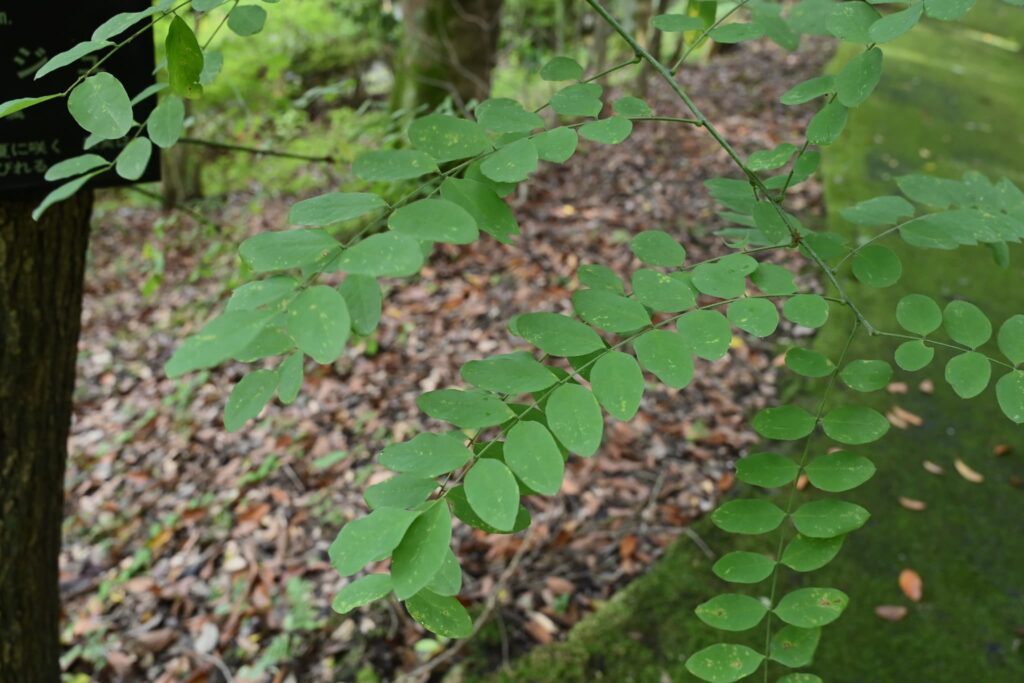
| Leaves | Alternate, pinnately compound, deep green above, pale below |
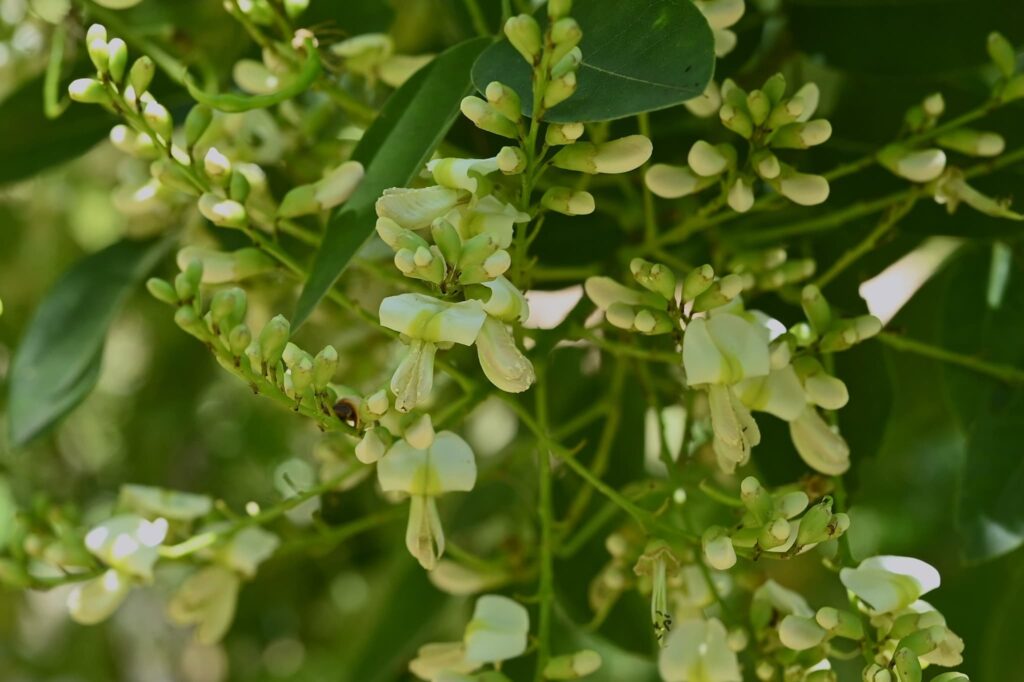
| Flowers | Small, cream-colored, in large cone-shaped clusters |
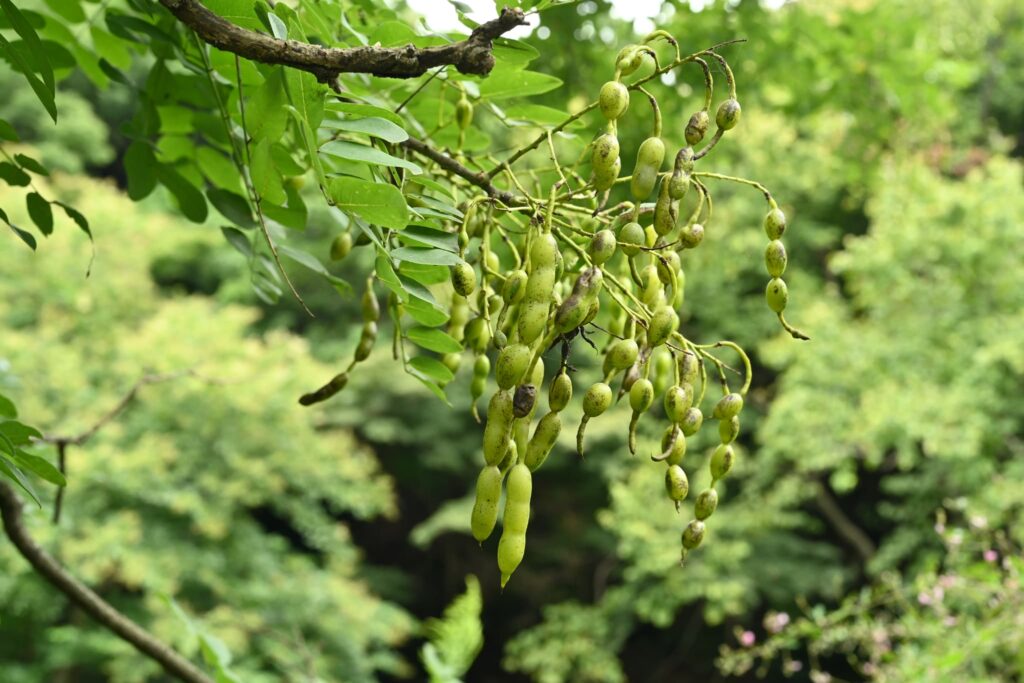
| Fruit | Fleshy, bead-like pod, ripening brown in winter |
| Bark | Gray, used medicinally when decocted |
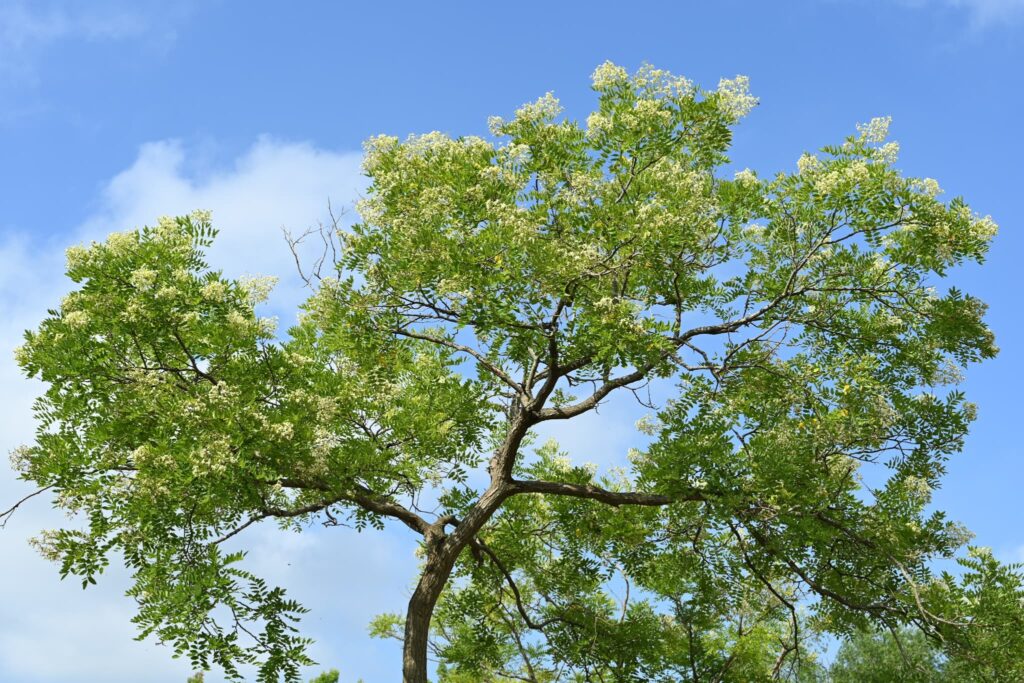
| Habit | Broad rounded crown |
Foliage
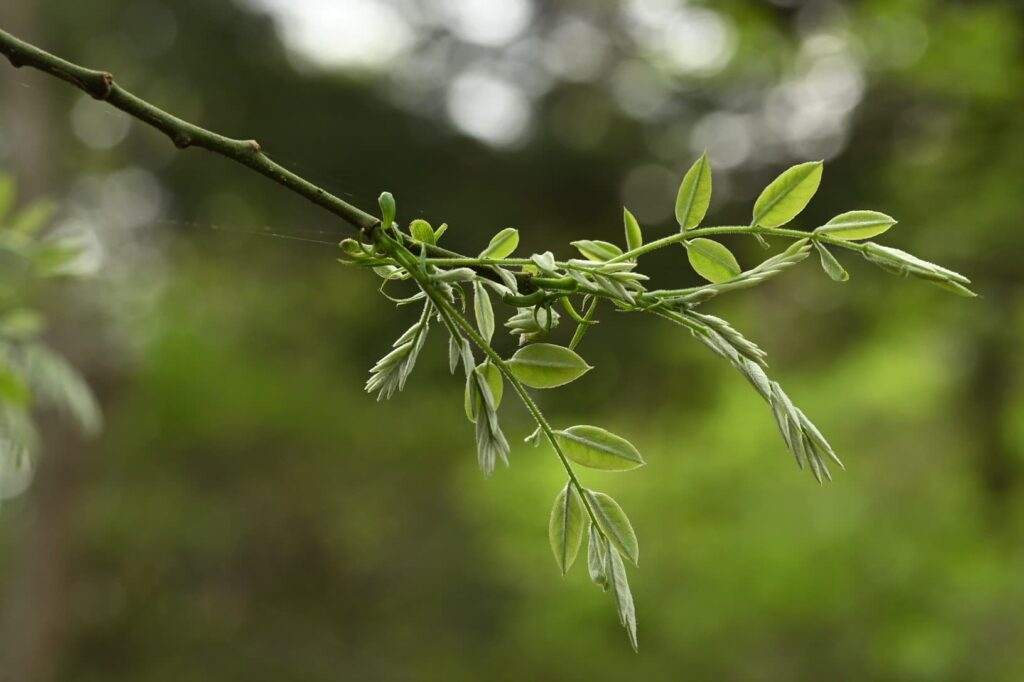
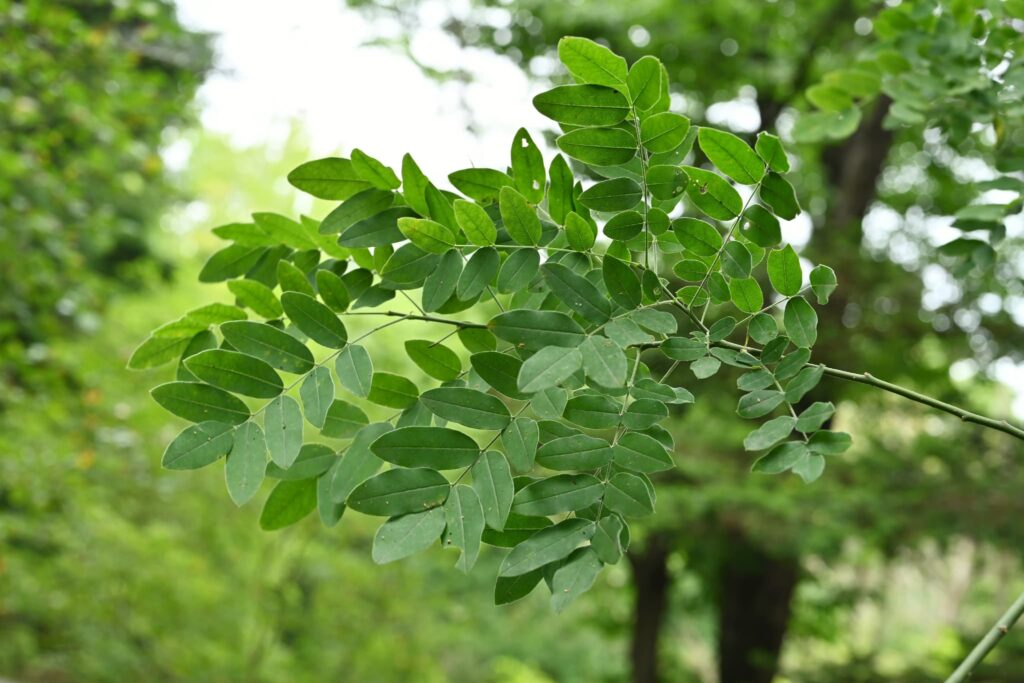
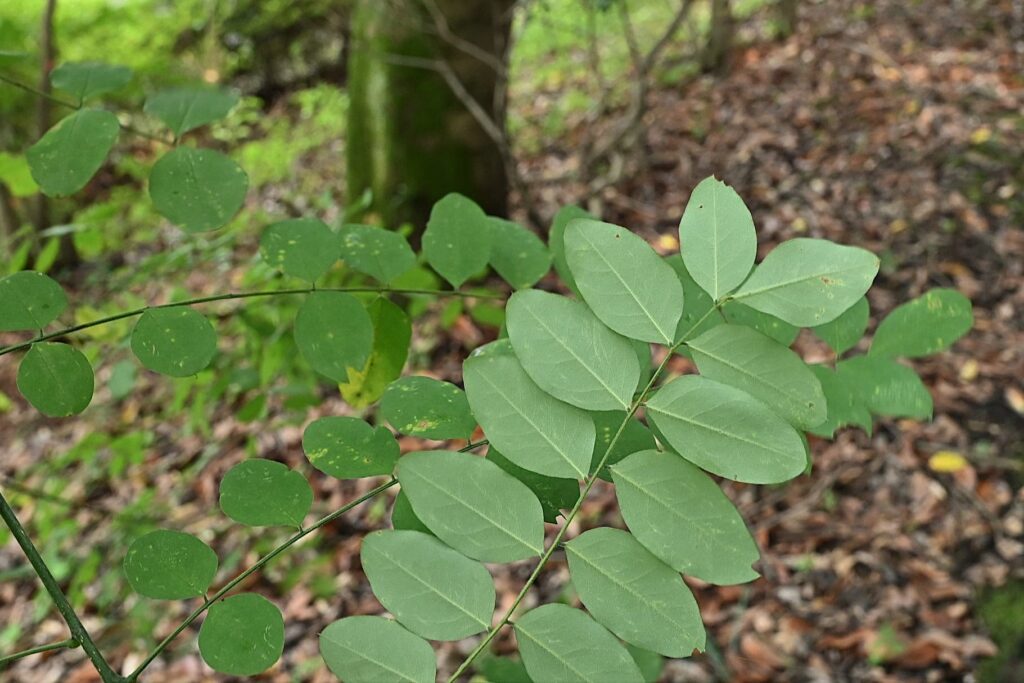
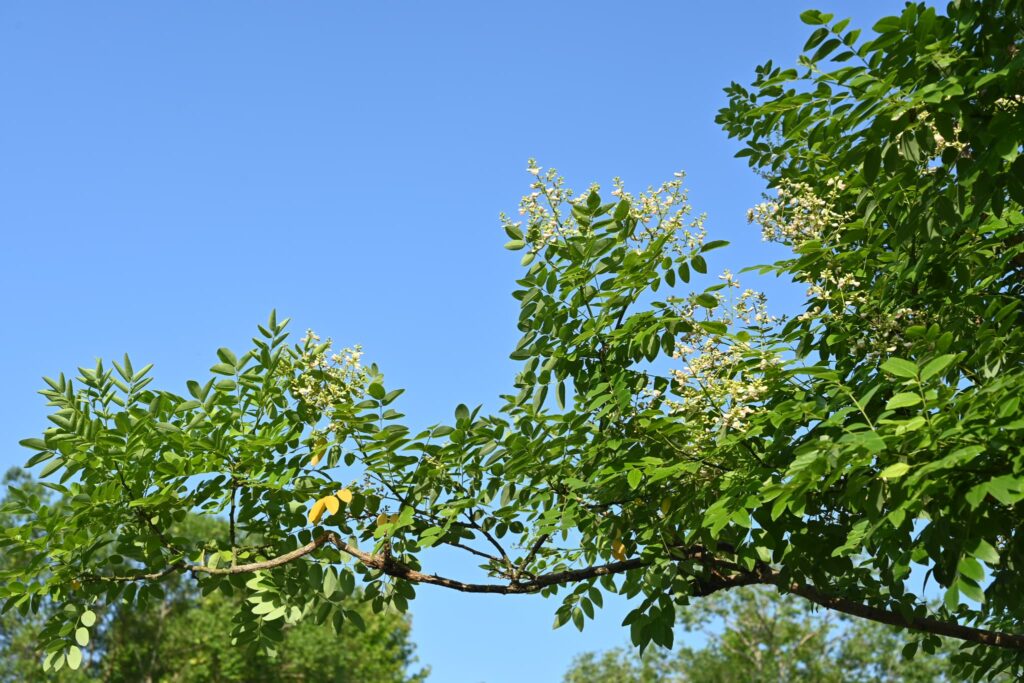
Leaves are pinnately compound, made up of four to seven pairs of oval leaflets, each 2–5 cm long, arranged alternately along the branch. The upper surface is deep green, while the underside is noticeably paler. Young leaves, once boiled to remove their bitterness, are edible, and dried leaves are used to make tea or as a treatment for skin rashes.
Flowers
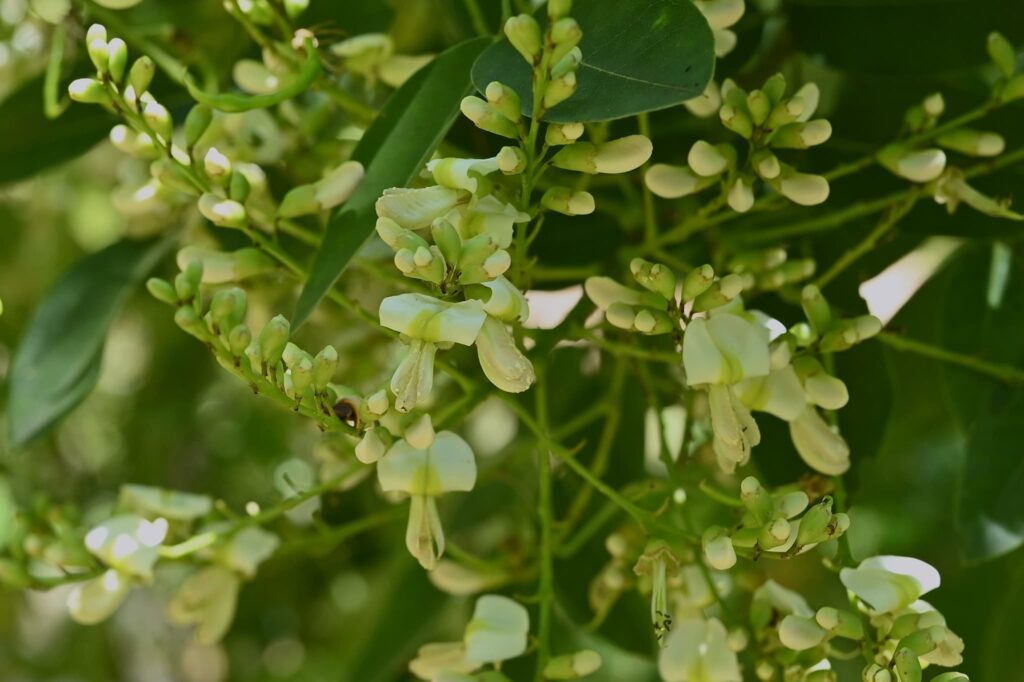
Japanese Pagoda Tree flowers in July and August; “Enju flower” is a traditional seasonal reference for summer in Japanese poetry. The flowers are cream-colored, pea-shaped, with a yellow center, and individually quite small at about 1–1.5 cm—but they gather in such large, cone-shaped clusters at the branch tips that from a distance, a flowering tree can look almost as if smoke is rising from its canopy.
Fruits
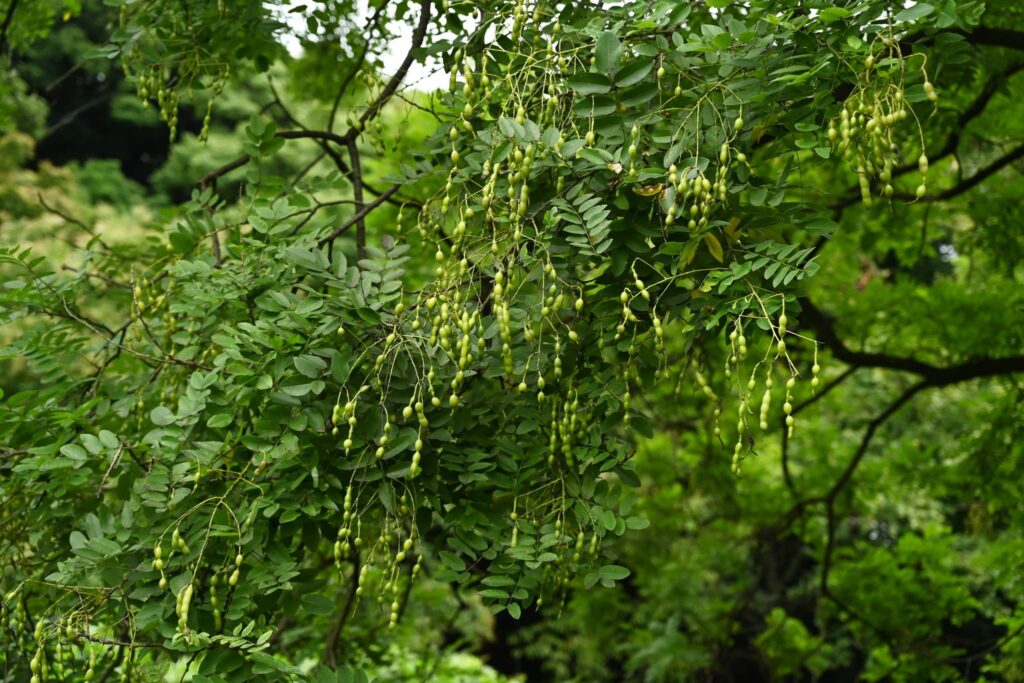
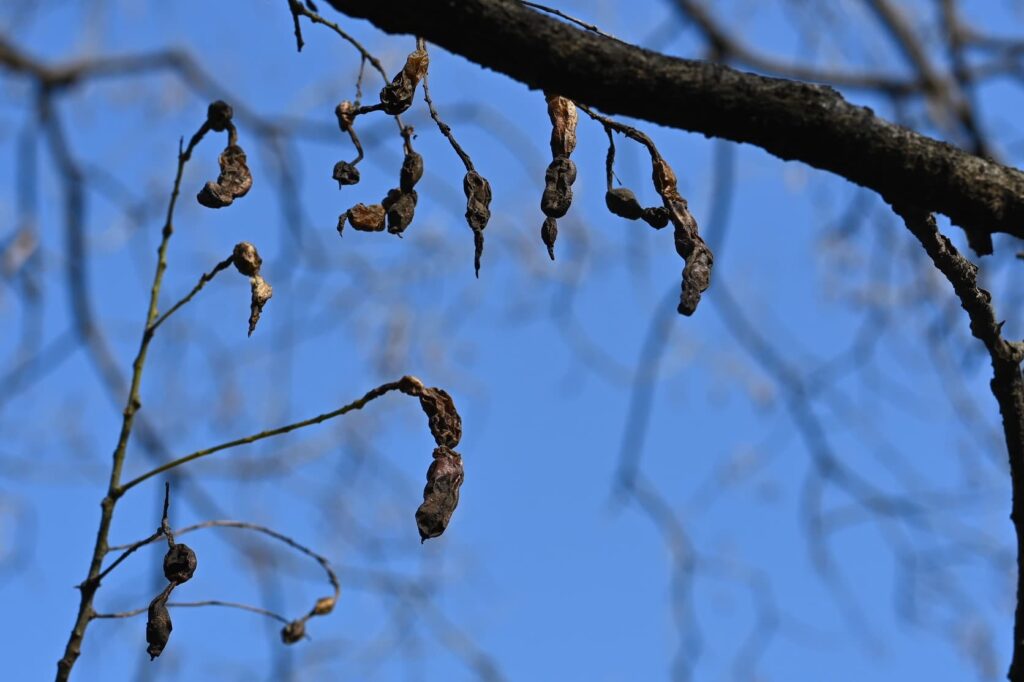
Flowers are followed by bead-like, constricted seed pods that hang down from the branch tips, ripening to brown around December. The pods are 4–7 cm long, fleshy inside, and slightly sticky to the touch. They are bitter and not eaten as food, though birds such as starlings, azure-winged magpies, and brown-eared bulbuls occasionally feed on them. The pods often remain on the tree through winter, making them a useful identification feature after the leaves have fallen.
Trunk & Bark
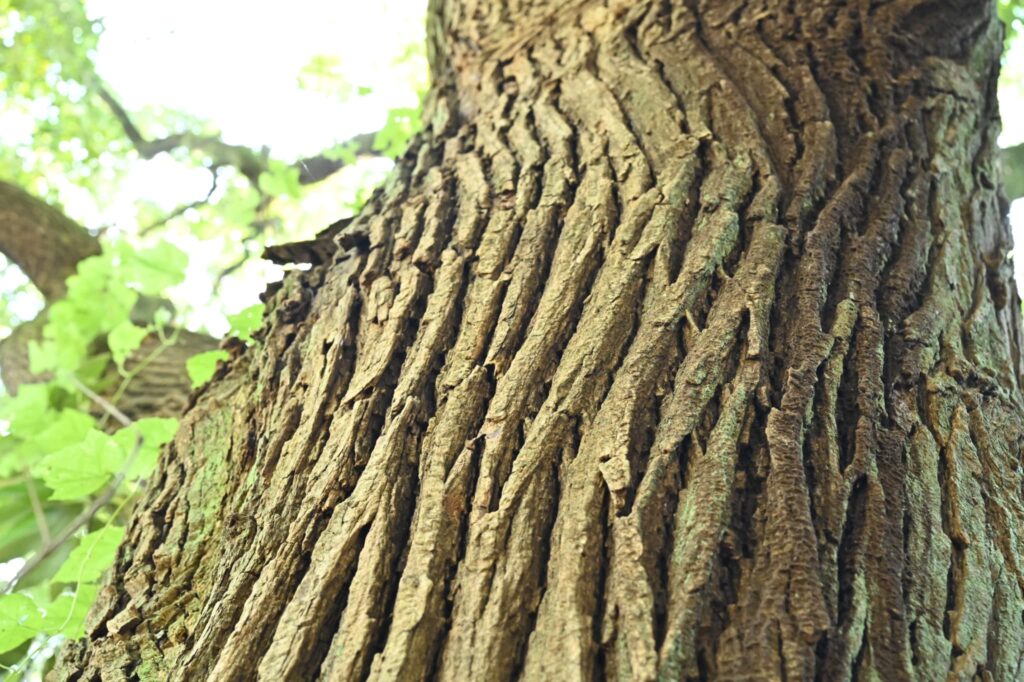
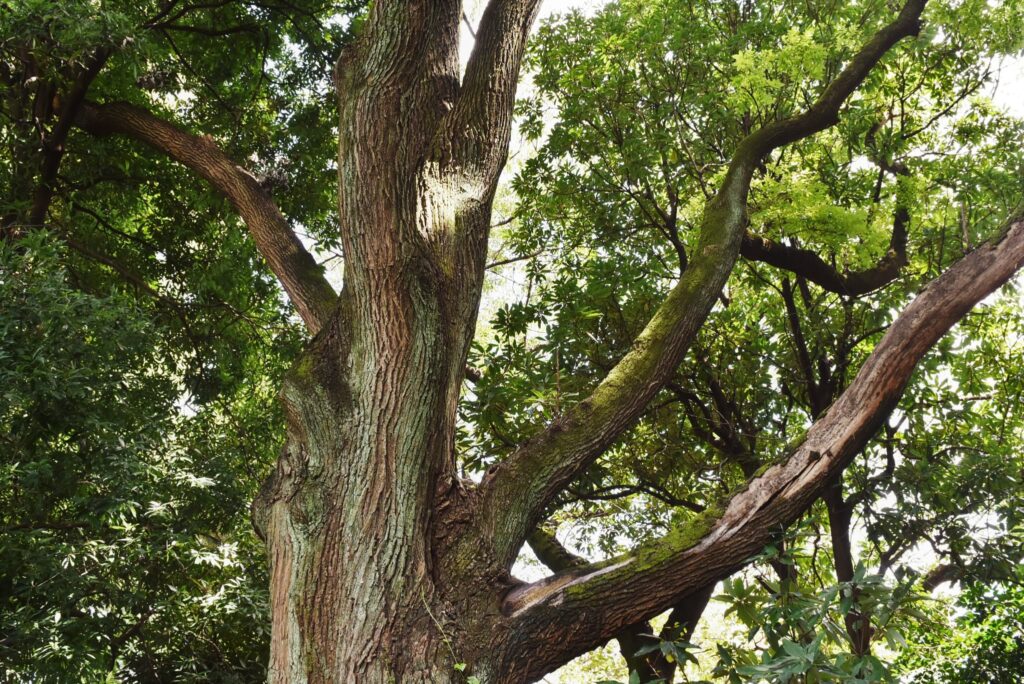
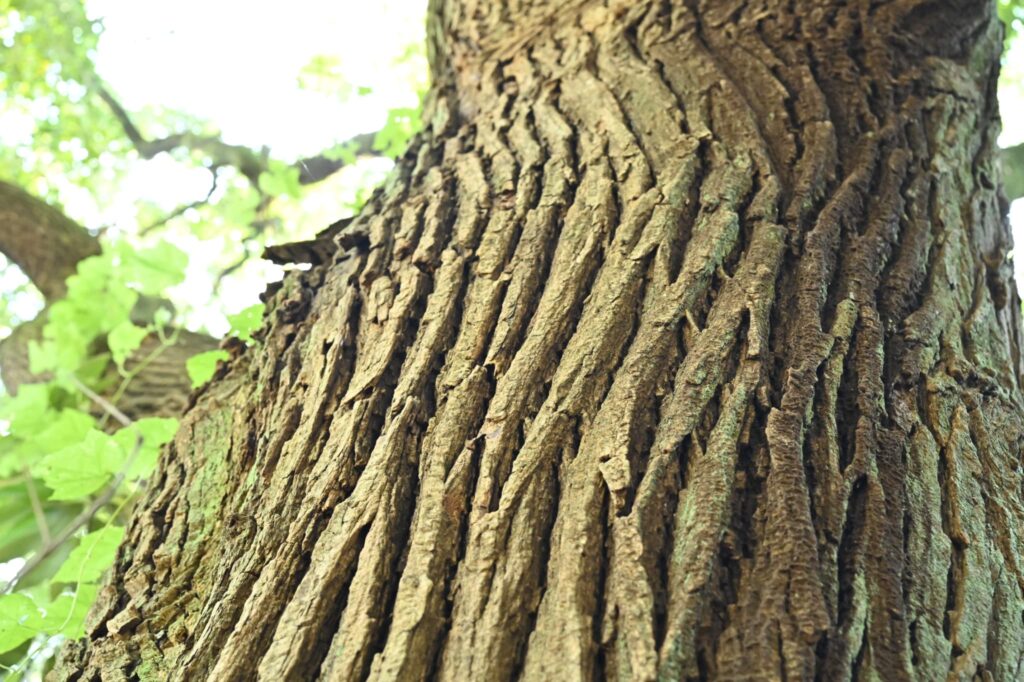
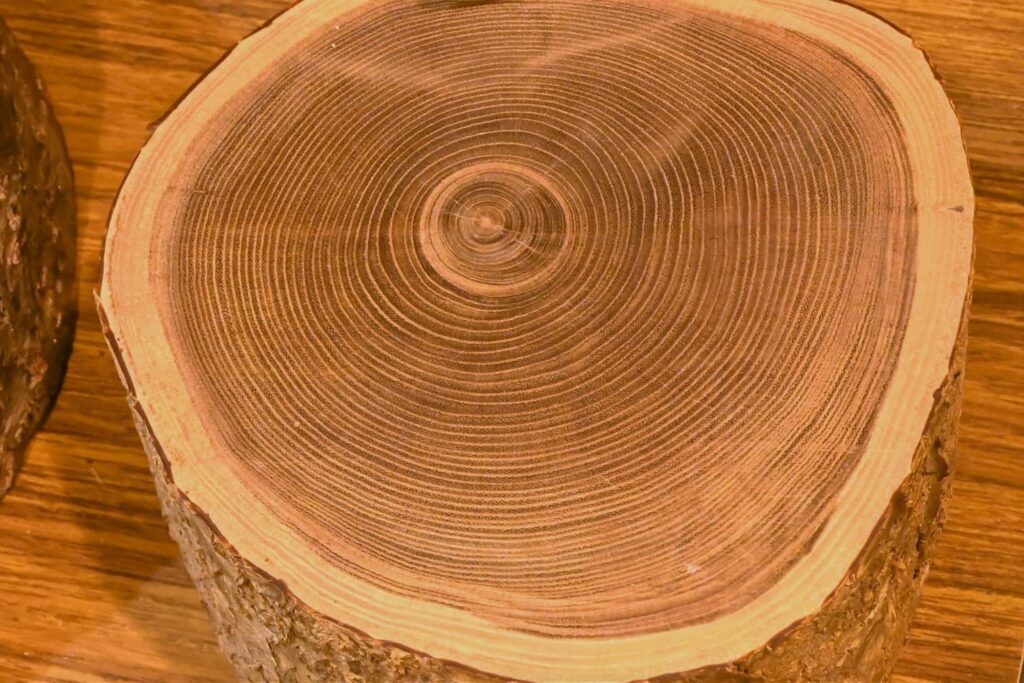
Mature bark becomes deeply furrowed into long vertical ridges, giving old trees a rugged appearance. The wood is used for tools, musical instruments, and furniture. The gray bark, once decocted, has traditionally been used as a remedy for lower back pain.
Medicinal Uses
Nearly every part of Japanese Pagoda Tree has been put to medicinal use in traditional Chinese and Japanese herbal medicine. The flower buds contain rutin, a compound that helps maintain blood vessel flexibility, and are used under the name kaika to stop bleeding from the gums and mouth, treat coughing up blood, address hemorrhoids, and help prevent arteriosclerosis and high blood pressure; the buds can also be used as a source of yellow dye. Dried fruit is taken internally as a traditional remedy for hemorrhoids as well. The root is processed into a preparation called kujin, which contains alkaloids and is used in traditional medicine for its fever-reducing and diuretic effects.
History & Culture
The scientific species name japonicum reflects an early mistaken belief that the tree was native to Japan, though it in fact originates in northern China. In ancient China, during the Zhou dynasty, three Japanese Pagoda Trees were traditionally planted at the imperial court, where the three most senior ministers would sit facing them—a practice that established the tree’s long-standing association with high rank and prestige. The tree remains considered auspicious in China today, planted in courtyards as a “tree of success,” a “tree of reverence,” or a “tree of high honor,” and used for commemorative plantings, as a ward against evil, and as a symbolic protector during childbirth.
The exact date of the tree’s arrival in Japan is unknown, but legend holds that Empress Jingu (traditionally dated 170–269 CE) planted one to celebrate a safe childbirth, and the tree also appears as a garden feature in the Konjaku Monogatarishū, a collection of tales from the Heian period. It began to be used as a street tree in Tokyo in the 1880s, and thanks to its tolerance for vehicle exhaust, it remains a common sight along streets such as Yamanote-dori today. Japanese Pagoda Tree is also associated with scholarship, and is planted at sites such as the Ashikaga Gakko in Tochigi Prefecture, considered Japan’s oldest academic institution.
Growing Guide
| Item | Description |
|---|---|
| Growth Rate | Moderate to Fast |
| Longevity | 100–300 years |
| Salt Tolerance | Moderate |
| Drought Tolerance | High |
| Urban Tolerance | Excellent |
Soil & Site
Japanese Pagoda Tree generally prefers fertile soil, but it is also a pioneer species capable of colonizing barren ground, and will grow even in poor soil provided conditions aren’t extremely dry.
Climate
The tree is cold-hardy, but is best suited to planting from the Kanto region westward.
Space & Pruning
Because its branches and foliage spread widely, appreciating the tree’s natural form requires a fair amount of space. It tolerates pruning well, but its naturally beautiful form is easily disrupted by cutting, so light, minimal pruning is generally preferable.
Transplanting
The tree dislikes being transplanted, so its planting site should be chosen carefully from the start.
Pests
Japanese Pagoda Tree is relatively resistant to pests and disease, but it serves as a host plant for the Angled Sunbeam butterfly, whose caterpillars can feed on its buds and flowers. It can also be affected by rust disease.
Cultivars
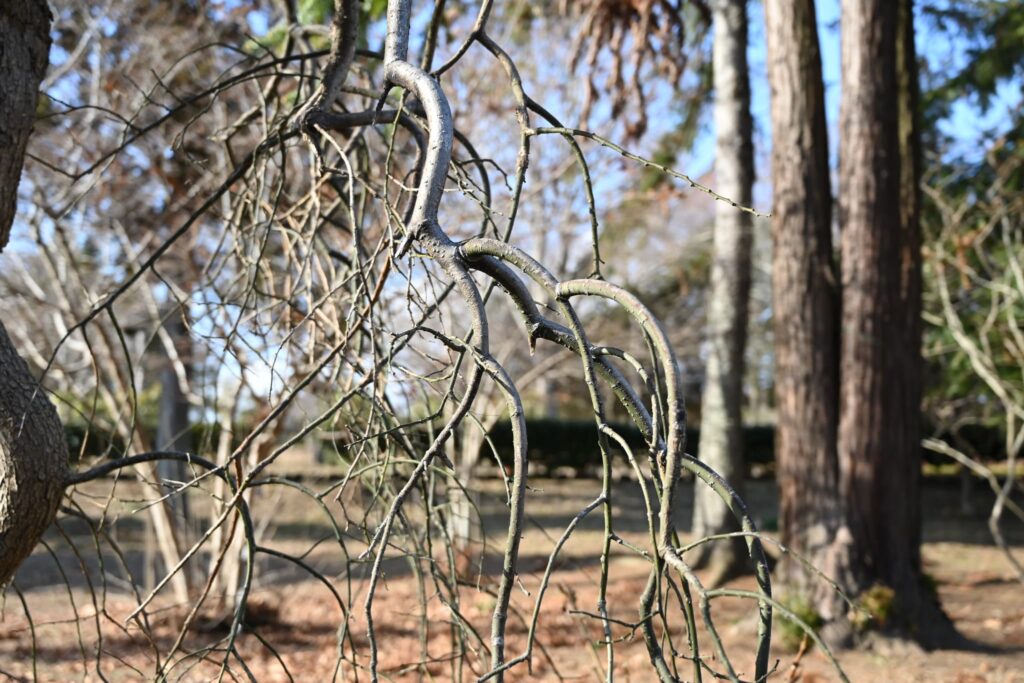
- Weeping Japanese Pagoda Tree (‘Pendula’) — a variant with drooping, twisting branches, said in China to resemble a dragon’s claw, earning it the name “dragon claw tree.” Considered even more auspicious than the standard form and especially favored in China, this cultivar is occasionally found in Japan as well, including at Nijo Castle in Kyoto and Yoyogi Park in Tokyo.
Similar Plants
- Black Locust (Robinia pseudoacacia) — a deciduous tree in the pea family native to North America. Unlike Japanese Pagoda Tree, whose flower clusters stand upright, Black Locust’s flowers hang downward from the branch tips and give off an intensely sweet fragrance.
- Inu-enju (Maackia amurensis) — a tree native to Hokkaido and northern Honshu, sometimes casually called simply “Enju” as well, but belonging to a different genus entirely. It can be distinguished from true Japanese Pagoda Tree by the dense fine hairs on its flowers and leaf undersides, its darker bark that doesn’t split vertically, and its fruit, which forms as a flat pod rather than a fleshy, bead-like one.
- Sophora flavescens (Kurara) — a closely related perennial herb that produces buds and fruit similar in appearance to Japanese Pagoda Tree’s.
- Amorpha fruticosa (Kurobana-enju, properly known as Itachihagi) — a deciduous shrub in the pea family native to North America (Canada, the United States, and Mexico). Its flowers look nothing like those of Japanese Pagoda Tree, but it produces a similar type of legume pod.
- Yukunoki (Cladrastis platycarpa) — a deciduous tree occasionally found in the mountains from the Kanto region westward, bearing white flowers similar to Japanese Pagoda Tree’s in early summer and likewise producing legume pods.
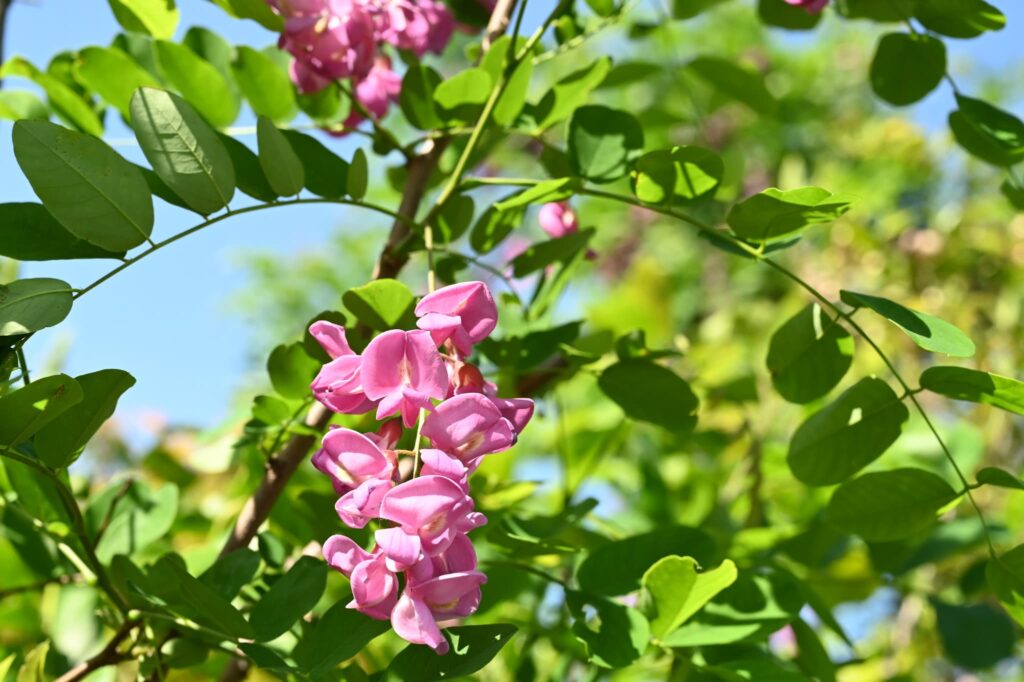
- Hana-enju (Rose Acacia, Robinia hispida) — A North American shrub in the same genus as Black Locust, valued for its showy pink flower clusters in contrast to Japanese Pagoda Tree’s cream-colored blooms.
Frequently Asked Questions
Q: Why is Japanese Pagoda Tree considered such an auspicious tree?
The tradition dates back to ancient China, where three Japanese Pagoda Trees were planted at the imperial court and the country’s most senior ministers sat facing them—establishing a lasting association between the tree and high rank. In Japan, the tree carries similar auspicious associations, including a legendary link to safe childbirth involving Empress Jingu.
Q: Is any part of Japanese Pagoda Tree used medicinally?
Yes, extensively, in traditional Chinese and Japanese herbal medicine. The flower buds (used as kaika) are applied to bleeding and circulatory concerns, the dried fruit is used as a traditional remedy for hemorrhoids, the bark is decocted for lower back pain, and the root is processed into a preparation called kujin used for fever and diuretic purposes. These are traditional uses rather than clinically established treatments, so anyone considering them should consult a qualified practitioner.
Q: Why is Japanese Pagoda Tree such a common street tree in Japan?
It’s tough, tolerates poor soil and urban air pollution (including vehicle exhaust) well, and requires relatively little maintenance once established—qualities that made it a practical choice when Tokyo began using it as a street tree in the 1880s. Those same qualities keep it a common sight along Japanese streets today.
Q: How can I tell Japanese Pagoda Tree apart from Inu-enju?
Look at the flowers and leaf undersides for dense fine hairs (present on Inu-enju, absent on true Japanese Pagoda Tree), check whether the bark is dark and doesn’t split vertically (a sign of Inu-enju), and examine the fruit—Japanese Pagoda Tree’s pods are fleshy and bead-like, while Inu-enju’s are flat.
Q: Does Japanese Pagoda Tree need much pruning?
Not really—it tolerates pruning if necessary, but its naturally elegant form is easily disrupted by cutting, so light, minimal pruning is usually the better approach. It also dislikes being transplanted, so it’s worth choosing its planting site carefully from the start rather than planning to move it later.
Q: Why is Japanese Pagoda Tree planted as a street tree?
Because it tolerates heat, drought, poor soil, and urban air pollution while producing dense summer shade. Its attractive flowers, long lifespan, and relatively low maintenance requirements have made it one of Japan’s most widely planted street trees since the late nineteenth century.
Q: Is Japanese Pagoda Tree good for pollinators?
Yes. Its fragrant summer flowers attract bees and other pollinating insects at a time when relatively few large trees are in bloom. The tree is therefore considered an important nectar source in midsummer.
Conclusion
Few street trees carry as much symbolic weight as Japanese Pagoda Tree, whose association with rank, scholarship, and good fortune stretches back to the imperial courts of ancient China. Practical as much as symbolic, its toughness and tolerance for urban conditions have made it a familiar presence along Japanese streets since the Meiji era, while its many traditional medicinal uses and its striking weeping cultivar continue to give it a place well beyond its role as simple shade. Today, Japanese Pagoda Tree remains one of Japan’s most important urban trees, valued not only for its resilience and beauty but also for its rich cultural and historical significance.