Japanese Holly (Ilex crenata): Identification, Care & Uses
Japanese Holly (Ilex crenata) is one of Japan’s most important evergreen shrubs, prized for hedges, topiary, bonsai, and traditional gardens. This guide covers identification features, flowers, fruit, bark, cultivars, and care, based on observations of the plant as grown in Japan.
What Is Japanese Holly?
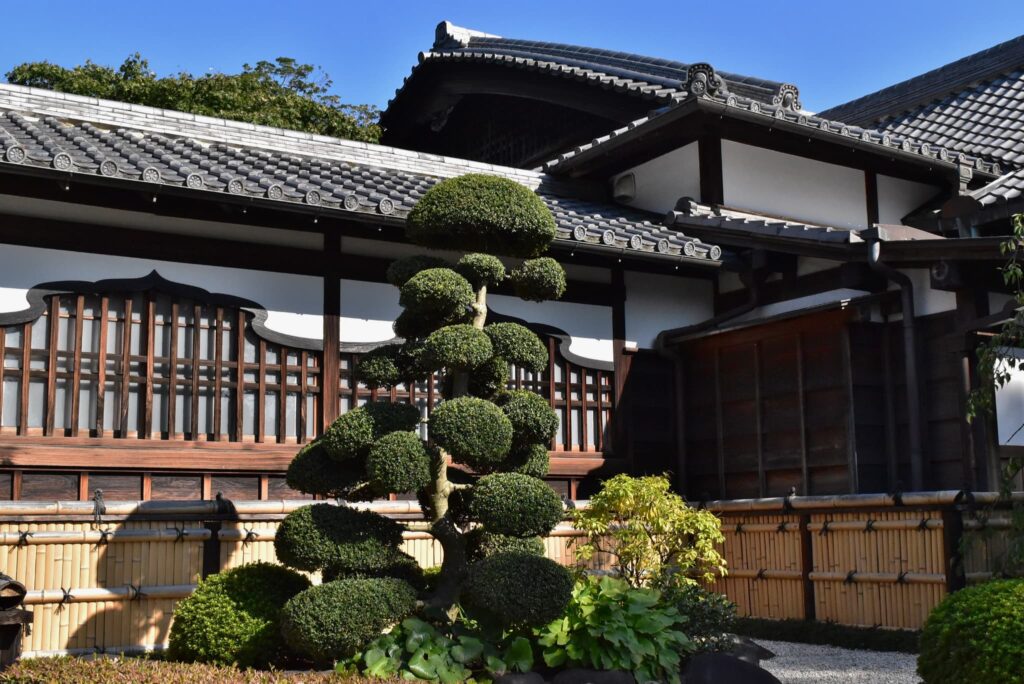
Japanese Holly is an evergreen shrub in the family Aquifoliaceae (holly family), native to Japan and other parts of East Asia. In Japan, it is widely distributed from Honshu southward to Shikoku, Kyushu, and the Ryukyu Islands, where it grows naturally on rocky outcrops, mountain ridges, and forest edges. Its glossy, deep-green leaves and strong ability to resprout after cutting have made it a favorite for garden planting, hedges, and bonsai throughout Japan.
Overview
| Item | Description |
|---|---|
| Scientific Name | Ilex crenata |
| Common Name | Japanese Holly / Box-leaved Holly |
| Japanese Name | Inutsuge (イヌツゲ), also Nisetsuge or Yamatsuge |
| Family | Aquifoliaceae |
| Native Range | Eastern Nepal to temperate East Asia |
| Plant Type | Evergreen Shrub or Small Tree |
| Height | Typically 3–5 m; occasionally over 10 m |
| Trunk | Up to about 60 cm in diameter |
| Flowering Season | May–July |
| Fruit Type | Round drupe, ripening to blackish-purple in October–November |
| USDA Zones | 6–9 |
| Sun Exposure | Full Sun to Partial Shade |
Characteristics
| Feature | Description |
|---|---|
| Leaves | Alternate, finely serrated |
| Fruit | Black drupes |
| Bark | Smooth gray |
| Habit | Evergreen shrub or small tree |
Foliage
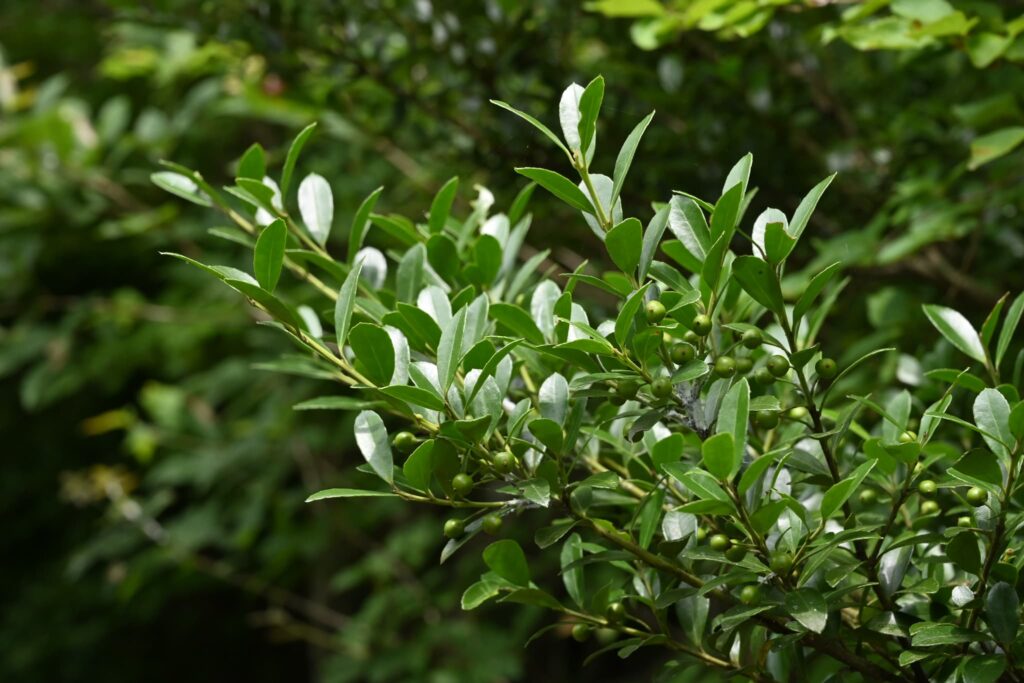
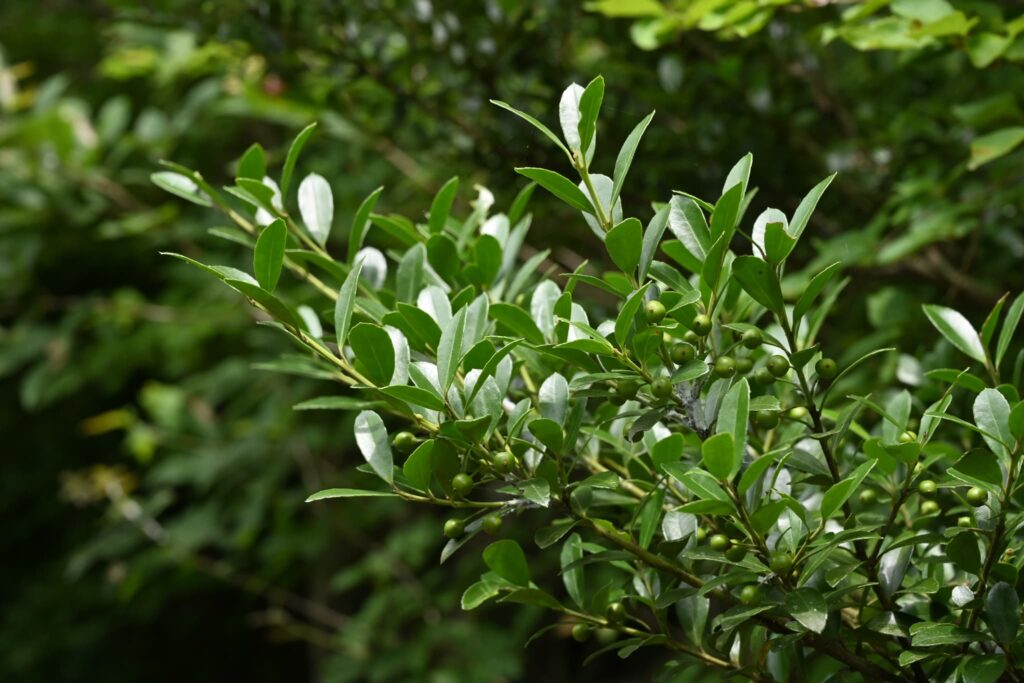
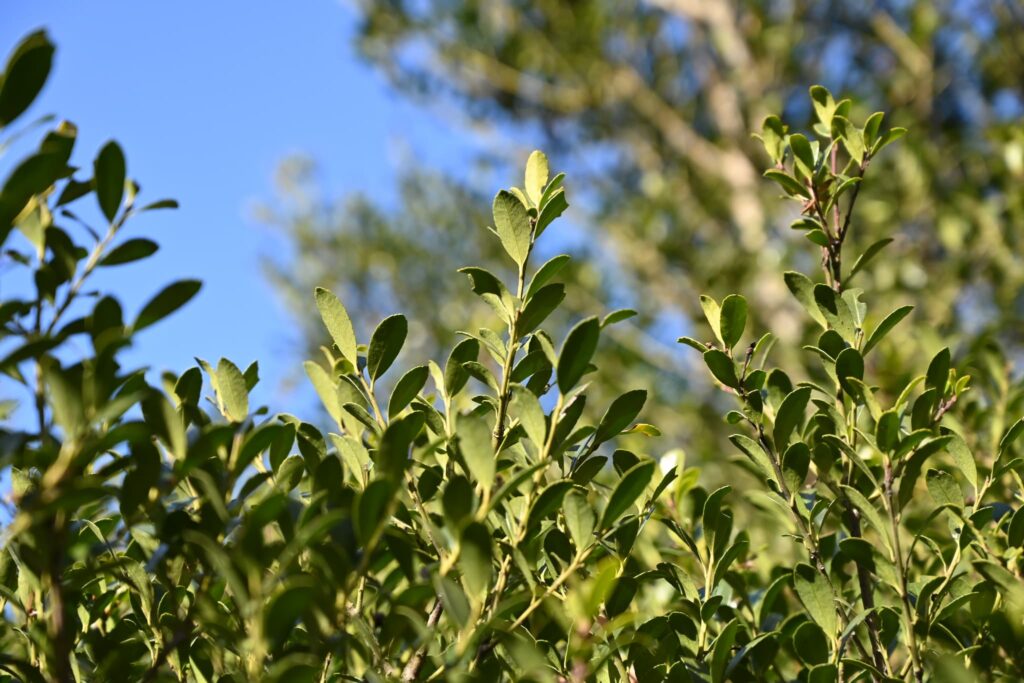
Leaves are oval to oblong, somewhat thick in texture, and arranged alternately along the branches—a feature that distinguishes Japanese Holly from true Boxwood, whose leaves grow in opposite pairs. Leaves measure 1–3 cm long and 0.6–2 cm wide, with a slightly protruding tip and finely toothed edges. Both surfaces are hairless and deep green, but the underside bears tiny glandular dots.
Flowers
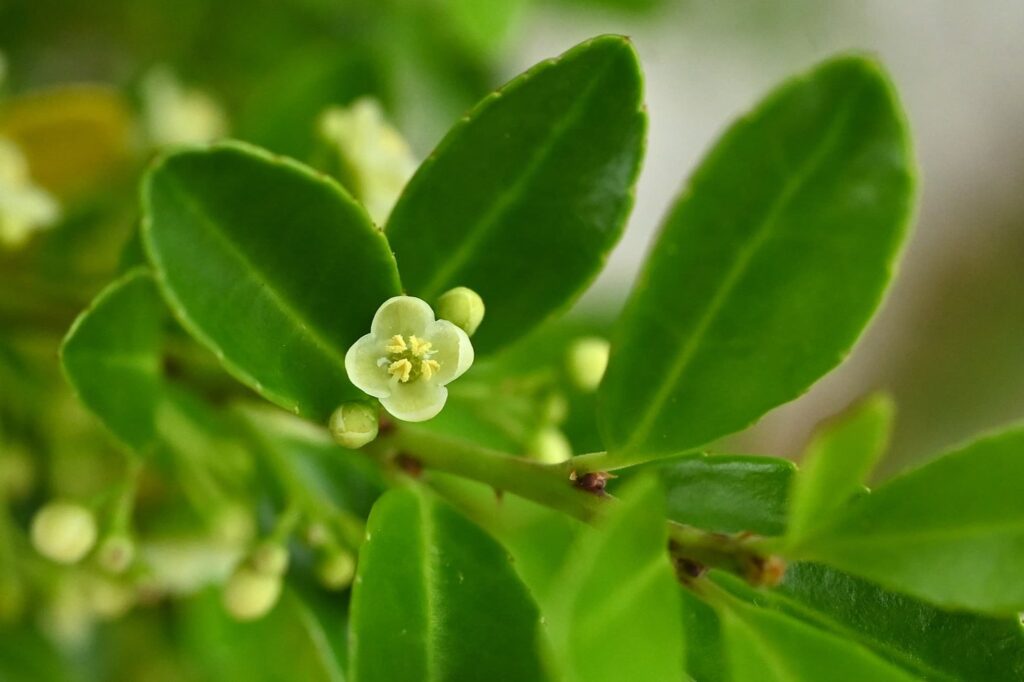
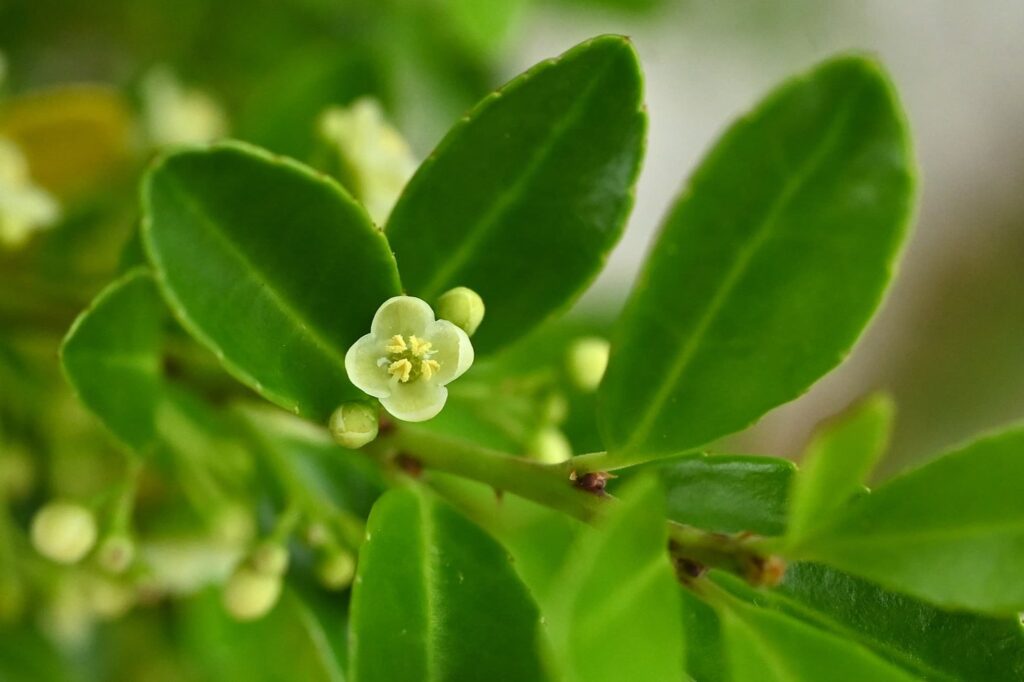
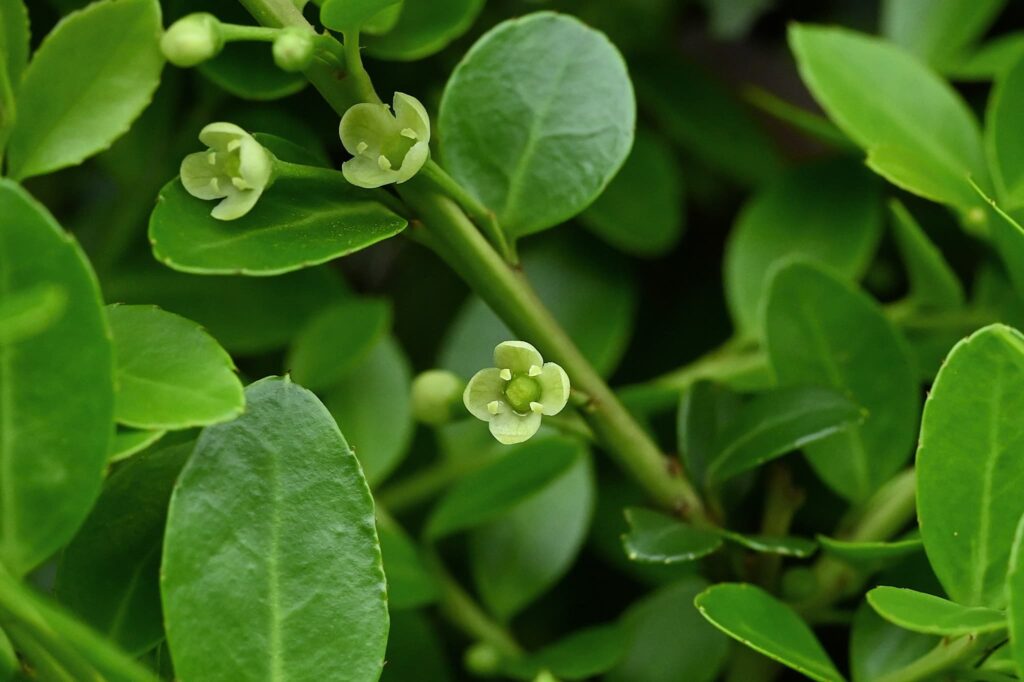
Japanese Holly flowers from May to July, producing small, pale cream-colored blooms about 3 mm across at the leaf axils of the current year’s new growth. The species is dioecious, with separate male and female plants. Male flowers are more conspicuous, opening in clusters of two to six, while female flowers open singly and are less noticeable.
Both male and female flowers have four petals, four sepals, and four stamens. In male flowers the stamens bear pollen, while in female flowers the stamens are reduced and pollen-free, making the dome-shaped pistil (stigma) more prominent than in the male flower.
Fruits
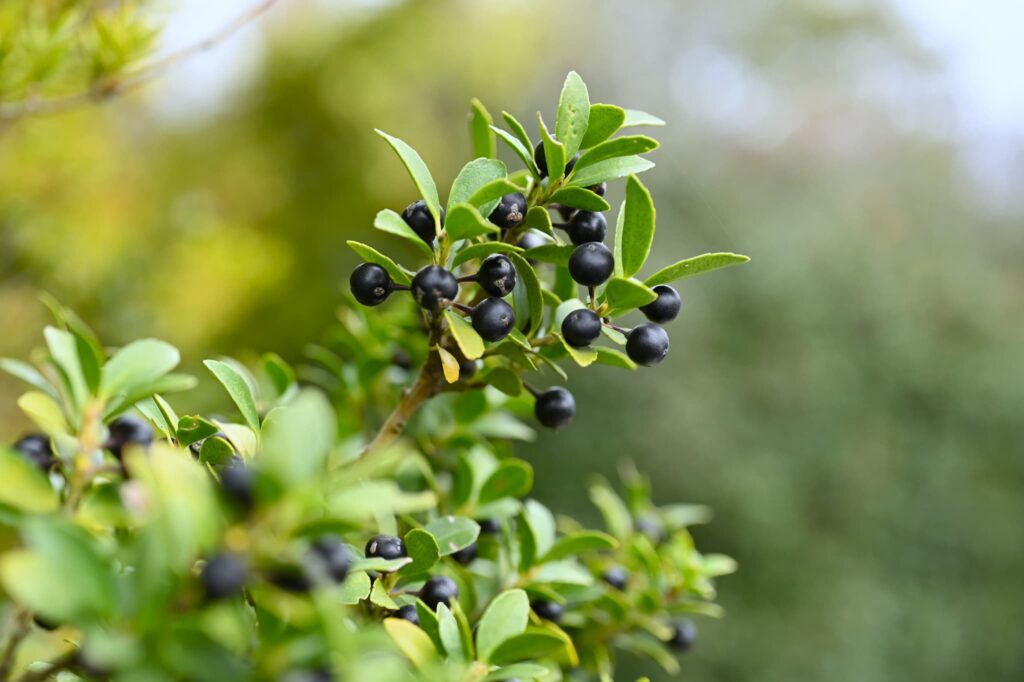
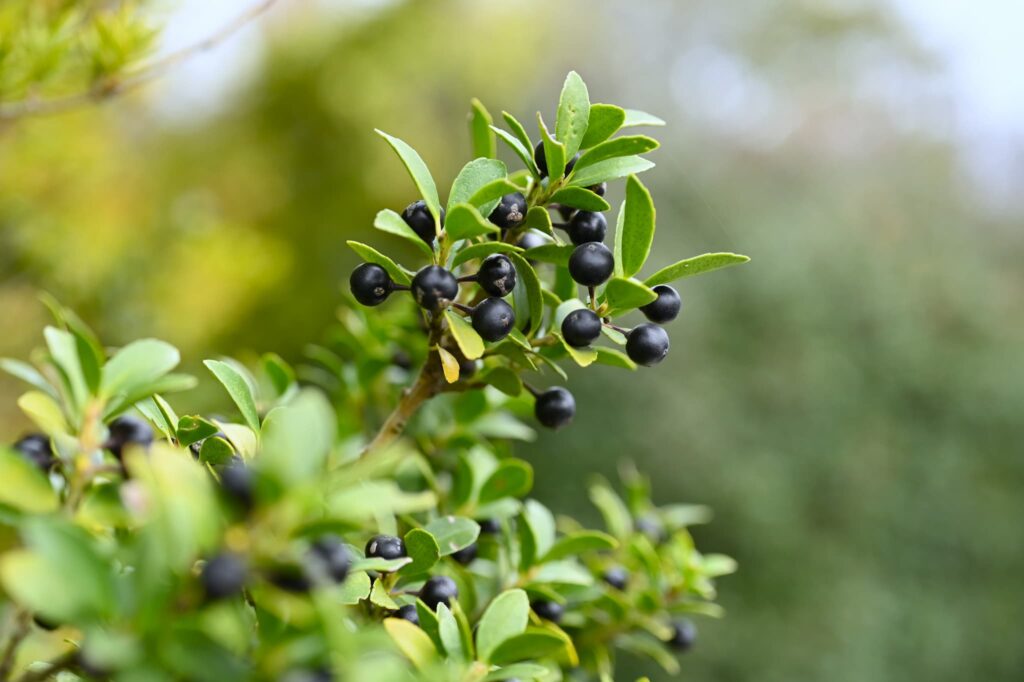
Female flowers develop into round fruit about 6–7 mm across, ripening to a blackish-purple color in October or November. This is somewhat unusual within the holly family, where red fruit is far more common—though red-fruited (Akami Inutsuge) and yellow-fruited (Kimino Inutsuge) forms of this species do exist.
The fruit is juicy and mildly sweet but is not eaten by people. Each fruit contains two to four grayish-white or pale brown seeds, which germinate readily when sown, making the plant relatively easy to propagate from seed.
The blackish-purple fruits are eaten by some birds, particularly when other food sources become scarce.
Bark & Wood
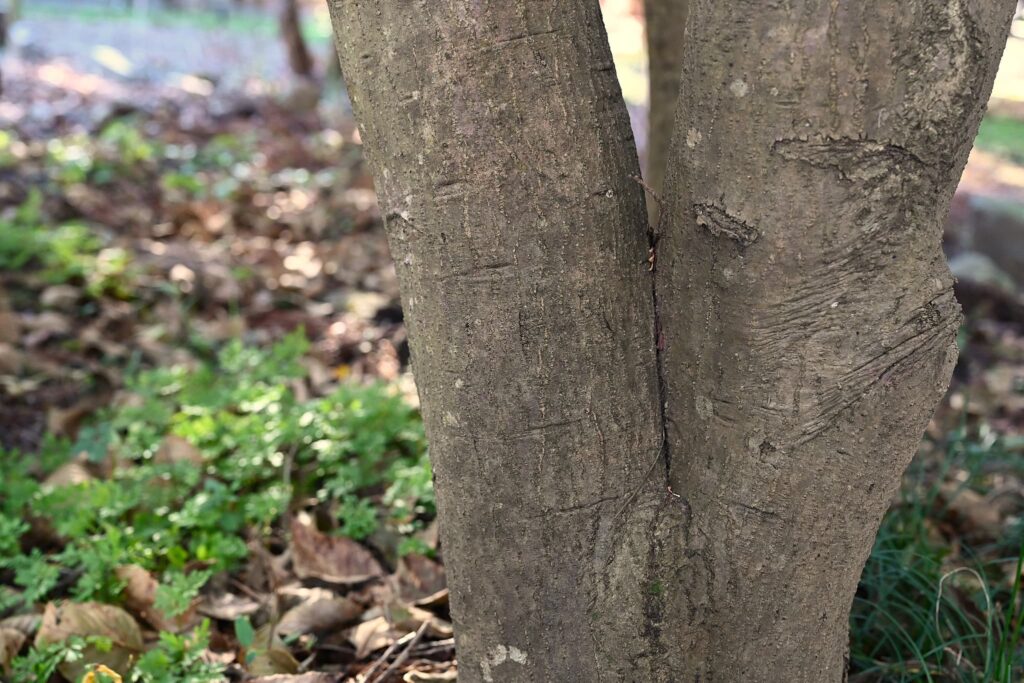
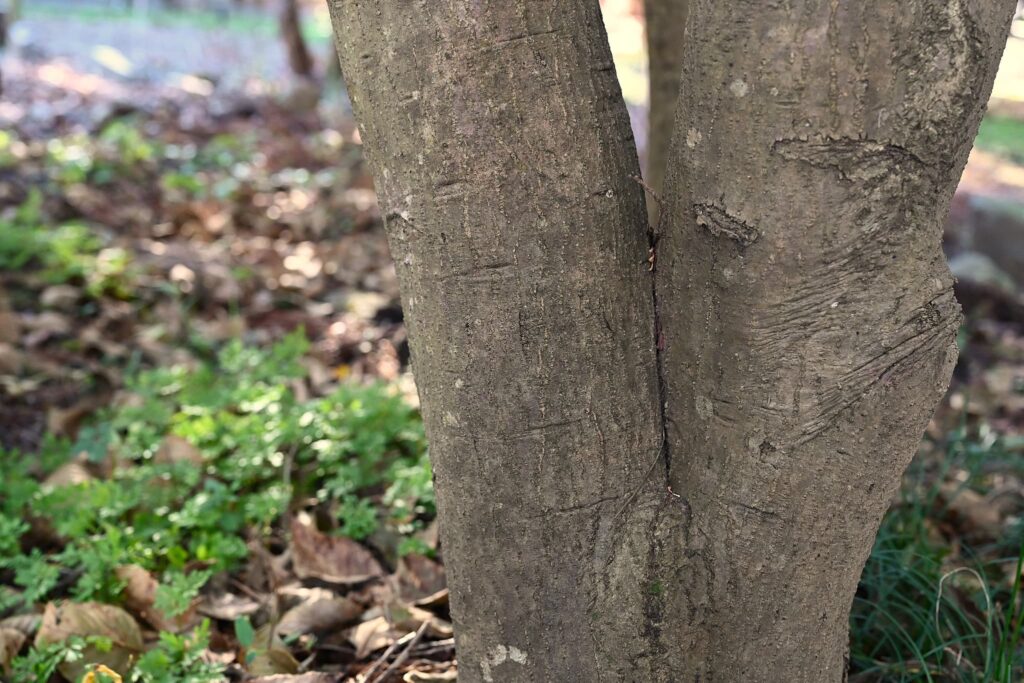
The main trunk grows straight and can reach up to about 60 cm in diameter. Most specimens stand 3–5 m tall, though occasional large trees exceed 10 m. The bark is smooth and grayish-white with a faint purplish tinge, developing more visible lenticels (bark pores) as the tree ages. The wood is dense but has relatively little commercial importance compared with true Boxwood.
Size & Growth
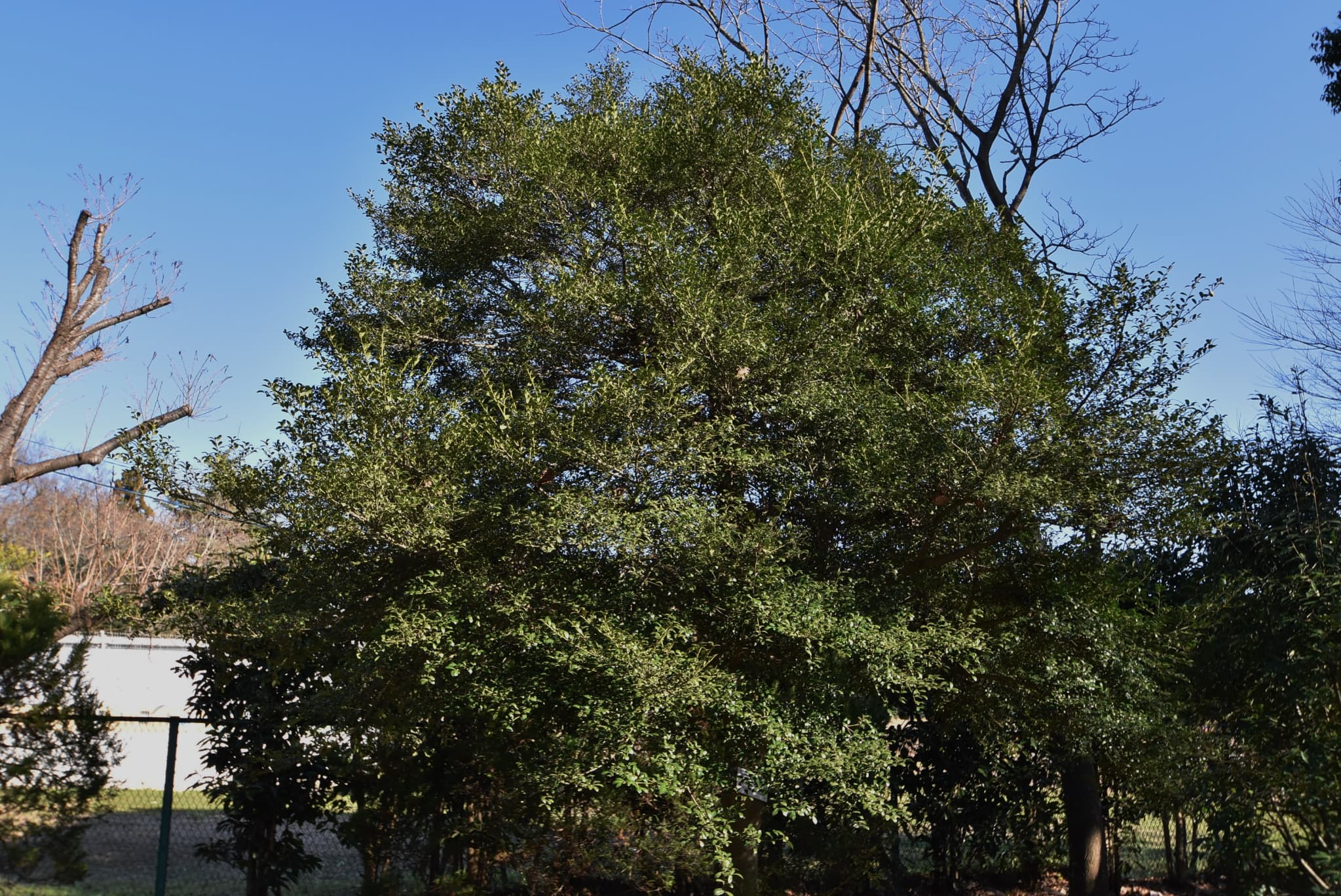
Japanese Holly typically reaches 3–5 m in height, though occasional specimens exceed 10 m where left unpruned. Growth is slow overall, and the plant’s strong ability to resprout after cutting, combined with its flexible branching, underlies its long history as a hedge and topiary subject in Japanese gardens.
Uses & Cultural Significance
Because Japanese Holly resembles Japanese Boxwood (Buxus microphylla, “Hontsuge” in Japanese)—the wood of which was traditionally used for seals, combs, carvings, and shogi pieces—it is often confused with that plant, though the two are unrelated. It also goes by the alternate names Nisetsuge (“false boxwood”) and Yamatsuge (“mountain boxwood”). The “Inu” (“dog”) in its Japanese name, Inutsuge, carries a slightly disparaging sense of “useless” or “not the real thing,” reflecting the fact that its wood has little practical use compared to true Boxwood—though ironically, Japanese Holly is used far more often than true Boxwood as an actual garden plant today.
About the only traditional application of the wood is pounding the inner bark to produce a sticky paste used as birdlime (tori-mochi) for trapping small birds. This use has also given the plant the folk name Nezumi-mochi (“mouse glue”)—though a completely different tree also goes by that same common name in Japanese.
Today, Japanese Holly’s principal value lies in the garden rather than the workshop: it is one of the most widely planted shrubs in Japan for hedges, topiary, and bonsai, and its fruit provides a modest late-autumn food source for birds such as azure-winged magpies, starlings, Japanese white-eyes, and thrushes once other food becomes scarce.
Growing Guide
| Item | Description |
|---|---|
| Light & Soil | Sunny site with rich, well-drained volcanic ash soil, but highly adaptable to shade or poor soil |
| Wind & Snow Tolerance | Good tolerance of urban conditions and is also used in coastal plantings. |
| Cold Hardiness | Generally hardy across much of Japan; commonly grown in USDA Zones 6–9 |
| Pruning | Slow-growing; light, repeated shearing preferred over infrequent hard cuts |
| Suitability for Home Gardens | Well suited, especially compact cultivars such as ‘Golden Gem’ |
| Pests | Generally pest- and disease-resistant |
Light & Soil
Japanese Holly naturally prefers a sunny site with rich, well-drained volcanic ash soil, but is highly adaptable and can be grown in shade or poor soil as well. In shade, however, the branches may become leggy and lower branches can die back, and in extremely poor soil the plant may suddenly drop its leaves. It tolerates both dry and humid conditions well, but is not fond of intense summer afternoon western sun.
Wind & Snow Tolerance
The species tolerates air pollution and salt-laden coastal winds, making it a workable choice even in less-than-ideal environments such as roadside plantings and coastal gardens.
Cold Hardiness
Japanese Holly is generally hardy across much of Japan and is commonly grown in USDA hardiness zones 6–9.
Pruning
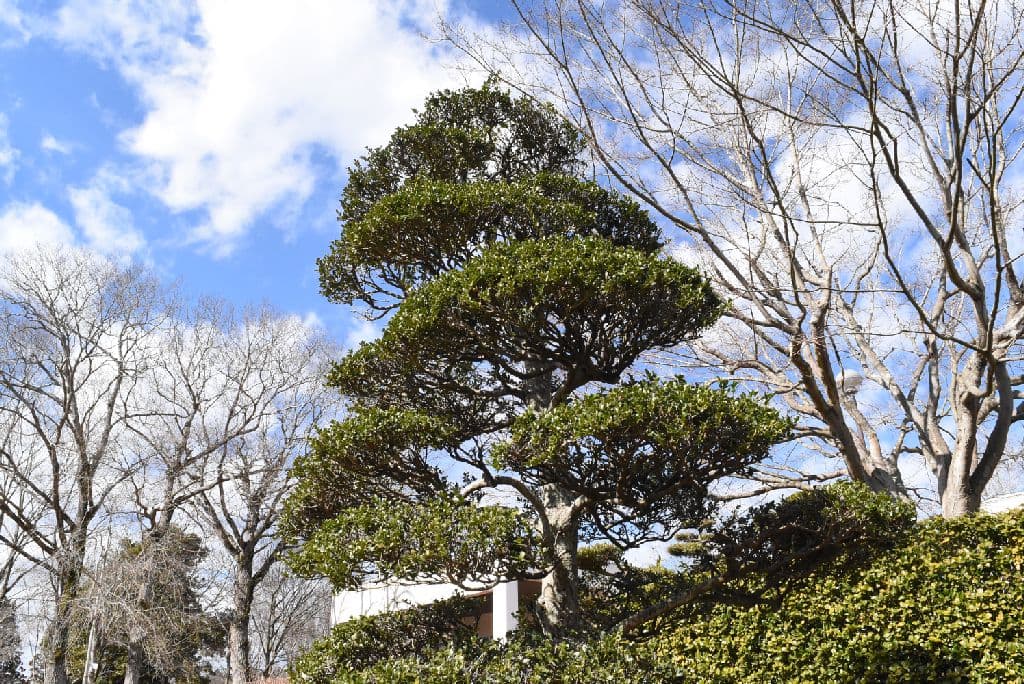
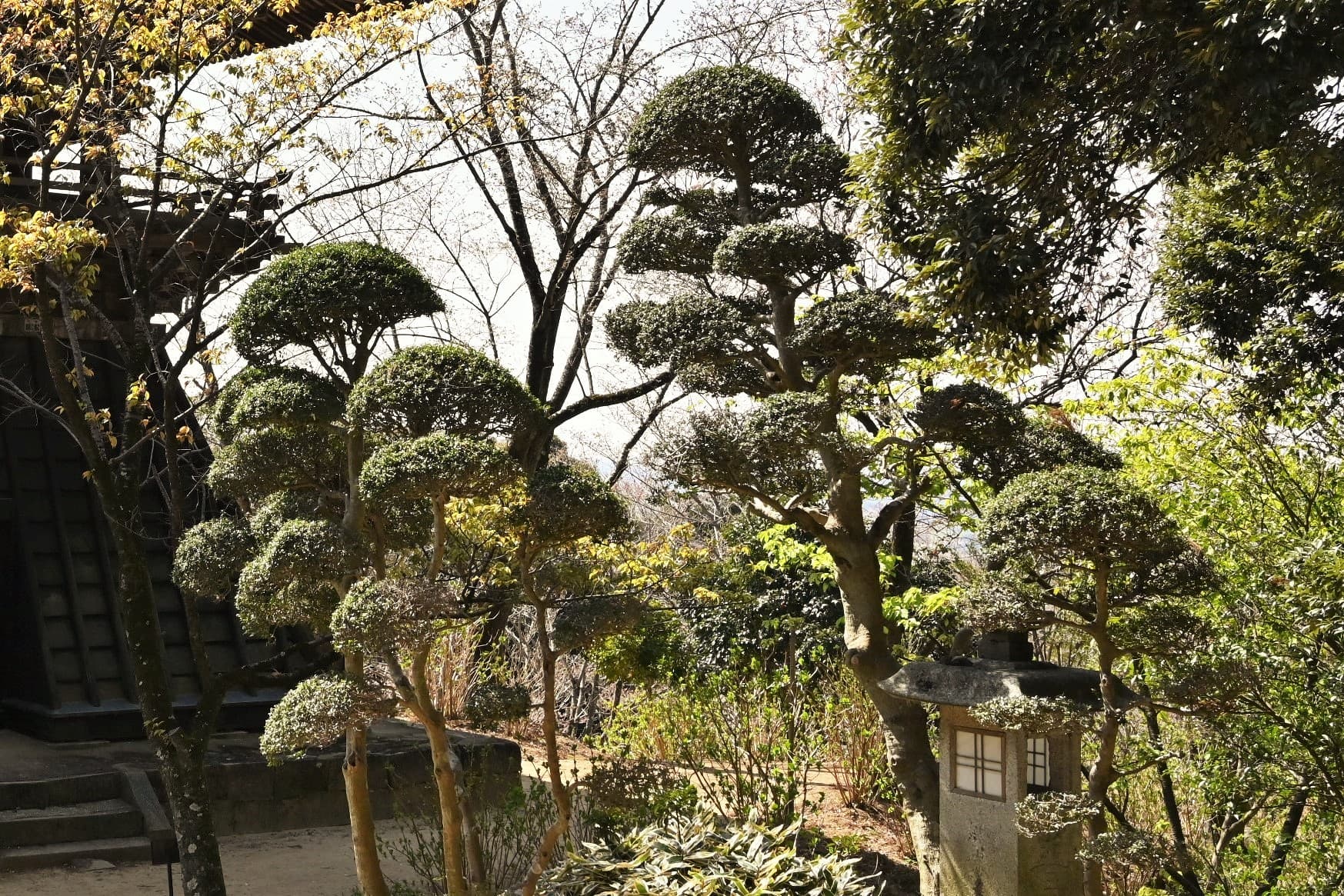
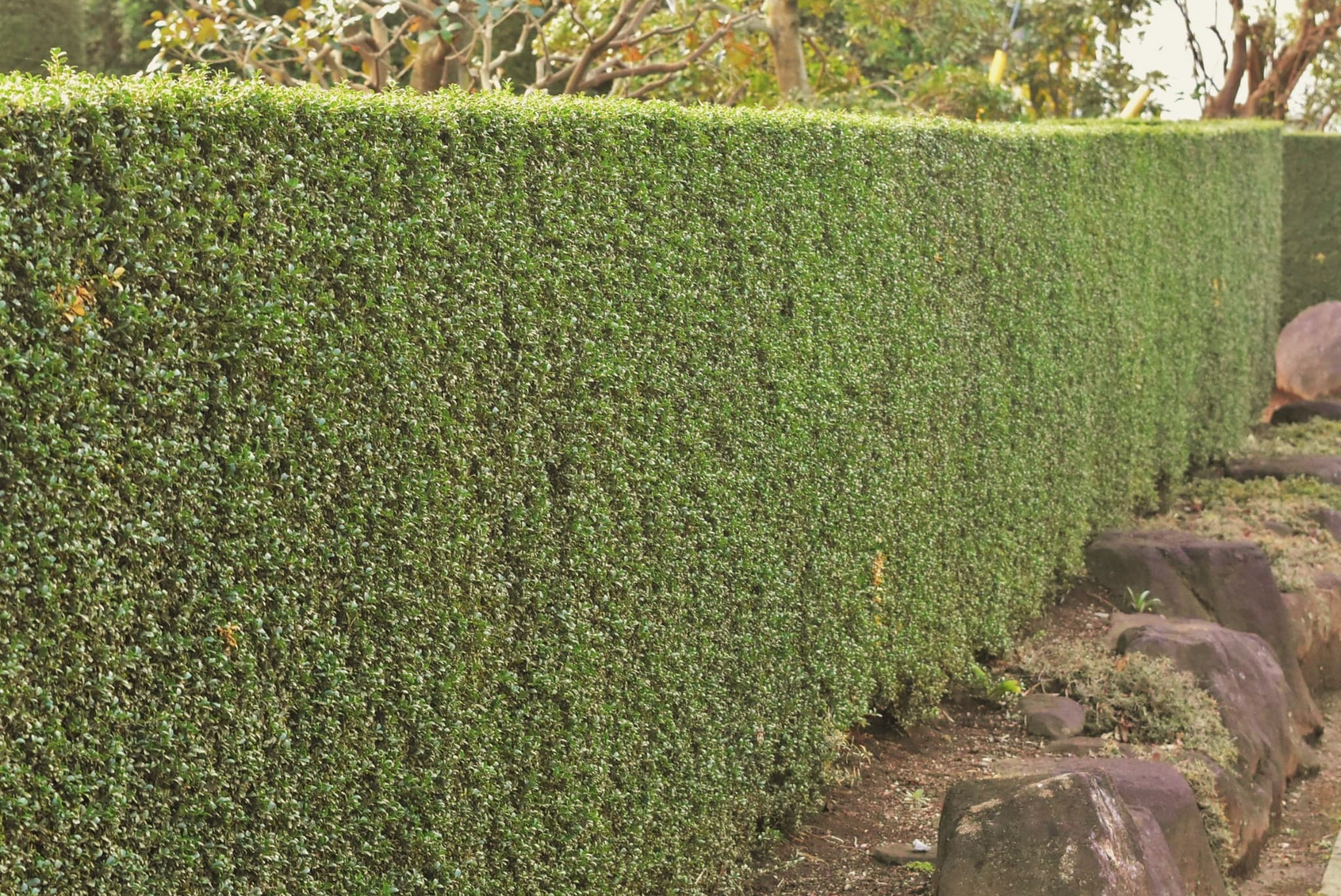
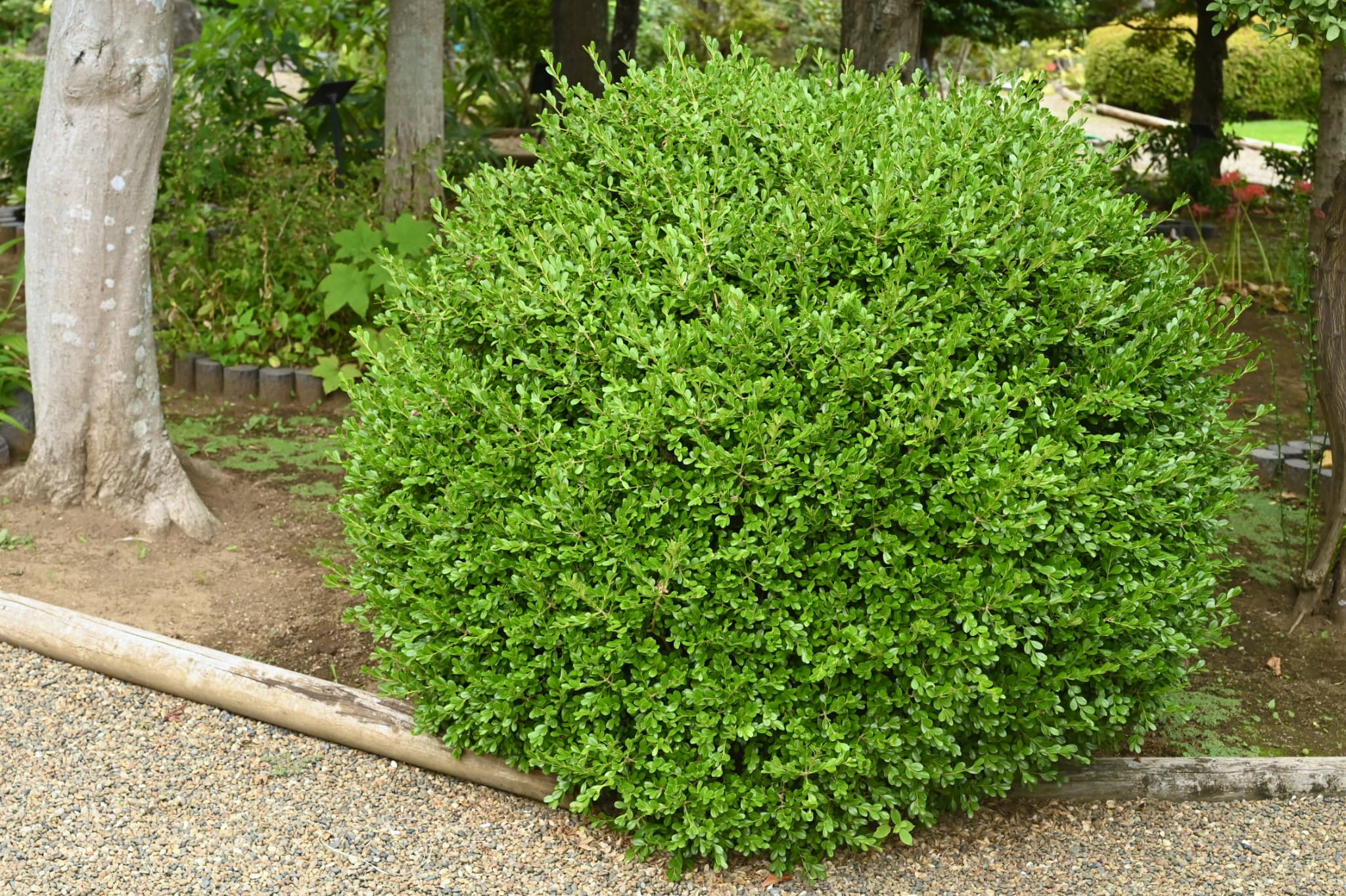
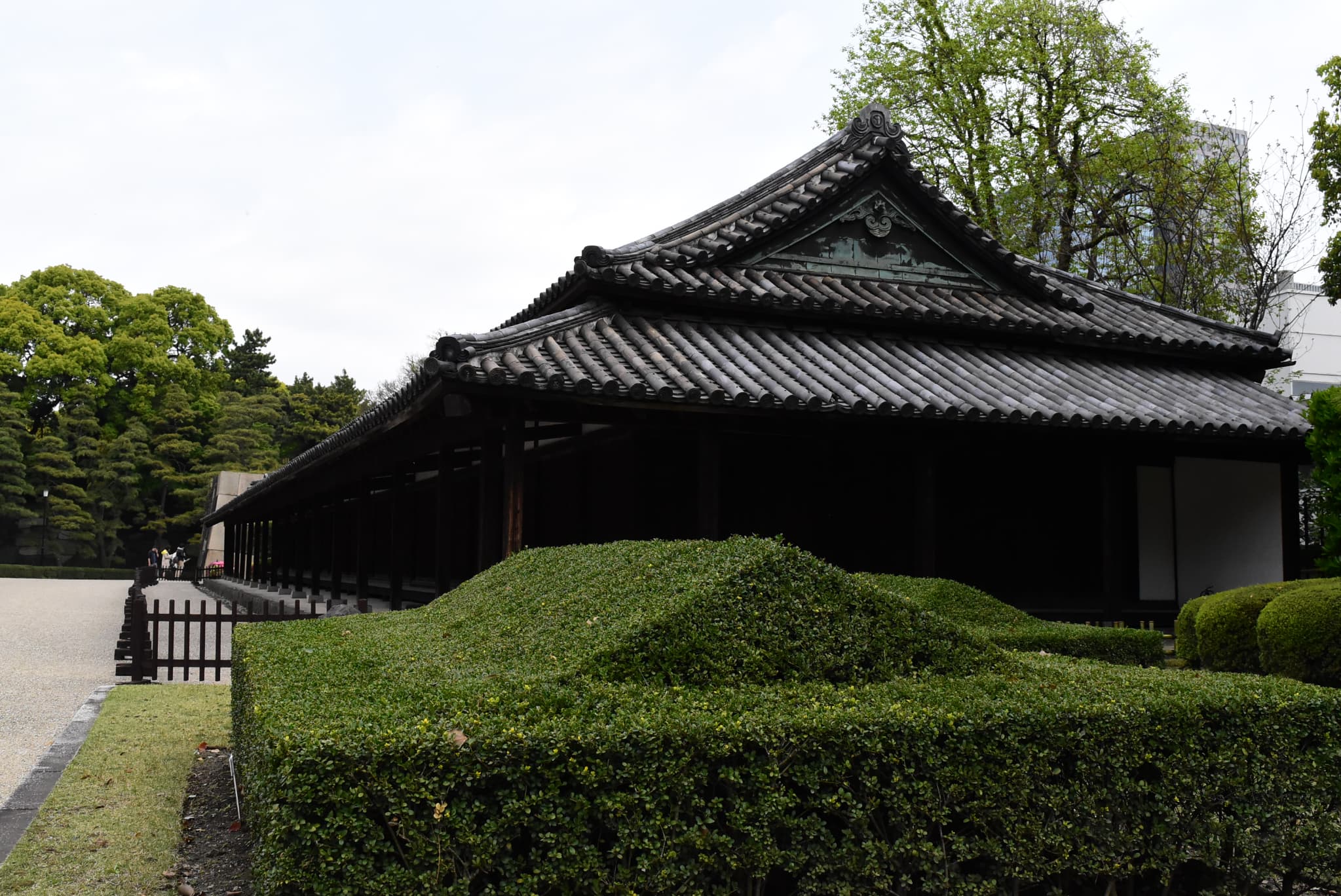
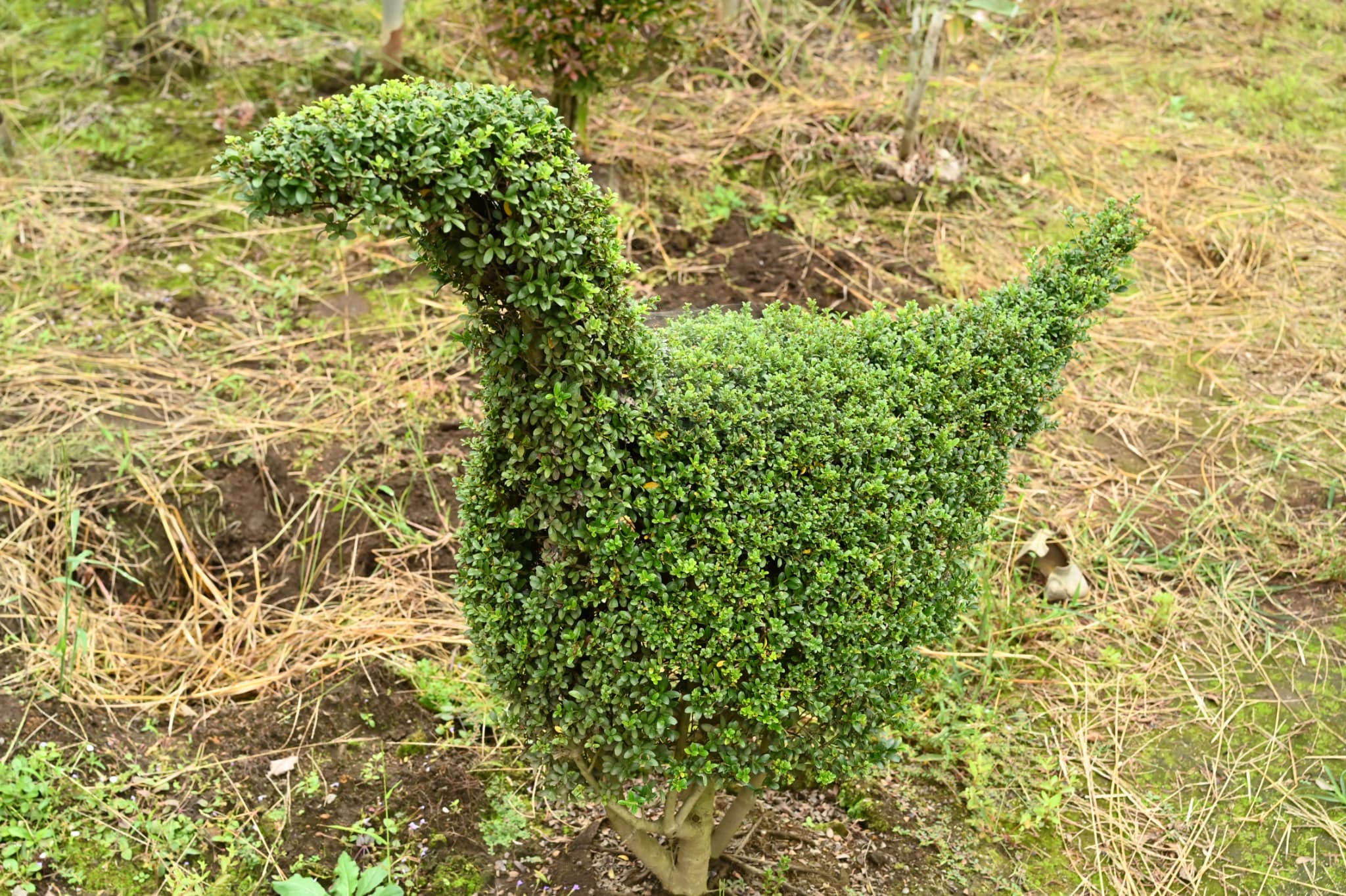
Thanks to its flexible branches and strong tolerance for shearing, Japanese Holly is well suited to hedges and topiary. Growth is slow, however, so light, repeated pruning is preferable to infrequent hard cuts. Pruning during the depths of winter or the height of summer heat can weaken the plant’s vigor. Because the leaves are small, cleaning up after shearing can be tedious, and this becomes especially troublesome if flower beds sit beneath the hedge.
Suitability for Home Gardens
Its tolerance for shearing, adaptability to a wide range of soils and light levels, and slow, manageable growth make Japanese Holly a practical choice for home gardens, particularly compact cultivars such as ‘Golden Gem’, which stays especially tidy in smaller spaces.
Pests
Japanese Holly is generally pest- and disease-resistant, but branches can die back in patches due to twig blight or drying out, and leafroller caterpillars can leave the foliage looking unsightly.
Cultivars
Japanese Holly has been cultivated and selected in Japan for generations, resulting in numerous forms that differ in leaf size, leaf color, branching habit, and overall shape. Some are traditional Japanese forms that have long been used in gardens, hedges, and bonsai, while others are modern ornamental cultivars selected for specific characteristics.
Traditional forms include Oba Inutsuge, with relatively large leaves; Kobano Inutsuge, with small leaves; and Mametsuge, characterized by small, rounded leaves with margins that curl backward. Kinmetsuge is valued for its fine foliage, dense branching, and yellowish new growth, while Hai Inutsuge has a low, spreading habit. Hoki Inutsuge (‘Sky Pencil’) develops upright, broom-like branches and forms a narrow, columnar shape.
Other cultivated forms include variegated Inutsuge, which has leaves marked with contrasting pale coloration, and Unryu Tsuge (‘Spiral Dragon’), characterized by twisted, contorted branches. Hachijō Inutsuge, associated with Izu Ōshima, and Munin Inutsuge, found on the Ogasawara Islands, are also distinctive regional forms.
Among modern ornamental cultivars, ‘Helleri’ is valued for its particularly deep-green foliage, while ‘Golden Gem’ is a compact selection with yellow foliage that is useful for smaller gardens and formal plantings.
These forms illustrate the considerable variation found within Japanese Holly. For practical identification, however, it is important to distinguish established horticultural cultivars from regional forms and traditional Japanese names, as not every name used in Japanese gardening represents a formally registered cultivar.
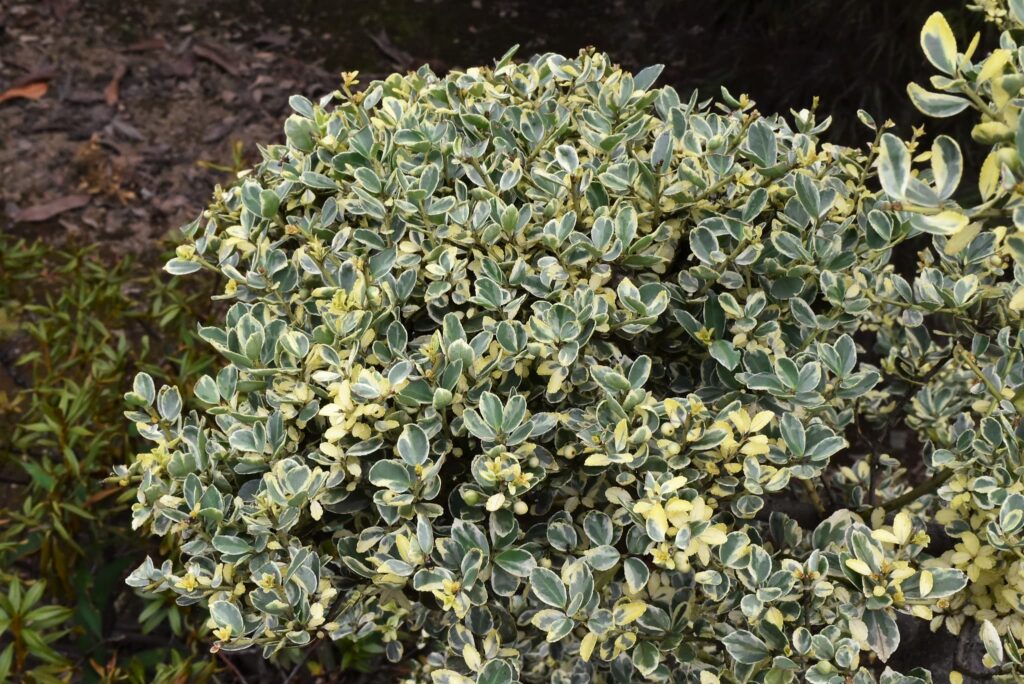
Kinmetsuge is worth distinguishing from the standard species: it has finer leaves and more twiggy branching, allowing it to form an especially dense hedge, and its new growth is more vividly yellow—though ordinary Japanese Holly’s new growth is also somewhat yellowish.
Similar Species
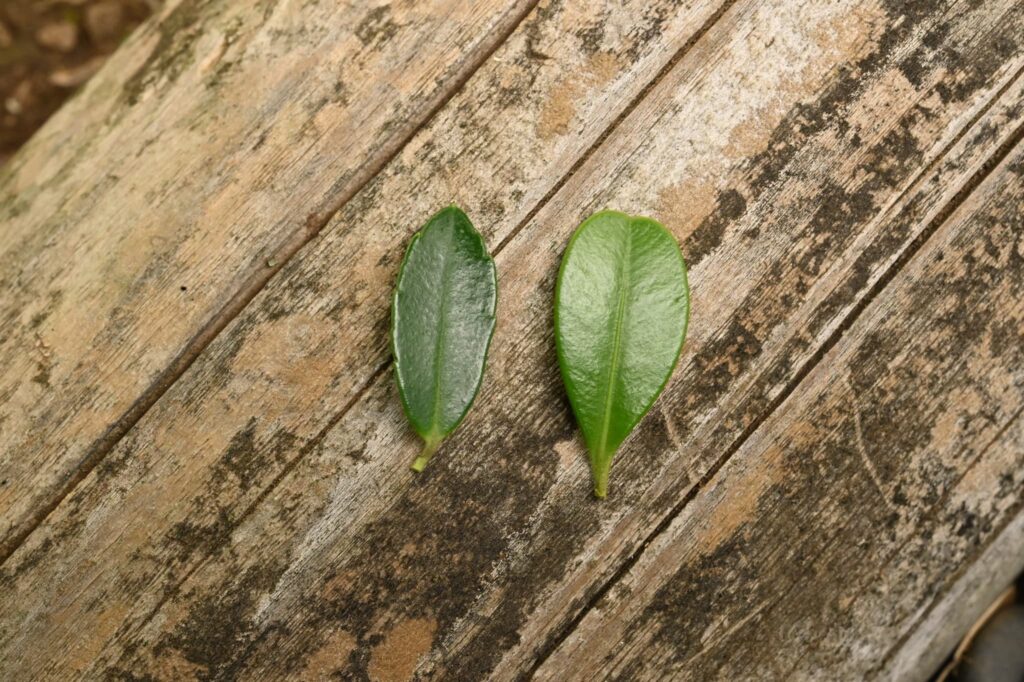
- Japanese Boxwood (Buxus microphylla, “Hontsuge” in Japanese) – The classic look-alike, though the two are unrelated. Leaf color is often cited as a distinguishing feature—Japanese Holly’s leaves tend to be deep green, while true Boxwood’s are more yellow-green—but individual variation makes color an unreliable guide. A more reliable clue is leaf arrangement: Japanese Holly’s leaves grow alternately along the stem, while true Boxwood’s grow in opposite pairs from the same point. Japanese Holly’s leaf margins also have faint, sparse serrations, which true Boxwood lacks; true Boxwood leaves instead have a slightly notched tip.
- Ilex crenata var. paludosa (Tsurutsuge) – An evergreen shrub found on Honshu from the Chubu region northward, growing in a creeping, ground-hugging habit within subalpine conifer forests. Its alternate leaves are similar in shape to Japanese Holly’s, but it produces red fruit.
- Inkberry (Ilex glabra) – A North American holly with spineless evergreen leaves and black berries, widely used in landscaping.
- Yaupon Holly (Ilex vomitoria) – An evergreen holly native to the southeastern United States, producing red berries and known as the only North American plant naturally containing caffeine.
Japanese Holly vs. Japanese Boxwood
| Feature | Japanese Holly | Japanese Boxwood |
|---|---|---|
| Scientific name | Ilex crenata | Buxus microphylla |
| Family | Aquifoliaceae | Buxaceae |
| Leaves | Alternate | Opposite |
| Leaf margin | Finely toothed | Smooth |
| Fruit | Blackish-purple | Capsule |
| Flowers | Small, white/cream | Small, inconspicuous |
Frequently Asked Questions
Is Japanese Holly the same plant as true Boxwood?
No, though they’re often confused. The two belong to different plant families entirely, and the traditional Japanese name for Japanese Holly—which includes a word meaning roughly “not the real thing”—reflects that distinction. The most reliable way to tell them apart is leaf arrangement: Japanese Holly’s leaves alternate along the stem, while true Boxwood’s grow in opposite pairs.
Is Japanese Holly good for hedges and topiary?
Yes—it’s one of the most popular choices in Japan for exactly that purpose, thanks to flexible branches and excellent tolerance for repeated shearing. Because it’s slow-growing, though, it responds best to frequent light trims rather than infrequent hard cutbacks, and pruning is best avoided during the coldest and hottest parts of the year.
Can Japanese Holly be grown in shade?
It can, since it’s quite adaptable, but it performs best in full sun with rich, well-drained soil. In shady conditions, branches tend to become leggy and lower branches may die back over time.
Does Japanese Holly’s fruit attract birds?
Not especially—its blackish-purple berries are generally low on the list of preferred foods for local birds. Species such as azure-winged magpies, starlings, and thrushes will eat them, but usually only once more appealing food sources have become scarce.
What’s the difference between Kinmetsuge and standard Japanese Holly?
Kinmetsuge has finer, more densely branched foliage, making it especially good for tight, formal hedges, and its new growth is a more pronounced yellow than that of the standard species—though ordinary Japanese Holly’s new shoots are also somewhat yellow, just less vividly so.
Are there any pest or disease concerns with Japanese Holly?
It’s generally a tough, low-maintenance plant, but it can occasionally suffer from twig dieback due to blight or drought stress, and leafroller caterpillars can damage the foliage and leave it looking untidy.
Conclusion
Few shrubs in Japan are as thoroughly woven into the practice of hedging and topiary as Japanese Holly. Its dense, glossy foliage, tolerance for hard shearing, and remarkable adaptability to difficult sites have made it a garden workhorse for generations, even as its many cultivars—from the compact ‘Golden Gem’ to the sculptural “Sky Pencil”—continue to expand its role from utilitarian hedge plant to genuine ornamental specimen.