Japanese Hackberry (Celtis sinensis): Identification, Care & Uses
Japanese Hackberry (Celtis sinensis), known in Japan as Enoki (エノキ), is a large deciduous tree in the hemp family (Cannabaceae). Native to Japan and other parts of East Asia, it is valued for its broad, dense crown, distinctive warty bark, colorful autumn fruits, and long association with roads, temples, shrines, and traditional landscapes. It is also an important food plant for the larvae of the Great Purple Emperor butterfly, Japan’s national butterfly. This guide covers identification, foliage, flowers, fruit, bark, timber, cultural history, cultivation, and similar species, based on observations of the tree as grown in Japan.
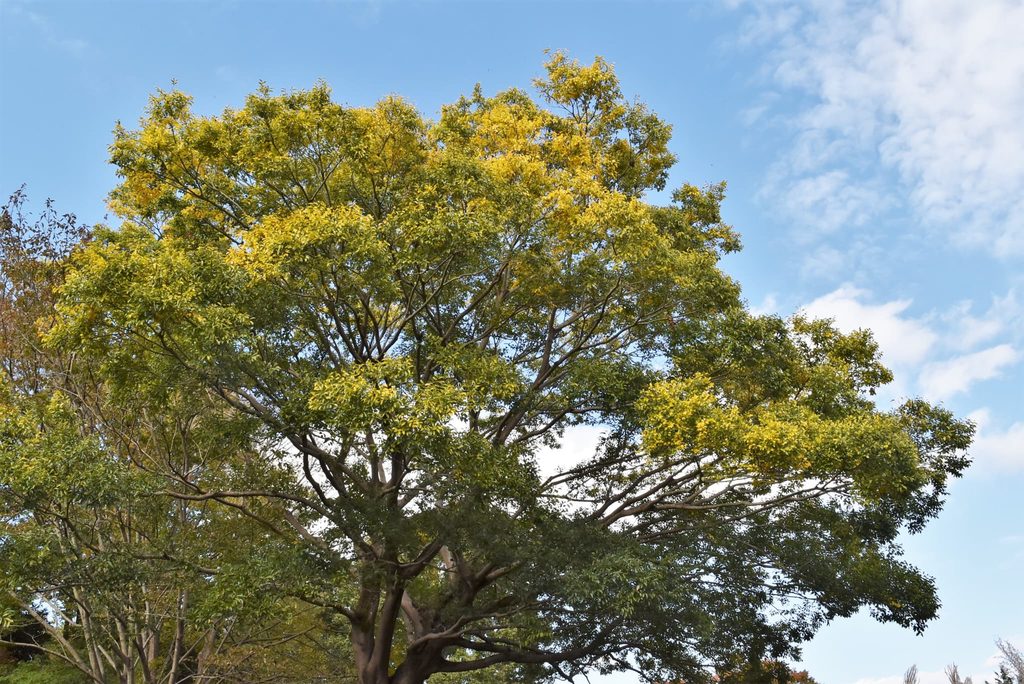
What Is Japanese Hackberry?
Japanese Hackberry (Celtis sinensis) is a deciduous broadleaf tree in the hemp family (Cannabaceae). Its native range extends across East Asia, including Japan, China, Korea, Taiwan, and parts of Indochina. In Japan, it occurs mainly from Honshu through Shikoku and Kyushu.
The species is commonly found in sunny or semi-open habitats, including riverbanks, woodland margins, roadsides, temple and shrine grounds, and other areas influenced by human activity. It has also been planted extensively as a shade tree.
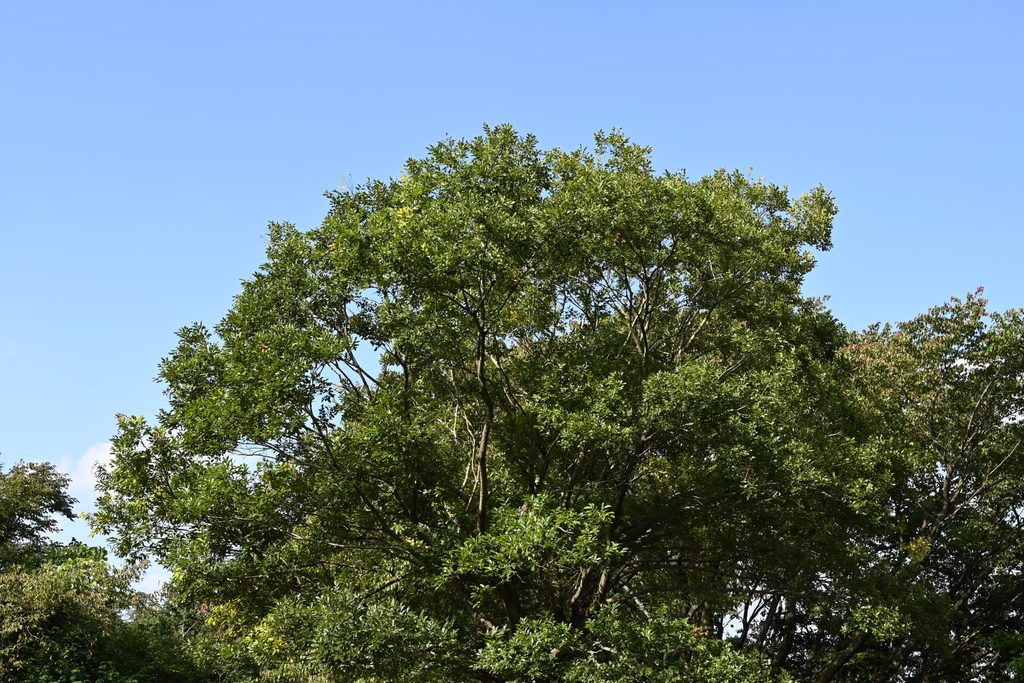
Japanese Hackberry develops a broad, densely branched crown and can become a very large tree. Older specimens are often associated with historic roads, shrines, temples, and traditional settlements.
Overview
| Item | Description |
| Scientific Name | Celtis sinensis Pers. |
| Common Name | Japanese Hackberry; Chinese Hackberry |
| Japanese Name | Enoki (エノキ, 榎) |
| Family | Cannabaceae (Hemp family) |
| Native Range | East Asia, including Japan, China, Korea, Taiwan, and parts of Indochina |
| Plant Type | Deciduous broadleaf tree |
| Height | Commonly about 10–20 m; can become a large tree |
| Flowering Season | April–May |
| Fruit Season | September–October |
| Sun Exposure | Full sun to part shade |
Characteristics
| Feature | Description |
| Leaves | Alternate, broadly ovate to oblong, about 4–10 cm long, with serrated margins mainly toward the upper half |
| Flowers | Small, greenish, inconspicuous; male and female flowers occur on the same tree |
| Fruit | Small, round drupe, about 6–8 mm across, ripening from green through orange-red to reddish-brown |
| Bark | Gray to gray-brown, rough and covered with small wart-like projections |
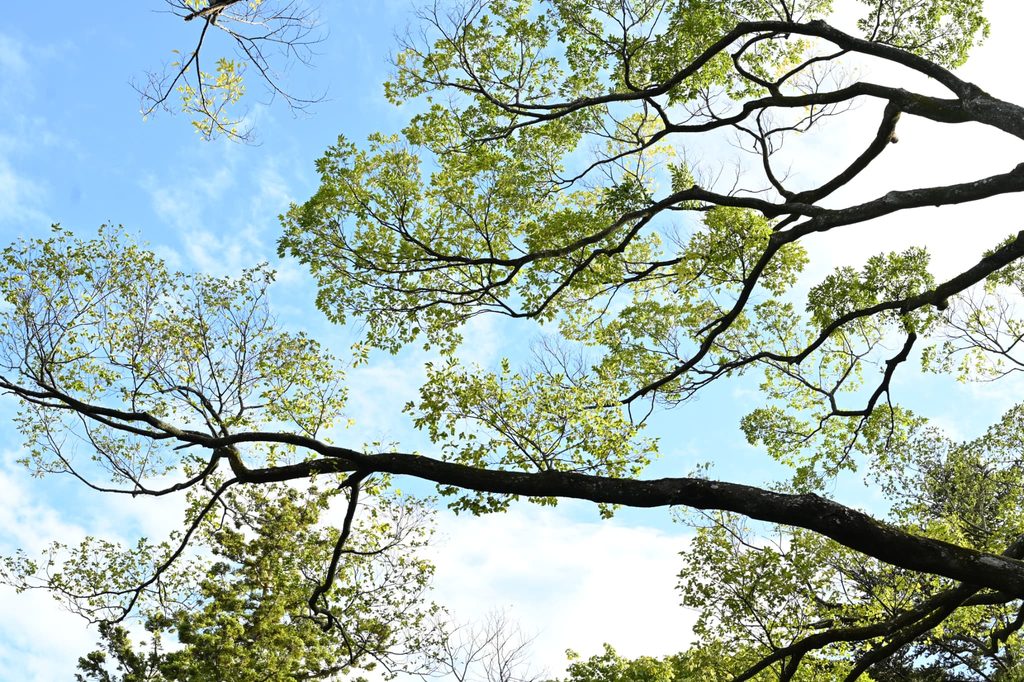
| Crown | Broad and densely branched |
Foliage
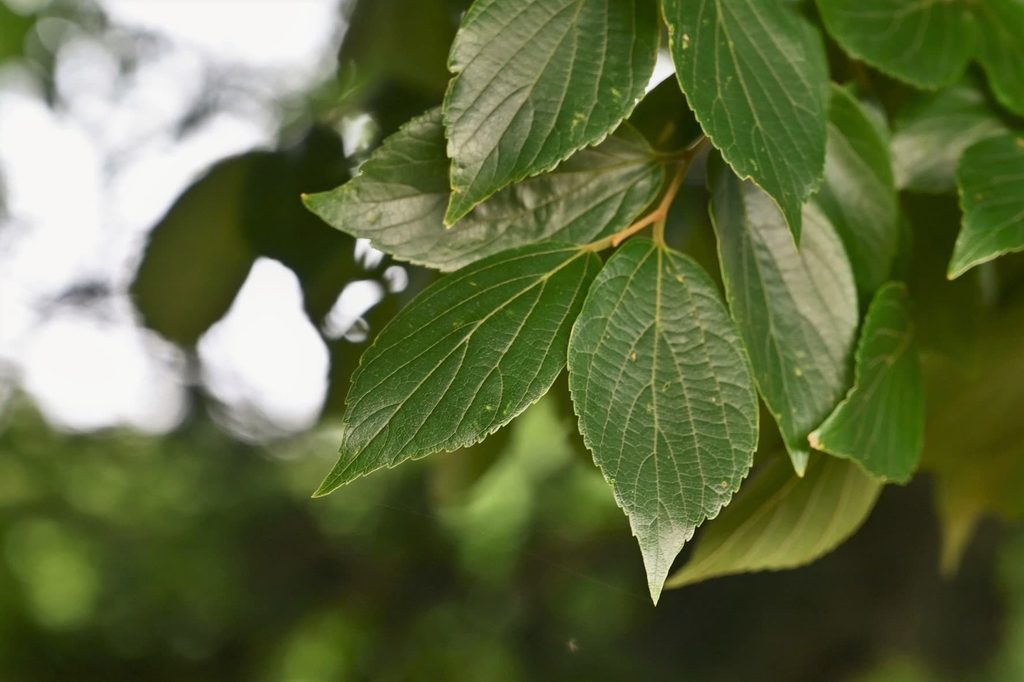
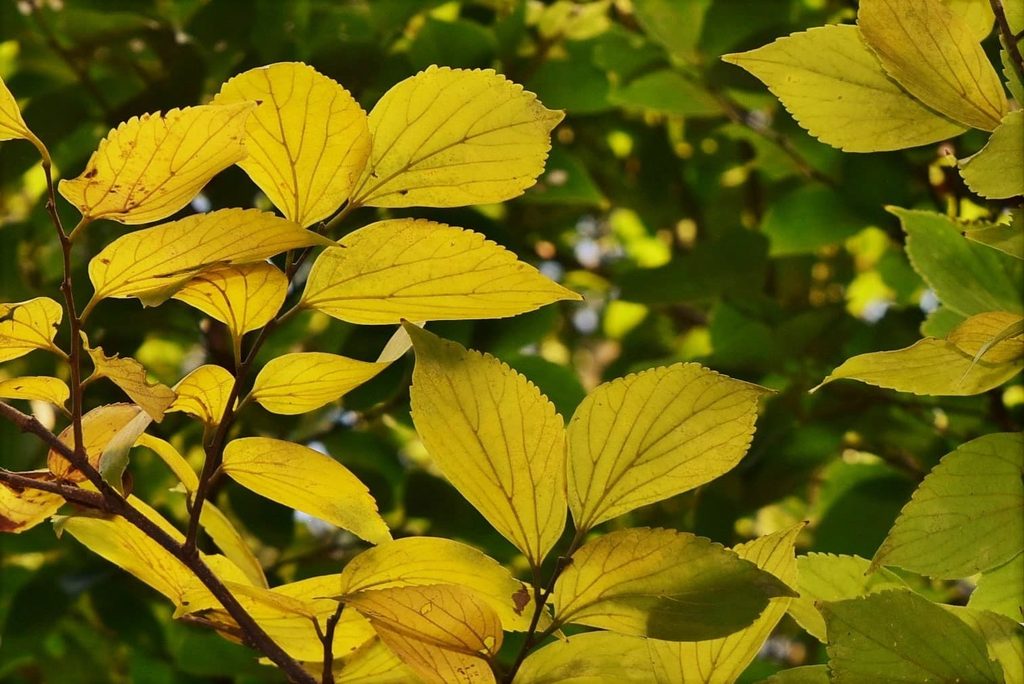
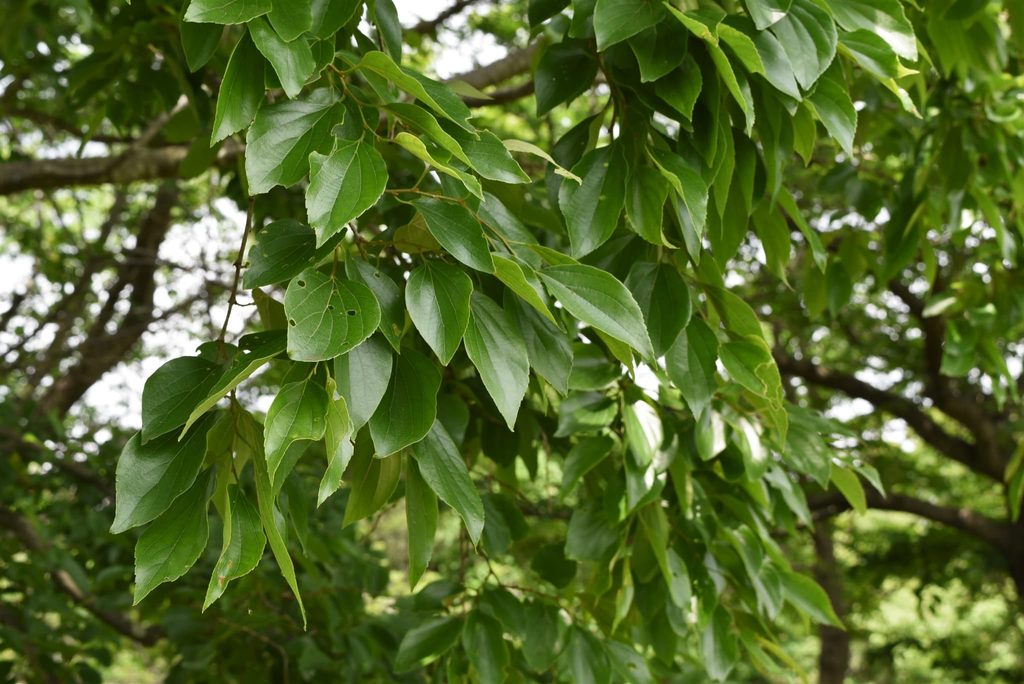
The leaves of Japanese Hackberry are alternate and generally 4–10 cm long. They are broadly ovate to oblong, with a pointed tip and serrated margins concentrated toward the upper half of the leaf.
One useful identification feature is the venation: several prominent veins arise from near the base and run toward the margin, giving the leaves a distinctive appearance.
The upper surface is relatively smooth and slightly glossy when fresh. The leaves turn yellow before falling in autumn, although the timing and intensity of the color vary with local conditions.
Japanese Hackberry is also an important food plant for the larvae of several butterflies. Most notably, the Great Purple Emperor (Sasakia charonda) uses Celtis species as host plants. The species therefore has considerable ecological importance beyond its value as a shade tree.
Flowers
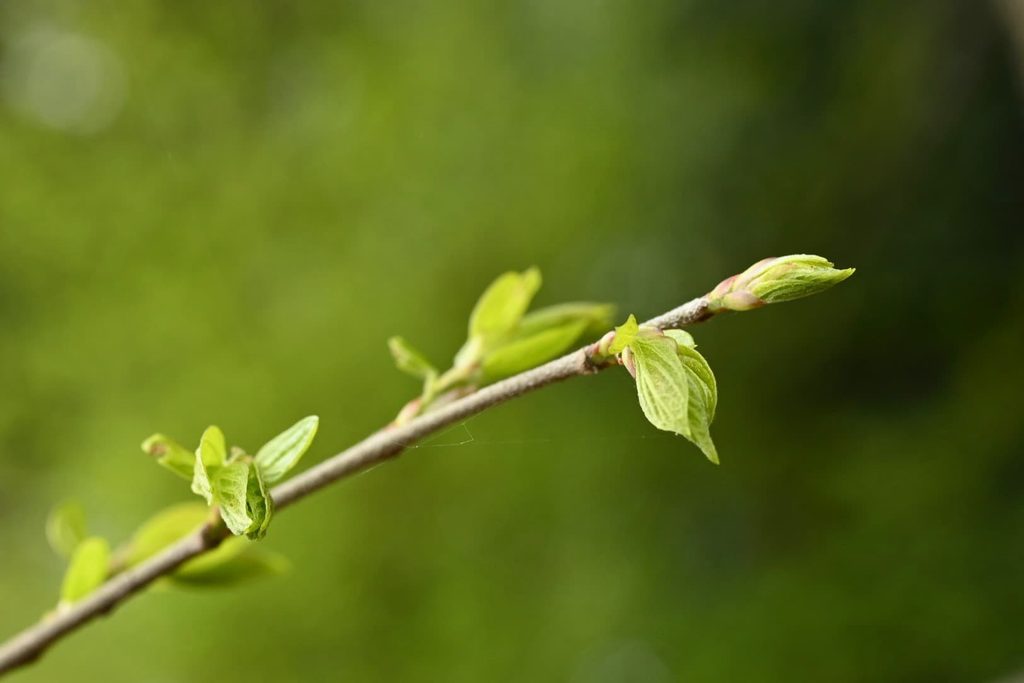
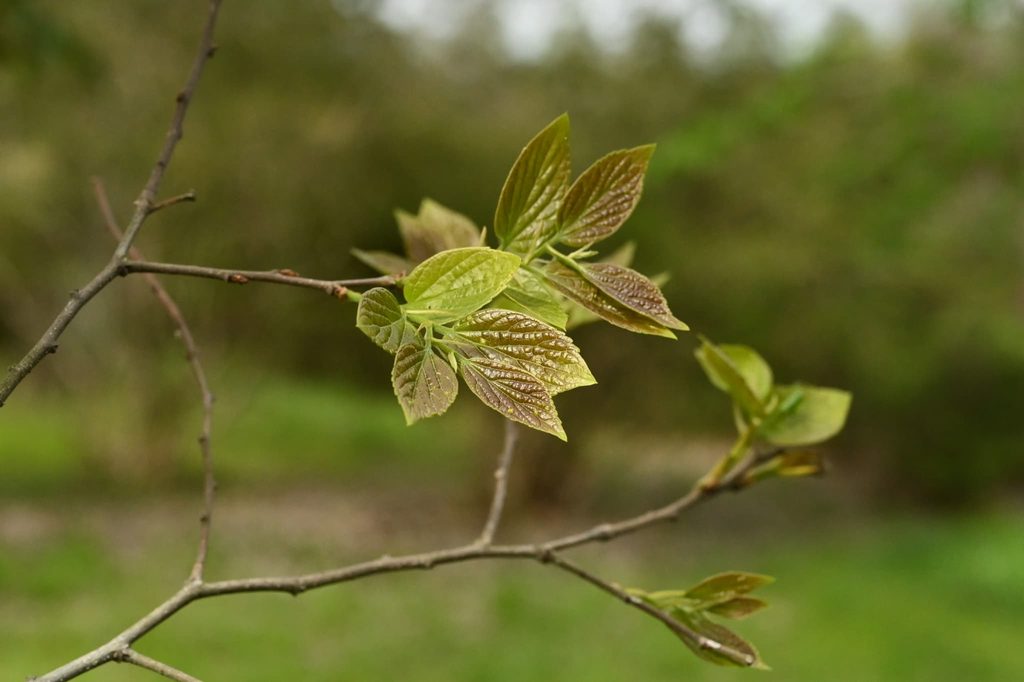
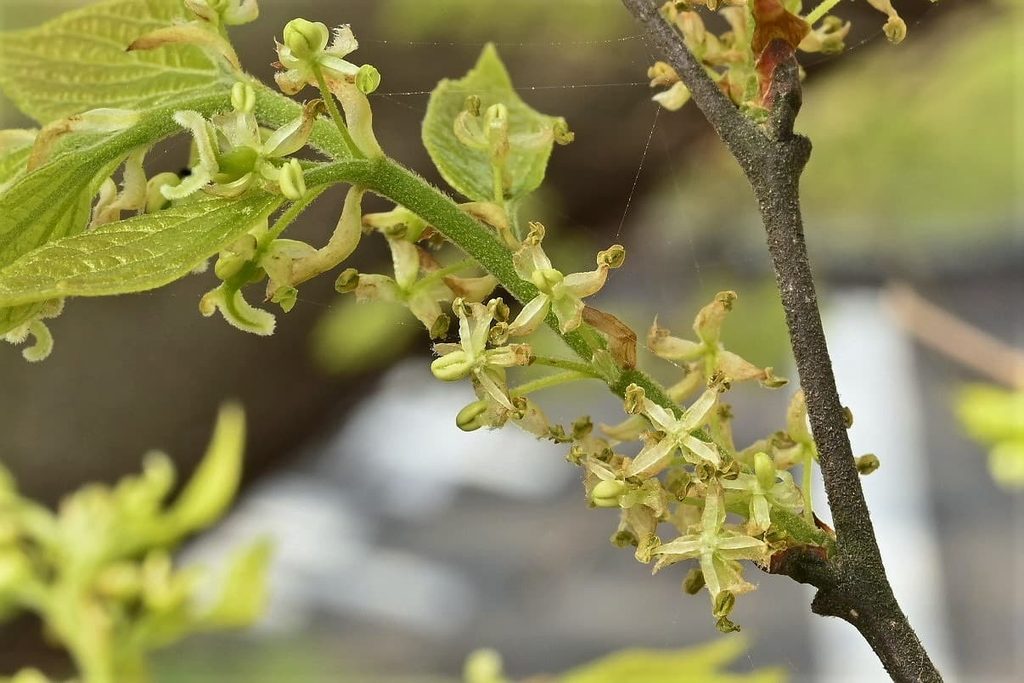
Japanese Hackberry flowers in spring, generally from April to May in Japan, as the new leaves emerge.
The flowers are very small and greenish and have little ornamental value. Male and female flowers occur on the same tree. Male flowers are generally produced lower on the new shoots, while female flowers occur farther toward the tips.
Because the flowers are inconspicuous, the tree is much easier to identify once its characteristic fruits begin to develop.
Fruits
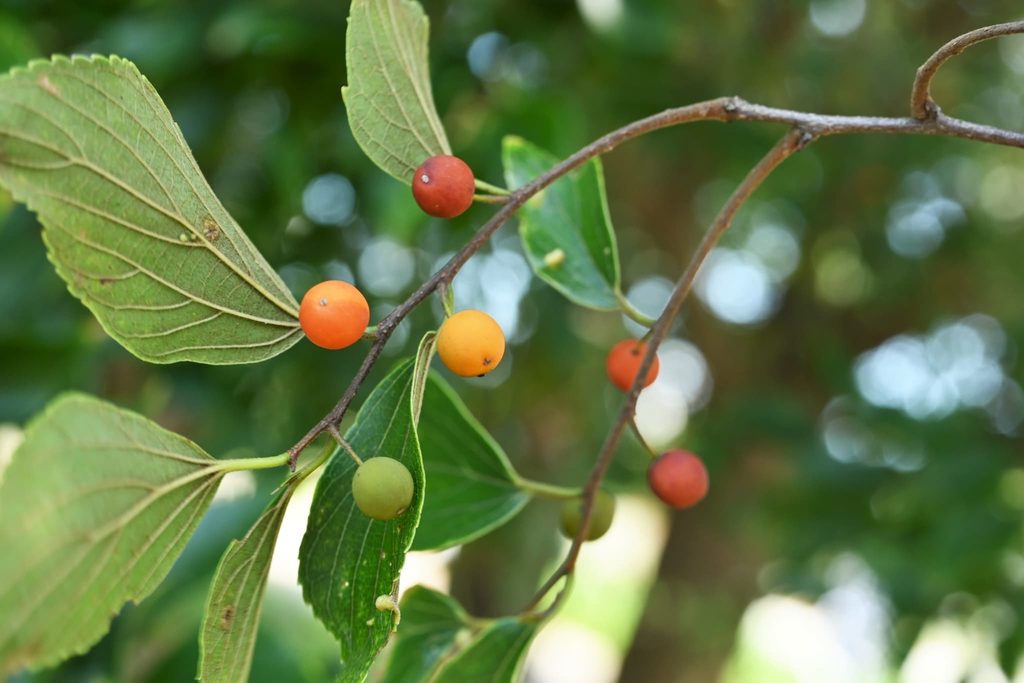
The fruits of Japanese Hackberry are small, round drupes approximately 6–8 mm across.
They develop from green and gradually change color as they mature, becoming orange, reddish, or reddish-brown depending on the stage of ripening. In Japan, the fruits generally mature from September into October.
The fruits are edible and have a sweet flavor. They are consumed by many birds and other wildlife, which help disperse the seeds. Because of this animal dispersal, young Japanese Hackberry trees can appear spontaneously along roadsides, riverbanks, and other suitable habitats.
The colorful fruits are one of the most attractive features of the tree in autumn.
Bark & Timber
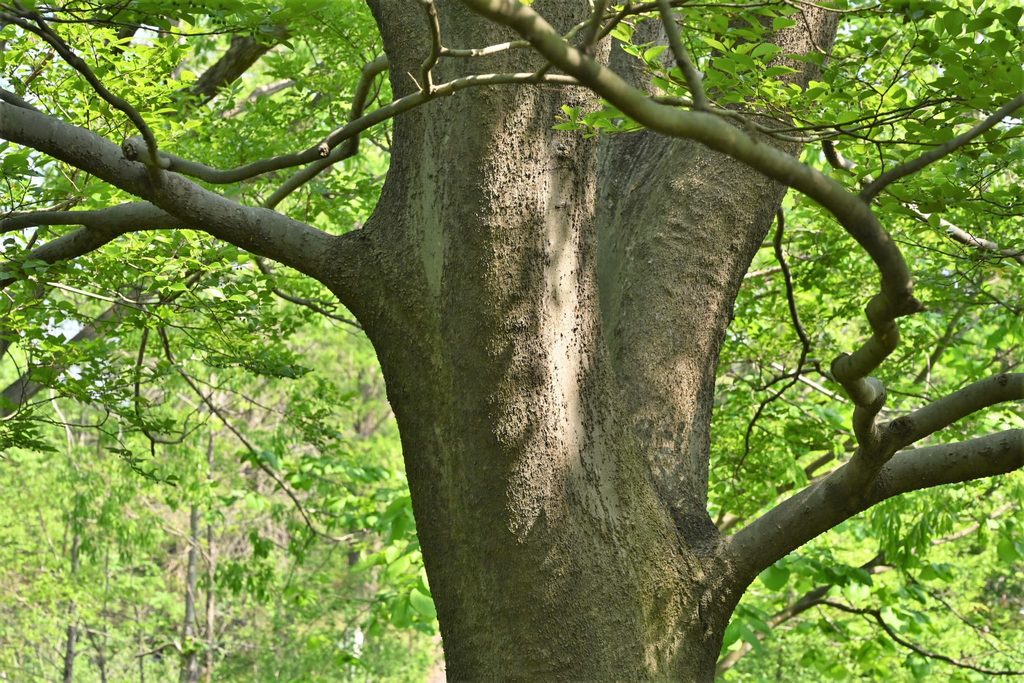
The bark is gray to gray-brown and does not normally peel away in conspicuous flakes. Instead, the surface becomes rough and develops numerous small wart-like projections and shallow horizontal ridges.
This texture is one of the easiest ways to distinguish a mature Japanese Hackberry from some superficially similar trees such as zelkova.
The wood is hard and has traditionally been used for furniture, construction, tools, and other practical applications. It is also used as a substitute for more highly valued hardwoods in some applications.
The trunk base and root flare of old Japanese Hackberry trees can develop particularly impressive forms, making ancient specimens notable landscape trees.
Size & Growth
Japanese Hackberry is a vigorous deciduous tree that can reach approximately 10–20 m in height and develop a broad, spreading crown.
Old trees can become considerably larger in girth and are sometimes preserved as landmark or protected trees.
Its rapid growth and dense branching make it effective as a shade tree, but these same characteristics mean that it requires substantial space.
Uses & Cultural Significance
Roadside Trees and Ichirizuka
Japanese Hackberry has a long association with roads and traditional Japanese landscapes.
During the Edo period, trees were commonly planted at ichirizuka, traditional roadside markers placed at intervals along major routes. Enoki was among the trees used for this purpose, and some old specimens associated with historic routes remain today.
The broad crown also made the species useful as a shade tree.
Temple and Shrine Trees
Large Japanese Hackberry trees are frequently found around temples and shrines, as well as in old villages and traditional settlements.
Some ancient specimens have been preserved because of their size, age, cultural associations, or local historical importance.
Food and Traditional Uses
The ripe fruits are edible and have traditionally been eaten fresh. Their sweet flavor also made them a minor wild food resource.
Historical accounts also describe the use of young leaves as food during periods of food shortage. However, this was a regional and historical use rather than a major modern food crop.
Timber
Japanese Hackberry wood has traditionally been used for furniture, construction, tools, and other woodworking purposes.
The wood is reasonably hard and durable, although it is not generally regarded as one of Japan’s most valuable commercial timbers.
Growing Guide
| ITem | Description |
| Light | Full sun to part shade |
| Soil | Adaptable; prefers fertile, well-drained soil |
| Moisture | Moderate; adaptable once established |
| Watering | Regular watering while young; relatively drought tolerant once established |
| Wind Tolerance | Good once established |
| Pruning | Tolerates pruning well |
| Garden Suitability | Suitable only where substantial space is available |
Light & Soil
Japanese Hackberry is adaptable and grows well in full sun to partial shade.
It can tolerate a range of soil conditions, but fertile, well-drained soil encourages vigorous growth. Young trees should receive regular water during dry periods while their root systems are becoming established.
Watering
Established Japanese Hackberry trees are relatively adaptable and can tolerate periods of dry weather. Young trees, however, should be watered during prolonged drought.
Although the species is often found near rivers and other moist habitats, it does not require permanently wet soil.
Wind & Coastal Tolerance
Japanese Hackberry develops a strong, substantial structure and can tolerate exposed conditions once established.
It can be used as a shade or shelter tree, although its eventual size should be considered carefully when choosing a planting location.
Pruning
Japanese Hackberry grows vigorously and tolerates pruning reasonably well.
Young trees can benefit from structural pruning to establish a strong framework. On mature trees, pruning should generally be limited to removing dead, damaged, or poorly positioned branches.
Because the species naturally develops a broad crown, severe repeated pruning is generally unnecessary and can create excessive regrowth.
Suitability for Home Gardens
Japanese Hackberry is not a good choice for a small garden.
It grows into a large tree with a broad crown and substantial trunk. It is better suited to parks, large gardens, temple and shrine grounds, riverbanks, roadsides, and other spacious locations.
Cultivars & Forms
Japanese Hackberry has several horticultural and naturally occurring forms that have been recognized in Japanese botanical literature.
Weeping Japanese Hackberry
Trees with distinctly pendulous branches are sometimes known as Shidare Enoki (シダレエノキ), or Weeping Enoki.
These forms are valued for their unusual branching habit and can become impressive specimen trees when given sufficient space.
Some old weeping Japanese Hackberry trees have been preserved as notable trees in Japan.
Ezo Enoki
Ezo Enoki is the Japanese name for Celtis jessoensis, a closely related species rather than a cultivar of Japanese Hackberry.
It is found in Hokkaido as well as parts of Honshu, Shikoku, and Kyushu. Compared with Japanese Hackberry, its leaves generally have serrated margins extending much farther toward the base, and its fruits turn black when mature.
Because of these differences, Ezo Enoki should be treated as a separate species rather than as a cultivar or regional form of Celtis sinensis.
Similar Species
Japanese Hackberry vs. Ezo Enoki
Ezo Enoki (Celtis jessoensis) is one of the species most likely to be confused with Japanese Hackberry.
Japanese Hackberry generally has serrations concentrated on the upper half of the leaf margin, whereas Ezo Enoki has serrations extending much farther toward the base. The fruits also differ: Japanese Hackberry fruits become orange to reddish-brown, while Ezo Enoki fruits turn black when mature.
Japanese Hackberry vs. Zelkova
Japanese Hackberry and Japanese Zelkova (Zelkova serrata) can develop similarly broad crowns and are both familiar trees in Japanese landscapes.
The leaves provide a useful distinction. Japanese Hackberry leaves are generally thicker and have serrations concentrated toward the upper portion of the margin. Zelkova leaves have more evenly serrated margins and a more symmetrical appearance.
The bark is also different: mature Japanese Hackberry develops a rough, warty surface, while mature zelkova develops a distinctive pattern of flaking bark.
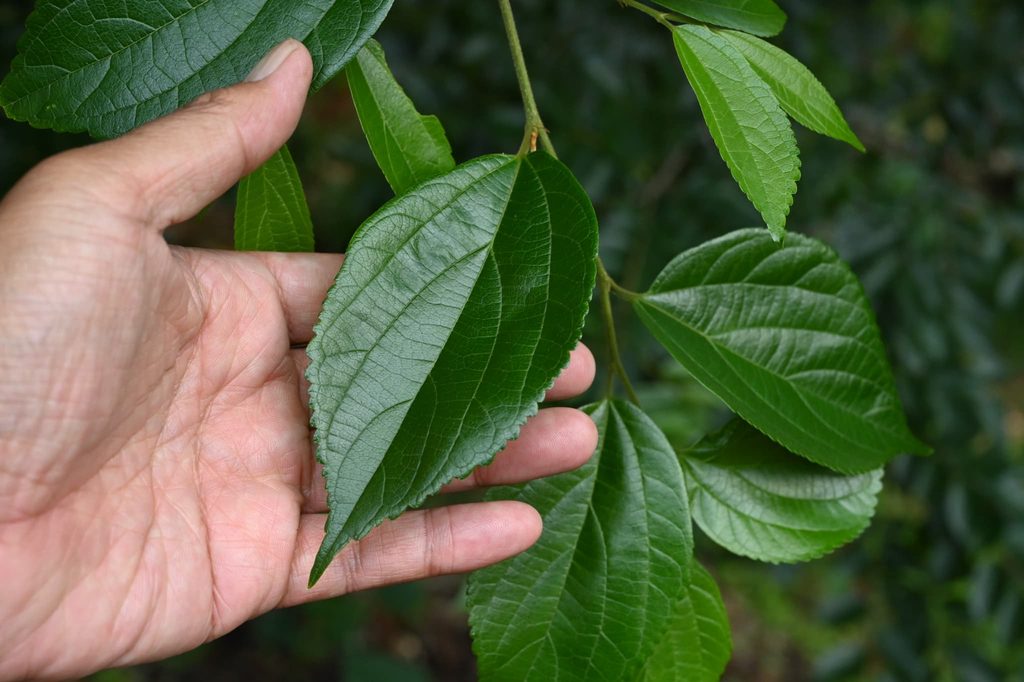
Japanese Hackberry vs. Muku Tree
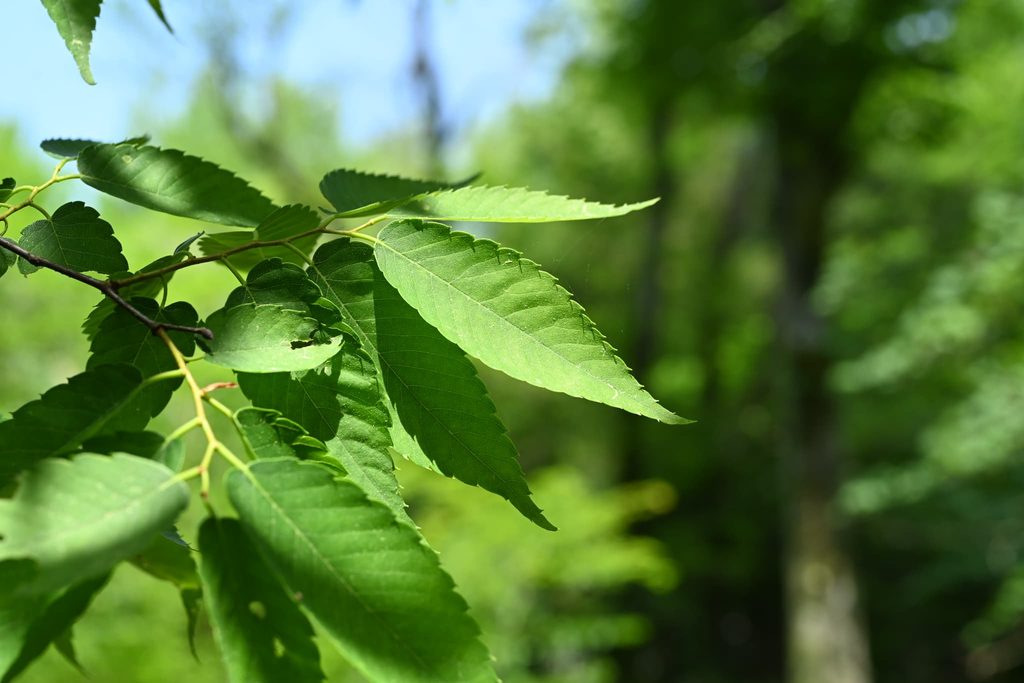
Muku Tree (Aphananthe aspera) is another common Japanese tree that can be confused with Japanese Hackberry.
The leaves are particularly useful for identification. Muku Tree leaves have a distinctly rough upper surface, whereas Japanese Hackberry leaves are comparatively smooth.
Muku Tree also tends to have more numerous and more prominent lateral veins. The bark differs as well: Muku Tree often develops longitudinal markings, while Japanese Hackberry has the characteristic warty and horizontally ridged surface.
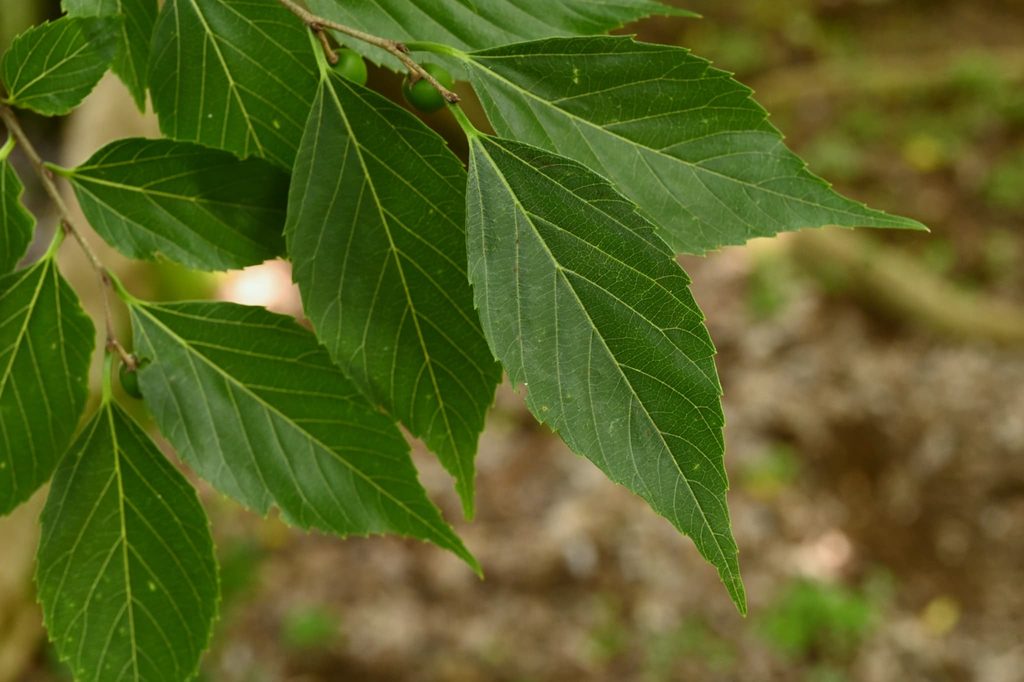
Frequently Asked Questions
What is Japanese Hackberry?
Japanese Hackberry is the common English name used for Celtis sinensis, a deciduous tree in the hemp family (Cannabaceae). It is native to Japan and other parts of East Asia and is particularly familiar as a large shade tree.
Is Japanese Hackberry the same as Enoki?
Yes. Enoki (エノキ) is the Japanese common name for Celtis sinensis. Japanese Hackberry is an English common name for the same species.
Is Japanese Hackberry edible?
Yes. The small ripe fruits are edible and have a sweet flavor. They have traditionally been eaten fresh, although they are not an important commercial fruit crop.
Why is Japanese Hackberry important to butterflies?
Its leaves are an important food source for the larvae of several butterfly species. The Great Purple Emperor (Sasakia charonda), Japan’s national butterfly, is particularly associated with Celtis trees.
Is Japanese Hackberry suitable for a small garden?
Generally not. It eventually becomes a large tree with a broad crown and requires substantial space. It is much better suited to parks, large gardens, temple and shrine grounds, and other spacious sites.
How can I tell Japanese Hackberry from Ezo Enoki?
Look at the leaf margins and fruit. Japanese Hackberry generally has serrations mainly on the upper half of the leaf, and its fruits mature orange to reddish-brown. Ezo Enoki has serrations extending much farther toward the base, and its fruits turn black when mature.
How can I tell Japanese Hackberry from a Muku Tree?
The easiest clue is the leaf surface. Muku Tree leaves are distinctly rough to the touch, while Japanese Hackberry leaves are comparatively smooth. The venation and bark also differ.
Is Japanese Hackberry related to hackberries in North America?
Yes. Japanese Hackberry belongs to the genus Celtis, the same genus that includes several hackberry species native to North America. However, Celtis sinensis is an East Asian species.
Conclusion
Japanese Hackberry (Celtis sinensis) is a large, adaptable deciduous tree with deep connections to the landscape and culture of Japan. Its broad crown, rough warty bark, colorful autumn fruits, and distinctive leaves make it relatively easy to recognize once its key characteristics are familiar.
The species has served many roles: a traditional roadside tree, a shade tree around temples and settlements, a source of timber and edible fruit, and an important host plant for native butterflies such as the Great Purple Emperor.
Its eventual size makes it unsuitable for most small residential gardens, but Japanese Hackberry remains an excellent tree for parks, large gardens, traditional landscapes, riverbanks, and other spacious sites. Its combination of ecological importance, cultural history, and distinctive appearance makes it one of the characteristic large deciduous trees of Japan.