Japanese Chestnut (Castanea crenata): Identification, Care & Uses
Japanese Chestnut is one of Japan’s most historically significant food trees, deliberately managed and likely cultivated by Jomon-period communities thousands of years before written history, and still celebrated today as a defining flavor of autumn. This guide covers identification features, flowers, fruit, bark, growing tips, and history, based on observations of the plant as grown in Japan.
What Is the Japanese Chestnut?
Japanese Chestnut is a deciduous tree in the family Fagaceae, whose nuts are among the signature flavors of autumn in Japan. It is deeply woven into Japanese daily life and is mentioned by name as far back as the Kojiki. Long before wet-rice agriculture became established in Japan, chestnuts were already an important food resource, and they continued to be eaten regularly alongside rice and wheat through the Nara and Heian periods.
Japanese Chestnut grows naturally across southwestern Hokkaido, Honshu, Shikoku, and Kyushu, although wild trees generally produce smaller and less sweet nuts than cultivated varieties. The wild form is commonly known in Japan as Shibaguri or Yamaguri. Modern cultivated chestnuts are primarily Japanese Chestnut cultivars selected from naturally occurring large-fruited forms of the wild species, although Chinese Chestnut and Japanese–Chinese hybrid cultivars are also grown.
Most commercial chestnut production in Japan is based on Japanese Chestnut cultivars. Other chestnut species are also cultivated on a smaller scale, including European Chestnut, widely associated with marrons glacés, and Chinese Chestnut, known in Japan for Tianjin-style sweet roasted chestnuts.
Overview
| Item | Description |
|---|---|
| Scientific Name | Castanea crenata |
| Common Name | Japanese Chestnut |
| Japanese Name | Kuri (クリ); wild form called Shibaguri or Yamaguri |
| Family | Fagaceae |
| Genus | Castanea |
| Native Range | Japan (southwestern Hokkaido, Honshu, Shikoku, Kyushu) |
| Plant Type | Deciduous Tree |
| Flowering Season | Early summer (June–July) |
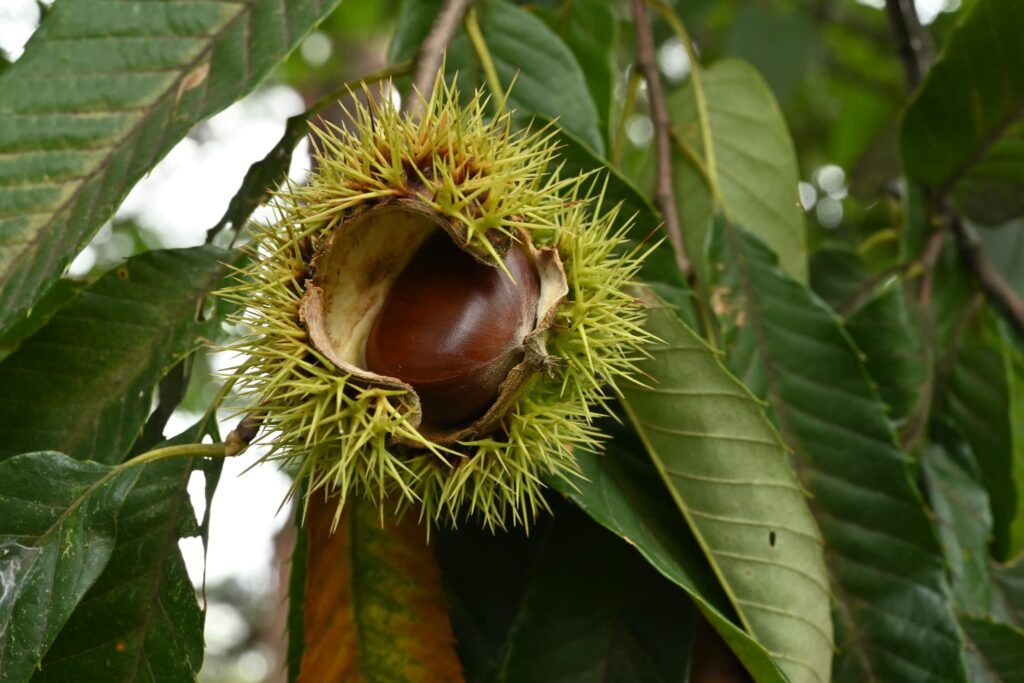
| Fruit Type | Spiny burr containing 2–3 nuts, ripening in autumn |
| USDA Zones | 5–8 |
| Sun Exposure | Full Sun |
Characteristics
| Feature | Description |
|---|---|
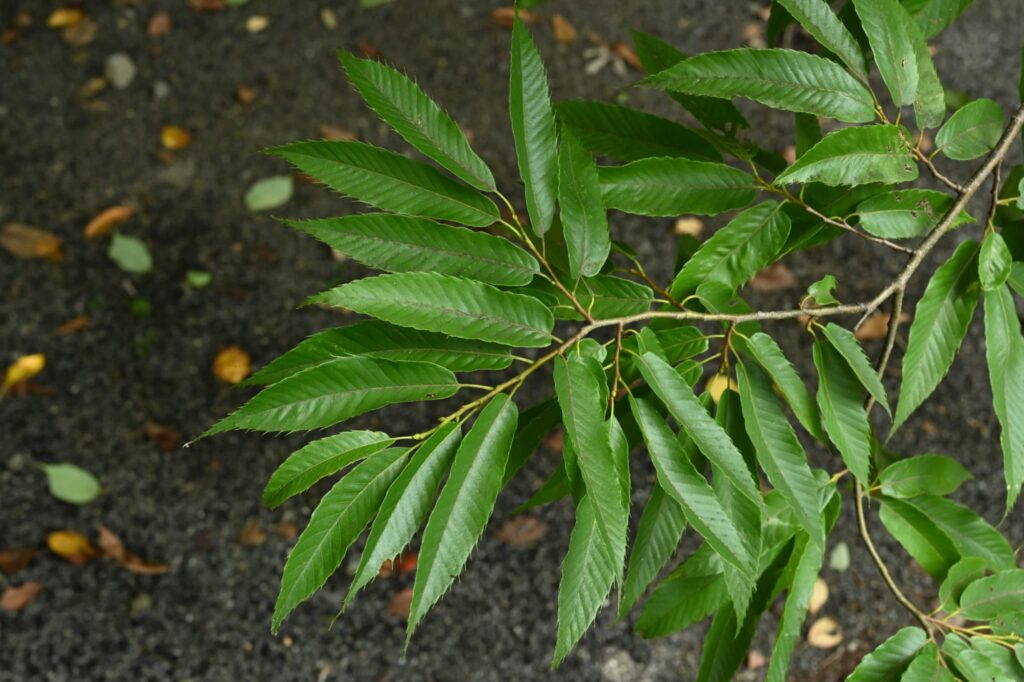
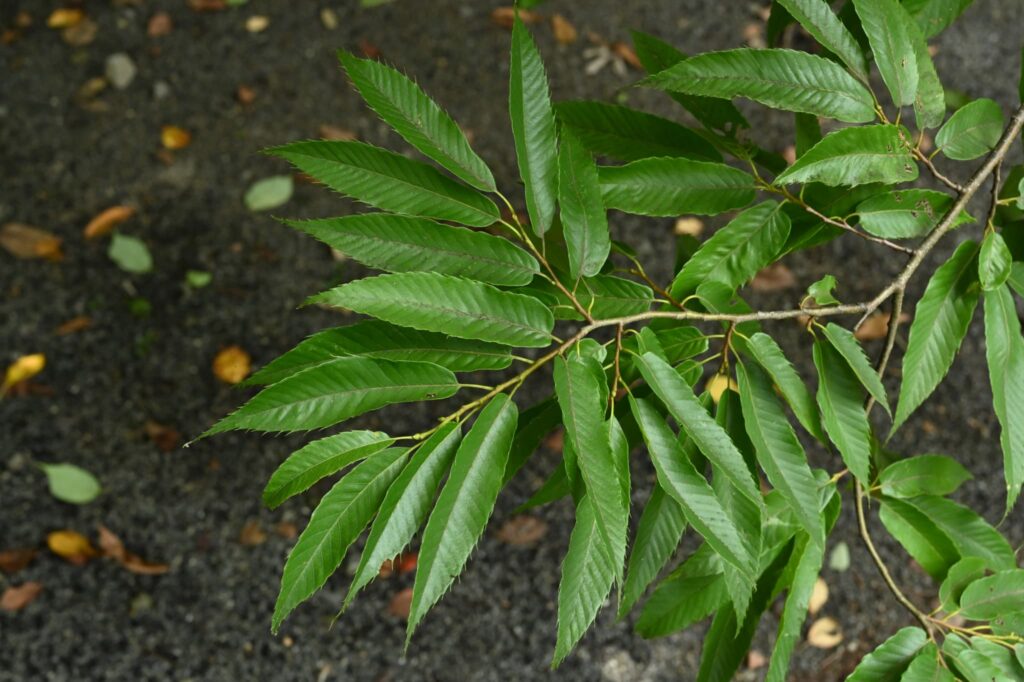
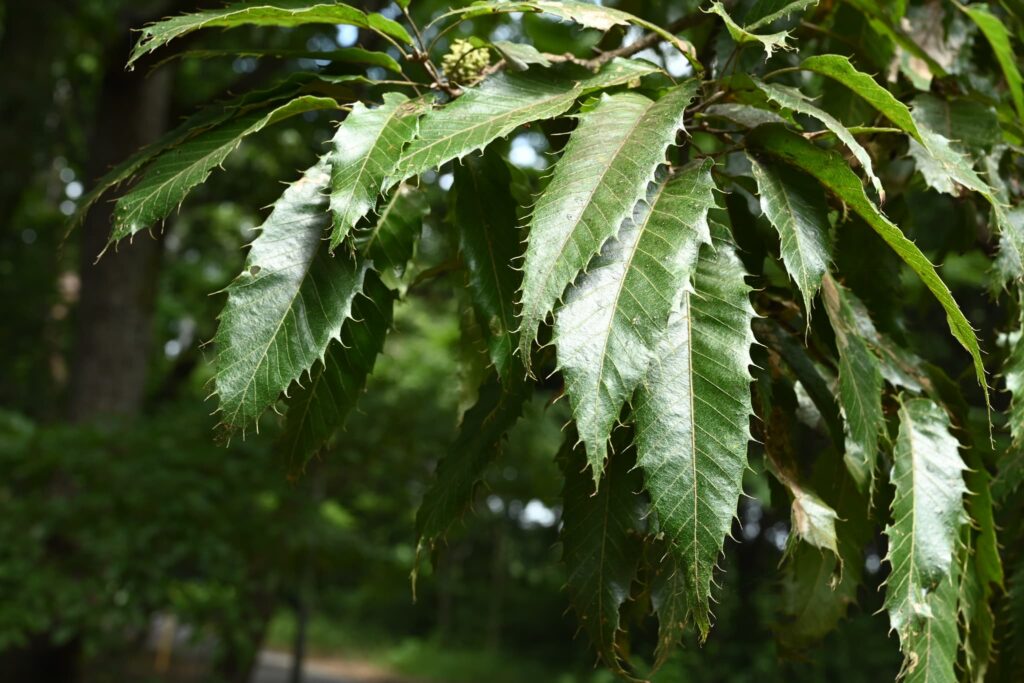
| Leaves | Alternate, narrow oval, finely spine-toothed with green tips, 8–15 cm long |
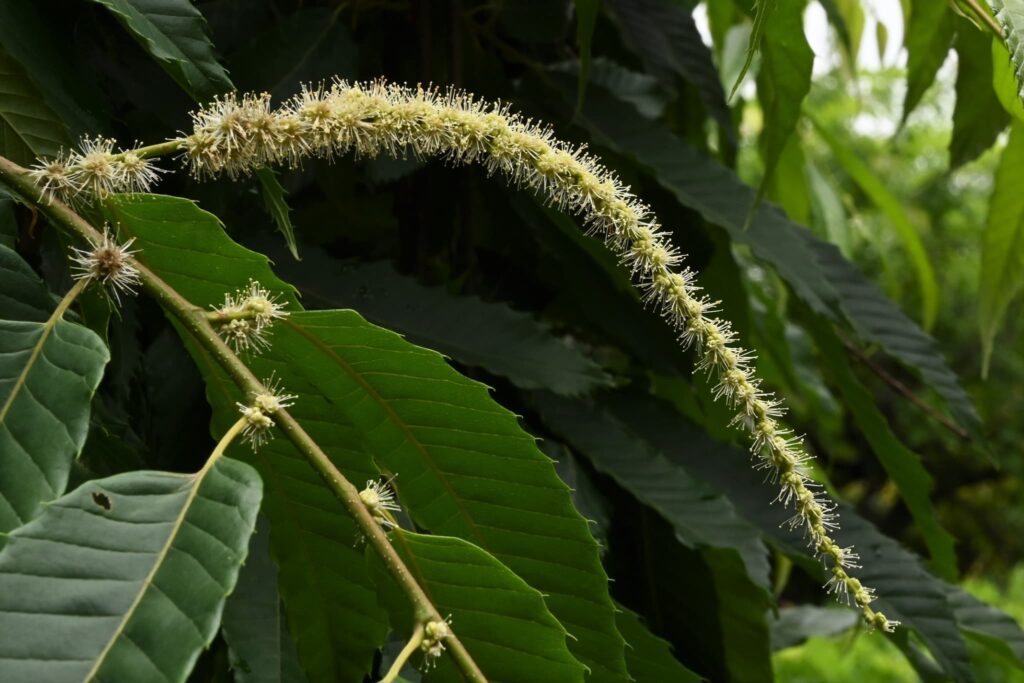
| Flowers | Male flowers in long, drooping, strongly scented catkins; female flowers inconspicuous |
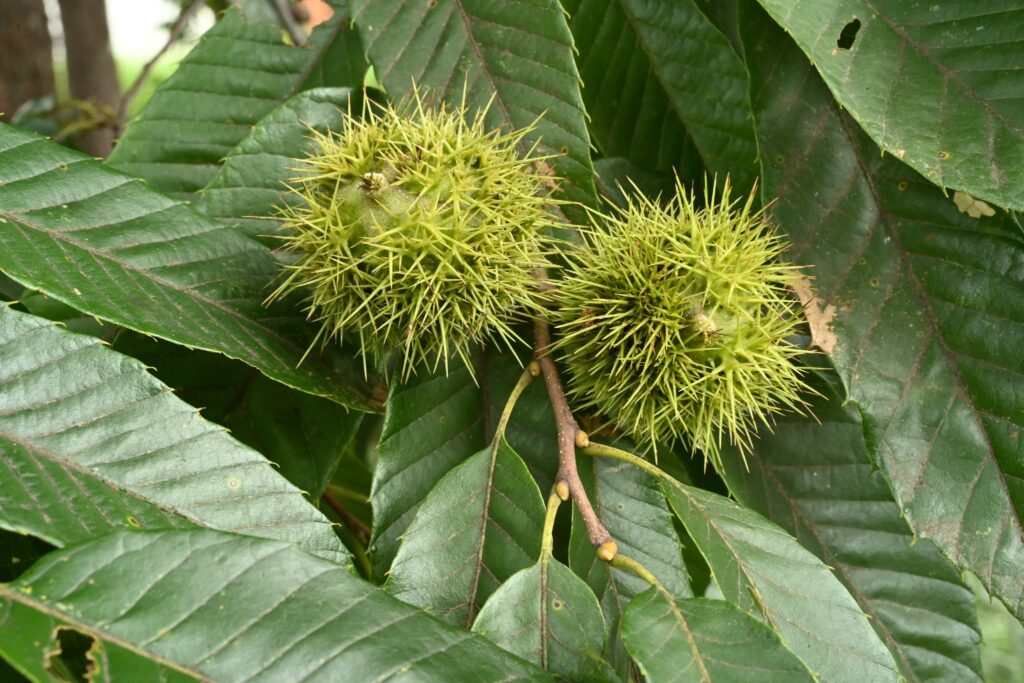
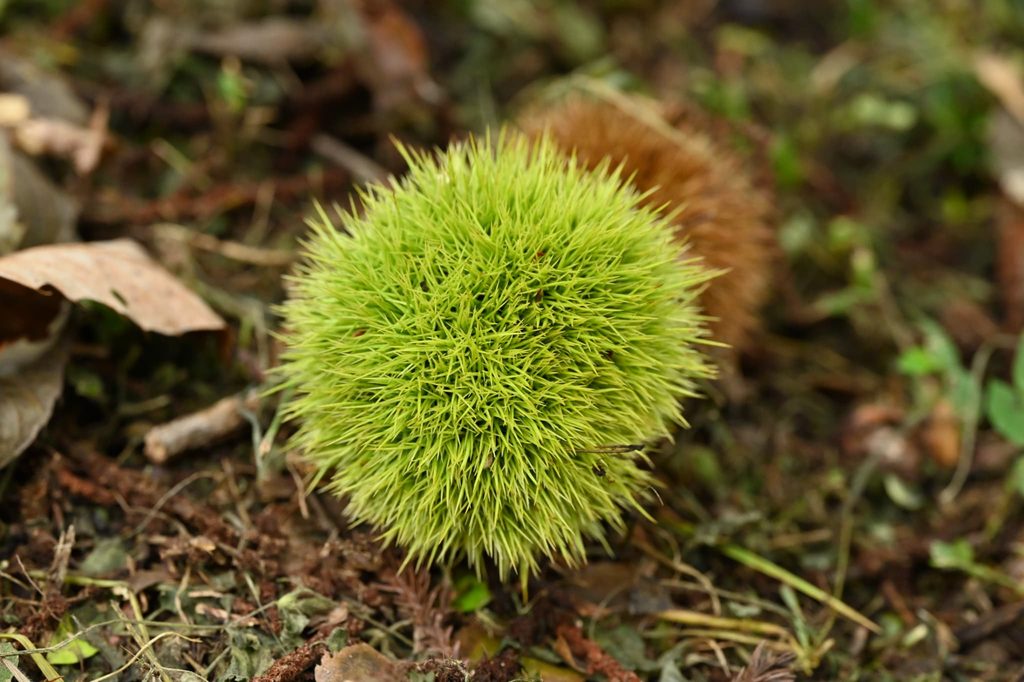
| Fruit | Spiny burr containing 2–3 nuts |
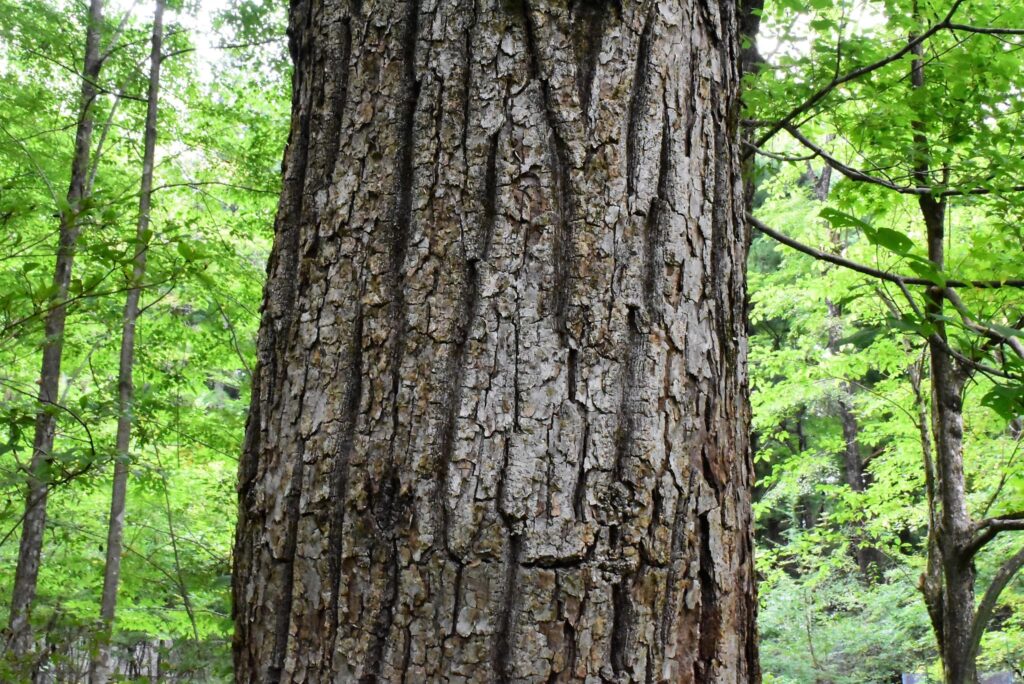
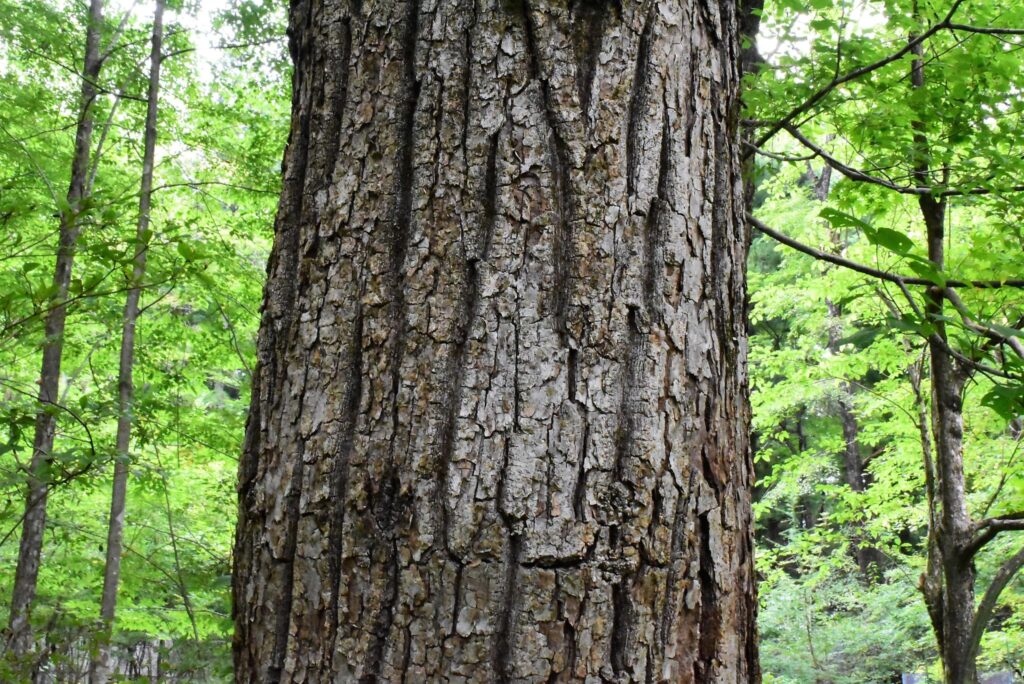
| Bark | Dark gray, deeply fissured; resembles Konara Oak; used for dye and tanning |
| Size | Large tree requiring significant space; can live well over 100 years |
Foliage
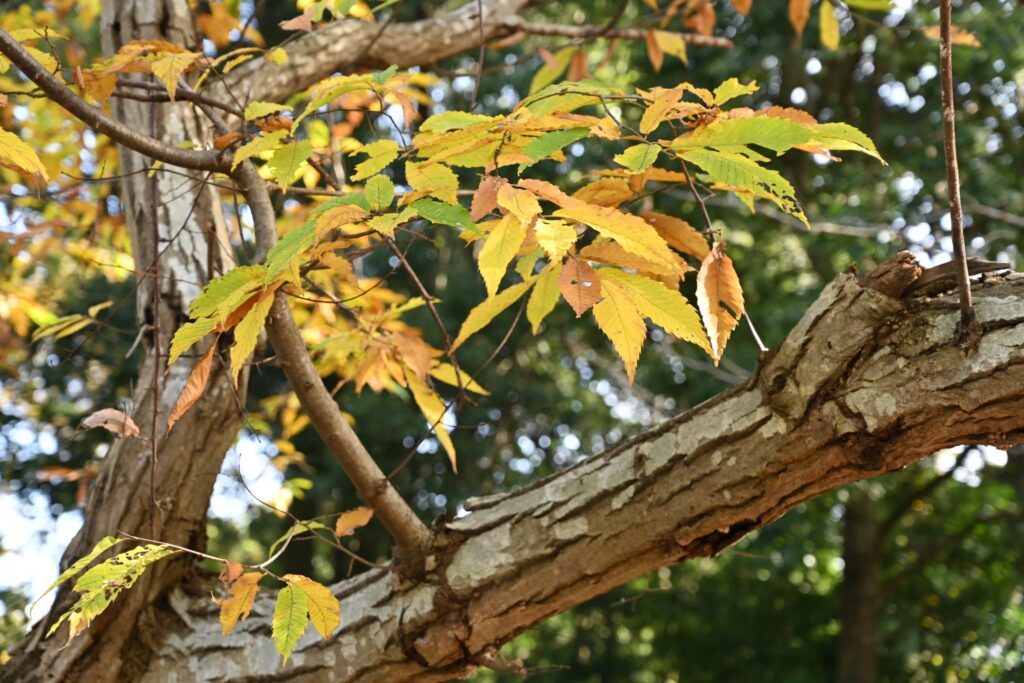
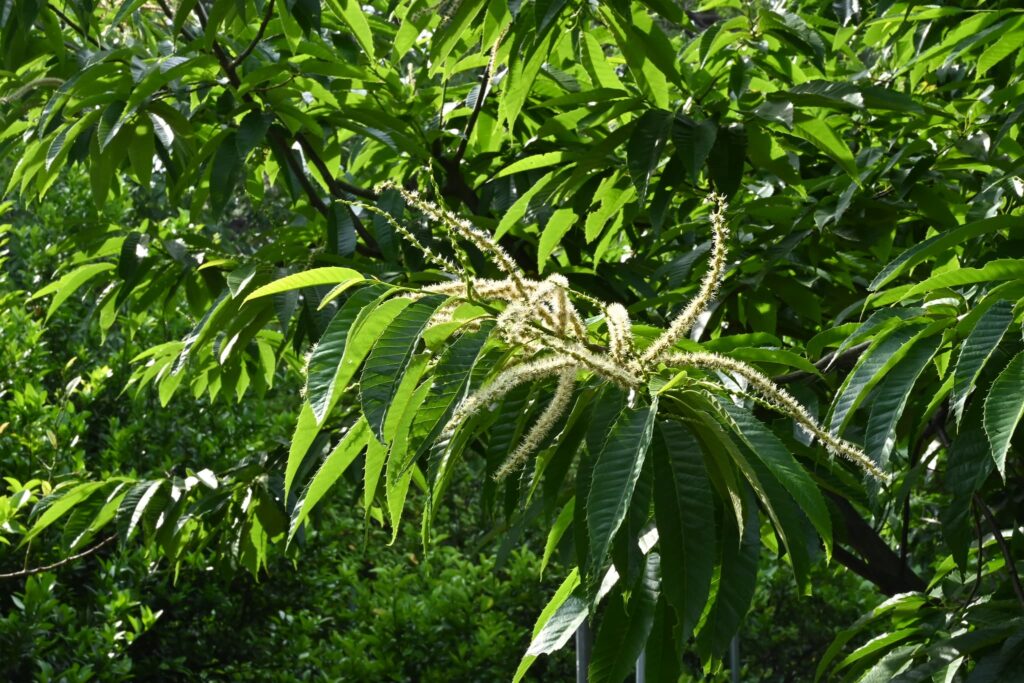
Leaves grow alternately along the branch, narrow and oval in shape, 8–15 cm long and 3–4 cm wide. The upper surface is deep green, the underside a paler green. The margins bear fine spine-like teeth, and while the leaves look similar to those of the related Kunugi (Sawtooth Oak), the two differ in color: Japanese Chestnut’s leaf-edge spines are green, while Kunugi’s are pale and washed-out toward the tip. In autumn, the foliage turns yellow, but this is rarely valued for its ornamental appeal.
Flowers
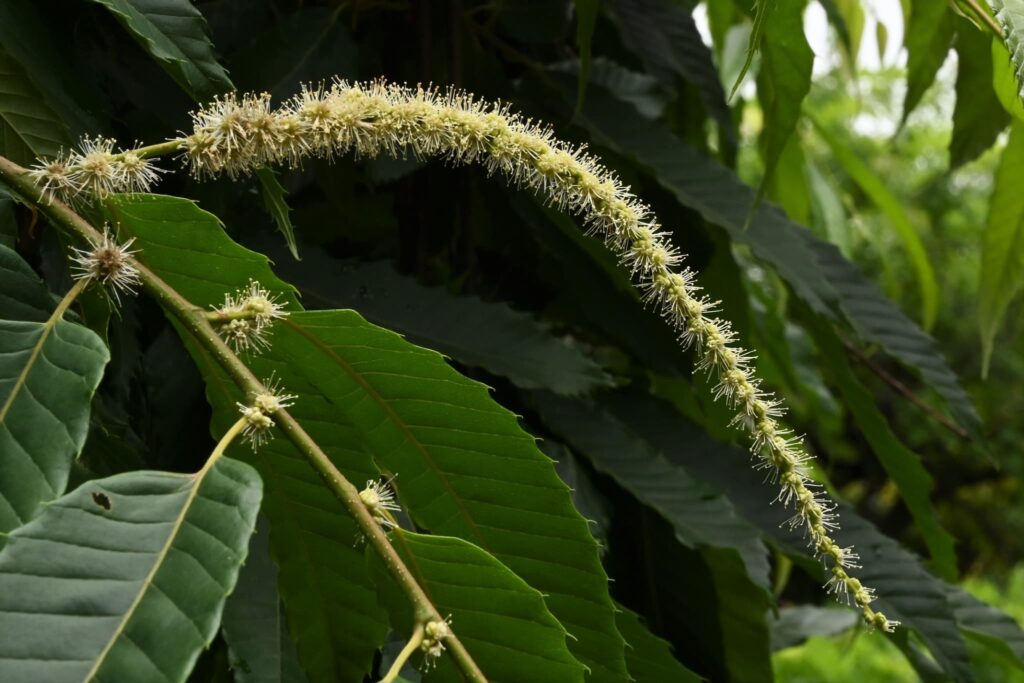
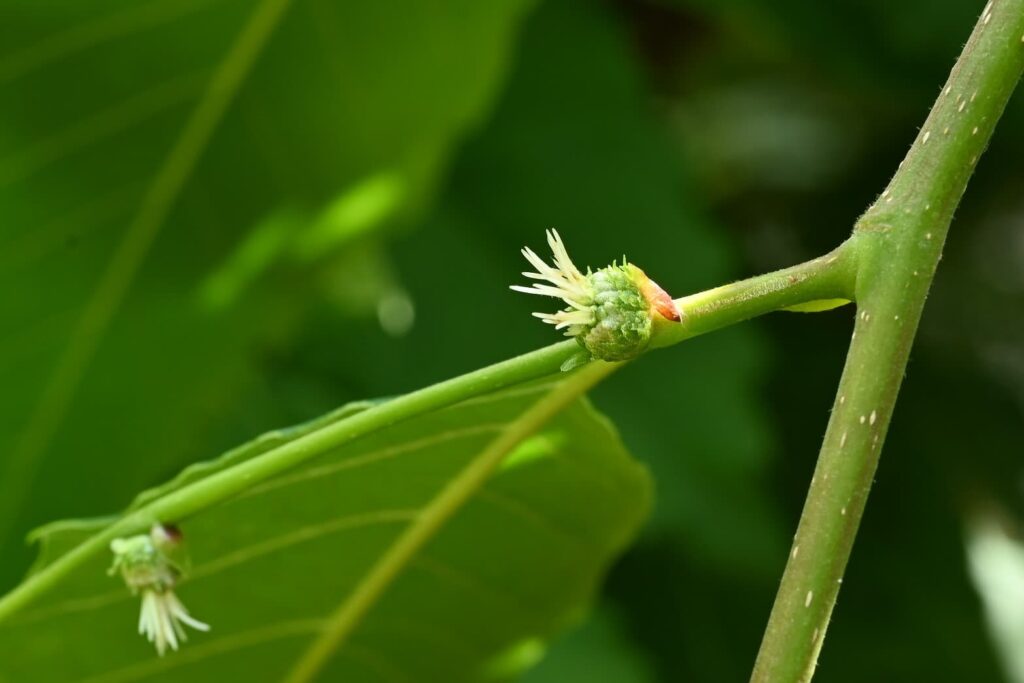
Japanese Chestnut is monoecious, producing separate male and female flowers on the same tree. The male flowers, which give off a distinctive odor, form long, drooping catkins 10–15 cm in length, conspicuous even from a distance. Female flowers are produced near the base of the flowering spikes and are much less conspicuous than the male flowers. Once the flowering season passes, the male flowers wither and drop, and the small, burr-like female flowers become more prominent following pollination.
Fruits
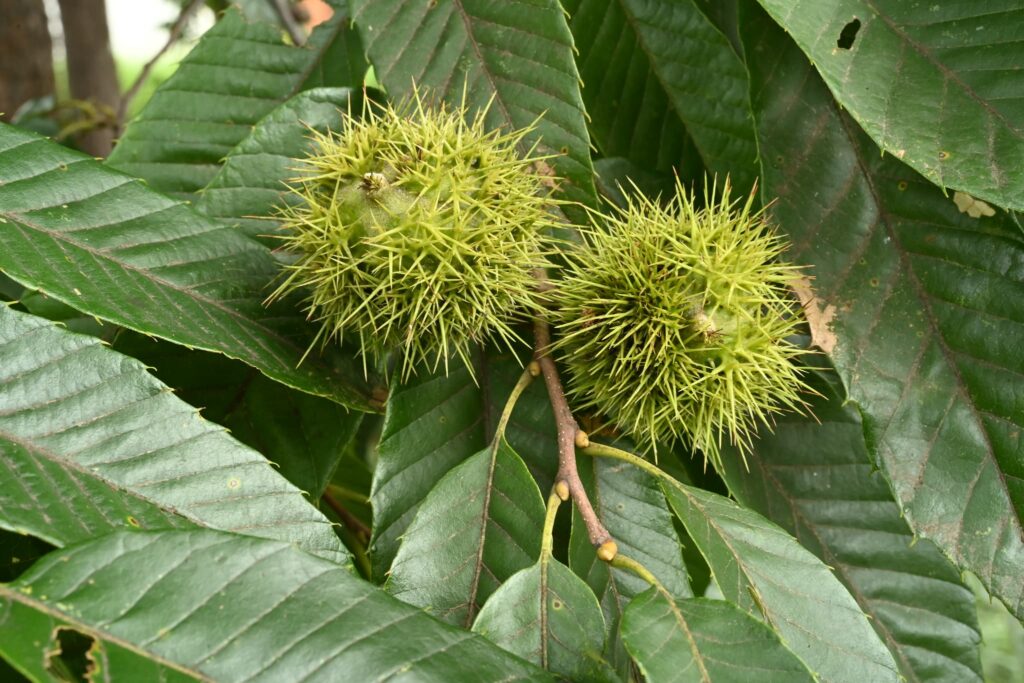
The nuts are usually harvested as the burrs begin to split and fall naturally in autumn, indicating that the nuts have reached maturity. Each burr typically contains two or three nuts, although cultivated varieties sometimes produce a single exceptionally large nut. Despite its formidable spines, the fruit is a favorite food of wild animals including squirrels, Japanese giant flying squirrels, and bears.
Bark & Timber
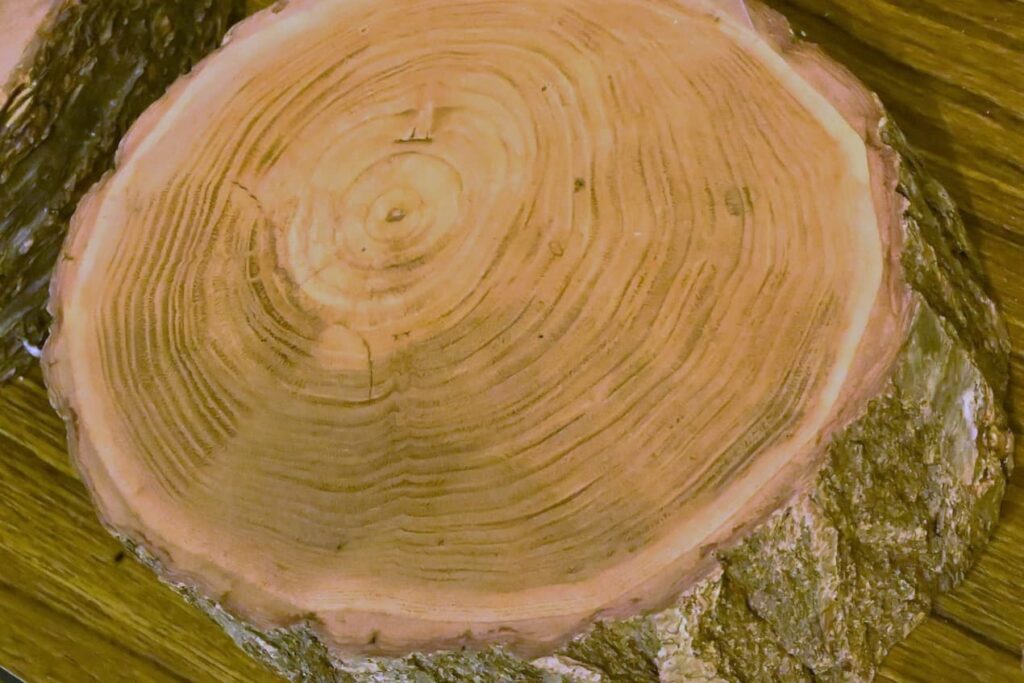
Because of its high tannin content, Japanese Chestnut wood is naturally durable, making it a traditional choice for building foundations, railway ties, boat construction, furniture, bathroom paneling, and substrate logs for shiitake cultivation. The bark is dark gray and develops deep vertical fissures as the tree matures, giving it an overall appearance similar to Konara Oak’s — a useful identification cue when the tree isn’t in fruit. It can be used both as a source of brown or dark gray dye and for leather tanning.
Size & Growth
Japanese Chestnut grows into a large tree that can survive for well over 100 years under favorable conditions, with some historic specimens living for several centuries. Grafted trees usually begin bearing nuts within three to five years, while seed-grown trees often take much longer to reach maturity.
Uses & Cultural Significance
History & Archaeology
Even during the Jomon period, when hunting and gathering formed the basis of subsistence, communities appear to have deliberately managed Japanese Chestnut trees around their settlements, using the wood for construction and the nuts for food. At the Sannai-Maruyama archaeological site in Aomori Prefecture, large chestnut posts have been excavated, while genetic and paleoenvironmental studies provide evidence consistent with long-term human management and selection of chestnut populations.
Cultural Traditions: Kachiguri
In earlier eras, there was a custom of pounding dried, unshelled wild chestnuts (Shibaguri) in a mortar to make kachiguri (“pounded chestnuts”). The verb katsu, meaning “to pound” in a mortar, is a homophone for the verb meaning “to win,” and this wordplay gave rise to the custom of eating kachiguri before departing for battle or to celebrate a victory, as a way of invoking good fortune. In some regions of Japan, eating kachiguri as a New Year’s good-luck food remains a living tradition today.
Name Origin
Several theories exist for the origin of the name Kuri. The most widely cited holds that it derives from kuro (“black”), a reference to the dark color of the nut’s outer skin, gradually shifting in pronunciation to kuri. Another theory traces it to an old word for black, kuri (written with a character now largely obsolete in this sense).
Growing Guide
| Item | Description |
|---|---|
| Climate & Site | Prefers warm temperate conditions; local cultivar selection is important in colder or hotter regions; cold climates risk canker disease, hot climates risk white-striped longhorn beetle |
| Sun & Soil | Full sun, good drainage |
| Pollination | Plant compatible cultivars nearby for reliable nut production |
| Propagation | Grafted saplings preferred over seed-grown trees for faster fruiting |
| Space & Pruning | Needs substantial space; “weeping chestnut style” (shidare-guri) suits smaller gardens |
| Pests | Sensitive to aphids and moth caterpillars; generally more resistant to chestnut blight than American Chestnut |
Climate & Site
Although Japanese Chestnut occurs naturally across a broad climatic range, commercial cultivation in Japan is generally concentrated in warmer temperate regions. Local cultivar selection is particularly important in colder or hotter areas. Trees grown in overly cold climates are prone to canker disease, while those in overly hot climates are more susceptible to damage from the white-striped longhorn beetle. Female beetles leave a distinctive ring of egg-laying marks around the trunk, which makes an infestation relatively easy to spot — though removing the larvae feeding inside the wood is considerably more difficult.
Sun & Soil
The tree prefers a site with good sun and good drainage.
Pollination & Propagation
Japanese Chestnut is largely self-incompatible, so planting compatible cultivars nearby is generally recommended for reliable nut production. As the old saying goes — “peach and chestnut, three years; persimmon, eight” — a tree grown from seed takes a long time to bear fruit, so grafted saplings are typically used instead.
Space & Pruning
Japanese Chestnut grows into a large tree and needs substantial space to accommodate it. Where space is limited, a training method known as “weeping chestnut style” (shidare-guri) can be used to keep the tree more compact.
Suitability for Home Gardens
Because of its size and space requirements, Japanese Chestnut is best suited to orchards or larger gardens rather than small residential plots, unless trained in the compact shidare-guri style.
Pests
Chestnut growth and yield are quite sensitive to pest pressure. Branches can become colonized by large chestnut aphid colonies, and the leaves are vulnerable to a range of moth caterpillars, including the Chinese moon moth, several species of slug moth caterpillar (Irokaga species), and the Chinese oak silk moth. Chinese oak silk moth caterpillars, once grown large by late June, can strip a tree completely bare of foliage.
The leaf-rolling weevil is another notable visitor, building chimaki-like nests (called yuran) from the young leaves of chestnut and Konara Oak trees, then cutting the rolled leaf free so it drops to the ground — a behavior that gives the insect its Japanese name, Otoshibumi (“dropped letter”). This weevil is best observed from late May through early June. Unlike the American Chestnut, Japanese Chestnut is naturally much more resistant to chestnut blight, a disease that devastated native chestnut populations in North America.
Similar Species
| Tree | Key Difference |
|---|---|
| Sawtooth Oak (Kunugi) | Similar leaves, but has paler leaf-edge bristles and produces acorns rather than spiny burrs |
| Abemaki | Similar foliage but produces acorns |
| European Chestnut | Larger nuts and widely used for marrons glacés |
| Chinese Chestnut | Generally smaller tree with sweet nuts and high blight resistance |
| American Chestnut | Historically dominant in eastern North America but devastated by chestnut blight |
Frequently Asked Questions
Why do wild chestnuts taste so different from the ones sold in stores?
Wild Japanese Chestnut, known as Shibaguri, produces smaller and generally less sweet nuts. The larger, sweeter chestnuts eaten today come primarily from improved Japanese cultivars selected from naturally occurring large-fruited forms of the wild species, although some imported chestnut species are also cultivated.
How can I tell Japanese Chestnut apart from Kunugi?
Look at the color of the fine spines along the leaf margin. Japanese Chestnut’s spines are green all the way to the tip, while Kunugi‘s spines are pale and washed-out toward the tip. This distinction works even without seeing the fruit of either tree.
Why do I need more than one chestnut tree to get a good harvest?
A single Japanese Chestnut tree planted alone tends to pollinate poorly on its own, resulting in a weak nut set. Planting compatible cultivars nearby improves cross-pollination and helps ensure reliable nut production.
How old is the tradition of eating chestnuts in Japan?
Extremely old — Japanese Chestnut is mentioned in the Kojiki, and archaeological evidence from sites like Sannai-Maruyama in Aomori Prefecture, supported by DNA analysis, shows that Jomon-period communities were already deliberately planting and managing chestnut trees for food and building material thousands of years ago.
What pests are most likely to damage a chestnut tree?
Large chestnut aphids and several species of moth caterpillar are common problems on the foliage, with Chinese oak silk moth larvae capable of stripping a tree bare by early summer if left unchecked. The white-striped longhorn beetle is a particular concern in warmer regions, boring into the trunk in a way that can be hard to fully eliminate once established.
Are Japanese Chestnuts sweet?
Yes. Cultivated Japanese Chestnuts are generally large, starchy, and mildly sweet, with a rich, nutty flavor that makes them popular for roasted chestnuts, rice dishes (kuri gohan), confectionery, and desserts. Wild chestnuts (Shibaguri), by contrast, are much smaller and generally less sweet, which is why modern orchards grow improved cultivars selected for larger, better-tasting nuts.
Can Japanese Chestnut grow in the United States?
Yes. Japanese Chestnut is hardy in USDA Zones 5–8 and can be grown in many parts of the United States with well-drained soil and full sun. It is valued not only for its edible nuts but also because it is generally more resistant to chestnut blight than American Chestnut. As with most chestnuts, planting two compatible varieties is recommended for reliable pollination and good nut production.
How long does a chestnut tree live?
Japanese Chestnut is a long-lived tree that can survive for well over 100 years under favorable conditions, with some historic specimens living for several centuries. Grafted trees usually begin bearing nuts within three to five years, while seed-grown trees often take much longer to reach maturity.
Conclusion
Few trees connect modern Japanese food culture to the country’s deep past as directly as Japanese Chestnut. Long before wet-rice agriculture became established in Japan, Jomon-period communities were already deliberately managing — and possibly cultivating — chestnut trees for food and timber. From the archaeological chestnut posts of Sannai-Maruyama to the New Year’s tradition of kachiguri, and from durable, tannin-rich wood to the burred fruit that ripens each autumn, Castanea crenata remains one of the most deeply rooted trees in Japanese history and culture.