Japanese Aucuba (Aucuba japonica): Identification, Care & Uses
Japanese Aucuba is one of the most shade-tolerant shrubs grown in Japan, valued for its glossy dark leaves, vivid winter berries, and unmatched toughness in difficult garden spots. This guide covers identification, flowers, fruit, bark, cultivars, and care, based on observations of the plant as grown in Japan.
What Is Japanese Aucuba?
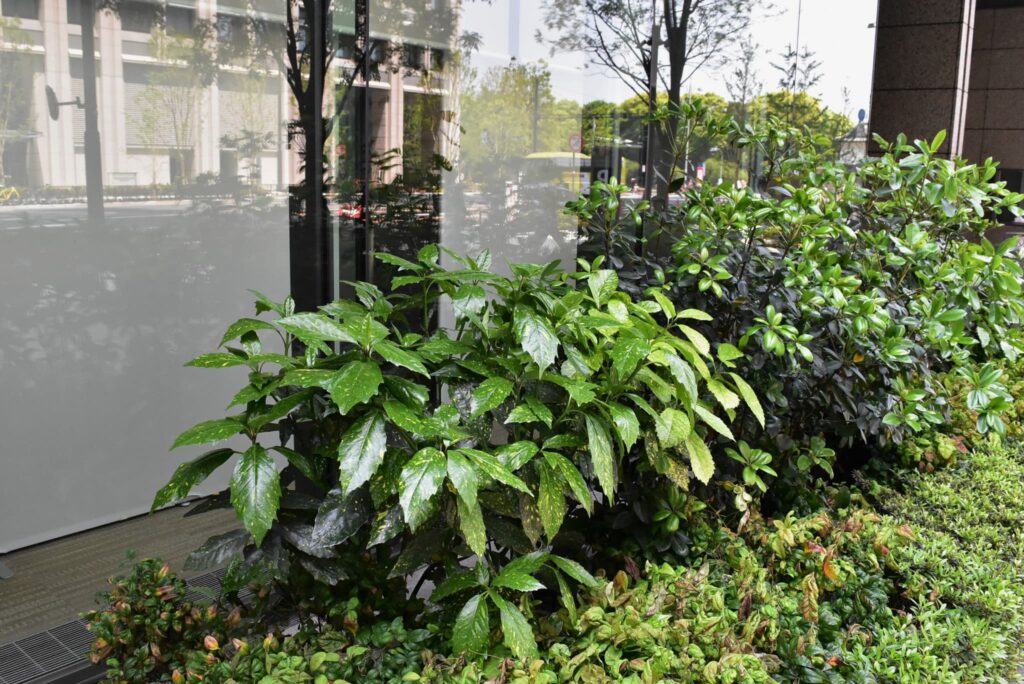
Japanese Aucuba is an evergreen shrub in the family Garryaceae (traditionally treated as its own family, Aucubaceae), belonging to the genus Aucuba. It is native to Japan, South Korea, Taiwan, and southeastern China. Within Japan, it is widely distributed from southern Hokkaido to Okinawa. It grows wild most commonly in woodlands near the coast from the Kanto region westward, but it is also a familiar component of secondary woodlands and other semi-natural habitats in many parts of Japan.
It is known as one of the most shade-tolerant plants available, and is often used to plant difficult spots such as the north side of a house or the narrow gap between buildings. Because it is tough and easy to work with as a garden plant, it’s said that today there are actually more cultivated Japanese Aucuba plants under human care than wild ones.
Overview
| Item | Description |
|---|---|
| Family | Garryaceae (traditionally Aucubaceae) |
| Genus | Aucuba |
| Species | A. japonica |
| Scientific Name | Aucuba japonica |
| Common Name | Japanese Aucuba / Spotted Laurel |
| Japanese Name | Aoki (アオキ) |
| Native Range | Japan, Korea, Taiwan, and southeastern China |
| Plant Type | Evergreen Shrub |
| Height | Typically 1–3 m |
| Flowering Season | March–May |
| Fruit Type | Oval berry, around 2 cm, ripening bright red from around January (female plants only) |
| USDA Zones | 7–10 |
| Sun Exposure | Shade to Deep Shade |
Characteristics
| Feature | Description |
|---|---|
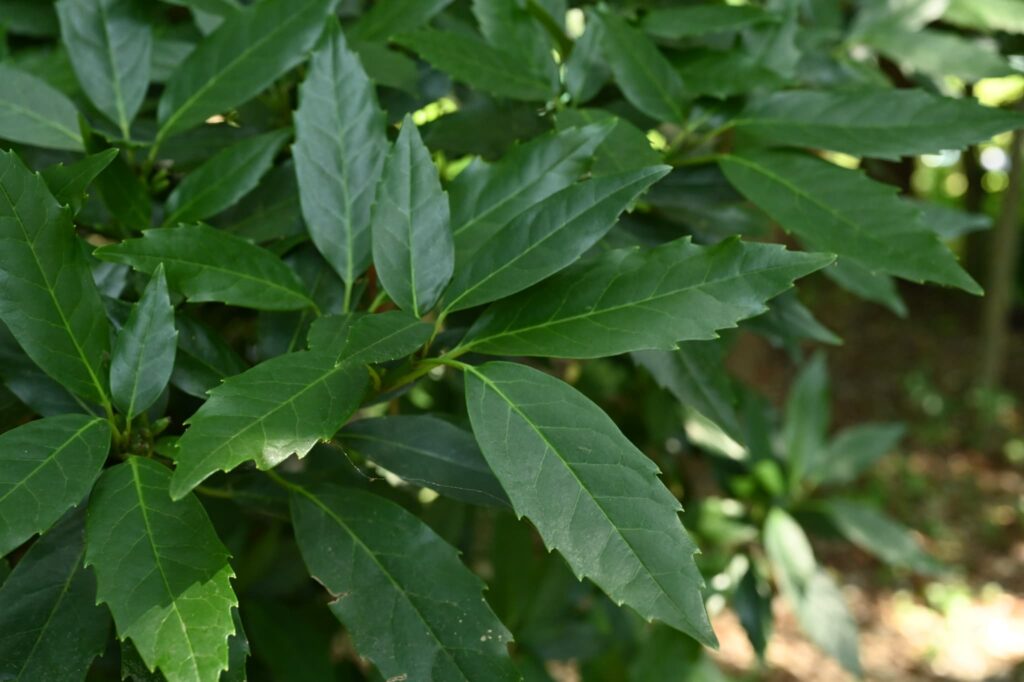
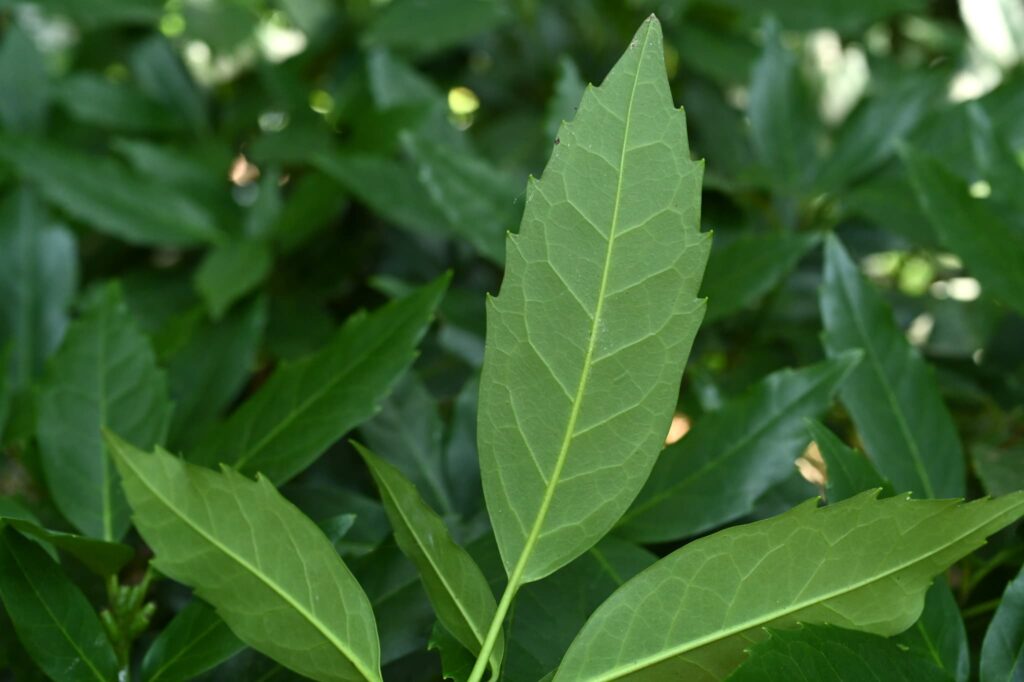
| Leaves | Opposite, large, glossy, coarsely toothed toward the tip |
| Fruit | Large red (or cream) berries, produced only on female plants |
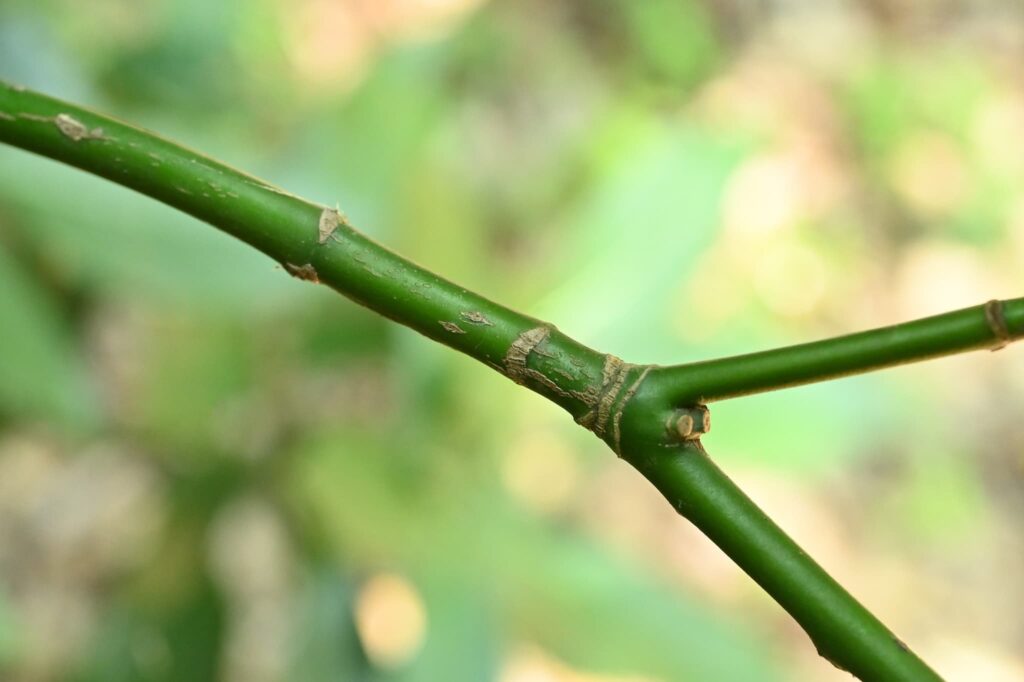
| Bark | Green when young, turning corky brown with age |
| Habit | Dioecious, simply branched, easy-care evergreen shrub |
Foliage
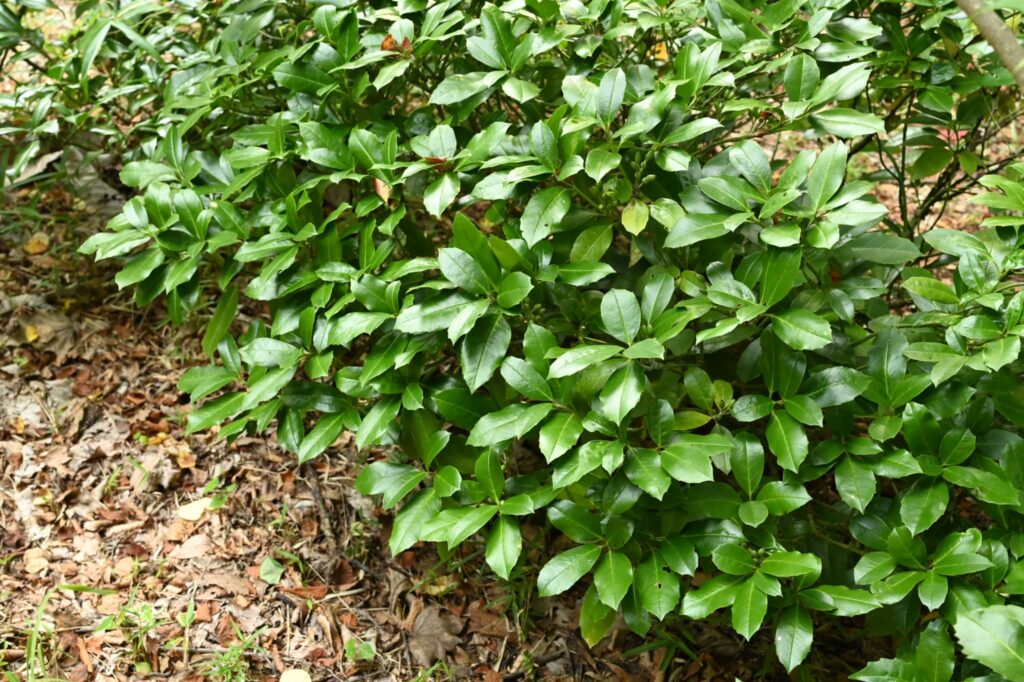
Leaves are oblong with a pointed tip, and the margin from about the midpoint to the tip bears coarse serrations. They are notably large—8–20 cm long and 2–10 cm wide. This large leaf size is reflected in the plant’s older Japanese name, Ohokiba (“big leaf”), a name that is traditionally regarded as the source of the scientific genus name Aucuba. Leaves grow in opposite pairs along the branch, but tend to cluster more densely toward the upper portion of each branch.
Flowers
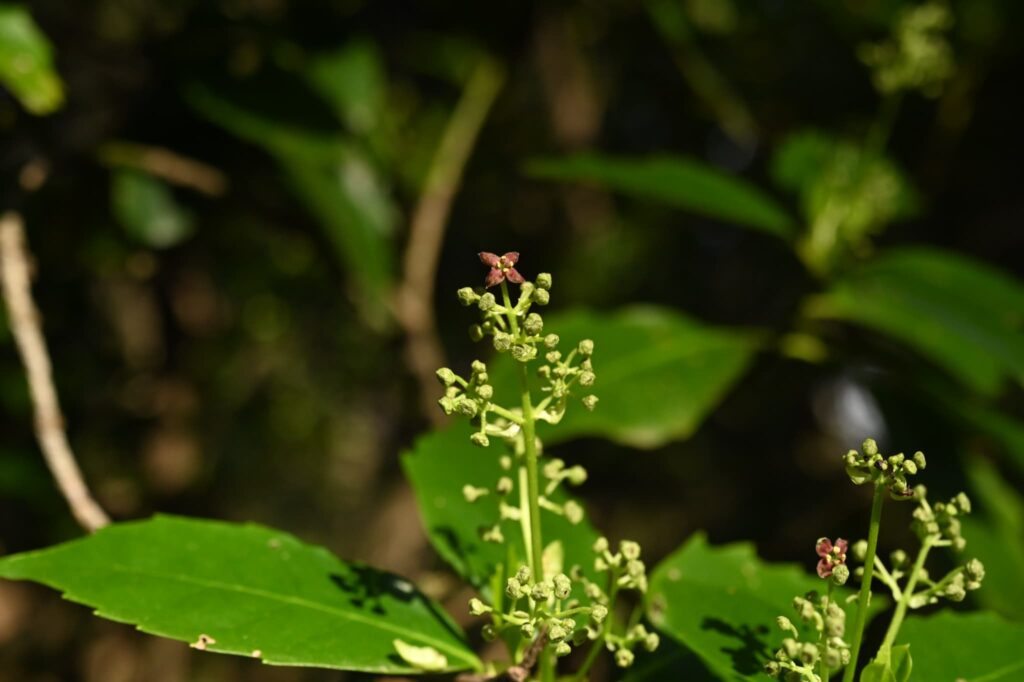
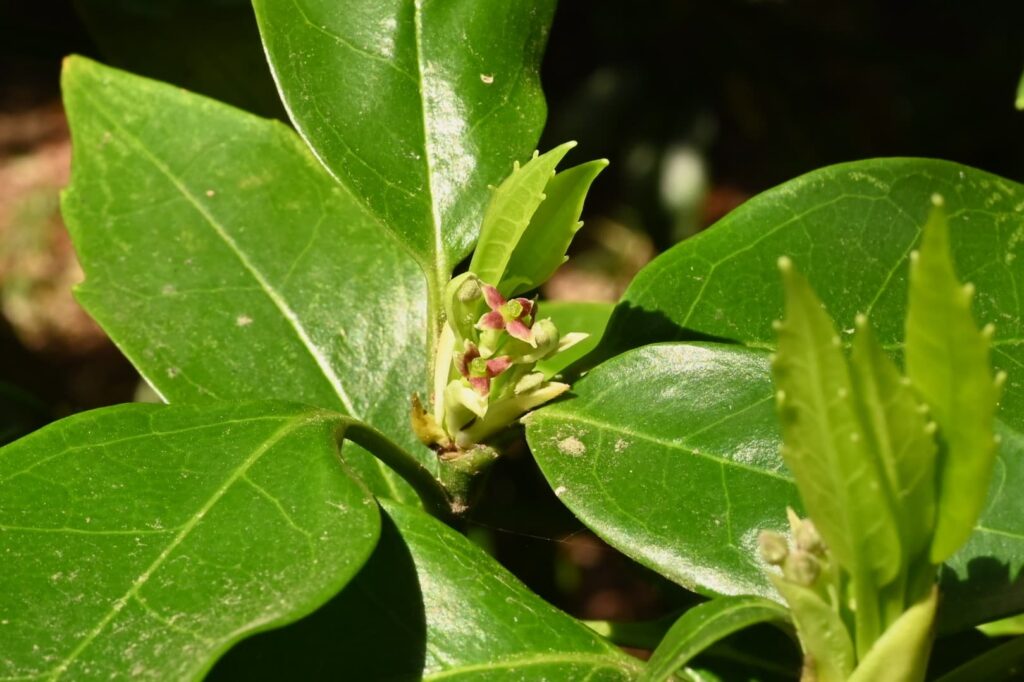
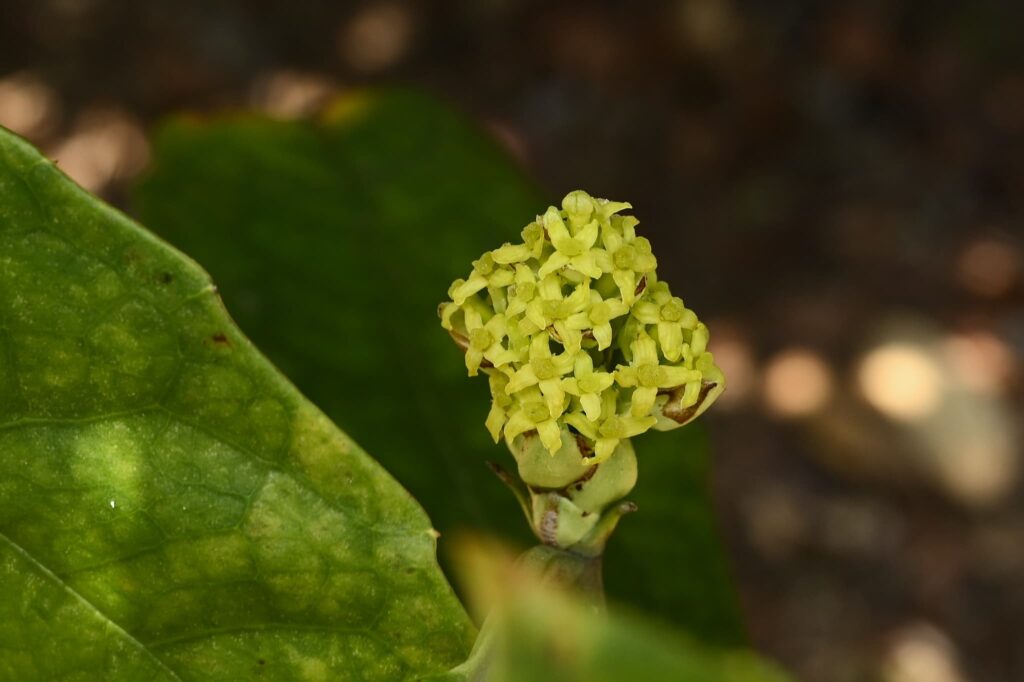
Japanese Aucuba flowers between March and May, producing blooms about 1 cm across gathered into cone-shaped clusters at the branch tips. The species is dioecious, with separate male plants bearing male flowers and female plants bearing female flowers; both have four pale purple petals.
In male flowers, the pistil is reduced and barely visible, while the stamens stand out thanks to their prominent yellow anthers. In female flowers, by contrast, the stamens are reduced, and the green pistil (style) at the center of the flower is the more conspicuous feature.
Fruits
Japanese Aucuba is especially valued for its bright fruit, which ripens during winter, when relatively few other ornamental plants provide much color. For this reason, it has been cultivated in Japanese gardens since the Edo period.
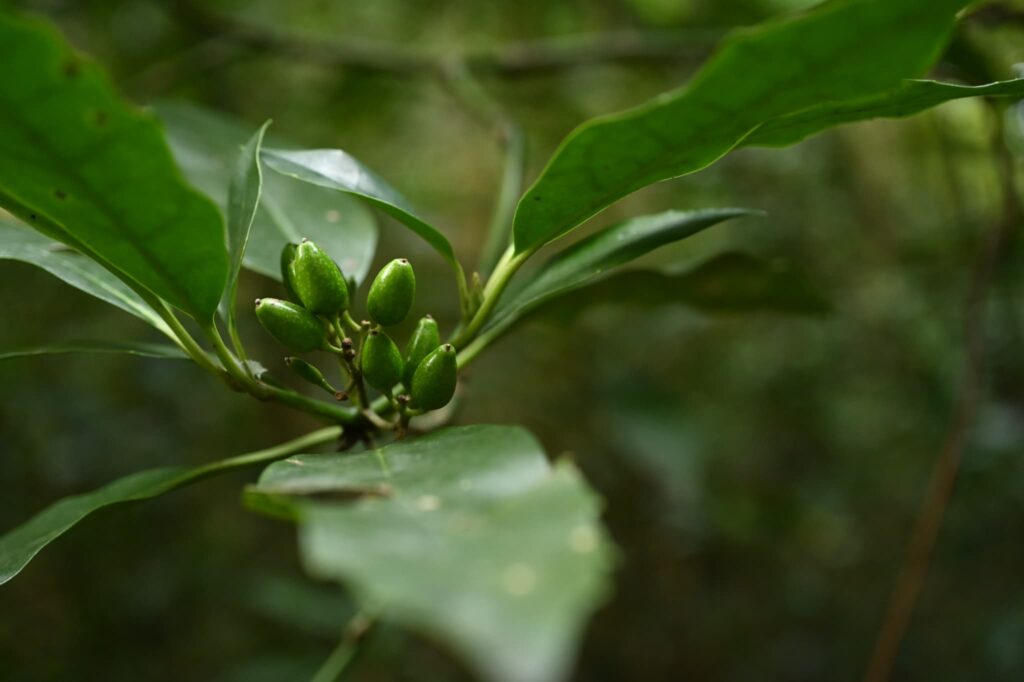
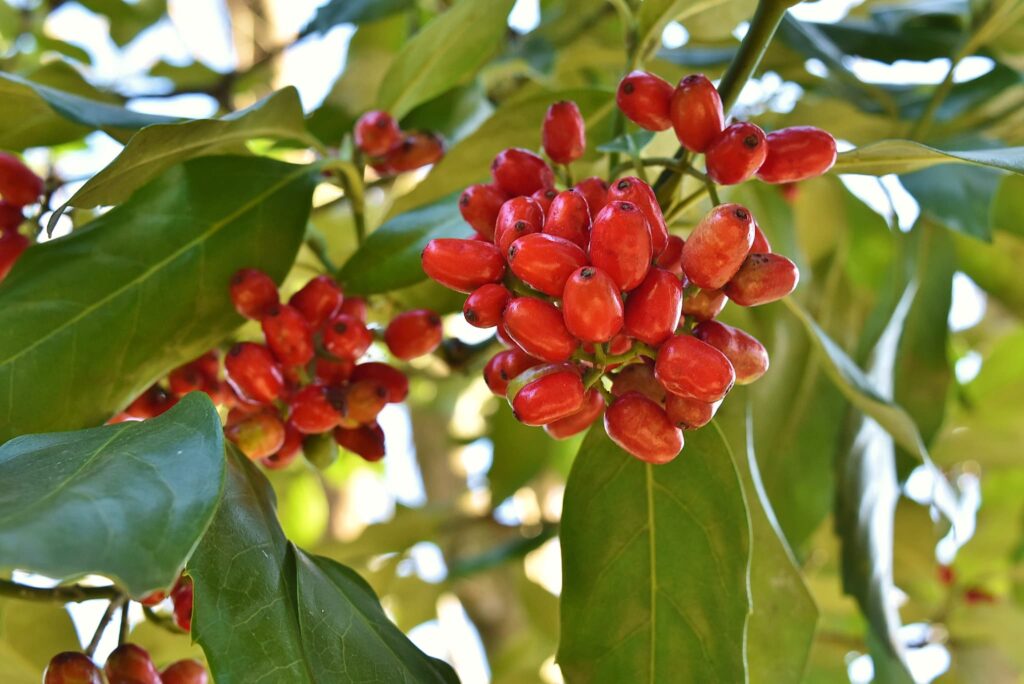
The fruit begins green, starts to color around January, and eventually ripens to a vivid red. Some berries may remain on the branches until the following spring, occasionally overlapping with the next season’s flowers. Because Japanese Aucuba is dioecious, only female plants produce fruit.
Male plants, which never bear berries, were sometimes referred to somewhat dismissively by gardeners focused on fruit production as baka (“useless one”). In practice, however, female plants generally require pollen from a nearby male plant in order to produce fruit.
The berries are large and conspicuous for a garden shrub, measuring about 2 cm across. Despite their bright color, they do not appear to be eaten by a particularly wide range of birds. Brown-eared bulbuls are among the birds observed feeding on them, although relatively few fruits typically remain by the following spring. A specimen still heavily laden with red berries late in the season is therefore a relatively unusual sight.
Japanese Aucuba can be propagated from seed, although cuttings are more commonly used to reproduce selected plants and cultivars. The fruit is not eaten by people.
Red-fruited Japanese Aucuba is the most common form, but cream-fruited forms such as Shiromino Aoki are also available in cultivation. Because a planting of Shiromino Aoki alone can appear somewhat understated, it is sometimes grown alongside the standard red-fruited form, allowing the contrasting red and white fruit to be enjoyed together.
Bark & Trunk
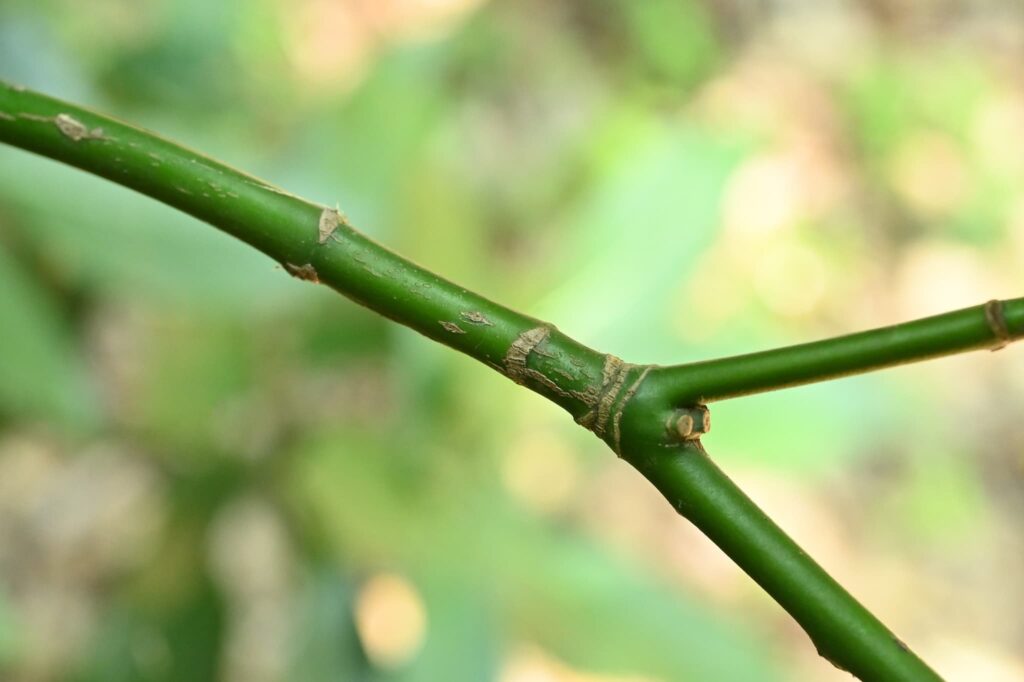
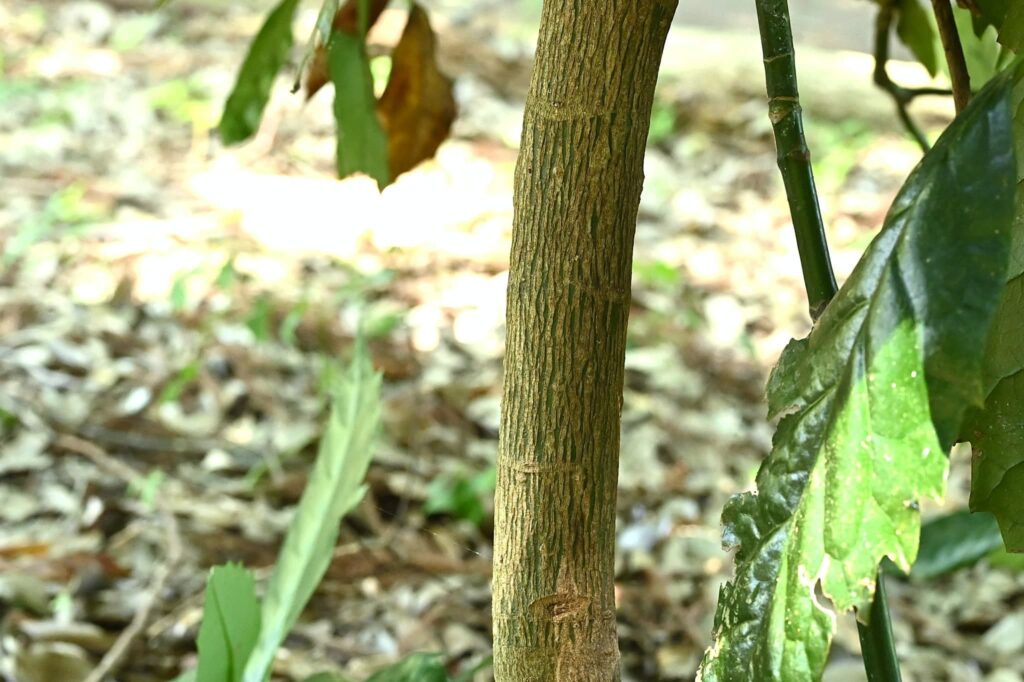
Branches divide mainly toward the upper part of the plant. Young branches are green, gradually turning a corky brown as they mature. Older branches become quite hard, and in the past, Japanese Aucuba wood was sometimes even used to make chopsticks.
Size & Growth
Japanese Aucuba typically reaches 1–3 m in height. It grows quickly but doesn’t become overly dense or unruly on its own, though left entirely alone it can grow surprisingly large. How densely a given plant branches varies somewhat by individual—some specimens naturally grow tall with sparser branching and resist becoming compact even with regular pruning.
Uses & Cultural Significance
Japanese Aucuba has been cultivated in Japanese gardens since the Edo period, valued for its evergreen foliage and bright winter fruit. Its ability to grow in deep shade also made it useful in gardens and other difficult planting situations where many ornamental shrubs perform poorly.
The leaves were traditionally used in Japanese folk practices. When dried, they quickly turn dark or black, and leaves were sometimes roasted to produce this change artificially. Historical accounts describe the resulting leaves being applied to conditions such as burns, chilblains, frostbite, warts, and corns. A decoction of the leaves was also traditionally used as a laxative. These practices reflect historical folk use and should not be interpreted as evidence of proven medicinal effectiveness.
Japanese Aucuba also has an interesting history in the West. It was introduced to Europe in 1783 by the Swedish naturalist Carl Peter Thunberg. Its large, glossy evergreen leaves proved especially attractive to European gardeners, where broad-leaved evergreen shrubs were comparatively uncommon. However, the plants initially introduced were female, meaning that they could not produce fruit without pollen from a male plant.
Decades later, after Japan was opened to increased contact with the outside world, the British plant collector Robert Fortune introduced male plants from Japan. This finally allowed Japanese Aucuba to produce its characteristic red berries in European gardens and helped establish the species as an important ornamental shrub outside Japan.
Name Origin
There are two common explanations for the origin of the Japanese name Aoki. One holds that it refers to the green (“ao,” an old word for green or blue) color of young branches; the other, that it refers to the plant keeping green leaves year-round. In earlier times, “Aoki” was actually used as a general term for evergreen trees as a whole, and in some regions the name was applied specifically to Daphniphyllum macropodum (Yuzuriha) rather than to this species.
Growing Guide
| Condition | Guidance |
|---|---|
| Light | Partial Shade to Deep Shade; avoid intense direct sun and afternoon western exposure |
| Soil | Moist, humus-amended soil |
| Wind | Tolerant of salt-laden coastal wind |
| Pruning | Cut unwanted branches back to point of origin; minimal fertilizer needed |
| Pests | Scale insects, aphids, Aoki gall midge |
Light & Soil
Too much direct sun causes poor growth, dull leaf color, and leaves that blacken as if scorched, so intense direct sun and strong afternoon western exposure should be avoided. The plant is also sensitive to dry conditions, so it helps to amend the planting hole beforehand with leaf mold or similar organic matter to improve moisture retention.
Wind & Snow Tolerance
Japanese Aucuba is tolerant of salt-laden coastal wind as well as air pollution, making it a dependable choice near the coast or in urban settings. The species itself is not specifically adapted to heavy snow, but a naturally occurring dwarf form, Hime Aoki, has evolved in the snowy regions of Hokkaido and the Sea of Japan coast to withstand snow cover.
Cold Hardiness
Japanese Aucuba is hardy across USDA zones 7–10. A related wild form, Nangoku Aoki, native to Kyushu and Okinawa, has lower cold tolerance and slower growth than the standard species, reflecting the milder climate of its native range.
Pruning
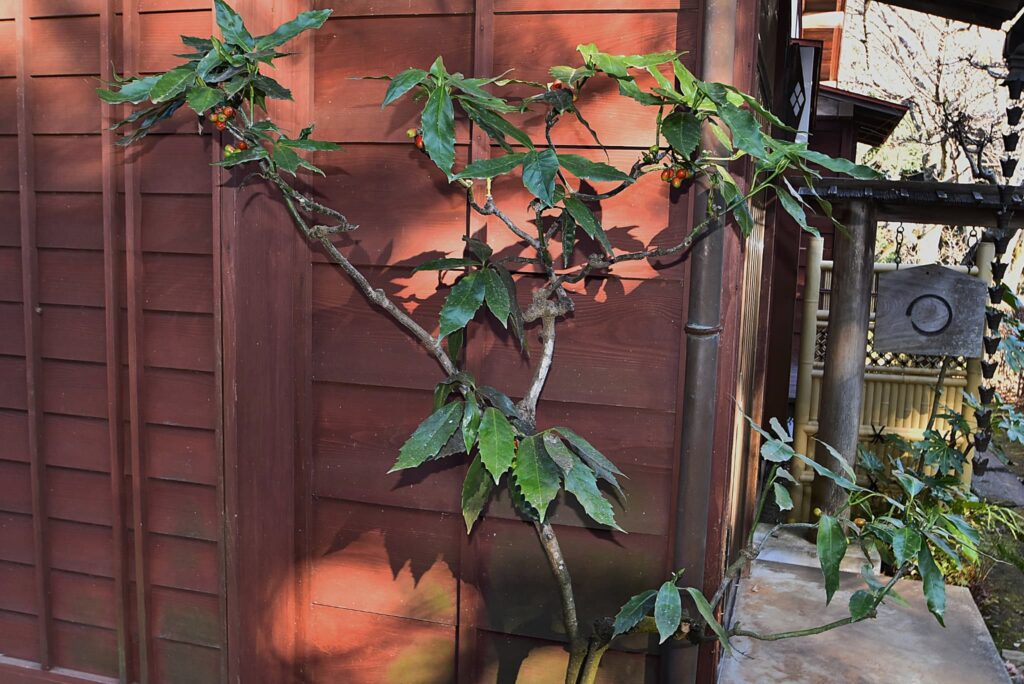
Japanese Aucuba grows quickly but doesn’t become overly dense or unruly, so it requires relatively little maintenance. Left entirely alone, however, it can grow surprisingly large, and its dark, heavy foliage can start to feel visually oppressive—so periodic thinning of the branches is a good idea.
Its branching pattern is simple enough that even professional gardeners sometimes use it as practice material for pruning. The basic technique is to cut unwanted branches back to their point of origin. If a clump has grown too large overall, one option is to remove the tallest stems entirely from the base, keeping the shorter stems to renew the plant’s shape. As with garden shrubs in general, avoiding leggy growth and encouraging dense, twiggy branching tends to give the best appearance, so little to no fertilizer is usually needed.
Suitability for Home Gardens
Japanese Aucuba is tolerant not only of shade but also of pests, salt-laden coastal wind, and air pollution, making it a generally tough, dependable plant for difficult spots such as the north side of a house or a narrow gap between buildings. If fruiting is desired, a female specimen must be planted, since only female plants set berries.
Pests
As with most garden shrubs, poor air circulation can lead to scale insects and aphids, so a reasonably open planting site is preferable. Occasionally, a gall midge (the Aoki gall midge) parasitizes the fruit, causing it to develop an irregular, misshapen form; this is not usually a serious problem for the plant’s overall health.
Cultivars
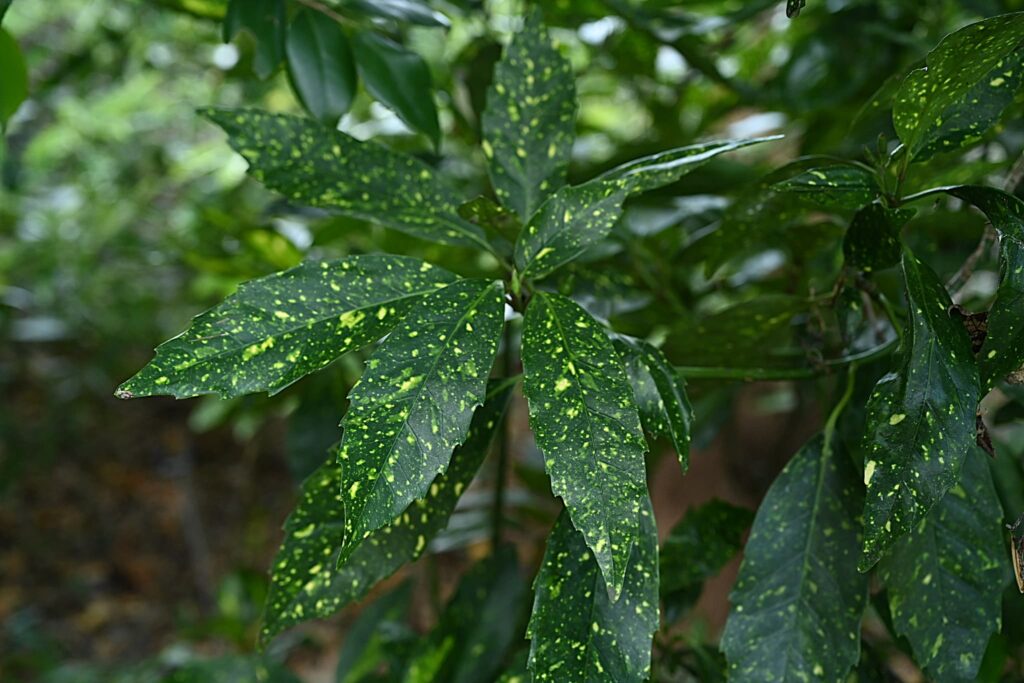
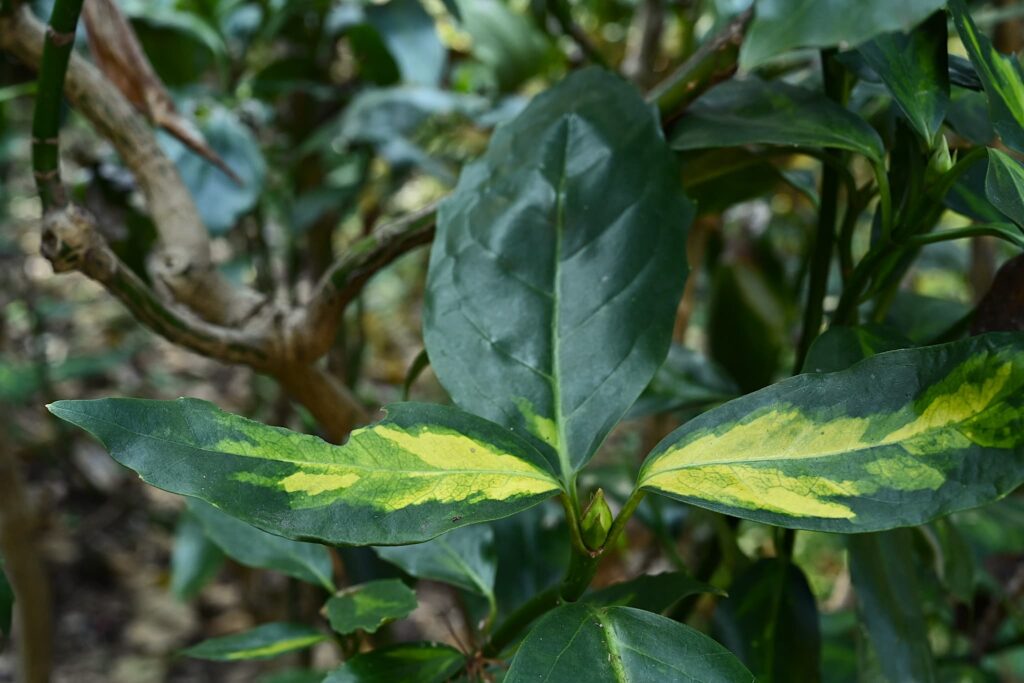
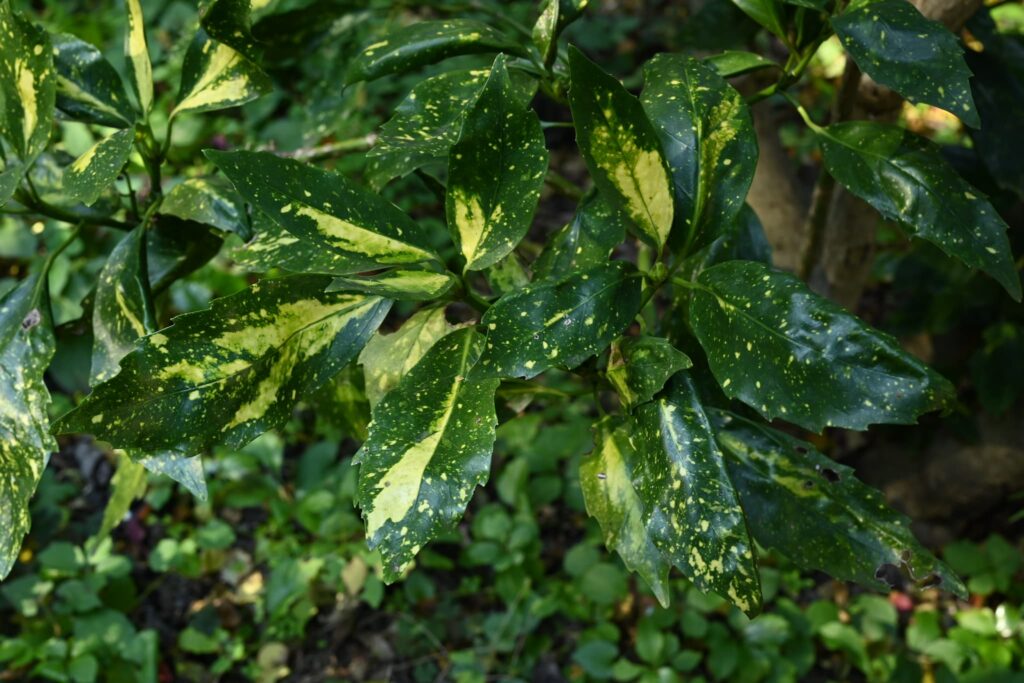
Japanese Aucuba is naturally quite variable, and this variability has been exploited to produce many cultivars: forms with patterned foliage (speckled, margined, or center-patterned variegation), forms with distinctively shaped leaves (narrow-leaved or “tortoiseshell-leaved” types), and fruit-color variants such as cream-fruited Shiromino Aoki and lemon-yellow-fruited Kimino Aoki. Although the deep green foliage of the wild species is appealing in its own right, its strongly Japanese character has made variegated cultivars—such as ‘Golden Delight’, ‘Sulphurea’ (‘Marginata’), ‘Dharma’, and ‘Crotonifolia’—more popular choices for Western-style homes.
Similar Species
Related Aucuba Forms
- Hime Aoki (“dwarf Aoki”) — a naturally occurring dwarf variant native to Hokkaido and the heavy-snowfall regions along the Sea of Japan coast. Adapted to withstand snow cover, it reaches only about 1 m in height. To cope with limited available sunlight, its leaves and fruit are smaller than the standard form’s, and it develops hairs on young branches, leaf stalks, and along the veins on the underside of the leaves.
- Nangoku Aoki (“southern Aoki”) — a wild form native to Kyushu and Okinawa, with lower cold tolerance and slower growth than the standard species.
- Chinese Aoki, Biwaba Aoki, and Gabi Aoki — among more than a dozen additional Aucuba species native to China, some of which bear yellow flowers rather than purple ones.
Similar Garden Plants
- Fatsia japonica (Yatsude) — a large-leaved evergreen shrub commonly planted with Japanese Aucuba in shaded Japanese gardens.
- Dendropanax trifidus (Kakuremino) — an evergreen small tree with glossy leaves, also valued for shaded Japanese gardens.
Frequently Asked Questions
Why is Japanese Aucuba considered such a good plant for shady spots?
It’s one of the most shade-tolerant garden shrubs available, capable of thriving in situations—like the north side of a house or a narrow gap between buildings—where few other plants would survive. This, combined with its overall toughness, is why it’s such a common choice in difficult garden spots across Japan.
Why doesn’t my Japanese Aucuba produce any berries?
Only female plants produce berries, and fruiting generally requires a nearby male plant for pollination.
Can Japanese Aucuba tolerate direct sun?
Not well. It naturally prefers shade to partial shade, and too much direct sun or intense afternoon western exposure can cause poor growth and leaves that darken as though scorched. It performs best in the shaded conditions it was built for.
How should Japanese Aucuba be pruned?
Its branching pattern is simple, and the basic approach is to cut unwanted branches back to their point of origin rather than shearing indiscriminately. If a plant has become too large overall, removing the tallest stems from the base while keeping shorter ones is an effective way to renew its shape without losing the plant entirely.
Why does the fruit sometimes look misshapen?
This is occasionally caused by the Aoki gall midge, a small insect that can parasitize developing fruit and cause it to grow into an irregular, distorted shape. It’s not usually a serious problem for the plant’s overall health.
Conclusion
Few shrubs solve the problem of deep shade as reliably as Japanese Aucuba. Its glossy, oversized leaves and bright winter berries have made it a garden fixture in Japan since the Edo period, and its introduction to the West—first without fruit, and only later complete with its vivid red berries—remains a small but memorable chapter in the history of plant exchange between Japan and Europe. From the compact, snow-adapted Hime Aoki to boldly variegated cultivars bred for Western gardens, Japanese Aucuba continues to earn its keep in exactly the spots where other plants give up.