Nandina (Nandina domestica): Identification, Care & Uses
Nandina (Nandina domestica), known in Japan as Nanten, is a distinctive evergreen shrub valued for its red berries, colorful winter foliage, and long association with Japanese gardens. Although it has been cultivated in Japan for centuries and is now widely naturalized in parts of the country, its native range is generally regarded as central and southern China.
This guide covers identification, flowers, fruit, bark, traditional uses, cultivars, and cultivation.
What Is Nandina?
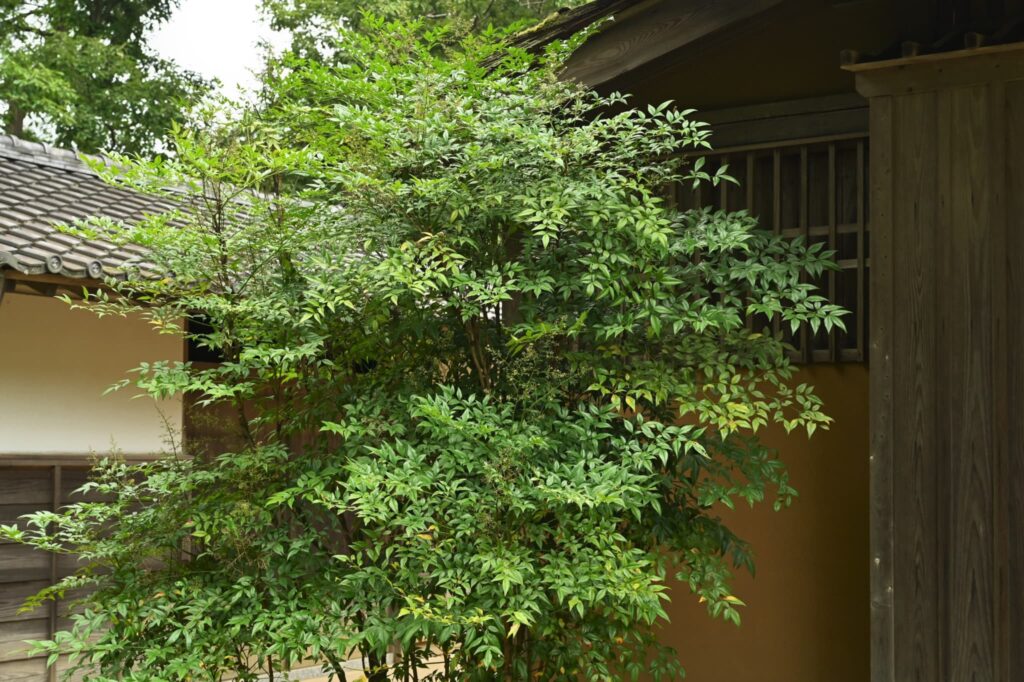
Nandina is an evergreen shrub in the barberry family (Berberidaceae). It usually grows as a clump of slender, upright stems rather than developing a conventional trunk.
In Japan, it has been cultivated for a very long time and has become naturalized in parts of western and southern Japan. Because plants found in the wild may have originated from old garden plantings, the precise status of Nandina as a native plant in Japan remains debated.
Overview
| Item | Description |
|---|---|
| Scientific Name | Nandina domestica |
| Common Names | Nandina / Heavenly Bamboo / Sacred Bamboo |
| Japanese Name | Nanten (ナンテン) |
| Family | Berberidaceae |
| Native Range | Central and southern China |
| Status in Japan | Long cultivated and naturalized; native status debated |
| Plant Type | Evergreen shrub |
| Height | Usually 1–3 m |
| Flowering Season | May–June |
| Fruit | Red berries, about 6–8 mm across |
| USDA Zones | Approximately 6–9 |
| Light | Full sun to partial shade |
The name Heavenly Bamboo refers to the bamboo-like appearance of its upright stems and leaves, but Nandina is not a bamboo. It is a member of the barberry family.
Characteristics
| Feature | Description |
|---|---|
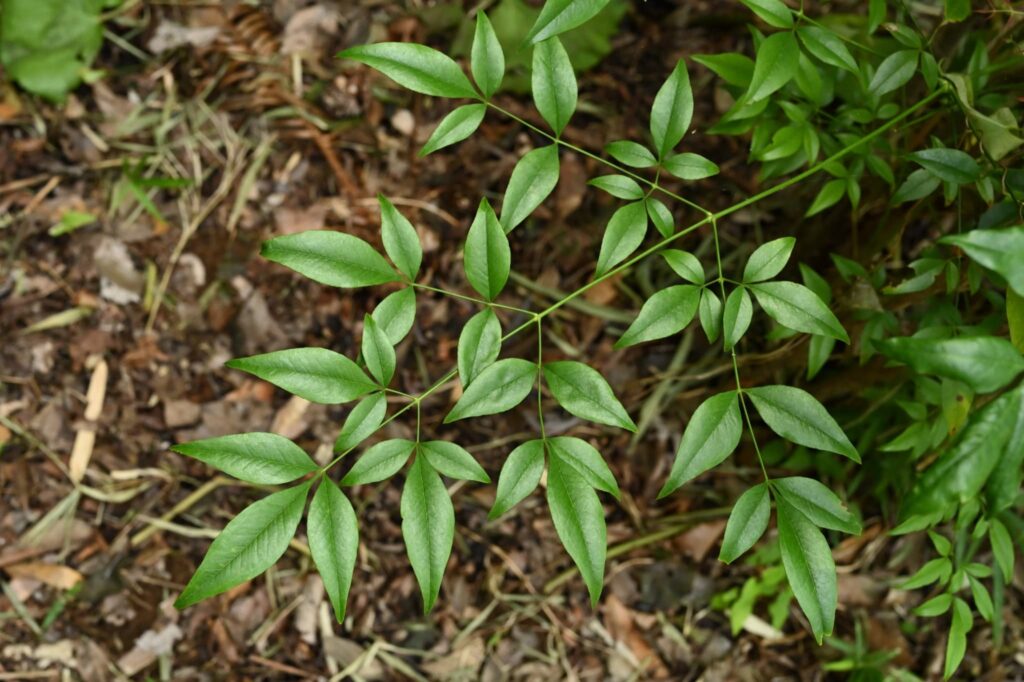
| Foliage | Large, finely divided, pinnate to bipinnate compound leaves |
| Flowers | Small white flowers in upright terminal panicles |
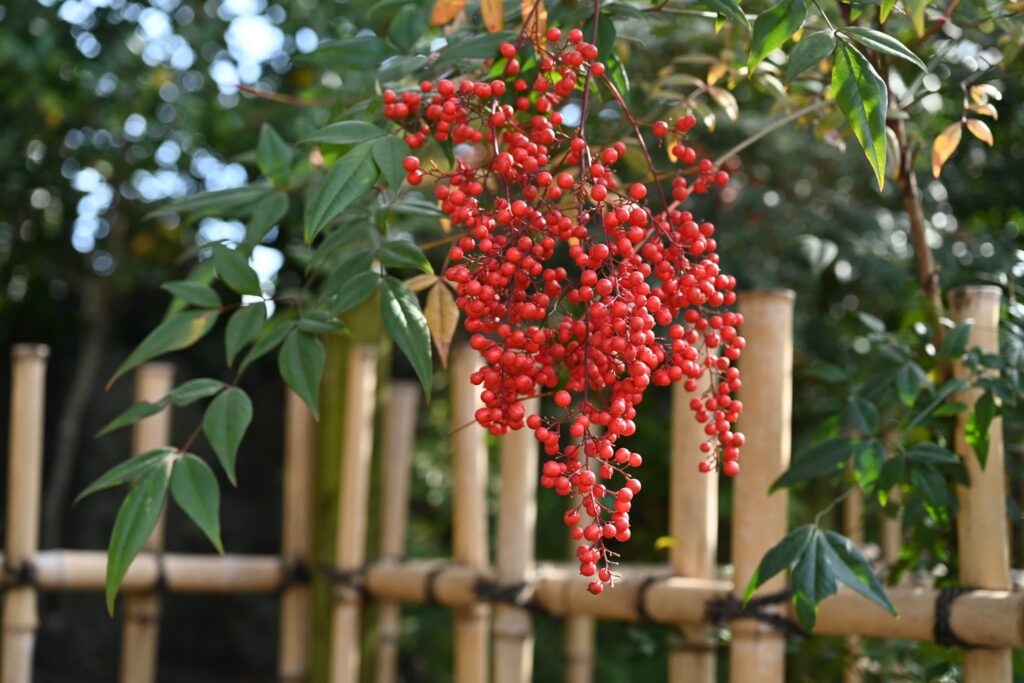
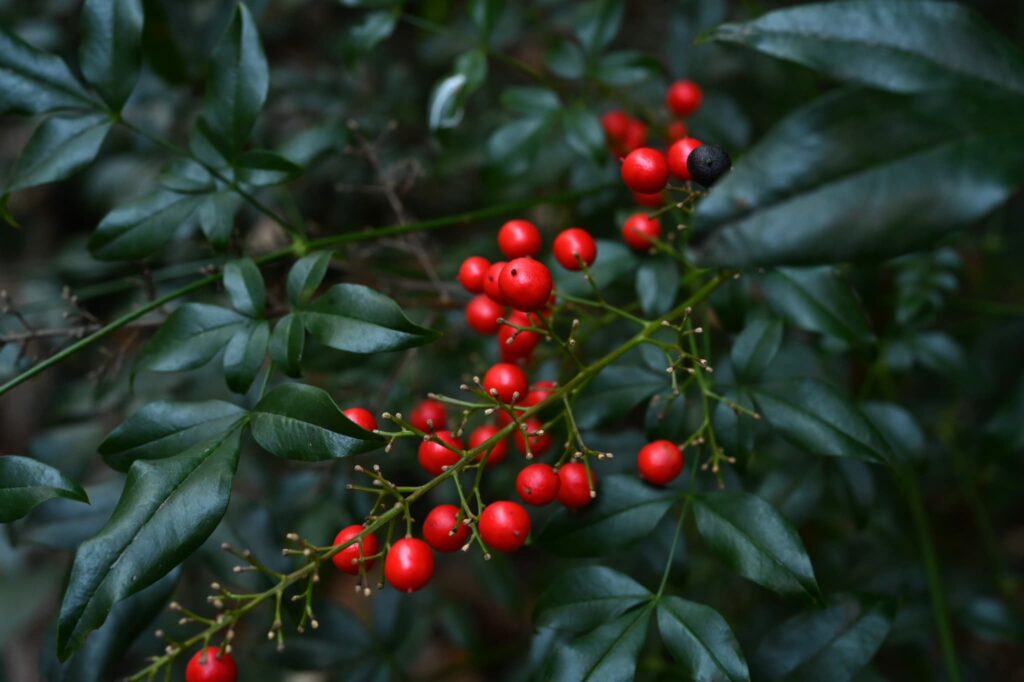
| Fruits | Round red berries that persist into winter |
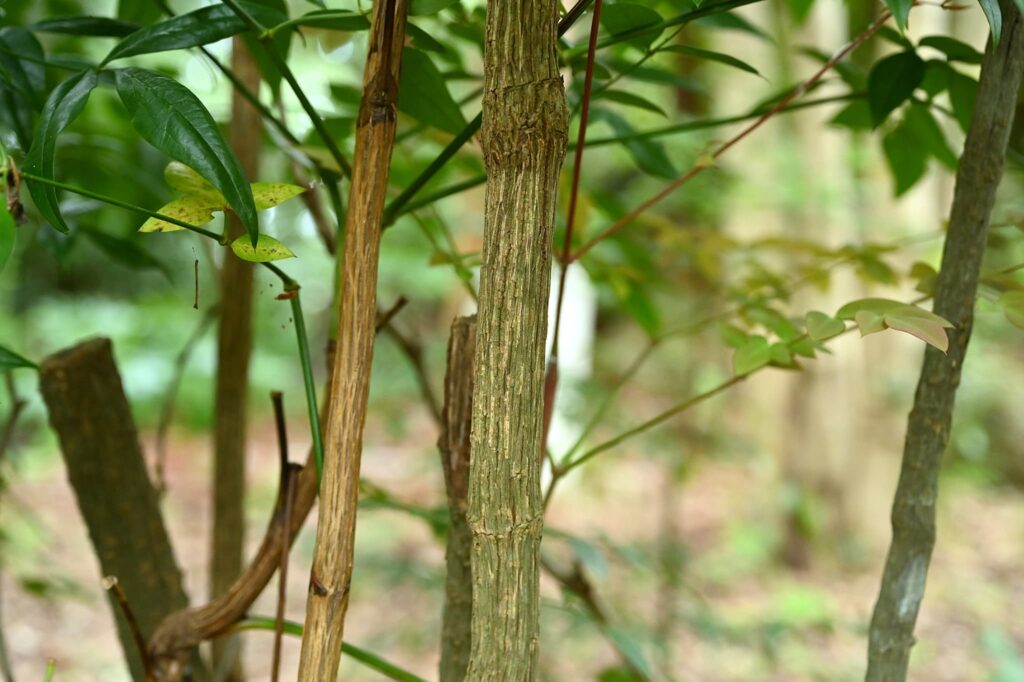
| Stems | Slender, upright, usually forming clumps |
| Bark | Gray to gray-brown on older stems |
Foliage
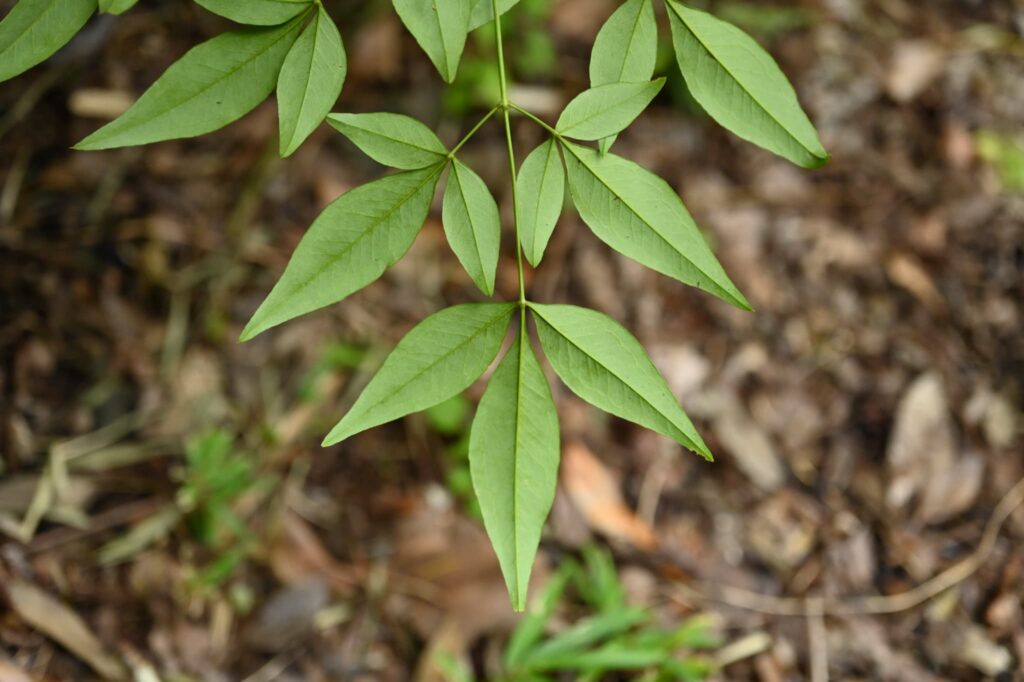
Nandina has large, finely divided compound leaves, usually 30–50 cm long. The leaflets are narrow to broadly lance-shaped, glossy, and mostly entire. New foliage may emerge reddish, while mature leaves are generally green.
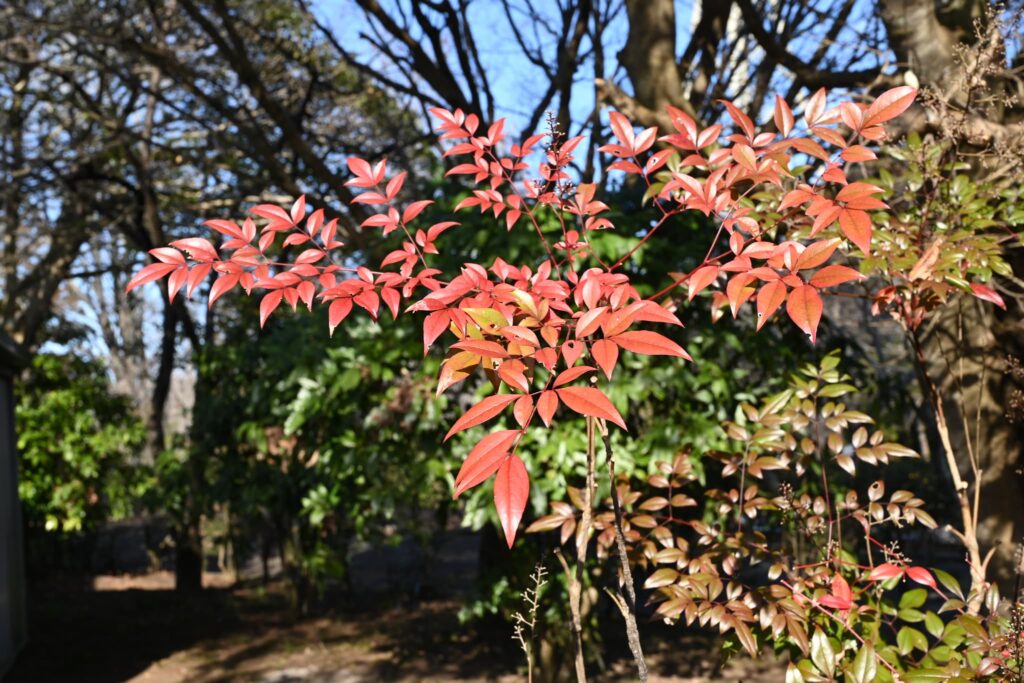
Cold temperatures can turn the foliage vivid red or reddish-purple, particularly in plants growing in sunny positions. The intensity of the color varies with cultivar, temperature, and growing conditions.
Flowers
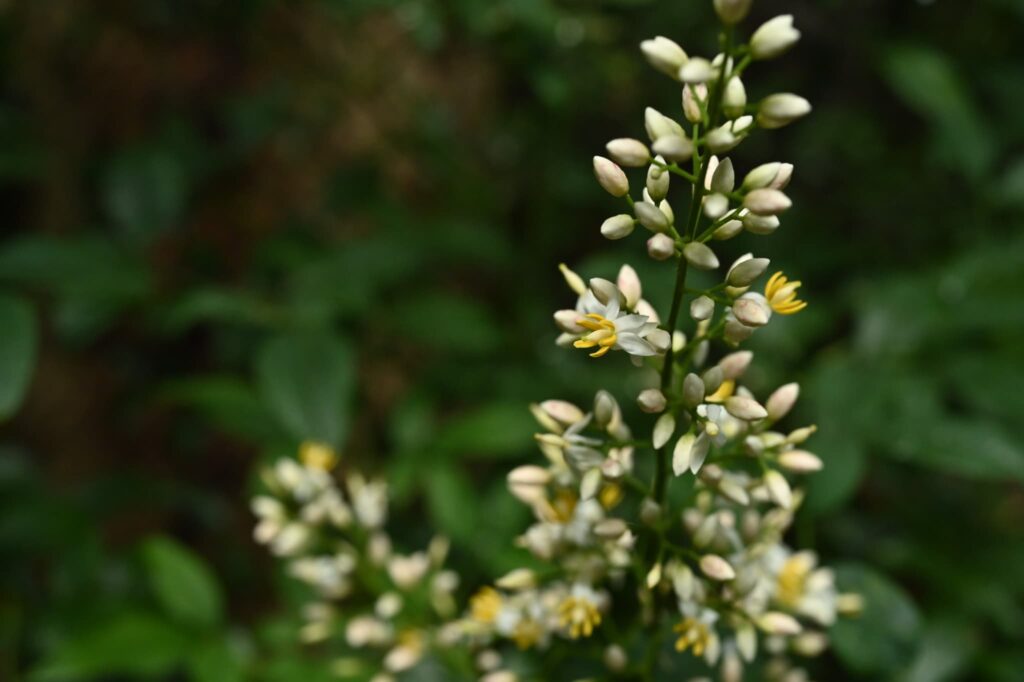
Nandina flowers mainly from May to June. Numerous small white flowers are produced in large, upright terminal panicles.
Individual flowers are only about 6–7 mm across and have six white petals with yellow anthers. The flowers are relatively inconspicuous compared with the colorful fruit that follows.
Fruits
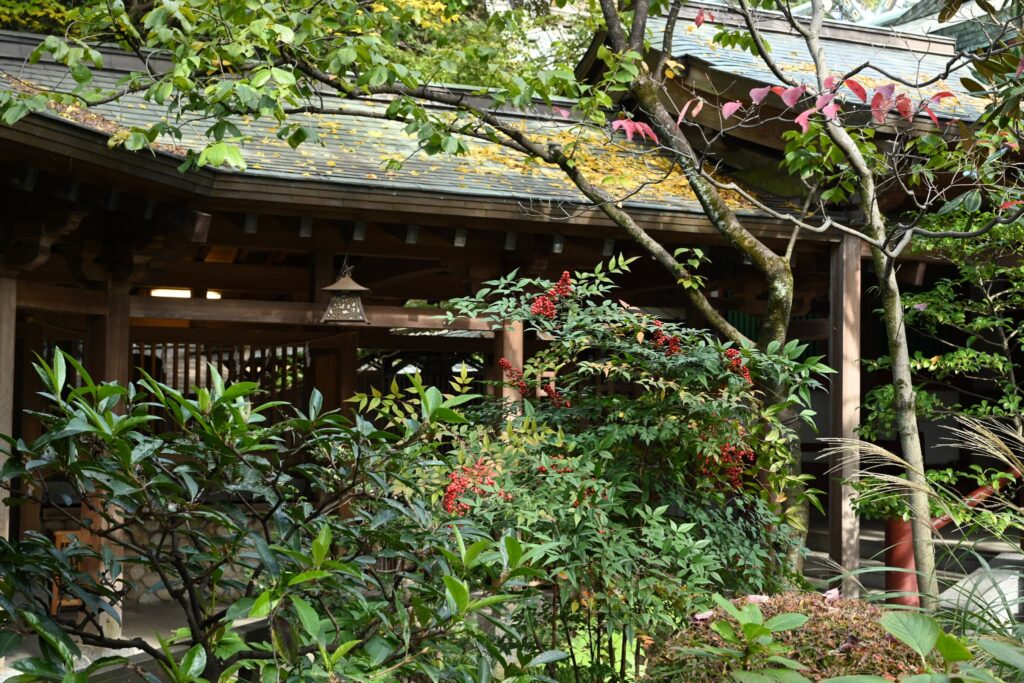
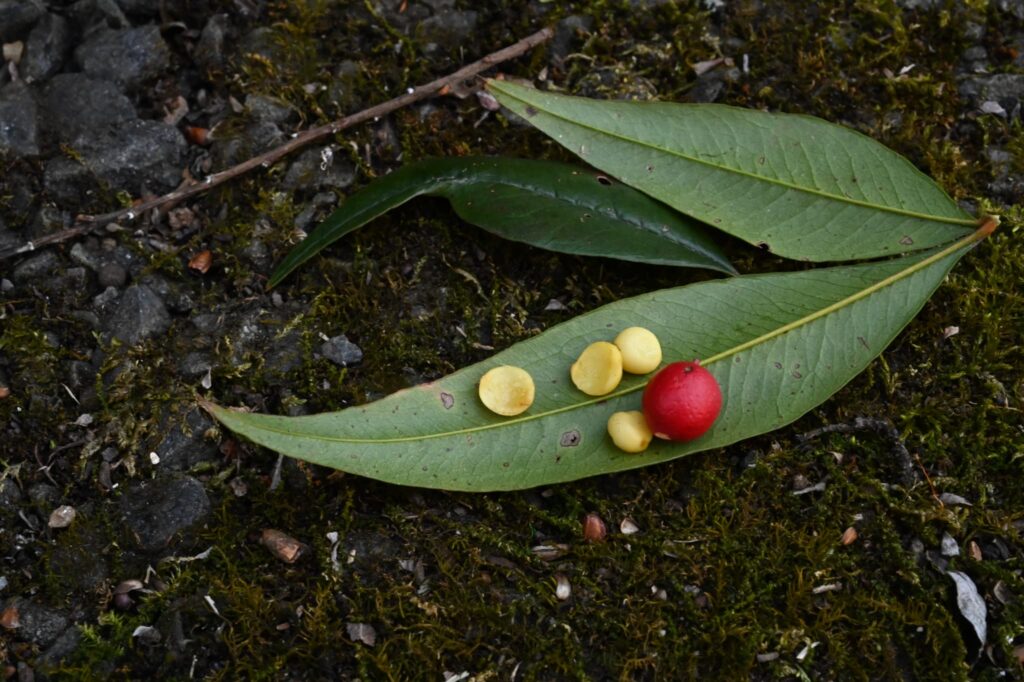
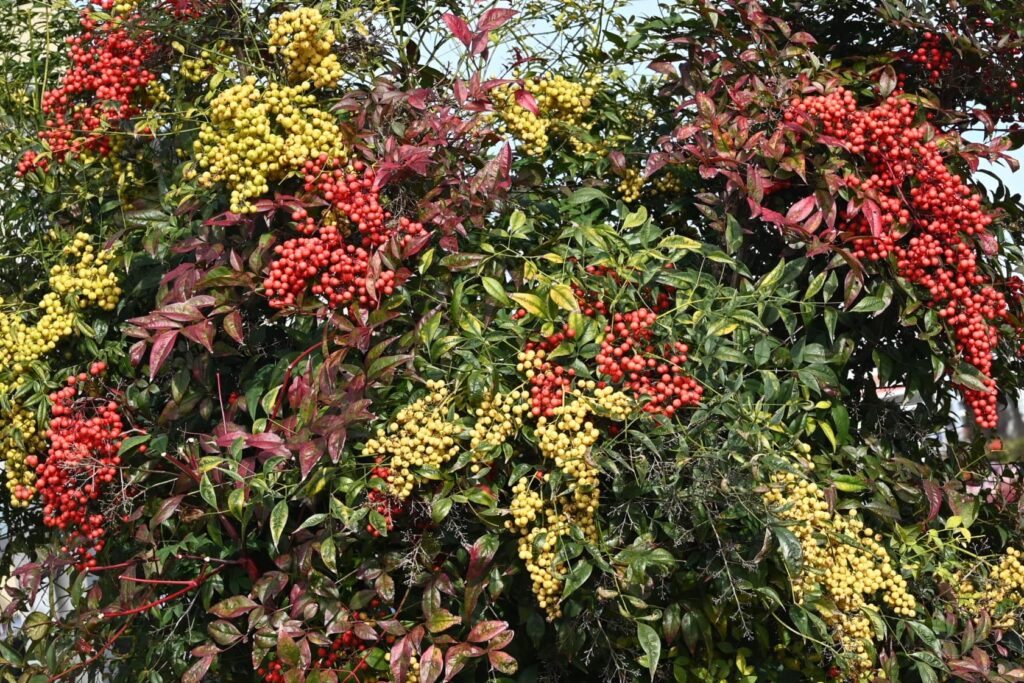
After flowering, Nandina develops clusters of round berries about 6–8 mm across. They ripen red in autumn and often remain on the plant through winter.
The berries are attractive but should not be eaten. Nandina contains cyanogenic compounds, and ingestion of sufficient quantities can cause poisoning. This applies not only to the berries but also to other parts of the plant.
Birds may eat Nandina berries, but this does not mean that the fruit is harmless. Large quantities can be particularly dangerous to some birds, including Cedar Waxwings, which have been associated with cyanide poisoning after consuming large amounts of Nandina fruit.
Bark & Stems
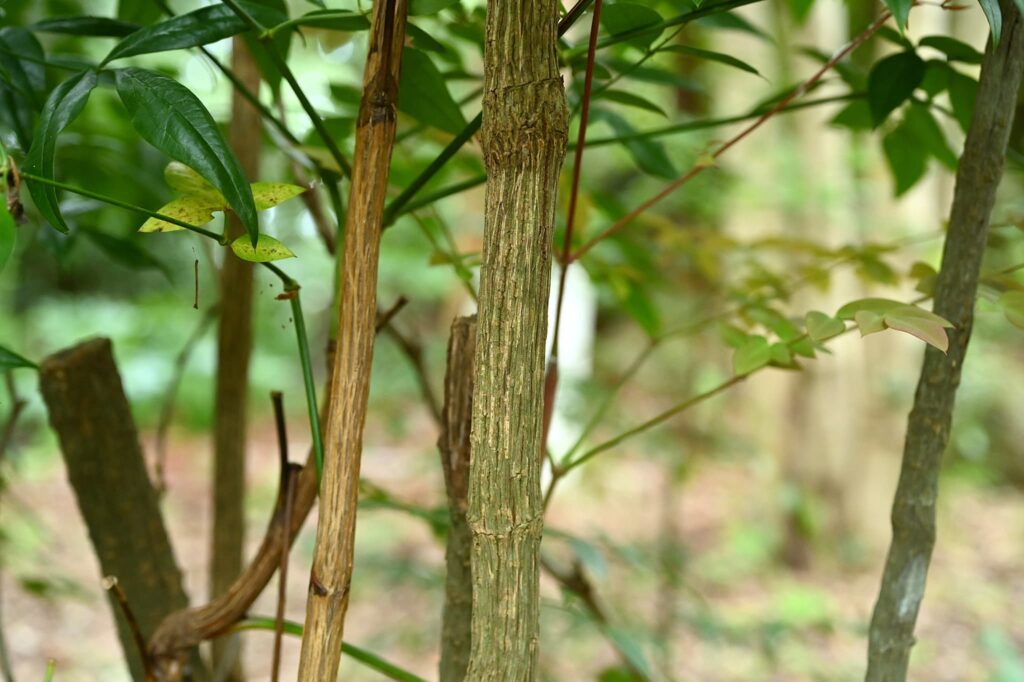
Nandina does not develop a large conventional trunk. Instead, numerous slender, upright stems arise from the base, gradually forming a clump.
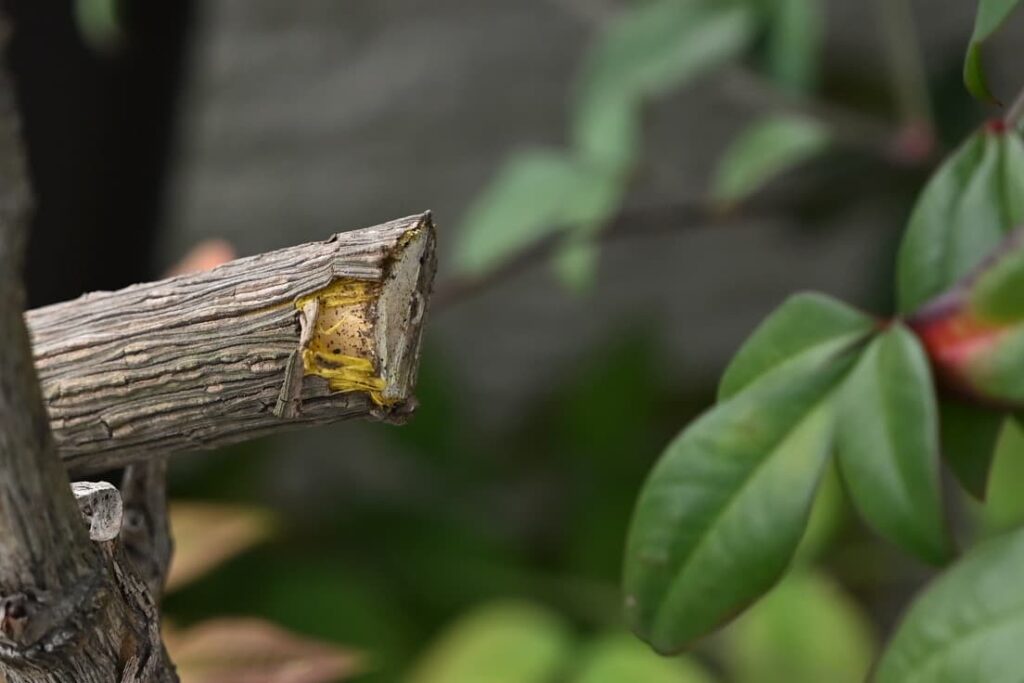
Older stems develop gray to gray-brown bark. Individual stems generally remain relatively thin, although old plants can develop a substantial mass of stems at the base.
The yellowish wood has traditionally been used in Japan for small implements, chopsticks, and decorative purposes.
Size & Growth
Nandina normally grows about 1–3 m tall in gardens. It spreads gradually by producing new stems from the base, creating a characteristic clumping habit.
Older stems can become sparse or unattractive as they age. Removing some of the oldest stems at ground level encourages younger shoots and helps maintain a compact appearance.
Uses & Cultural Significance
Why Is Nandina Considered Auspicious in Japan?
Nandina has a particularly strong association with good fortune in Japan.
The Japanese name Nanten (南天) is traditionally associated with the phrase nan o tenjite fuku to nasu (難を転じて福となす), meaning roughly “turning misfortune into good fortune.” This wordplay helped establish Nandina as an auspicious plant.
It has traditionally been planted near entrances and around houses, and its evergreen foliage and red fruit made it especially suitable for New Year decorations.
Traditional Uses
Nandina leaves have traditionally been used as decorative leaves with foods such as sekihan (red rice), and branches and berries have been used in seasonal decorations.
The plant has also had medicinal uses. Its fruit, known as Nanten-jitsu (南天実), has traditionally been used as an ingredient in remedies for coughing. The leaves and other parts have also been used medicinally.
However, Nandina contains biologically active alkaloids and cyanogenic compounds, so traditional use should not be interpreted as evidence of safety for home remedies.
Growing Guide
| Item | Guidance |
|---|---|
| Light & Soil | Full sun to partial shade; moist, well-drained soil |
| Watering | Water during prolonged dry periods, especially when young |
| Wind | Protect tall plants from strong winds |
| Cold Hardiness | Approximately USDA Zones 6–9 |
| Pruning | Remove selected old stems at ground level |
| Home Gardens | Excellent for small and traditional gardens |
| Pests | Generally trouble-free; occasional scale insects and other pests |
Light & Soil
Nandina is adaptable and grows in full sun, partial shade, and even fairly deep shade. It prefers moist, well-drained soil but tolerates a range of soil types once established.
Sunlight generally produces stronger red coloration and can improve flowering and fruiting, although cultivars differ considerably.
Watering
Water young plants regularly until they are established. Mature plants tolerate some drought, but prolonged dryness can reduce vigor and cause leaf damage.
Cold Hardiness
Nandina is relatively cold hardy and is commonly grown in USDA Zones 6–9. Cold temperatures are also responsible for much of its attractive winter coloration.
Pruning
Nandina should generally be pruned by removing selected old stems at ground level, rather than shortening all stems at the same height.
This preserves the plant’s natural layered appearance and encourages new shoots from the base. Heavy shearing can produce an unnatural, congested form.
Pruning is best carried out from late winter into early spring, before the main flush of new growth. Removing too many stems at once can reduce flowering and fruiting.
Suitability for Home Gardens
Nandina is particularly well suited to small gardens because it remains relatively narrow and can be maintained without severe pruning.
It is also useful in Japanese-style gardens, foundation plantings, mixed shrub borders, and as a seasonal accent.
Pests
Nandina generally has few serious pest problems. Scale insects and other occasional pests may occur, but serious damage is uncommon under suitable growing conditions.
Cultivars
Many ornamental forms of Nandina have been selected in Japan and elsewhere.
- Kinshi Nanten — A traditional Japanese cultivar with very narrow, thread-like leaflets.
- Otafuku Nanten — A compact form with relatively broad, rounded leaflets and a low-growing habit.
- Shiro-mi Nanten — A white- or cream-fruited form, also known as Shiro-nanten or Kimi-nanten.
- Orizuru Nanten — A distinctive form with curled and twisted foliage.
- ‘Gulf Stream’ — A compact modern cultivar with colorful young and mature foliage.
- ‘Fire Power’ — A compact cultivar selected primarily for its intense red foliage.
Some modern cultivars are selected to produce few or no fruits. These can be useful where the ornamental foliage is desired but the toxic berries are a concern.
Similar Species
Nandina vs. Mahonia
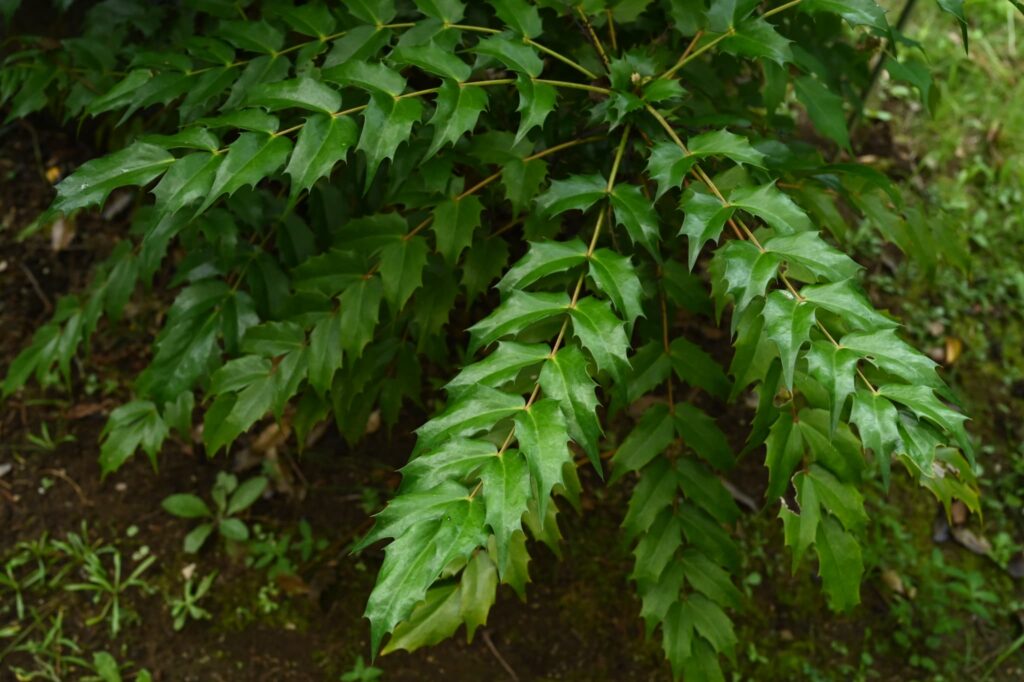
Mahonia japonica and other Mahonia species can superficially resemble Nandina because both belong to the barberry family.
Nandina, however, has much more finely divided compound leaves and slender, bamboo-like stems, while Mahonia has larger, leathery leaves with clearly toothed leaflets.
Nandina vs. Nanten-hagi
Nanten-hagi (Vicia unijuga) is an unrelated legume. The similarity is mainly in the Japanese name; it does not resemble Nandina closely enough to be a serious identification problem.
Frequently Asked Questions
Is Nandina native to Japan?
This is complicated. Kew currently treats the native range of Nandina domestica as central and southern China and lists Japan as an introduced range. In Japan, however, the plant has been cultivated for centuries and occurs in natural-looking populations, especially in western and southern Japan. Some Japanese sources regard these populations as native, while others consider them naturalized descendants of cultivated plants.
Is Nandina poisonous?
Yes. Nandina contains cyanogenic compounds and other biologically active substances. Its berries, leaves, and stems should not be eaten. Large quantities can cause serious poisoning in humans and animals.
Can birds eat Nandina berries?
Birds do eat the berries, but the fruit is not harmless. Large quantities can expose birds to cyanide, and mass consumption has caused poisoning in some bird species.
Can Nandina grow in shade?
Yes. Nandina tolerates partial shade and can survive fairly deep shade. However, brighter sunlight generally produces stronger red foliage and better flowering and fruiting.
When should I prune Nandina?
Late winter to early spring is a good time. Remove some of the oldest stems at ground level rather than cutting the entire plant back to the same height.
How tall does Nandina grow?
Most garden plants are about 1–3 m tall. Some plants can become taller when left unmanaged, but the species generally remains a relatively small shrub.
Why doesn’t my Nandina produce berries?
Nandina needs to flower before it can produce fruit. Insufficient sunlight, excessive pruning, or unfavorable conditions during flowering can reduce berry production. Some cultivars are also selected for reduced or absent fruiting.
Does Nandina lose its leaves?
No. Nandina is an evergreen shrub. Individual leaves are eventually replaced, but the plant does not become completely bare in winter. Cold temperatures can turn the foliage red or reddish-purple.
Conclusion
Nandina is one of the most characteristic shrubs of traditional Japanese gardens. Its combination of evergreen foliage, brilliant winter coloration, red berries, and long association with good fortune has made it an enduring garden plant.
Although its botanical origin is generally placed in China, centuries of cultivation have made Nandina deeply embedded in Japanese horticultural culture. Its distinctive clumping habit and seasonal color also make it one of the easiest Japanese garden shrubs to recognize.