Japanese Spindle (Euonymus japonicus): Identification, Care & Uses
Japanese Spindle (Euonymus japonicus) is one of Japan’s most widely planted evergreen shrubs, valued for its glossy foliage, tolerance of repeated pruning, and long history of use in hedges, windbreaks, and gardens. Native to Japan and Korea, it is especially characteristic of warm coastal areas, where it tolerates salt exposure and difficult growing conditions. This guide covers identification, foliage, flowers, fruit, bark, uses, cultivars, pests, and cultivation.
What Is the Japanese Spindle?
Japanese Spindle is an evergreen shrub or small tree in the family Celastraceae, the bittersweet family. Its natural range extends from southern Hokkaido through the Japanese archipelago to the Nansei Islands, and it is also native to Korea. It commonly grows near the coast, particularly in coastal forests, woodland margins, and scrub, but is also widely planted inland.
The species is highly adaptable and tolerates pruning, salt exposure, urban conditions, and a range of soils. These qualities have made it one of the most familiar evergreen hedge plants in Japan. It is also highly variable in leaf size and coloration, and numerous ornamental forms have been selected in cultivation.
Overview
| Item | Description |
|---|---|
| Scientific Name | Euonymus japonicus Thunb. |
| Common Names | Japanese Spindle, Japanese Euonymus, Evergreen Euonymus |
| Japanese Name | Masaki (マサキ) |
| Family | Celastraceae |
| Native Range | Japan, Korea, and the Nansei Islands |
| Plant Type | Evergreen shrub or small tree |
| Height | Typically 2–6 m; larger specimens may become taller |
| Leaves | Opposite, glossy, leathery, and finely serrated |
| Flowering Season | June–July |
| Fruit | Rounded, four-lobed capsule with orange-red arils |
| USDA Hardiness | Approximately Zones 6–9, depending on cultivar and local conditions |
| Sun Exposure | Full sun to partial shade |
Characteristics
| Feature | Description |
| Leaves | Opposite, simple, glossy, leathery, and finely serrated |
| Flowers | Small, pale green to greenish-white, four-petaled flowers in axillary cymes |
| Fruit | Rounded capsule that opens into four lobes |
| Seeds | Usually four, each surrounded by a bright orange-red aril |
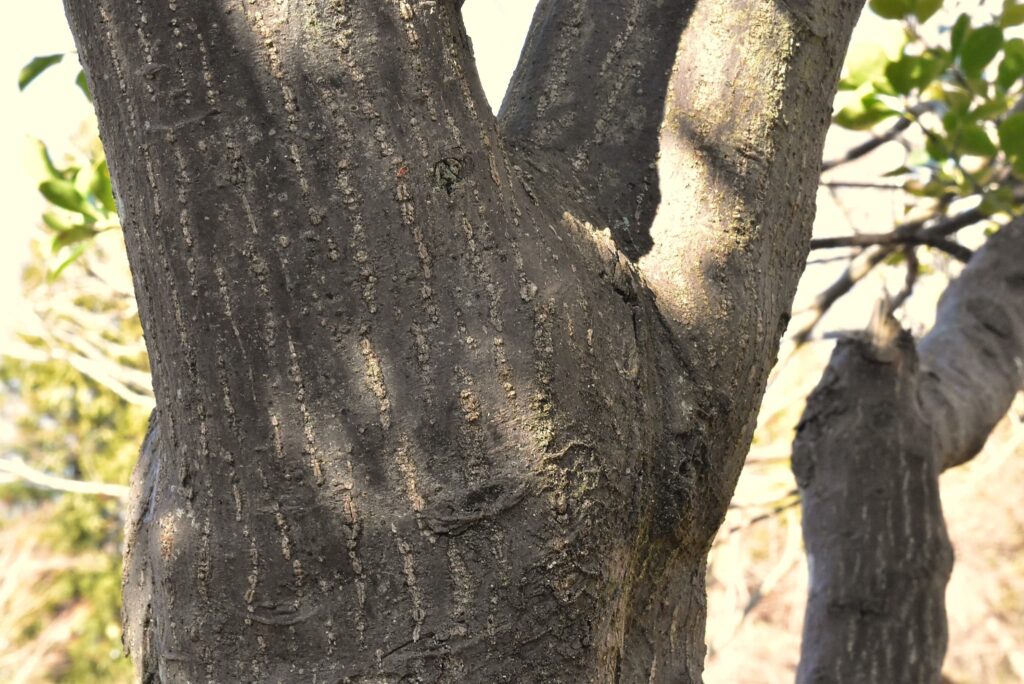
| Bark | Grayish brown and relatively smooth |
| Habit | Dense, upright to rounded evergreen shrub |
Foliage
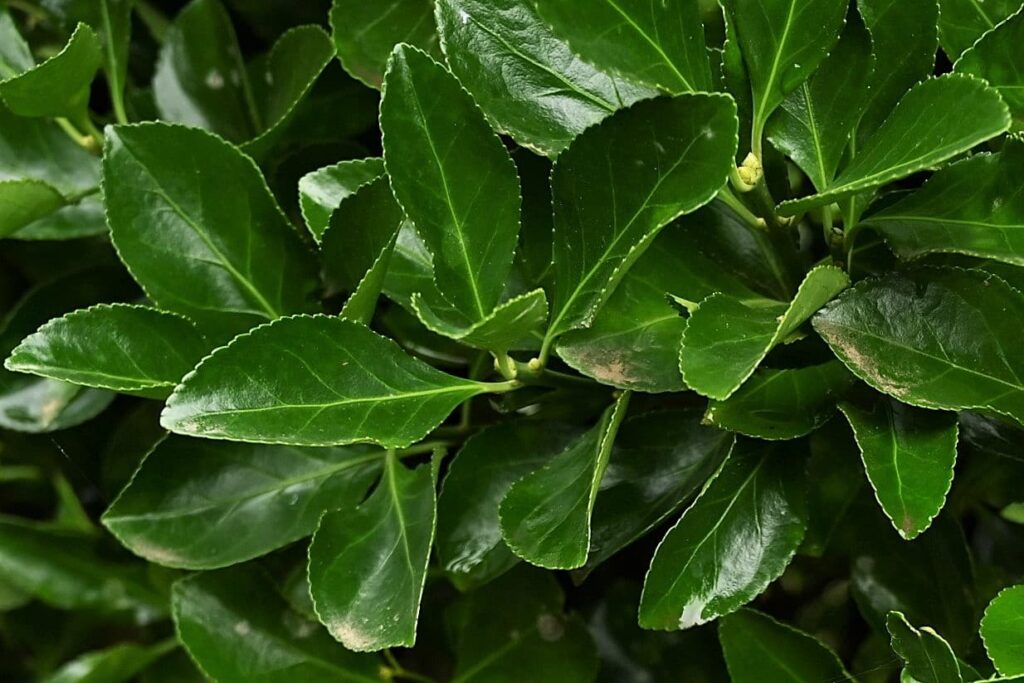
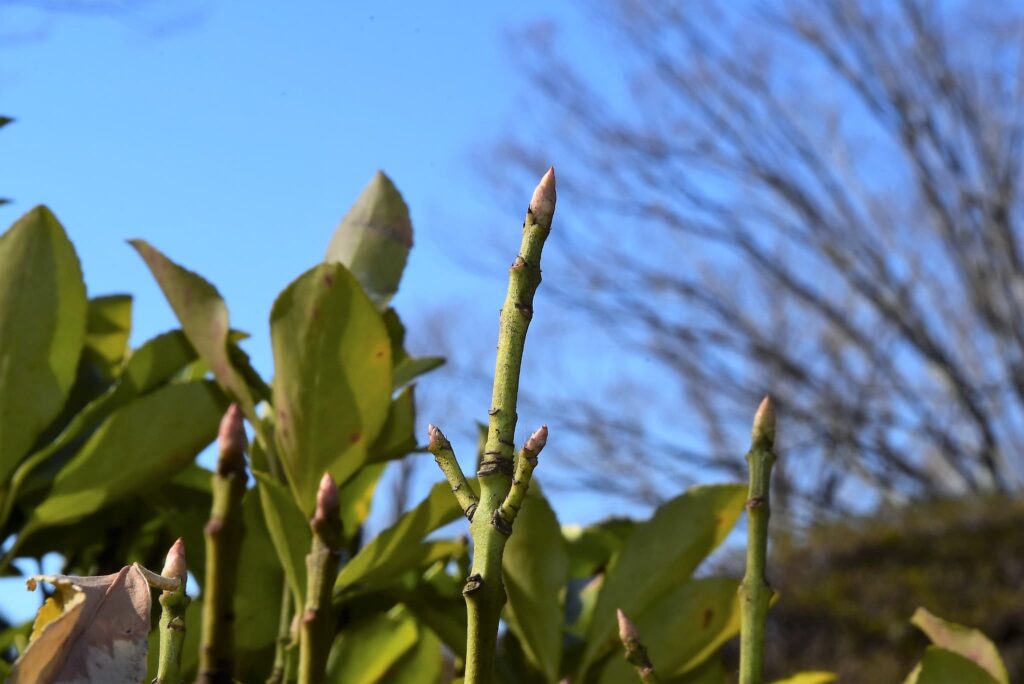
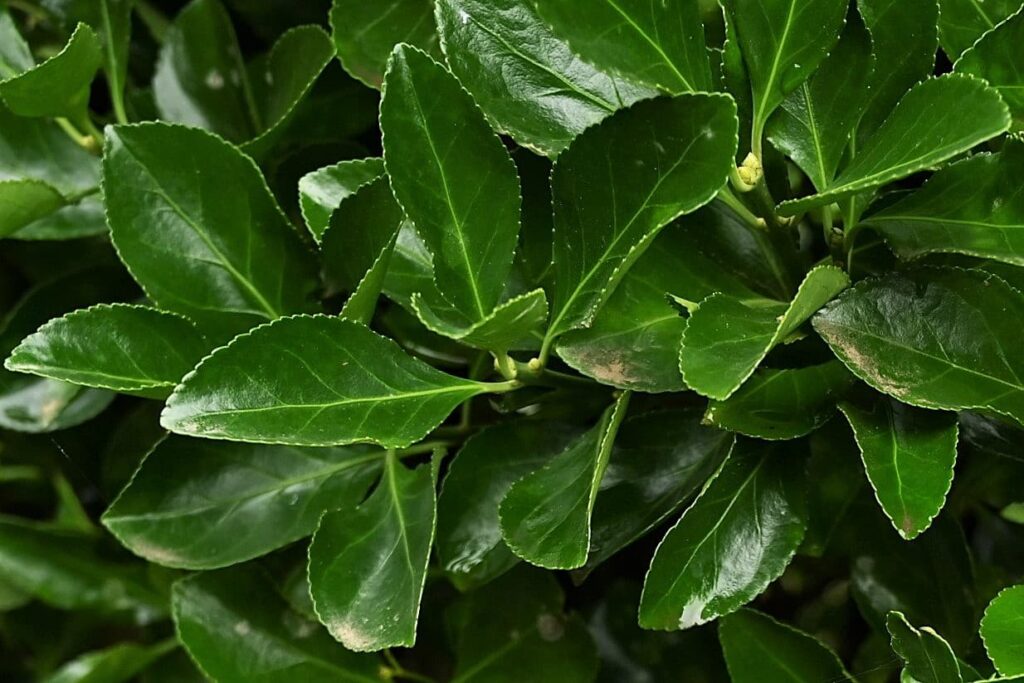
Japanese Spindle has simple, opposite leaves that are typically elliptic to obovate, about 3–8 cm long. The leaves are thick, leathery, and glossy, with shallow serrations along the margins. The upper surface is dark green, while new growth is often lighter green before gradually becoming darker.
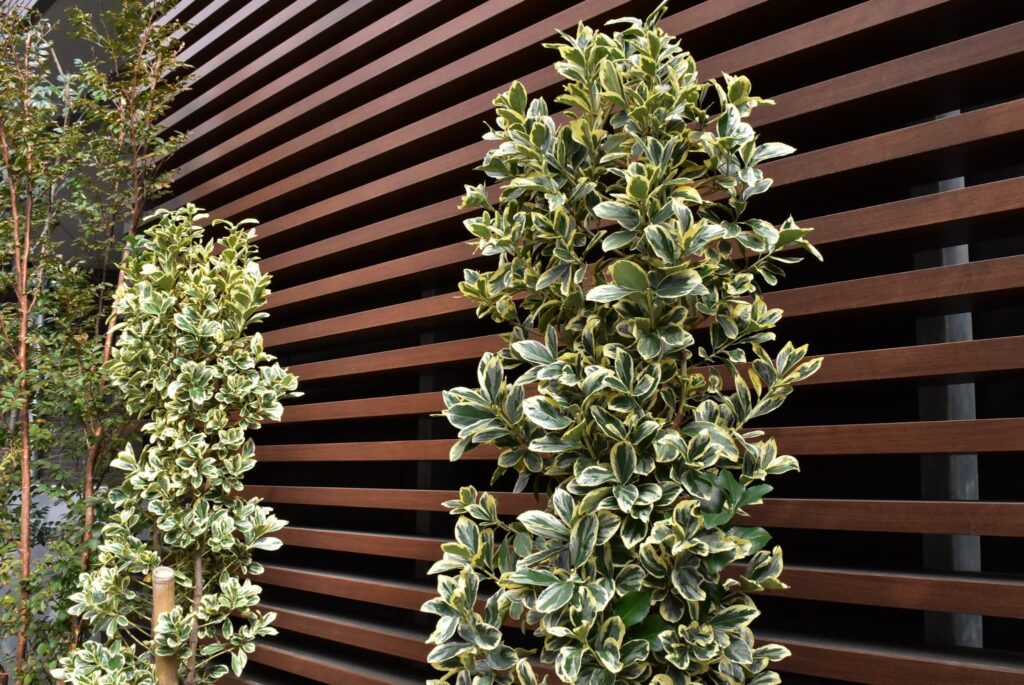
The glossy evergreen foliage is one of the plant’s main ornamental features. Depending on the cultivar, leaves may be smaller, larger, or marked with white, yellow, or cream-colored variegation.
Flowers
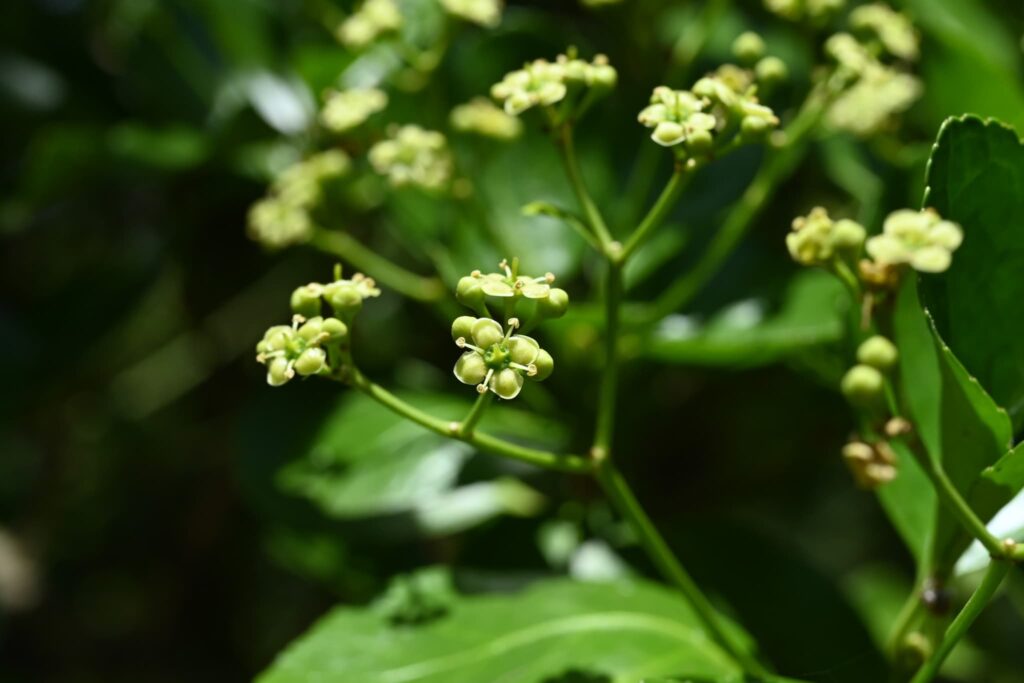
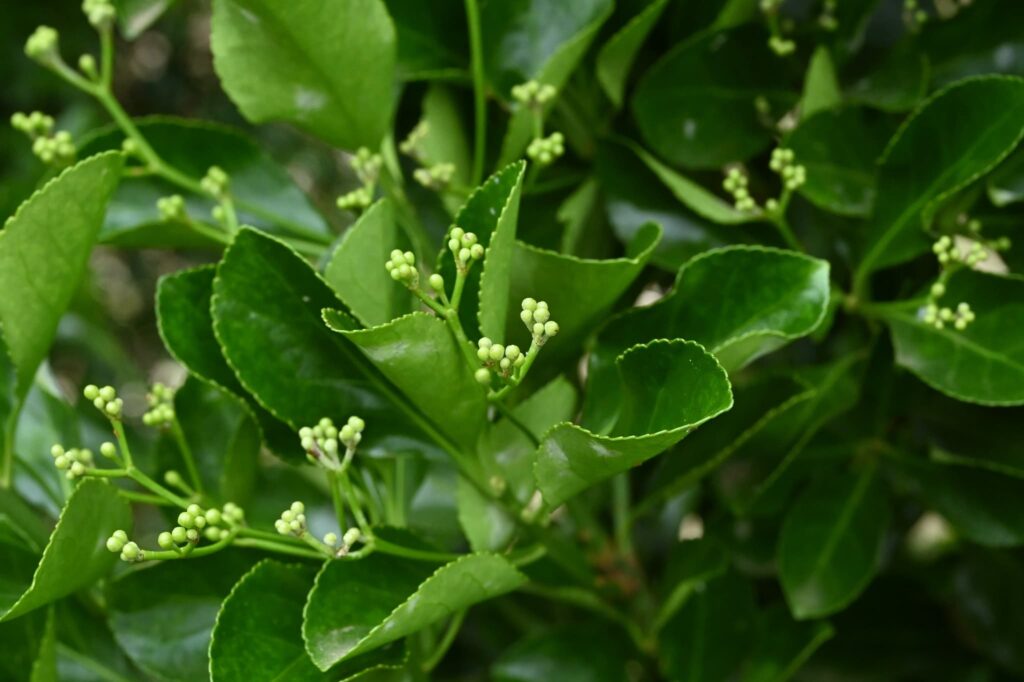
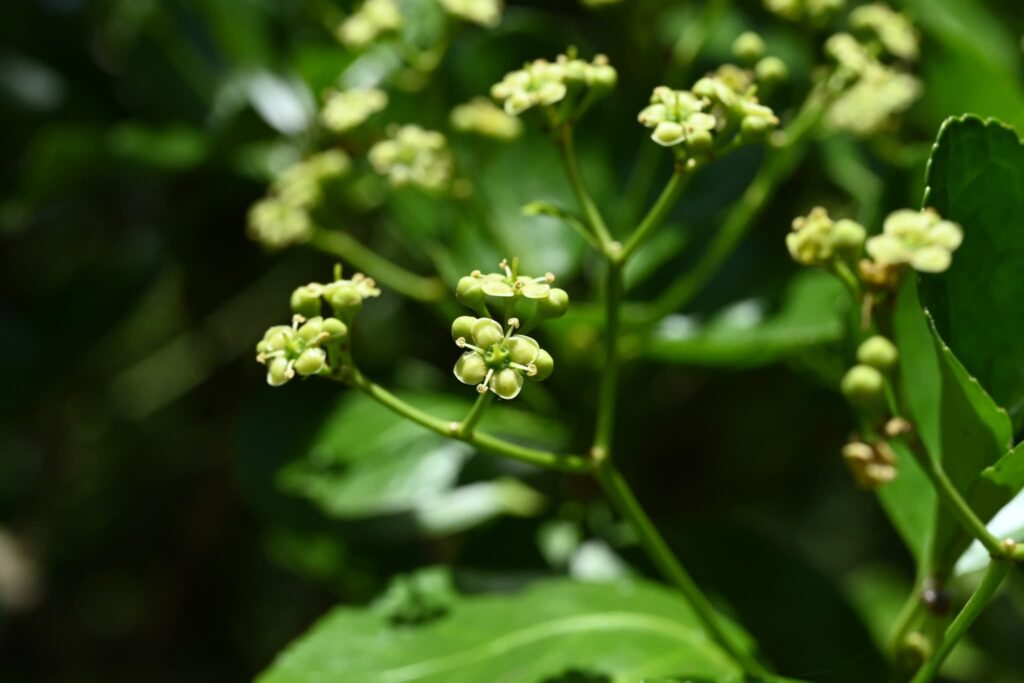
Japanese Spindle flowers from June to July in Japan. Numerous small flowers are produced in branched clusters from the leaf axils of current-season shoots.
Individual flowers are only about 5 mm across and are usually pale green or greenish white. Each flower has four petals, four stamens, and a conspicuous floral disc surrounding the ovary.
The flowers are not especially showy individually, but a mature shrub can produce large numbers of them.
Fruits
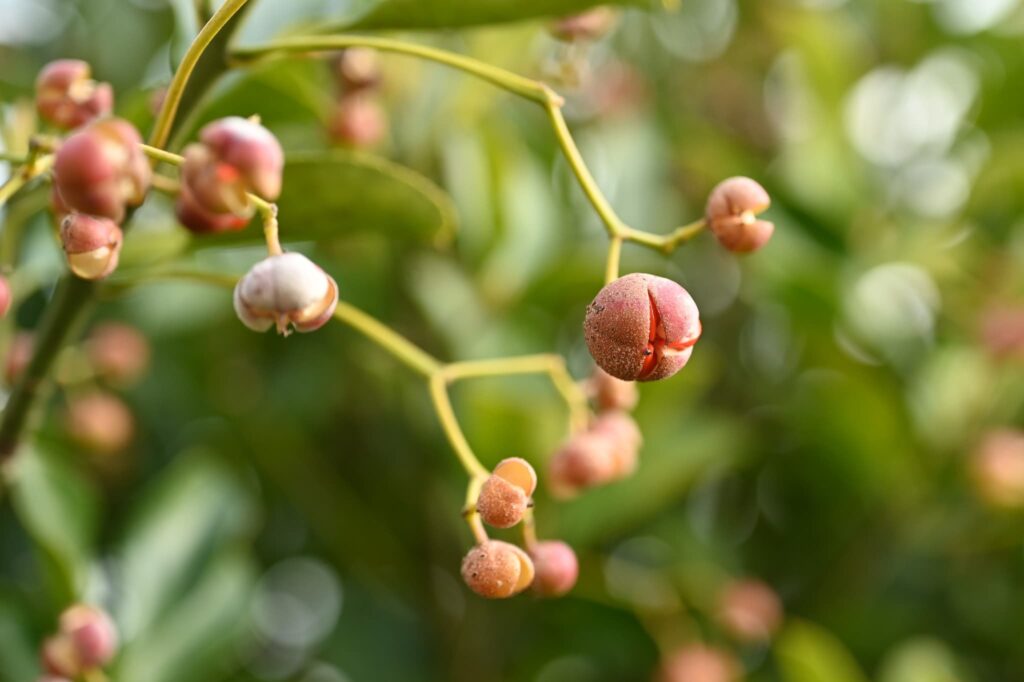
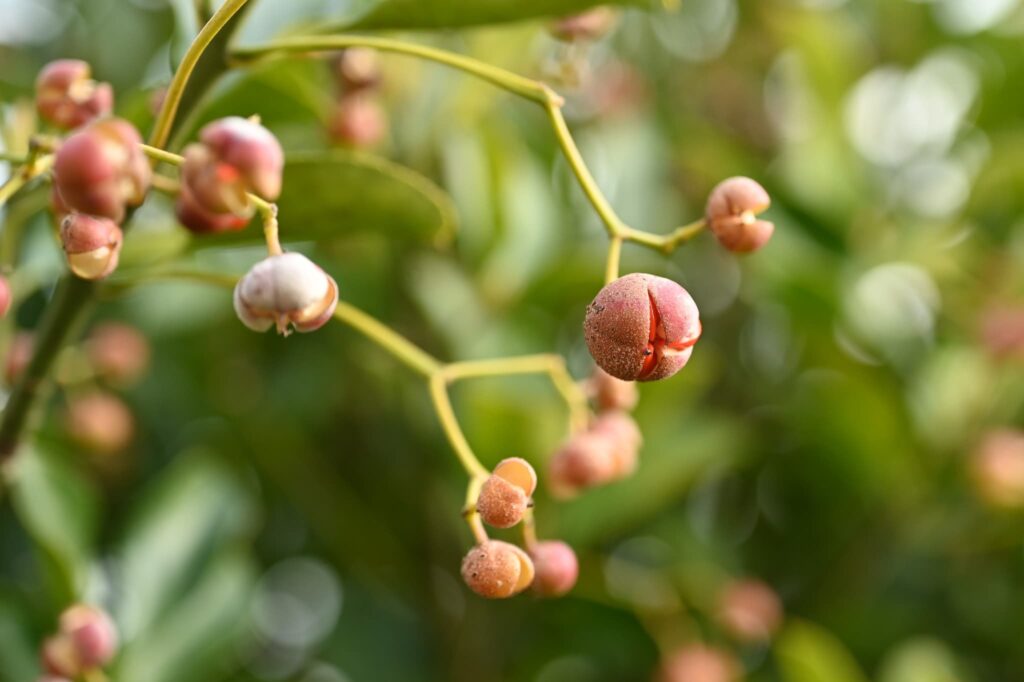
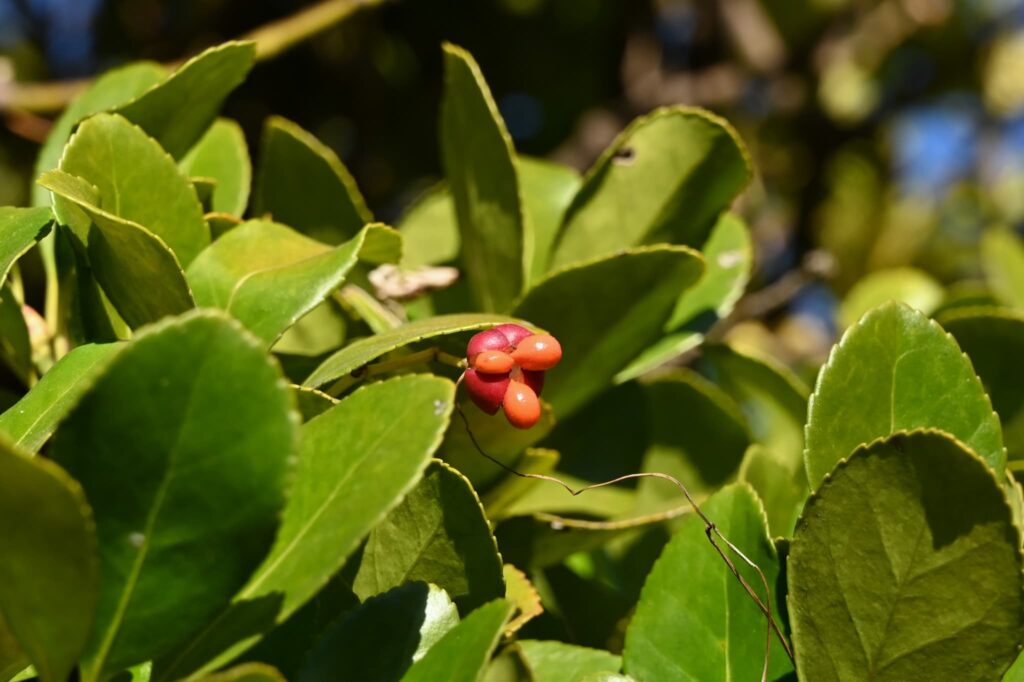
The fruit is a rounded capsule about 7–9 mm across. It usually matures from autumn into winter and changes from green to pinkish or reddish purple before opening.
When mature, the capsule splits into four lobes, exposing seeds surrounded by vivid orange-red arils. The brightly colored seeds are considerably more conspicuous than the flowers and can remain visible after the leaves have begun to age.
Bark & Timber
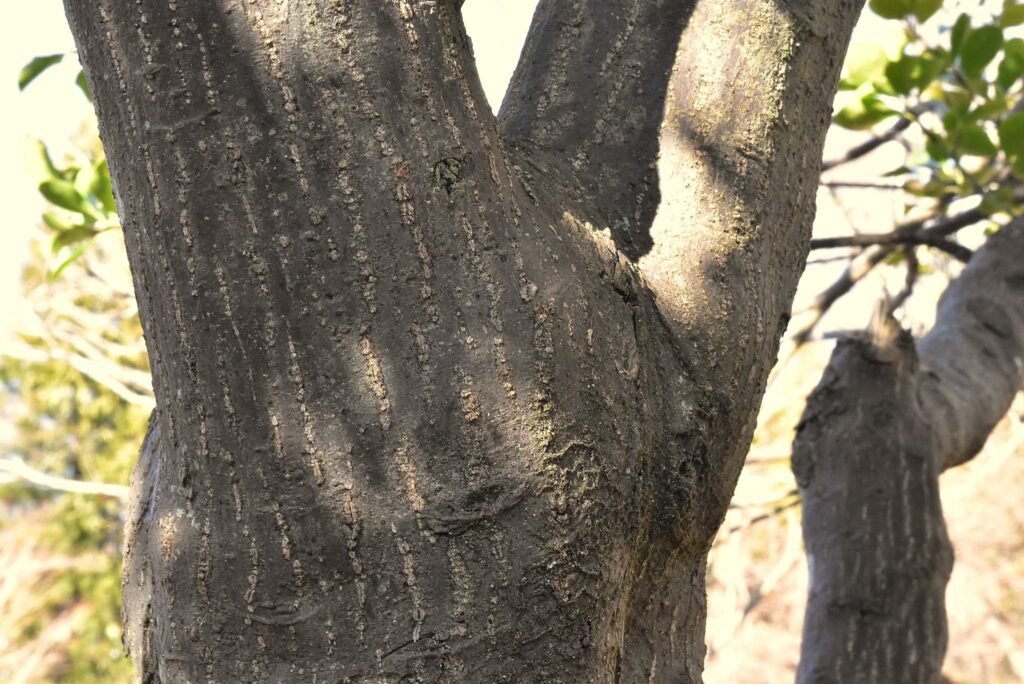
The bark of Japanese Spindle is grayish brown and relatively smooth, especially on young branches. Older stems may become somewhat rougher with age, but the bark is not normally an important ornamental feature because the plant is usually maintained as a shrub or hedge.
The wood is fine-grained and relatively hard. Historically, the plant has had some practical uses, but its main importance today is as an ornamental and landscape shrub.
Uses & Cultural Significance
Japanese Spindle has been cultivated in Japan for a long time and became particularly important as a hedge and garden plant because it remains evergreen and responds well to repeated pruning. Its dense growth also makes it useful for screens and windbreaks.
The species is especially well suited to coastal landscapes. Its tolerance of salt exposure has been documented in studies of its use in coastal protection forests, helping explain its widespread use near the sea.
The Japanese name Masaki has several proposed etymologies, and its exact origin is uncertain. Historical Japanese horticultural literature also records numerous variegated forms, demonstrating that the species has been selected and cultivated for ornamental foliage for centuries.
Historically, the bark of Japanese Spindle was sometimes used in Japan as a substitute for Eucommia ulmoides, under the name “Wa-tochu” (Japanese tochu). This is a historical medicinal use and should not be interpreted as evidence that the plant is safe or effective as a home remedy.
Toxicity
Japanese Spindle should not be eaten. Ingestion of large quantities can cause gastrointestinal symptoms such as vomiting and diarrhea, and more serious symptoms have also been reported.
The plant is therefore unsuitable for home medicinal use. Children and pets should not be allowed to chew or consume its leaves, fruits, seeds, or other parts.
Growing Guide
| Item | Description |
| Climate & Site | Adaptable; especially well suited to warm coastal conditions |
| Soil | Most well-drained soils; tolerates a range of soil types |
| Sun Exposure | Full sun to partial shade |
| Cold Hardiness | Approximately USDA Zones 6–9, depending on cultivar and exposure |
| Salt Tolerance | Good tolerance of coastal salt exposure |
| Drought Tolerance | Moderate once established |
| Pruning | Highly tolerant of repeated pruning |
| Propagation | Seeds and stem cuttings |
Light & Soil
Japanese Spindle grows well in full sun but also tolerates partial shade. It is adaptable to a wide range of soils, provided that drainage is reasonably good.
Plants grown in deep shade tend to become more open and may lose foliage from the lower branches. For dense hedges and compact growth, several hours of direct sunlight each day is preferable.
Wind & Salt Tolerance
Japanese Spindle is particularly well adapted to coastal environments. It tolerates salt exposure and has been studied for use in coastal protection plantings.
Its ability to withstand sea winds and difficult urban conditions is one reason it has long been favored for hedges and windbreaks in Japan.
Cold Hardiness
Japanese Spindle is one of the more cold-tolerant evergreen Euonymus species, although hardiness varies with cultivar, exposure, and winter conditions. It can survive in southern Hokkaido in Japan, while some cultivated selections are rated for approximately USDA Zones 6–9.
In colder areas, young plants and exposed variegated cultivars may suffer winter damage even when established plants survive.
Pruning
Japanese Spindle responds very well to pruning and can be maintained as a formal hedge, screen, foundation shrub, or topiary.
Light trimming can be carried out during the growing season when necessary. For major structural pruning in Japan, late winter to early spring, before vigorous new growth begins, is generally a suitable period.
Avoid removing large amounts of foliage during periods of extreme summer heat or drought, when exposed branches and leaves can be more susceptible to stress.
Propagation
Japanese Spindle can be propagated from seed or stem cuttings. Cuttings are generally the easier method for maintaining desirable cultivars because seedlings may not reproduce the characteristics of the parent plant.
Suitability for Home Gardens
Japanese Spindle is particularly useful where an evergreen, easily shaped shrub is required. Common applications include:
- Hedges
- Screens and windbreaks
- Foundation plantings
- Formal gardens
- Topiary
- Containers
- Coastal gardens
Its dense foliage and tolerance of repeated shearing make it especially useful for formal hedges.
Pests & Diseases
Japanese Spindle can be affected by several pests and diseases. Common problems include euonymus scale, powdery mildew, mites, aphids, leaf miners, and fungal leaf spots. Caterpillars may also feed on the foliage.
Plants that are overcrowded, heavily shaded, or poorly ventilated are more likely to develop fungal problems. Regular inspection is particularly important for hedges, where dense foliage can make infestations difficult to detect.
Bagworm cases may also occur on neglected plants. Removing conspicuous cases by hand before the larvae become numerous can help reduce damage.
Cultivars
Japanese Spindle is highly variable in cultivation, and numerous selections have been made for foliage color, leaf size, and growth habit.
Ginmasaki and White-Margined Forms
In Japan, white-margined forms are traditionally known as Ginmasaki (銀マサキ, “silver Masaki”). Similar white-variegated cultivars are sold internationally under names such as Euonymus japonicus ‘Albomarginatus’, ‘Silver Queen’, and ‘Silver King’.
Kinmasaki and Yellow-Variegated Forms
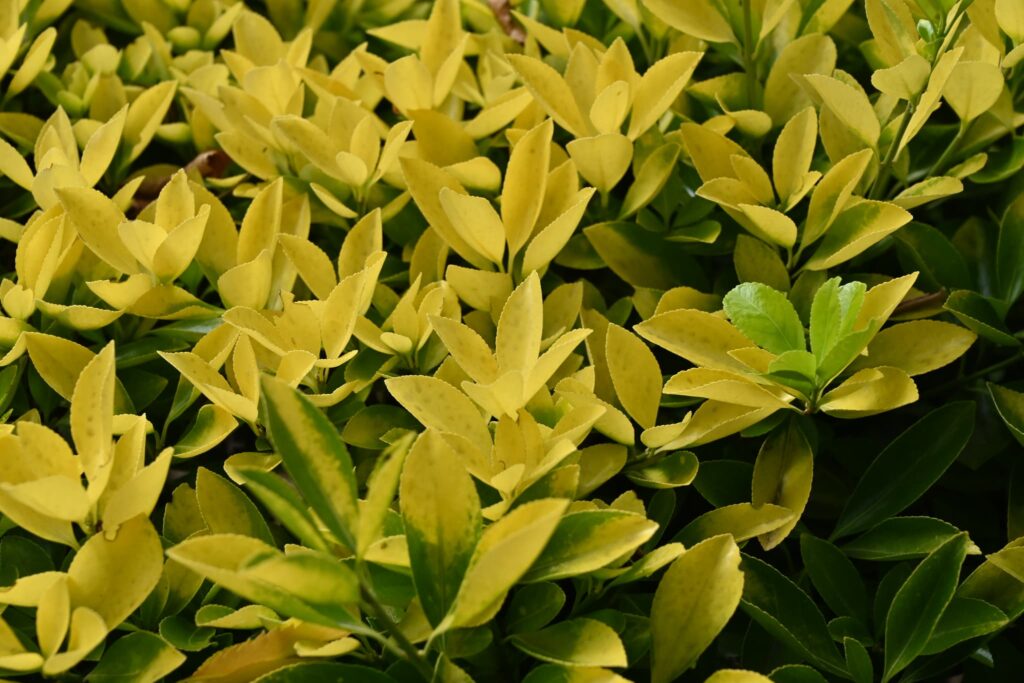
Kinmasaki (金マサキ, “gold Masaki”) refers to yellow-variegated forms. Depending on the selection, the yellow coloration may appear along the leaf margins or across larger portions of the leaf.
Cultivars such as ‘Aureomarginatus’ have yellow margins, while ‘Aureus’ and related selections can show more extensive yellow coloration.
Bekko Masaki
Bekko Masaki (べっこうマサキ) refers to forms with yellow or golden markings toward the center of the leaf, producing a tortoiseshell-like pattern.
‘Microphyllus’
Euonymus japonicus ‘Microphyllus’ is a compact, small-leaved selection with distinctly smaller leaves than the species. It generally remains much shorter and denser than the standard form, making it useful for low hedges, containers, and formal plantings.
‘Green Spire’
‘Green Spire’ is a narrow, upright selection valued for its columnar habit. It can be useful where vertical structure is desired without the broad spread of a conventional Japanese Spindle.
Because variegated Japanese Spindle cultivars can occasionally revert to green shoots, entirely green branches should be removed promptly if maintaining the variegated appearance is important.
Similar Species
Tsurumasaki (Euonymus fortunei)
Tsurumasaki, or Wintercreeper, is a closely related evergreen species that differs most obviously in its growth habit. It commonly spreads or climbs using aerial roots, whereas Japanese Spindle is normally an upright shrub. E. fortunei also has generally smaller leaves.
Komayumi (Euonymus alatus)
Komayumi is a deciduous relative. Unlike Japanese Spindle, it loses its leaves in winter and develops colorful autumn foliage and capsules. The branches of the typical winged spindle have corky wings, although Komayumi is the wingless form.
Mayumi (Euonymus sieboldianus)
Mayumi is a deciduous Japanese species with opposite leaves and conspicuous pinkish capsules. Its leaves turn color and fall in autumn, making it easy to distinguish from evergreen Japanese Spindle outside the flowering season.
Tsuribana (Euonymus oxyphyllus)
Tsuribana is another deciduous Japanese Euonymus. Its capsules hang from relatively long stalks and typically split into five lobes, whereas Japanese Spindle is evergreen and normally produces four-lobed capsules.
Burning Bush (Euonymus alatus)
Burning Bush is a deciduous species best known for brilliant red autumn foliage and corky wings along its branches. It is therefore quite different in overall appearance from Japanese Spindle despite belonging to the same genus.
European Spindle (Euonymus europaeus)
European Spindle is a deciduous species native to Europe and western Asia. It is grown for its pink capsules and orange seeds as well as its autumn color.
Frequently Asked Questions
Is Japanese Spindle a good choice for a hedge?
Yes. Japanese Spindle is particularly well suited to hedges because it remains evergreen, produces dense foliage, and tolerates repeated pruning. It is also well adapted to coastal conditions and urban environments.
When is the best time to prune Japanese Spindle?
Light trimming can be carried out when needed during the growing season. For major pruning, late winter to early spring is generally a good period in Japan, before vigorous new growth begins. Avoid severe pruning during extreme summer heat or drought.
Is Japanese Spindle toxic?
Yes. Japanese Spindle should not be eaten. Large quantities can cause vomiting and diarrhea, and more serious poisoning symptoms have also been reported. It should not be used as a home herbal remedy.
Can Japanese Spindle be grown in shade?
Yes. It tolerates partial shade, but plants grown in deep shade tend to become more open and may lose lower branches. Full sun to light shade is preferable when a dense hedge is desired.
Is Japanese Spindle salt tolerant?
Yes. It is notably tolerant of coastal conditions and salt exposure and has been studied for use in coastal protection plantings.
How can Japanese Spindle be propagated?
It can be propagated from seeds or stem cuttings. Cuttings are generally preferred for named cultivars because they produce plants genetically identical to the parent.
How can Japanese Spindle be distinguished from Tsurumasaki?
Japanese Spindle is normally an upright evergreen shrub, while Tsurumasaki (Euonymus fortunei) commonly grows as a trailing or climbing plant and can produce aerial roots. Their leaves can overlap in appearance, so growth habit is often the easiest distinction.
Conclusion
Japanese Spindle is one of the most useful evergreen shrubs in traditional and modern Japanese landscaping. Its glossy foliage, dense growth, tolerance of repeated pruning, and ability to withstand coastal exposure have made it a dependable hedge, screen, windbreak, and garden plant.
Its ornamental diversity is another important feature. White-, yellow-, and gold-variegated selections, as well as compact forms such as ‘Microphyllus’, provide considerably more variety than the plain green species. For gardeners looking for a durable evergreen shrub that can be shaped and maintained easily, Japanese Spindle remains one of the classic choices.