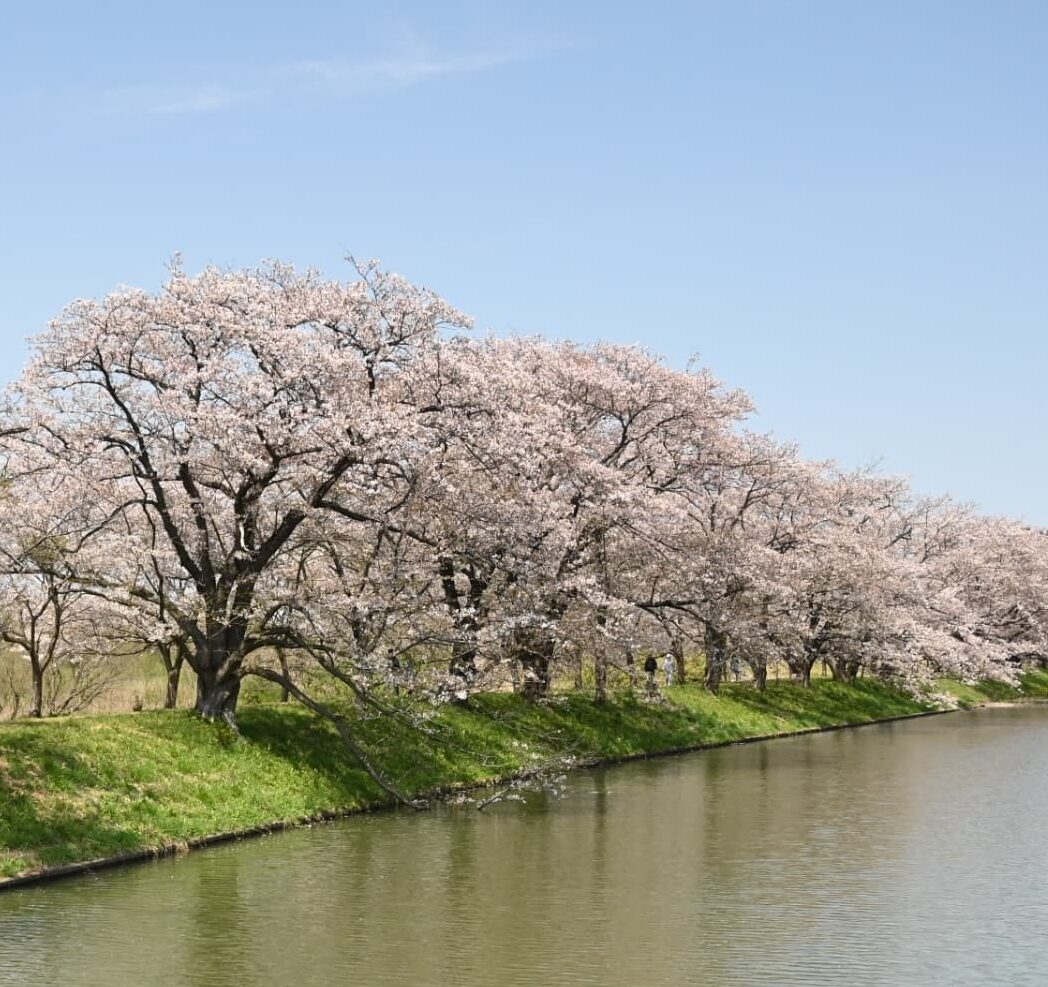
Japanese Cedar vs. Hinoki Cypress: How to Tell Them Apart
Japanese Cedar (Sugi) and Hinoki Cypress are two of the most widely planted trees in Japan. Together, Sugi and Hinoki account for about 70% of Japan’s plantation forest area. Both are tall evergreen conifers valued as timber, and both are commonly planted around shrines, temples, and other cultural sites. They are also major sources of spring pollen in Japan.
Despite their similar appearance, the two can be distinguished quite easily by looking closely at their foliage, bark, and cones.
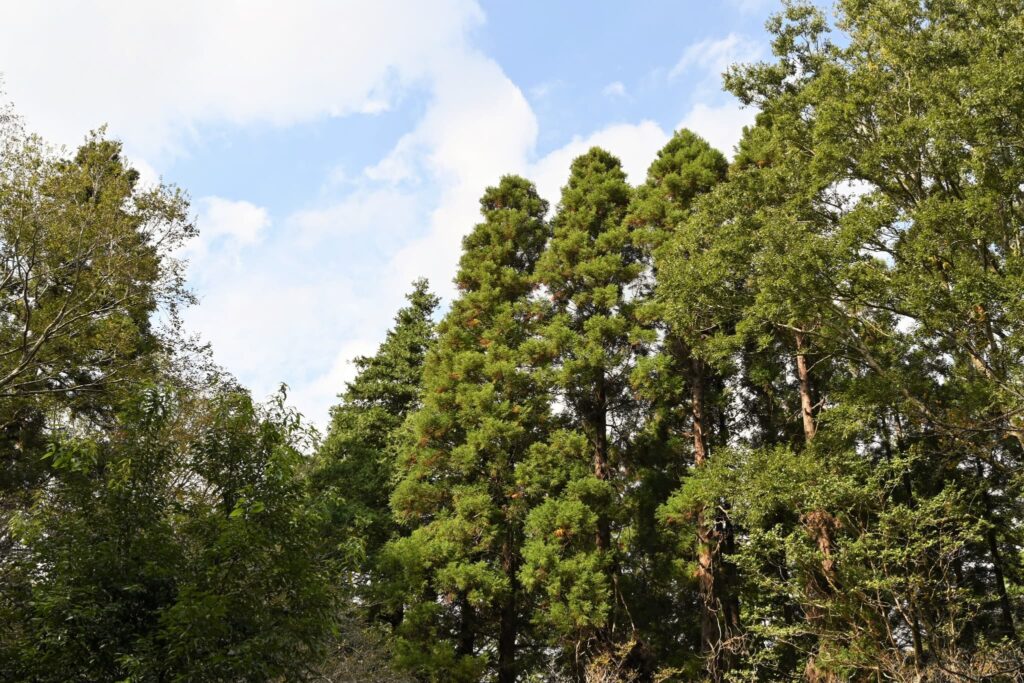 Japanese Cedar
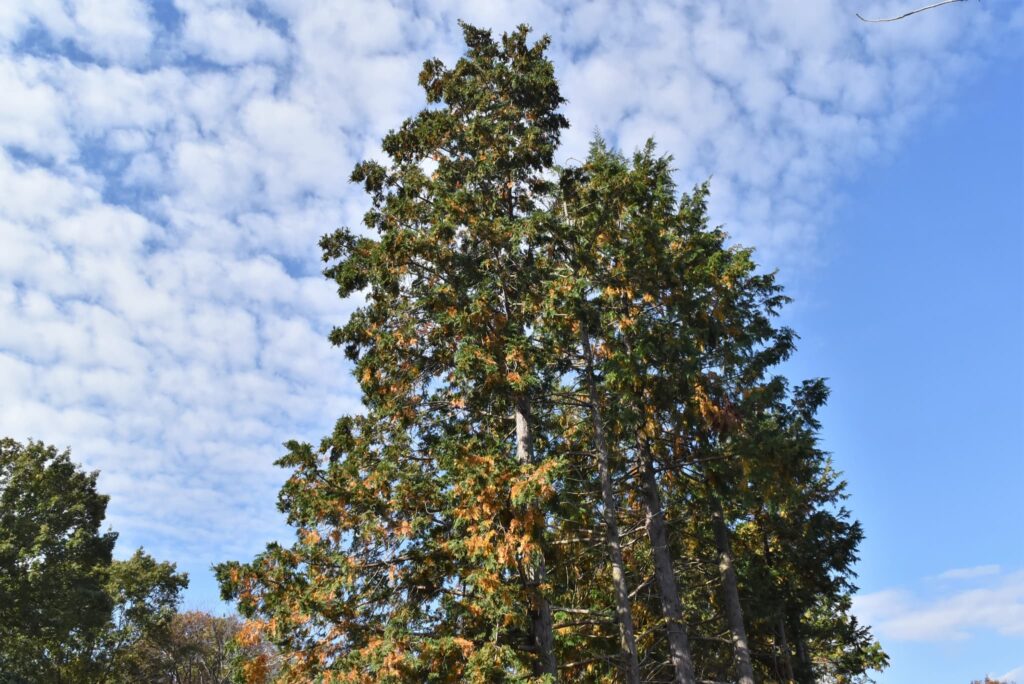 Hinoki Cypress
Table of Contents
- Japanese Cedar vs. Hinoki Cypress at a Glance
- Difference in Bark
- Difference in Foliage
- Difference in Male Cones and Pollen
- Difference in Cones
- Difference in Growth Habit & Habitat
- Difference in Uses
- Quick Identification Checklist
- Frequently Asked Questions
- Conclusion
Japanese Cedar vs. Hinoki Cypress at a Glance
Both species belong to the family Cupressaceae, although Sugi was formerly placed in the separate family Taxodiaceae. Their most obvious difference is the foliage: Sugi has stiff, needle-like leaves arranged around the twig, while Hinoki has tiny scale-like leaves pressed closely against flattened branchlets.
| Feature | Japanese Cedar (Sugi) | Hinoki Cypress (Hinoki) |
|---|---|---|
| Scientific Name | Cryptomeria japonica | Chamaecyparis obtusa |
| Family | Cupressaceae | Cupressaceae |
| Japanese Name | Sugi (スギ) | Hinoki (ヒノキ) |
| Foliage | Needle-like, about 0.7–2 cm long, spirally arranged | Tiny, scale-like leaves, about 1–3 mm long |
| Leaf Color in Winter | Often turns reddish-brown | Usually remains green |
| Bark | Reddish-brown, fibrous, peeling in relatively narrow strips | Reddish-brown, peeling in broader vertical strips |
| Male Cones | Larger and conspicuous in clusters | Small, about 2–3 mm, inconspicuous |
| Seed Cones | Globose, about 1–2 cm, with pointed projections | Globose, about 1 cm, with rounded scales |
| Growth | Faster-growing | Slower-growing |
| Typical Use | Construction timber, barrels, furniture, and other general uses | Construction, shrine and temple architecture, furniture, and baths |
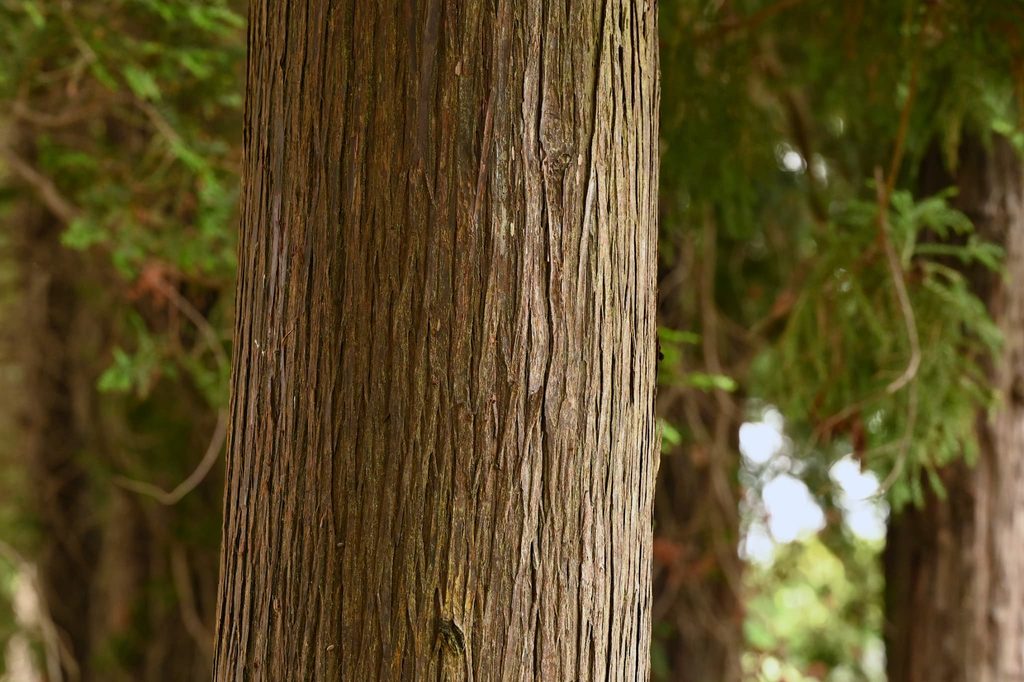
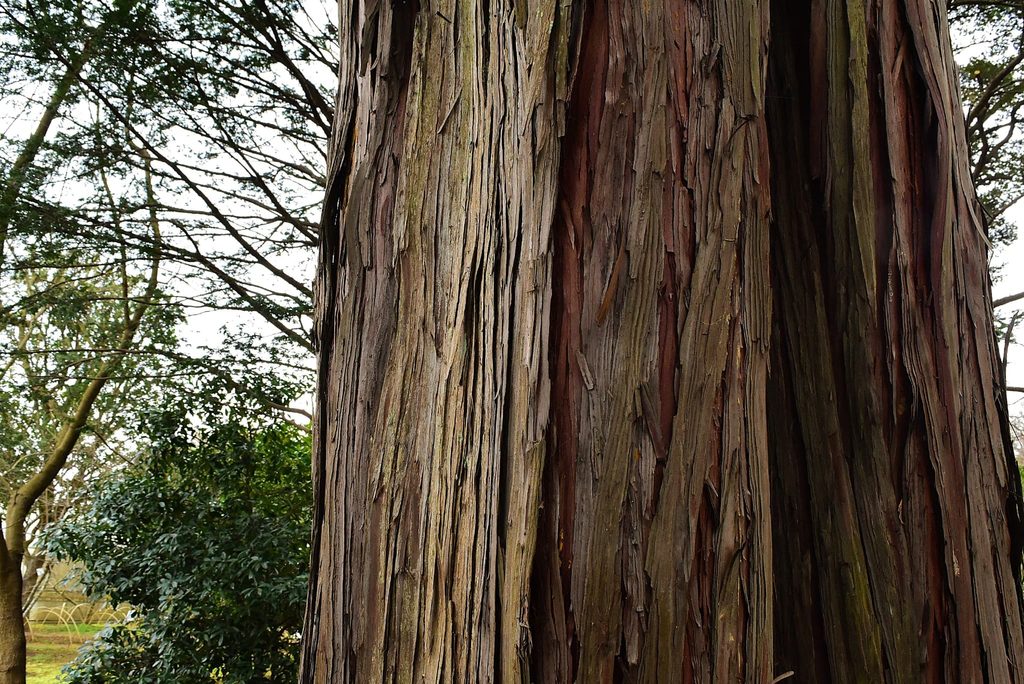
Difference in Bark
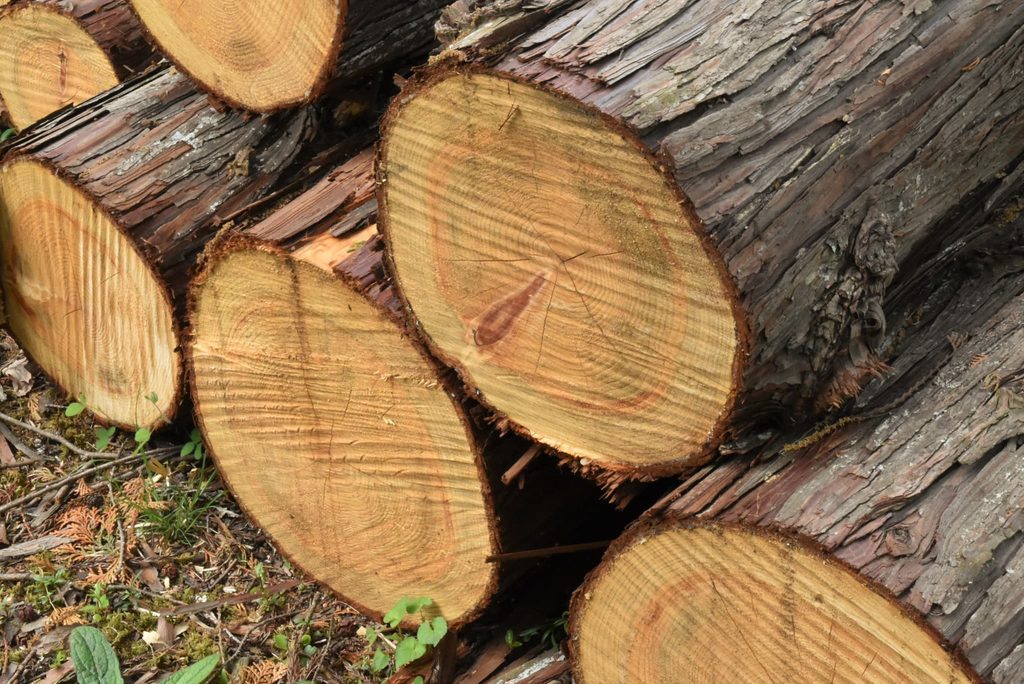
At a glance, the bark of both trees can look similar. Both are reddish-brown and peel vertically as the tree ages.
Sugi bark tends to split into relatively narrow, long, fibrous strips.
Hinoki bark peels in broader vertical strips and often appears more coarsely divided. Hinoki bark is also traditionally used as a roofing material for hiwada-buki, or Japanese cypress-bark roofing.
Bark is useful when the foliage is out of reach, but it is less reliable than looking at the leaves.
Difference in Foliage
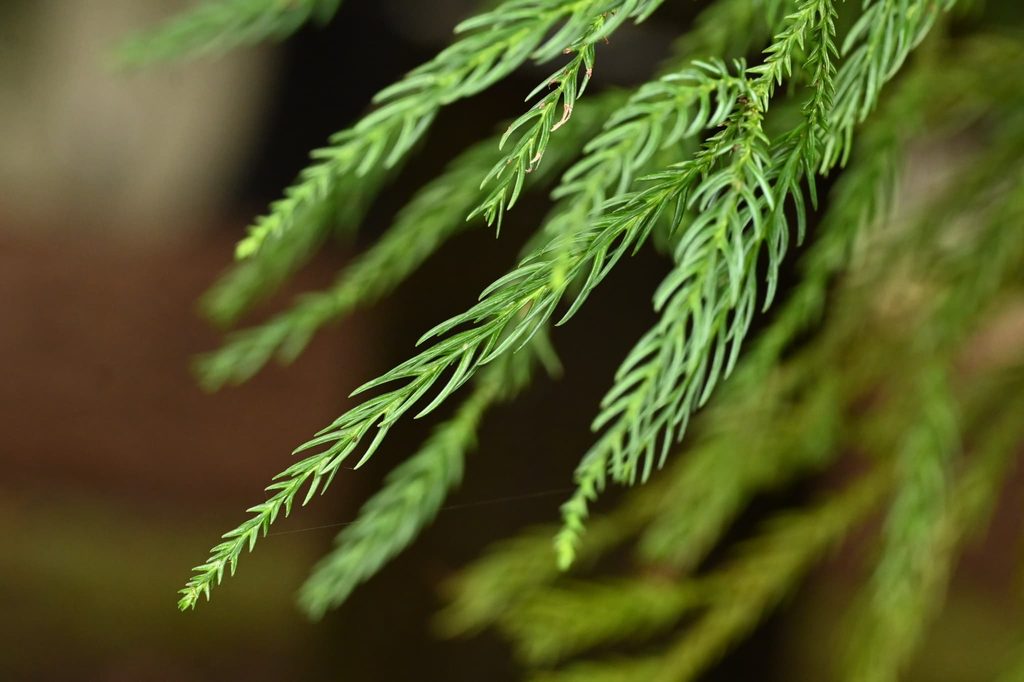
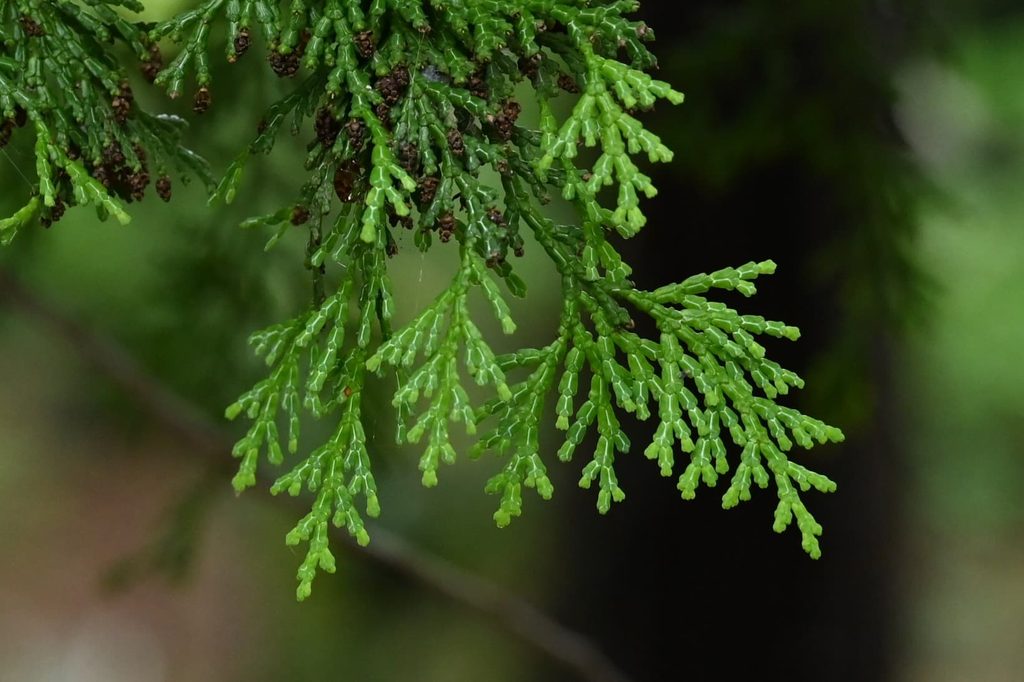
Foliage is the quickest and most reliable way to distinguish the two.
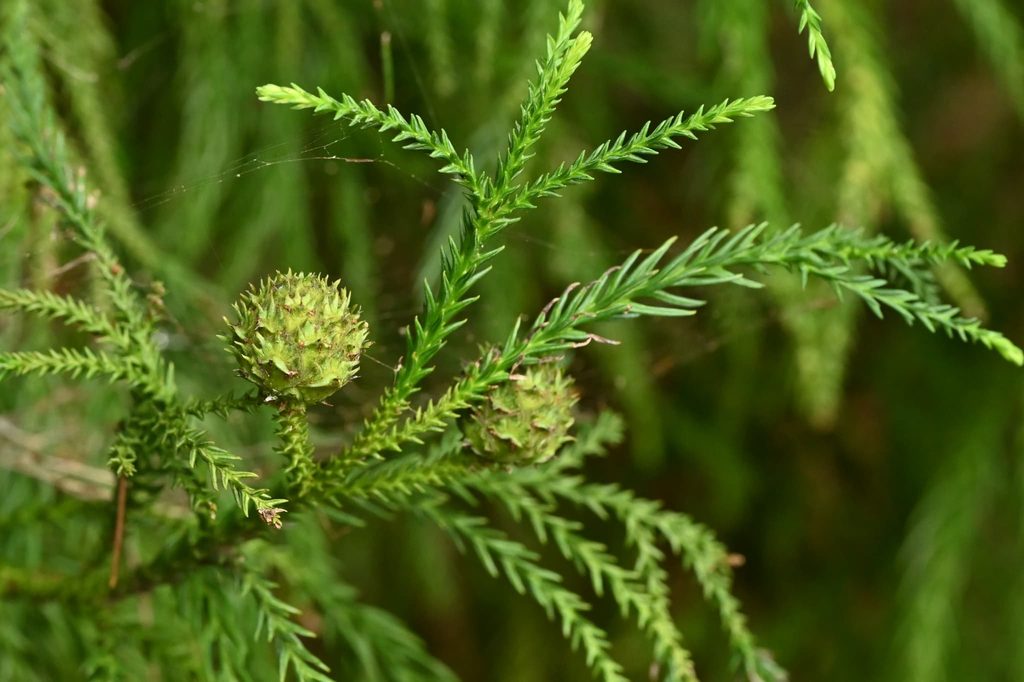
- Japanese Cedar: The leaves are stiff, pointed, and needle-like. They are arranged spirally around the branchlets and may be straight or strongly curved.
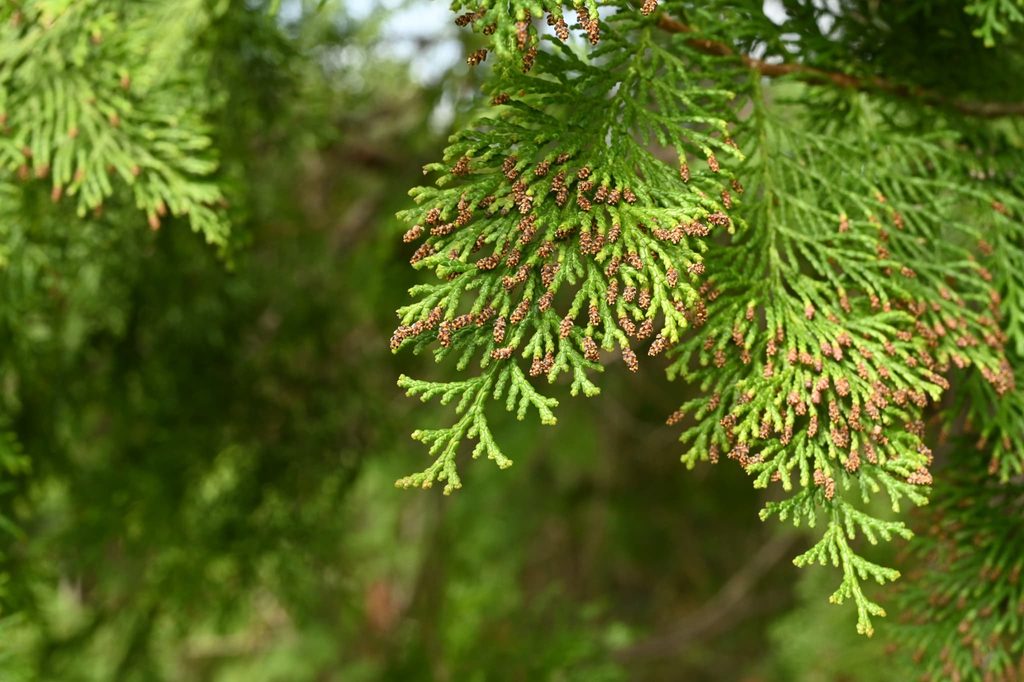
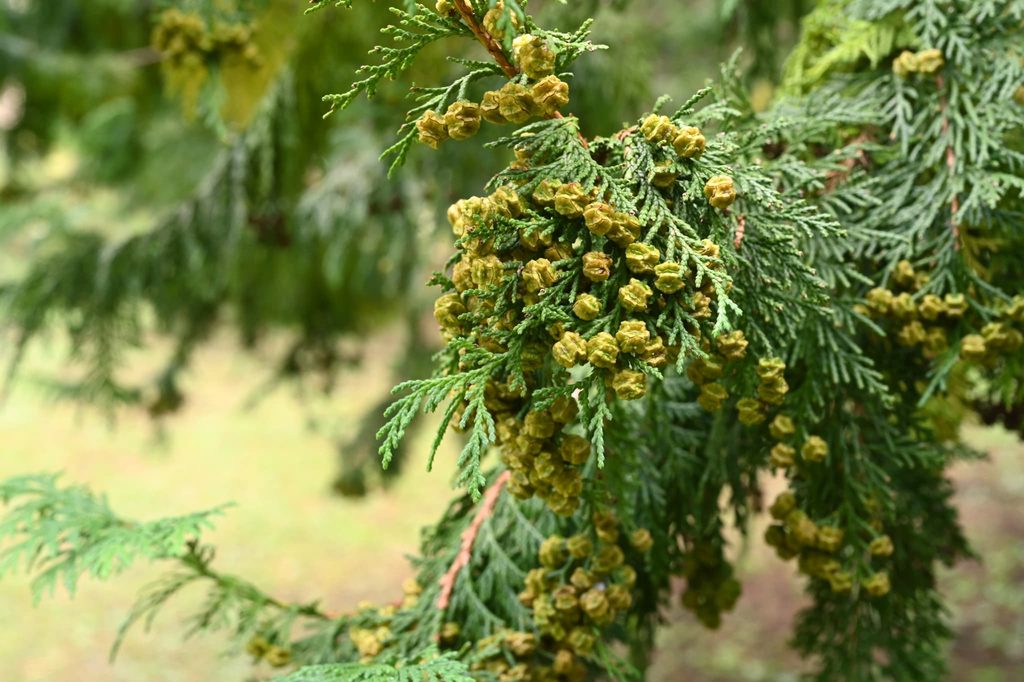
- Hinoki Cypress: The leaves are tiny and scale-like, closely pressed against the branchlets. The branchlets form characteristic flattened sprays. The underside has a distinctive white Y-shaped stomatal band.
The difference is especially obvious in close-up photographs.
In simple terms: sharp, three-dimensional needles indicate Sugi; flat, scale-like foliage indicates Hinoki.
Difference in Male Cones and Pollen
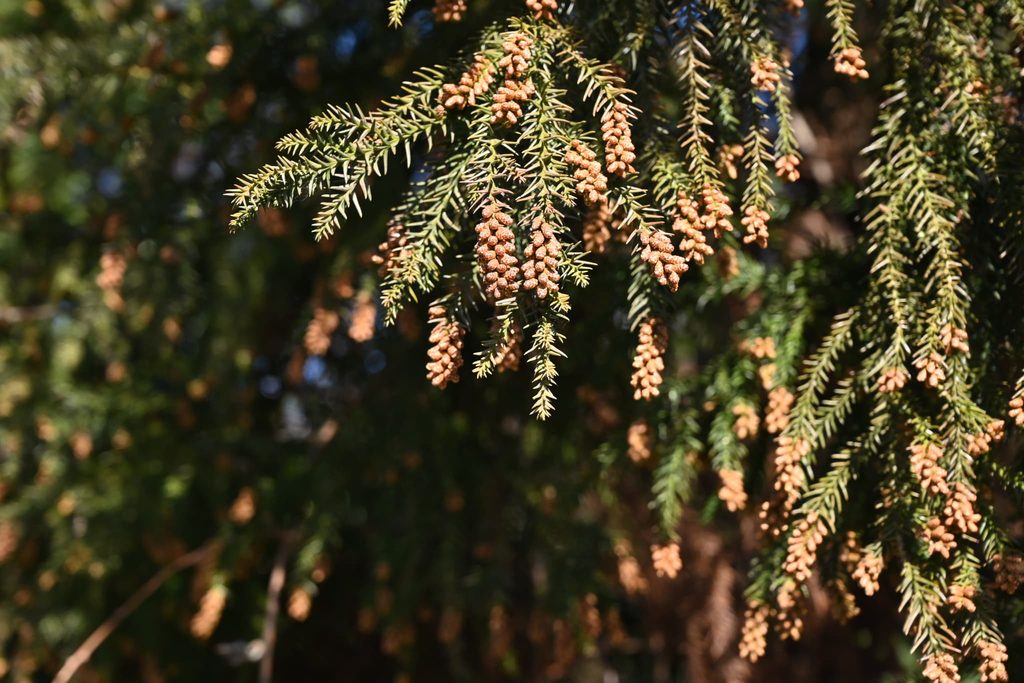
Because these are conifers, it is more accurate to refer to their pollen-producing structures as male cones rather than flowers.
- Japanese Cedar: Male cones occur in clusters near the ends of branchlets and release pollen mainly from late winter into spring. Pollination is generally reported from February to April.
- Hinoki Cypress: Male cones are much smaller, about 2–3 mm long, and occur near the ends of branchlets. Pollen is released in spring, generally later than Sugi.
The exact timing of airborne pollen varies considerably by region and weather. In Japan, Sugi pollen generally peaks before Hinoki pollen, with considerable overlap between the two seasons.
Difference in Cones
The seed cones provide another useful identification feature.
- Japanese Cedar cones: Usually about 1–2 cm across, globose, with numerous pointed projections that give the surface a distinctly spiky appearance. They mature in autumn.
- Hinoki Cypress cones: About 1 cm across, globose, reddish-brown when mature, with fewer and more rounded woody scales.
The contrast is easy to see when the cones are photographed side by side: Sugi has a distinctly spiky cone, while Hinoki has a smaller, smoother-looking cone.
Difference in Growth Habit & Habitat
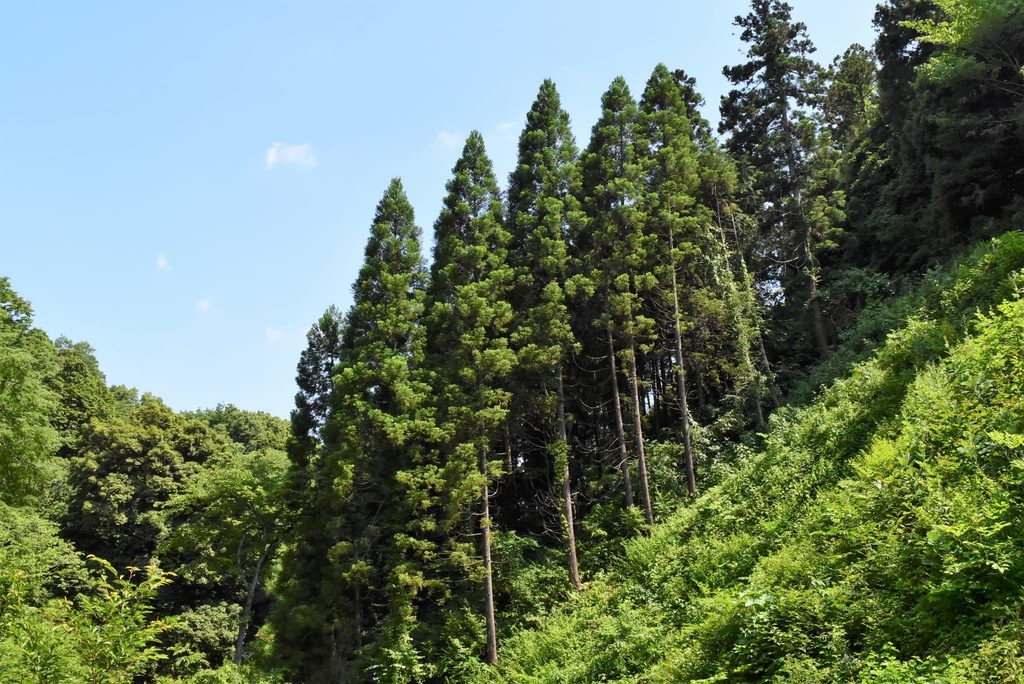
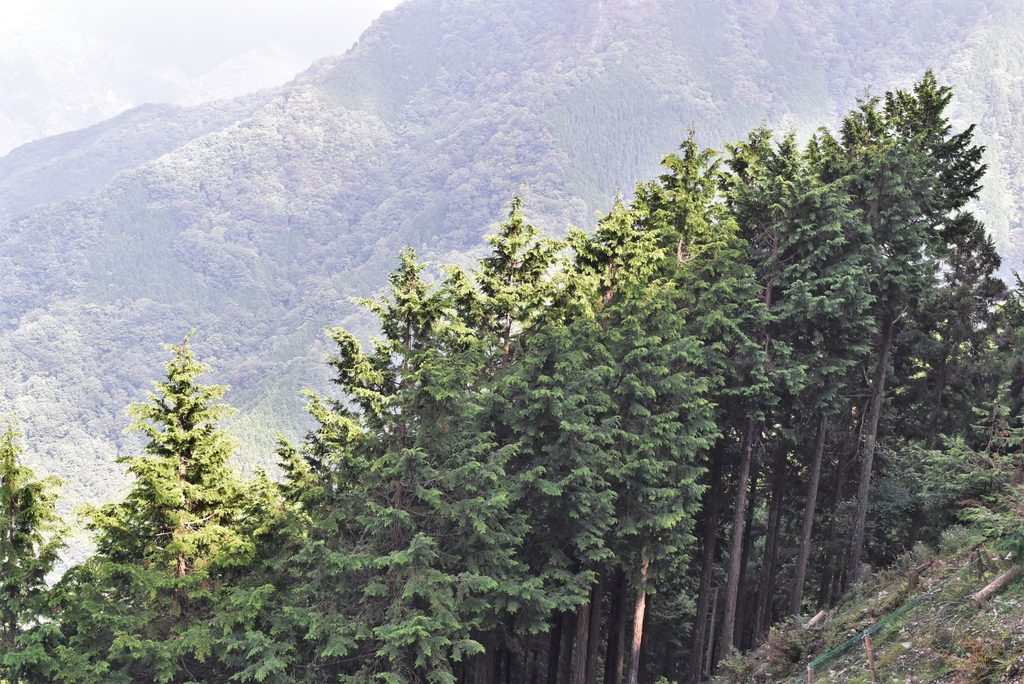
Sugi generally grows faster than Hinoki and is widely planted on moist sites. It is one of Japan’s principal plantation trees and is found extensively throughout the country.
Hinoki grows more slowly and is also one of Japan’s major plantation trees. Natural Hinoki forests occur mainly in mountainous areas, while plantations are widespread in central and western Japan.
Habitat alone is not a dependable identification method because both species are extensively planted and can grow in a range of conditions. When identifying an individual tree, foliage is more useful than location.
Both species also have famous regional forestry traditions. Akita Sugi and Kiso Hinoki are associated with two of Japan’s Three Great Forests, along with Aomori Hiba.
Difference in Uses
Both species have been important Japanese timber trees for centuries, but their traditional uses differ somewhat.
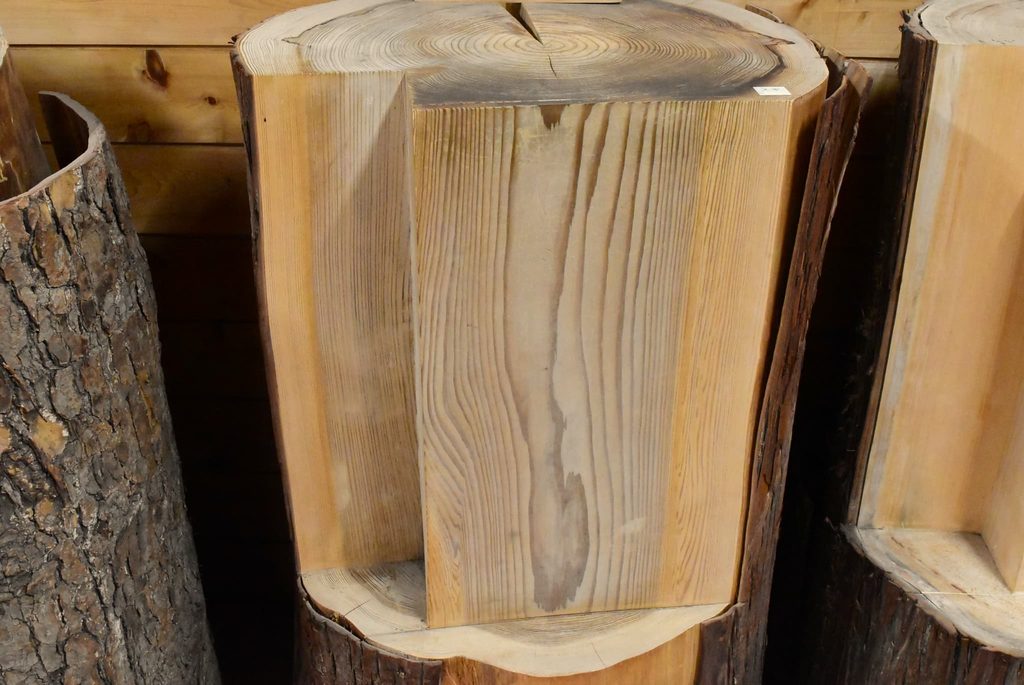
Sugi is widely used for construction, interior materials, furniture, barrels, and other everyday wooden products. Its relatively light, workable wood has made it one of Japan’s most important forestry species.
Hinoki is valued for its attractive appearance, fragrance, durability, and resistance to decay. It has long been used for high-quality construction, shrine and temple architecture, furniture, and traditional Japanese bathtubs.
The Nihon Shoki also records a famous cultural association between the two trees: Sugi is said to have grown from Susanoo’s beard, while Hinoki grew from his chest hair. The same passage associates Sugi with boat building and Hinoki with palace construction.
Quick Identification Checklist
- Needle-like leaves arranged around the twig → Japanese Cedar
- Tiny, scale-like leaves forming flat sprays → Hinoki Cypress
- White Y-shaped marking on the underside of the leaves → Hinoki Cypress
- Foliage often turns reddish-brown in winter → Japanese Cedar
- Bark peeling in relatively narrow strips → Japanese Cedar
- Bark peeling in broader strips → Hinoki Cypress
- Spiky, larger-looking cone → Japanese Cedar
- Small, relatively smooth, round cone → Hinoki Cypress
Frequently Asked Questions
Why are Japanese Cedar and Hinoki Cypress so often confused?
Both are tall evergreen conifers with straight trunks, reddish-brown peeling bark, and a long history of plantation forestry in Japan. From a distance they can look remarkably similar. Their foliage, however, is very different.
Which tree causes more pollen allergies, Sugi or Hinoki?
Sugi is generally the larger source of pollen because Sugi forests are more extensive. Hinoki pollen also contributes substantially to spring pollen allergies, and the two pollen seasons overlap. The relative amount varies by region and year.
Which wood is more valuable, Sugi or Hinoki?
Hinoki often commands higher prices, particularly for high-quality timber used in architectural applications. However, timber value depends on factors such as tree age, diameter, grade, growing region, and the quality of the individual log, so there is no universal price difference.
Can I tell the two trees apart without looking at the leaves?
Yes, although it is less reliable. Bark texture and cone shape provide useful clues: Sugi tends to have narrower, fibrous bark strips and more strongly pointed cones, while Hinoki has broader bark strips and smaller, smoother cones. When available, the foliage is still the best feature to check.
Are Sugi and Hinoki related?
Yes. Both belong to the family Cupressaceae, although they are classified in different genera. Sugi is Cryptomeria japonica, while Hinoki is Chamaecyparis obtusa.
Conclusion
Japanese Cedar and Hinoki Cypress are among the most characteristic trees of Japan’s managed forests and landscapes. Their similar size, bark, and widespread planting can make them difficult to distinguish from a distance, but their foliage provides an immediate clue.
Needle-like leaves arranged around the twig indicate Sugi; tiny scale-like leaves forming flat sprays indicate Hinoki. Bark and cone shape can then be used to confirm the identification.