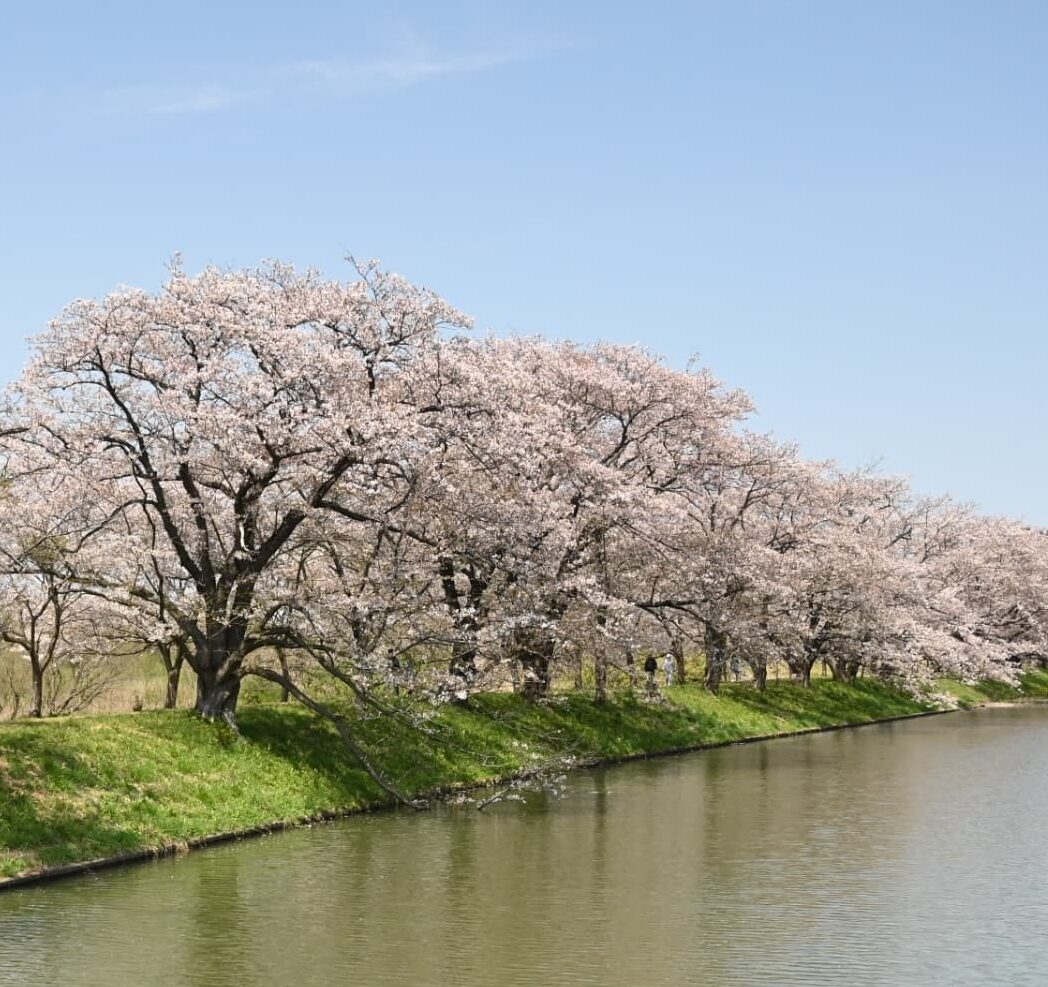
Japanese Black Pine vs. Japanese Red Pine: How to Tell Them Apart
Japanese black pine (Pinus thunbergii) and Japanese red pine (Pinus densiflora) are two of Japan’s most familiar pines. Both are evergreen members of the pine family and are widely used in gardens, but they can be distinguished by several features, especially their bark, needles, winter buds, and typical habitat.
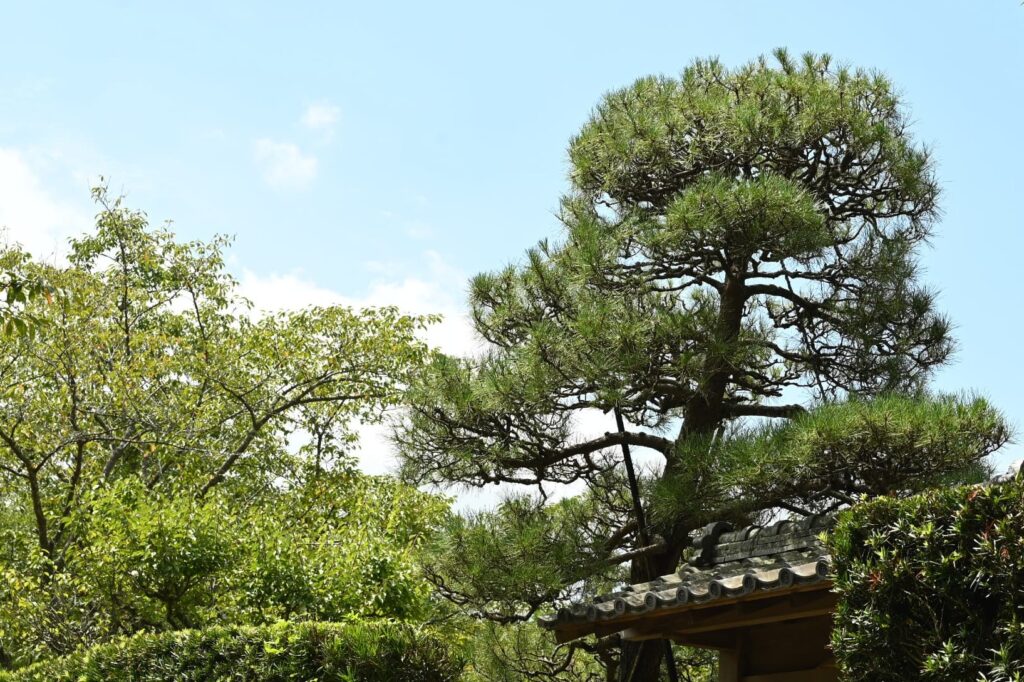
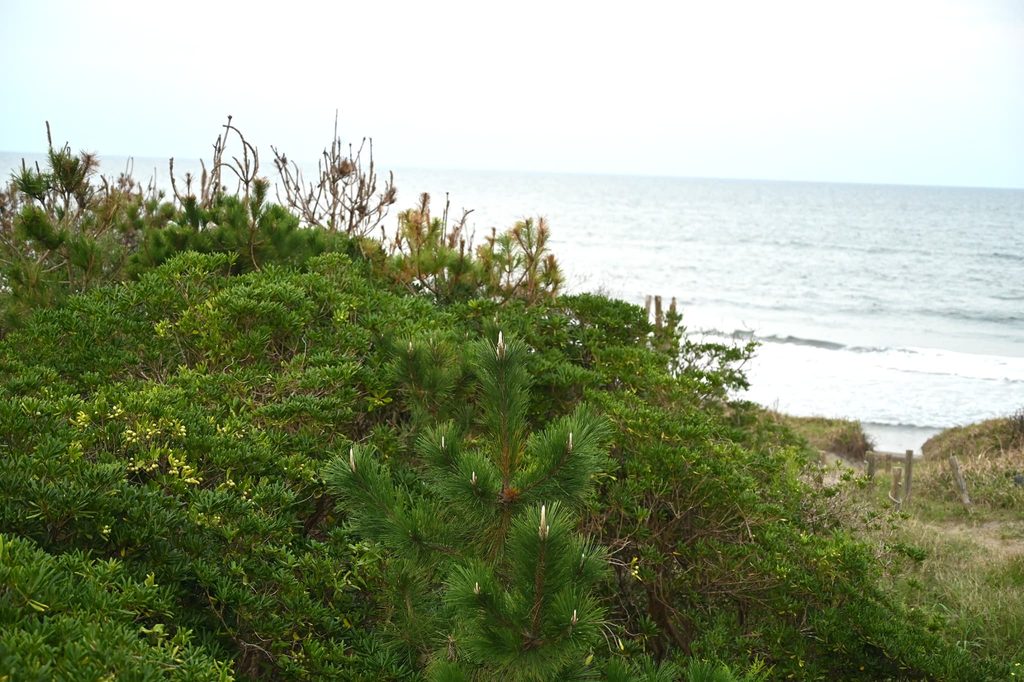
Japanese Black Pine 
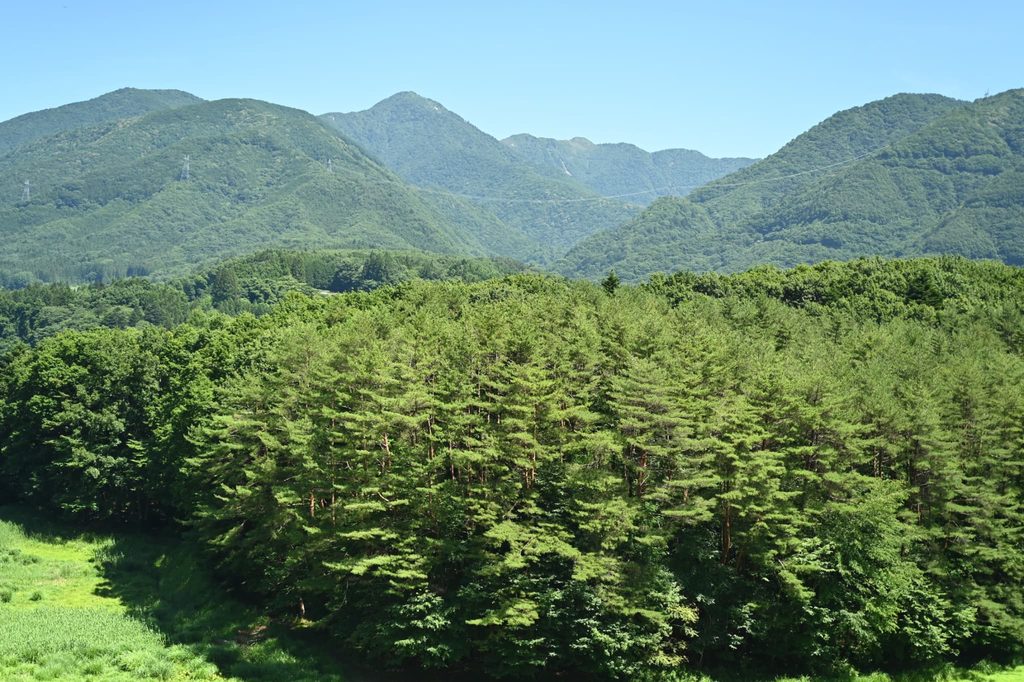
Japanese Red Pine
Table of Contents
- What Are Japanese Black Pine and Japanese Red Pine?
- Quick Comparison
- Bark Differences
- Needle Differences
- Winter Bud Differences
- Pinecone Differences
- Habitat Differences
- Uses
- How to Tell Them Apart
- Frequently Asked Questions
What Are Japanese Black Pine and Japanese Red Pine?
Japanese black pine (Kuromatsu, Pinus thunbergii) is an evergreen pine native to Japan and Korea. In Japan, it is especially characteristic of coastal areas, where its tolerance of salt-laden winds, drought, and sandy soils has made it an important tree for coastal protection forests. Its dark, rugged bark and stiff needles give it a strong, robust appearance.
In traditional Japanese horticulture, Japanese black pine is also known as Omatsu, or “male pine.”
Japanese red pine (Akamatsu, Pinus densiflora) is also an evergreen pine native to Japan and neighboring parts of East Asia. It is common in mountains, hills, and other sunny, relatively dry habitats, but its range also extends to coastal areas.
Its reddish-brown bark and relatively soft, slender needles give it a lighter appearance than Japanese black pine. It is traditionally known as Mematsu, or “female pine.”
Quick Comparison
| Feature | Japanese Black Pine | Japanese Red Pine |
|---|---|---|
| Scientific name | Pinus thunbergii | Pinus densiflora |
| Japanese name | Kuromatsu | Akamatsu |
| Traditional name | Male pine (Omatsu) | Female pine (Mematsu) |
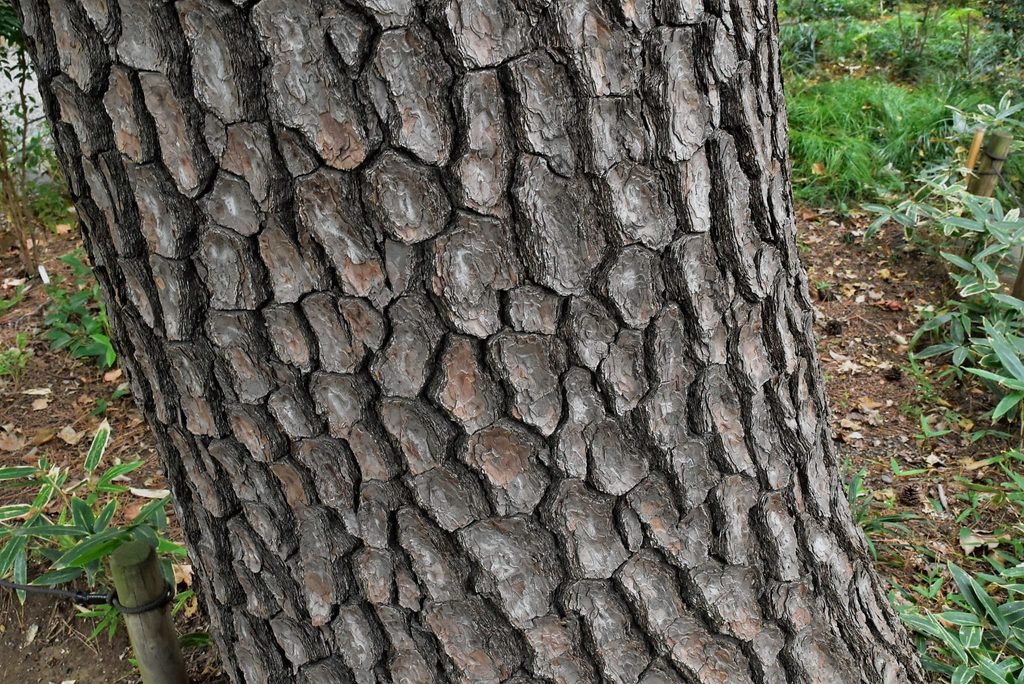
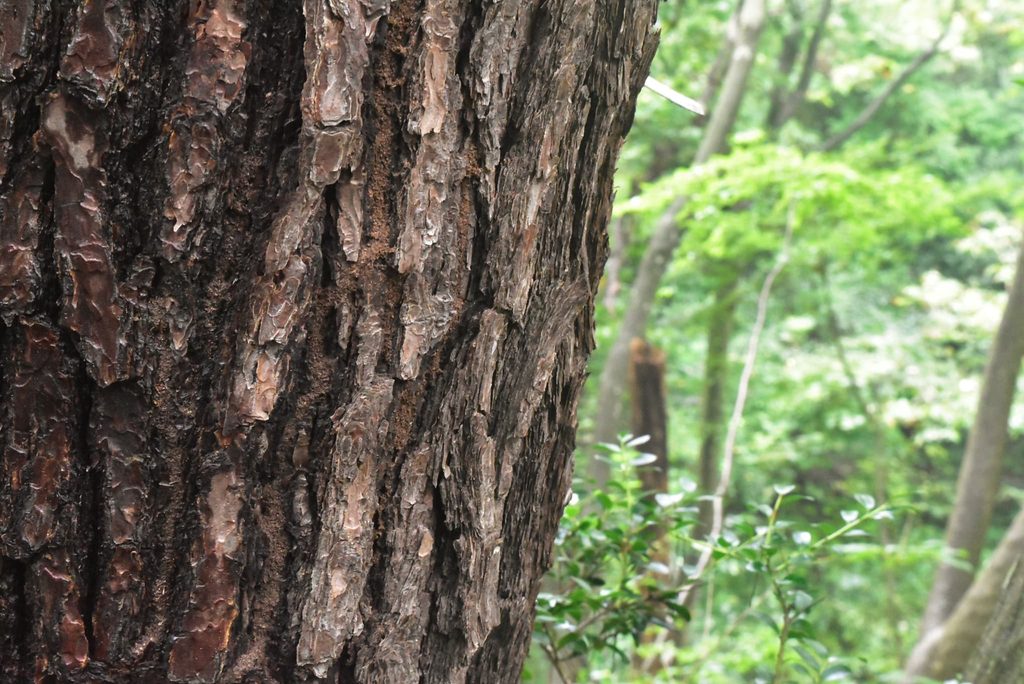
| Bark | Dark gray to blackish, deeply fissured | Reddish brown, flaky or scaly |
| Needles | Dark green, thick and stiff | Slender and relatively flexible |
| Winter buds | White to whitish | Red-brown to dark red-brown |
| Typical habitat | Especially common on coasts and sandy soils | Common inland, especially sunny hills and dry slopes |
| Salt tolerance | High | Lower than Japanese black pine |
| Common uses | Coastal protection, gardens, bonsai | Gardens, forestry, bonsai, and traditional red-pine woodlands |
Bark Differences
Bark is one of the easiest ways to distinguish the two species on mature trees.
Japanese black pine develops dark gray to blackish bark with deep longitudinal fissures and rough, scaly plates as it ages. The trunk often has a distinctly rugged appearance.
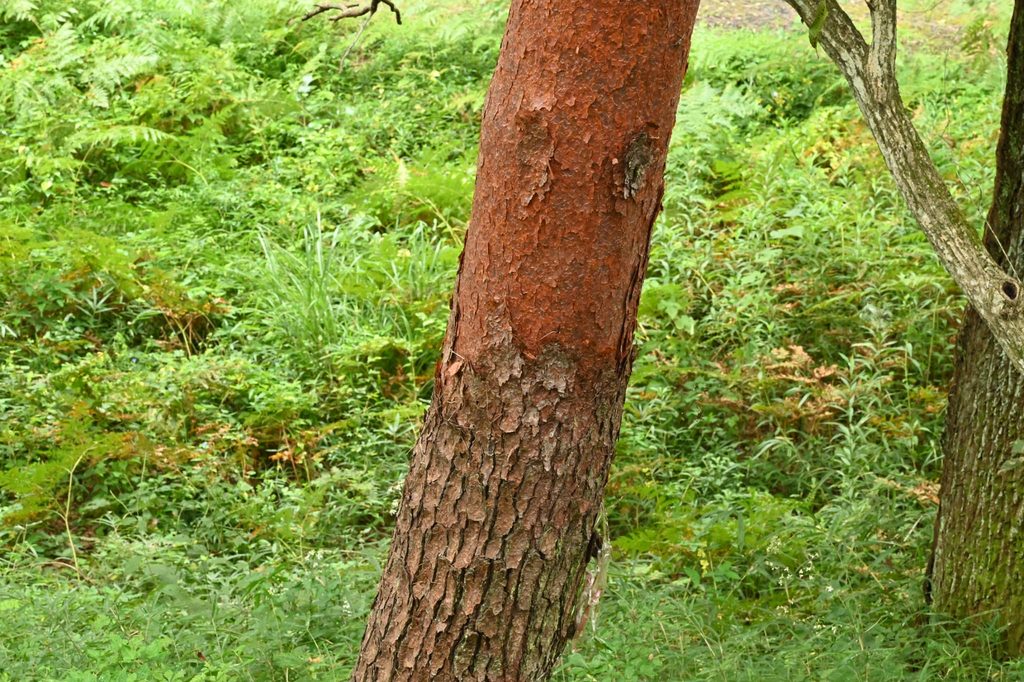
Japanese red pine has reddish-brown to orange-brown bark that becomes flaky or scaly. The reddish color is particularly conspicuous on the upper trunk and branches.
Bark is useful for identification from a distance, but intermediate-looking trees do occur because Japanese black pine and Japanese red pine can hybridize.
Needle Differences
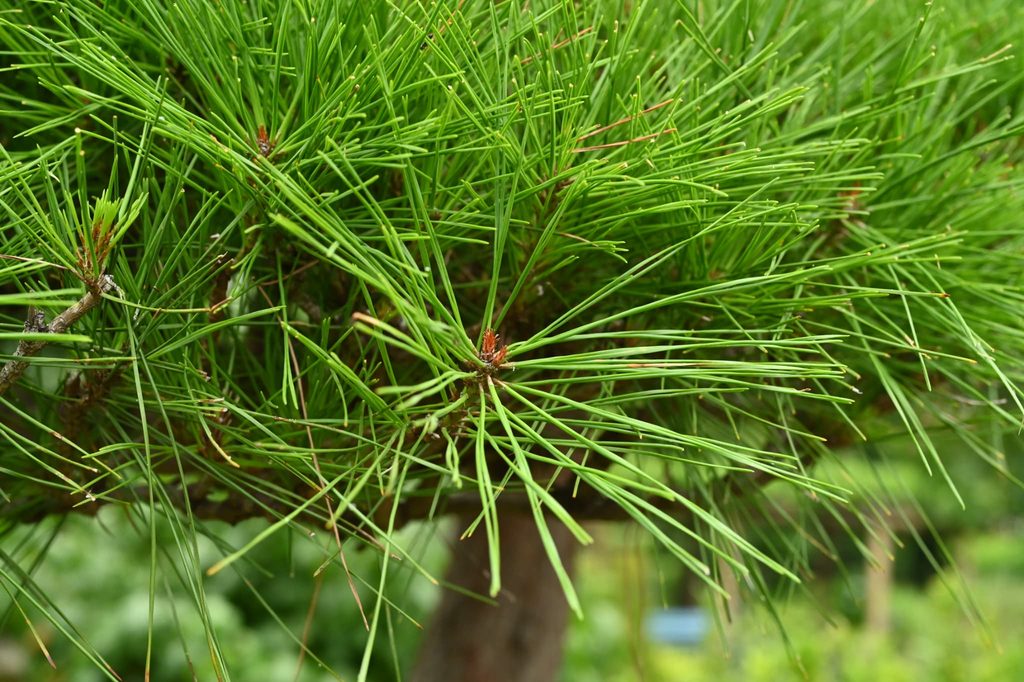
Both species have needles in pairs, but their texture is noticeably different.
Japanese black pine has thick, stiff, sharply pointed needles that are usually dark green. They often feel distinctly rigid when handled.
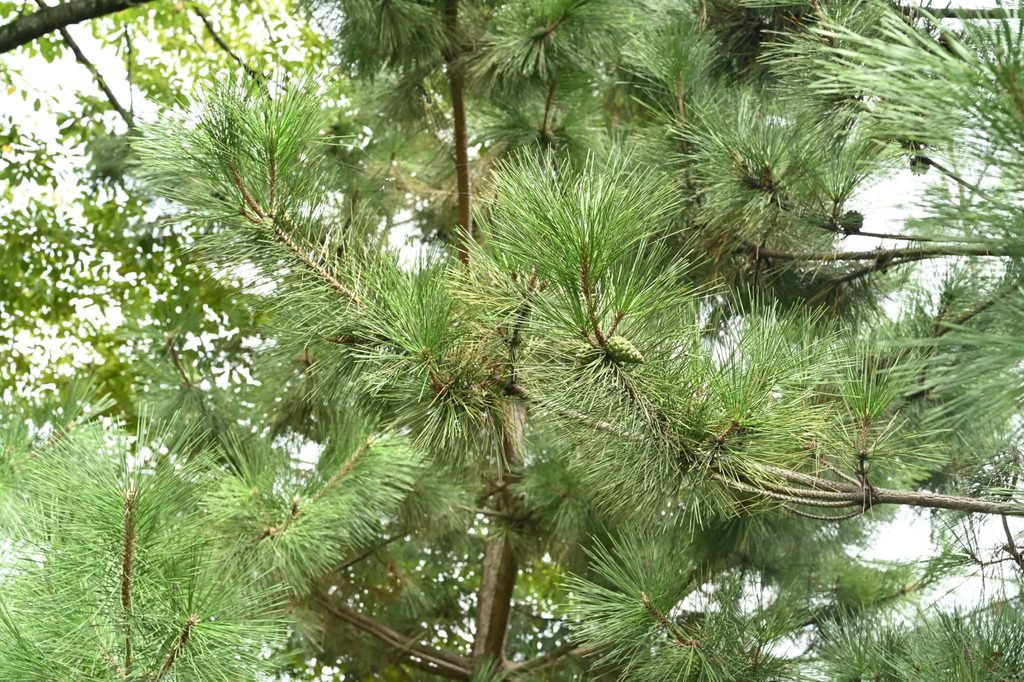
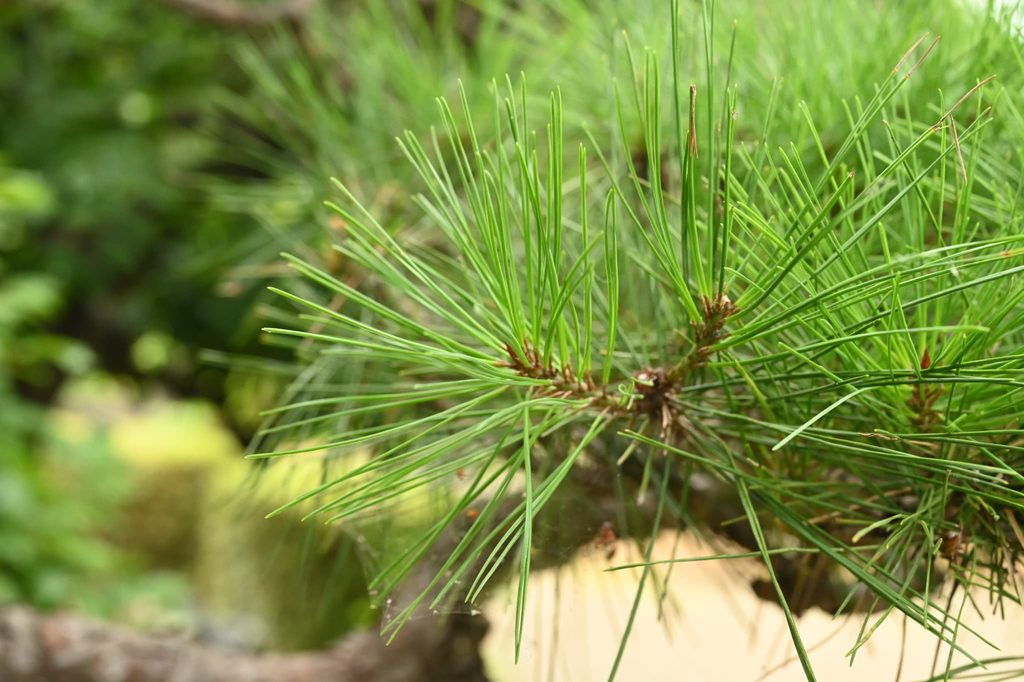
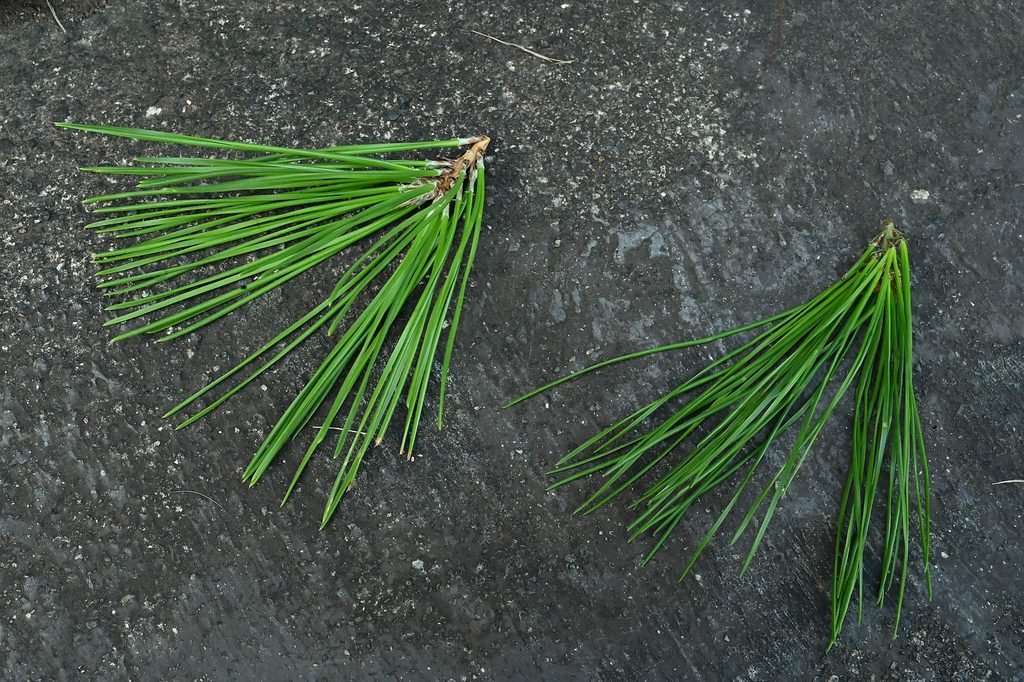
Japanese red pine has slenderer, more flexible needles, generally giving the foliage a softer appearance. The foliage is often lighter or slightly bluish green compared with Japanese black pine.
Needle length overlaps considerably between the two species, so length alone is not a dependable identification feature. Texture and overall appearance are more useful.
Winter Bud Differences
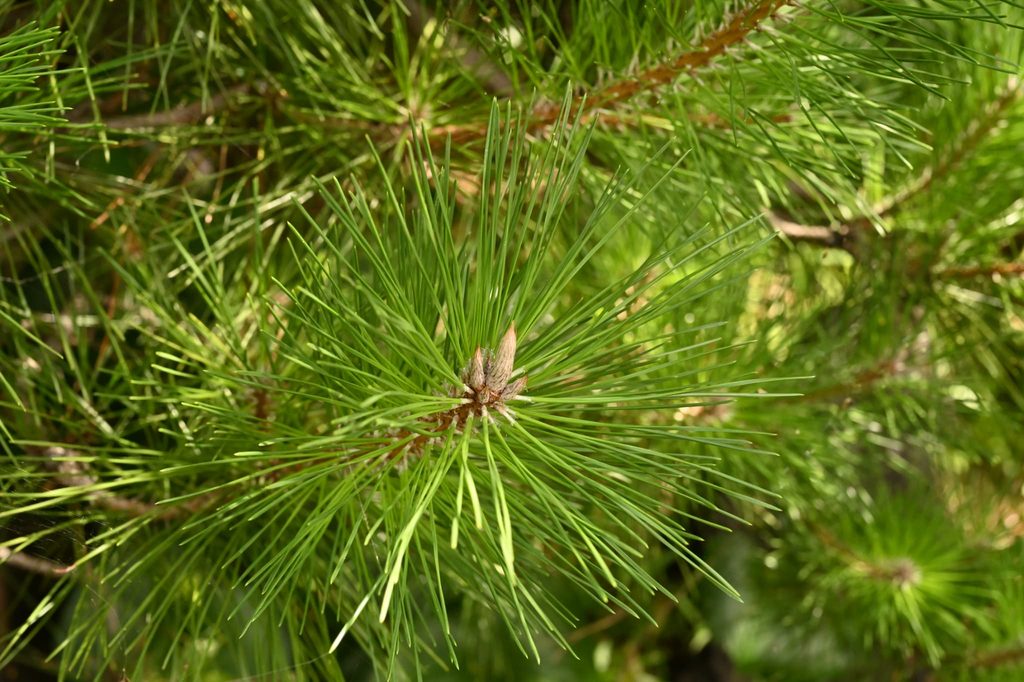
Winter buds are one of the most useful features for distinguishing Japanese black pine from Japanese red pine.
Japanese black pine has white to whitish terminal buds, which stand out clearly against its dark green foliage.
Japanese red pine has reddish-brown to dark red-brown buds.
When the buds are clearly visible, their color can be more useful than needle length or bark color. However, identification should not rely on a single feature, especially because hybrid trees can show intermediate characteristics.
Pinecone Differences
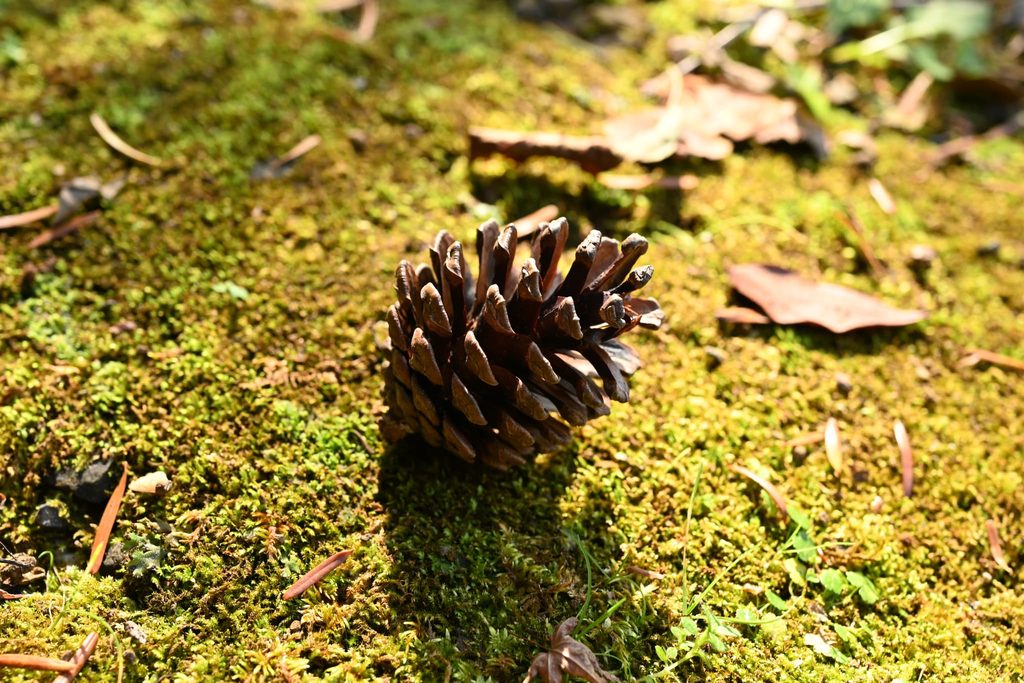
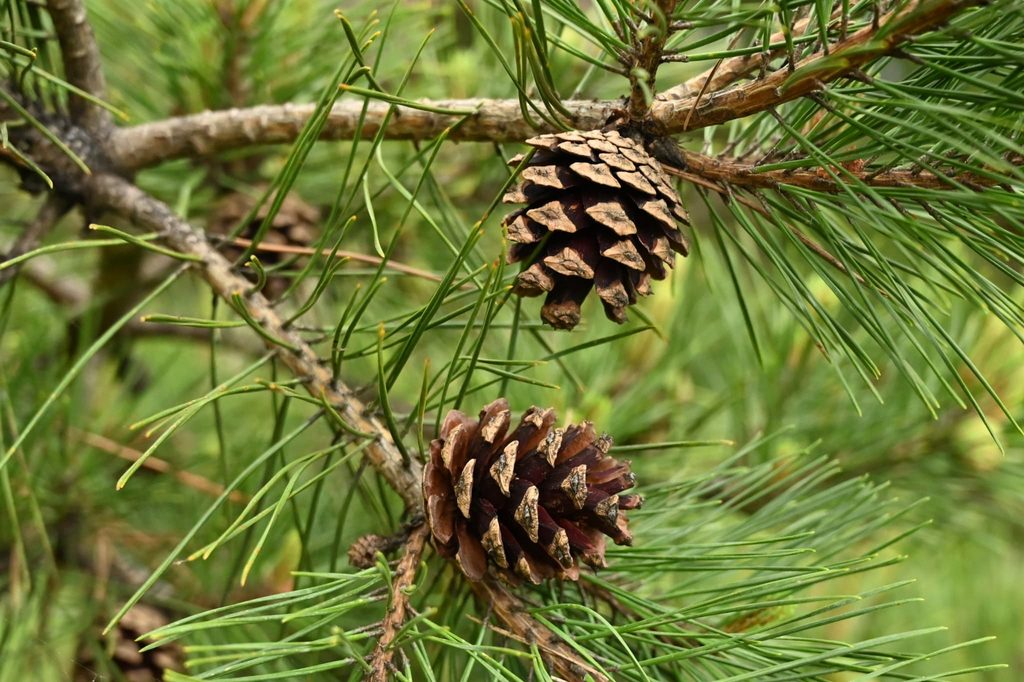
The cones of the two species are broadly similar and overlap in size, so they are not as useful for identification as bark, needles, or winter buds.
Japanese black pine produces conical to ovoid cones that are generally about 4–7 cm long.
Japanese red pine produces smaller-looking ovoid or conical cones, commonly around 3–5.5 cm long.
Because cone size and appearance vary, do not identify the species from cone size alone.
Habitat Differences
Japanese black pine is strongly associated with coastal environments. It tolerates salt-laden winds, drought, and relatively poor sandy soils, and has long been planted in coastal protection forests. Famous Japanese pine groves such as Miho no Matsubara, Niji no Matsubara, and Kehi no Matsubara are largely associated with Japanese black pine.
Japanese red pine is more commonly associated with inland hills, mountains, dry slopes, and other sunny habitats. It can grow on poor soils and has played an important role in traditional rural landscapes and pine forests.
Habitat is useful as a clue but is not conclusive. Japanese red pine can also occur in coastal areas, while Japanese black pine is widely planted far inland.
Uses
Japanese black pine is widely used as a coastal protection tree, garden tree, and bonsai subject. Its tolerance of harsh coastal conditions and its rugged appearance have made it one of Japan’s characteristic landscape trees.
Japanese red pine has long been used as a garden tree and timber tree and is also an important component of traditional pine woodlands. It is strongly associated with matsutake mushrooms, which form ectomycorrhizal relationships with its roots.
How to Tell Them Apart
When identifying a pine in the field, look at several features together:
- Dark, deeply fissured bark → likely Japanese black pine
- Reddish-brown, flaky bark → likely Japanese red pine
- Thick, stiff, sharply pointed needles → Japanese black pine
- Slender, flexible needles → Japanese red pine
- White or whitish winter buds → Japanese black pine
- Red-brown winter buds → Japanese red pine
- Coastal, sandy habitat → Japanese black pine is more likely
- Sunny inland hills or dry slopes → Japanese red pine is more likely
For a confident identification, use winter buds, bark, and needle texture together rather than relying on habitat or a single characteristic.
Frequently Asked Questions
Q: What is the easiest way to tell Japanese black pine from Japanese red pine?
Look first at the winter buds and bark. White or whitish buds combined with dark, deeply fissured bark indicate Japanese black pine. Red-brown buds combined with reddish, flaky bark indicate Japanese red pine.
Q: Are Japanese black pine needles harder than Japanese red pine needles?
Yes. Japanese black pine has relatively thick, stiff needles, while Japanese red pine has more slender and flexible needles. This difference is often noticeable even when the two trees are growing nearby.
Q: Which pine is more common along the Japanese coast?
Japanese black pine is strongly associated with Japan’s coastal protection forests because of its tolerance of salt-laden winds and sandy conditions. Japanese red pine can also grow near the coast, so location alone is not definitive.
Q: Which pine is associated with matsutake mushrooms?
Matsutake commonly forms ectomycorrhizal associations with Japanese red pine, and many matsutake-producing forests in Japan are dominated by this species. However, matsutake is capable of forming associations with other conifers as well.
Q: Can Japanese black pine and Japanese red pine hybridize?
Yes. A recognized natural hybrid, Pinus × densithunbergii, occurs between Japanese black pine and Japanese red pine. Hybrid trees can show intermediate characteristics, which is one reason identification should not depend on a single feature.
Q: Why is Japanese black pine planted along the coast?
Its tolerance of salt-laden winds, drought, and sandy soils makes it well suited to coastal environments. It has therefore been widely used in coastal protection forests and windbreaks in Japan.
Conclusion
Japanese black pine and Japanese red pine are closely related and superficially similar, but their bark, needle texture, and winter buds provide useful clues for identification.
Japanese black pine generally has dark, deeply fissured bark, stiff dark-green needles, and whitish winter buds. Japanese red pine has reddish-brown flaky bark, more flexible needles, and reddish-brown winter buds.
Habitat can provide an additional clue, but it should not be treated as proof. When the two species are difficult to distinguish, examining several characteristics together is more reliable than relying on any single feature.