Sudajii (Castanopsis sieboldii): Identification, Acorns & Care
Sudajii is an evergreen broad-leaved tree native to warm-temperate regions of Japan and southern Korea. It is a characteristic tree of shrine and temple groves, coastal forests, parks, and other landscapes in warm parts of Japan. Its dark green foliage, deeply fissured bark on older trees, and edible acorns make it one of the most recognizable evergreen trees of the Japanese countryside.
This guide covers how to identify sudajii, its leaves, flowers, acorns, bark, growth habit, traditional uses, cultivation, and the differences between sudajii and the closely related tsuburajii.
What Is Sudajii?
Sudajii is an evergreen tree in the beech family (Fagaceae). Its scientific name is Castanopsis sieboldii. It occurs naturally in Japan from Fukushima and Niigata southward through Shikoku and Kyushu, as well as on the Korean island of Jeju. It is especially characteristic of warm-temperate evergreen broad-leaved forests.
The tree is also widely known simply as shii in Japan, although the name can refer to different species depending on the region. Sudajii is also called itajii and nagajii.
Unlike many oaks, its acorns contain relatively little tannin and are traditionally regarded as edible without the extensive leaching required for more bitter acorns.
Overview
| Item | Description |
|---|---|
| Scientific Name | Castanopsis sieboldii (syn. Castanopsis cuspidata var. sieboldii) |
| Common Names | Sudajii, Itajii, Itajii chinkapin |
| Japanese Name | スダジイ (Sudajii); also Shii, Itajii, Nagajii |
| Family | Fagaceae |
| Native Range | Japan and Jeju Island, South Korea |
| Plant Type | Evergreen broad-leaved tree |
| Height | Usually about 15–25 m |
| Flowering Season | May–June |
| Fruit | Acorn |
| Sun Exposure | Full sun to partial shade |
Characteristics
| Item | Description |
|---|---|
| Leaves | Elliptical to lance-shaped, leathery, about 5–15 cm long; underside covered with fine scales |
| Flowers | Male and female flowers occur on the same tree; male flowers form conspicuous catkins |
| Fruit | Egg-shaped acorn, ripening in autumn of the following year |
| Bark | Dark brown to blackish brown; deeply vertically fissured on older trees |
| Wood | Heavy and hard, but prone to cracking as it dries |
| Growth | A vigorous, long-lived tree that can become very large |
Foliage
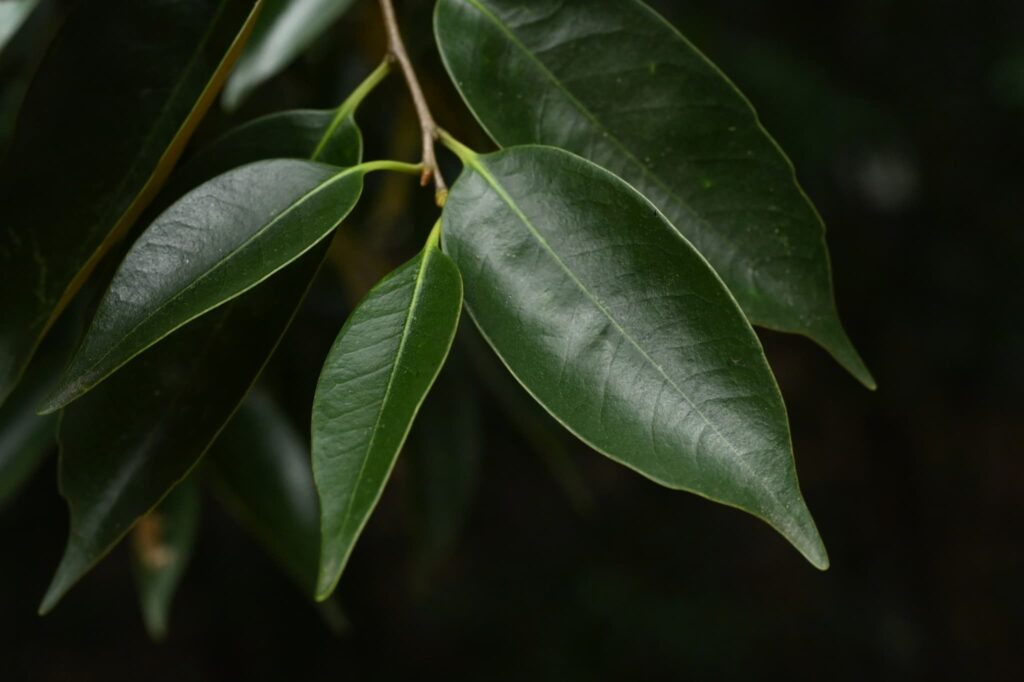
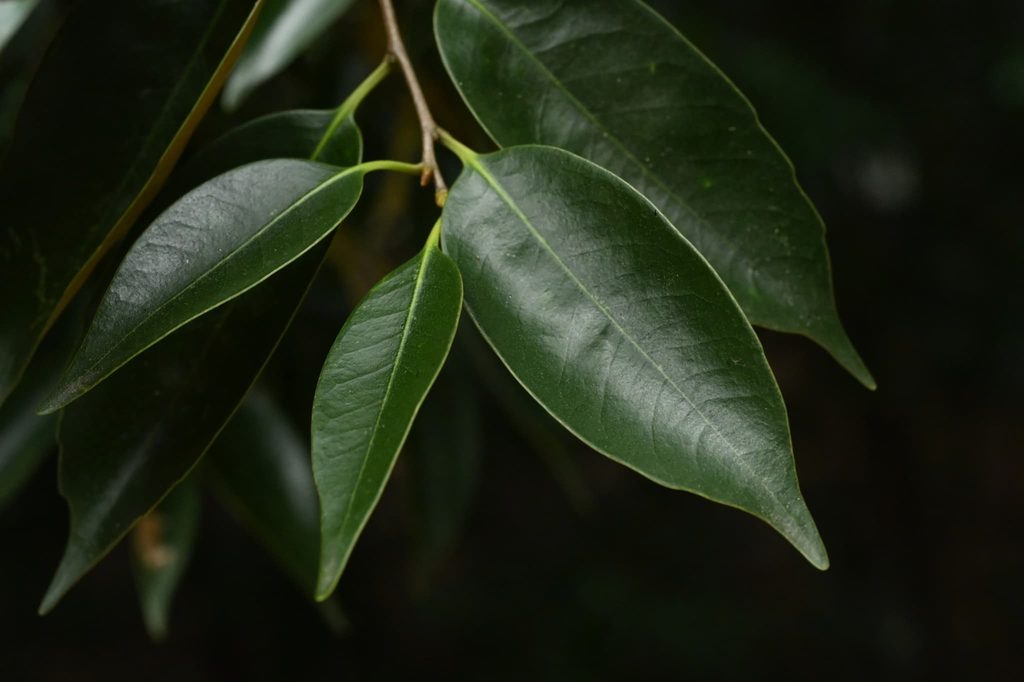
The leaves are leathery and grow alternately along the branches. They are generally elliptical to lance-shaped, with a pointed tip. Mature leaves have a glossy, dark-green upper surface.
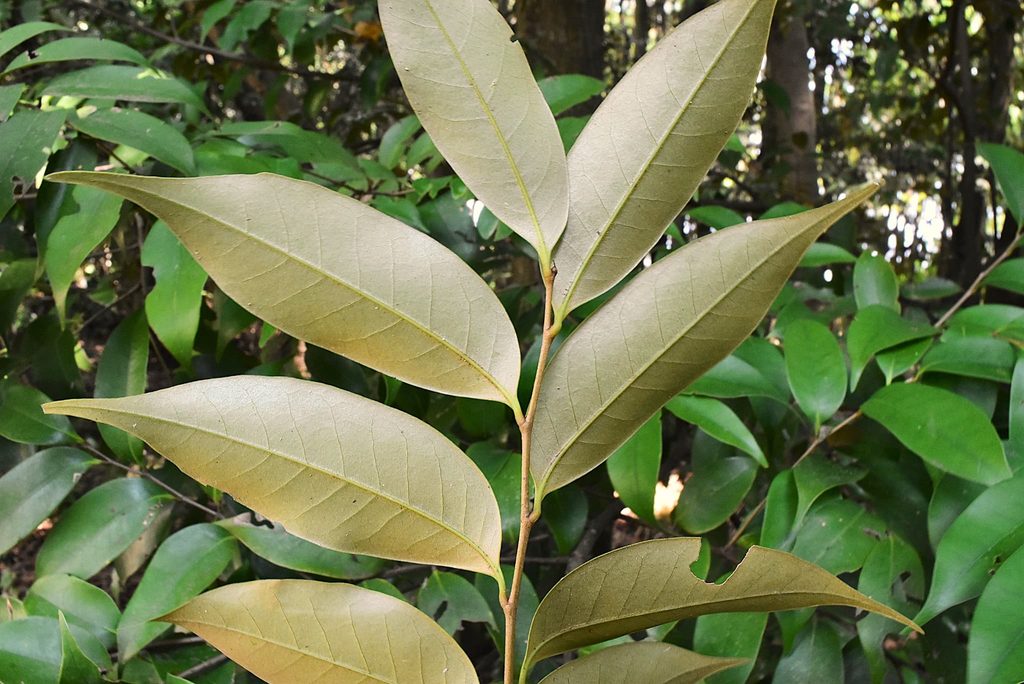
The underside is one of the most useful visual features of sudajii. It is densely covered with fine, scale-like hairs that can appear gray-brown, silvery, or golden depending on the light. Looking up into the crown, these pale undersides can give the foliage a distinctive yellowish or silvery appearance.
Leaf size and shape vary considerably, however, so the leaves should not be used alone to distinguish sudajii from tsuburajii.
Flowers
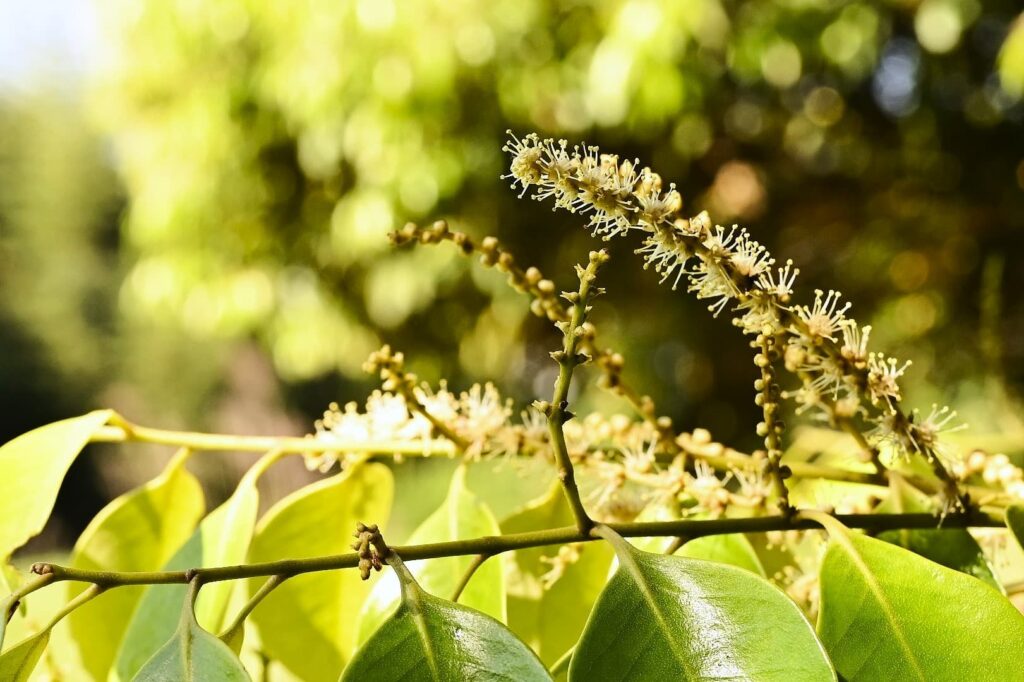
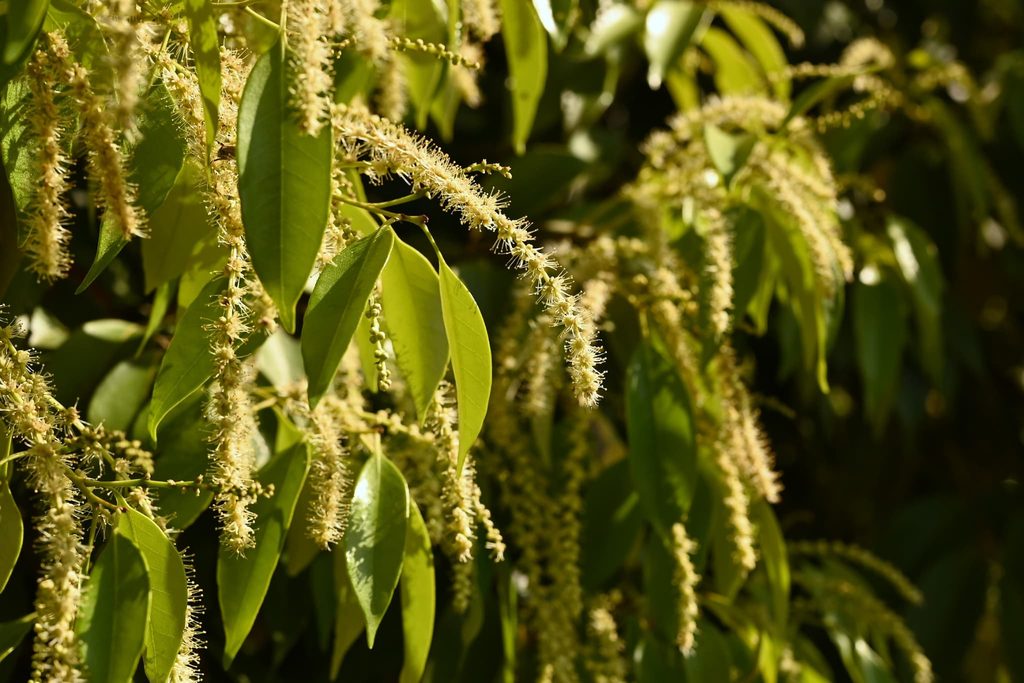
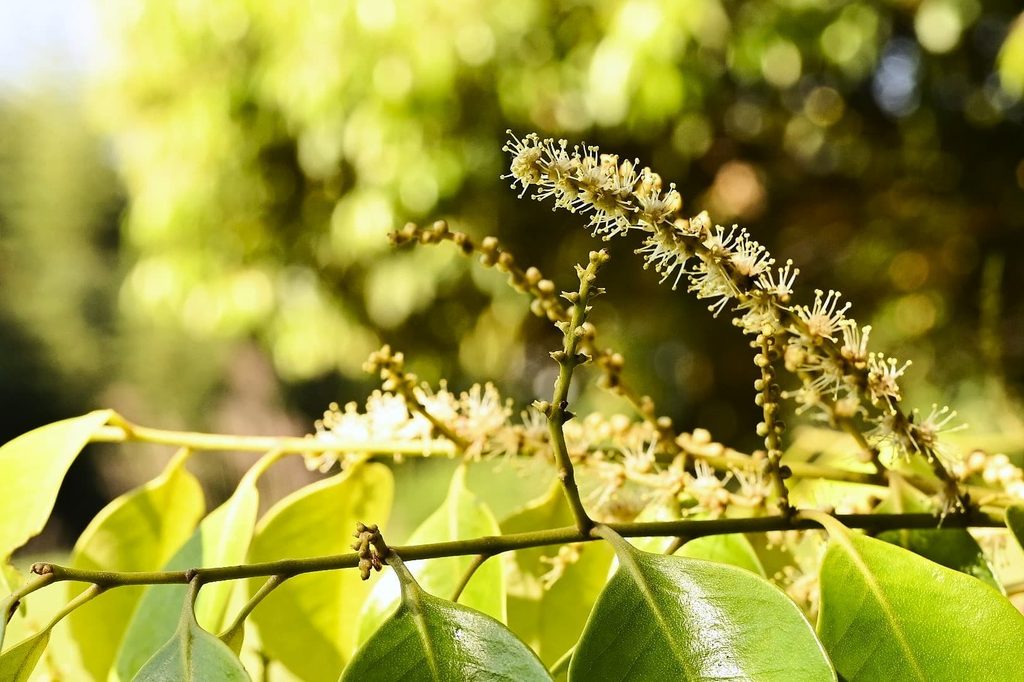
Sudajii flowers in spring to early summer, usually from May to June in much of Japan. Male and female flowers occur on the same tree.
The male flowers are produced in conspicuous catkins on new growth and can be noticeable from a distance when a tree is in bloom. Their strong scent is often described as unpleasant, although individual impressions vary.
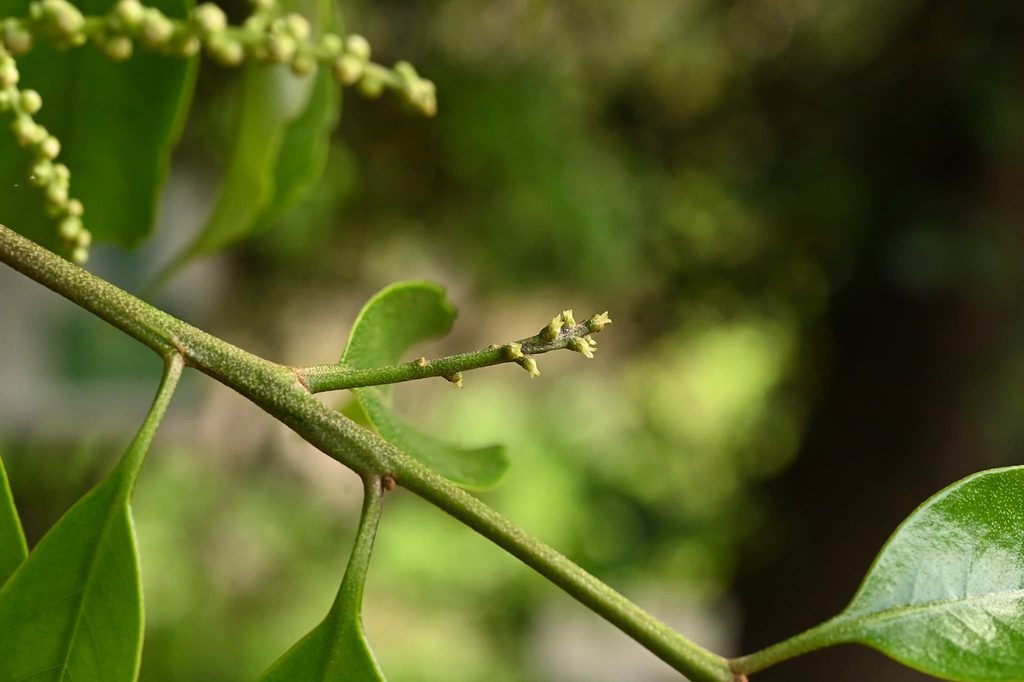
Female flower clusters are smaller and less conspicuous, occurring toward the ends of shoots.
Acorns
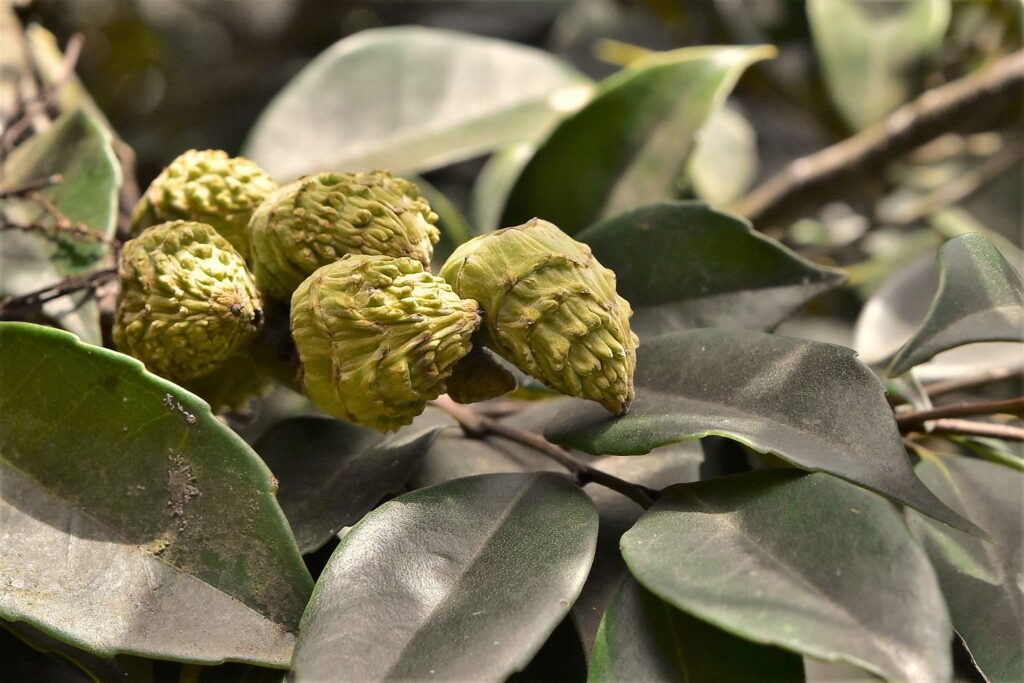
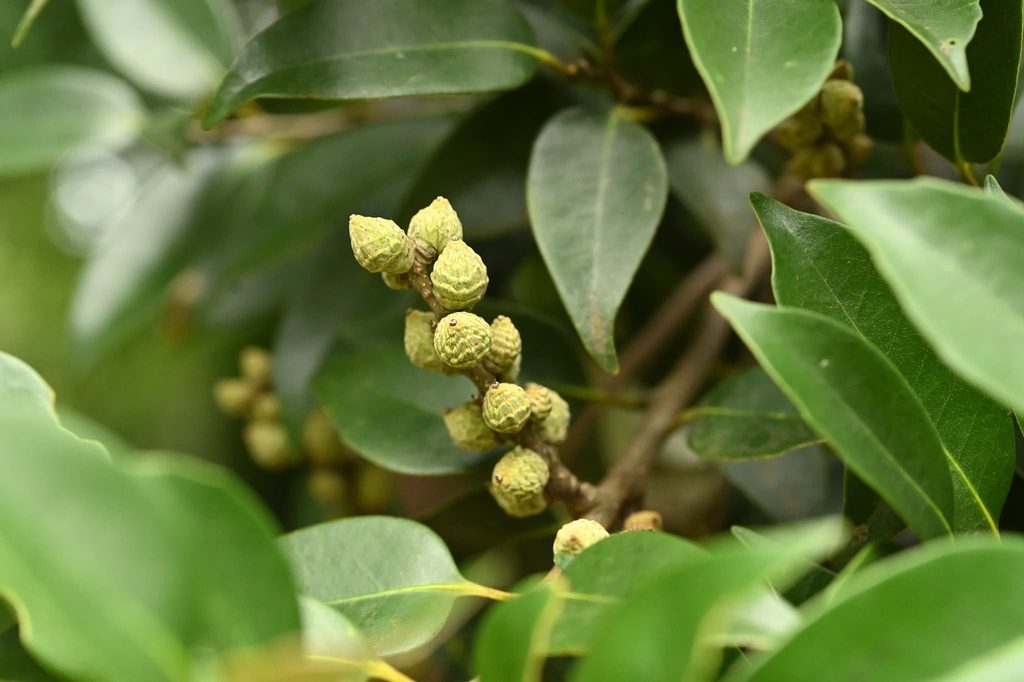
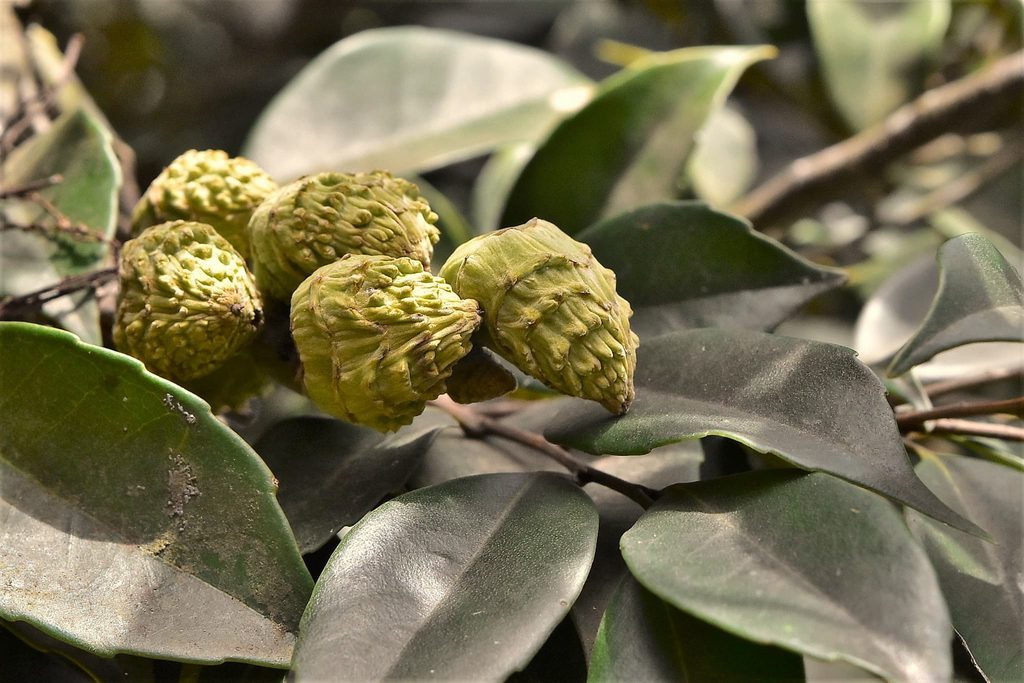
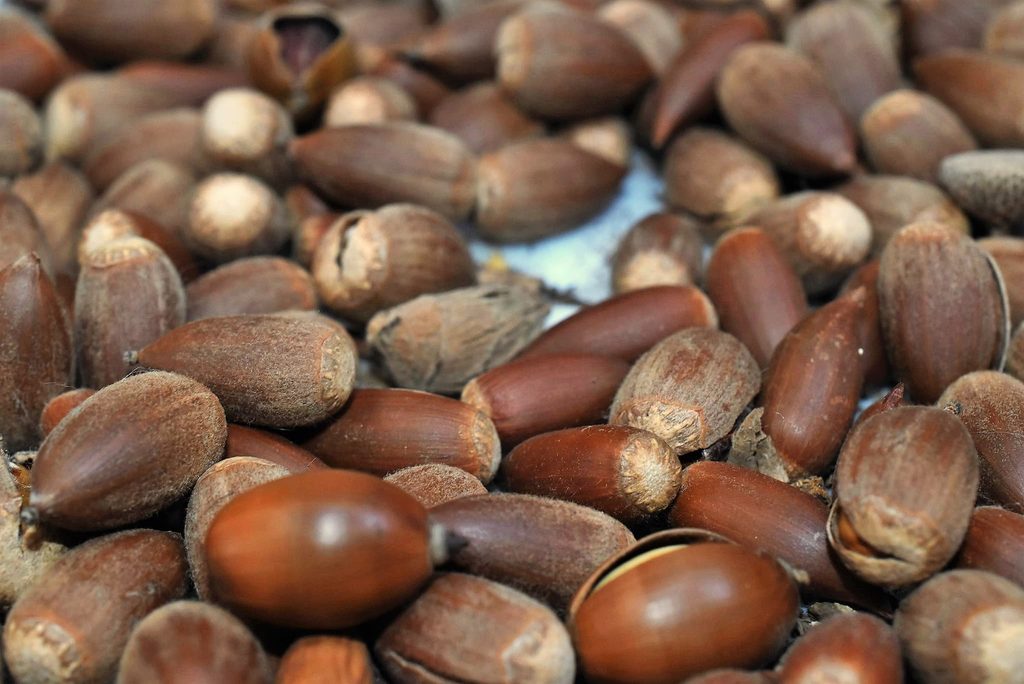
Sudajii produces acorns that mature in autumn of the following year after flowering. The developing acorn is initially enclosed by a cup-like husk. As the fruit matures, the husk splits open and exposes the acorn.
The acorns are typically about 1–2 cm long and are relatively low in tannins compared with many other Japanese acorns. They have traditionally been eaten raw or roasted.
Bark & Timber
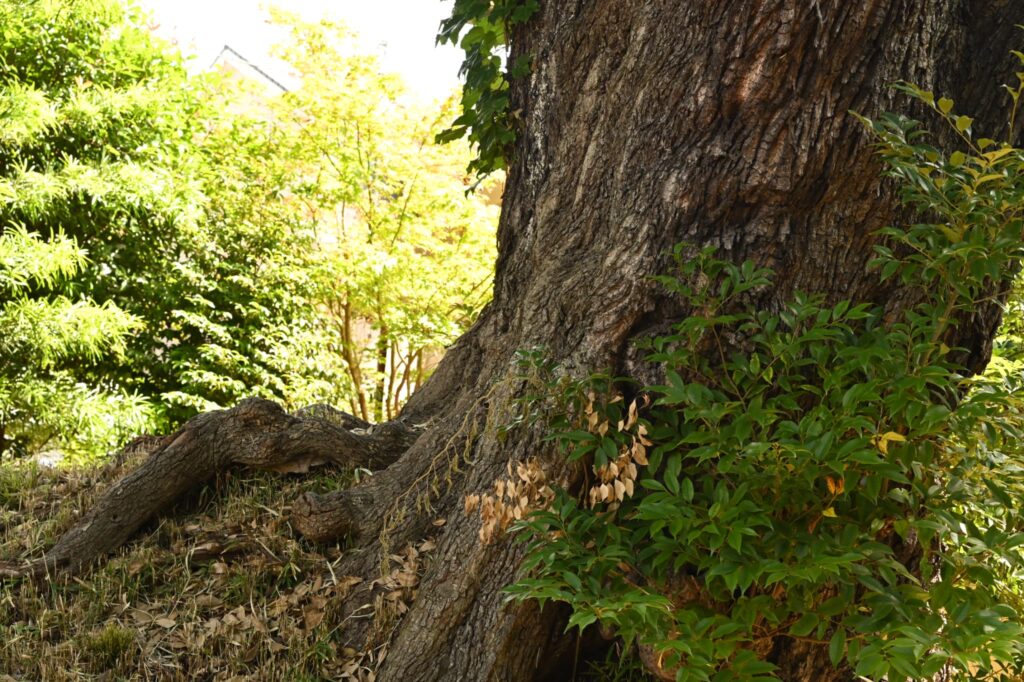
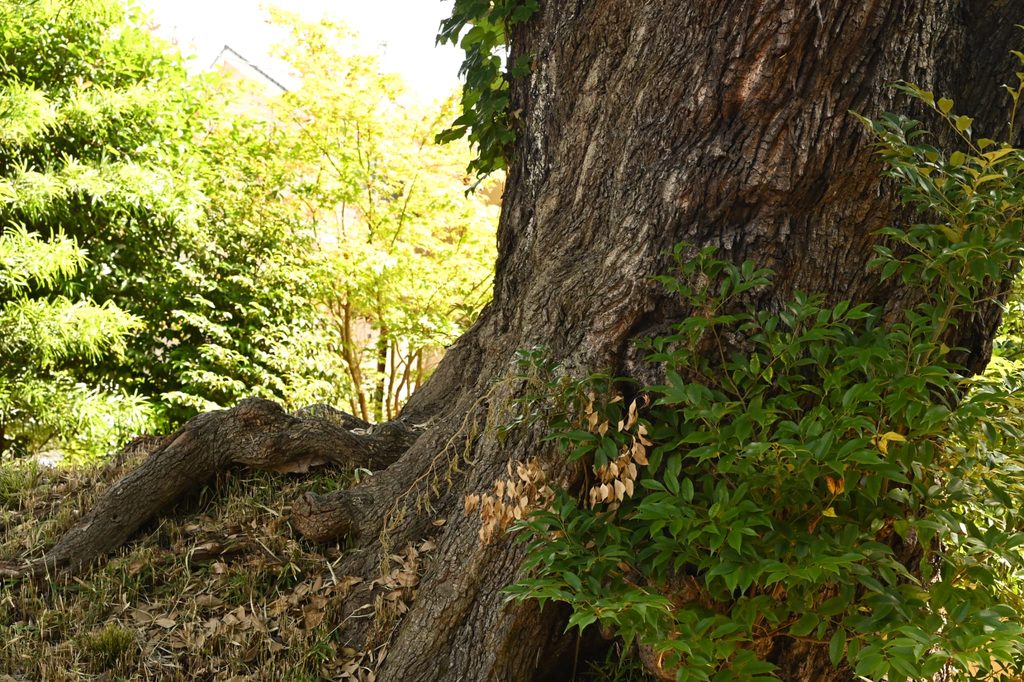
Young trunks are relatively smooth, but the bark of older sudajii becomes dark and develops conspicuous vertical fissures. The deeply cracked bark is one of the useful features for distinguishing mature sudajii from the smoother-barked tsuburajii, although old trees of the two species can still be difficult to separate.
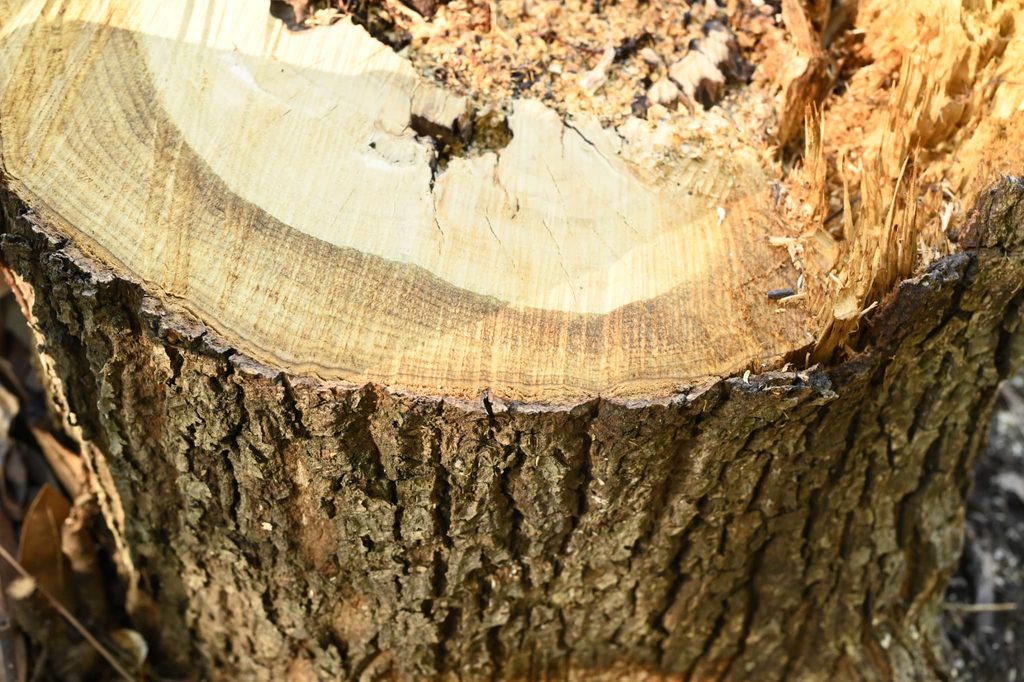
The wood is heavy and hard but can crack as it dries. It has been used for various practical purposes, including fuel, utensils, building materials, and mushroom cultivation logs. The species is also planted in parks, gardens, and other public spaces.
Size & Growth
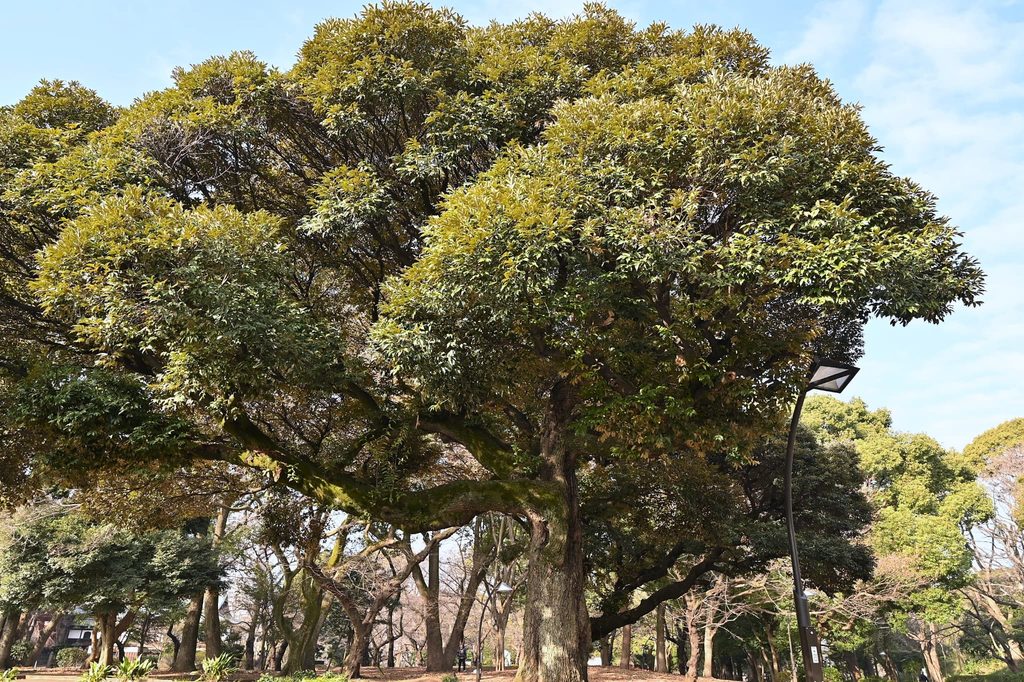
Sudajii is a large, long-lived evergreen tree. Mature specimens commonly reach around 15–25 m in height, and old trees can develop very large trunks.
The trunk and major branches often divide repeatedly, producing a broad, rounded crown. With age, the crown can take on a distinctive shape resembling a large broccoli head.
Because of its eventual size and dense evergreen foliage, sudajii is generally better suited to large grounds than to small residential gardens.
Uses & Cultural Significance
Shrine Forests and Sacred Groves
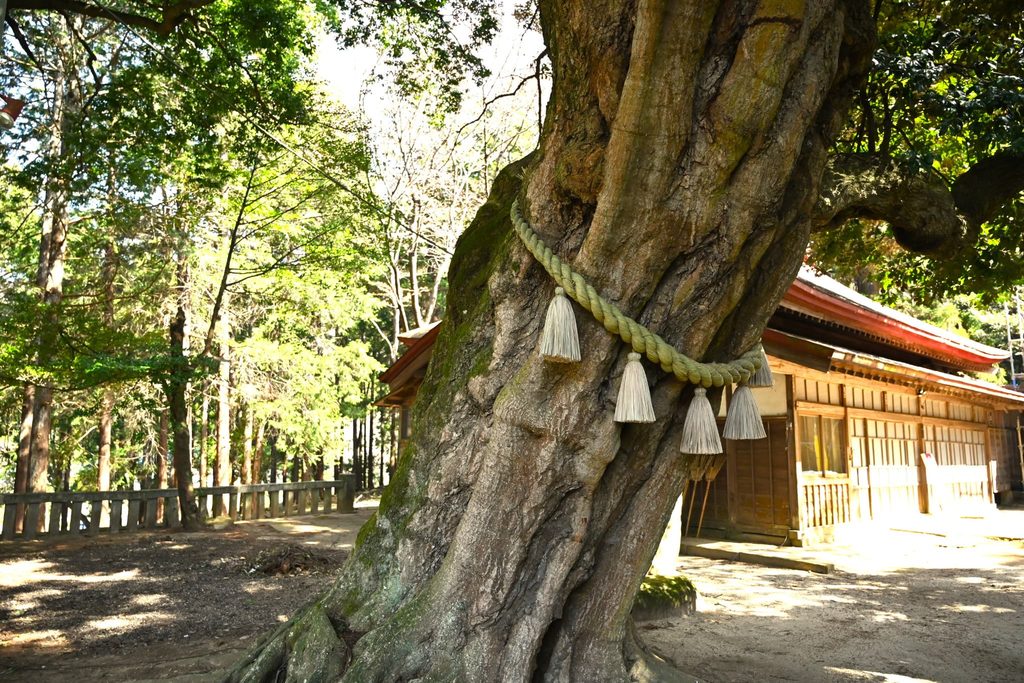
Sudajii is an important tree of the evergreen broad-leaved forests of warm regions of Japan and is commonly found in the chinju no mori, the sacred groves surrounding Shinto shrines.
Large old trees have survived at many shrines and temples, where their size and longevity contribute strongly to the character of the landscape.
Acorns as Food
Sudajii acorns have long been used as food in Japan. They contain relatively little tannin and are less bitter than the acorns of many oak species. They can be eaten raw or roasted, although preparation and palatability vary.
The acorns were an important traditional food resource before modern agriculture became widespread.
Wood and Other Uses
Sudajii wood has been used as fuel, for tools and other wooden products, and as logs for shiitake mushroom cultivation. The bark contains tannins and has traditionally been used as a dye, including for fishing nets.
The tree is also planted as a park, garden, roadside, windbreak, and landscape tree.
Name Origin
The origin of the Japanese name sudajii is uncertain. One traditional explanation connects the name with shitadami, a small sea snail whose shape was thought to resemble the acorn, but this is only one proposed etymology.
The name nagajii, meaning roughly “long shii,” refers to the relatively elongated shape of its acorns.
Giant Trees
Sudajii is capable of living for centuries, and many large old trees survive in Japan. Some have been designated as natural monuments.
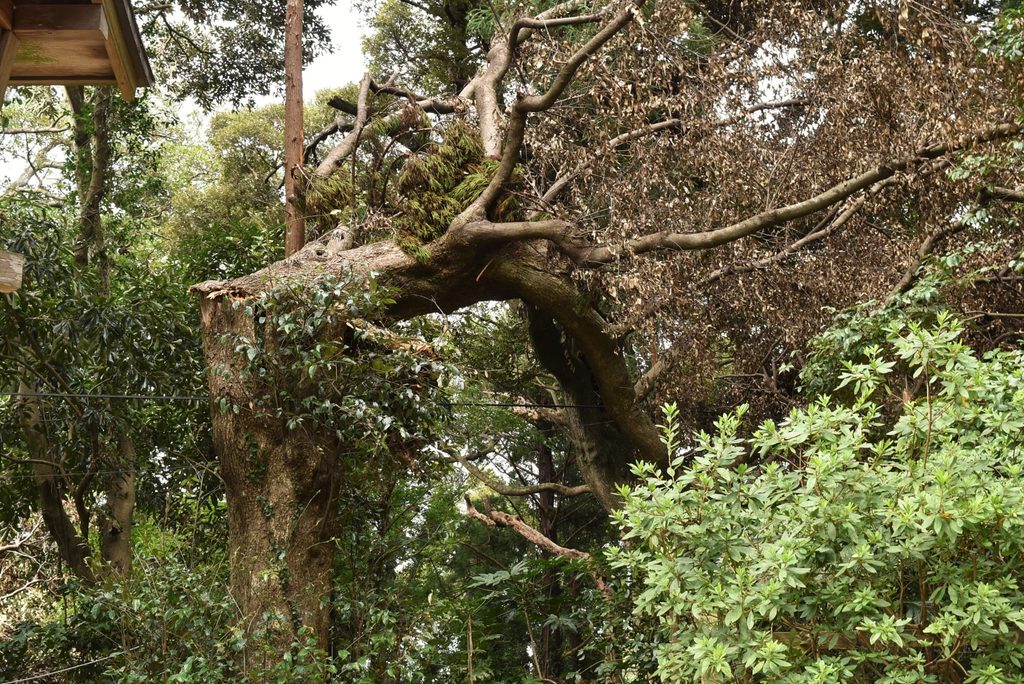
Their great size is one reason the species is particularly conspicuous in old shrine and temple grounds. Hollow trunks and decayed sections are common features of very old trees, however, so large specimens near buildings, roads, or places used by people should be inspected for structural safety.
Growing Guide
| Item | Description |
|---|---|
| Light | Full sun to partial shade |
| Soil | Well-drained soil |
| Wind / Salt | Generally tolerant of coastal conditions |
| Pruning | Tolerates pruning, but avoid repeated severe cutting |
| Home Garden | Usually unsuitable for small gardens because of its eventual size |
Light & Soil
Sudajii grows well in sunny positions but can tolerate partial shade. It is characteristic of warm-temperate evergreen forests and is especially common in relatively warm areas, including coastal regions.
Well-drained soil is generally suitable. The species develops into a large tree, so sufficient space for the trunk and crown is essential.
Wind & Coastal Conditions
Sudajii is well adapted to warm coastal environments and is often found in areas exposed to maritime conditions. This does not mean that every old tree is structurally safe, however. Hollowing and decay can weaken large trunks and branches, particularly in very old trees exposed to typhoons.
Cold Hardiness
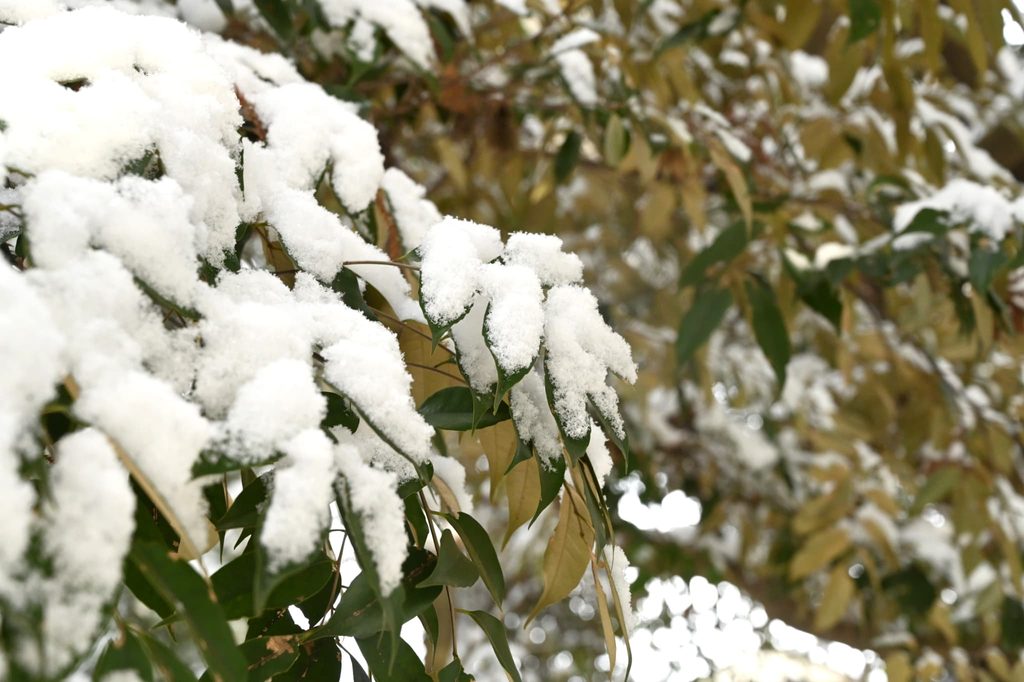
Sudajii is a warm-temperate species and is naturally distributed mainly in southern and western Japan, although its range extends northward to Fukushima and Niigata. It is therefore less suitable for cold, snowy regions than many deciduous Japanese trees.
Pruning
Sudajii tolerates pruning, but repeated severe pruning is undesirable, particularly on mature trees. Hard cutting can remove a large proportion of the crown and place considerable stress on an old tree.
In urban environments, old sudajii are sometimes repeatedly reduced to fit them into spaces that are too small for their natural growth. Careful formative pruning while a tree is young is preferable to repeated heavy reduction later in its life.
Suitability for Home Gardens
Sudajii is generally not a good choice for a small garden. It eventually becomes a large tree with a dense evergreen crown and can cast deep shade over the ground beneath it.
It is better suited to spacious gardens, parks, shrine and temple grounds, or other locations where the tree can be allowed to develop its natural form.
Pests, Diseases & Structural Problems
Old sudajii can develop internal decay and hollow trunks. Fungal decay may progress inside the trunk without being obvious from the outside.
For large trees near buildings, roads, or frequently used areas, the condition of major limbs and the trunk should therefore be monitored, especially after storms or other events that may increase the risk of failure.
Cultivars
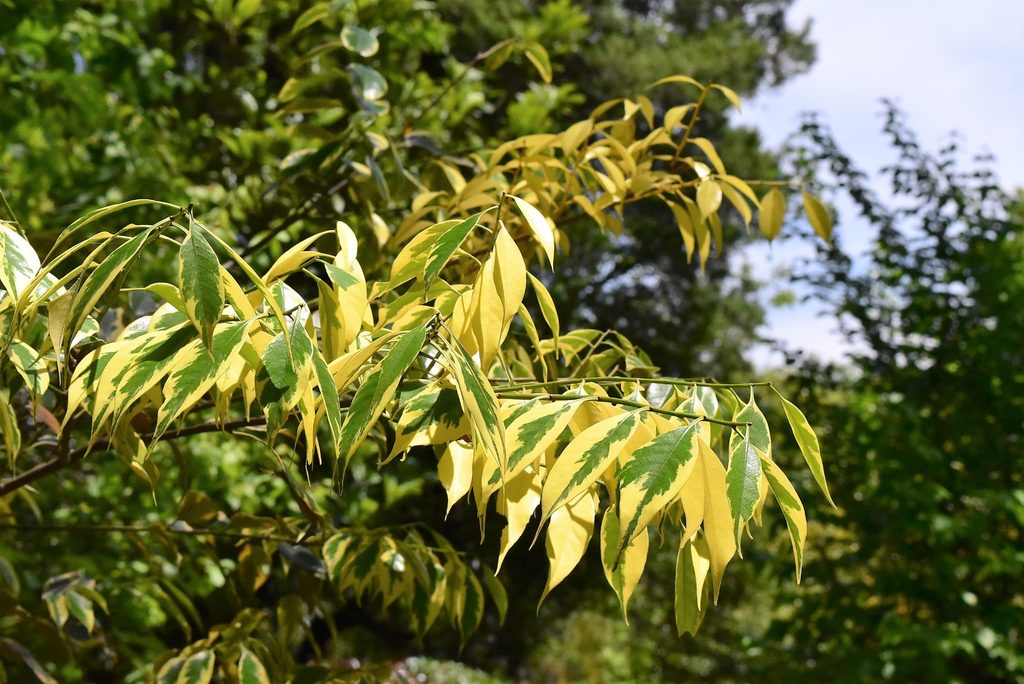
Variegated forms of sudajii occur, including forms with cream or yellow patterns on the leaves. Such trees are relatively uncommon in ordinary garden centers but can provide a lighter appearance than the typical dark-green species.
Similar Species
The species most often confused with sudajii is tsuburajii (Castanopsis cuspidata). The two trees are closely related and can be difficult to distinguish from photographs or from a single feature.
Leaves
Sudajii generally has larger, thicker and darker leaves than tsuburajii, and the underside is densely covered with fine scale-like hairs.
These characteristics overlap, however. Individual variation is considerable, so leaf size alone is not a reliable identification method.
Trunk
The bark of mature sudajii commonly develops conspicuous vertical fissures. Tsuburajii generally retains smoother bark for longer.
This difference is useful with mature trees, but bark becomes less reliable when comparing old specimens because both species can develop rough or damaged trunks.
Acorns
The acorns provide another useful clue. Sudajii generally produces relatively elongated, egg-shaped acorns, while those of tsuburajii tend to be smaller and more rounded.
There is considerable overlap, however, so an acorn alone should not always be treated as definitive.
Which Features Are Most Useful?
The combination of several features is more reliable than any single characteristic:
- Sudajii: generally larger leaves, pale scale-covered leaf undersides, deeply fissured bark on mature trees, and relatively elongated acorns.
- Tsuburajii: generally smaller leaves, smoother bark, and smaller, more rounded acorns.
The distinction is not always clear-cut, especially when only leaves or bark are available.
Frequently Asked Questions
Are sudajii acorns edible?
Yes. Sudajii acorns contain relatively little tannin and have traditionally been eaten raw or roasted. They are generally much less bitter than many oak acorns.
How can I tell sudajii from tsuburajii?
Look at several features together. Sudajii generally has larger leaves with pale, scale-covered undersides, deeply fissured bark when mature, and relatively elongated acorns. Tsuburajii tends to have smaller leaves, smoother bark, and more rounded acorns.
No single feature is completely reliable because both species vary.
Is sudajii suitable for a small garden?
Usually not. It becomes a large evergreen tree with a broad, dense crown and can produce heavy shade.
When should I prune sudajii?
The most important point is to avoid repeated severe pruning. Young trees can be trained gradually, while mature trees should generally be pruned conservatively and with consideration for their long-term structure.
How long does sudajii live?
Sudajii can live for several centuries, and large old specimens survive at shrines, temples, and other sites throughout Japan.
Do sudajii flowers smell good?
The scent of the male flowers is strong and is often described as unpleasant. Individual reactions to the smell vary.
Conclusion
Sudajii (Castanopsis sieboldii) is a large, long-lived evergreen tree characteristic of warm regions of Japan. Its dark foliage, pale leaf undersides, deeply fissured bark, and edible acorns make it relatively distinctive, while its similarity to tsuburajii can make identification difficult.
For identification, it is best to consider several features together rather than relying on leaf size, bark, or acorn shape alone. As a landscape tree, sudajii is best given plenty of room to develop its broad crown and should be managed with relatively gentle pruning as it matures.