Sawtooth Oak (Quercus acutissima): Identification, Care & Uses
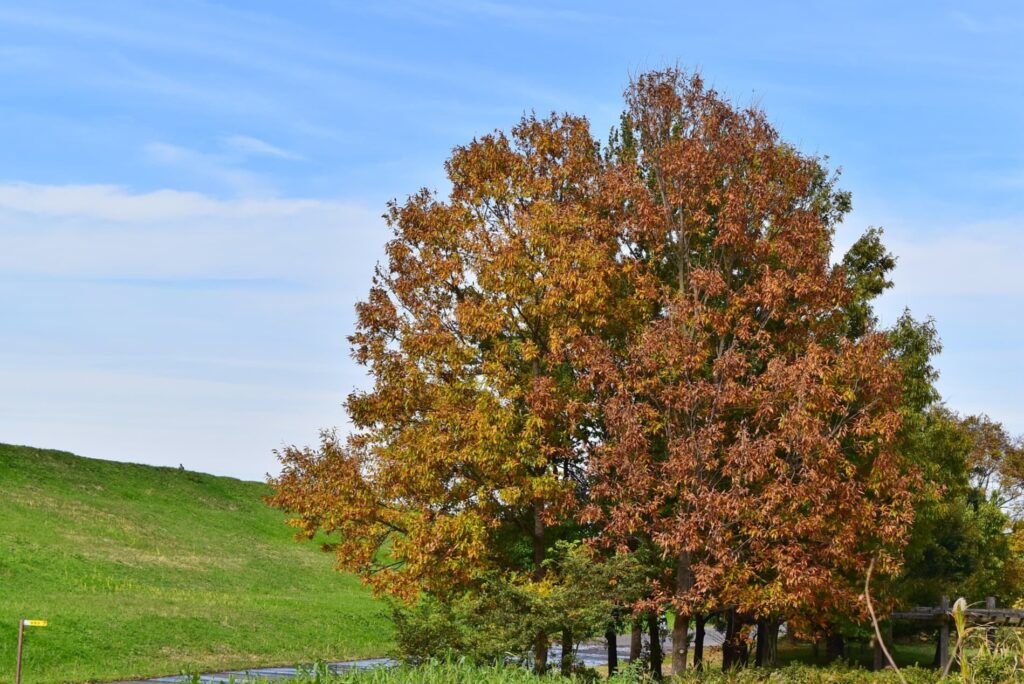
Sawtooth Oak (Kunugi) is one of the most familiar deciduous trees of Japan’s satoyama woodlands, prized for its role in traditional charcoal and shiitake production, its large acorns, and its deep roots in Japanese culture. This guide covers identification features, flowers, fruit, bark, and care, based on observations of the plant as grown in Japan.
What Is Sawtooth Oak?
Sawtooth Oak is a deciduous tree in the family Fagaceae (the beech family), In Japan, it occurs naturally across much of the country, from central Honshu southward through Shikoku and Kyushu. Its wider native range extends from the Himalayas and China through Korea and Japan to parts of mainland Southeast Asia. Within Japan, it is one of the most common trees of everyday secondary woodland (satoyama), often growing alongside Konara oak.
Its acorns have been eaten by people in Japan since the Jōmon period, and the tree is so deeply woven into daily life that it appears by name in both the Kojiki and the Man’yōshū, Japan’s oldest chronicle and poetry anthology. Historically it has been written with a great many different kanji, including 椢, 橡, 椚, 椡, 栩, 櫪, 櫟, and 檞.
Overview
| Item | Description |
|---|---|
| Scientific Name | Quercus acutissima |
| Common Name | Sawtooth Oak |
| Japanese Name | Kunugi (クヌギ) |
| Family | Fagaceae |
| Native Range | Central and southern Japan; also Korea, China, mainland Southeast Asia, and the Himalayan region |
| Plant Type | Deciduous Tree |
| Height | Typically 12–18 m |
| Trunk | Straight trunk; deeply fissured gray-brown bark, orange-tinged at the base of the furrows with age |
| Flowering Season | Around early-mid April, alongside Somei-Yoshino cherry blossom season |
| Fruit Type | Acorn, about 2–3 cm across, ripening brown in autumn the year after flowering |
| USDA Zones | 6–9 |
| Sun Exposure | Full sun preferred; tolerates half shade |
Characteristics
| Feature | Description |
|---|---|
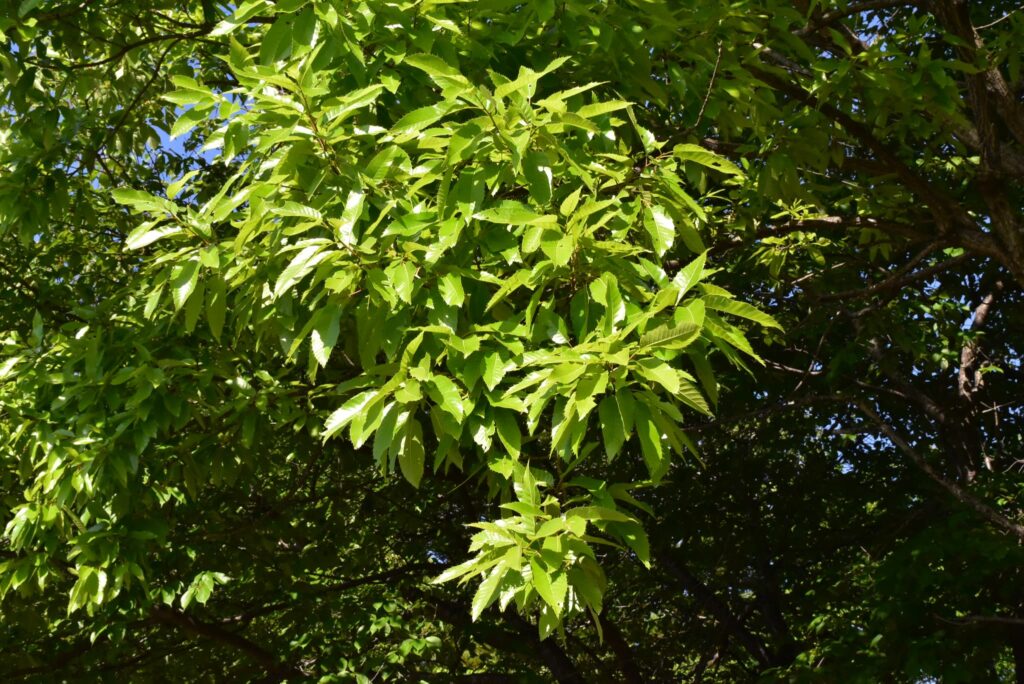
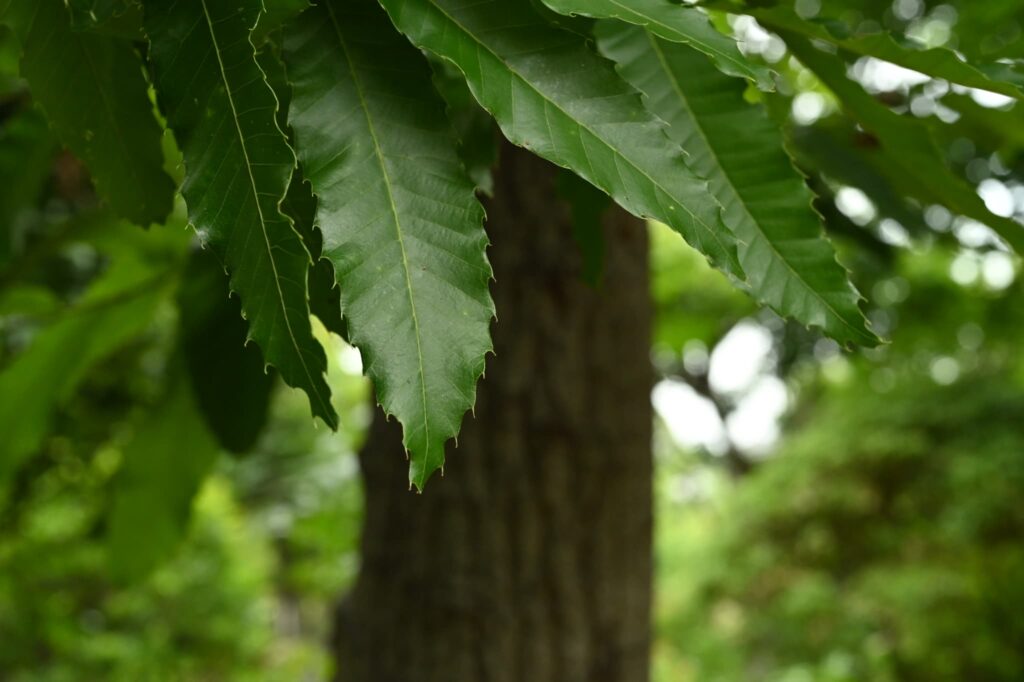
| Leaves | Narrow and chestnut-like, with sharply serrated margins and distinctive white-tipped teeth |
| Flowers | Monoecious; inconspicuous female flowers, cord-like yellow male catkins |
| Fruit | Large round acorn, about two-thirds covered by a cup of shaggy, recurved scales |
| Bark | Gray-brown, deeply fissured, orange-tinged at the base of furrows with age |
| Habit | Straight trunk when young; often multi-stemmed where repeatedly coppiced |
Foliage
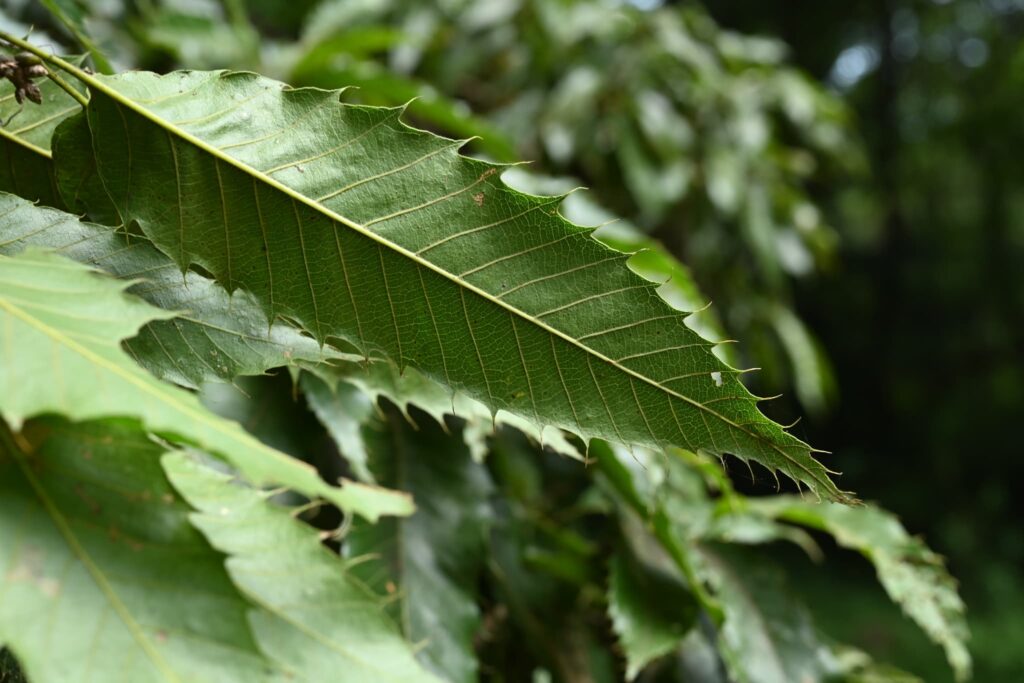
Leaves are a narrow, elongated oval with a pointed tip. The margin is saw-toothed, and — unlike the similar-looking chestnut (Kuri) — the tips of the teeth are white. Leaves are arranged alternately along the stem, and young twigs carry a fine grayish down. Under good growing conditions, the foliage turns an attractive yellow in autumn.
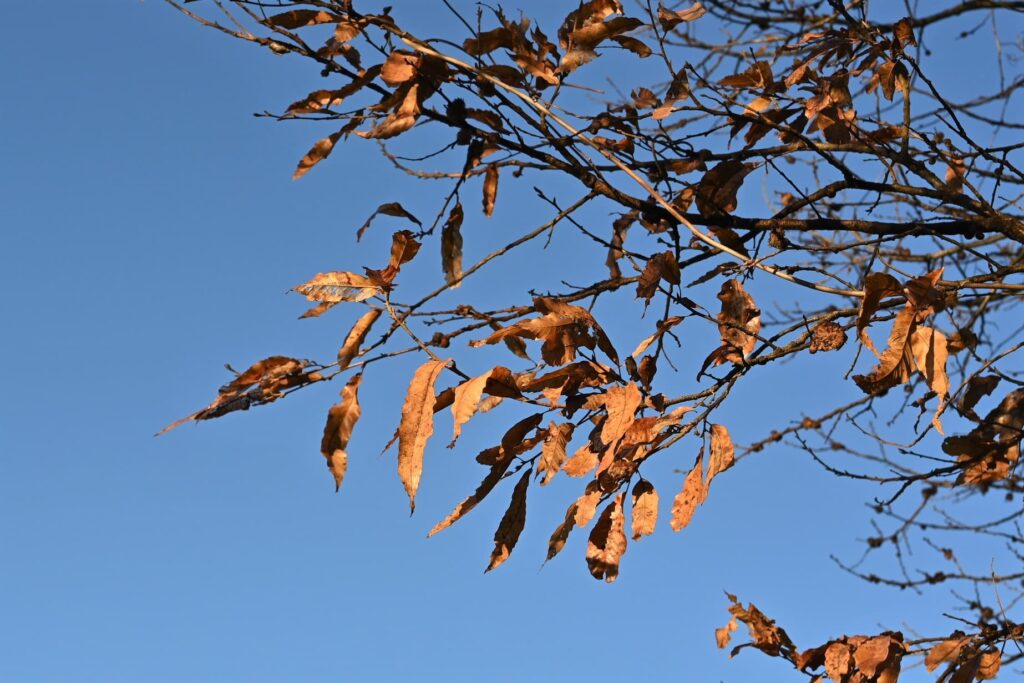
Kunugi holds onto its withered leaves through the winter, only shedding them the following spring as new growth emerges — a trait that distinguishes it from the closely related and often-confused Konara oak, which drops its leaves soon after they color in autumn.
Flowers
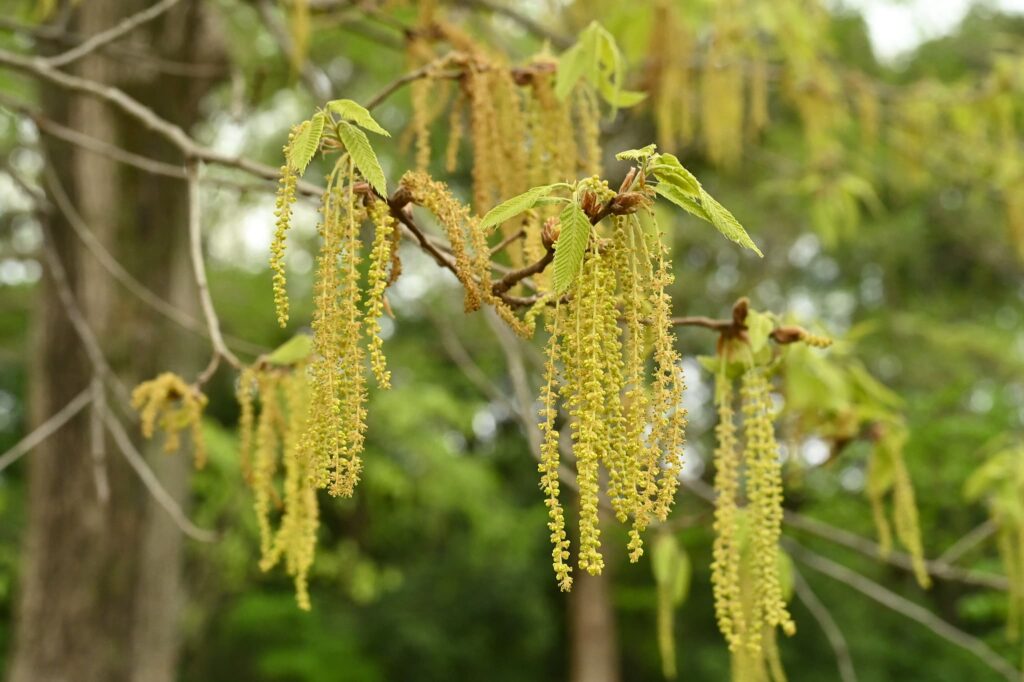
Sawtooth Oak flowers around the same time Somei-Yoshino cherries bloom, in early to mid April, with flowers similar to those of Mizunara oak opening alongside the new leaves. The tree is monoecious, bearing separate male and female flowers.
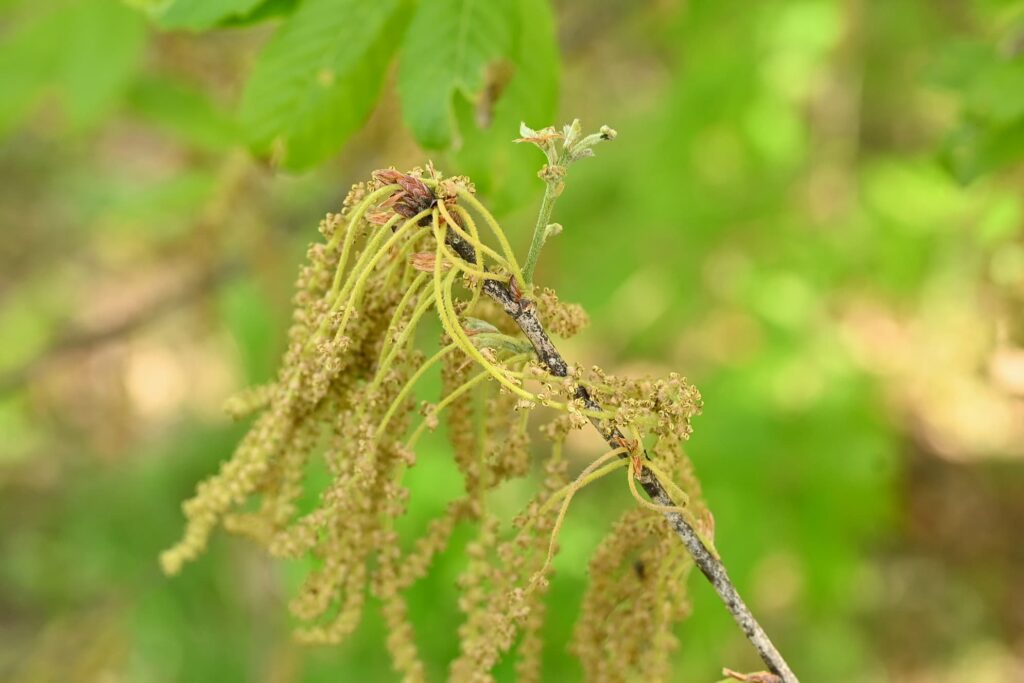
Female flowers are inconspicuous, tucked into the leaf axils near the tips of new shoots. Male flowers are cord-like catkins about 10 cm long, hanging from the lower part of new shoots; even a light breeze sends their pollen drifting, tinting the surrounding air and ground yellow. The catkins themselves soon fall as well, blanketing the ground in pale yellow-brown.
Acorns
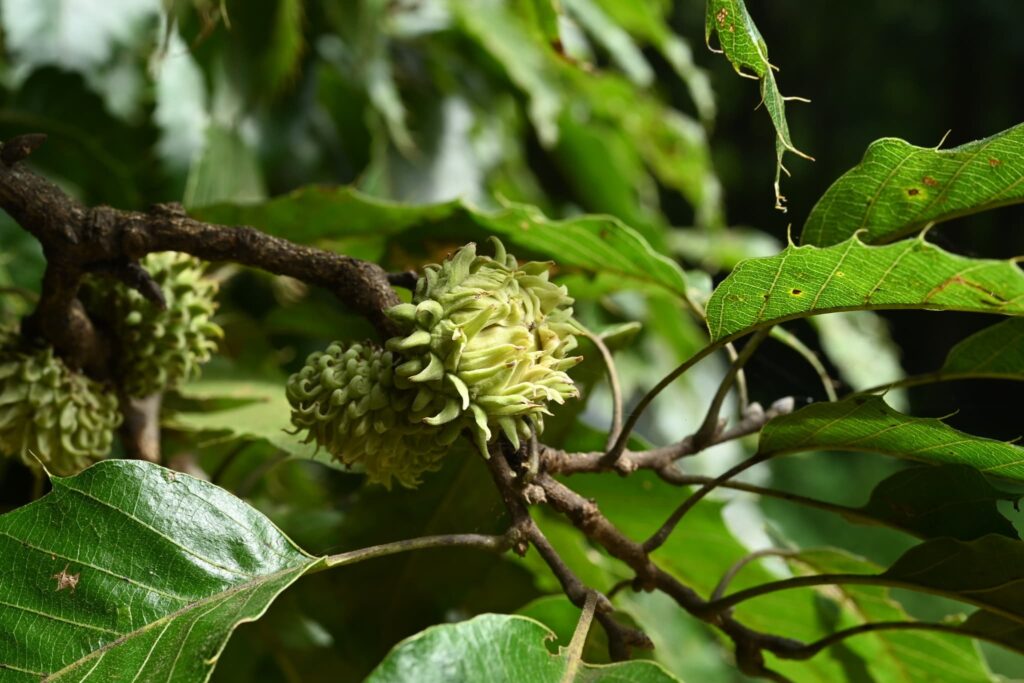
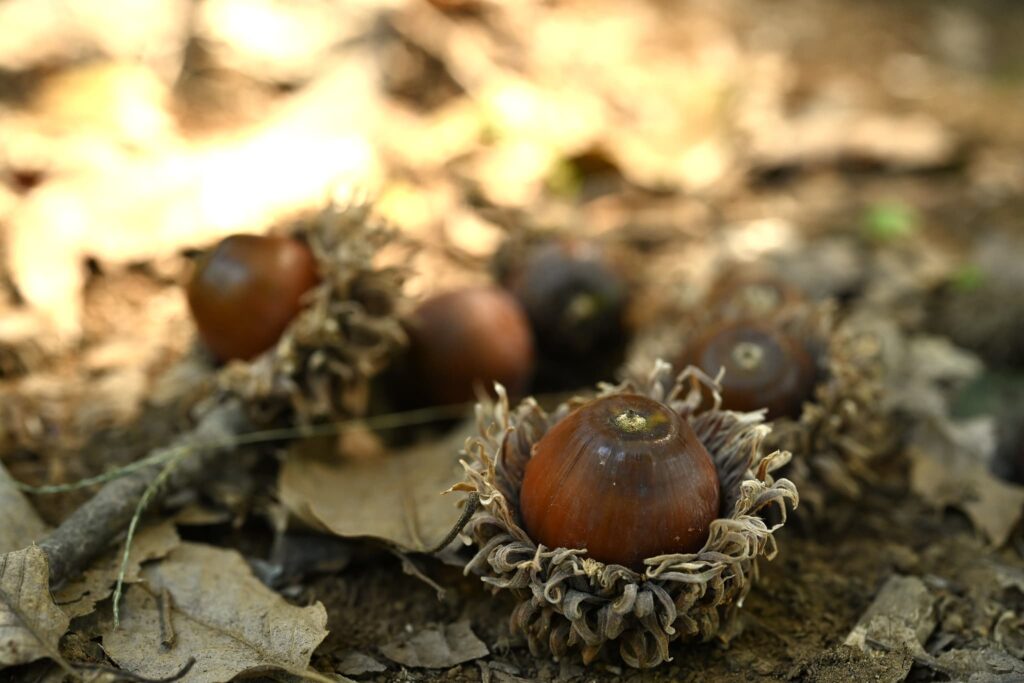
The acorn ripens to brown in the autumn of the year following flowering. It is round, roughly 2–3 cm across, among the largest acorns of Japan’s native oaks. About half of the nut is covered by a cup (cupule) whose scales extend outward and curl back in a distinctive shaggy fashion, giving Kunugi’s acorn its nickname “Okame Donguri.”
The word donguri itself originally referred specifically to this round Kunugi acorn, though today it is used generically for the acorns of many oaks, as well as beech and other Fagaceae species. Because the acorns ripen in the autumn of the year after flowering, developing fruit from the previous season and new flowers can appear on the tree at the same time.
Bark & Timber
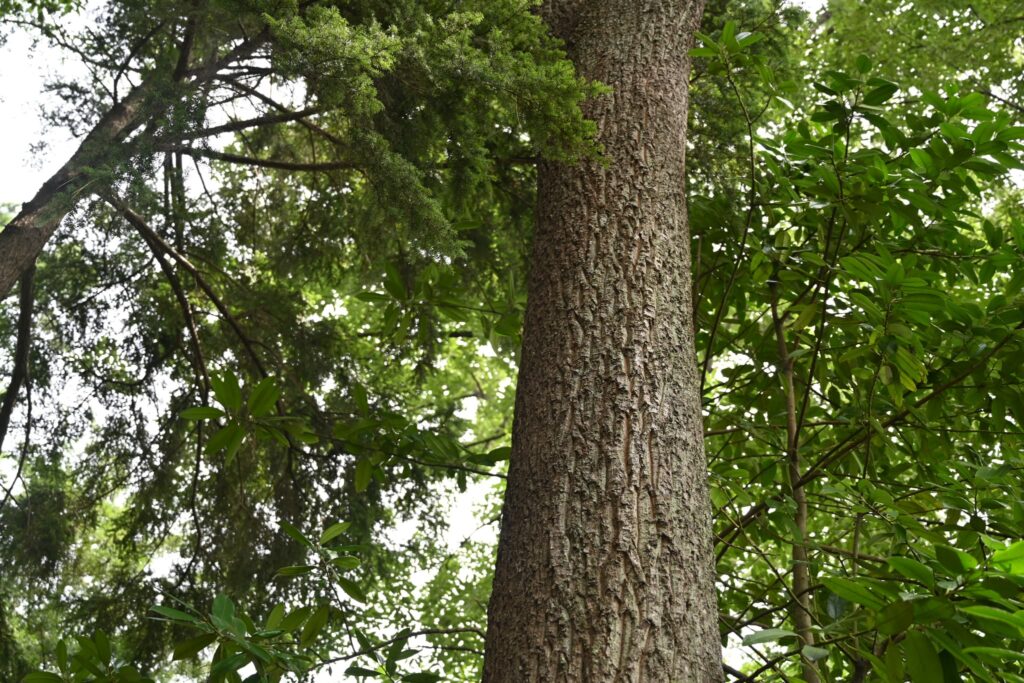
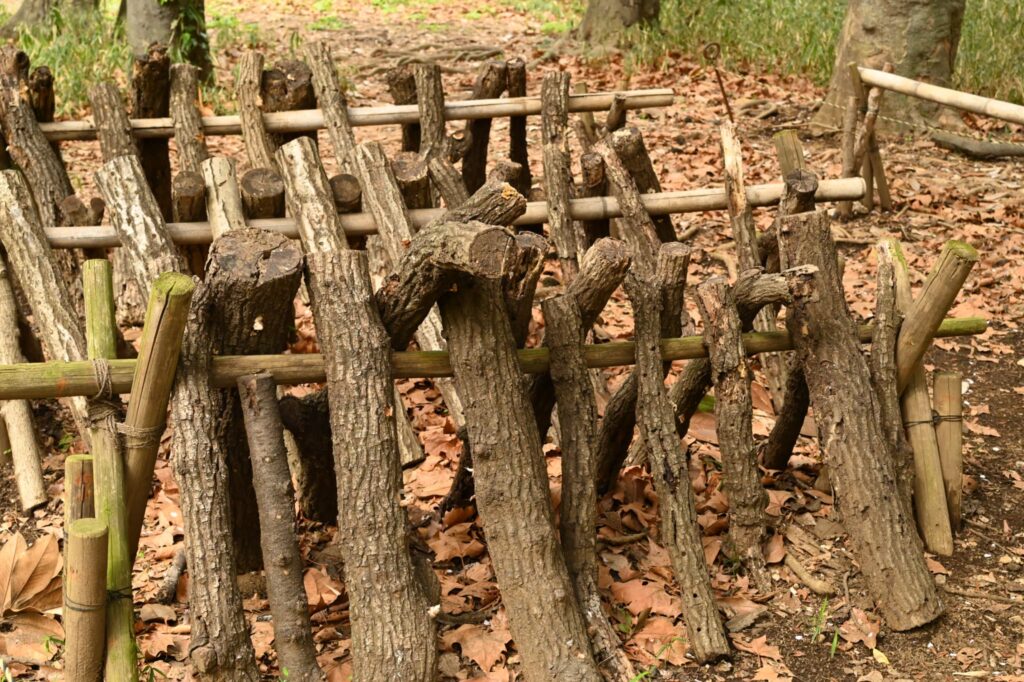
The trunk grows straight when young. With age, the bark develops deep vertical fissures, taking on an orange tint at the base of the furrows. Sawtooth Oak has an exceptionally strong capacity to regenerate. After cutting, it readily produces new shoots from the stump, and traditionally managed stands were often harvested again on cycles of roughly 15–20 years. This ability has made it a long-standing choice for firewood, charcoal, and as substrate logs for shiitake mushroom cultivation. Because of repeated harvesting, many specimens develop a multi-stemmed, stool-like form.
For traditional shiitake cultivation, trees roughly 8–15 years into a coppice cycle have often been preferred for producing logs, since Kunugi has traditionally been favored because its wood provides a particularly suitable substrate for shiitake cultivation. As a charcoal wood, Kunugi has long been prized, and regional charcoals were historically named for their production areas, such as Sakura-zumi and Ikeda-zumi.
Size & Growth
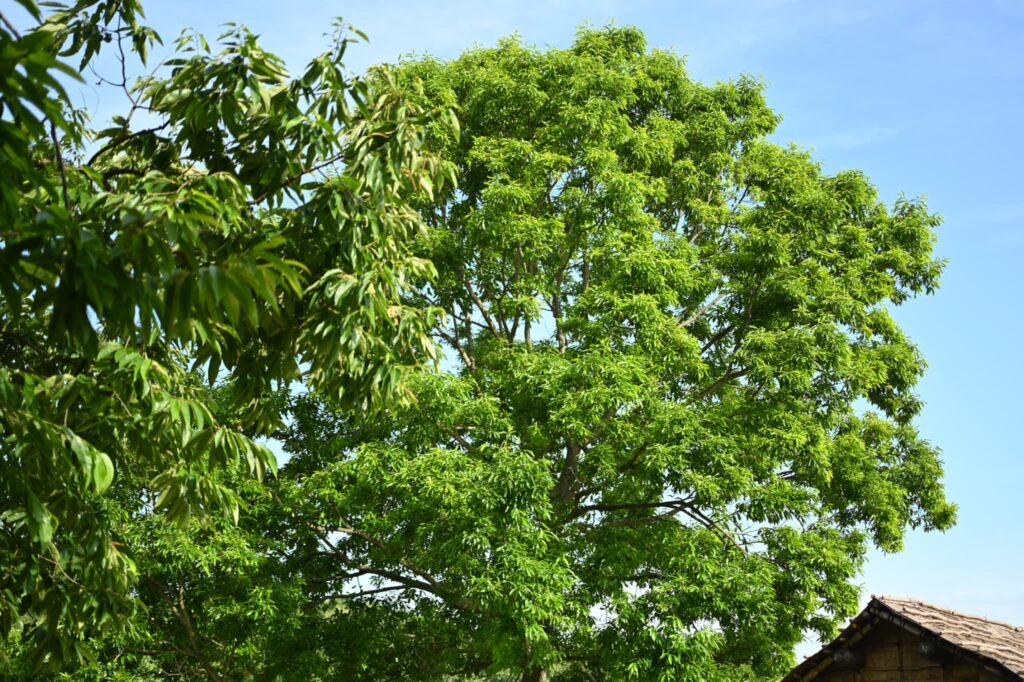
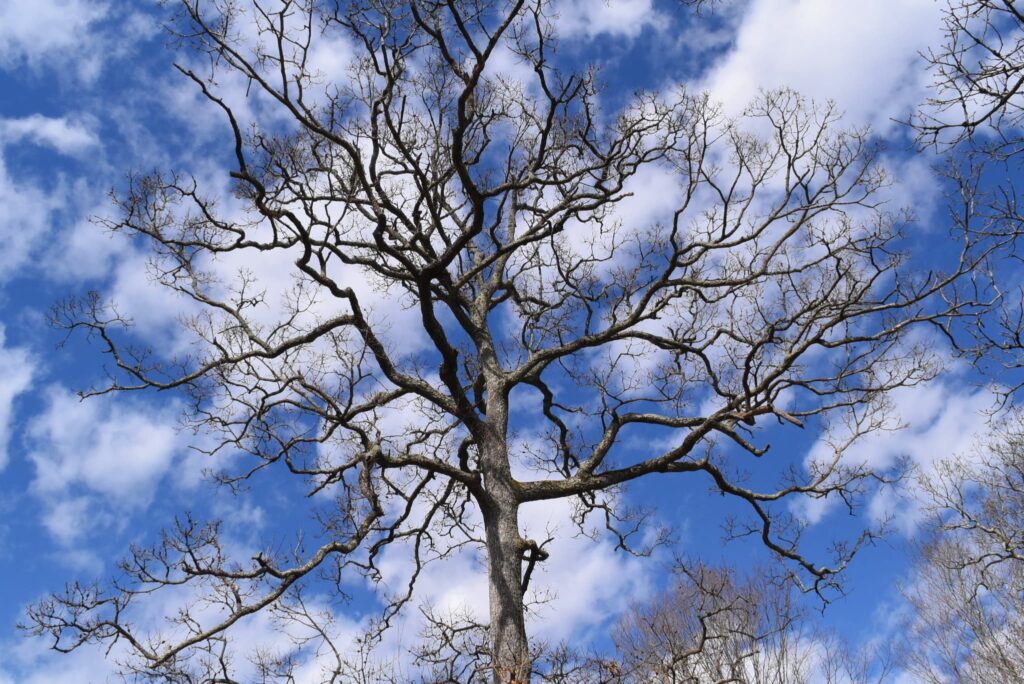
Sawtooth Oak typically reaches 12–18 m in height, growing at a moderate to fast rate. Its outstanding ability to resprout from a cut stump or root has long supported cycles of coppice management for fuel, charcoal, and mushroom log production.
Uses & Cultural Significance
Kunugi’s acorns have been part of the human diet in Japan since the Jōmon period, and the tree’s long familiarity is reflected in its appearance by name in the Kojiki and the Man’yōshū.
Name Origin
One theory holds that the name Kunugi derives from “kuni no ki” (“tree of the nation”), reflecting just how familiar and essential the tree was to daily life. Other proposed origins include “kunogi” (食乃木, “food tree”), referencing the edible acorns, and “kuriniki” (栗似木, “chestnut-resembling tree”), referencing the resemblance of its leaves and fruit to those of chestnut.
Traditional Uses
Because of its rapid regrowth after cutting, Kunugi has long been managed as coppice woodland for firewood and charcoal, with regional charcoals historically named after their production areas, such as Sakura-zumi and Ikeda-zumi. It remains a mainstay log species for shiitake cultivation today.
Bark, acorn shells, and young shoots were traditionally used to dye cloth a reddish-purple color known as tsurubami-zome; in ancient Japan, this dye was associated with clothing worn by people of low rank and by the young.
Kunugi sap is a well-known favorite of stag beetles and rhinoceros beetles, making the tree a familiar sight to generations of children collecting insects in summer — though the same sap also draws the tree’s natural enemy, the longhorn beetle.
Growing Guide
| Item | Description |
|---|---|
| Light | Full sun preferred; tolerates half shade |
| Soil | Not particular; grows robustly in a wide range of soil types |
| Cold Hardiness | USDA Zones 6–9 |
| Pruning | Regular pruning needed in home gardens; resprouts vigorously from a cut stump |
| Pests | Moth caterpillars (leaf damage), longhorn beetle larvae (wood damage) |
Light & Soil
Sawtooth Oak generally prefers a sunny, well-drained site but tolerates half shade. It is not particular about soil type and grows robustly across a wide range of conditions.
Pruning
Left unpruned, Kunugi develops into a grand, multi-stemmed form, but a home garden setting generally calls for regular pruning to keep it in bounds. As its long history as a firewood species demonstrates, even cutting the trunk down to the base does not kill the tree — vigorous new shoots (hikobae) rise from the stump, allowing it to regenerate.
Because of this vigorous growth habit, shaping Kunugi into a tidy, artificial form is difficult; a naturalistic style of pruning is recommended instead.
Suitability for Home Gardens
Given its eventual size and vigorous growth, Kunugi is best suited to larger gardens or naturalistic, satoyama-style plantings where it has room to spread and where periodic pruning or coppicing is feasible, rather than to small, formal garden settings.
Pests
Sawtooth Oak is generally a robust tree, although several insects may occasionally cause damage. Caterpillars of moths can feed on the leaves, sometimes causing noticeable defoliation in early summer. Wood-boring insects, including longhorn beetle larvae, may also damage weakened or stressed trees.
In home gardens, light infestations can often be managed by removing visible larvae by hand. More serious infestations may require closer inspection, particularly when there are signs of boring or declining branches.
Cultivars
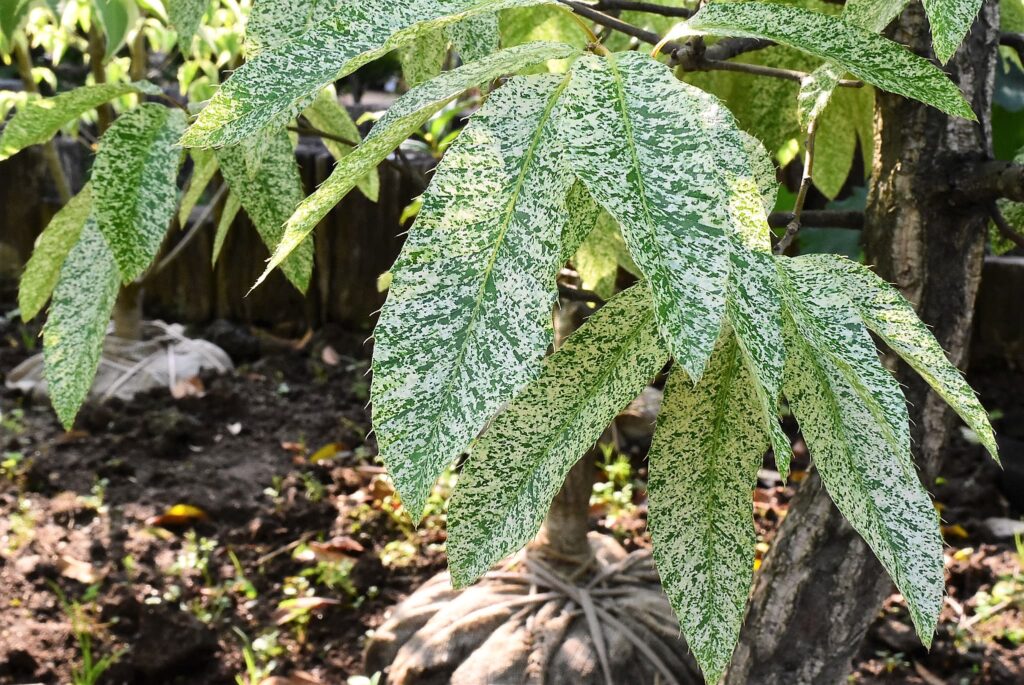
- Variegated Kunugi — a cultivar with patterned, variegated foliage.
Similar Species
- Konara (Quercus serrata) — the species most often confused with Kunugi; the two differ in leaf shape, color, and size. Konara also sheds its leaves soon after they color in autumn, while Kunugi holds its withered leaves on the branch until the following spring.
- Chestnut (Kuri, Castanea crenata) — similar serrated leaves, but the tips of the leaf teeth are not white as they are in Kunugi.
- Abemaki (Quercus variabilis) — a closely related, similar-looking species, distinguished by wider leaves with hairy undersides (Kunugi generally has a less densely hairy leaf underside).
Frequently Asked Questions
Are Kunugi acorns edible?
Yes. Like other oak acorns, however, they contain tannins and traditionally require processing before they can be eaten.
Why do stag beetles gather on Kunugi trees?
Kunugi sap is a favorite food source of stag beetles and rhinoceros beetles, which is why the tree is a popular spot for insect collecting in Japan during summer. The same sap also attracts the tree’s natural enemy, the longhorn beetle.
What is the difference between Kunugi and Konara?
The two are easily confused, but their leaves differ in shape, color, and size. The clearest seasonal difference is that Konara drops its leaves soon after they turn color in autumn, while Kunugi holds onto its withered leaves through winter, dropping them only as new growth appears the following spring.
Does Kunugi need pruning in a home garden?
Yes. Left to grow naturally, Kunugi becomes a large, multi-stemmed tree, so regular pruning is generally needed to keep it a manageable size in a home garden. Because its growth is vigorous, a naturalistic pruning style works better than trying to clip it into a tidy, artificial shape.
Why does Kunugi keep its dead leaves through winter?
This is a natural trait of the species: rather than dropping its withered leaves in autumn like many deciduous trees, Kunugi retains them on the branch until they are pushed off by new growth the following spring.
Is Kunugi used for firewood and shiitake logs?
Yes. Kunugi’s strong ability to resprout after being cut made it well suited to traditional coppice management for firewood and charcoal. Managed stands were often harvested on cycles of roughly 15–20 years, and Kunugi remains one of the primary tree species used for cultivating shiitake mushrooms today.
Conclusion
Few trees are as deeply tied to everyday life and the satoyama landscape of Japan as Kunugi. Its acorns have been used as food since ancient times, while its remarkable ability to regenerate after cutting made it ideal for managed woodland, firewood, charcoal, and shiitake cultivation. Its summer sap has also connected the tree to generations of children collecting stag beetles and rhinoceros beetles.
Even today, a mature Kunugi carries that history. Rather than a carefully manicured garden tree, it remains one of the defining trees of Japan’s lived-in woodland landscape — a species whose value lies not only in its appearance, but in the long relationship between the tree, people, and the landscape they have shaped together.