Japanese Wisteria (Wisteria floribunda): Identification, Care & Uses
Japanese Wisteria (Wisteria floribunda) is one of Japan’s most celebrated flowering vines, known for its long, cascading racemes of fragrant purple flowers and its centuries-old association with Japanese gardens, literature, and traditional culture. It is a vigorous deciduous woody climber that is especially spectacular when trained over a traditional wisteria trellis (fujidana).
This guide covers identification, foliage, flowers, fruit, bark, traditional uses, cultural significance, cultivars, similar species, and cultivation, with particular attention to the plant as it occurs and is grown in Japan.
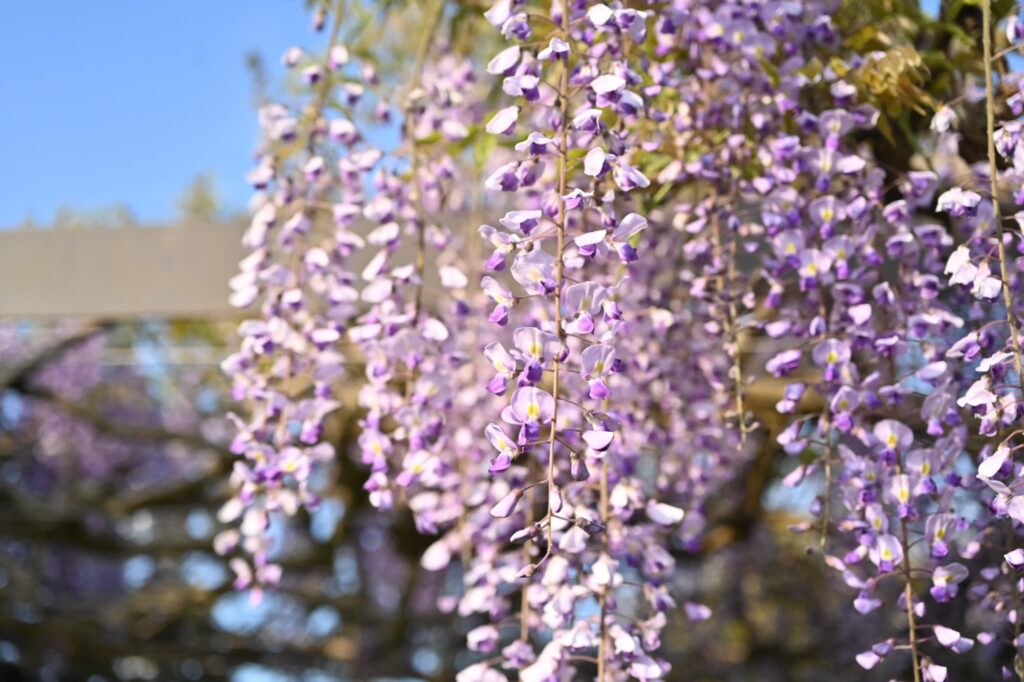
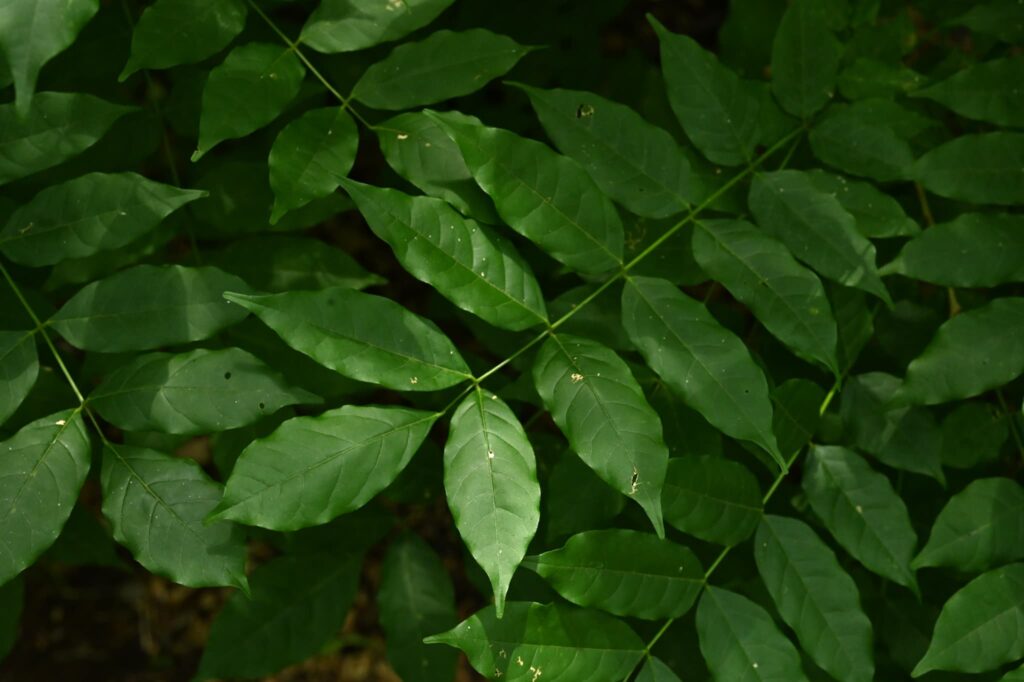
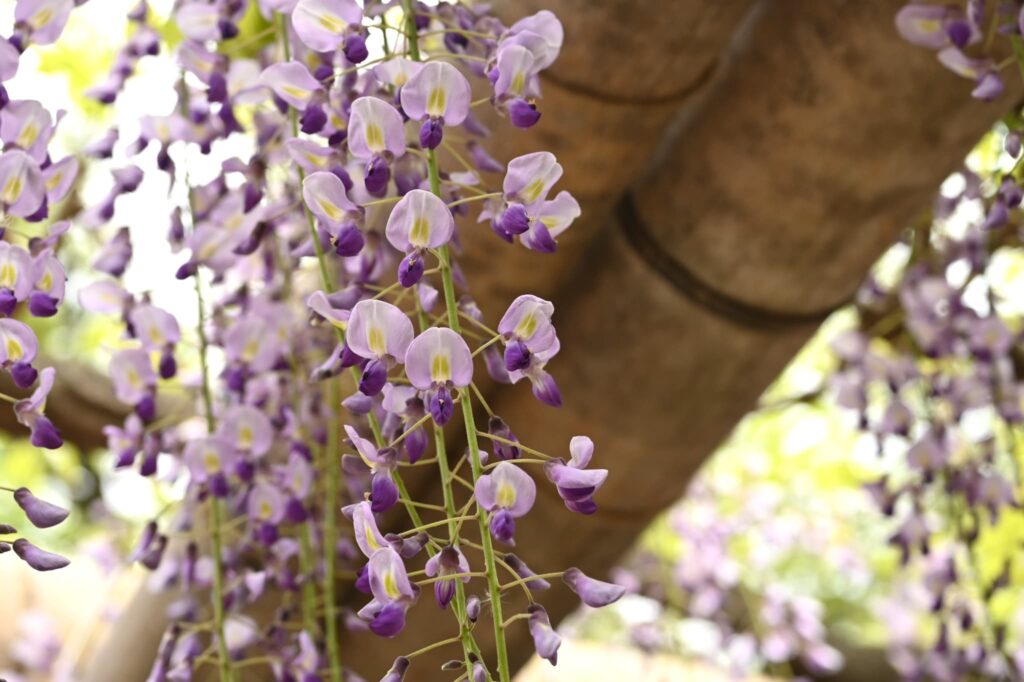
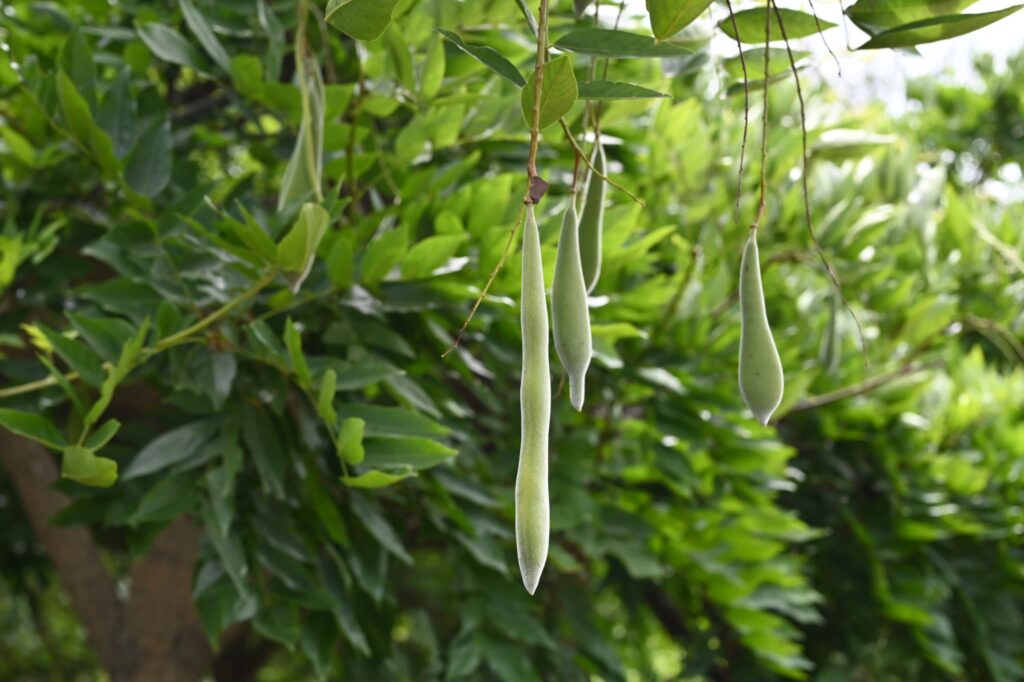
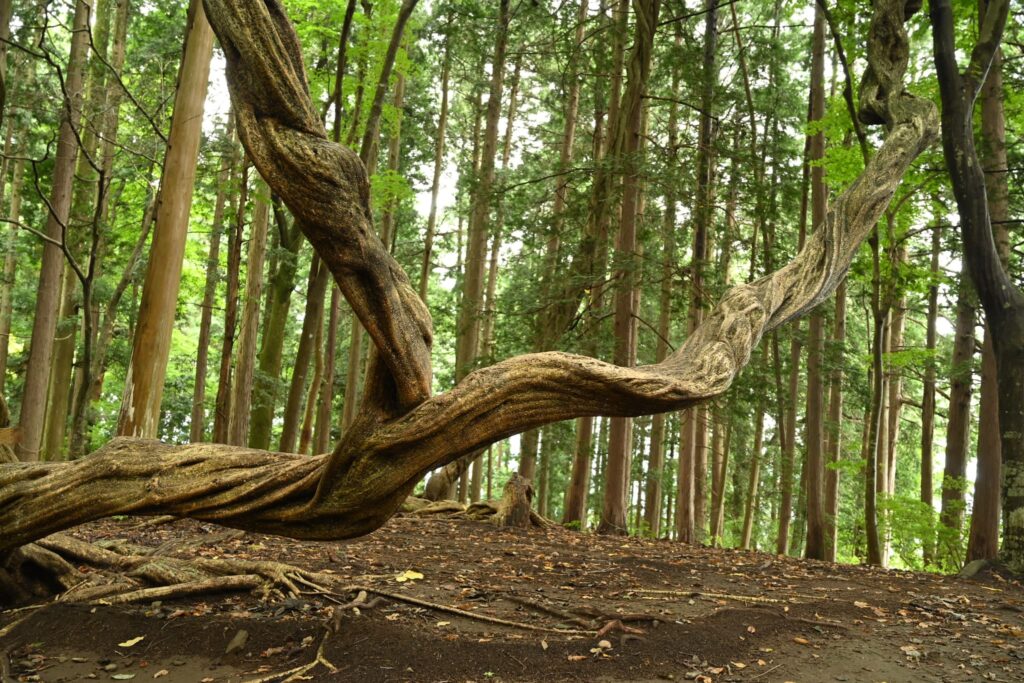
What Is Japanese Wisteria?
Japanese Wisteria (Wisteria floribunda) is a deciduous woody climbing vine in the pea family (Fabaceae). It is native to Japan and occurs naturally in forest margins, woodland, and other sunny or semi-open habitats. In cultivation, it is usually trained onto a strong trellis, pergola, or traditional Japanese fujidana so that its long flower clusters can hang freely.
The plant commonly known as Fuji (藤) in Japan is principally represented by Nodafuji (野田藤), corresponding to Wisteria floribunda. Another native Japanese species, Yamafuji (山藤), is Wisteria brachybotrys. These are separate species rather than merely regional forms of the same species.
One of the clearest differences is the direction in which the stems twine around a support. Japanese Wisteria (W. floribunda) is generally described as twining clockwise when viewed from above, while Yamafuji (W. brachybotrys) twines in the opposite direction. Because the terms “right-handed” and “left-handed” can be confusing depending on the viewpoint, describing the direction explicitly is preferable.
Overview
| Item | Description |
|---|---|
| Scientific Name | Wisteria floribunda (Willd.) DC. |
| Common Name | Japanese Wisteria |
| Japanese Name | Fuji (フジ); Nodafuji (野田藤) |
| Family | Fabaceae |
| Genus | Wisteria |
| Native Range | Japan |
| Plant Type | Deciduous woody climbing vine |
| Growth Habit | Vigorous, twining climber |
| Flowering Season | Spring to early summer, generally April–May in much of Japan |
| Flower Color | Violet, purple, pink, or white depending on cultivar |
| Flower Cluster | Usually about 30–50 cm in typical forms; exceptionally long in some cultivars |
| Fruit | Flattened, velvety legume pod, usually about 10–15 cm long |
| Seeds | Several flat, brown seeds per pod |
| USDA Hardiness | Approximately Zones 5–9 |
| Sun Exposure | Full sun for best flowering |
The species is accepted by Kew’s Plants of the World Online, which gives Japan as its native country and treats Wisteria floribunda as a liana of temperate habitats.
Characteristics
| Feature | Description |
|---|---|
| Leaves | Alternate, pinnately compound, usually with 13–19 leaflets |
| Leaflets | Narrowly ovate to lanceolate, pointed at the tip, with entire margins |
| Flowers | Fragrant, pea-shaped, borne in long pendulous racemes |
| Flowering | Racemes open progressively from the base toward the tip |
| Fruit | Flattened, velvety brown legume pods |
| Bark | Gray to gray-brown, becoming increasingly rough and thick with age |
| Stem | Woody, vigorous, strongly twining |
Foliage
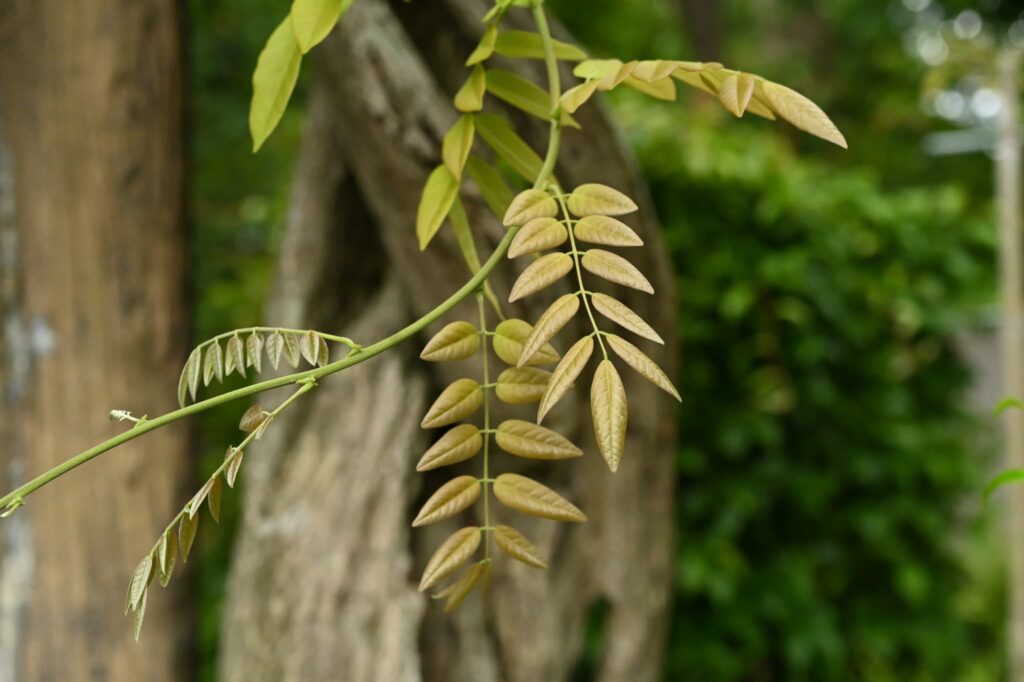
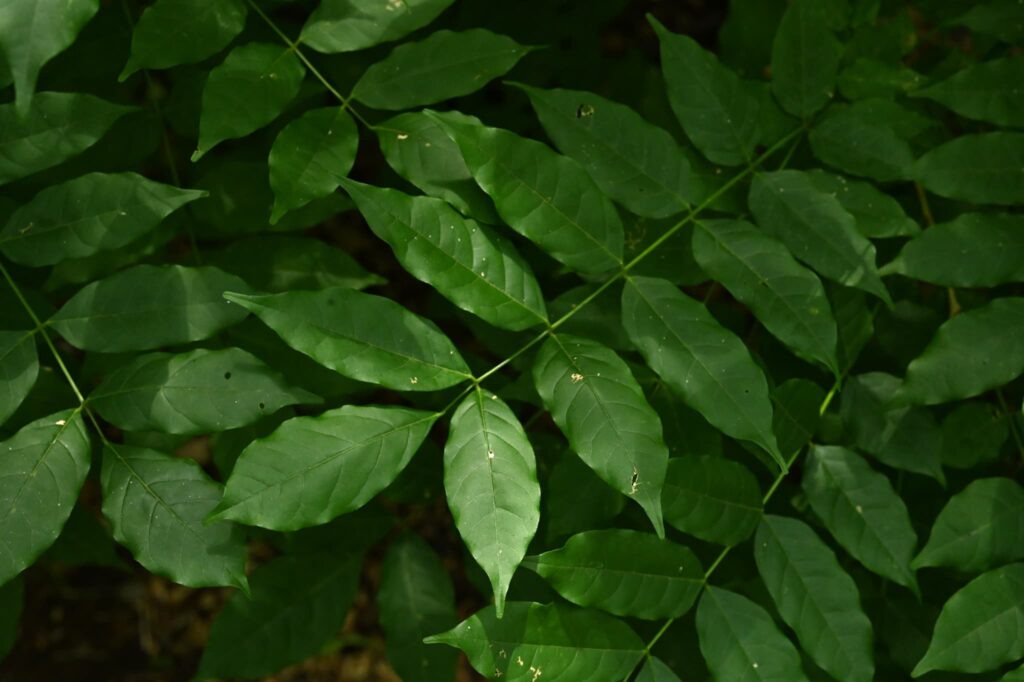
The leaves are alternate and pinnately compound, usually consisting of 13–19 leaflets. A terminal leaflet is present, with the remaining leaflets arranged in opposite pairs along the central rachis.
Young foliage may emerge with a reddish or bronze tint before becoming green. The leaflets are generally narrow and pointed, with smooth margins. Fine hairs may be present on young foliage, particularly on the undersides of the leaflets.
In autumn, the foliage turns yellow before falling.
Flowers
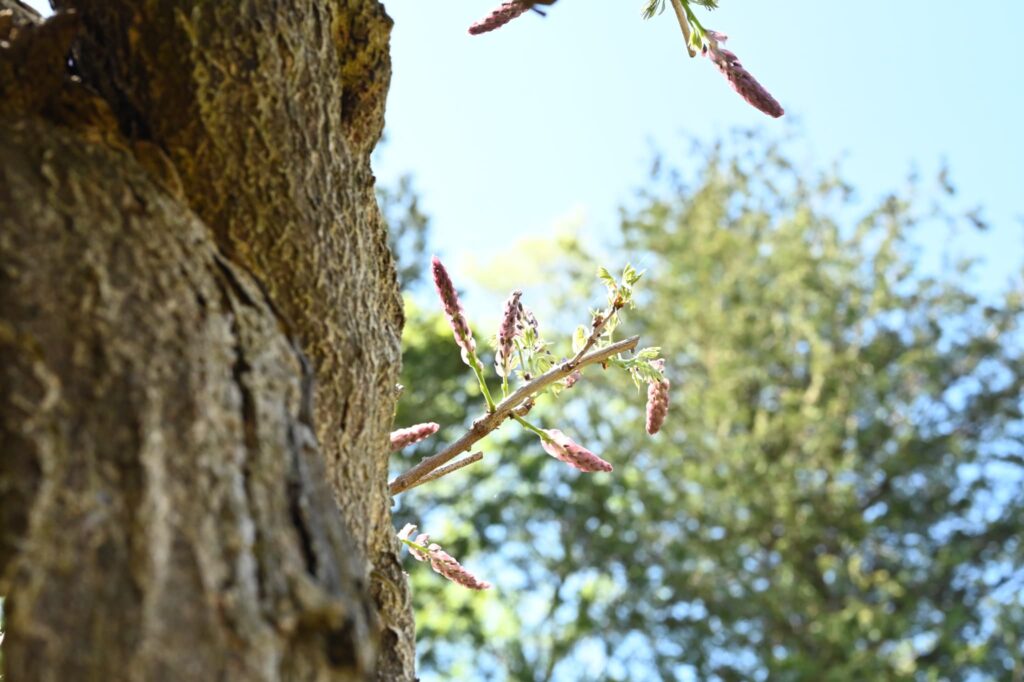
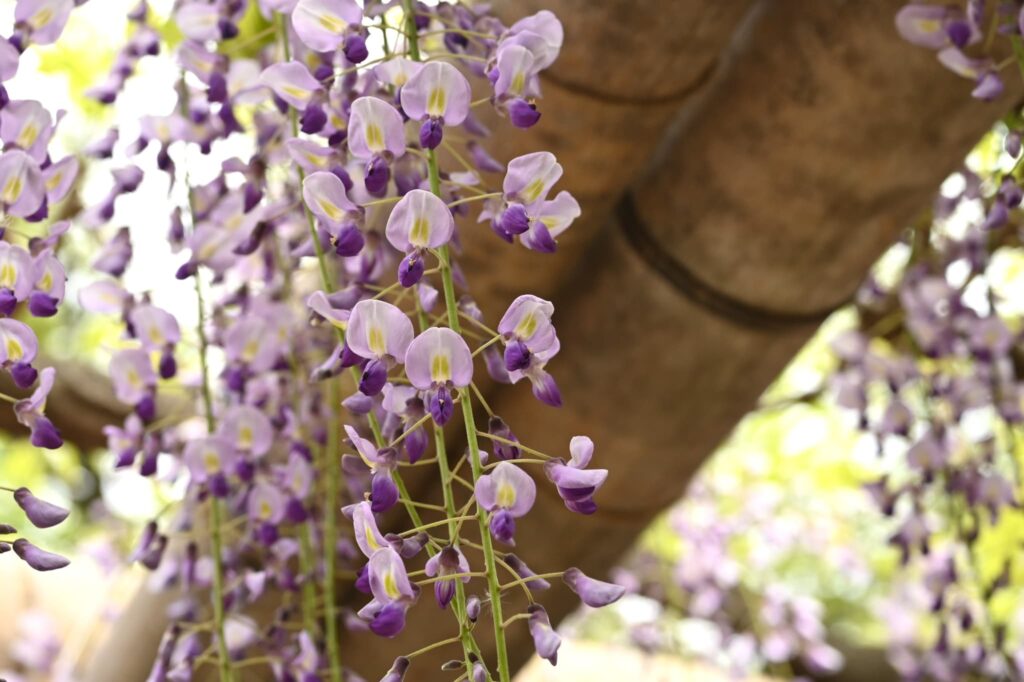
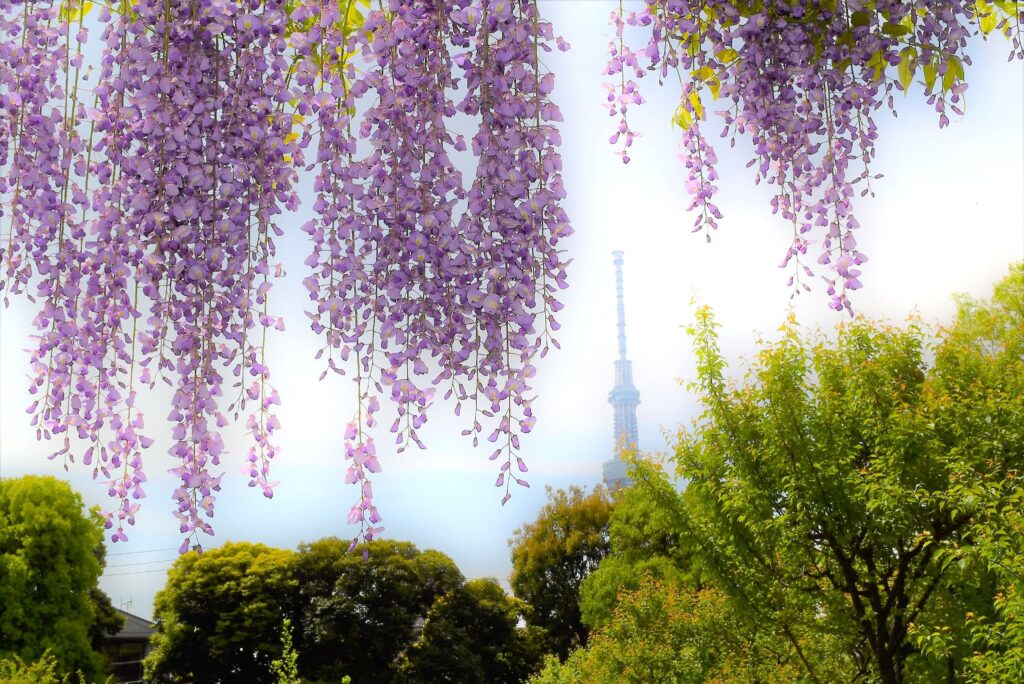
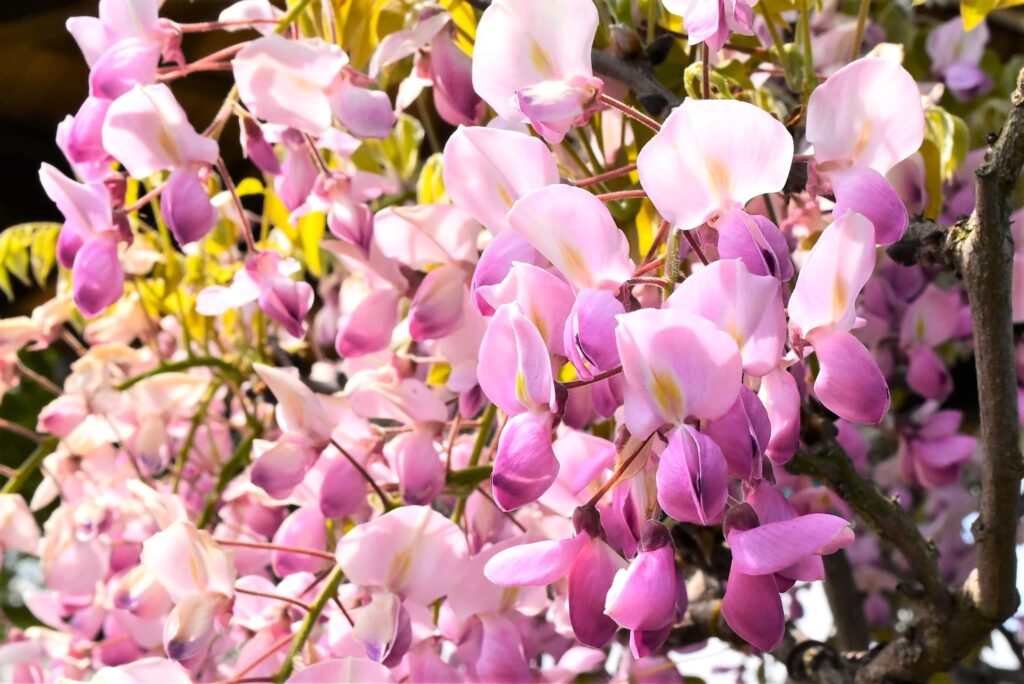
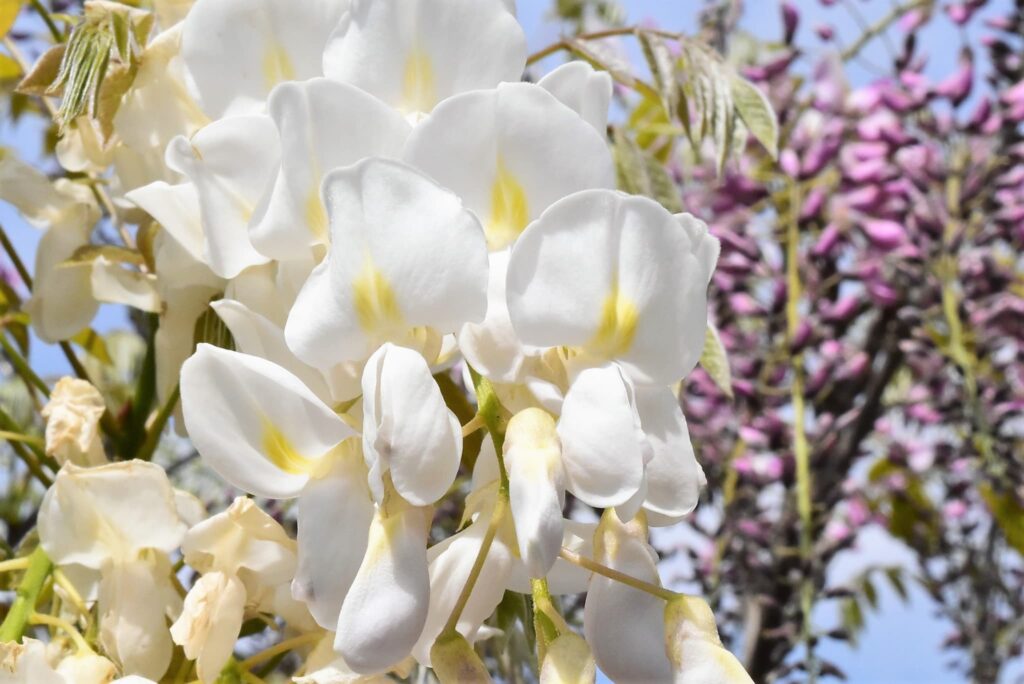
Japanese Wisteria is best known for its long, hanging racemes of fragrant pea-shaped flowers. The flowers are commonly violet or purple, although pink- and white-flowered cultivars are also widely grown.
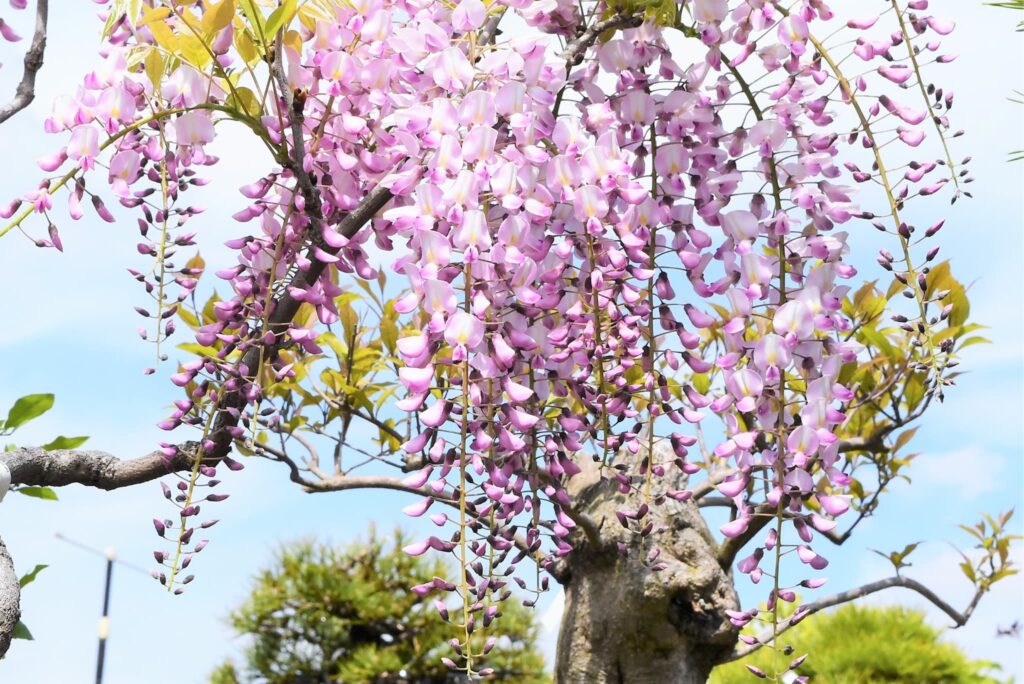
Typical flower racemes are roughly 30–50 cm long, although selected cultivars can produce substantially longer clusters. The famous long-flowered forms cultivated in Japan are one reason Japanese Wisteria is so highly valued for ornamental use.
Each individual flower has the typical structure of a legume flower, including a prominent upper or banner petal and lateral wing petals. The flowers are attractive to pollinating insects and are strongly fragrant in many cultivated forms.
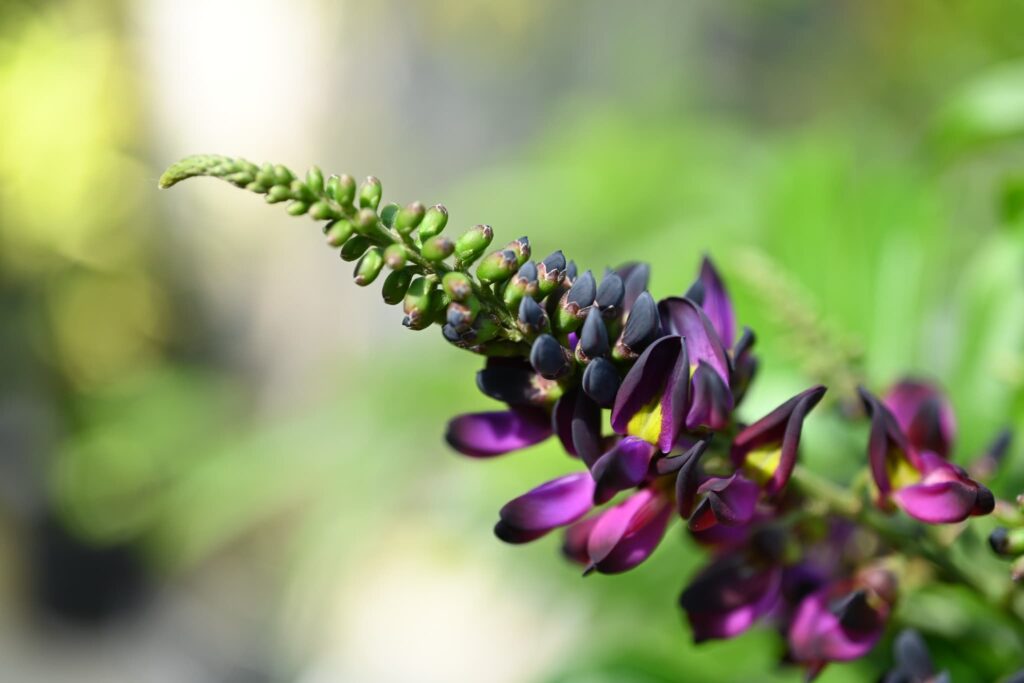
An important identification feature is the flowering sequence. In Japanese Wisteria, flowers generally open from the base of the raceme toward the tip, rather than all opening simultaneously.
The flowering period varies with climate and cultivar but generally falls from April into May in much of Japan, with flowering occurring later in colder regions.
Fruits
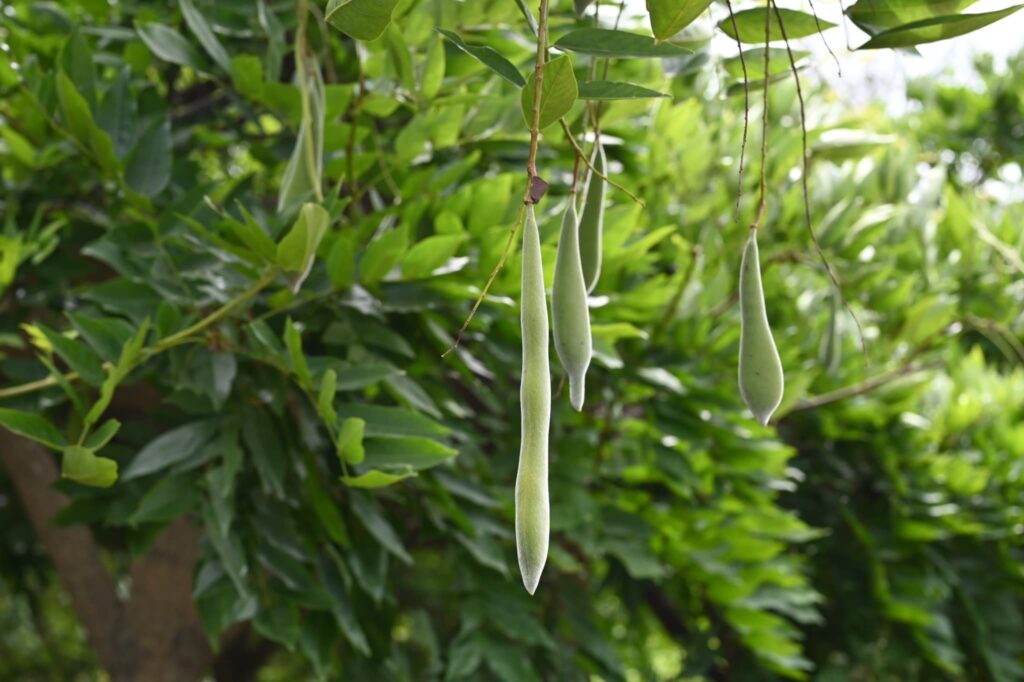
After flowering, Japanese Wisteria may produce flattened, pendant legume pods. The young pods are covered with fine, velvety hairs and become brown as they mature.
Mature pods are generally about 10–15 cm long and contain several flattened, rounded seeds. The pods may remain attached after the leaves have fallen.
The seeds are dispersed when the mature pods split open.
Importantly, the seeds should not be treated as an ordinary edible food. Raw Wisteria seeds are poisonous, and documented cases of Wisteria floribunda seed poisoning include vomiting and abdominal symptoms in children.
Bark & Old Vines
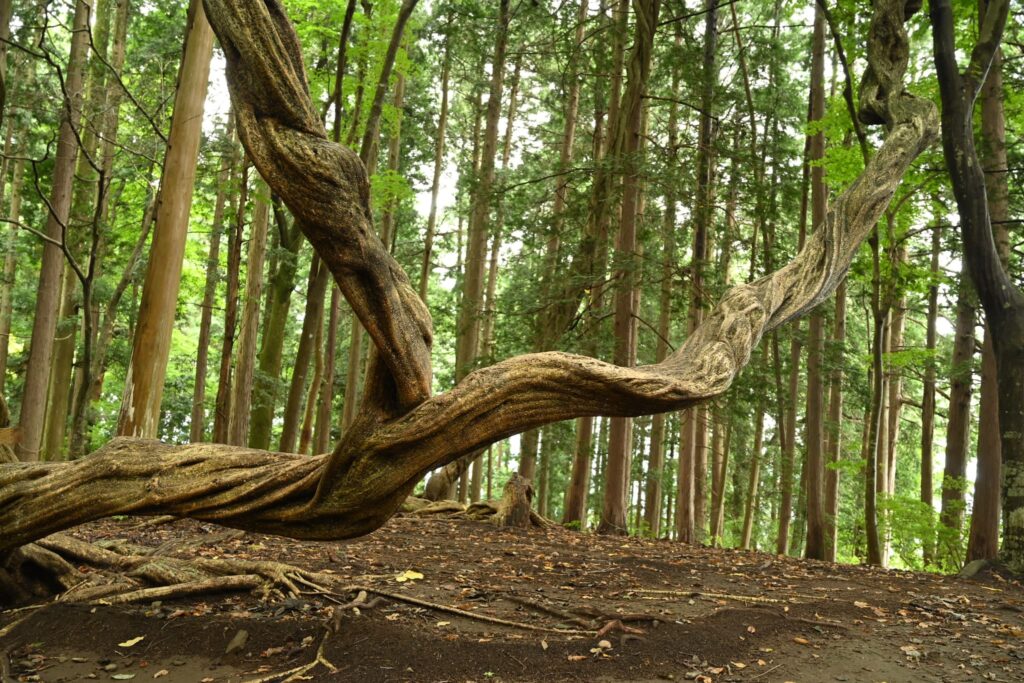
Young stems are relatively slender and flexible, but Japanese Wisteria becomes increasingly woody with age. Old vines can develop remarkably thick, twisted stems that resemble tree trunks.
The bark is generally gray to gray-brown and becomes more rugged and deeply textured as the vine ages.
The strength and flexibility of Wisteria stems have made the plant useful historically as a source of natural fiber and durable vine material. Wisteria has been used for binding, basketry, ropes, and other traditional purposes.
Wisteria fiber was also used to make fujifu, a traditional cloth produced from plant fibers. Historical uses of Wisteria therefore extend well beyond its role as an ornamental plant.
Some ancient Japanese Wisteria specimens have developed enormous bases through centuries of growth. Ushijima no Fuji in Kasukabe, Saitama Prefecture, is designated as a Special Natural Monument of Japan. Cultural Properties Online records a root circumference of about 10 m and flower racemes reaching approximately 2.7 m in exceptional years.
Such measurements belong to exceptional historic specimens and should not be interpreted as normal dimensions for the species.
Size & Growth
Japanese Wisteria is a vigorous and long-lived climber. In cultivation, individual plants are commonly trained to a trellis or pergola and may occupy several meters of horizontal and vertical space.
When allowed to grow without regular training, the vine can climb into trees and spread over surrounding vegetation. Its woody stems become increasingly difficult to remove once established.
Because of this vigorous growth, a strong support structure is essential. Trellises, pergolas, and traditional fujidana should be designed to support the weight of the mature vine as well as wind, rain, and snow.
Plants propagated from selected flowering material are generally preferable for ornamental cultivation because flowering age can vary considerably among seedlings.
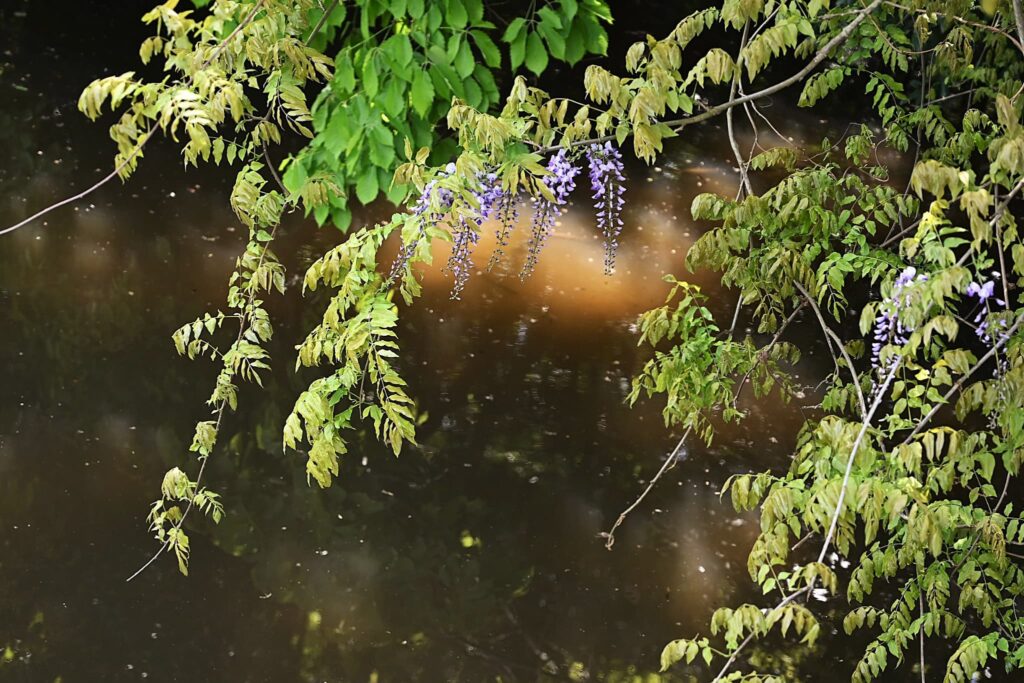
Uses & Cultural Significance
Wisteria has an unusually deep connection with Japanese culture.
The plant appears in early Japanese literature, including the Man’yōshū, where Fuji and the image of fujinami (“waves of Wisteria”) occur in poetry. A modern study of Wisteria and Japanese culture documents its treatment in the Man’yōshū, Kojiki, traditional textiles, family crests, famous trees, gardens, and food culture.
Wisteria also became strongly associated with the Fujiwara clan and with heraldic designs. Various Japanese family crests incorporate stylized Wisteria motifs, including circular and hanging forms of the flower clusters.
The plant’s long life, vigorous growth, and spectacular flowering helped make it a symbolically important garden plant. Traditional Wisteria trellises provide a characteristic Japanese garden scene in spring, when the hanging flower clusters form a curtain of color beneath the supporting framework.
Wisteria has also been valued as a practical plant. Its strong stems and fibers were used historically for ropes, baskets, bindings, and textiles.
The species is therefore important not only as an ornamental vine but also as a plant connected with Japanese literature, material culture, heraldry, and garden history.
Famous Japanese Wisteria
Japan has numerous historic Wisteria specimens and famous Wisteria gardens.
One of the most important is Ushijima no Fuji in Kasukabe, Saitama Prefecture. It was designated a Natural Monument in 1928 and elevated to Special Natural Monument status in 1955. The official cultural-property record describes its exceptionally large base and flower racemes that can reach approximately 2.7 m.
Other famous historic Wisteria specimens occur at shrines, temples, and traditional gardens throughout Japan.
Because individual vines can survive for many decades or centuries, some famous specimens are associated with traditional claims of great age. Such age estimates should be regarded as historical or traditional estimates unless supported by documented records.
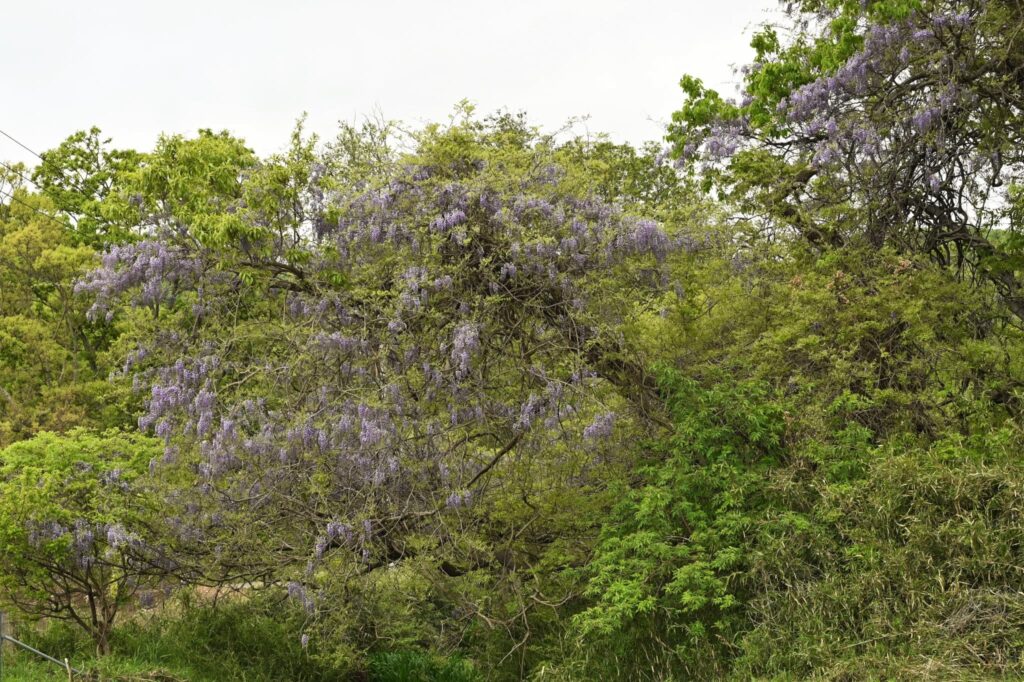
Traditional Uses and Safety
Wisteria has a history of traditional food use in Japan, and historical sources describe the preparation of flowers and young plant material.
However, this should not be confused with modern evidence that the plant is safe to eat.
Wisteria seeds are toxic. Poisoning has been documented after ingestion of Wisteria floribunda seeds, with symptoms including vomiting, abdominal pain, and other gastrointestinal or neurological symptoms.
For a general gardening guide, the safest advice is:
- Do not eat raw Wisteria seeds.
- Do not allow children to play with or ingest the seeds or pods.
- Do not assume that traditional preparation makes all Wisteria plant material safe.
- Seek medical advice promptly if seeds or other potentially toxic plant material have been swallowed.
The attractive bean-like pods can be particularly tempting to children, making this an important consideration when growing Wisteria in a home garden.
Growing Guide
| Factor | Guidance |
|---|---|
| Light | Full sun is best for abundant flowering |
| Soil | Moist but well-drained soil |
| Watering | Water young plants regularly; established plants need additional water during prolonged drought |
| Fertilizing | Avoid excessive nitrogen, which can encourage vegetative growth at the expense of flowers |
| Support | Use a very strong trellis, pergola, or fujidana |
| Cold Hardiness | Approximately USDA Zone 5 and warmer |
| Pruning | Prune and train regularly; two pruning periods per year are commonly recommended |
| Propagation | Layering, cuttings, or grafting are commonly used |
| Transplanting | Difficult once established; choose the planting site carefully |
Light & Soil
Full sun is the most important factor for reliable flowering. Japanese Wisteria can grow in partial shade, but flowering is generally reduced when the plant receives insufficient direct sunlight.
The soil should retain moisture while remaining well drained. Avoid permanently waterlogged ground, but do not allow newly planted vines to become severely dry.
A deep, fertile soil is beneficial, although excessive fertility—particularly excessive nitrogen—can produce vigorous foliage at the expense of flowers.
Watering
Young Wisteria plants should be watered regularly while they establish their root systems.
Once established, Japanese Wisteria is more tolerant of short dry periods, but prolonged drought can reduce growth and flowering. Water deeply during extended periods of dry weather, particularly when plants are young or growing in sandy or shallow soil.
Fertilizing
Japanese Wisteria generally does not require heavy feeding.
Excess nitrogen can encourage long shoots and abundant foliage without producing a corresponding increase in flowers. A balanced or relatively low-nitrogen fertilizer is preferable when additional feeding is needed.
Cold Hardiness
Japanese Wisteria is reasonably cold hardy and is commonly grown in USDA Zones 5–9.
In colder climates, the greater concern can be damage to developing flower buds by late spring frost rather than severe winter cold. A sheltered position can therefore help protect the year’s flowering display.
Pruning
Regular pruning is essential.
A widely used system combines summer pruning and winter pruning. The long, vigorous shoots produced during the growing season are shortened in summer to control the plant and encourage the formation and maturation of flowering wood. A further winter pruning shortens these shoots and keeps the framework compact.
The Royal Horticultural Society recommends pruning Wisteria twice a year, with summer pruning in July or August and winter pruning in January or February under its British conditions. The exact timing should be adjusted to the local climate and the growth cycle of the plant.
For Japanese gardens, pruning should also be coordinated with the desired framework of the fujidana. The main permanent branches should be trained horizontally or diagonally, while excessively long temporary shoots are shortened regularly.
Support & Training
A mature Wisteria is considerably heavier than its appearance suggests.
Use a strong structure capable of supporting the woody vine for many years. Weak fences, small decorative trellises, and lightweight garden arches may eventually fail under the combined weight of the vine and weather.
When training a young plant, establish a small number of permanent framework branches first. Once the basic structure has been created, regular pruning can maintain the desired shape.
Transplanting
Established Japanese Wisteria can be difficult to transplant successfully because of its extensive root system and vigorous growth.
For this reason, select the final planting site carefully and provide adequate space and support from the beginning.
Pests & Diseases
Japanese Wisteria is generally vigorous, but it can suffer from several pests and diseases.
Potential problems include:
- Aphids
- Scale insects
- Leaf-chewing caterpillars
- Borers
- Fungal leaf spots
- Powdery mildew
- Root rot in poorly drained soil
Good air circulation, appropriate watering, regular inspection, and pruning are usually more useful than routine chemical treatment.
RHS lists aphids, red spider mite, and scale insects among potential pests, with diseases including root rot, fungal leaf spot, powdery mildew, and other fungal or viral problems.
Cultivars
Japanese Wisteria has an extensive range of horticultural cultivars selected for flower color, flower form, raceme length, and flowering characteristics.
Notable cultivars include:
- ‘Multijuga’ — known for long, hanging racemes of violet flowers; the name is associated with exceptionally long-flowered forms.
- ‘Kuchibeni’ — a pinkish or “lipstick” type with contrasting coloration on the flowers.
- ‘Yae Kokuryu’ — a double-flowered form with dark purple flowers.
- ‘Shiro Naga’ — a white-flowered, long-racemed cultivar.
- ‘Honbeni’ — a pink-flowered form.
- ‘Issai Perfect’ — a cultivated form noted for relatively early and abundant flowering.
Cultivar names can vary between Japanese horticultural sources and Western nursery catalogues, and some historical Japanese names have been applied differently in different sources. For this reason, cultivar identification should be based on both the cultivar name and its botanical or horticultural description.
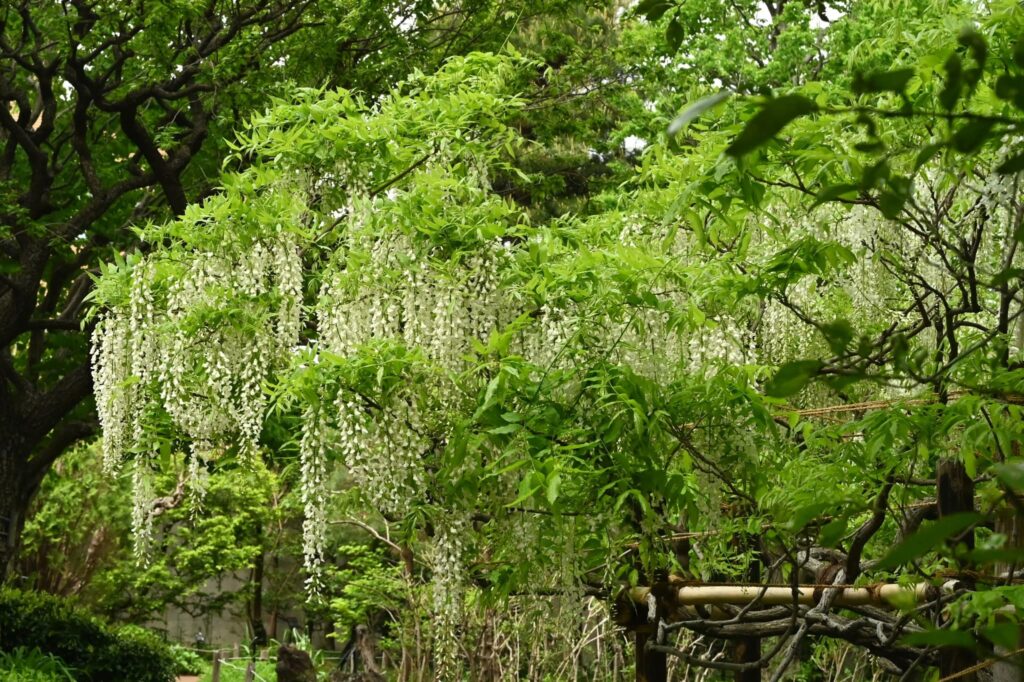
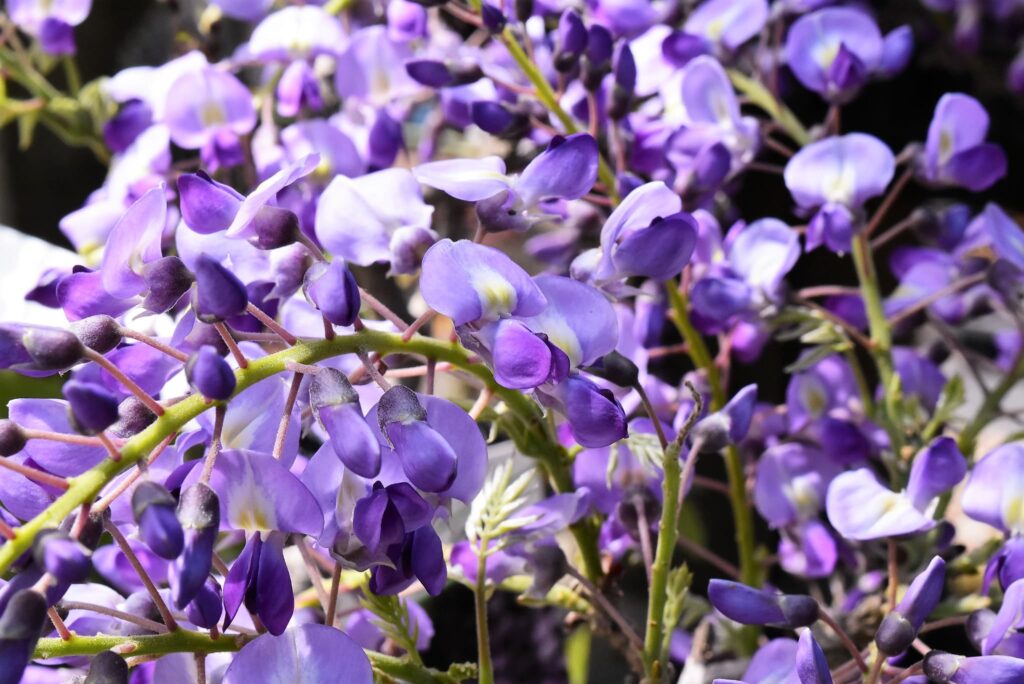
Nodafuji and Yamafuji
The two native Japanese Wisteria species are often confused.
| Feature | Nodafuji | Yamafuji |
|---|---|---|
| Scientific name | Wisteria floribunda | Wisteria brachybotrys |
| English name | Japanese Wisteria | Silky Wisteria / Yamafuji |
| Native range | Japan | Japan and parts of eastern China |
| Stem twining | Clockwise when viewed from above | Opposite direction |
| Flower racemes | Usually longer | Usually shorter |
| Flowers | Smaller, numerous | Generally larger |
| Flowering sequence | Gradual, base toward tip | More nearly simultaneous |
| Leaflets | Usually numerous | Generally fewer and larger |
Kew currently accepts Wisteria brachybotrys as a distinct species, with a native range including Japan and parts of eastern China.
In Japan, the practical distinction is particularly useful: Nodafuji generally has longer hanging flower clusters and clockwise twining, whereas Yamafuji has shorter clusters and the opposite twining direction. The Japanese Ministry of the Environment likewise describes these features as useful for distinguishing the two.
Similar Species
Chinese Wisteria (Wisteria sinensis)
Chinese Wisteria is native to China and is closely related to Japanese Wisteria. It generally has fewer leaflets and shorter flower racemes. The flowers of a raceme tend to open much more nearly simultaneously, whereas Japanese Wisteria opens progressively from the base toward the tip.
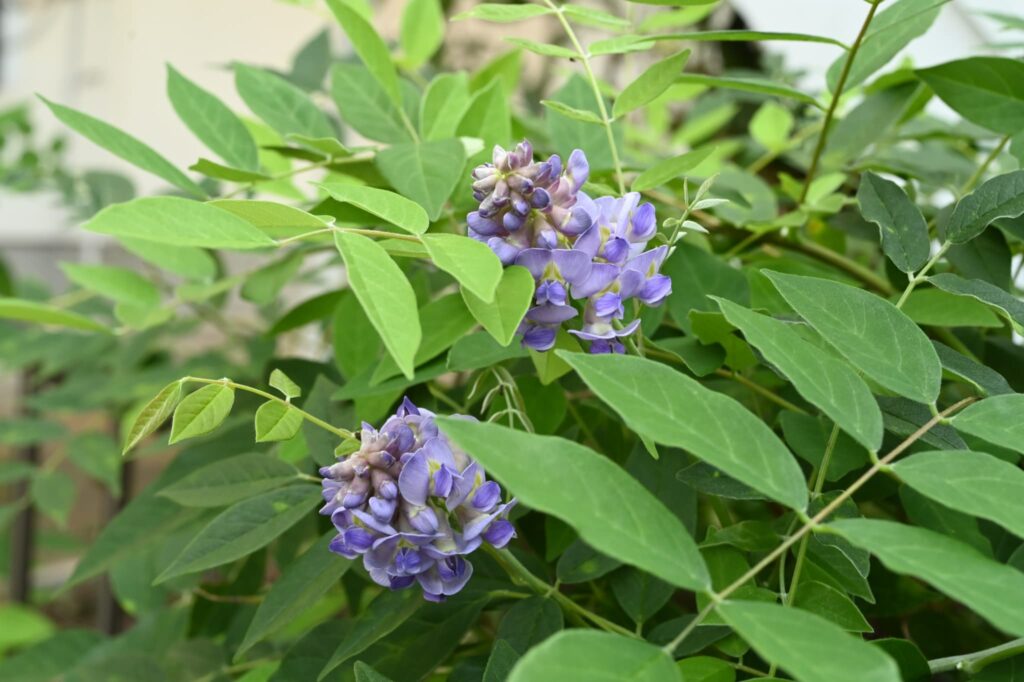
American Wisteria (Wisteria frutescens)
American Wisteria is native to the central and eastern United States. It generally has shorter flower clusters than Japanese Wisteria and is less vigorous in its climbing habit.
Yamafuji (Wisteria brachybotrys)
Yamafuji is not merely a variety of Japanese Wisteria but a separate species. It is one of the most important native Japanese Wisteria species to compare with W. floribunda.
Kudzu (Pueraria montana var. lobata)
Kudzu is another vigorous member of the pea family and can form extensive climbing vines, but its leaves, flowers, and growth habit are sufficiently different to distinguish it readily from Wisteria.
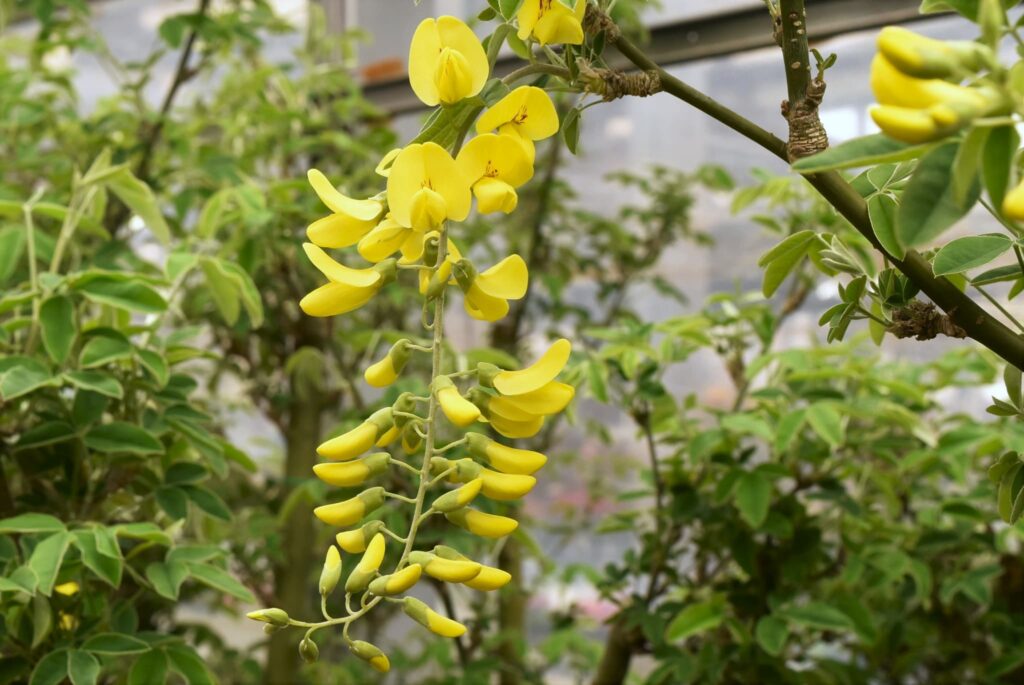
Golden Chain Tree (Laburnum spp.)
Golden Chain Trees are European members of the pea family with hanging racemes of yellow flowers. They are sometimes planted in gardens as a visual counterpart to Wisteria but are not closely related at the genus level.
Frequently Asked Questions
What is the difference between Japanese Wisteria and Yamafuji?
Japanese Wisteria is Wisteria floribunda, while Yamafuji is Wisteria brachybotrys. The two are separate species. Japanese Wisteria generally has longer flower racemes and clockwise-twining stems, while Yamafuji has shorter racemes and twines in the opposite direction.
Does Japanese Wisteria need a trellis?
Yes. A strong support is highly recommended. Japanese Wisteria becomes a large, heavy woody vine, and a purpose-built trellis or pergola allows its long flower clusters to hang freely while keeping the permanent framework under control.
How long does Japanese Wisteria take to flower?
The time varies considerably according to propagation method, cultivar, growing conditions, and plant age. Plants propagated from a known flowering parent by grafting, layering, or cuttings generally reach flowering age sooner and more predictably than seedlings.
Why does my Japanese Wisteria grow leaves but not flowers?
Common causes include insufficient sunlight, excessive nitrogen, immature plants, excessive vegetative growth, and inadequate pruning. A vigorous vine can produce very long shoots while producing relatively few flowers if it is not trained and pruned properly.
When should Japanese Wisteria be pruned?
Japanese Wisteria is commonly pruned twice a year: once during the growing season to shorten vigorous shoots and again during the dormant season to refine the framework and flowering spurs. The exact timing should be adjusted to the local climate.
Are Japanese Wisteria seeds poisonous?
Yes. The seeds are toxic and should not be treated as ordinary edible beans. Cases of Wisteria floribunda seed poisoning have been documented, including serious gastrointestinal symptoms in children.
Why do old Wisteria vines look like tree trunks?
The stems become increasingly woody and thick with age. In exceptionally old cultivated specimens, multiple stems may merge visually into a massive, twisted base. Some historic Japanese specimens have developed extraordinary dimensions over many decades or centuries.
How long can Japanese Wisteria live?
Japanese Wisteria is a long-lived woody vine, and individual cultivated specimens can survive for many decades. Some famous Japanese specimens are traditionally regarded as several centuries old, although the exact ages of historic vines are not always scientifically established.
Why is Wisteria important in Japanese culture?
Wisteria has been associated with Japanese literature, poetry, family crests, textiles, traditional crafts, and gardens for centuries. It appears in early Japanese literary sources including the Man’yōshū and Kojiki, and the flower remains one of the most recognizable symbols of spring in Japanese gardens.
Conclusion
Japanese Wisteria (Wisteria floribunda) is much more than a spectacular flowering vine. Its long racemes, vigorous woody stems, and distinctive climbing habit have made it one of Japan’s most important traditional garden plants.
Its significance extends into literature, family heraldry, traditional fiber production, craftwork, and historic gardens. Famous ancient vines such as Ushijima no Fuji demonstrate how large and long-lived cultivated Wisteria can become.
For gardeners, however, Japanese Wisteria is not a low-maintenance plant. It needs full sun, a very strong support structure, adequate moisture, and regular pruning. Choosing a reliable flowering cultivar or vegetatively propagated plant is also important when the primary goal is abundant flowers.
With the right support and disciplined training, Japanese Wisteria can become one of the most spectacular flowering plants in a Japanese-style or large garden, while also providing a living connection to Japan’s long history of horticulture and culture.