False Holly (Osmanthus heterophyllus): Identification, Care & Uses
False Holly (Osmanthus heterophyllus) is an evergreen shrub native to Japan, valued for its glossy spiny foliage, fragrant autumn flowers, and long history in Japanese gardens. It is also traditionally associated with Setsubun. This guide covers identification features, flowers, fruit, bark, cultivars, and care, based on observations of the plant as grown in Japan.
What Is False Holly?
False Holly is a slow-growing evergreen shrub or small tree in the family Oleaceae (the olive family), genus Osmanthus, distributed across Honshu south of Fukushima Prefecture, as well as Shikoku, Kyushu, and Okinawa. It grows wild in mountain woodlands and is also widely planted in gardens, often as a hedge. It is frequently confused with the true holly used in Christmas wreaths (Ilex aquifolium, family Aquifoliaceae), but the two are unrelated plants.
Several other Japanese plants also include “Hiiragi” in their names — such as Hiiraginanten (Mahonia), Hiiragimokusei (a related Osmanthus hybrid), and Shina Hiiragi (Chinese holly) — which can sometimes cause confusion. It is one of the plants traditionally associated with Setsubun in Japan. Outside Japan, it is also found growing wild in Taiwan.
Overview
| Item | Description |
|---|---|
| Family | Oleaceae |
| Genus | Osmanthus |
| Species | O. heterophyllus |
| Scientific Name | Osmanthus heterophyllus |
| Common Name | False Holly / Holly Osmanthus / Holly-leaf Osmanthus |
| Japanese Name | Hiiragi (ヒイラギ) |
| Native Range | Honshu (south of Fukushima), Shikoku, Kyushu, Okinawa; also Taiwan |
| USDA Hardiness | 7–9 |
| Plant Type | Evergreen Shrub or Small Tree |
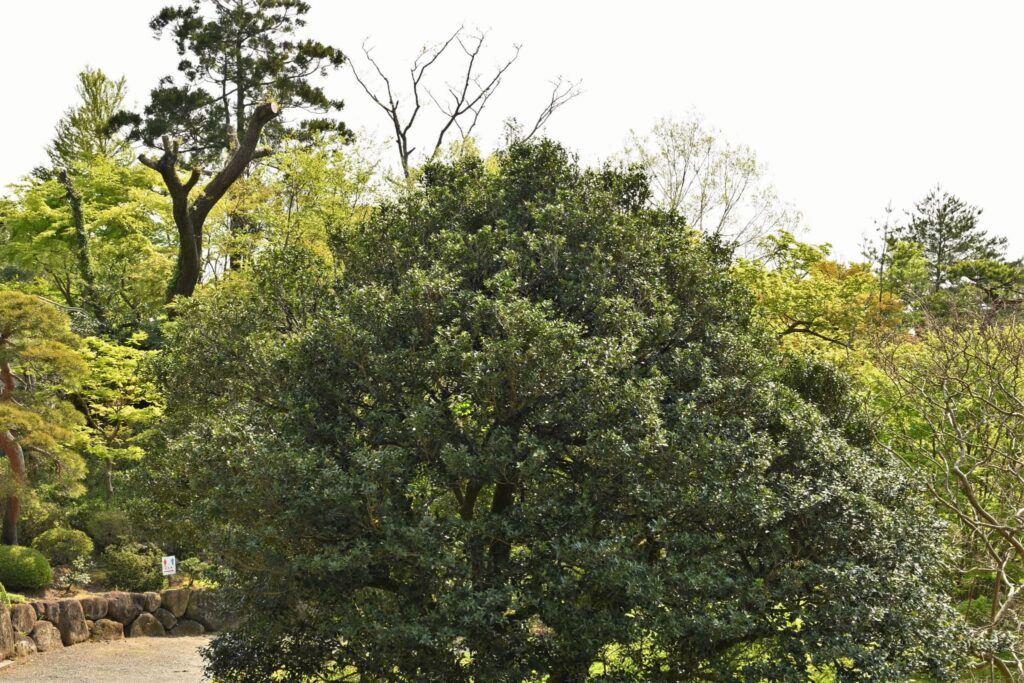
| Height | Usually 3–6 m, occasionally taller |
| Flowering Season | Late autumn (November–December) |
| Fruit Type | Small oval drupe, ripening blackish-purple the following early summer (May–July), female trees only |
| Garden Use | Hedge, security planting, traditional Setsubun plant for warding off evil |
Characteristics
| Feature | Description |
|---|---|
| Leaves | Opposite, thick, glossy, spine-toothed on young growth |
| Flowers | Small, fragrant white flowers in late autumn |
| Fruit | Small black-purple drupe (female trees only) |
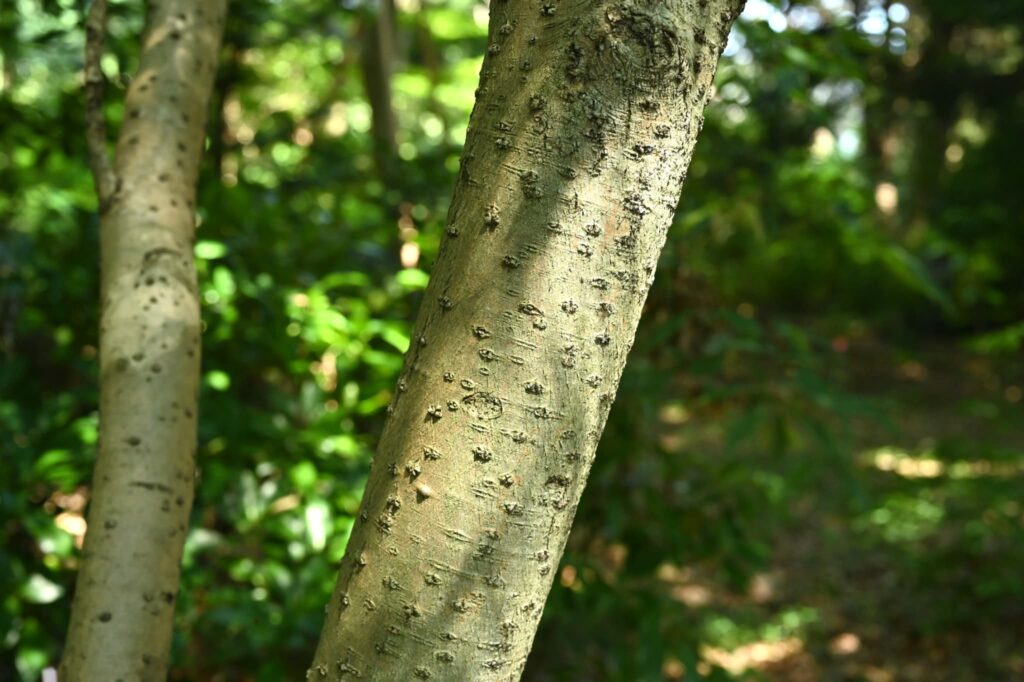
| Bark | Pale whitish, developing a netted, flaking pattern with age |
Foliage
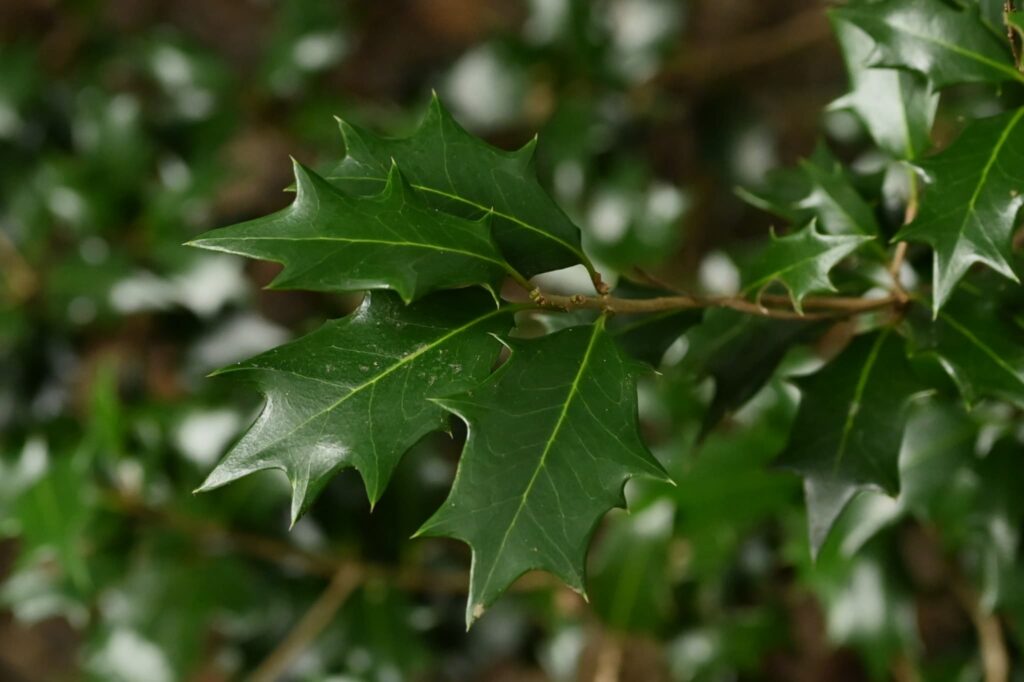
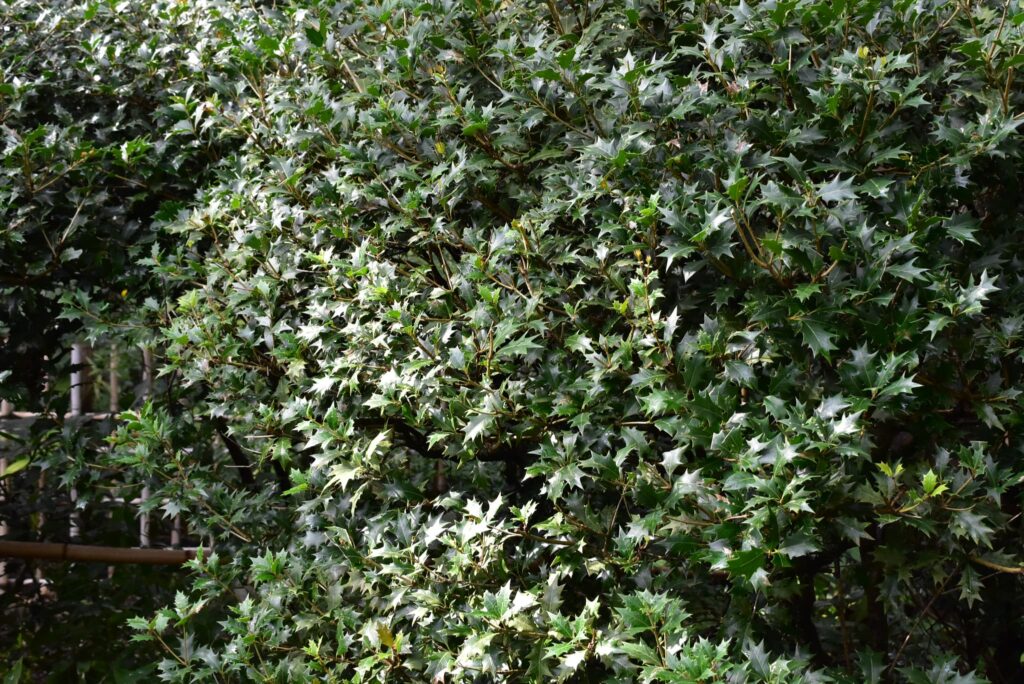
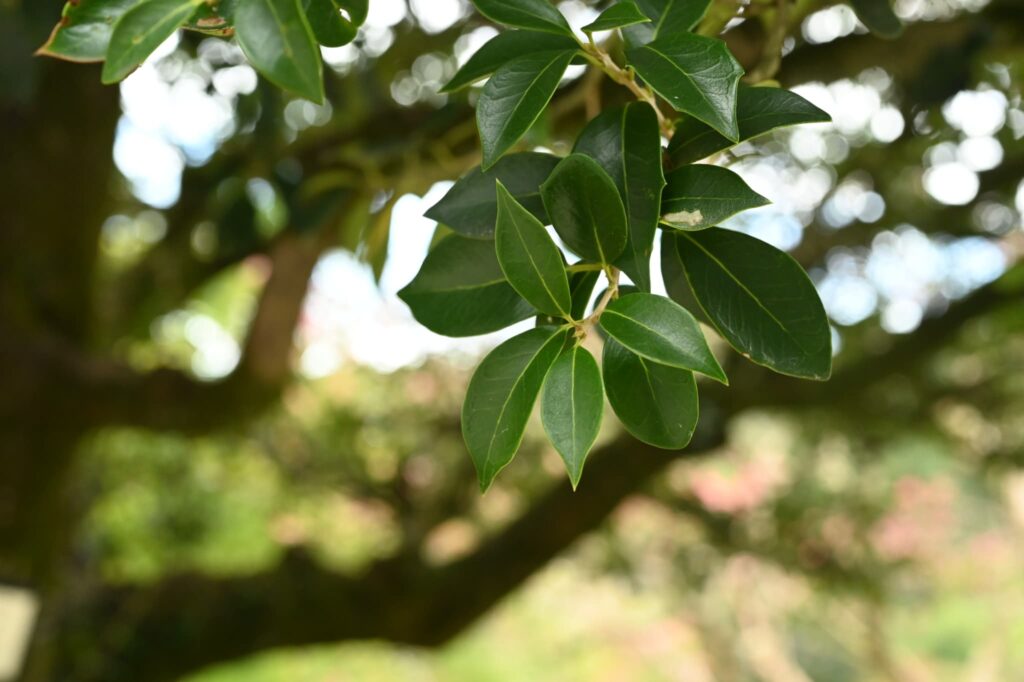
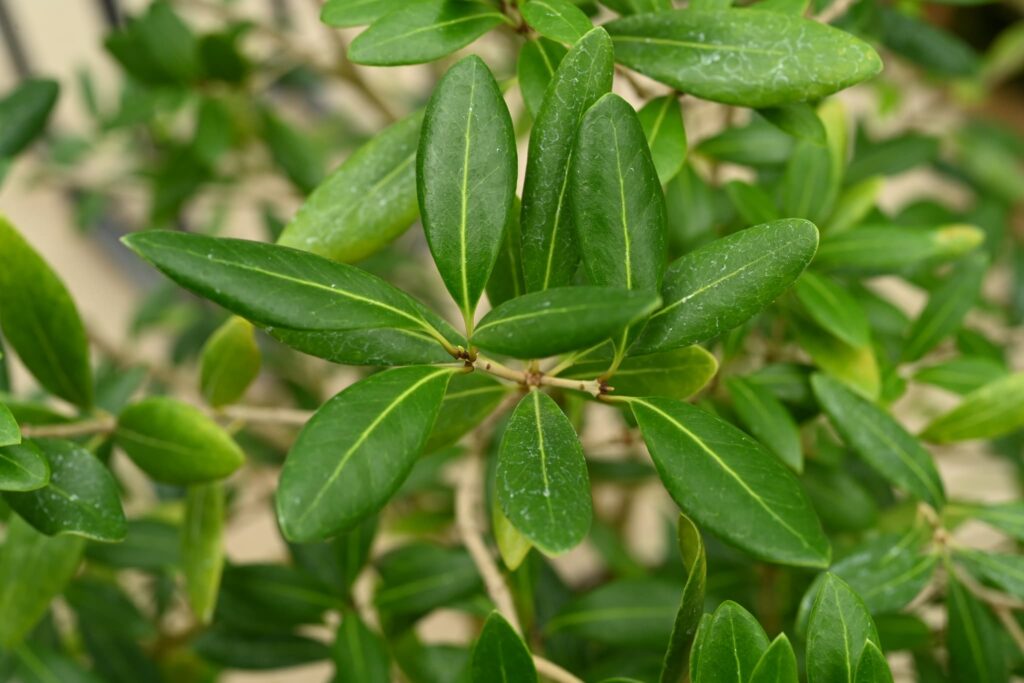
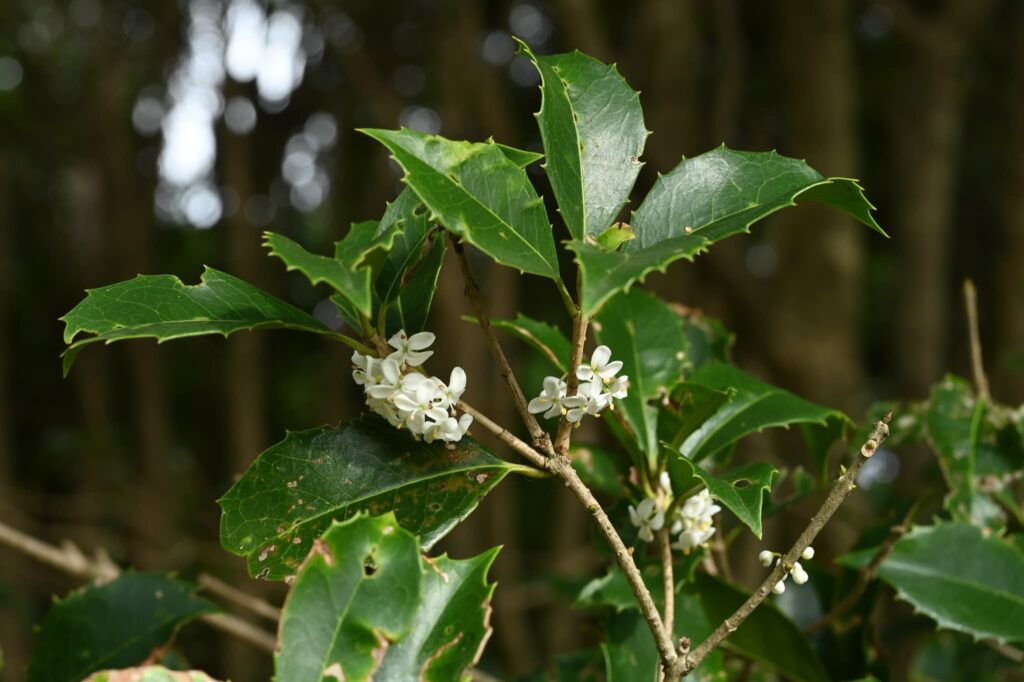
New leaves emerge cream-colored or pink, with small cream-colored, leaf-like stipules near the base. Mature leaves are 3–7 cm long and 2–3 cm wide, arranged in opposite pairs along the branch.
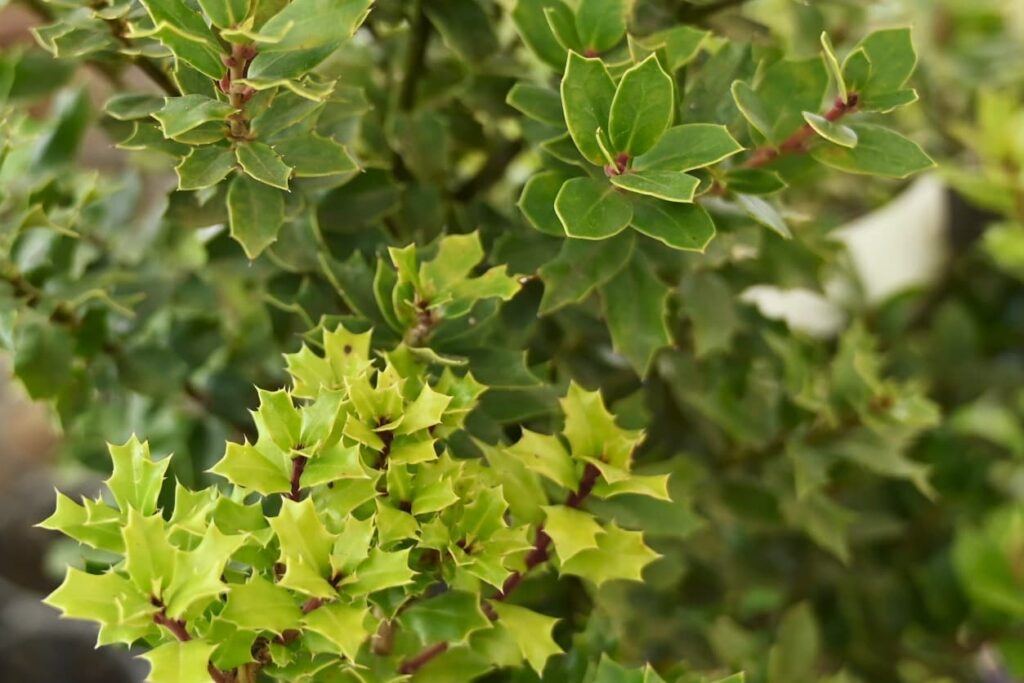
Mature leaves are thick and glossy, with two to five pairs of sharp spines along the margin. The underside is yellow-green, dotted with tiny green glandular points, and the leaves also make a distinctive crackling sound when burned. This characteristic may have contributed to the plant’s association with protection from evil, although the exact origins of the Setsubun custom are not certain.
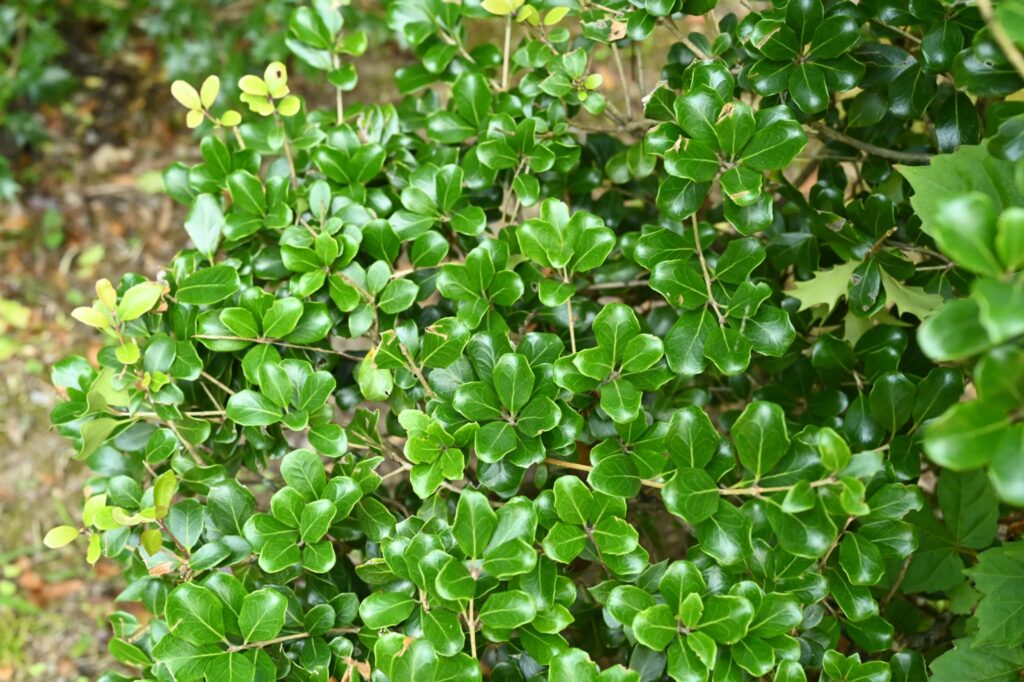
Spiny leaves are most common on young plants and on the lower branches, where browsing pressure is greatest. Mature trees often produce smooth-edged leaves high in the canopy.
Flowers
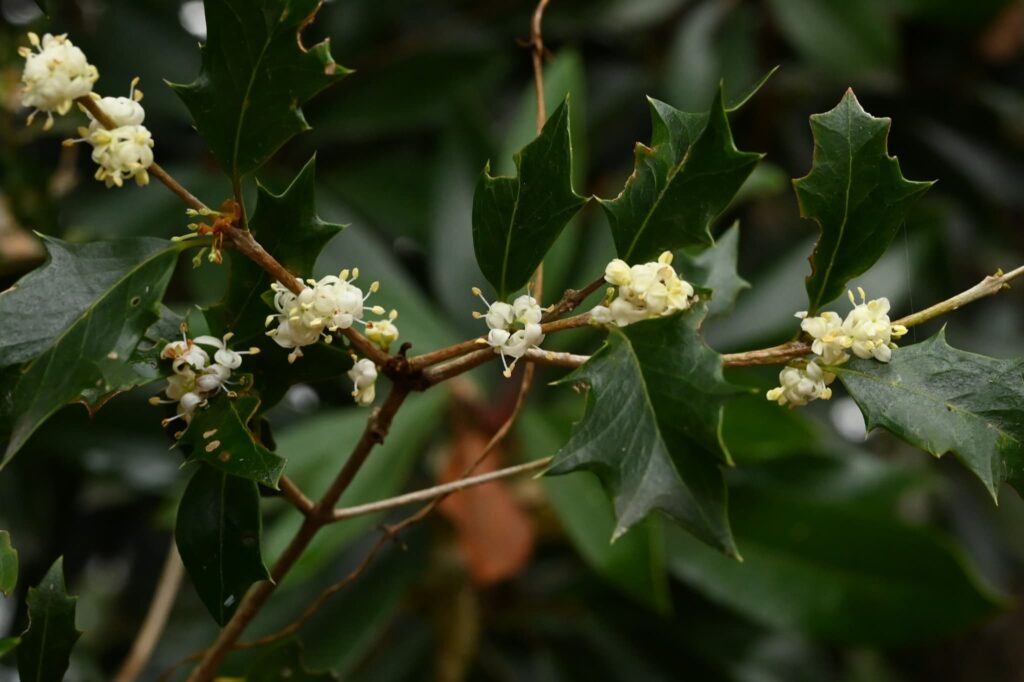
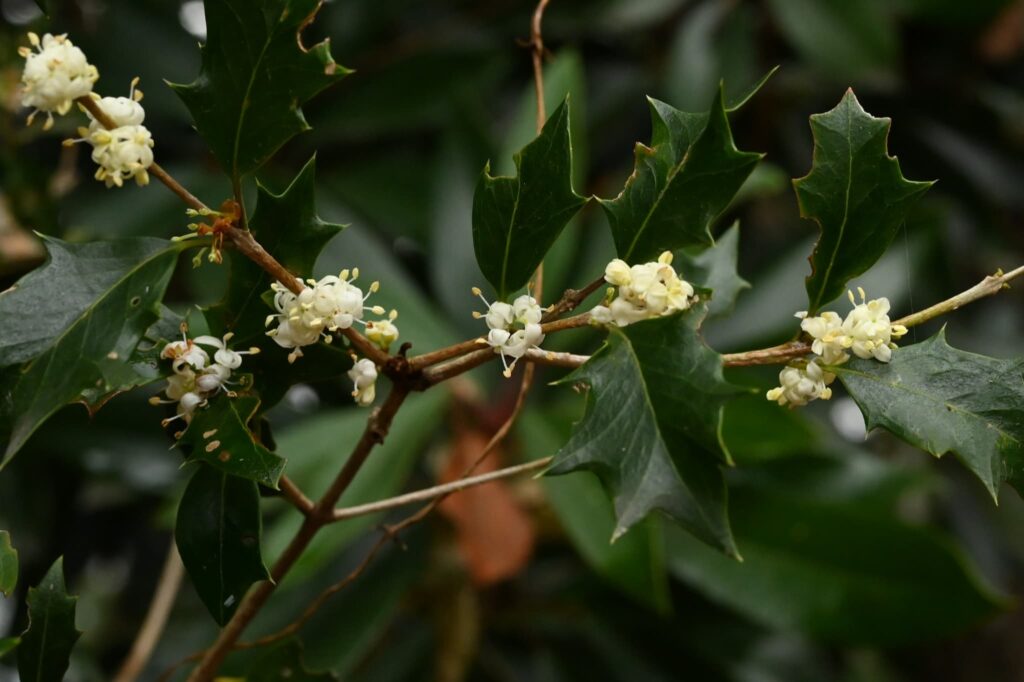
False Holly flowers in late autumn (November–December), producing small white blooms similar to those of the related Ginmokusei (silver Osmanthus), clustered at the base of the leaves. Each flower’s tip splits into four recurved lobes, and the calyx behind it likewise splits into four sections.
The species is dioecious, though male and female flowers share the same basic shape. Each flower has two stamens and one pistil; in female flowers, the pistil is notably longer and more fully developed. The flowers are only about 5 mm across and tend to hide beneath the foliage, making them easy to overlook — but they carry a rich, perfume-like fragrance.
Fruits
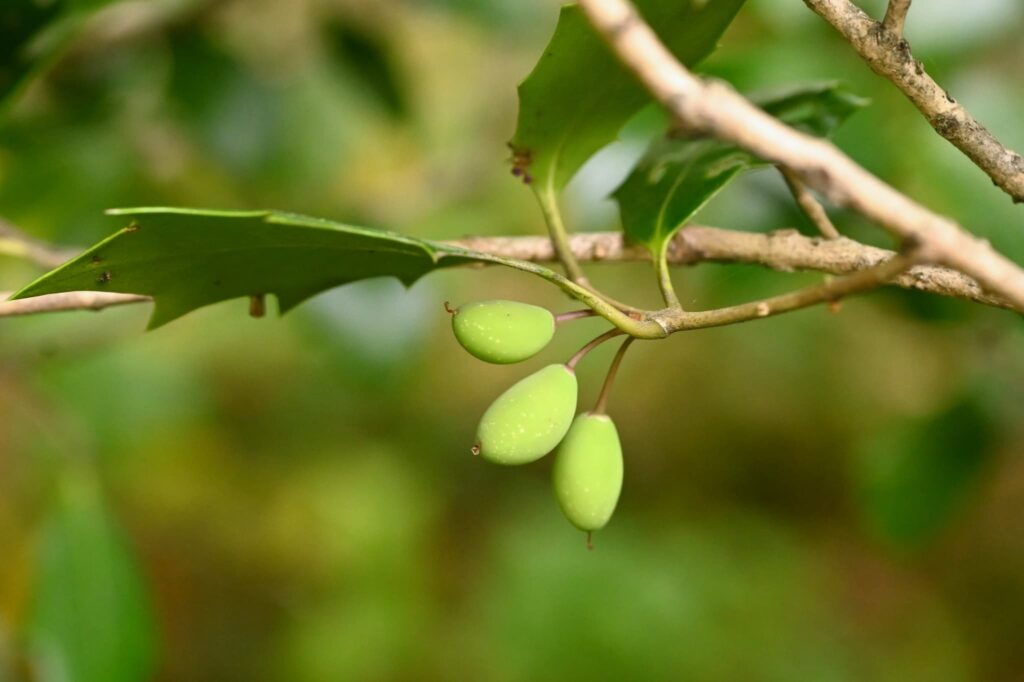
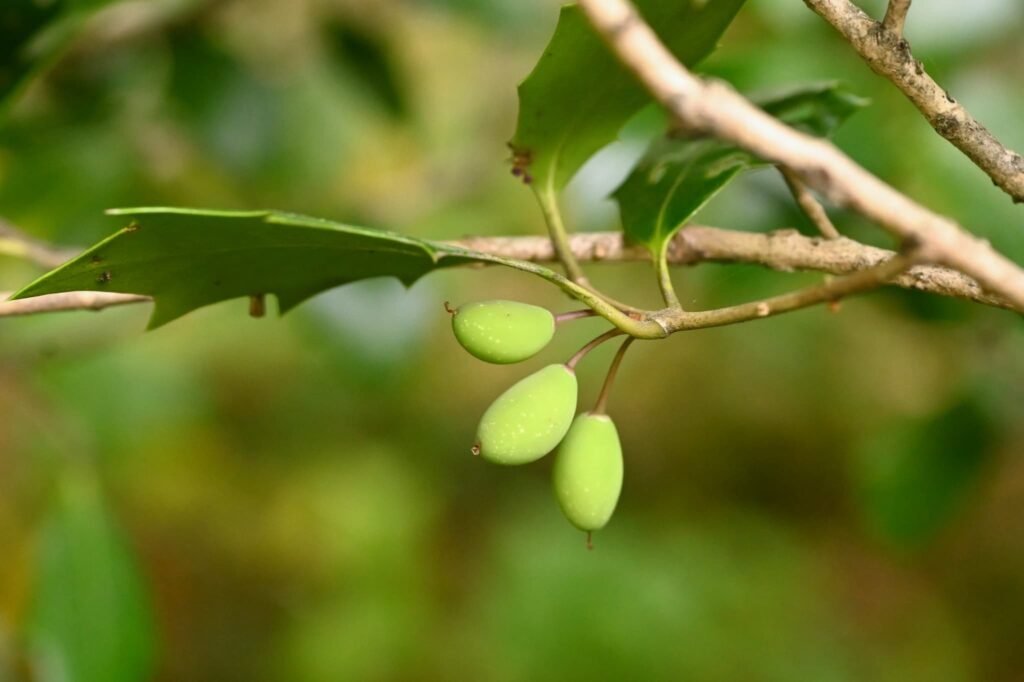
Female flowers develop into small oval fruit, roughly 1.5 cm long, which ripen to a blackish-purple color the following early summer (May–July). The fruit is moist and slightly indented at the tip. Inside is a single seed about 9 mm across, which can be sown to propagate the plant relatively easily — though female trees themselves are quite uncommon, making viable seed hard to come by in the first place.
Bark & Trunk
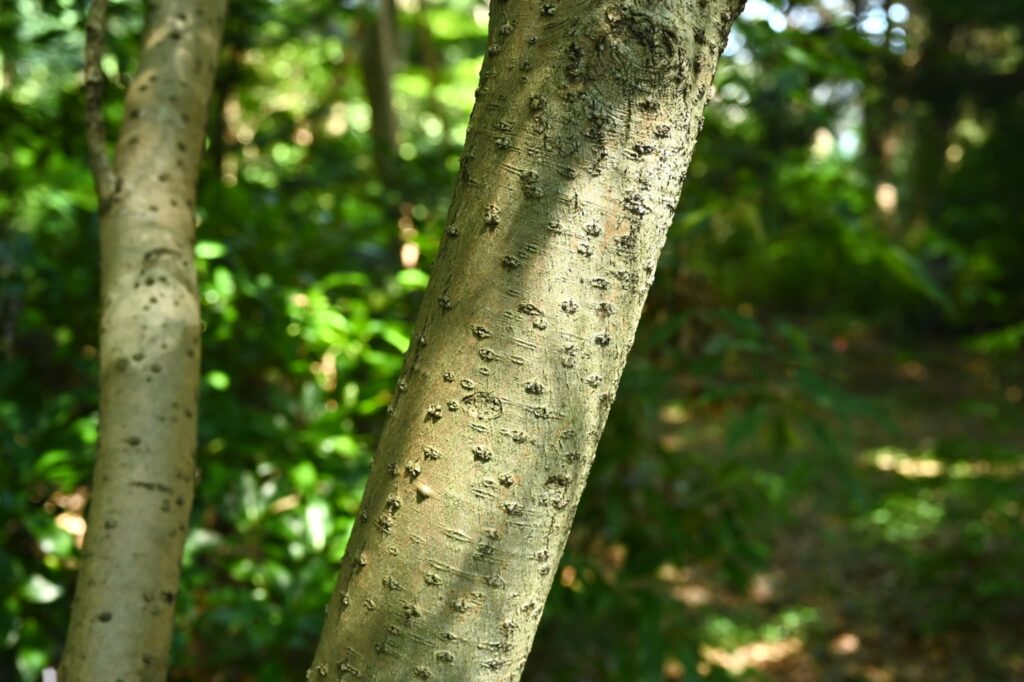
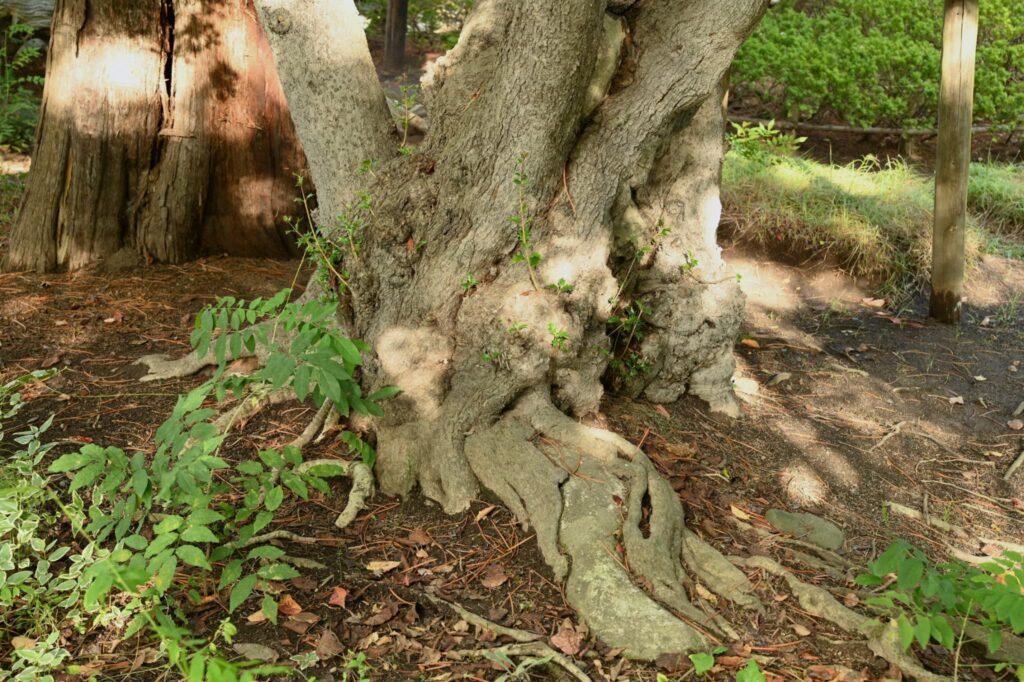
The trunk can reach up to about 30 cm in diameter, with pale whitish bark that develops a distinctive net-like, flaking pattern as the tree matures. The trunk grows upright, but the tree branches heavily, so large timber can’t typically be harvested from it. The wood is, however, dense and highly resistant to warping, which has made it a traditional material for abacus beads, combs, shogi pieces, seals (hanko), and musical instrument parts such as shamisen picks.
Uses & Cultural Significance
Name Origin
The Japanese name Hiiragi is thought to come from an old word, hihiragu, describing the itching, stinging pain of skin pricked by the leaf’s spines. The character used to write it, 柊, is not a Chinese character but one created in Japan (a kokuji), likely referencing either that same sense of pain or the tree’s flowering season.
The Setsubun Tradition
False Holly has a long association with Setsubun, the traditional Japanese festival held around the beginning of spring. Branches of the plant are traditionally placed at entrances to homes because its sharp, spine-tipped leaves were believed to drive away evil spirits.
The custom is based on the idea that oni (demons) would be frightened or injured by the plant’s sharp leaves. In some regions, False Holly branches are displayed together with grilled sardine heads, whose smell was also believed to repel evil spirits.
The tradition is particularly associated with placing the branches near entrances, where they serve a symbolic protective role. This cultural association helps explain why False Holly has remained a familiar garden plant in Japan despite its relatively inconspicuous flowers and fruit.
Growing Guide
| Item | Description |
|---|---|
| Light | Prefers full sun; tolerates shade well |
| Cold Hardiness | Generally suitable for USDA Hardiness Zones 7–9; young plants may be more vulnerable to severe frost |
| Growth Rate | Slow-growing; relatively low maintenance |
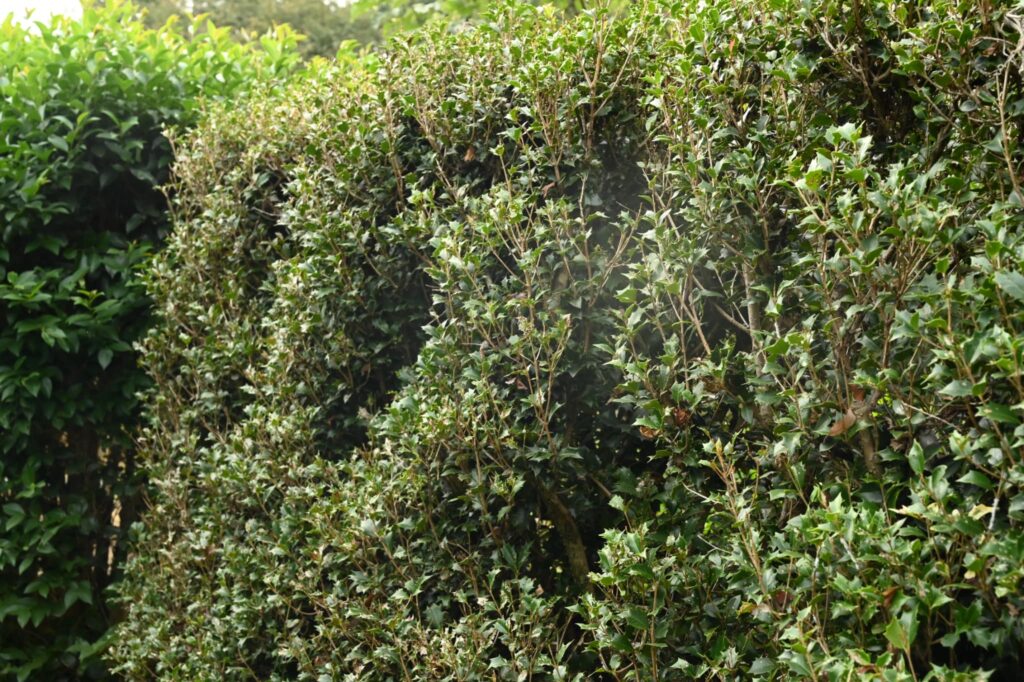
| Shearing | Tolerates shearing well, but frequent shearing produces spinier new leaves |
| Pollution Tolerance | Withstands air pollution reasonably well |
| Garden Use | Popular as a security hedge due to spiny foliage |
Security & Site
Because the leaves are spiny, planting False Holly around the perimeter of a house can serve as a modest security deterrent. That said, it can be difficult to manage in households with small children or pets.
Growth & Maintenance
False Holly is slow-growing, which makes it relatively easy to maintain over time. It tolerates shearing well, but the more frequently it’s sheared, the spinier its new leaves tend to become.
Sun, Cold & Pollution Tolerance
False Holly naturally prefers full sun but also tolerates shade well. It is generally suitable for USDA Hardiness Zones 7–9, although young plants may be more susceptible to severe frost. It also withstands air pollution reasonably well, making it suitable for urban and suburban gardens.
Pests
Although often described as pest- and disease-resistant, False Holly is in practice quite frequently affected by pests, including flea beetles, moth larvae, and other leaf-feeding insects. It is not unusual to see minor insect damage on otherwise healthy plants.
As is true of shade-tolerant trees in general, its notably dark leaf color can make a garden feel visually heavier or darker overall.
Cultivars
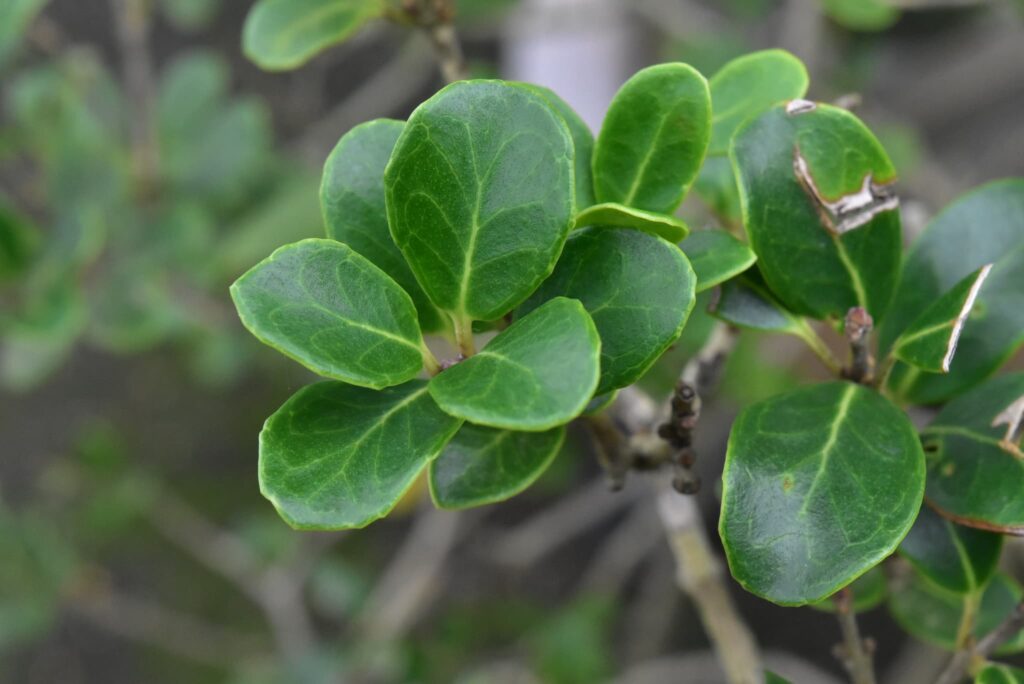
Numerous traditional cultivars exist, including Hime Hiiragi (small-leaved), Oni Hiiragi (“demon” Hiiragi), Kikkou Hiiragi (tortoiseshell-leaved), and Maruba Hiiragi (round-leaved) — though because these carry a strongly traditional Japanese image, they’ve become less common in recent years. In their place, variegated cultivars such as Shima Hiiragi, Fuiri Hiiragi, Kifukurin Hiiragi, and Goshiki Hiiragi have grown popular as colorful foliage plants for Western-style garden settings.
Similar Species
European Holly (Ilex aquifolium, family Aquifoliaceae) is the plant traditionally used in Christmas wreaths, while False Holly (Oleaceae) is the plant traditionally used for Setsubun. Their leaves look superficially similar, but False Holly’s leaves grow in opposite pairs, while European Holly’s grow alternately along the stem — a reliable way to distinguish the two. The simplest way to tell them apart, however, is fruit color: European Holly produces red berries, while False Holly’s fruit is black. Female False Holly trees are rare, though, so finding fruit to check in the first place can be a challenge.
| Species | Key Difference |
|---|---|
| Osmanthus fragrans (Kinmokusei / Sweet Osmanthus) | A close relative prized for its intensely fragrant orange autumn flowers, though its leaves lack False Holly’s characteristic spines |
| Osmanthus × fortunei (Hiiragimokusei) | A naturally occurring hybrid between False Holly and Kinmokusei, combining traits of both parent species |
| European Holly (Ilex aquifolium) | Unrelated but visually similar, distinguished by alternate leaves and red fruit |
| Japanese Holly (Ilex crenata) | Aquifoliaceae family; small, smooth, spineless leaves; alternate arrangement; flowers May–July; used for hedges, topiary, bonsai |
Frequently Asked Questions
Is False Holly the same plant used for Christmas wreaths?
No. The holly traditionally used in Christmas wreaths is European Holly (Ilex aquifolium), an entirely different plant in the family Aquifoliaceae. False Holly belongs to the olive family and is traditionally associated with Japan’s Setsubun festival rather than Christmas, though the two plants do have a similar spiny-leaved appearance.
Why do some False Holly leaves have spines and others don’t?
The spines develop as a defense against animals browsing on the foliage. Leaves that grow out of reach — higher in the canopy, for instance, or on older, more established trees — often lack spines altogether, since there’s less evolutionary pressure to produce them there. This is also why young trees tend to look spinier overall than mature ones.
Why is False Holly used during Setsubun?
Its sharp leaves are traditionally believed to keep evil spirits away. Branches are placed near entrances as a symbolic form of protection during Setsubun.
Is False Holly hard to maintain as a hedge?
Not particularly — it’s slow-growing, which keeps maintenance relatively light, and it tolerates shearing well. One tradeoff is that frequent shearing tends to produce spinier new growth, so a hedge that’s clipped often may become noticeably prickly over time.
Why does my False Holly have some damaged or blemished leaves?
This is quite common. Despite its reputation for toughness, False Holly is actually fairly susceptible to certain pests, including flea beetles and moth larvae, and it is uncommon to find specimens with completely unblemished foliage.
Is False Holly poisonous?
False Holly is not generally considered highly toxic to people. However, the leaves are not edible, and it is grown as an ornamental rather than an edible plant.
Conclusion
False Holly (Osmanthus heterophyllus) is a distinctive Japanese evergreen shrub, best recognized by its glossy opposite leaves, spiny young foliage, fragrant late-autumn flowers, and blackish-purple fruit on female plants. The tendency for mature plants to produce smooth-edged leaves is another useful identification feature.
Its slow growth, tolerance of shade, and ability to withstand regular shearing make it well suited to hedges and other garden plantings. Its sharp young leaves have also given it a long-standing role in Japanese Setsubun traditions, where the plant is associated with protection from evil.
For anyone interested in Japanese garden plants, False Holly is especially worth knowing because it can easily be confused with true hollies such as European Holly and Japanese Holly. The opposite arrangement of its leaves and, when present, its dark fruit provide useful clues for distinguishing it from these unrelated plants.