Japanese Zelkova (Zelkova serrata): Identification, Care & Uses
Japanese Zelkova (Zelkova serrata), known in Japan as Keyaki (ケヤキ), is one of Japan’s most distinctive deciduous trees. It is recognized by its vase-shaped crown, finely serrated leaves, mottled bark, brilliant autumn color, and exceptionally durable timber. This guide covers identification, flowers, fruits, bark, timber, cultural history, cultivars, and cultivation, based on observations of the species as grown in Japan.
What Is Japanese Zelkova?
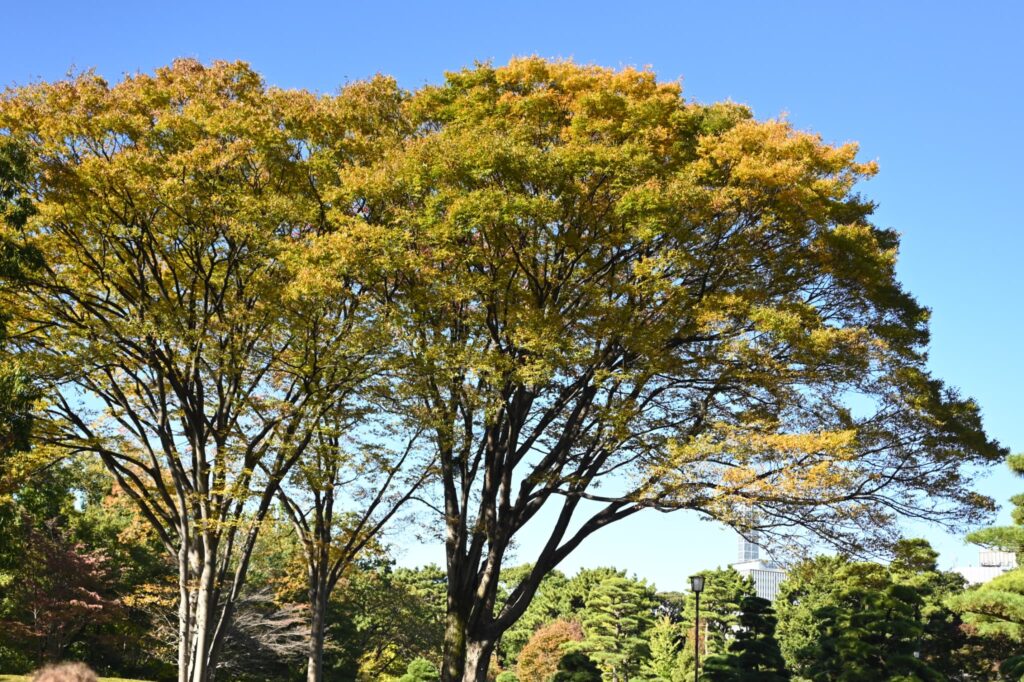
Japanese Zelkova is a deciduous broadleaf tree in the elm family, Ulmaceae. Its native range extends across Japan, the Korean Peninsula, China, Taiwan, and the southern Kuril Islands. In Japan it occurs mainly in hills, low mountains, valleys, and along streams, and is also one of the country’s most important street, park, and landscape trees.
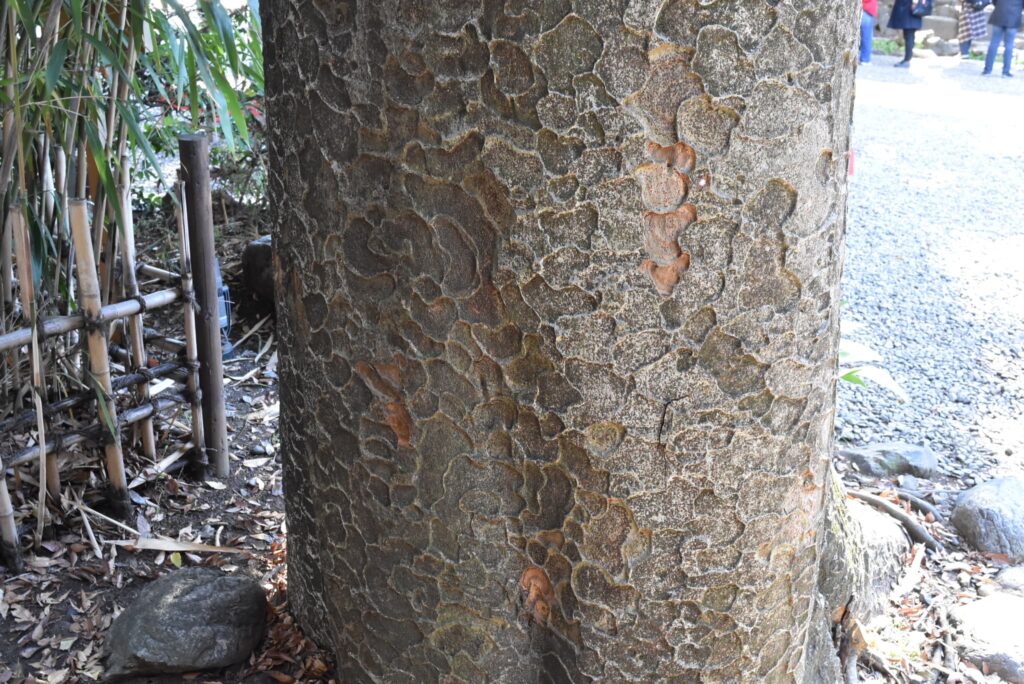
Its characteristic upright, spreading crown, finely serrated leaves, and exfoliating bark make mature trees particularly easy to recognize.
Overview
| Item | Description |
|---|---|
| Scientific Name | Zelkova serrata |
| Common Name | Japanese Zelkova |
| Japanese Name | Keyaki (ケヤキ) |
| Family | Ulmaceae |
| Native Range | Japan, Korea, China, Taiwan, southern Kuril Islands |
| Plant Type | Deciduous broadleaf tree |
| Typical Height | 20–30 m (65–100 ft) |
| Exceptional Size | 30 m+ tall; trunk circumference of 5 m or more is possible |
| Flowering Season | April–May |
| Fruit | Small, wingless, drupe-like fruit; often described botanically as an achene |
| USDA Hardiness | Zones 5–8 |
| Light | Full sun |
Characteristics
| Feature | Description |
|---|---|
| Crown | Broad, upright, vase-shaped |
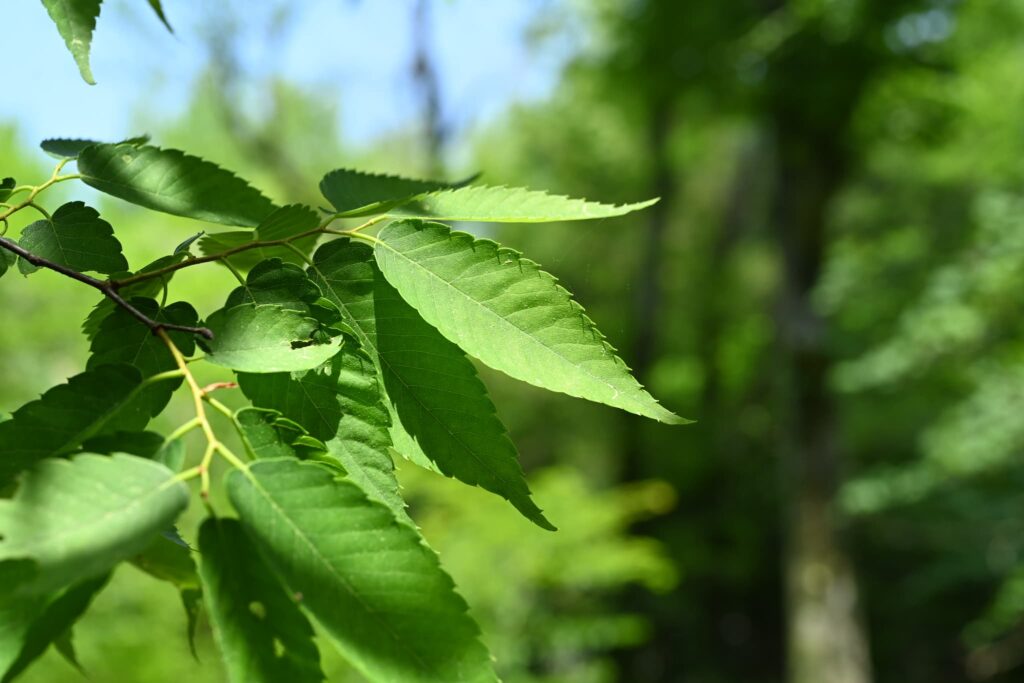
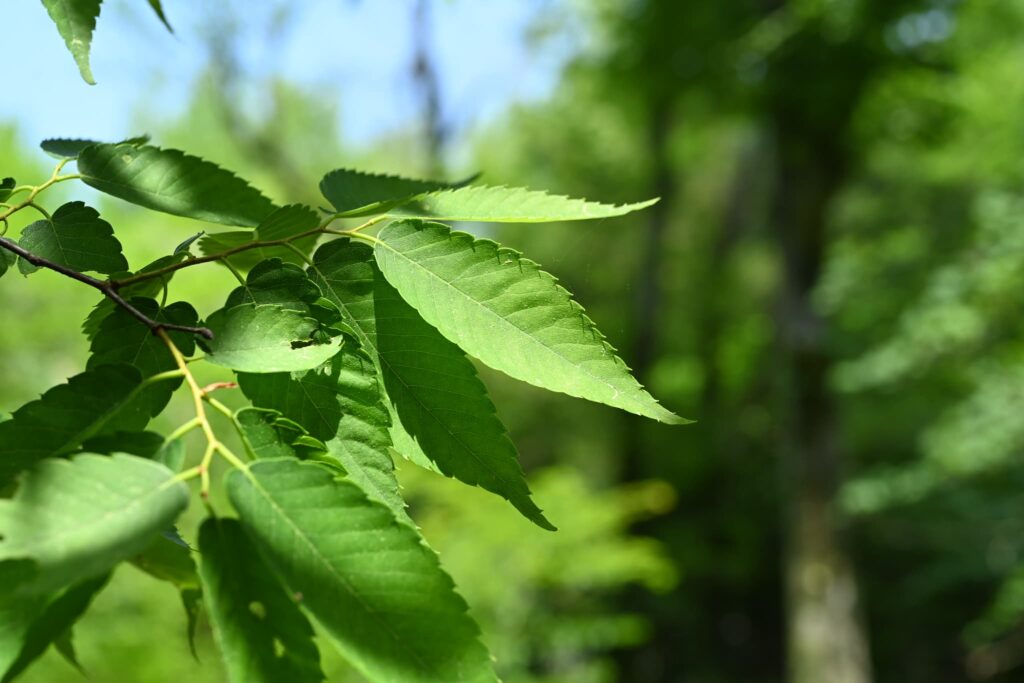
| Leaves | Narrow-ovate, 3–7 cm long, sharply serrated |
| Flowers | Tiny, yellow-green and inconspicuous |
| Fruit | About 4–5 mm, asymmetrical and brown when mature |
| Bark | Gray when young; exfoliating and mottled on mature trees |
Foliage
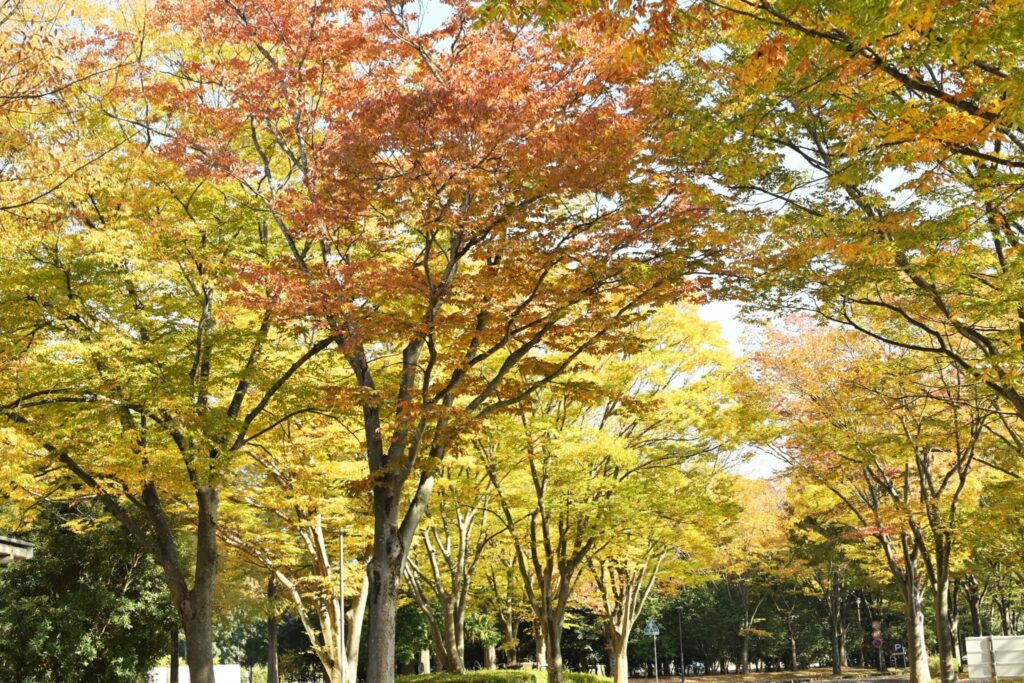
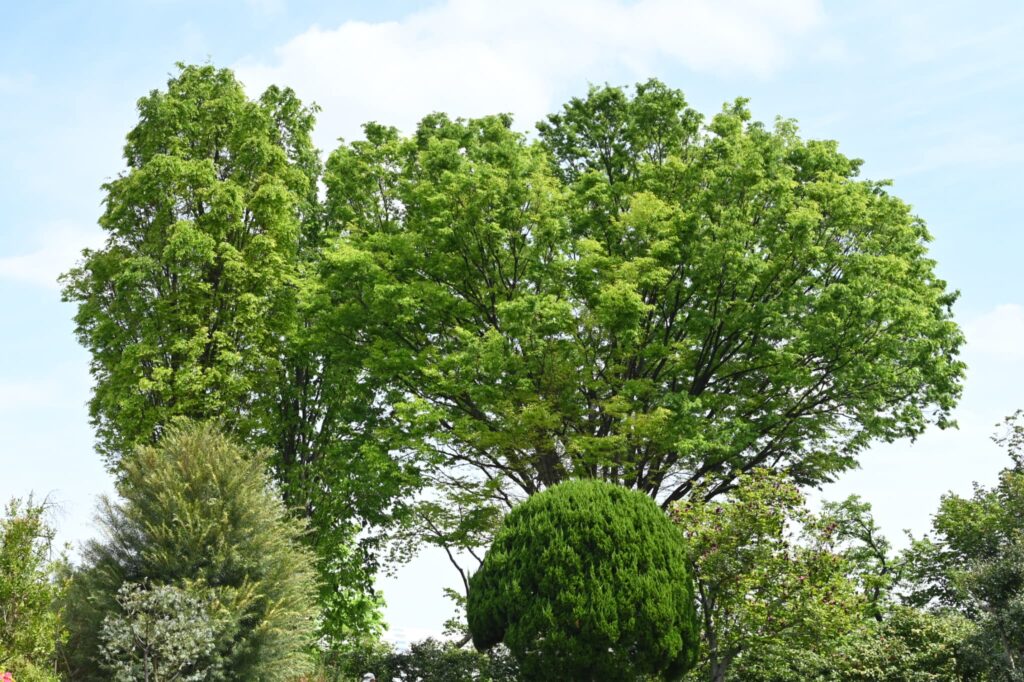
Japanese Zelkova develops a broad, vase-shaped crown with ascending branches that spread outward and upward. The leaves are alternate, narrow-ovate to ovate, usually 3–7 cm long, with a sharply pointed tip and conspicuous serrations along the margin. The upper surface is slightly rough to the touch.
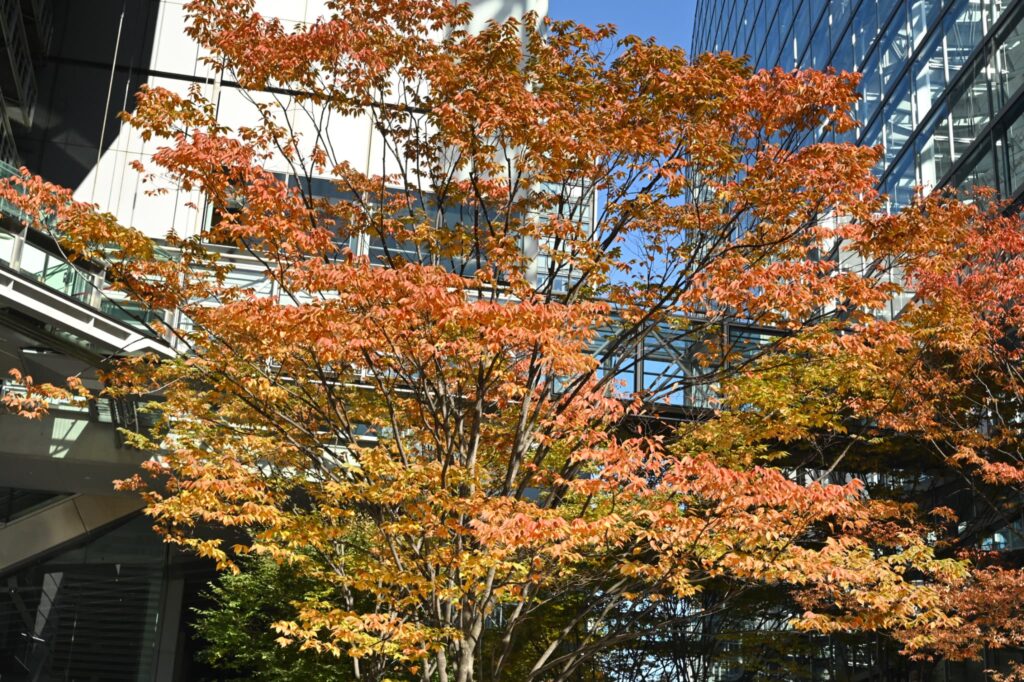
Autumn foliage ranges from yellow and orange to reddish brown, depending on weather and growing conditions.
Flowers
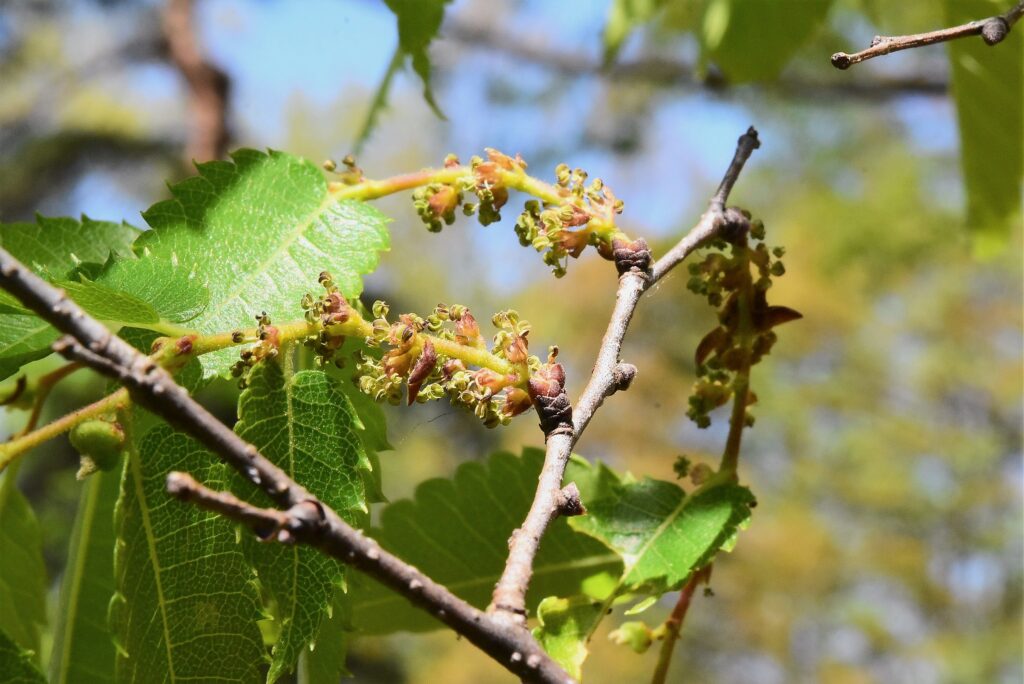
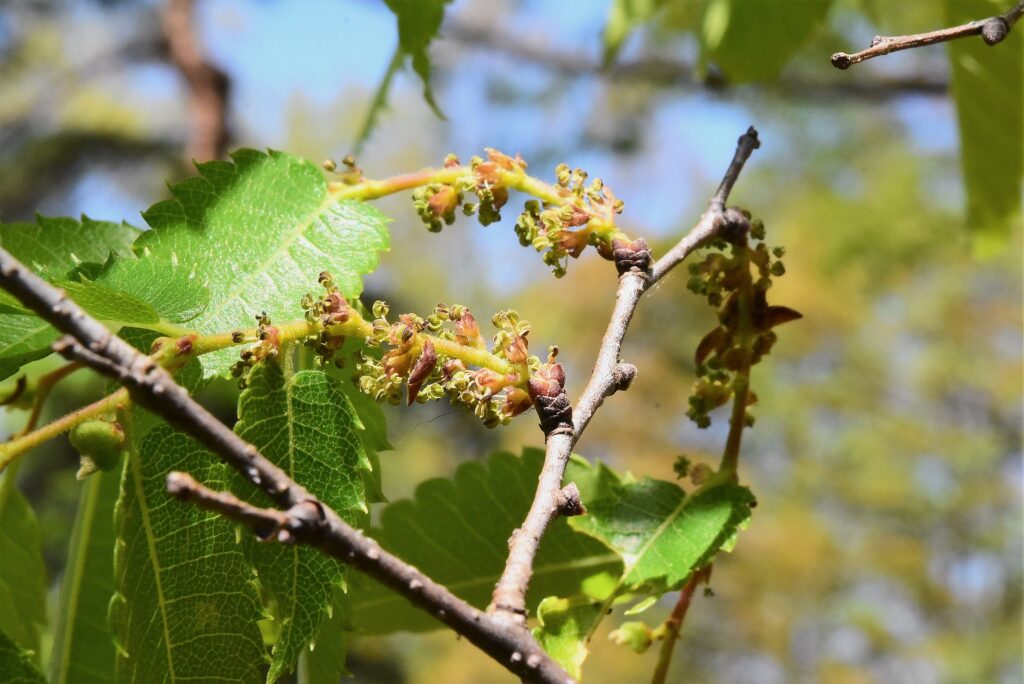
Japanese Zelkova is monoecious and flowers in April and May as the new leaves emerge. The flowers are small and yellow-green, without showy petals.
Male flowers occur in clusters near the bases of new shoots, while female flowers usually occur singly or in small groups in the upper leaf axils. Because of their small size, the flowers are easily overlooked.
Fruits
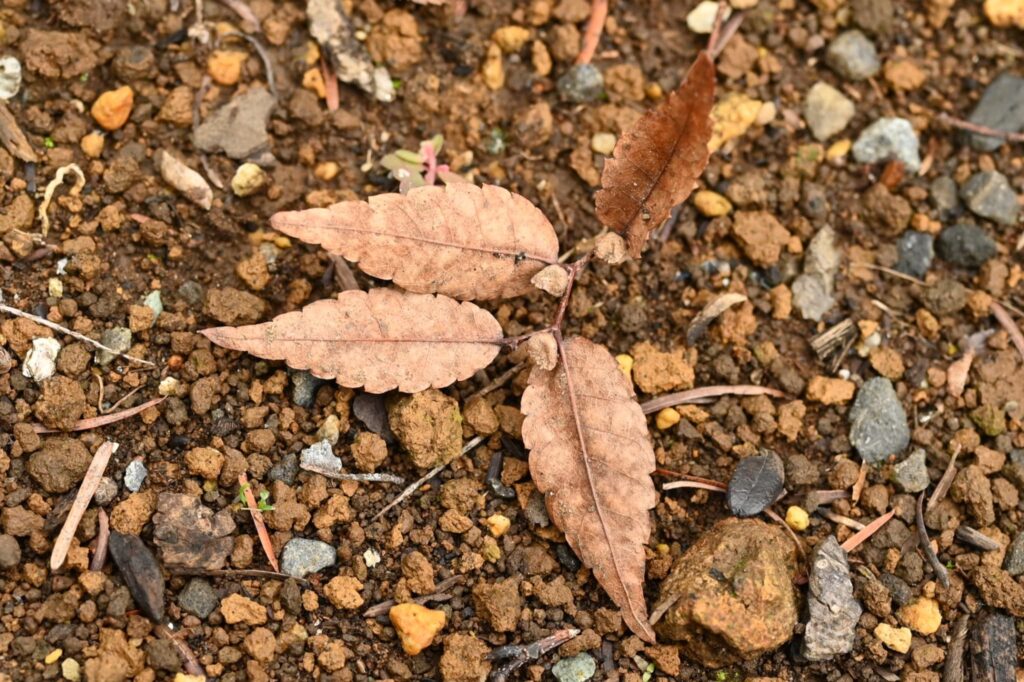
The fruit is a small, wingless, asymmetrical fruit about 4–5 mm across. It matures from green to brown in autumn.
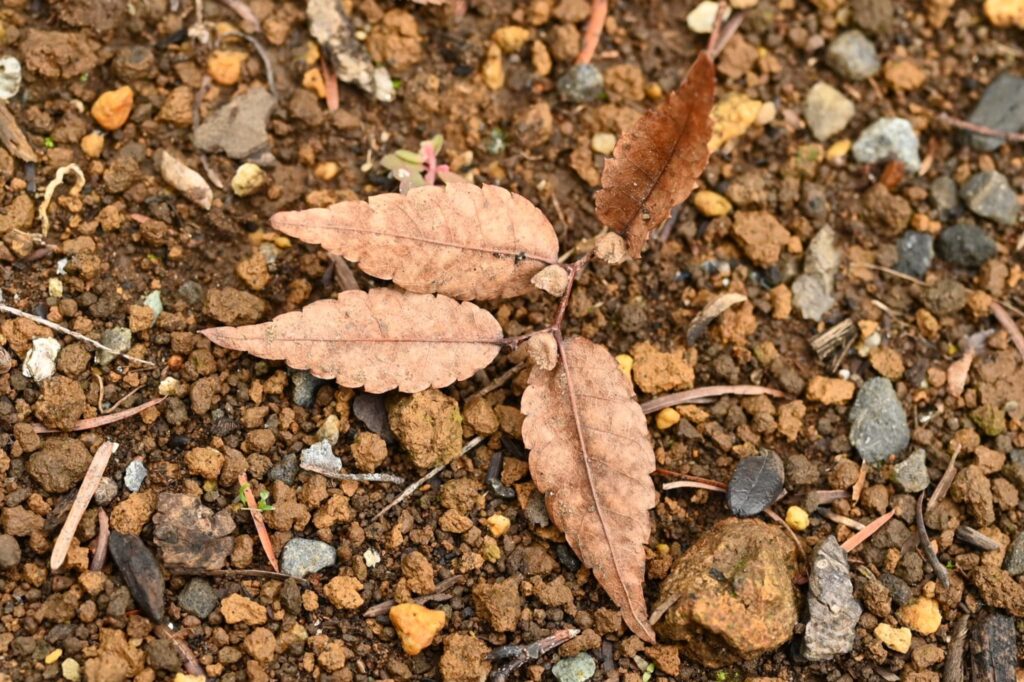
One of the species’ most unusual features is its method of fruit dispersal. Many fruits remain attached to short fruiting branchlets bearing several brown leaves. These branchlets detach and are carried by the wind, helping the seeds travel away from the parent tree. A Japanese ecological study found that more than 65% of fruits observed beneath mature trees remained attached to fruiting shoots.
Bark & Timber
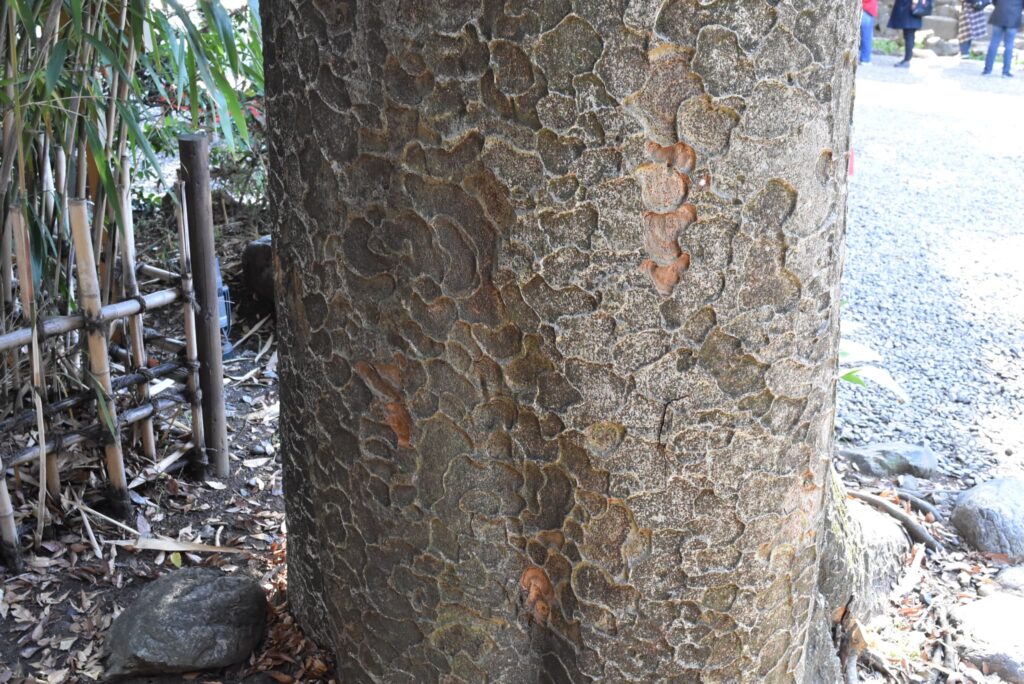
Young Japanese Zelkova trees have smooth gray to gray-brown bark marked by small lenticels. With age, the outer bark exfoliates in irregular scales and patches, revealing contrasting colors beneath. This mottled, scaly bark is one of the most useful features for identifying mature trees.
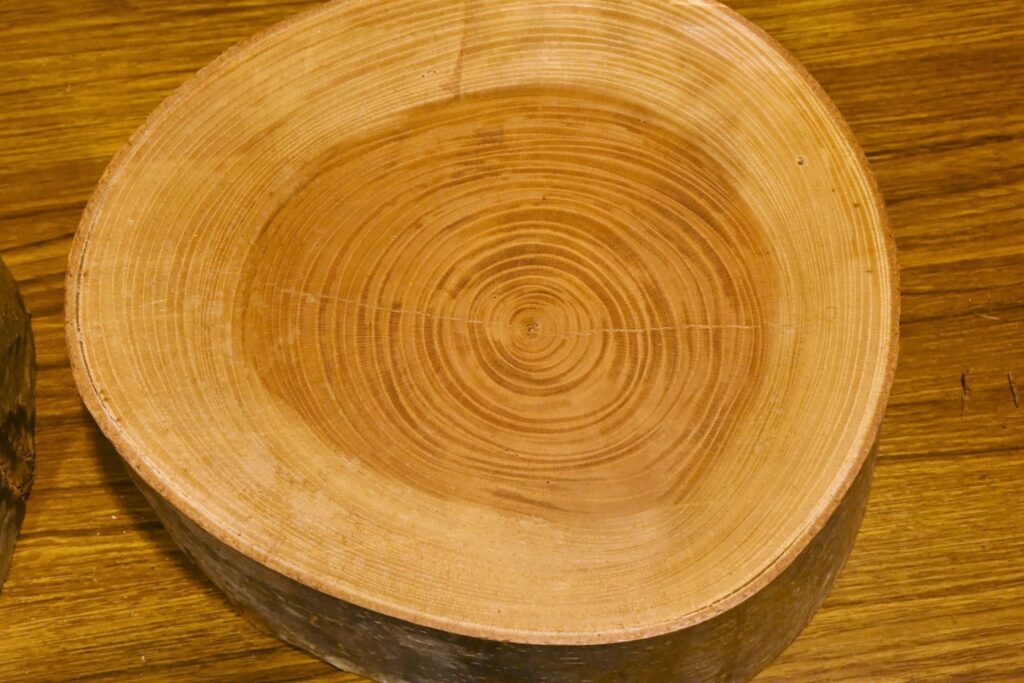
Zelkova wood is hard, strong, durable, and highly valued for its attractive grain. It has traditionally been used for architecture, furniture, tools, mortars, trays, lacquerware, and taiko drums. Keyaki is also an important wood for traditional Japanese tansu, including Sendai tansu.
Highly figured wood, including forms known as tamamoku and botanmoku, is especially prized for traditional woodworking and decorative objects.
Size & Growth
Japanese Zelkova commonly reaches 20–30 m in height and can develop a massive trunk with age. Exceptional trees may exceed 30 m, and some ancient specimens have trunks with circumferences of 5 m or more.
The species is relatively fast-growing when young and can eventually become a very large landscape tree. Its natural form is particularly impressive when given enough space to develop without severe pruning.
Uses & Cultural Significance
History and Name Origin
Japanese Zelkova has been important in Japanese culture for centuries. The tree was historically known as Tsuki (槻), while Keyaki became established as the common name later.
The most widely cited explanation connects Keyaki with the old Japanese word keyakeki, meaning something conspicuous, exceptional, or outstanding — an appropriate description of the tree’s distinctive form and valuable wood. The historical record includes the name keyaki by the Muromachi period.
The Japanese use of the character 欅 should not be confused with its original Chinese meaning, where it refers to a different tree.
Zelkova and the Japanese Landscape
Zelkova has long been planted around houses, temples, shrines, roads, and public spaces. Its strong trunk, spreading crown, and tolerance of urban conditions have made it one of Japan’s classic avenue and street trees.
The species is particularly prominent in the Kanto region, including the Musashino area, where mature trees contribute strongly to the traditional landscape. Famous plantings include the approach to Okunitama Shrine in Fuchu and major avenues in Tokyo and Sendai.
Zelkova is also the prefectural tree of Miyagi and Fukushima.
Timber and Craft
Keyaki timber has been valued for its combination of strength, durability, moisture resistance, and attractive grain. It is used for structural timber, furniture, traditional tools, drums, and decorative woodworking.
Its wood has also been widely used in temple and shrine architecture throughout Japan.
Growing Guide
| Item | Description |
|---|---|
| Light | Full sun; partial shade tolerated when young |
| Soil | Deep, fertile, well-drained soil; adaptable once established |
| Water | Regular watering during establishment; moderately drought tolerant when mature |
| Wind | Generally wind tolerant once established |
| Cold Hardiness | USDA Zones 5–8 |
| Pruning | Best trained when young; avoid unnecessary heavy pruning |
| Garden Suitability | Poor for most small residential gardens |
| Pests | Aphids, caterpillars, and wood-boring insects may occur |
Light & Soil
Japanese Zelkova grows best in full sun and deep, well-drained soil. It tolerates clay, loam, and a range of urban soils once established, but growth is strongest where roots have access to adequate moisture and oxygen.
Newly planted trees should be watered regularly during the first several growing seasons. Mature trees are moderately drought tolerant, although prolonged drought can reduce growth and cause premature leaf fall.
Wind & Snow Tolerance
Established trees are generally strong in exposed sites, making Zelkova useful as a street and landscape tree. However, heavy snow or ice can still damage branches, particularly where dense secondary growth has developed after poor pruning.
Cold Hardiness
Japanese Zelkova is generally rated for USDA Zones 5–8. Hardiness varies with provenance, cultivar, age, and local conditions, so young trees should be protected from severe winter exposure in colder regions.
Pruning
Young trees benefit from structural pruning to establish a strong trunk and well-spaced main branches. Mature trees tolerate pruning, but repeated heavy cuts can produce vigorous secondary shoots and spoil the natural crown.
Prune selectively to remove dead, damaged, crossing, or poorly positioned branches. Maintaining the natural vase-shaped structure is preferable to repeated severe reduction.
Suitability for Home Gardens
Japanese Zelkova is generally too large for a small residential garden. It is better suited to parks, avenues, large estates, and other sites where the mature crown can develop freely.
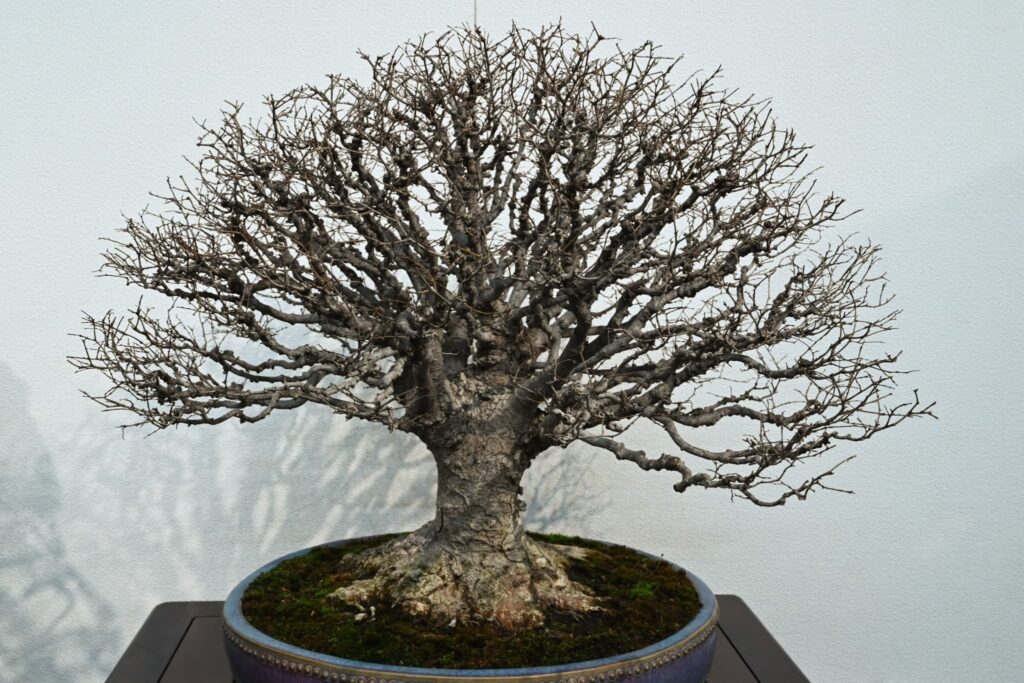
For restricted spaces, narrow cultivars such as ‘Musashino’ are more practical. Japanese Zelkova is also highly suitable for bonsai because of its fine branching and ability to tolerate repeated training.
Pests & Disease
Japanese Zelkova is generally a robust tree and is notably resistant to Dutch elm disease compared with true elms. It tolerates urban conditions reasonably well once established.
Aphids, caterpillars, and wood-boring insects may occasionally cause problems. Stressed trees should be monitored for trunk and branch damage, particularly where pruning wounds or other injuries provide entry points.
Cultivars
Several cultivars are important in landscape planting.
| Cultivar | Main Feature |
|---|---|
| ‘Musashino’ | Narrow, upright form; useful where space is limited |
| ‘Green Vase’ | Narrower vase-shaped crown and relatively fast juvenile growth |
| ‘Village Green’ | Broad, vigorous form with good street-tree characteristics |
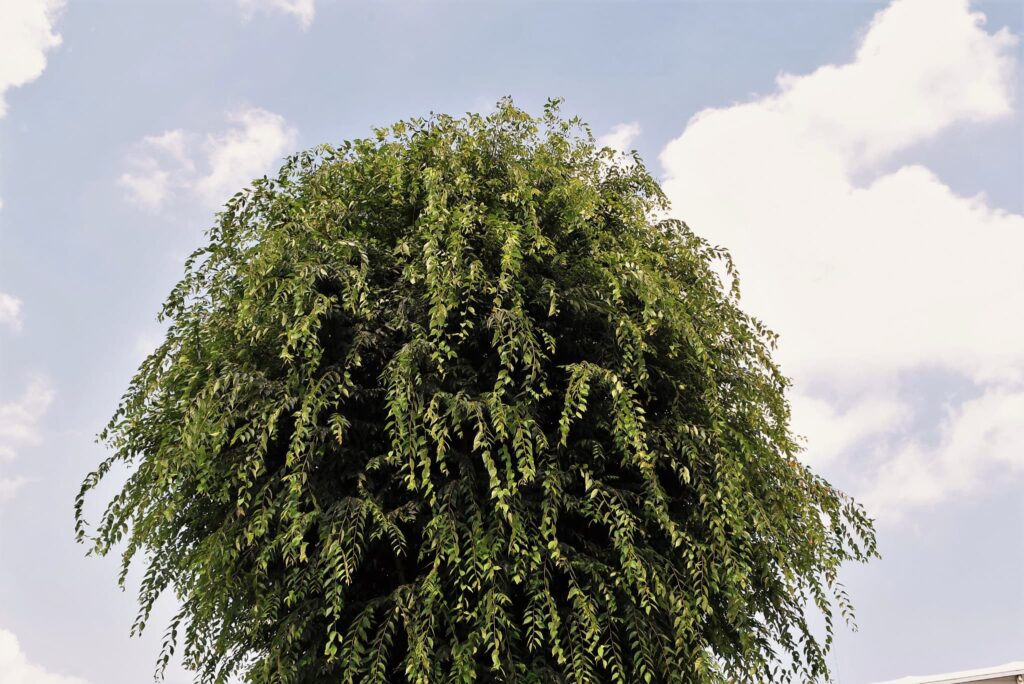
| ‘Shidare’ | Weeping branches |
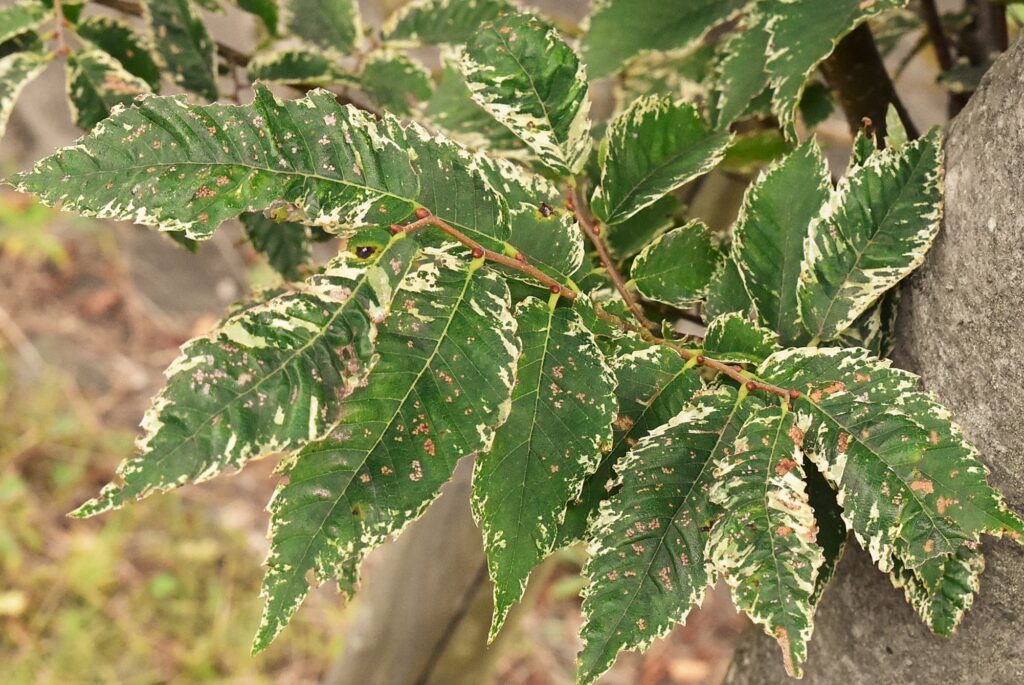
| ‘Fuiri’ / variegated forms | Variegated foliage |
‘Musashino’ is particularly useful for narrow streets and restricted planting sites. The RHS describes it as a slender, columnar tree, while Japanese forestry authorities classify it as a fastigiate type.
Similar Species
Japanese Zelkova can be confused with several other large deciduous trees in Japan, particularly Enoki, Mukunoki, Akinire, and Harunire.
Enoki (エノキ, Celtis sinensis, Chinese Hackberry)
Enoki has an asymmetrical leaf base and serrations concentrated toward the upper part of the leaf. Its bark generally remains smoother than mature Zelkova bark, often developing small bumps with age. Its orange-red fruits are much more conspicuous than Zelkova’s small brown fruits.
Mukunoki (ムクノキ, Aphananthe aspera, Muku Tree)
Mukunoki is easily recognized by its distinctly rough, sandpaper-like leaves. Its bark develops vertical fissures and its fruits turn dark purple-black. The species is now placed in Cannabaceae rather than Ulmaceae.
Akinire (アキニレ, Ulmus parvifolia, Chinese Elm)
Akinire is a true elm with smaller leaves and fine exfoliating bark. Unlike Zelkova, it flowers and produces fruit in late summer or autumn. Its small leaves and dense branching also make it a popular bonsai subject.
Harunire (ハルニレ, Ulmus davidiana var. japonica, Japanese Elm)
Harunire is mainly associated with cooler parts of Japan. Its leaves are larger and rougher, with an asymmetrical base, while mature bark develops coarse vertical fissures and ridges.
| Species | Bark | Leaf | Fruit / Flowering |
|---|---|---|---|
| Zelkova | Mottled, exfoliating scales | Serrated, slightly rough | Small brown fruit, autumn |
| Enoki | Gray, relatively smooth, warty | Smooth; serrations mainly toward tip | Colorful fruit, autumn |
| Mukunoki | Pale, vertically fissured | Very rough, sandpaper-like | Dark purple-black fruit |
| Akinire | Fine exfoliating scales | Small, relatively smooth | Flowers and fruits in autumn |
| Harunire | Rough vertical ridges | Larger, rough, asymmetrical | Flowers in spring |
Frequently Asked Questions
Q: Why is Japanese Zelkova so common in Japan?
Its strong wood, attractive form, long life, tolerance of urban conditions, and ability to form a broad, high crown have made it an important tree for streets, parks, temples, shrines, and large gardens.
Q: Is Japanese Zelkova a good street tree?
Yes. Its upright, spreading crown provides shade while allowing relatively good visibility beneath the canopy. It also tolerates urban conditions reasonably well once established.
Q: Can Japanese Zelkova be planted in a home garden?
Only where there is substantial space. A mature tree can become very large, so it is generally unsuitable for small residential lots. Narrow cultivars such as ‘Musashino’ are better where space is restricted.
Q: Why does Japanese Zelkova drop fruiting branches?
The small fruiting branchlets act as wind-dispersed units. Fruits often remain attached to these branchlets when they fall, allowing wind to carry them farther from the parent tree.
Q: What is tamamoku?
Tamamoku is a highly figured form of wood grain characterized by rounded, swirling patterns. It is especially valued in traditional Japanese woodworking.
Q: Is Japanese Zelkova good for bonsai?
Yes. Its fine branching, relatively small leaves, attractive autumn color, and response to pruning make it a well-established deciduous bonsai species.
Q: How can I distinguish Japanese Zelkova from Enoki and Mukunoki?
Check the leaves first. Zelkova has sharply serrated margins and a slightly rough surface; Enoki has an asymmetrical base with serrations concentrated toward the tip; Mukunoki has a distinctly gritty, sandpaper-like surface. Mature Zelkova is also characterized by its mottled, exfoliating bark.
Conclusion
Japanese Zelkova is one of the defining trees of the Japanese landscape. Its vase-shaped crown, finely serrated leaves, mottled bark, autumn color, and highly valued timber have made it important both as a landscape tree and as a traditional timber species.
From ancient Tsuki trees and temple plantings to modern avenues and bonsai, Zelkova serrata combines exceptional ornamental character with practical value. For large landscapes it remains one of Japan’s finest native deciduous trees, while cultivars such as ‘Musashino’ extend its usefulness to more restricted urban sites.