Japanese Beech (Fagus crenata): Identification, Care & Uses
Japanese Beech (Fagus crenata) is one of Japan’s most iconic native forest trees, prized for its smooth pale bark, luminous foliage, and dramatic seasonal color. This guide covers its identification, bark, flowers, fruit, and cultivation, based on observations of the tree as grown in Japan.
.
Overview
| Item | Description |
|---|---|
| Scientific Name | Fagus crenata |
| Common Name | Japanese Beech / Siebold’s Beech |
| Japanese Name | Buna (ブナ) |
| Family | Fagaceae |
| Native Range | Japan (endemic) |
| Plant Type | Deciduous Broadleaf Tree |
| Height | Up to 30 m (100 ft) |
| Trunk | Straight, can exceed 1 m in diameter |
| Flowering Season | May |
| Fruit Type | Nut (beechnut) |
| USDA Zones | 5–7 |
| Sun Exposure | Partial Shade (young) / Full Sun (mature) |
Characteristics
| Feature | Description |
|---|---|
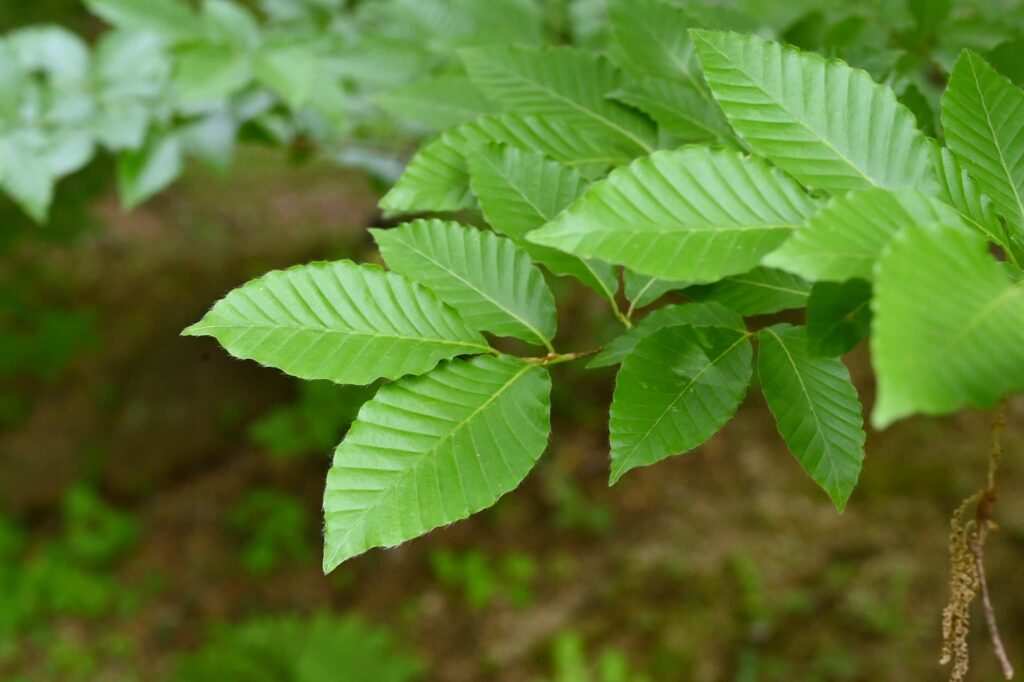
| Leaves | Alternate, oval, 4–10 cm long, 2–4 cm wide, wavy toothed margins |
| Flowers | Monoecious, pendulous male clusters and upper female flowers, May |
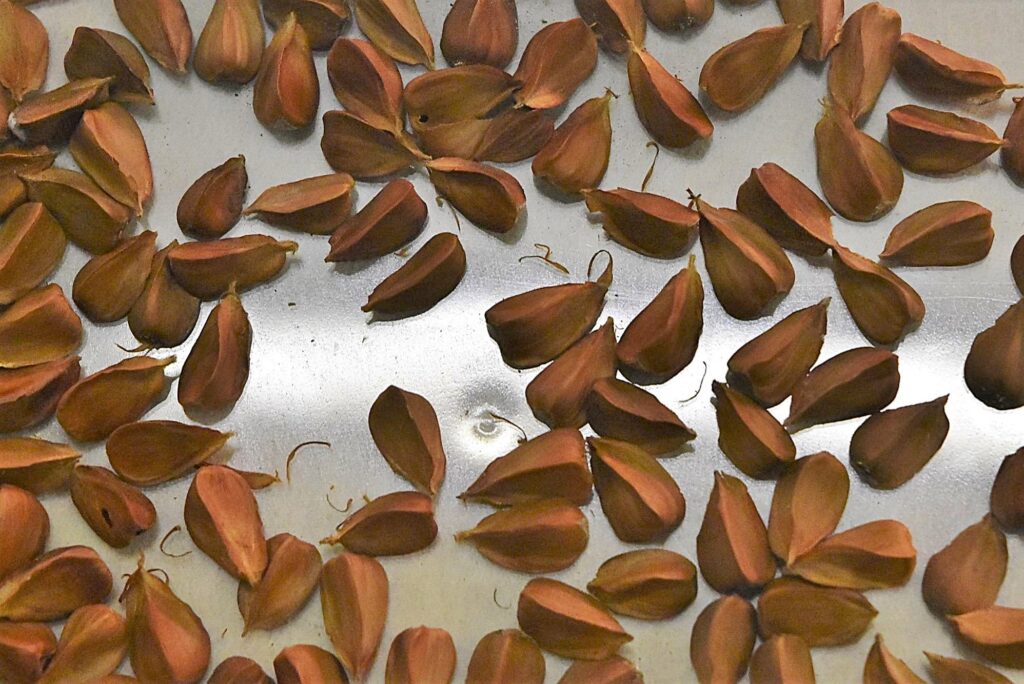
| Fruit | Spiny husk splitting into 4 sections, 2 triangular nuts, ripens October |
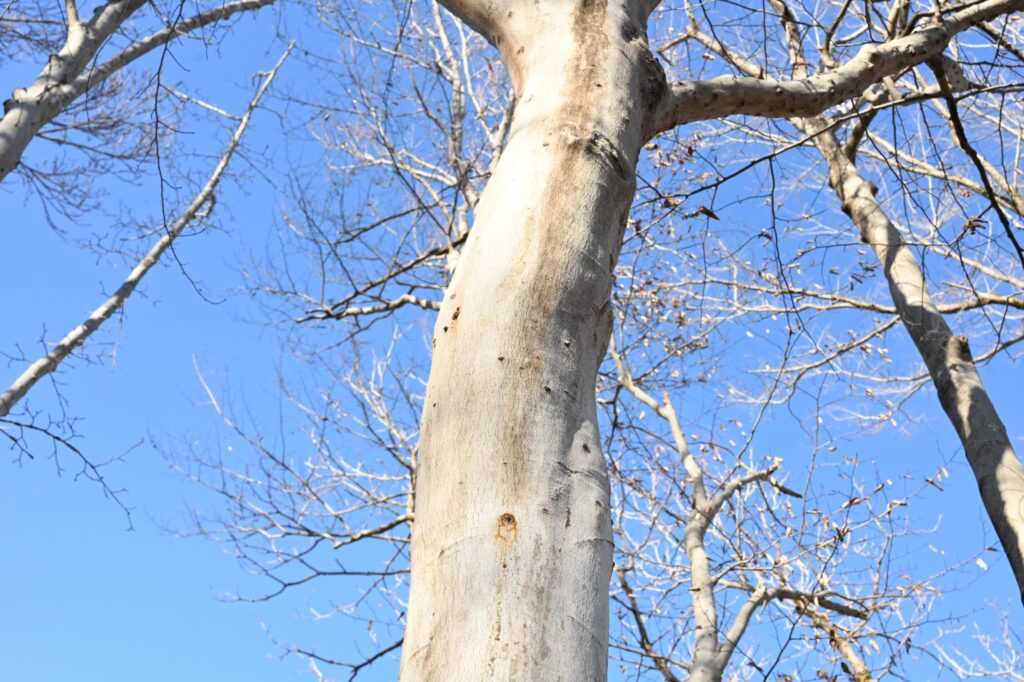
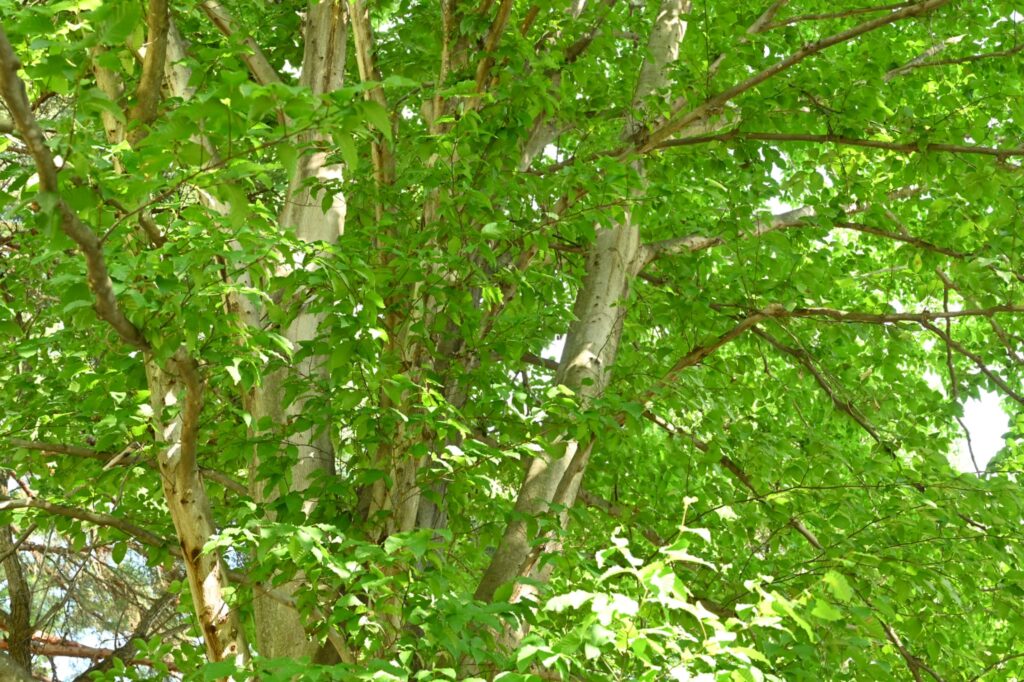
| Bark | Smooth, pale whitish-gray, remains smooth even on old trees |
Foliage
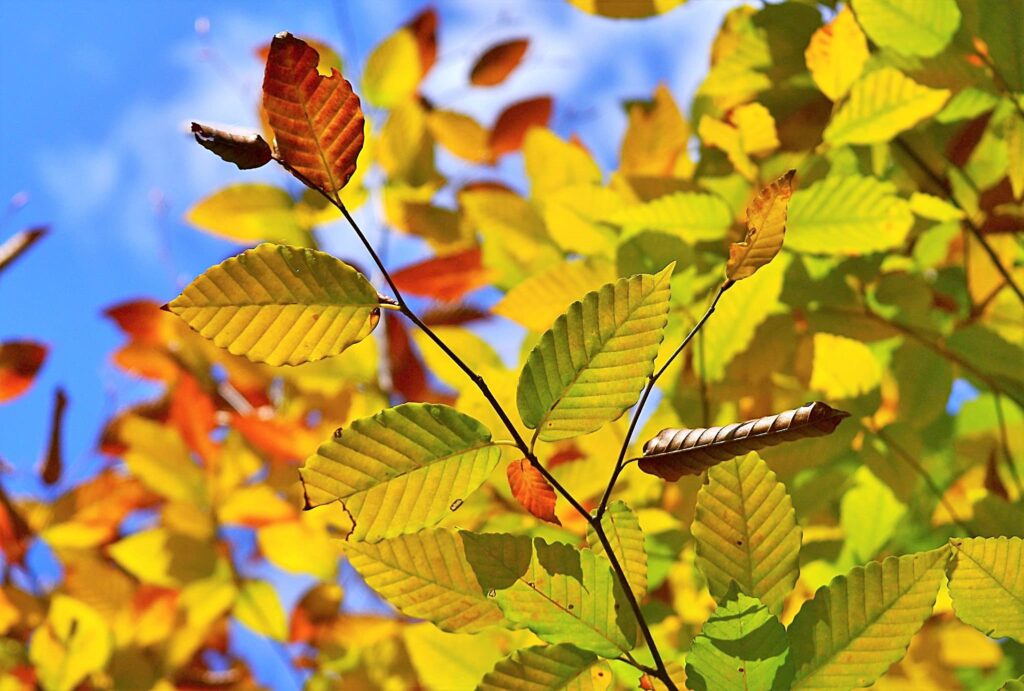
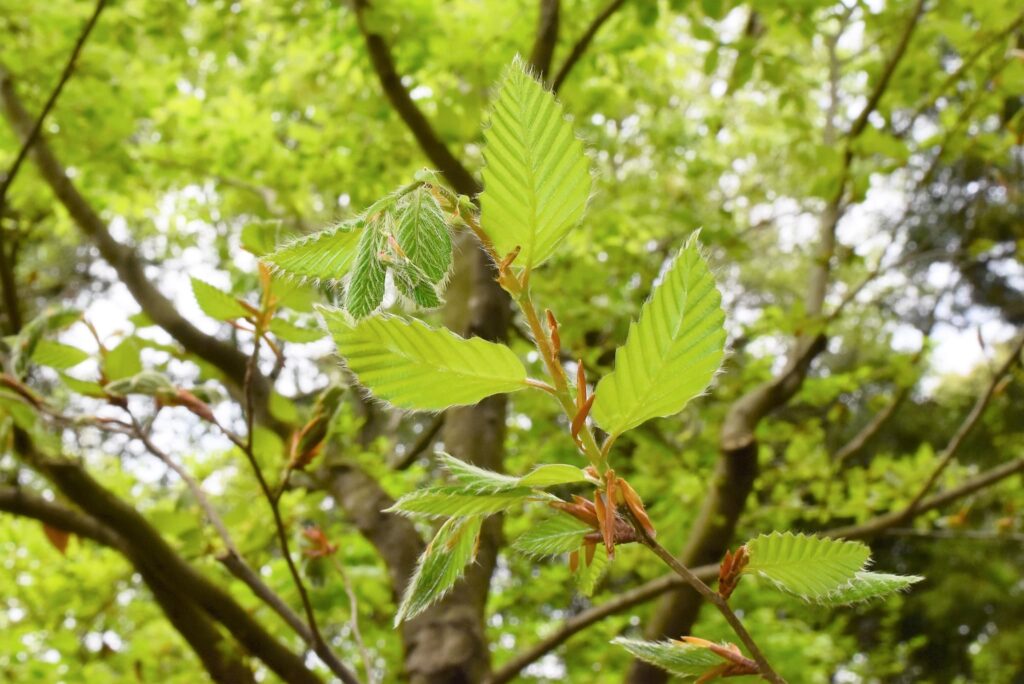
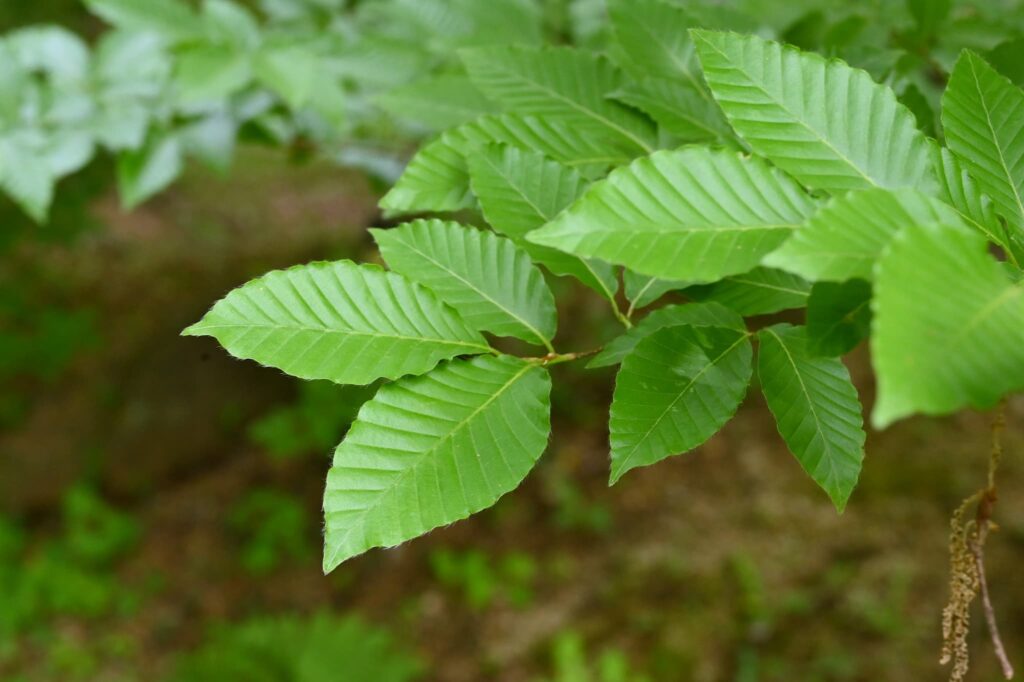
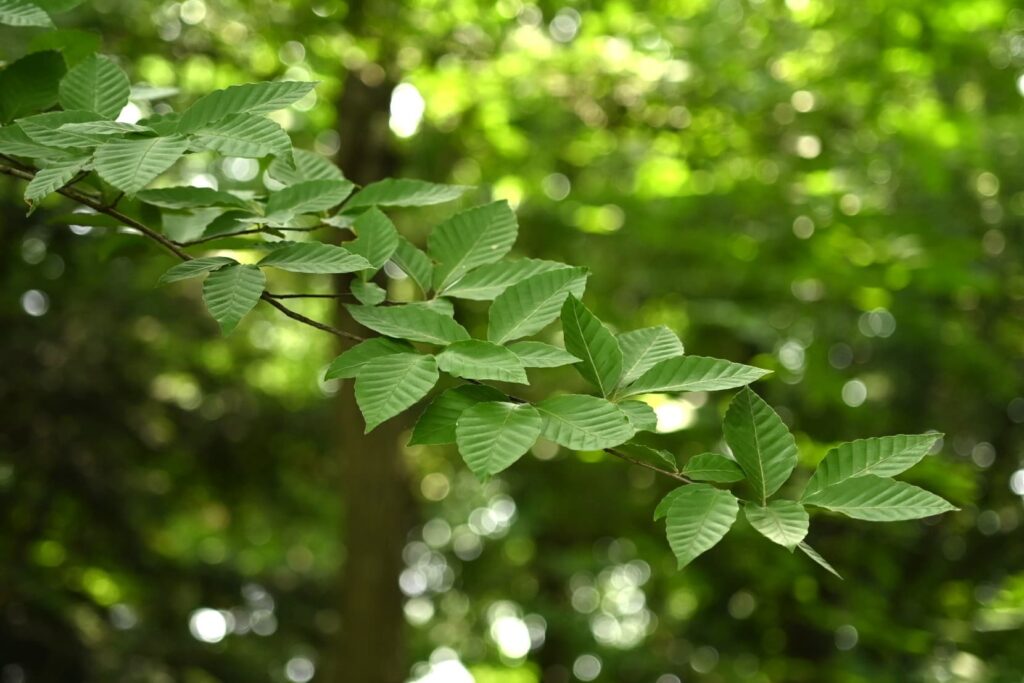
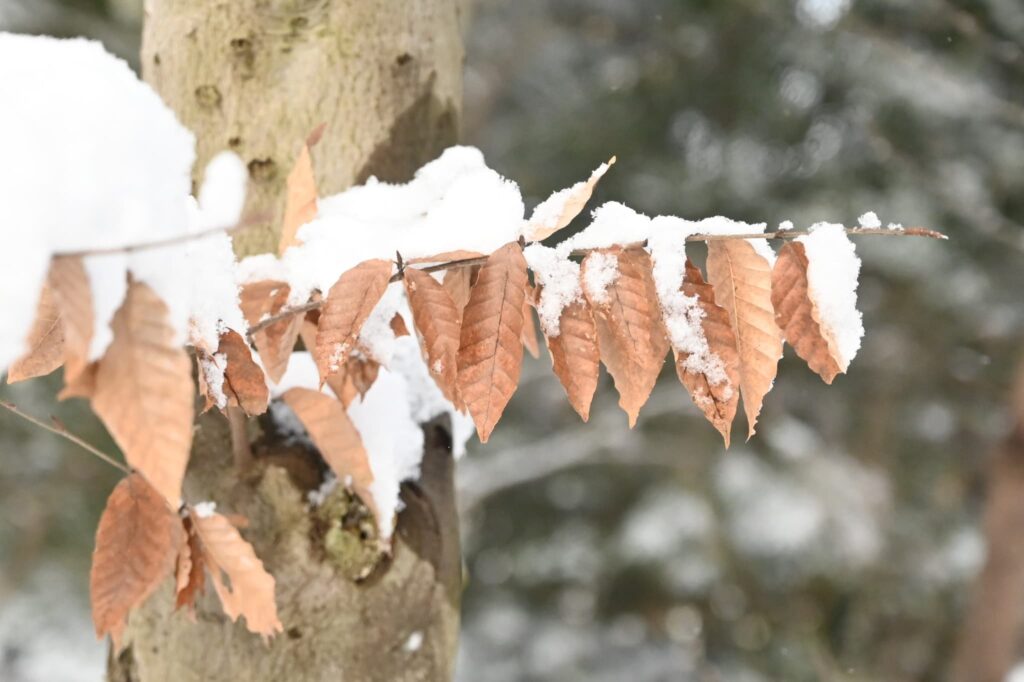
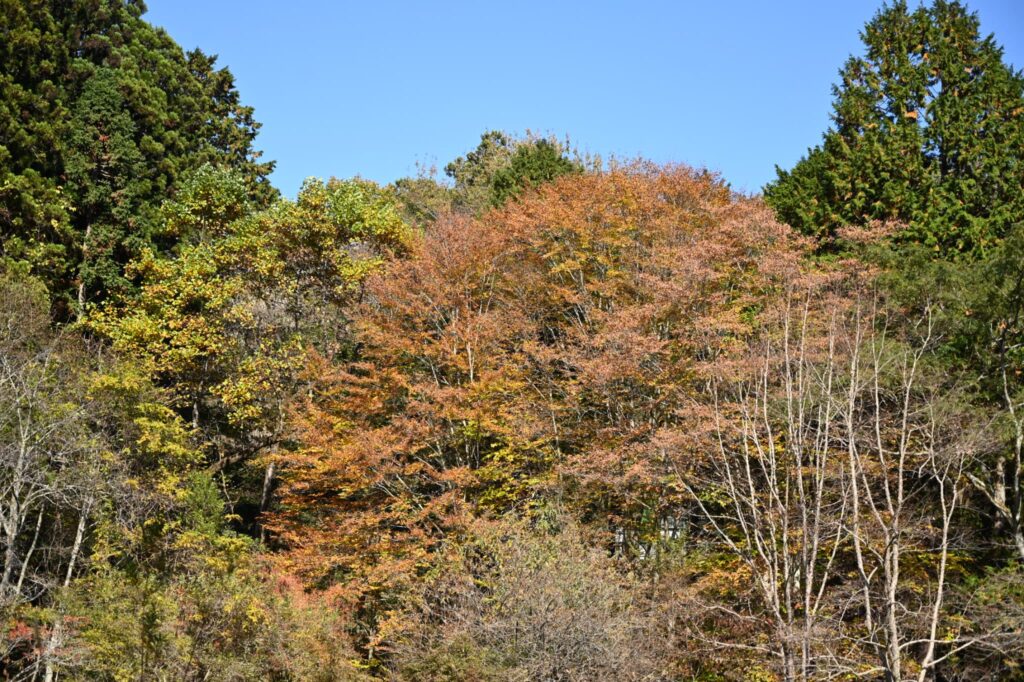
Japanese Beech leaves are alternately arranged, oval-shaped, 4–10 cm long and 2–4 cm wide, with a pointed tip and wavy, finely toothed margins. The parallel lateral veins are distinctly prominent and visually striking. Young leaves emerging alongside snowmelt in spring are particularly beautiful, as is the golden autumn color. Japanese Beech may retain some of its dried leaves through winter, particularly on younger trees and lower branches.
Flowers
Japanese Beech flowers in May, as new leaves unfurl. In natural forest stands, all trees flower simultaneously—but heavy flowering usually occurs only every few years, and trees generally require many years of growth before reaching reproductive maturity, making the blooms genuinely difficult to observe. The tree is monoecious: male flowers hang in pendulous clusters from the axils of lower leaves on new shoots, while female flowers form in the upper leaf axils. Both are subtle and easy to miss.
Fruits
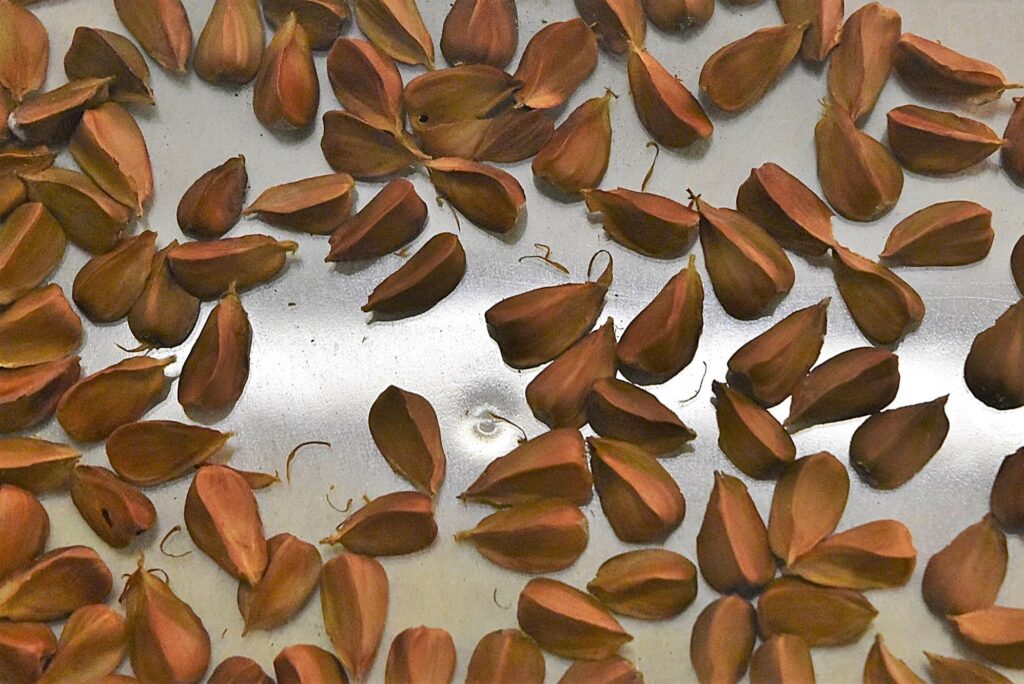
The fruit ripens in October, at which point the spiny outer husk splits into four sections, revealing two triangular nuts inside. These beechnuts—known by the folk names sobaguri, sobanoki, and tachisoba for their resemblance to buckwheat (soba) seeds—are a favorite food source for forest wildlife including squirrels and bears. In Europe, beech forests were historically managed as pig-fattening woodlands (pannage forests) for the same reason. The nuts are nutritious, develop a pleasant sweetness when roasted, and can be pressed for edible oil or lamp oil.
Bark & Timber
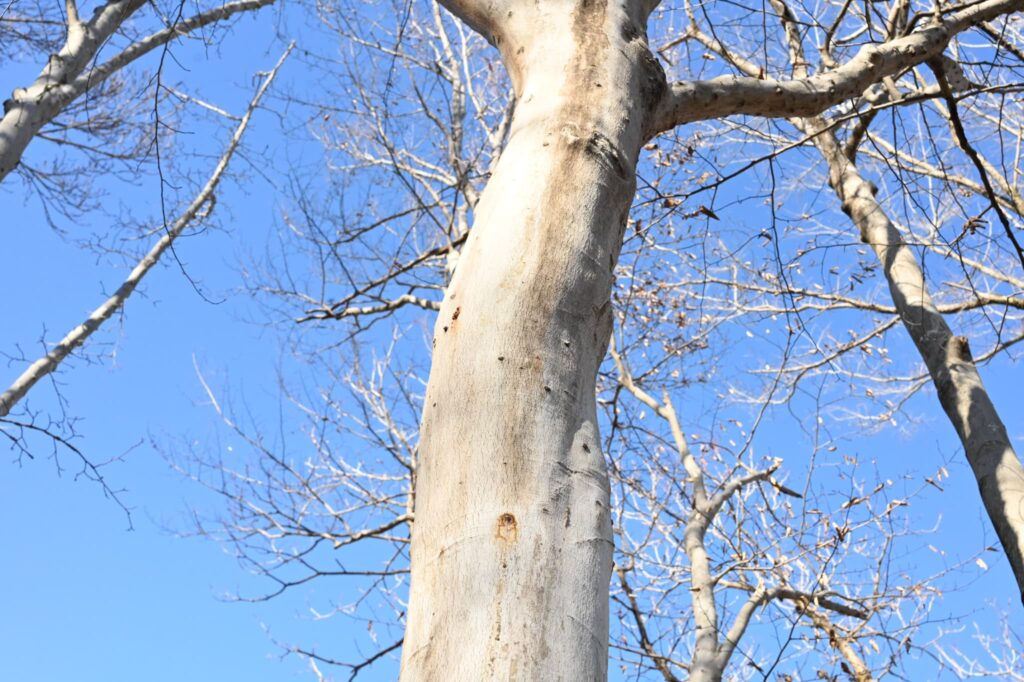
Japanese Beech grows with a straight trunk that can exceed 1 m in diameter. Its most immediately striking feature is its smooth, pale whitish-gray bark—clean and almost luminous in appearance, earning it the nickname “King of Japan’s Broadleaf Forests.” The bark remains relatively smooth even on older trees, occasionally developing subtle mottled patches, and is one of the most beautiful and recognizable tree barks in the Japanese forest. Its elegant bark also makes it a favorite subject for bonsai enthusiasts.
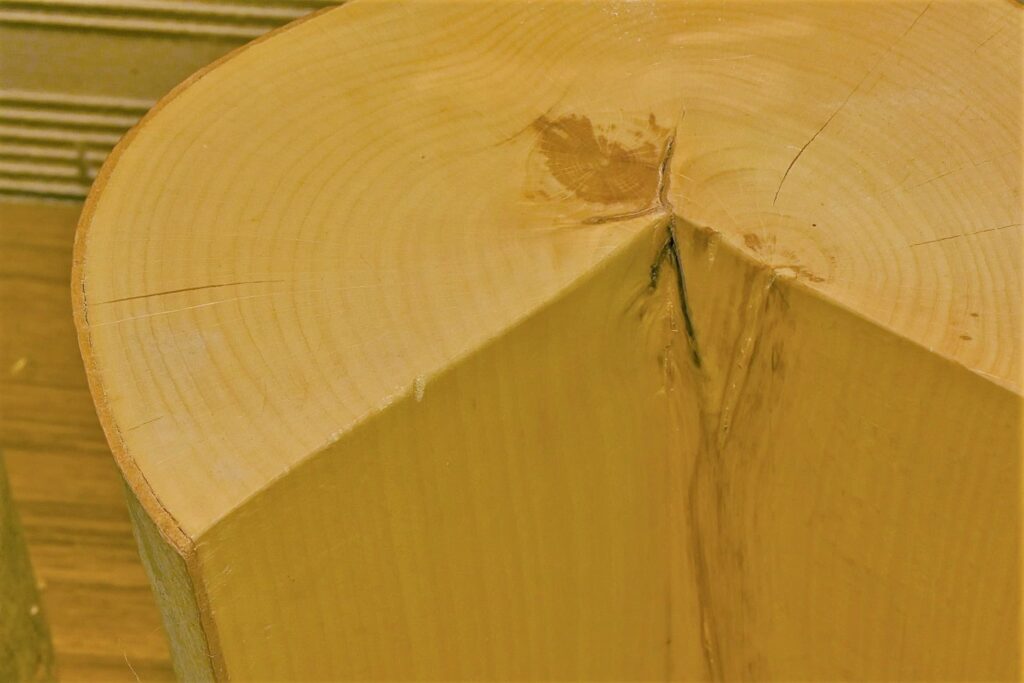
Despite its majestic presence, Japanese Beech timber is notoriously difficult to work with. Because of its high moisture content, the wood is prone to decay. During drying it tends to warp and discolor. It also makes poor charcoal due to its low combustion longevity. As a result, large-scale timber use has been limited—occasionally it is used for pulp, ornamental pillars, furniture such as chairs, toys, and rice paddles. In some areas, its relatively limited timber value may also have reduced pressure for intensive logging compared with more commercially valuable species.
Size & Growth
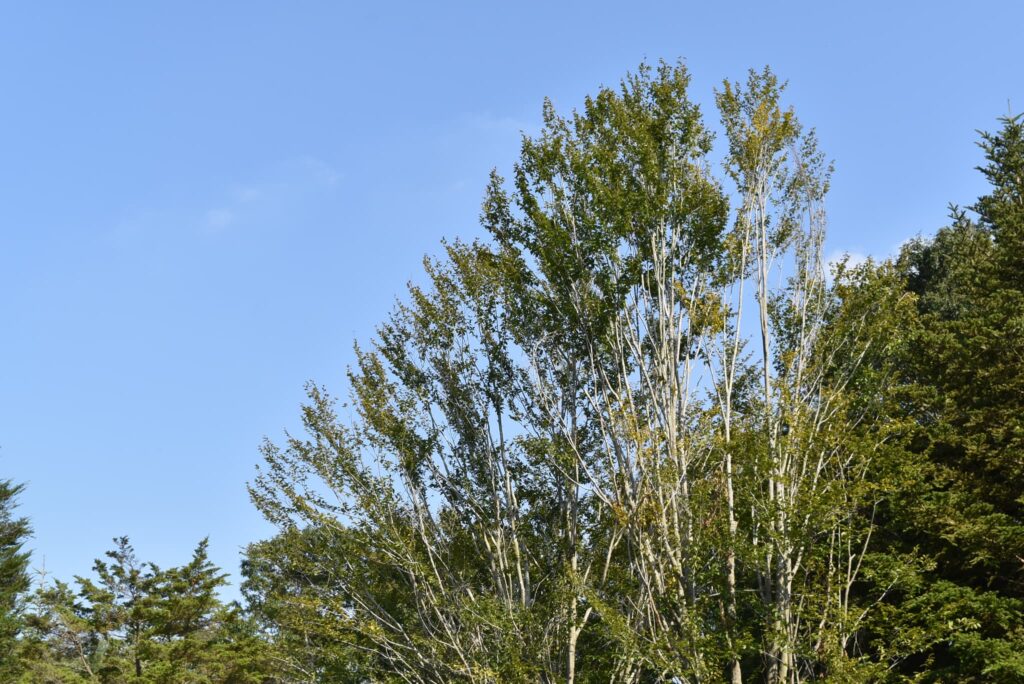
Japanese Beech can reach up to 30 m (100 ft) in height, growing slowly but ultimately becoming a very large tree. Japanese Beech growing on the Sea of Japan side generally develops more vigorously and produces larger leaves than Pacific coast specimens. This has led some botanists and foresters to distinguish them informally as Ooba-buna (“large-leaved beech”) for the Sea of Japan form and Koba-buna (“small-leaved beech”) for the Pacific coast form.
Uses & Cultural Significance
Japanese Beech stands apart from many forest trees in that it is valued more for its presence than for its timber. One of the rare exceptions to its limited commercial use is the Konponchudo (Main Hall) of Risshakuji Temple in Yamagata Prefecture—the famous “Mountain Temple” (yamadera)—which is constructed from Japanese Beech timber and is designated an Important Cultural Property of Japan.
Name Origin
The origin of the Japanese name Buna is uncertain, and several traditional explanations have been proposed. One folk etymology suggests that the name imitates the low humming sound (buu-n) made by wind passing through a beech forest. Another connects it with bun-nageru (“to throw away”), reflecting the tree’s historical reputation as a timber species of limited practical value.
Japanese Beech is written with several different characters, including 橅, 山毛欅, and 椈. The character 橅 has traditionally been associated with the idea of a tree that was considered of little use as timber, although this interpretation should not be taken as a definitive explanation of the name’s origin. The characters 山毛欅, literally “mountain hairy zelkova,” are also used for beeches in a broader sense.
Whatever its exact linguistic origin, the name Buna reflects the tree’s long and distinctive place in Japanese culture—both as a dominant forest species and, historically, as a tree valued more for its presence in the landscape than for its commercial timber.
Growing Guide
| Condition | Guidance |
|---|---|
| Climate | North of central Kanto; intolerant of severe summer heat |
| Light | Partial shade when young, full sun as it matures |
| Soil | Moist, humus-rich soil |
| Pruning | Minimal, to preserve natural form |
Light & Soil
Young trees are classic shade-tolerant (sciophytic) species, preferring partial shade and growing slowly but steadily. As the tree matures, it gradually shifts toward preferring full sun—a pattern shared with several other Japanese forest trees. Japanese Beech strongly prefers moist, humus-rich soil—a need captured in the old Japanese saying: “You don’t need a water bottle in a beech forest.” When planting in a garden, mixing leaf mold or compost into the planting hole beforehand is recommended.
Wind & Snow Tolerance
Japanese Beech is especially prevalent in the snowy regions along the Sea of Japan coast, where it forms some of its most vigorous natural stands, suggesting good tolerance of heavy snow accumulation in its native range.
Cold Hardiness
Japanese Beech is highly tolerant of cold winters and heavy snow within its natural range.
Heat Tolerance
Japanese Beech is best suited to cool-temperate climates with relatively mild summers. Even in mild lowland areas, prolonged summer heat can increase stress, make trees more susceptible to pest damage, and shorten their lifespan. In Japan, this generally means cooler mountain regions and areas north of central Kanto.
Pruning
Japanese Beech is not well suited to repeated pruning for size control. Although it grows slowly, a mature tree can eventually reach up to 30 m (100 ft), so the planting site should be chosen with its eventual size in mind.
Pruning is best limited to removing dead, damaged, crossing, or poorly positioned branches. If some shaping is necessary, use selective pruning rather than repeatedly cutting back the entire crown. Heavy or routine pruning can disrupt the tree’s natural form, which is one of its main ornamental qualities.
For most home gardens, Japanese Beech is better suited to a spacious site, container culture while young, or bonsai cultivation than to a small garden where its size must be continually restricted.
Suitability for Home Gardens
Container growing or bonsai cultivation is more practical for most home settings than planting a full-sized specimen in the ground. The tree’s slow growth and beautiful form make it a rewarding long-term project for patient gardeners, though it is best suited to cooler climates north of central Kanto.
Pests
No major pest problems are documented for Japanese Beech in its native cool-temperate range, though heat stress in warmer, lower-elevation plantings can make trees more susceptible to pest damage and shorten their lifespan.
Similar Species
| Species | Key Difference |
|---|---|
| Inubuna (Fagus japonica) | Thinner leaves with narrower veins; white hairs on the leaf underside; also used in bonsai. Sometimes also called Kurobuna. Not to be confused with the purple-leaved cultivar sometimes seen, which is a European Beech cultivar (Fagus sylvatica ‘Purpurea’) |
| Southern Beech (Nothofagus spp.) | Distributed across southern continents (excluding Africa); similar in appearance but with smaller leaves; belongs to a separate family, Nothofagaceae |
| European Beech (Fagus sylvatica) | Widely distributed from northern to southern Europe; designated the national tree of Denmark; commonly planted as a street tree for its spring and autumn color. Numerous cultivars exist, including the popular purple-leaved Purpurea form |
| American Beech (Fagus grandifolia) | Native to eastern North America; larger leaves, darker gray bark, and a broader crown |
| Chinese Beech (Fagus longipetiolata) | Native to southern China; long, narrow leaves with conspicuously long petioles |
Frequently Asked Questions
Why is the Shirakami-Sanchi beech forest a UNESCO World Heritage Site?
The Shirakami-Sanchi contains one of the last remaining virgin Japanese Beech forests in East Asia—an almost undisturbed primeval cool-temperate forest ecosystem. Its biodiversity and ecological integrity were the basis for UNESCO designation in 1993.
Is Japanese Beech timber useful?
Its use has historically been limited due to its tendency to warp, decay, and discolor. However, it is occasionally used for furniture, toys, rice paddles, and decorative purposes. The Konponchudo of Risshakuji Temple is one of the rare notable examples of its use in architecture.
Can Japanese Beech be grown as a garden tree?
It can, though it is better suited to cooler climates north of central Kanto. Container growing or bonsai cultivation is more practical for most home settings. The tree’s slow growth and beautiful form make it a rewarding long-term project for patient gardeners.
Do Japanese Beech trees hold their leaves in winter?
They can. Some dried leaves may remain on the branches through winter and are shed just before new growth emerges in spring. This phenomenon, known as marcescence, adds winter interest to the tree’s silhouette.
Are beechnuts edible?
Beechnuts are edible when properly prepared and have traditionally been roasted or processed for oil. They are a critical food source for forest wildlife, particularly in autumn.
Conclusion
Japanese Beech stands apart in the Japanese forest—not for its timber value, which is modest, but for the sheer beauty of its presence. Its smooth pale bark, luminous spring foliage, golden autumn color, and graceful winter silhouette make it one of the most visually compelling trees in East Asia across all four seasons. The ancient beech forests of Shirakami-Sanchi remind us of what Japan’s cool mountain landscapes looked like before human intervention—a rare, irreplaceable inheritance. For gardeners, naturalists, and anyone exploring Japan’s native forests, Japanese Beech remains one of the country’s finest and most iconic deciduous trees.